27 Fridge Organization Ideas for 2026
This post may contain affiliate links: full affiliate disclosure.
If your fridge looks full but food still goes bad, you’re not doing anything wrong. You buy fresh groceries, put them away, and somehow.
Few days later, vegetables are limp, leftovers are forgotten, and something smells off. Most of the time, the problem isn’t the food, it’s where you’re putting it.
When food sits in the wrong spot, it spoils faster and disappears from view. Once you fix placement and visibility, food lasts longer, and waste drops fast.
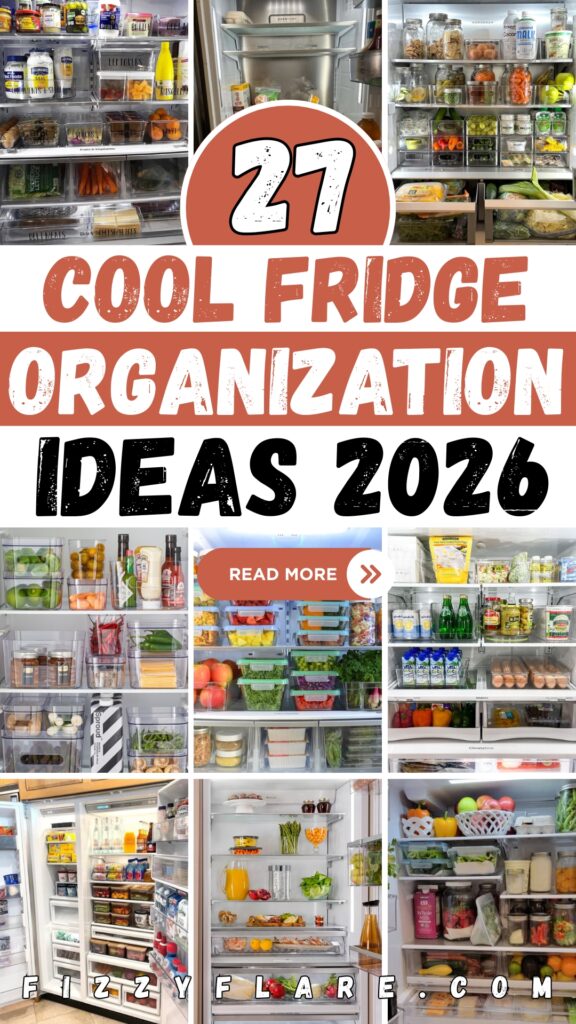
In this article, you’ll find 27 Fridge Orgaization ideas that work in 2026.
Let’s jump in!
Contents
- 1 How do I organize my fridge to keep food fresh longer?
- 1.1 Clear Zone System
- 1.2 Label-Led Zones
- 1.3 Front-Row Meals
- 1.4 Stacked Produce Bins
- 1.5 Prep-and-Stack Meals
- 1.6 Drink-Dedicated Shelf
- 1.7 Uniform Jar System
- 1.8 Herb-Forward Storage
- 1.9 Open Shelf Balance
- 1.10 Category-by-Fridge Setup
- 1.11 Bowl-and-Jar Mix
- 1.12 Color-Coded Produce
- 1.13 Label-First Storage
- 1.14 Shelf-by-Shelf Logic
- 1.15 Produce Grid Layout
- 1.16 Freshness Flow Shelves
- 1.17 Grab-and-Go Center
- 1.18 Meal-Prep Display
- 1.19 Balanced Shelf Heights
- 1.20 Container-Only Rule
- 1.21 Chalk-Labeled Drawers
- 1.22 Tiered Access Rows
- 1.23 Prep-Forward Fridge
- 1.24 Natural Material Zones
- 1.25 Door-Side Containment
- 1.26 Top-Shelf Fresh Prep
- 1.27 Pantry-Style Fridge
- 2 FAQs
How do I organize my fridge to keep food fresh longer?
Food goes bad in the fridge for two main reasons: temperature changes and poor visibility. If you can’t see food, you won’t use it.
If food sits in the wrong temperature zone, it spoils faster. Start by giving everything a clear place. Put leftovers and ready-to-eat food at eye level.
You notice them first. Keep milk, eggs, and dairy on the middle shelf where the temperature stays cold and steady.
Store meat on the bottom shelf in sealed containers to prevent leaks from ruining other food. Use the door only for condiments and drinks.
Since it warms up whenever you open the fridge. When food is visible, separated, and stored in the coldest spots, it lasts longer with less effort.
Save this article for later! 👇👇
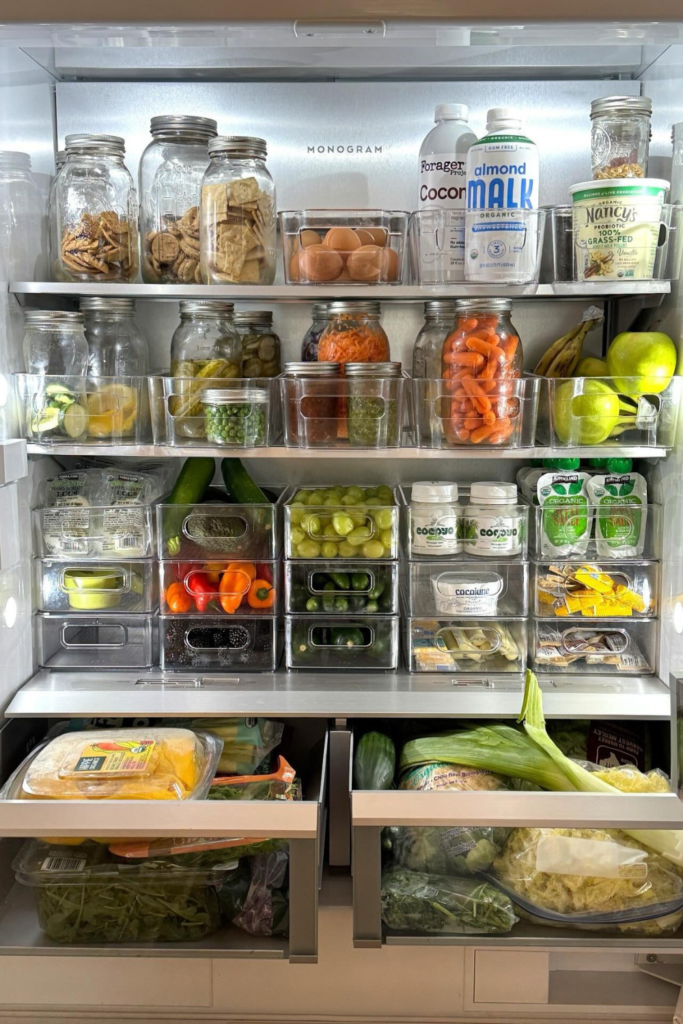
Clear Zone System
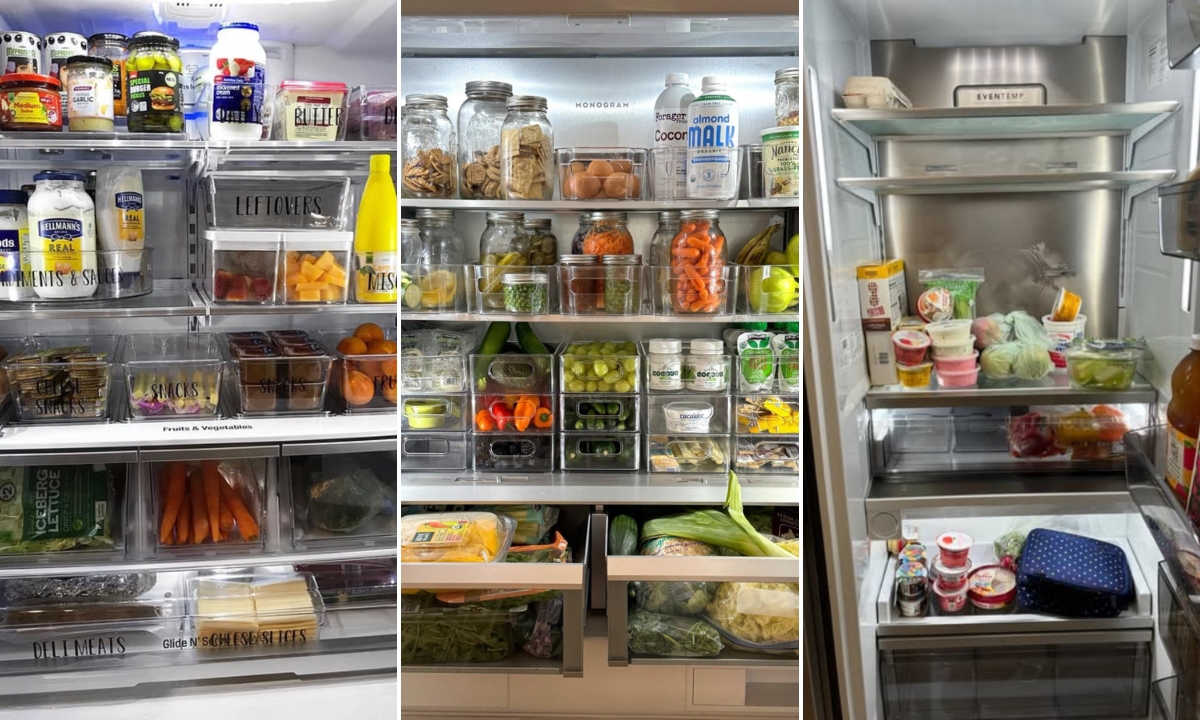
Chaos starts when food floats without a job, works because every shelf has a purpose, items never compete for space.
Assigning zones first snacks, produce, dairy, grab-and-go, then choosing clear bins that fit each shelf depth.
Keep similar items together and avoid mixing categories. Strong side-wall fridge lighting passes through transparent containers.
Label-Led Zones
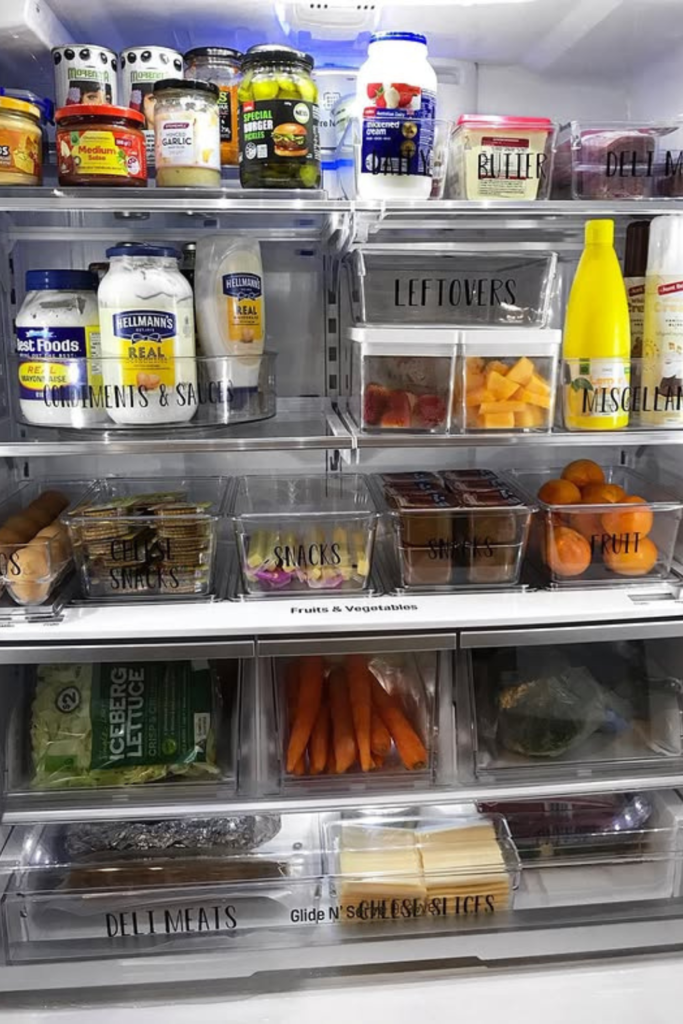
Mess happens when nobody knows. This setup fixes that by labeling every category, so food goes back to the right place.
Use snacks, leftovers, sauces, deli, and labeling bins in plain, bold text. Place high-traffic items at eye level for quick access.
Bright overhead fridge lighting paired with clear bins keeps labels readable and makes misplaced items stand out immediately.
Front-Row Meals
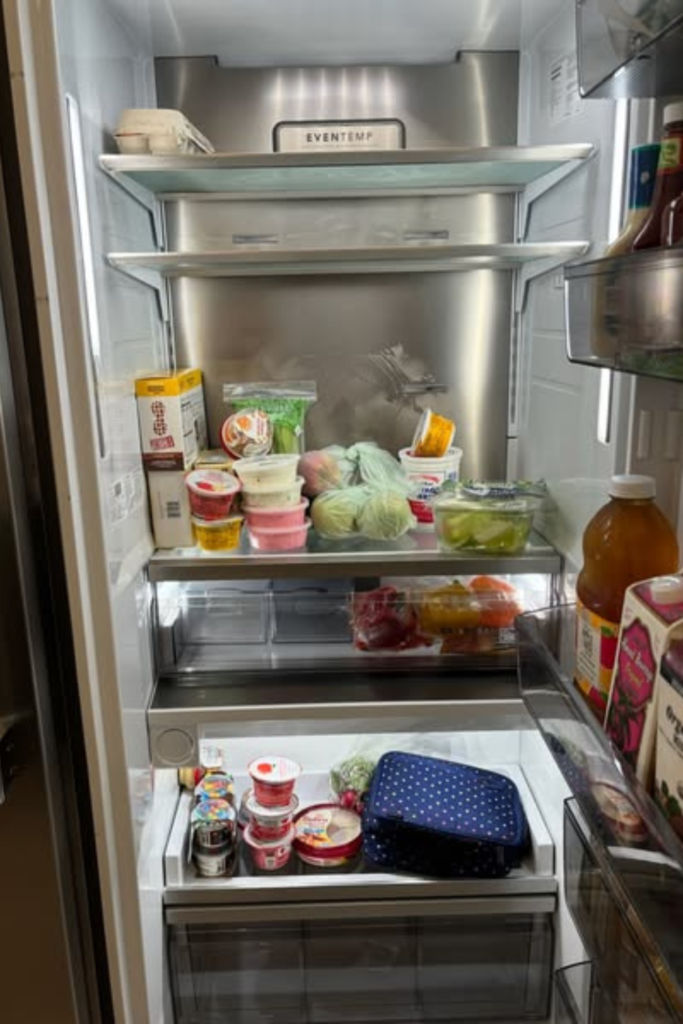
Leftovers disappear when they blend into groceries. This fridge fixes that by giving cooked food the most visible shelf.
Meals get eaten before they expire. Keeping leftovers in low, stackable containers and lining them up in a single row.
Center shelves catch the strongest fridge light, and flat lids reflect it forward, making labels and food colors easy to spot.
Stacked Produce Bins
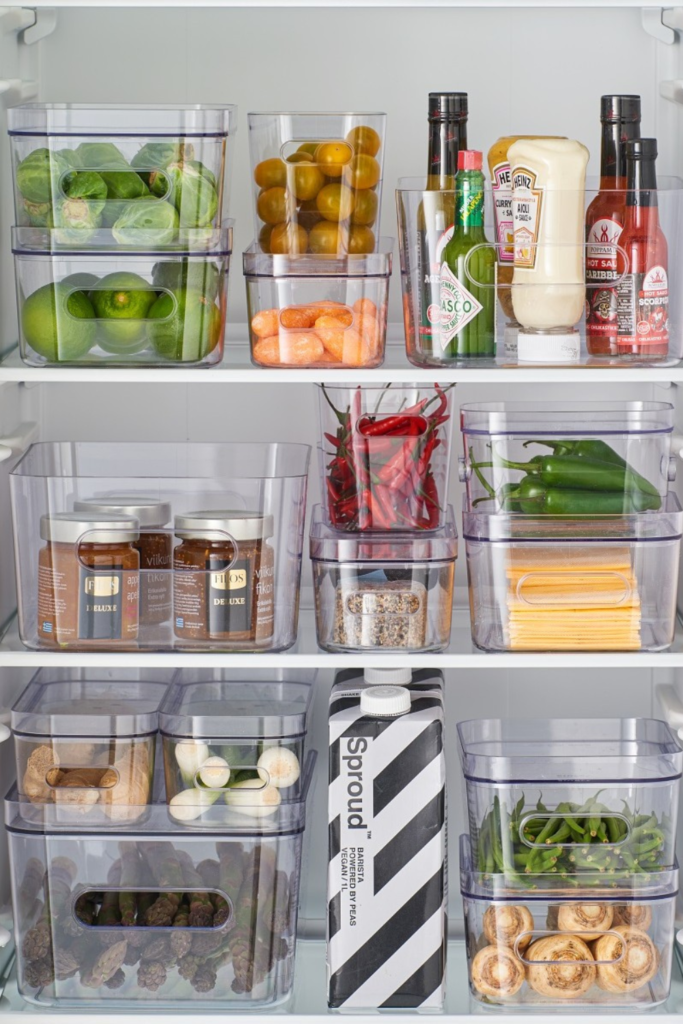
Loose produce wastes space and bruises quickly. This setup uses vertical bins to separate fruits and vegetables.
Keeping airflow around each item. Choose stackable clear containers with handholds, grouping produce by type or ripeness.
Back-panel fridge lighting shines through clear plastic, keeping lower layers visible, taller bins work best on middle shelves.
Prep-and-Stack Meals
Prepped food only saves time if it stays easy to grab, works because meals are portioned, sealed, and stacked by type.
Use matching airtight containers and grouping breakfast, lunch, and dinner foods together. Keep stacks low so lids don’t block sightlines.
Strong top lighting spreads evenly across flat containers, while clear sides let colors show, making meals easy to finish.
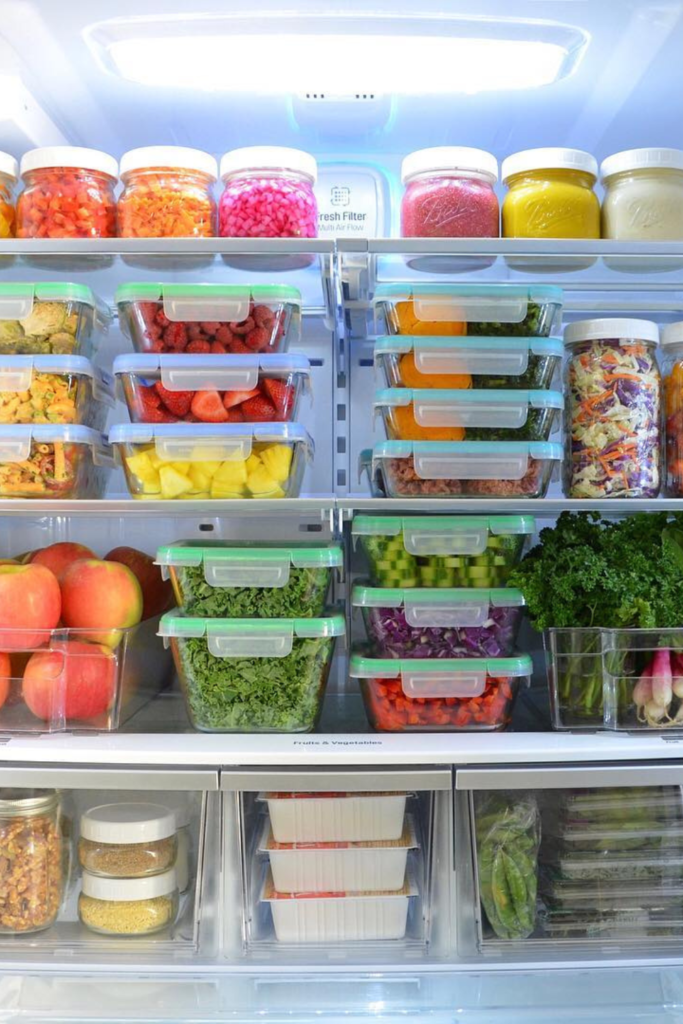
Drink-Dedicated Shelf
Bottles take over fast when they’re spread across the fridge. This setup fixes that by giving drinks their own shelf.
Food stays undisturbed and space feels calmer. Use one long bin or matching containers sized for cans and bottles.
Place this zone on an upper or middle shelf for easy reach. Bright top lighting reflects off glass and clear bins, keeping the shelf light.
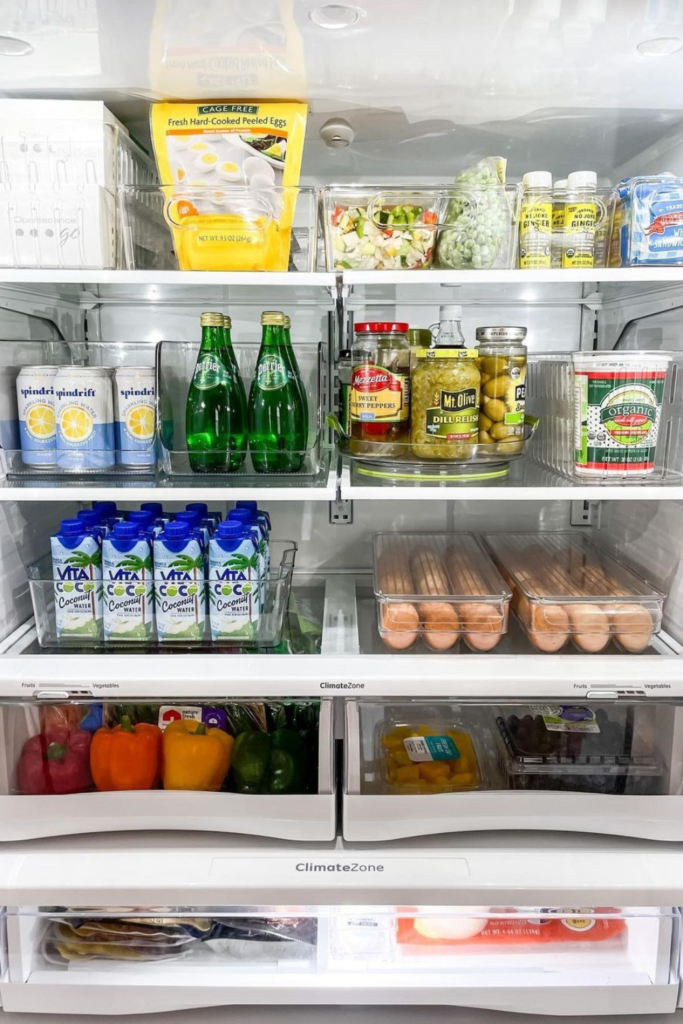
Uniform Jar System
Mismatched containers make small items hard to track and easy to forget. Keep similar items grouped by shelf.
Recreate this by decanting leftovers, toppings, grains, or prep ingredients into matching jars with tight lids and clear labels.
Glass shelves and jars reflect overhead fridge lighting, keeping even the back rows visible, this fridge works best.
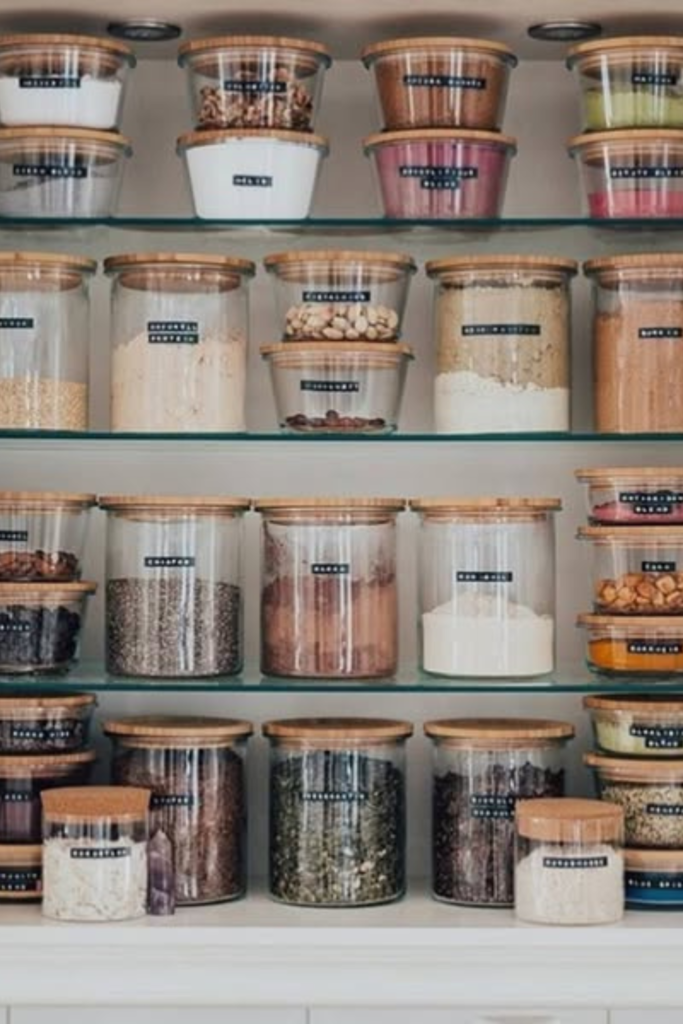
Herb-Forward Storage
Herbs spoil fast when they get buried behind containers. This fridge keeps them alive longer by giving greens a visible.
Standing the herbs upright in jars with a little water and placing them on an upper shelf or in a door bin, keep leaves loose.
Door and top lighting hit this area directly, making wilting obvious early and helping you use herbs before they turn slimy.
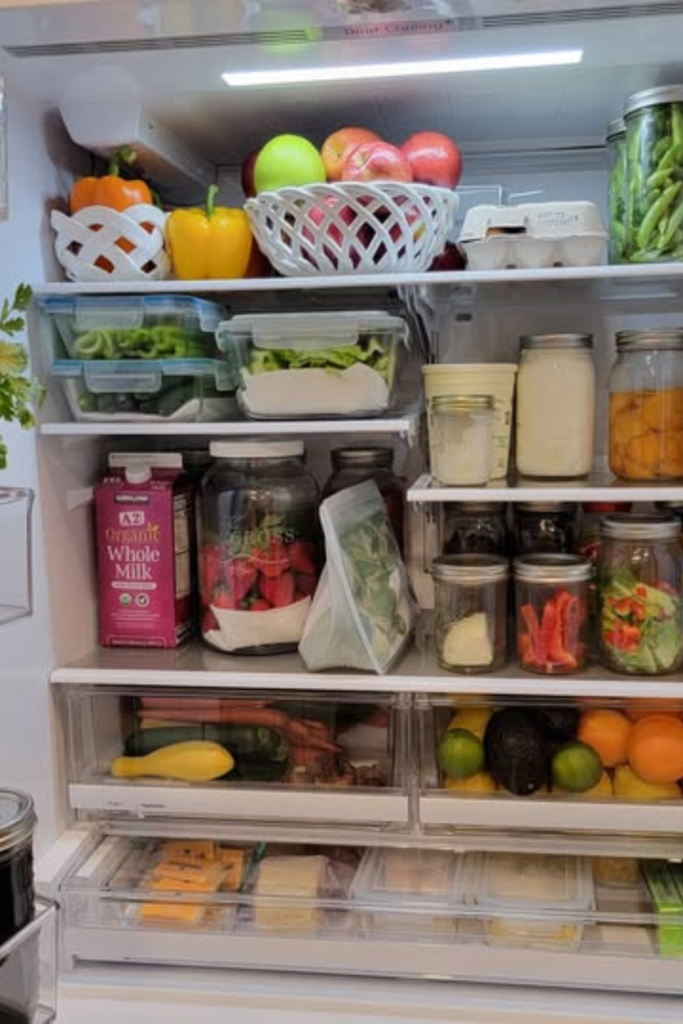
Open Shelf Balance
Visual breathing room keeps food from getting ignored. This fridge works because shelves aren’t packed wall to wall.
Every item has space to stand out and get used, editing down what stays inside and spacing items with trays or bowls.
Keep taller items back and lower in front. Wide shelves paired with strong top lighting evenly spread light, making the fridge feel calm.
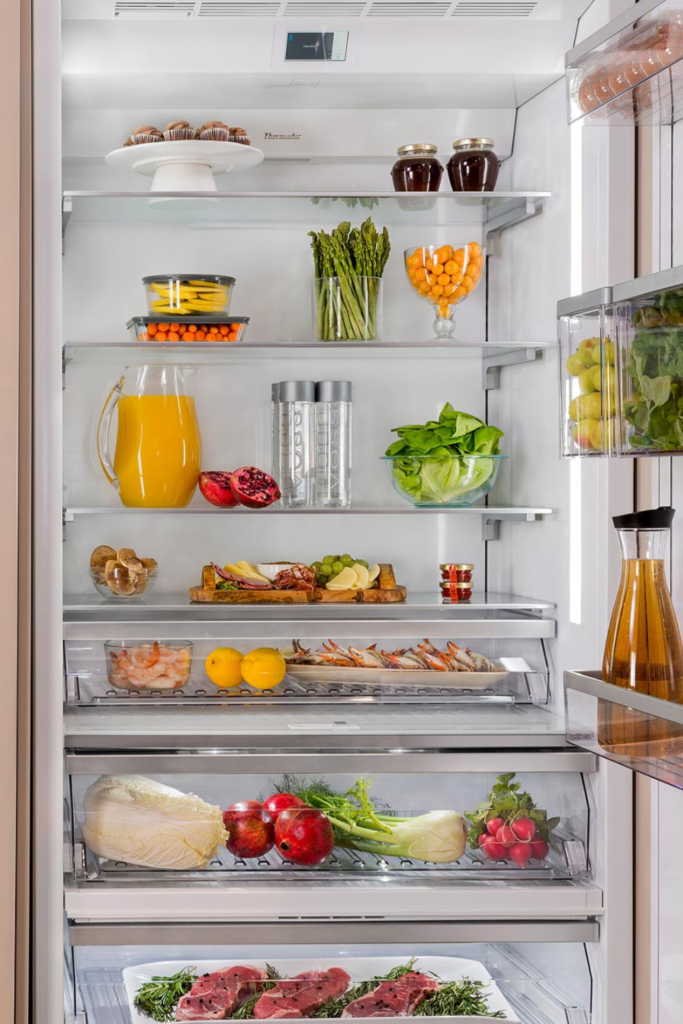
Category-by-Fridge Setup
Overflow happens when one fridge tries to do everything. Assigning zones for daily drinks, meal prep, snacks, and backups.
This setup works because food is split by purpose across multiple compartments, so nothing gets buried or forgotten.
Strong interior lighting in each section keeps categories clear and prevents overbuying what you already have.
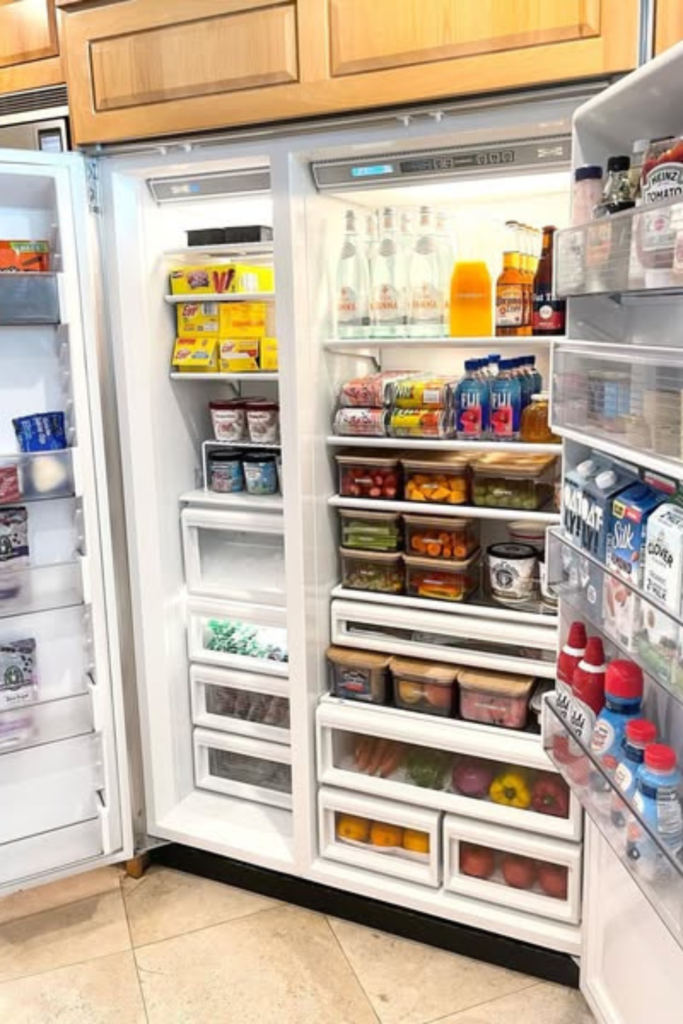
Bowl-and-Jar Mix
Flat containers aren’t always the best answer. This fridge uses bowls and jars to keep snacks and produce visible.
Recreate this by placing ready-to-eat fruit or snacks in open bowls and storing prepped items in sealed jars behind them.
Open shelves paired with top lighting highlight colors and textures, making food feel inviting and harder to forget.
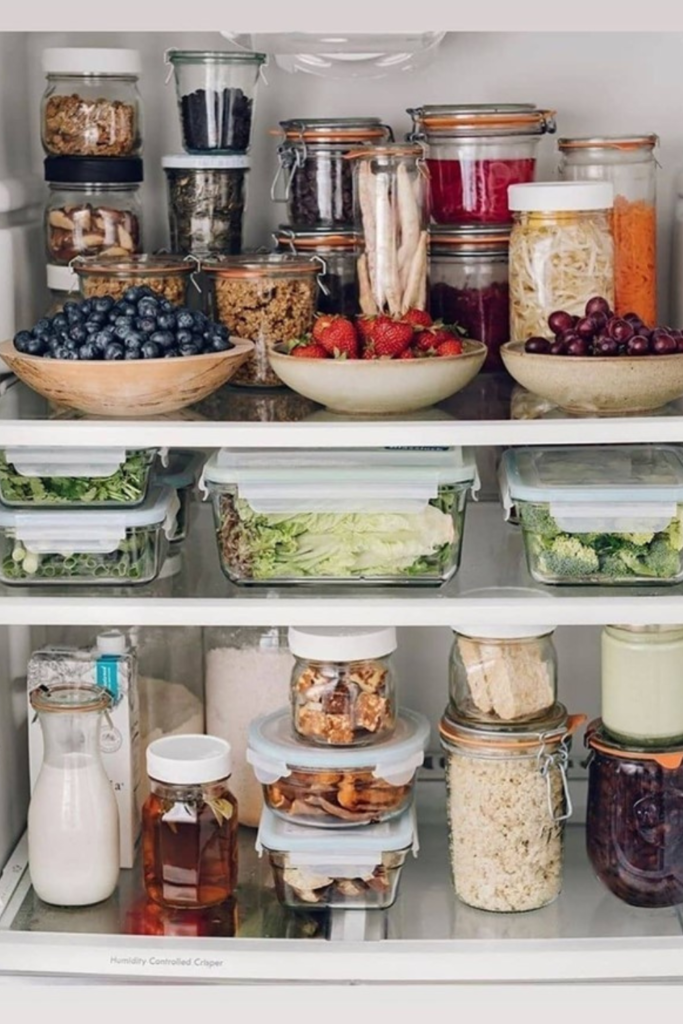
Color-Coded Produce
Color tells you what needs attention first, works best because fruits and vegetables are grouped by type and color.
Making ripeness and freshness easy to judge at a glance. Use clear bins and dedicating each one to a single produce group.
Keep frequently eaten produce at eye level. Bright interior lighting amplifies natural colors, helping you spot soft spots.
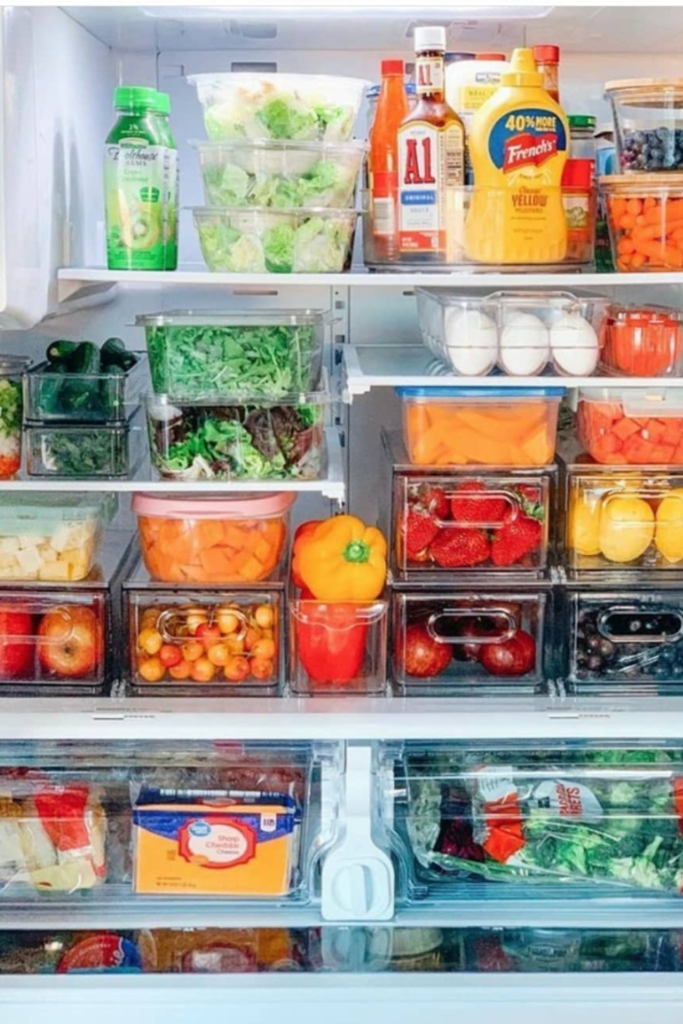
Label-First Storage
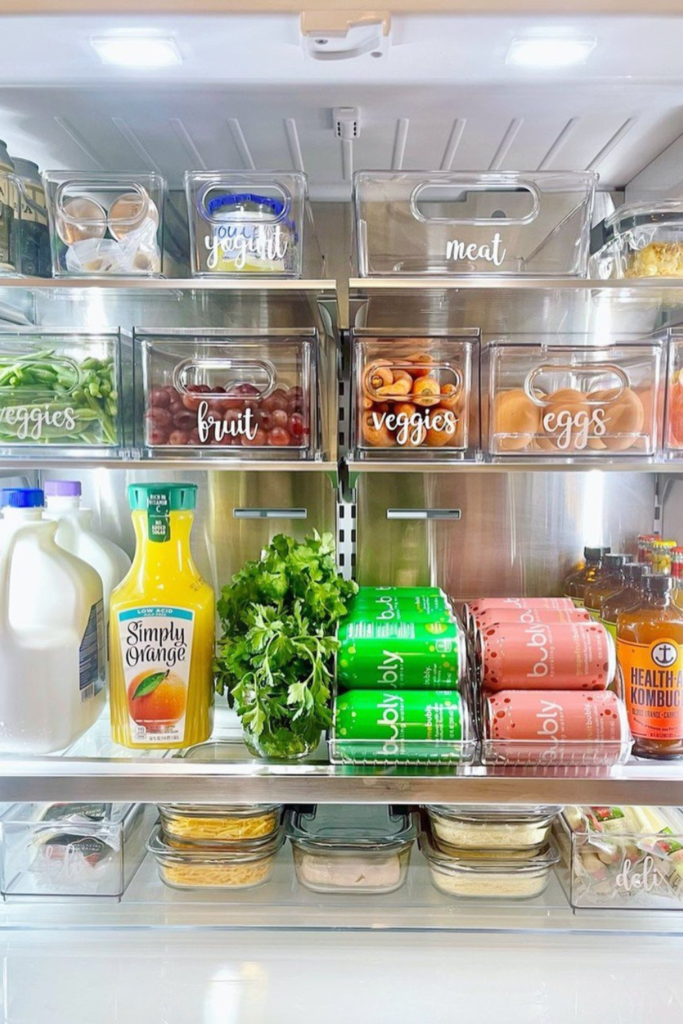
This fridge stays organized because every bin is labeled clearly, so food always goes back to the same spot.
Use clear containers and labeling by food type, not brand. Keep daily-use items like yogurt, fruit, and eggs at eye level.
Bright top- and side-lighting make labels instantly readable and expose misplaced items before clutter spreads.
Shelf-by-Shelf Logic
Random placement makes food disappear, works because every shelf has a clear job, so items get used in the right order.
Grouping food by how often you reach for it ready-to-eat meals. Use clear containers and simple labels to reinforce the system.
Even top-down fridge lighting spreads evenly, keeping everything visible and preventing forgotten food from hiding in the back.
Produce Grid Layout
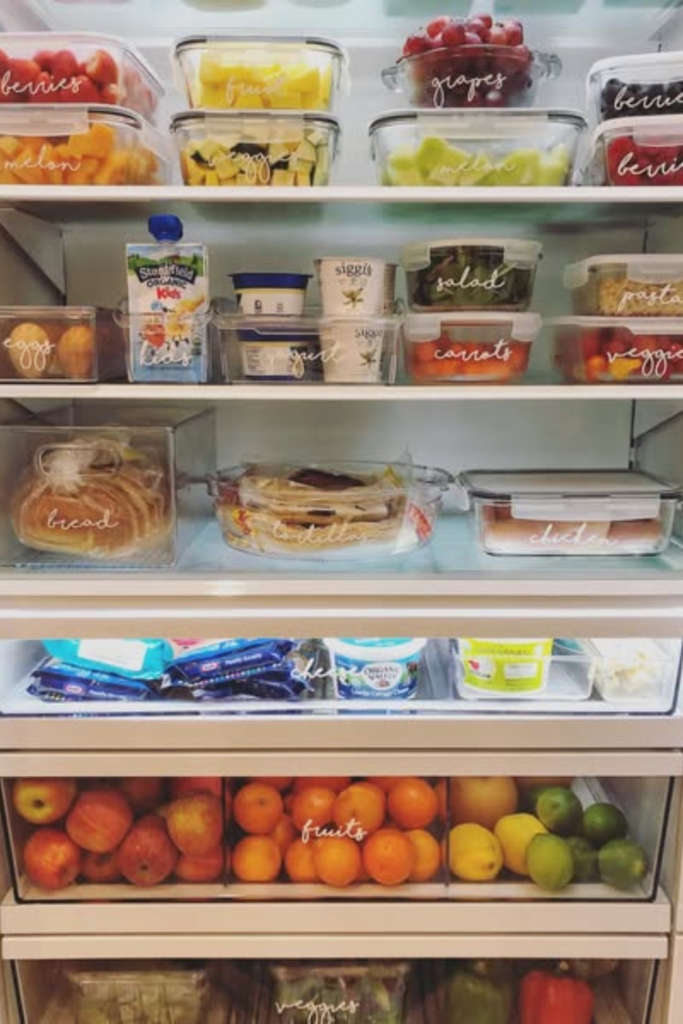
This fridge avoids that by giving each produce type its own bin, so airflow stays consistent and ripening stays predictable.
Recreate this by lining identical clear bins side by side and dedicating one item per bin apples, citrus, berries, greens.
Wide shelves plus strong overhead lighting highlight color differences, making it easy to spot what needs to be eaten first.
Freshness Flow Shelves
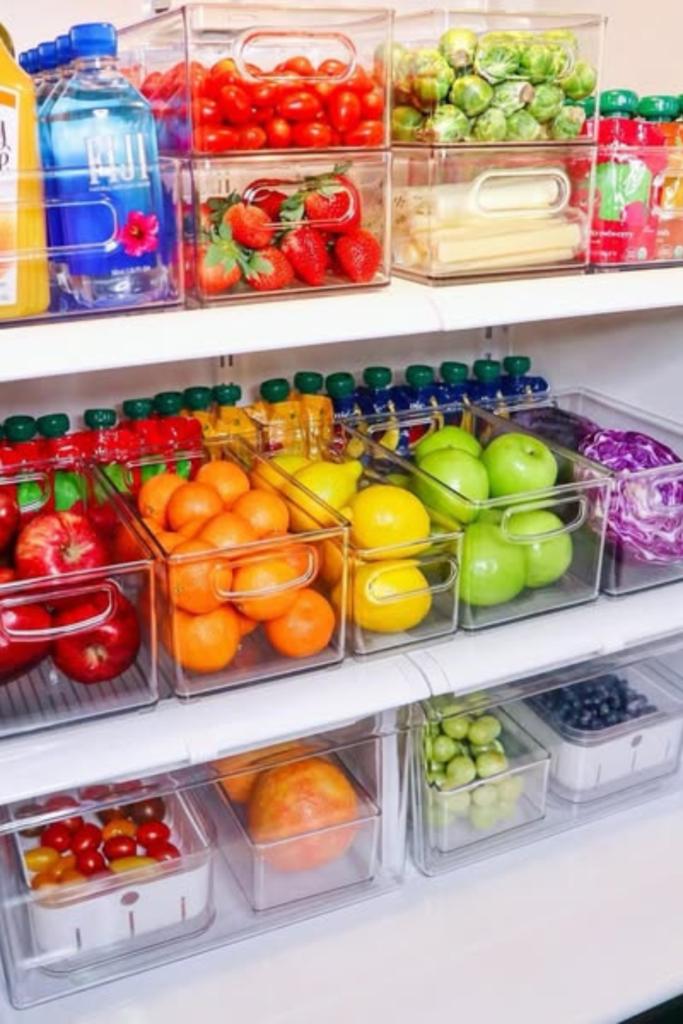
Food lasts longer here because everything moves in a clear, orderly manner. Put items you need to eat soon at eye level.
Fresh produce and ready-to-eat items sit at the top, cooked meals stay in the center, and backups live at the bottom.
Clear containers keep transitions visible, while strong top and side lighting highlights labels and colors, nothing gets forgotten.
Grab-and-Go Center
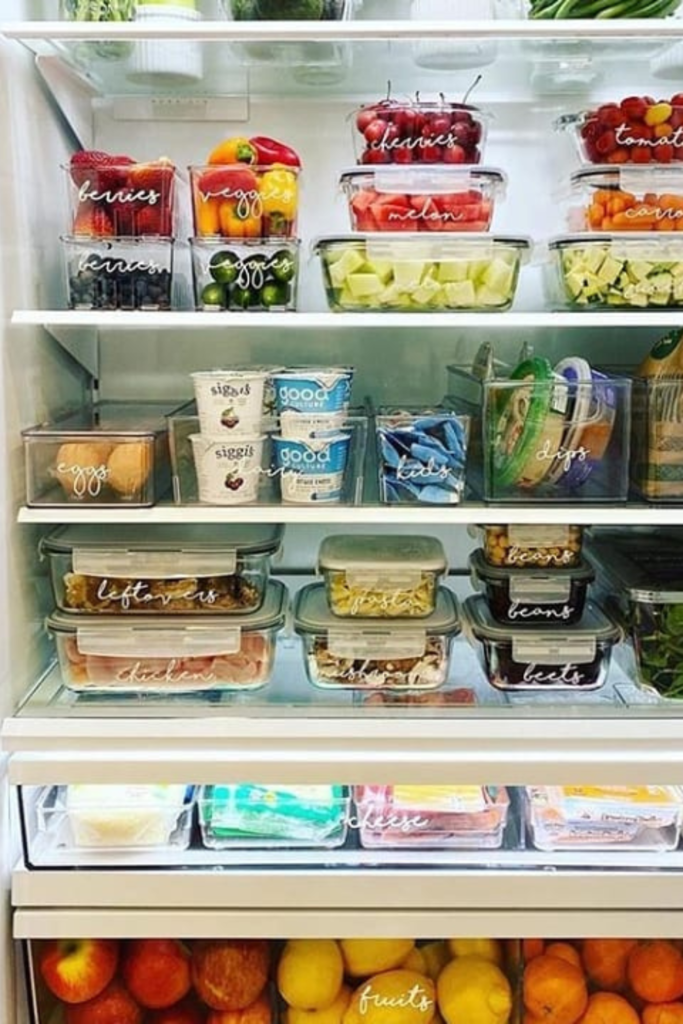
Busy days need food that’s easy to reach, this setup works for reserving your center shelf for daily-use items only.
Keeping them in clear, low containers. Avoid stacking more than two layers. Bright central lighting illuminates this zone directly.
Making labels readable and keeping frequently used food front and center rather than forgotten behind taller items.
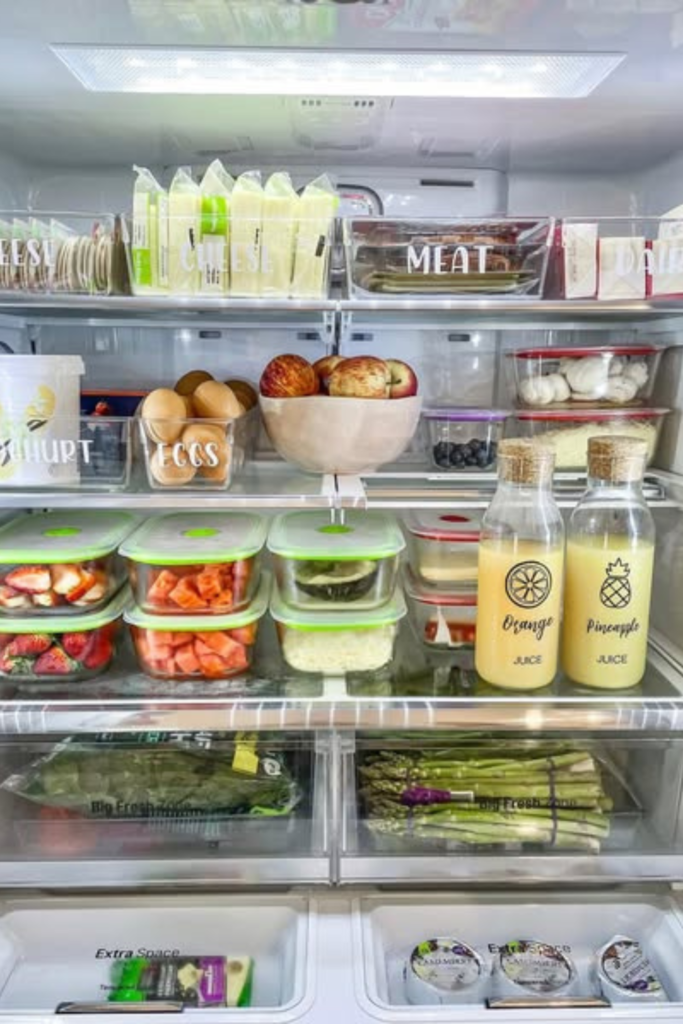
Meal-Prep Display
Prepared meals only get eaten when they’re easy to see and easy to grab. Use uniform containers for meal prep and lining them up.
This works because prepped bowls, salads, and snacks are stored in matching containers, nothing feels hidden or forgotten.
Keep lids consistent and portions visible. Strong top lighting highlights layers inside jars and bowls, making food look appealing.
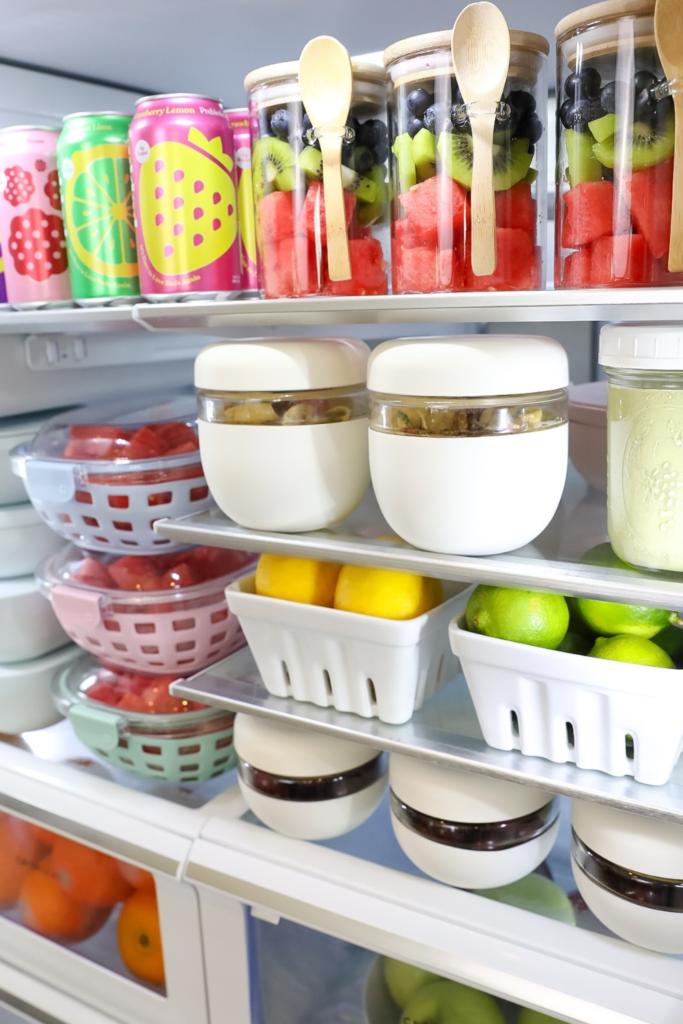
Balanced Shelf Heights
Food gets forgotten when tall items block everything behind them. Use low bins for produce and shallow bins for snacks and dairy.
Recreate this by adjusting the shelves to fit the containers snugly and keeping taller items toward the sides rather than the center.
Even top lighting spreads across the open space here, keeping every shelf bright and making scanning the fridge quick.
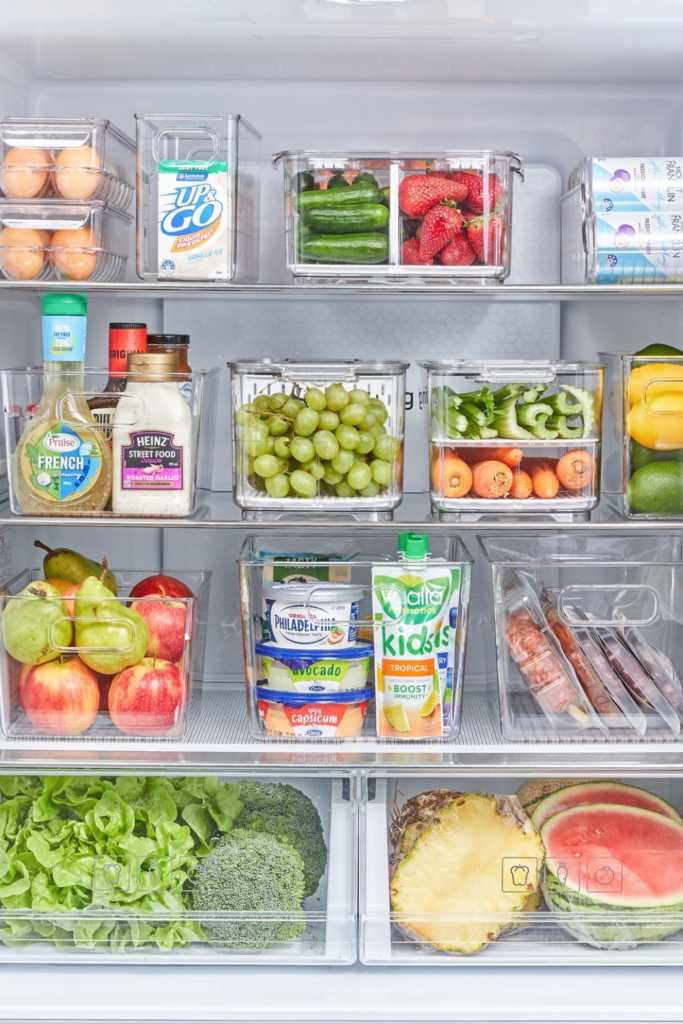
Container-Only Rule
Loose packaging creates clutter fast. Transferring leftovers, cut produce, and open items into matching containers.
This fridge stays under control because everything lives in a container, shapes stack cleanly, and spills stay contained.
Keep containers shallow so food stays visible and accessible. Strong overhead lighting reflects off clear lids and glass shelves.
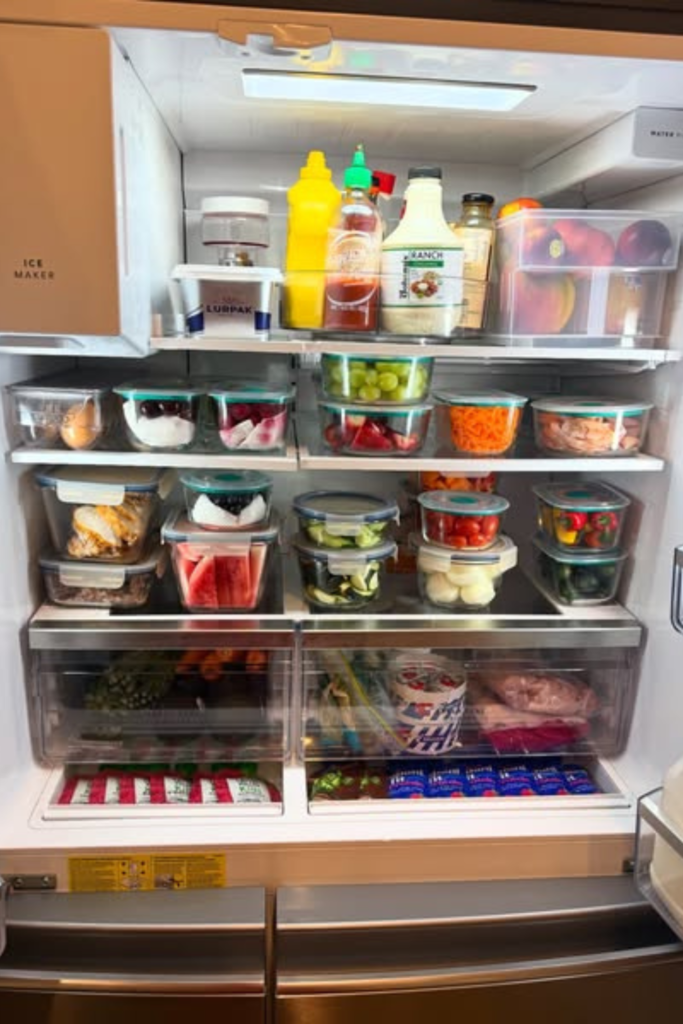
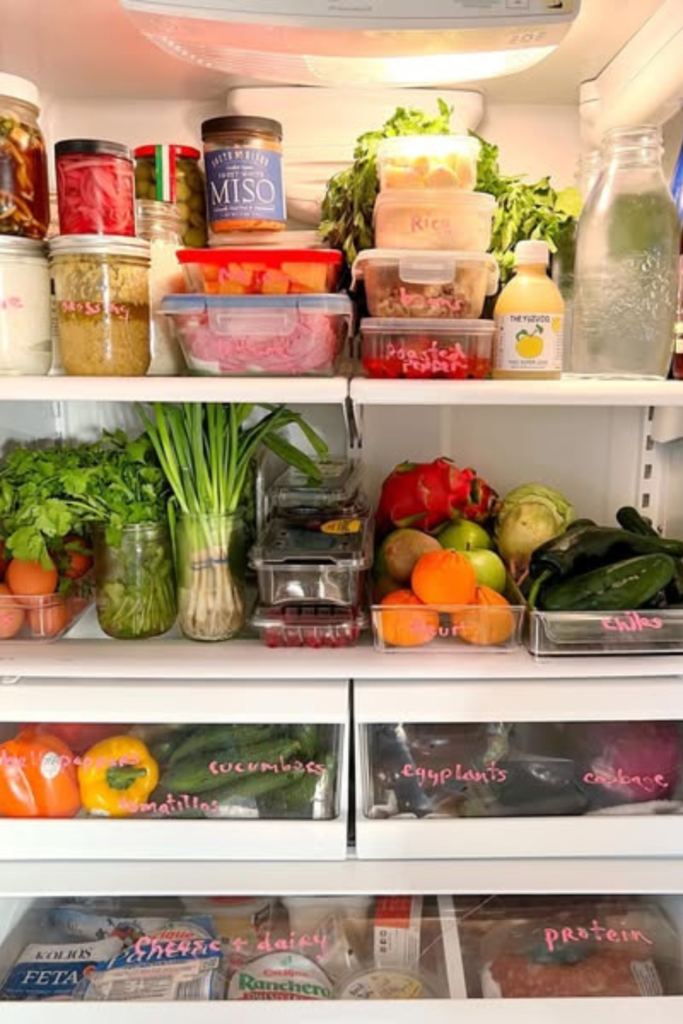
Chalk-Labeled Drawers
Forgetting what’s inside drawers leads to wasted produce, this fixes that by labeling drawers, you know what lives.
Use chalk labels, tape, or removable tags on clear drawers, and group produce by type. Keep heavier vegetables lower.
Lighter items above to avoid crushing. Drawer-level lighting shines upward through clear fronts, making labels readable.
Tiered Access Rows
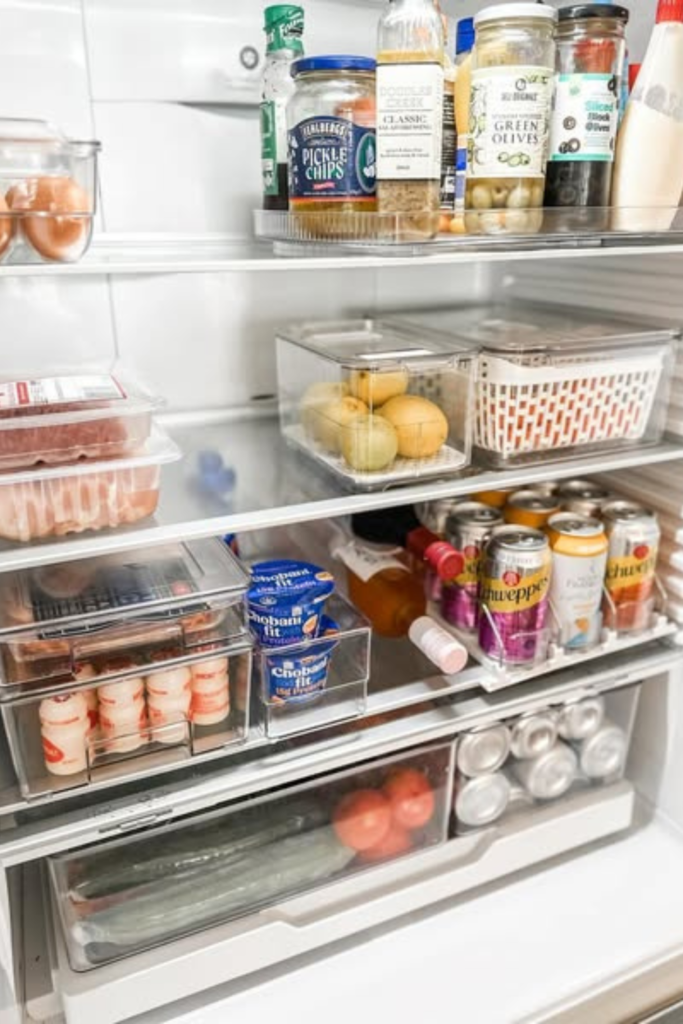
Food gets ignored when everything sits on the same plane. Placing low bins at the front and taller containers toward the back.
Keeping sightlines open. Use narrow bins for snacks and canned goods to prevent clutter. Use shelf-level lighting.
Making scanning fast and helping you grab older items before newer ones are pushed forward, this setup works best.
Prep-Forward Fridge
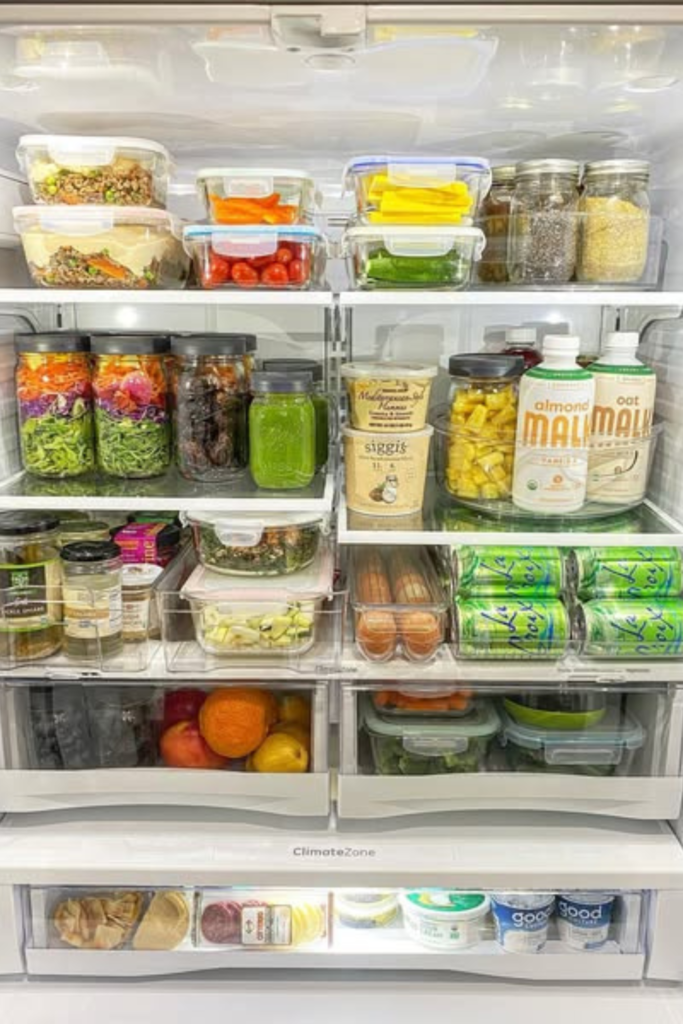
Cooking feels easier when ingredients are ready before you need them. Prepping once, then storing ingredients in clear containers.
This fridge works because chopped vegetables, cooked grains, and washed greens are stored front and center, not buried in drawers.
Bright interior lighting reflects through glass jars, making colors pop and reminding you to use prepped food.
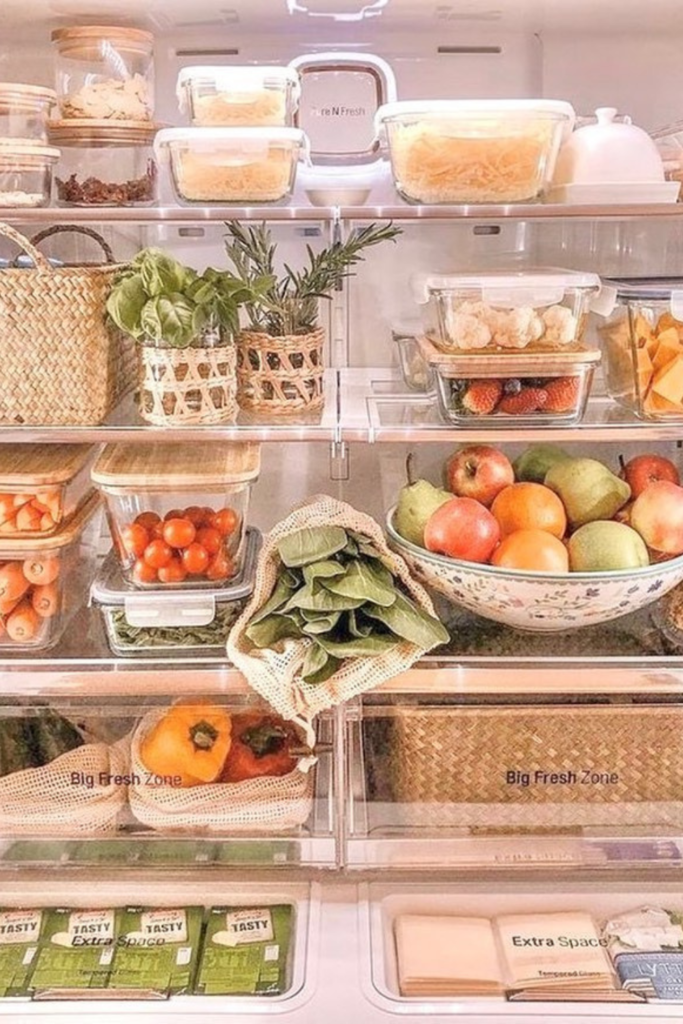
Natural Material Zones
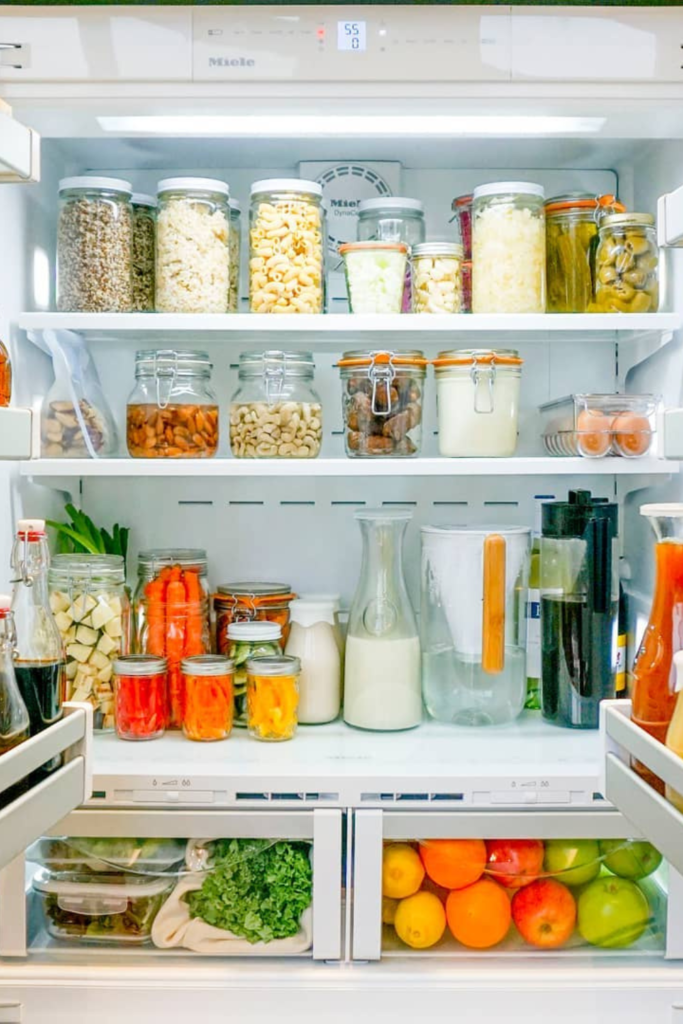
Hard plastic isn’t the only way to organize a fridge, this works best. Use woven baskets for produce, open bowls for fruit.
Mesh bags for greens that need breathing room. Keep these on the middle shelves where the temperature stays stable.
Soft overhead lighting reflects off light-colored materials, creating contrast that makes produce stand out and use fresh items.
Door-Side Containment
Doors turn chaotic when loose bottles tip and crowd each other, fixes that by using bins to corral condiments and drinks.
Grouping bottles by type and height in clear door bins, rather than lining them up individually. Keep daily-use sauces at eye level.
Door-mounted lighting hits this area directly, and clear bins let light pass through, making labels readable and accessible.
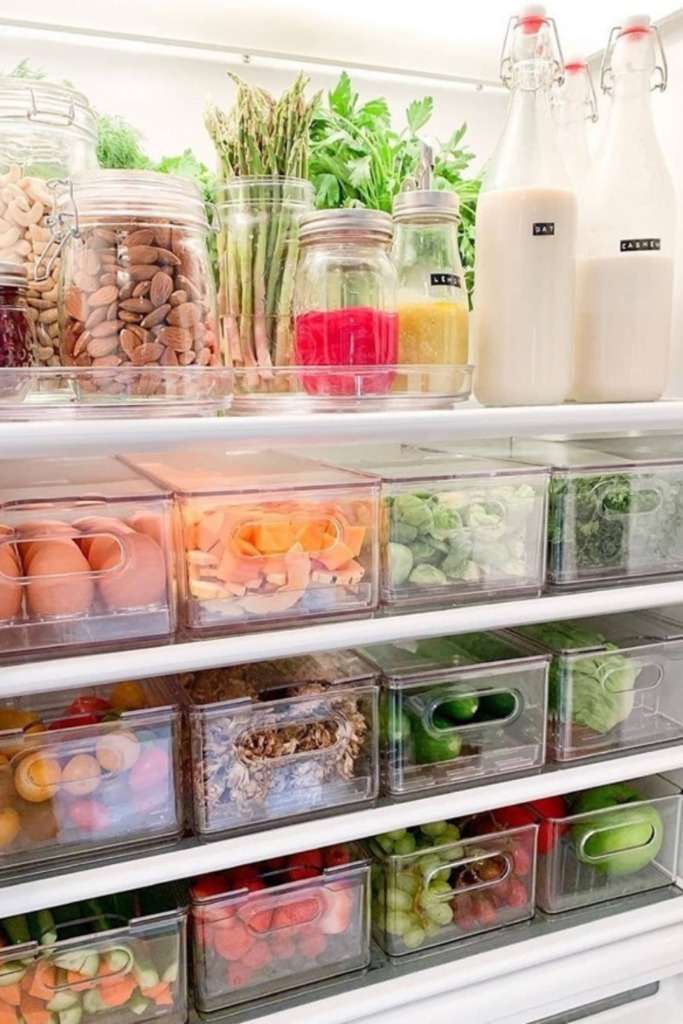
Top-Shelf Fresh Prep
This fridge works because herbs, soaked nuts, fresh juices, and prep items sit on the top shelf, which keeps them in constant rotation.
Recreate this by reserving your highest shelf for daily prep essentials and storing them in clear jars or bottles with tight lids.
Keep taller bottles toward the sides to avoid blocking views. Strong top lighting hits this shelf directly, highlighting freshness.
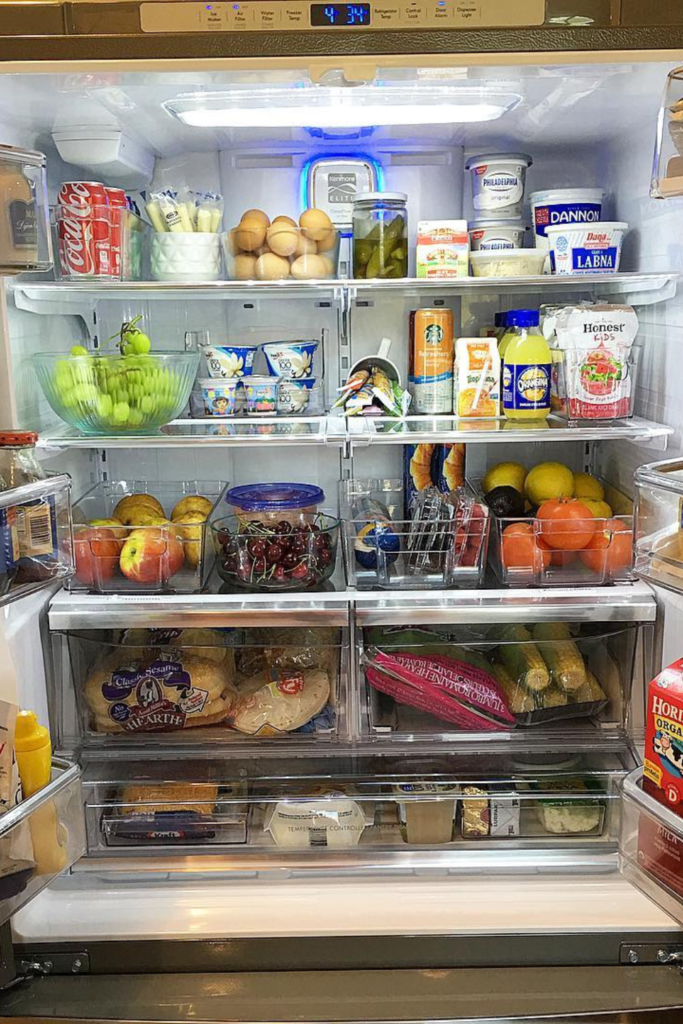
Pantry-Style Fridge
Too many half-open packages create visual noise and wasted food. Transferring grains, nuts, sauces into sealed glass jars.
Grouping them by use. Keep frequently used jars at eye level, works best because everything is decanted into jars.
Strong interior lighting reflects off glass surfaces, keeping shelves bright and making it easy to spot low quantities.
FAQs
How often should I reorganize my fridge?
Reorganizing doesn’t mean starting from scratch every time. A quick weekly reset works best. While putting groceries away, pull older items forward.
Move newer ones to the back. Wipe obvious spills as they happen instead of deep-cleaning often. If food has a clear place, staying organized becomes part of daily use.
Do clear containers really help food last longer?
Clear containers don’t magically extend shelf life, but they change behavior. When you can see food, you use it sooner. That alone reduces waste.
Airtight clear containers also slow moisture loss and protect produce from fridge odors.
If food is sealed, visible, and easy to grab, it gets eaten before it has time to spoil.
You may like to read!
- 26 Dresser Organization Ideas
- 24 Family Organization Wall
- 22 Junk Drawer Organization
- 26 Snack Organization Ideas
- 20 Nail and Screw Organization

Fasial is the founder of the Fizzy Flare. He has been a passionate blogger since 2021. He ran three different websites in the past few years. Now he is focusing on Fizzy Flare to build an audience and help them organize their life.