24 Family Organization Wall Ideas For 2026
This post may contain affiliate links: full affiliate disclosure.
Every day begins with a familiar scramble. You are late, someone shoes are MIA and a crucial assignment is nowhere to be found.
And just as you’re about to leave, a child pipes up, “You never mentioned this.” You did, of course but it was buried in a text stuck to the fridge, or lost in a mountain of paperwork.
The real issue. Your family lacks a centralized hub for essential information. A family organization wall can solve that.
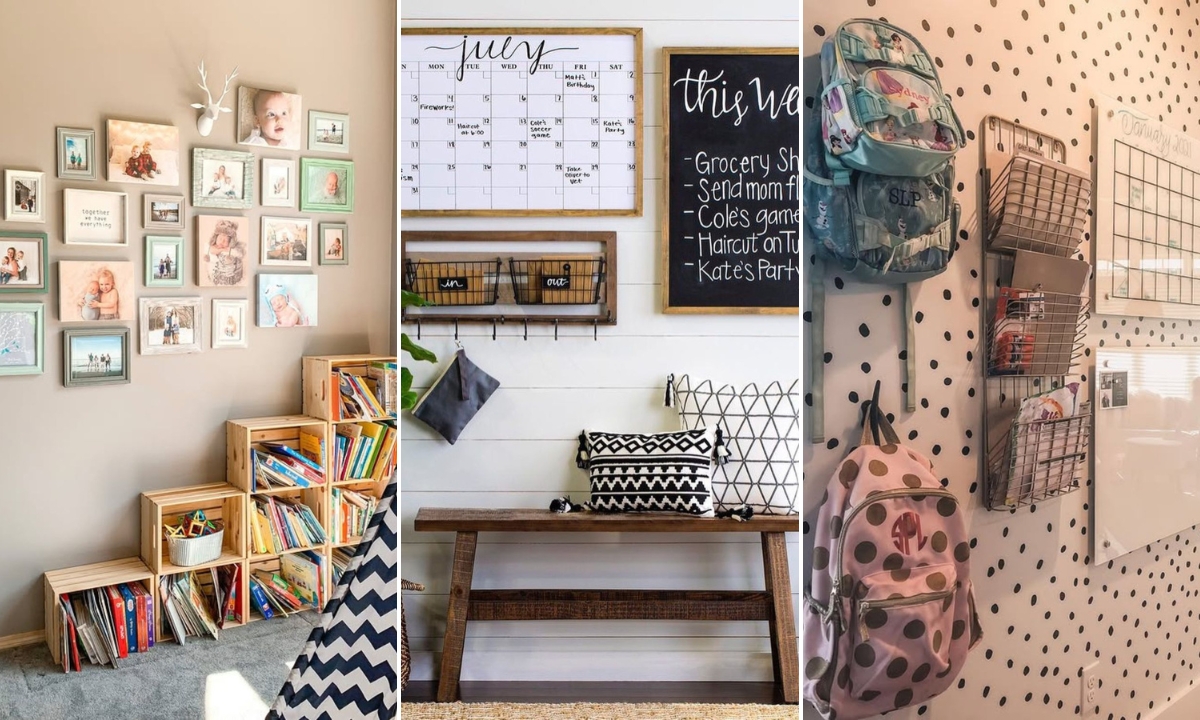
This article highlights 24 Family Organization Wall Ideas that turn messy spaces into functional ones in 2026.
Contents
- 1 Where Is The Best Place To Set Up A Family Organization Wall?
- 2 How Can A Family Organization Wall Work In Small Homes Or Apartments?
- 2.1 Memory Grid
- 2.2 Backpack Zone
- 2.3 Entry Lockers
- 2.4 Supply Wall
- 2.5 Study Stations
- 2.6 Weekly Hub
- 2.7 Drop Station
- 2.8 Reading Corner
- 2.9 Craft Command
- 2.10 Shared Workspace
- 2.11 Book Display
- 2.12 Gear Gallery
- 2.13 Quiet Nook
- 2.14 Shelf Focus
- 2.15 Catchall Console
- 2.16 Visual Anchor
- 2.17 Floating Layers
- 2.18 Wall Library
- 2.19 Signal Board
- 2.20 Rotation Rail
- 2.21 Routine Ladder
- 2.22 Tech Parking
- 2.23 Decision Strip
- 2.24 Memory Inbox
- 3 FAQs
Where Is The Best Place To Set Up A Family Organization Wall?
The ideal spot? Right where your family already spends their time, day in and day out. If you stash it away in a seldom-used room, it’ll be ignored.
Families tend to have the most success with calendars and reminders in the kitchen, near the refrigerator, or along the main path everyone takes in the morning.
If you want people to actually look at the calendar, it needs to be at eye level, not hidden away.
To prevent papers from accumulating, the wall needs to be close to where the mail and school bags end up. Visibility trumps perfection every time.
Save this article for later! 👇👇
How Can A Family Organization Wall Work In Small Homes Or Apartments?
A cramped area isn’t the problem it’s poor positioning. When wall space is limited, think vertically. Go up, not out.
A slim strip by the door, the side of a cabinet, or even the inside of a pantry can be effective, provided it’s in a spot people see regularly.
Keep things straightforward. Overloading a small space with too many sections will likely lead to it being ignored.
Begin with a single calendar and a single paper holder. Once those are in place and functioning, you can expand.
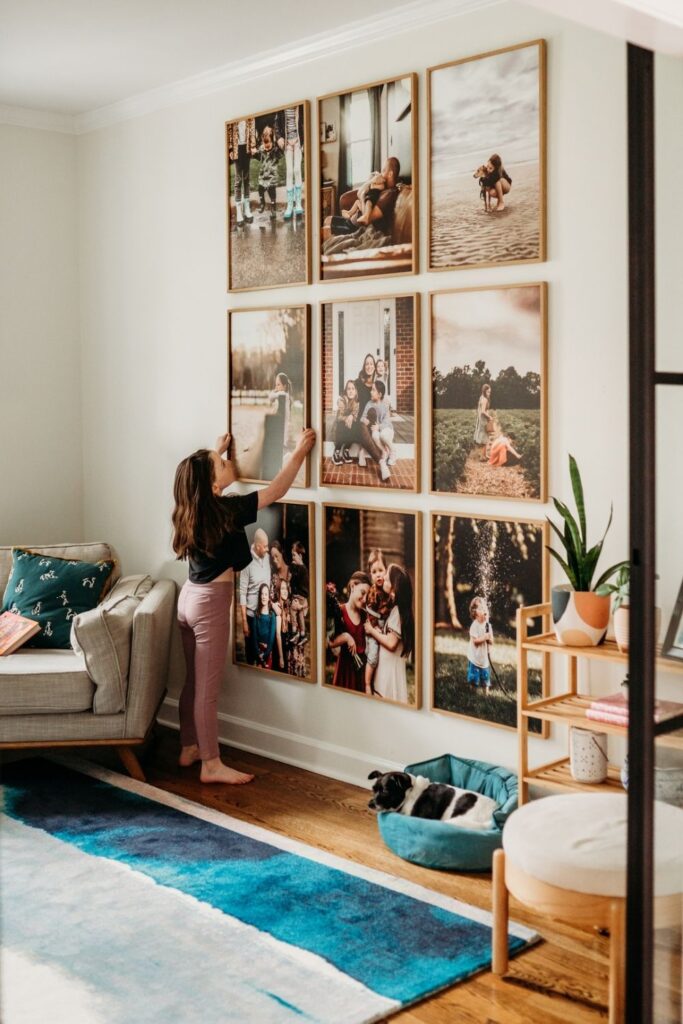
Memory Grid
Daily life feels calmer when family moments live in one clear place instead of scattered frames around the house.
A photo grid, such as this, thrives in spaces like living rooms or hallways, places with frequent foot traffic.
To maintain a sense of order, rather than chaos, use identical frames. Before you begin, measure the spacing; then, hang the photos row by row.
Backpack Zone
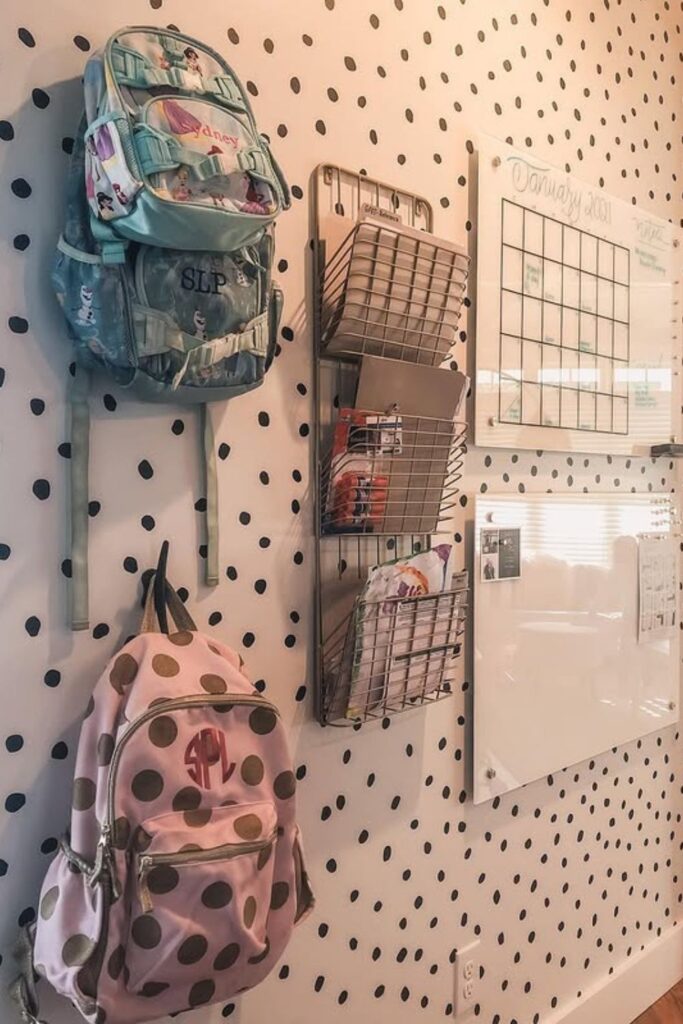
Morning runs smoother when school bags live off the floor and in plain sight. Wall hooks at kid height turn drop-and-go into a habit, not a reminder.
Pairing them with wire baskets helps keep homework, library books, and forms from vanishing into the abyss of backpacks.
A dry-erase calendar, conveniently placed nearby, keeps school dates front and center as bags are being packed, which, in turn, reduces those frantic moments right before leaving.
Entry Lockers
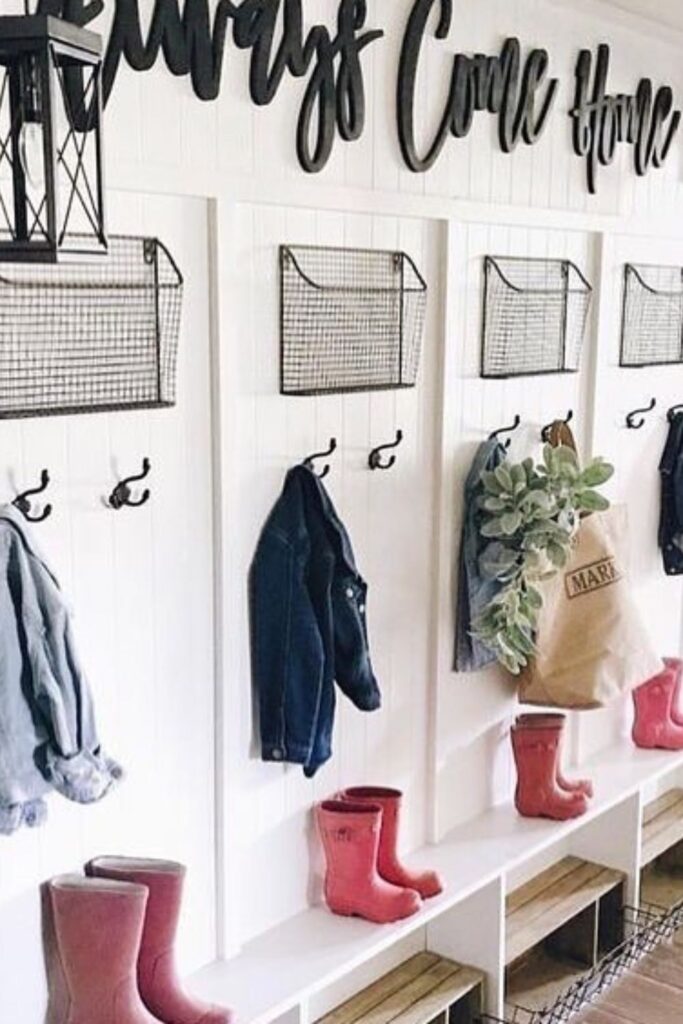
Mornings stay calmer once everyone owns a clear drop spot. Individual hooks stop jackets from stacking.
Wire baskets corral hats, gloves and stray school supplies, preventing them from going missing.
A bench underneath encourages kids to stow their shoes, rather than leaving them strewn about.
Supply Wall
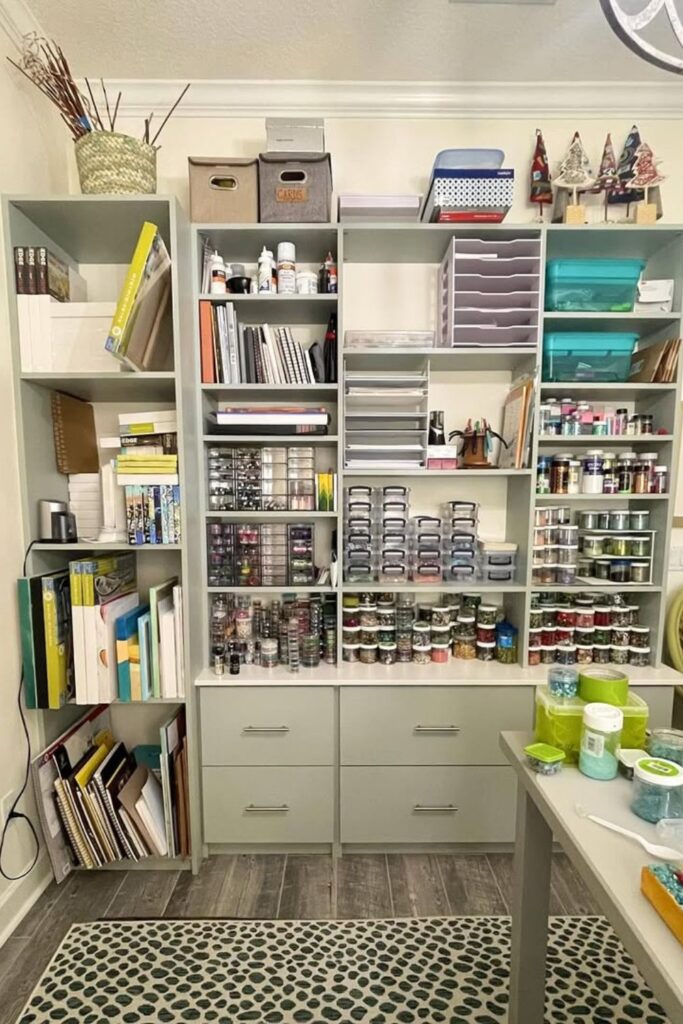
Creative chaos disappears once every item earns a visible home. Floor-to-ceiling shelves work best in playrooms.
Shared craft corners tend to see materials vanish quickly. Transparent containers help everyone see what running out and what needs to be put away.
Organizing items by activity, rather than size makes tidying up feel effortless, rather than a chore, when the day’s done.
Study Stations
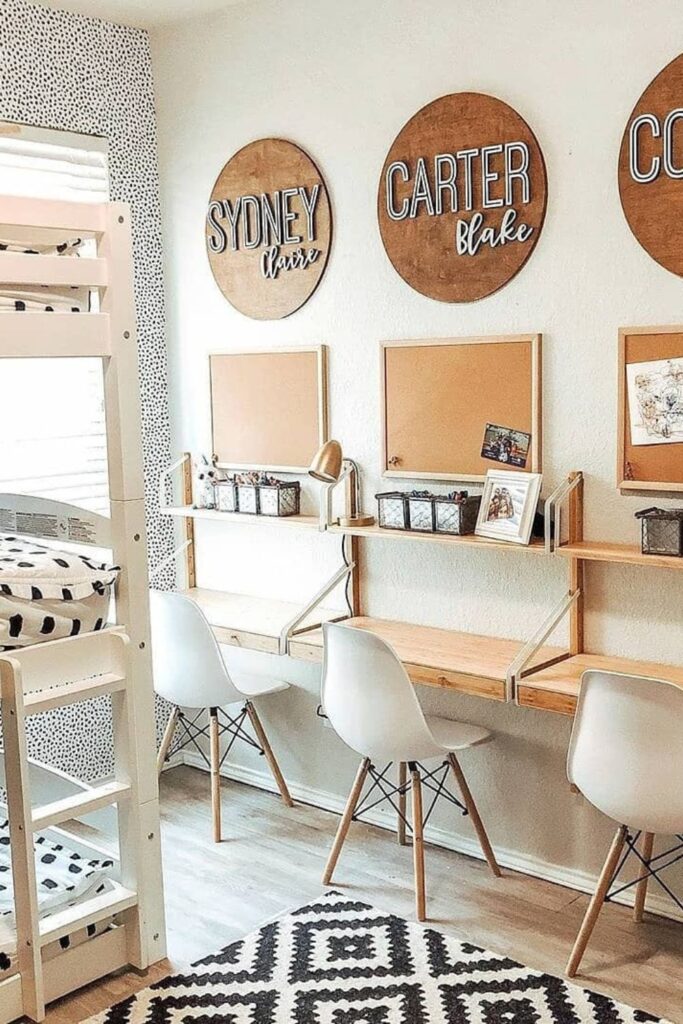
Names on the wall change how kids treat their space. A dedicated desk for each child removes daily arguments about supplies and territory.
Wall-mounted workstations are a boon for shared bedrooms, freeing up floor space. Above each desk, cork boards provide a designated place for homework and artwork.
Preventing them from becoming scattered throughout the house. To ensure fairness and simplify upkeep, keep the storage consistent across the board.
Weekly Hub
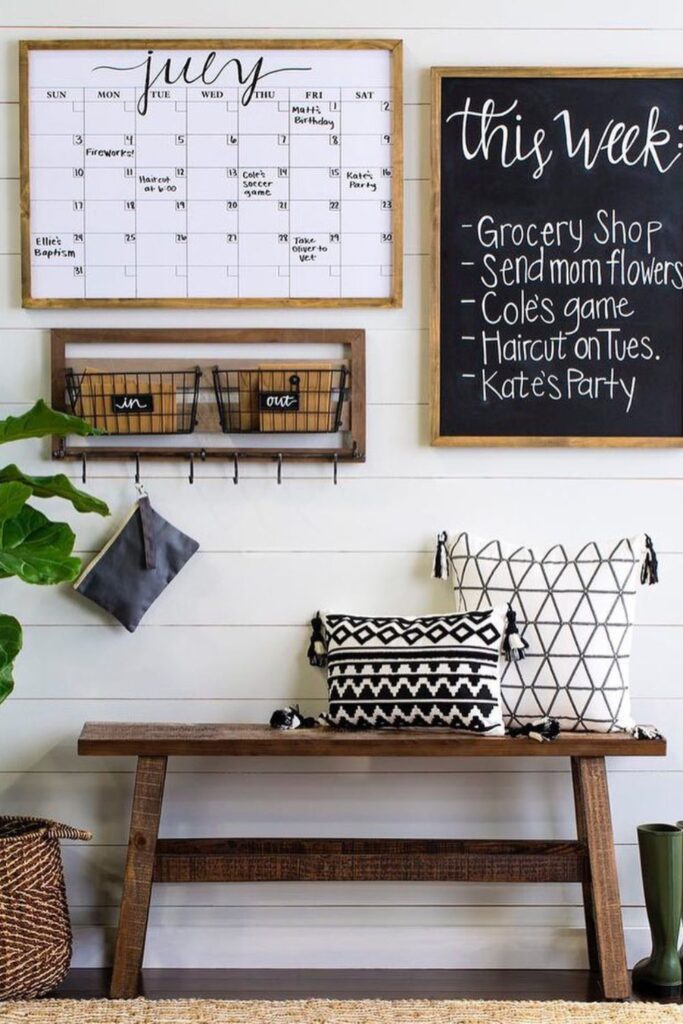
Life gets quieter once plans stop living in your head. A monthly calendar handles big dates while a separate weekly board keeps daily tasks from getting lost.
Mail baskets provide a clear path for papers and preventing them from simply accumulating on the table.
They are most effective positioned near an entryway or kitchen wall places where people like to stop anyway. This way, updates occur effortlessly.
Drop Station
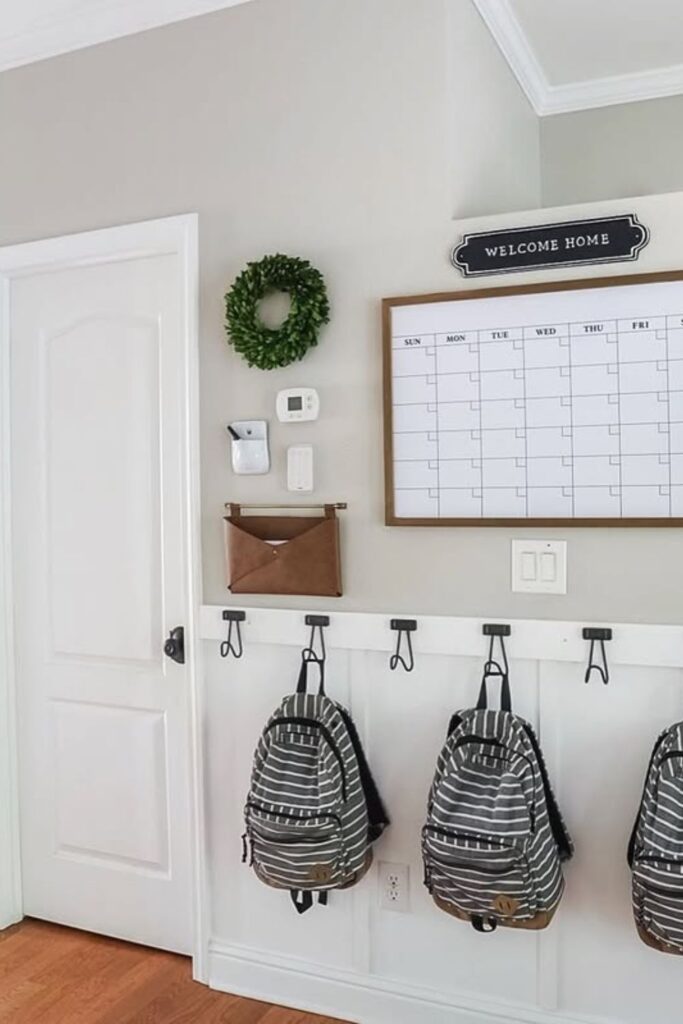
Coming home feels easier when everything lands in the same place. Backpacks hanging in a straight line stop floor piles before they start.
A wall calendar, prominently displayed ensures tomorrow agenda is always in sight as you enter. This setup is most effective at the front door or a mudroom wall.
Begin by installing robust hooks and then hang the calendar. This way your daily routines will and naturally align with its presence.
Reading Corner
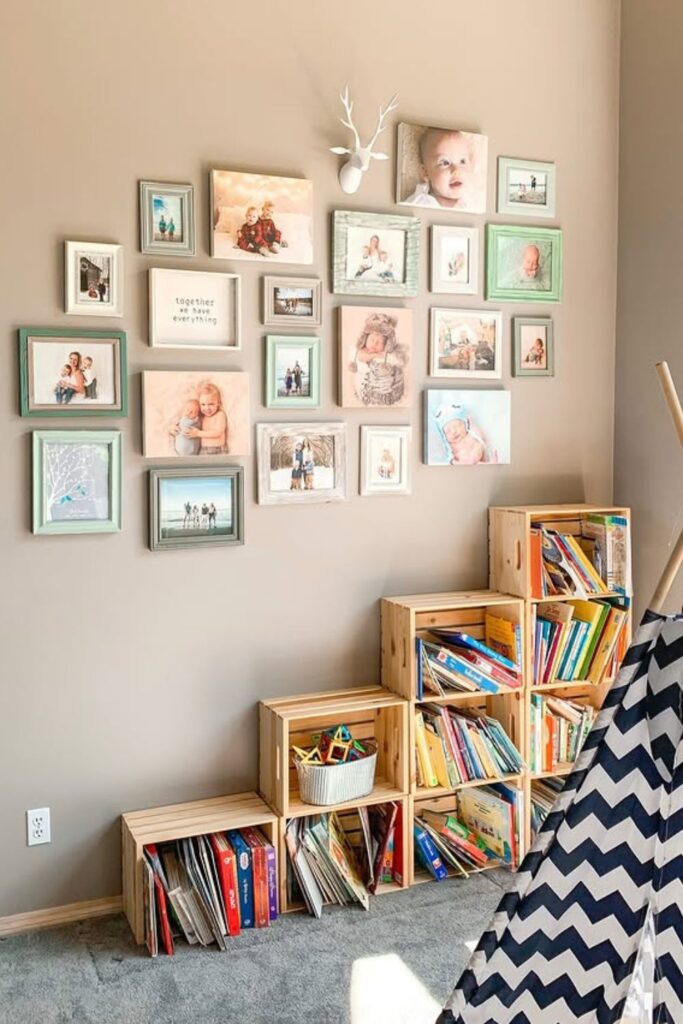
Books stop spilling everywhere once kids can reach them without help. Low wooden crates create and flexible storage that works along the playroom or bedroom walls.
Organizing books by size simplifies both reading through them and tidying up. Adding a photo wall above.
Which utilizes vertical space without contributing to a sense of disorder, gives the corner a deliberate, rather than haphazard, appearance.
Craft Command
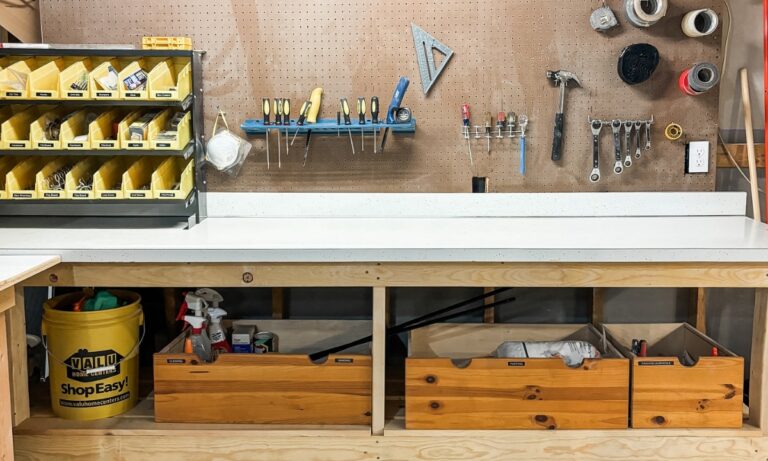
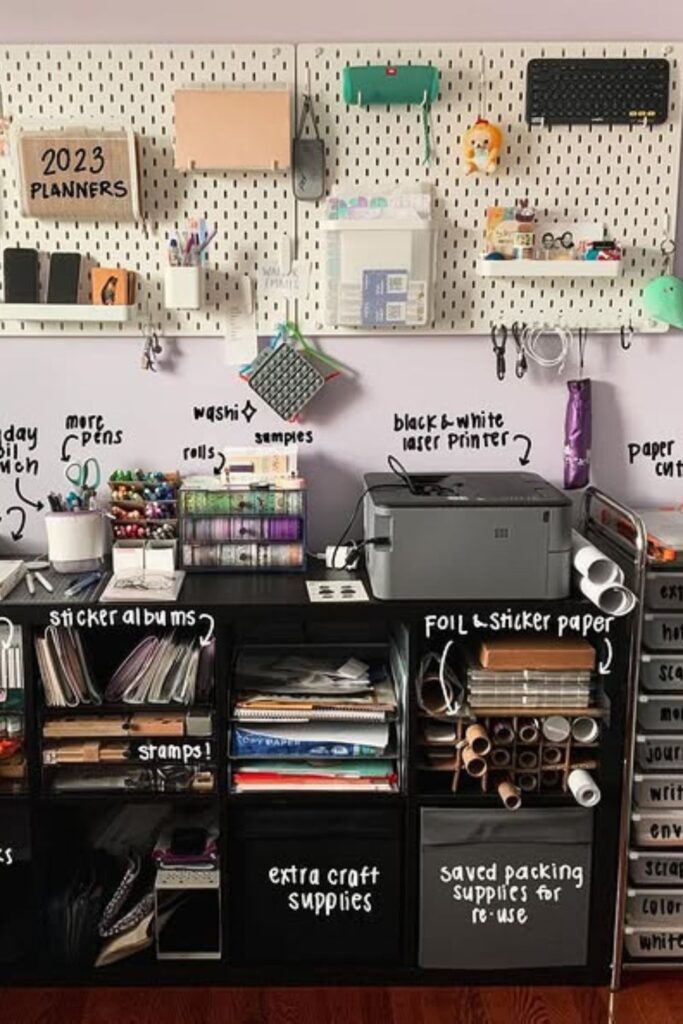
Mess stays manageable once every tool answers one question where does it go back. A pegboard like this works best in a family room, spare corner, or shared office.
Projects tend to get messy. Labels eliminate uncertainty, making cleanup quicker and preventing supplies from wandering off.
Begin by placing commonly used equipment on the board itself then designate boxes under neath for the less frequently used items keeping the workspace uncluttered.
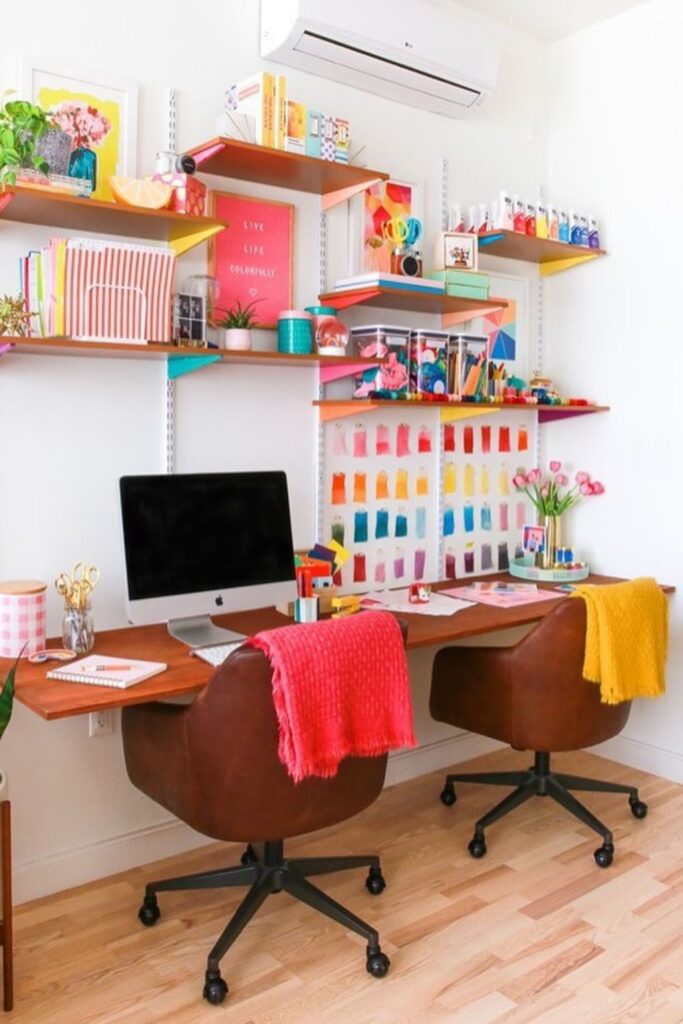
Focus improves when work zones feel intentional instead of improvised. Wall mounted shelves pull supplies off the desk.
This arrangement maintains the workspace functional. Open containers allow for quick access to tools eliminating the need to rummage around.
Its an ideal solution for home offices or study areas shared by two people and providing organization without feeling cramped.
Book Display
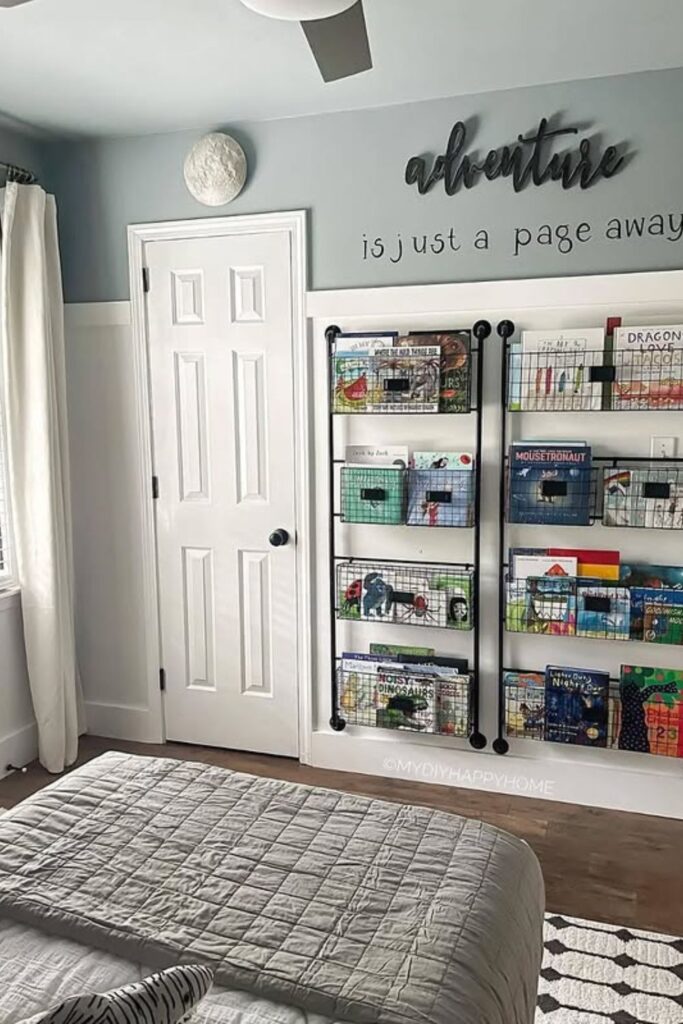
Reading sticks when books stay visible instead of hidden in bins. Wall-mounted racks like these turn covers into an invitation.
This approach is particularly effective in childrens bed rooms or cozy reading corners.
Organizing books by subject or size simplifies selection and speeds up tidying. Position the racks at a height accessible to youngsters encouraging independent book retrieval.
Gear Gallery
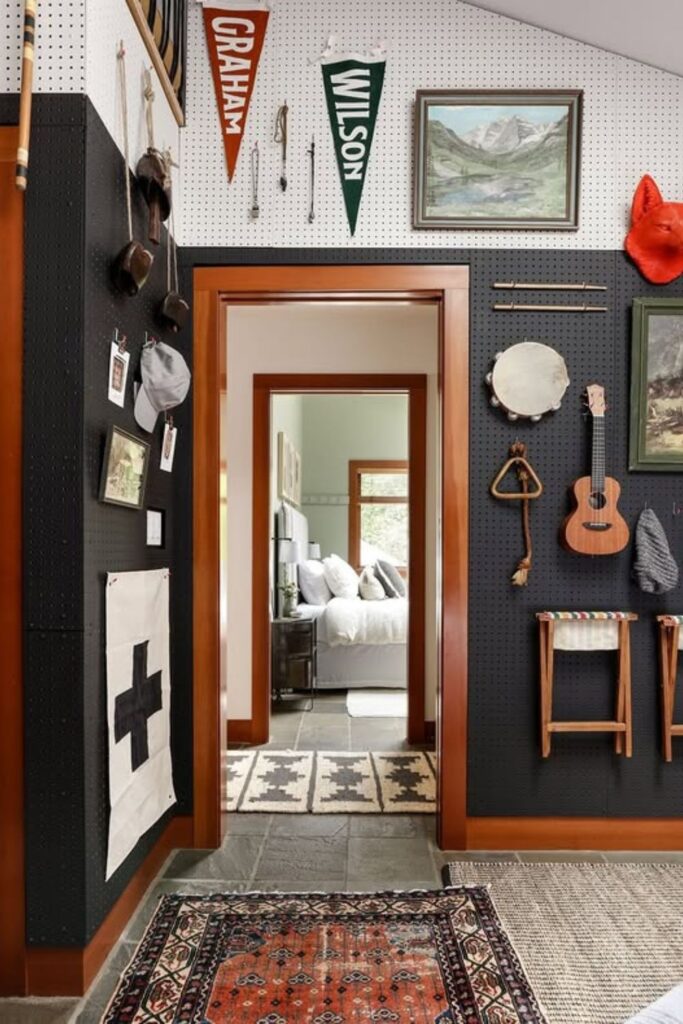
Belongings stop drifting once the wall does the heavy lifting. A full pegboard turns awkward items hats instruments.
Keepsakes into easy grabs instead of cluttered piles. This approach shines in corridors or those often overlooked pass through spaces.
Employ hooks and compact shelves allowing for gradual adjustments. This way, you would not be stuck with a complete overhaul each time your interests shift.
Quiet Nook
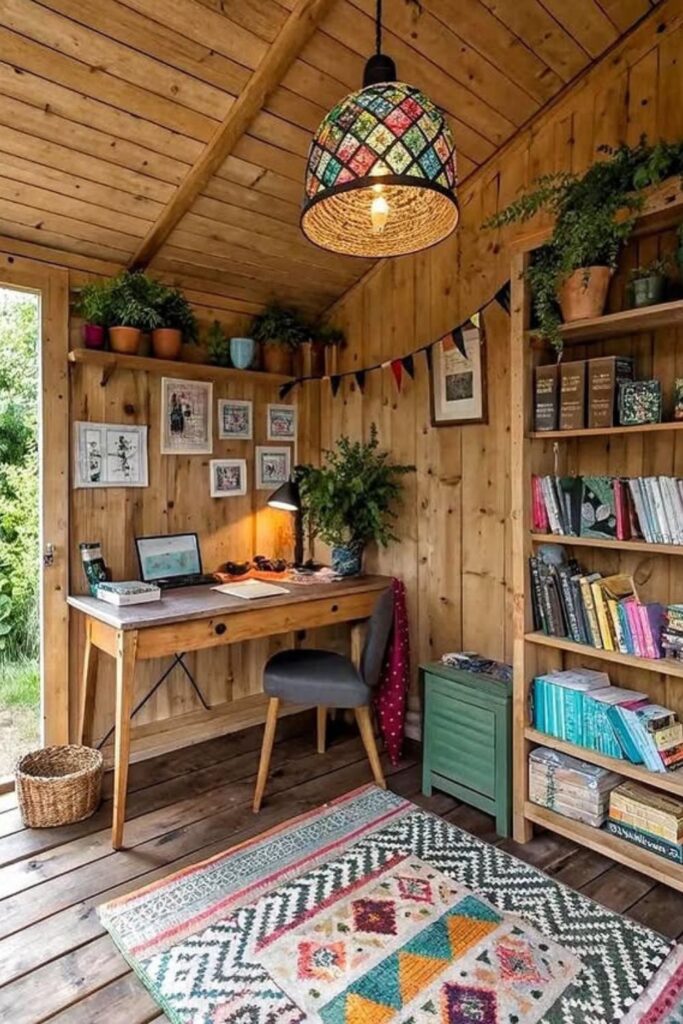
Distractions fade once work gets its own boundary. A small room or backyard shed becomes usable by pushing storage to the walls and leaving the center open.
Open bookshelves offer a way to keep reference materials easily accessible, preventing a cluttered workspace.
This arrangement is particularly effective for remote work or journaling. It ensures that everything you need is the readily available while also keeping distractions at bay.
Shelf Focus
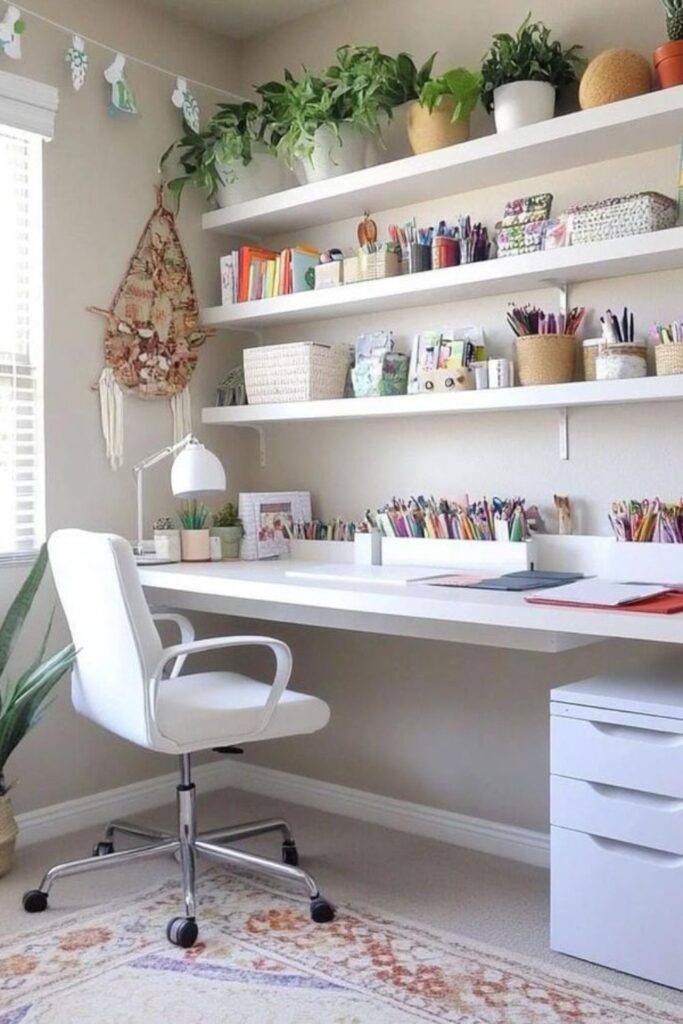
Creative work stays under control when the desk stays clear. Long wall shelves pull pens, paper, and tools off the surface.
This arrangement makes settling in feel less daunting. It’s a good fit for home offices and study areas.
Keep everyday items in open bins and stow away less frequently used goods in closed drawers beneath preventing clutter from taking over the workspace.
Catchall Console
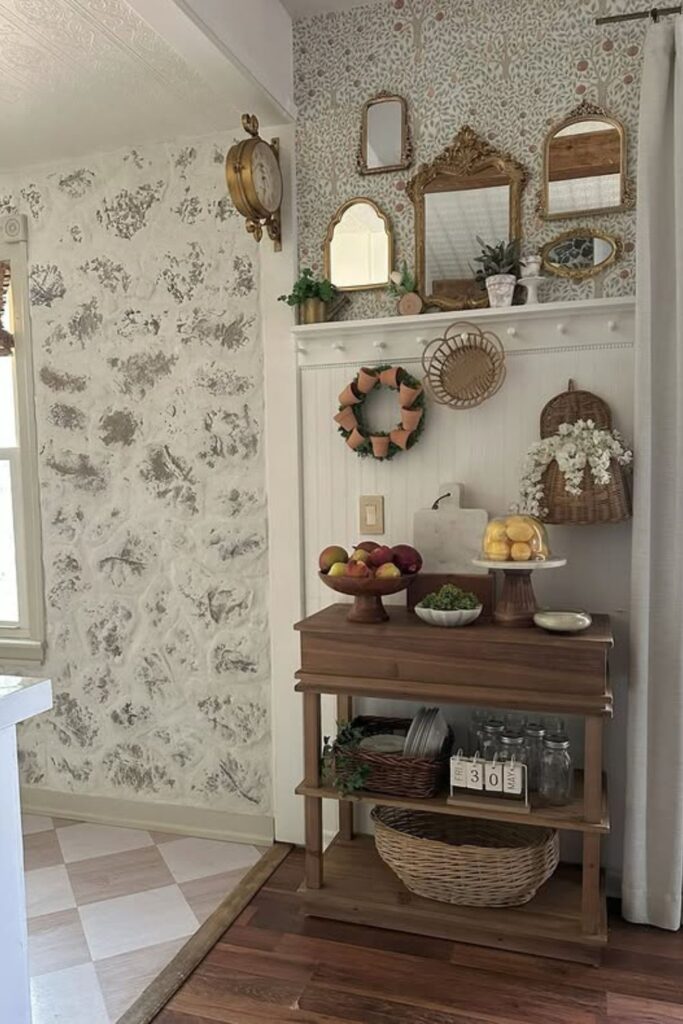
Daily clutter stays contained when one surface handles it all. A narrow console like this works well in dining corners or between rooms where items tend to pause.
The baskets underneath are there to catch anything that doesn’t make it, while the top remains clear for mail, snacks or a fast toss of keys.
A simple, uncluttered look gives the whole thing a purpose, helping it to actually work for you, rather than just becoming another place to pile things up.
Visual Anchor
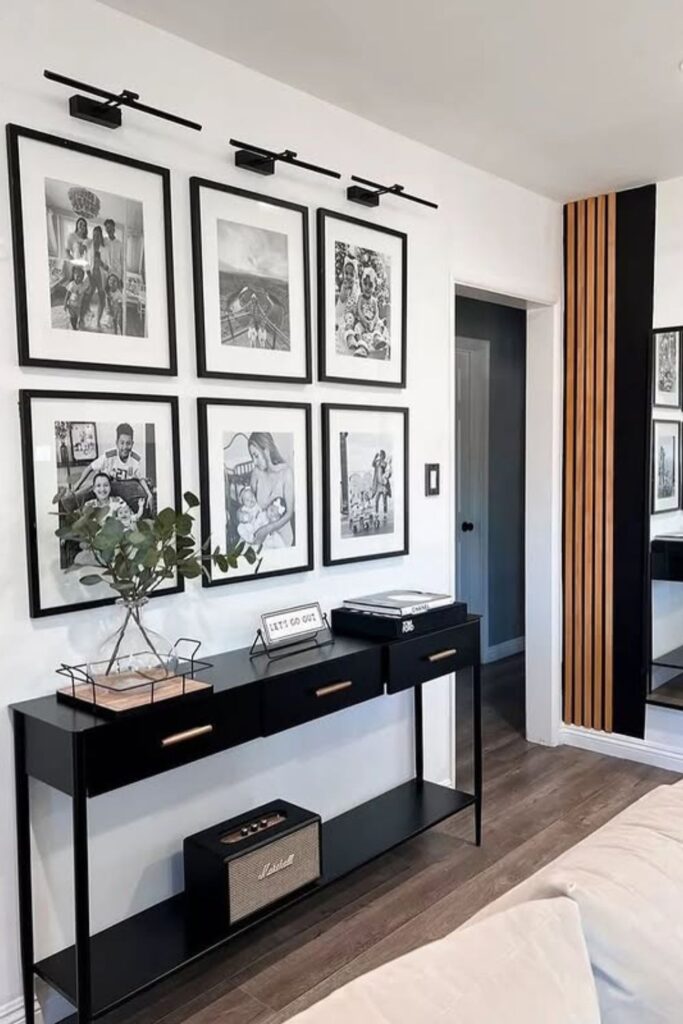
Walls start working harder when storage and memories share the same zone. A slim console under a photo grid.
It offers a convenient spot for keys, mail, and other daily necessities. This approach is particular effective in the living room or expansive corridors.
Where a blank wall can seem like a missed opportunity. To maintain the wall’s visual impact and prevent clutter from accumulating, keep the surface relatively free.
Floating Layers
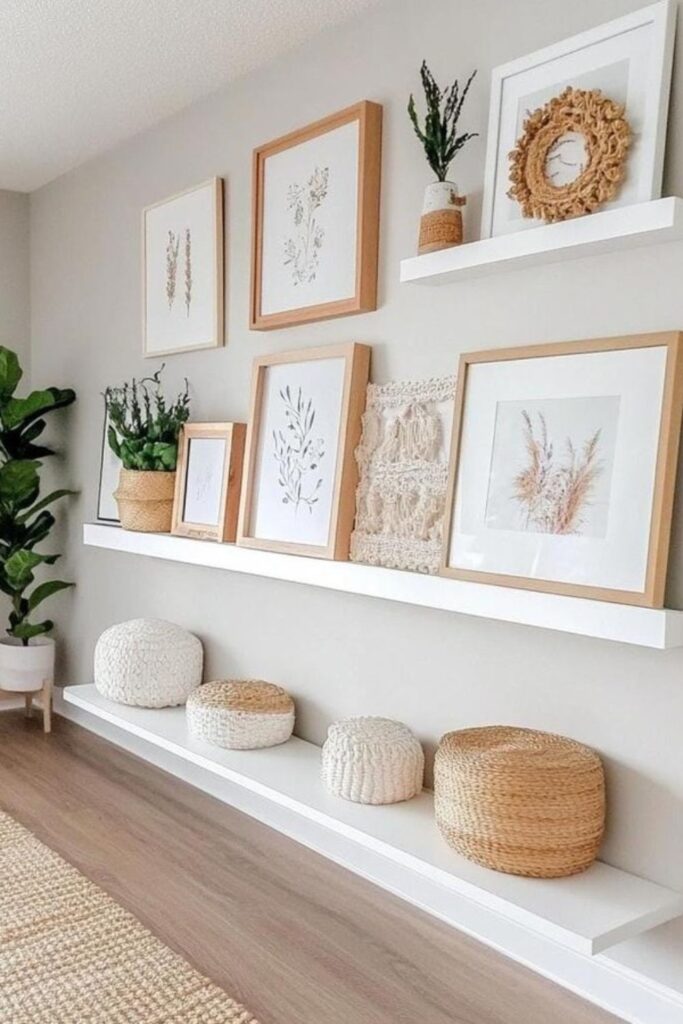
Storage can stay useful without looking busy. Long floating shelves like these work well in living rooms and wide hallways and floor furniture feels heavy.
Use the lower shelf to conceal ordinary clutter with baskets. Reserve the upper shelf for lighter elements like framed art or plants.
By limiting the contents of each level you maintain a sense of calm on the wall, even while it serves its purpose.
Wall Library
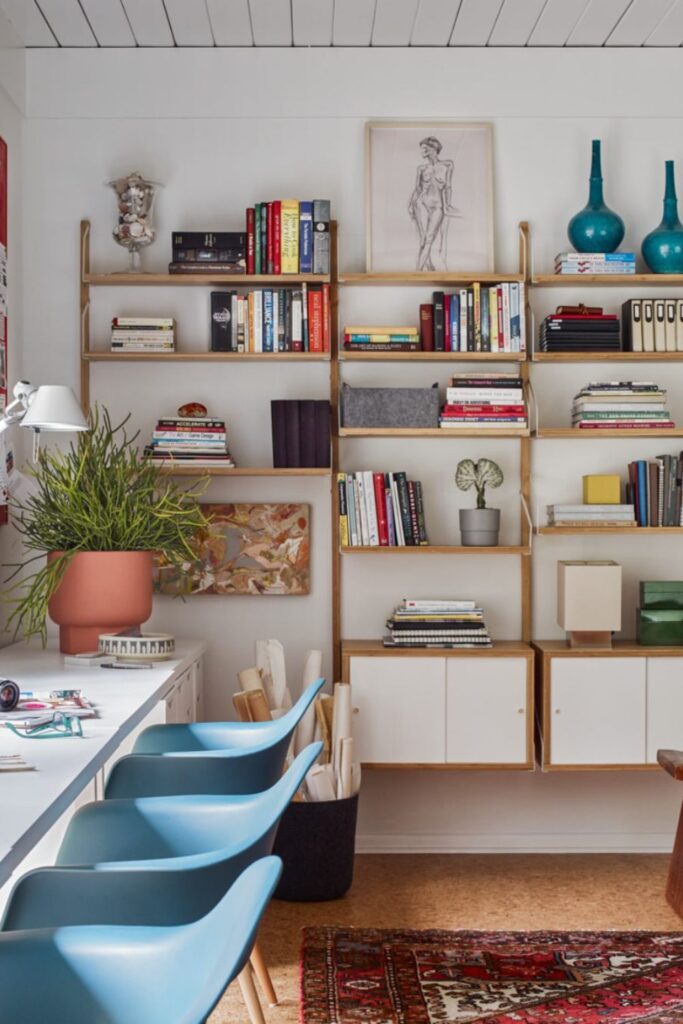
Rooms feel less crowded once storage moves upward. Open shelves handle books and reference items.
Closed cabinets beneath conceal the overflow, keeping things tidy and out of sight. This setup is particularly effective in shared spaces like offices or study rooms.
Where several people could be working. Place goods you use often at eye level and save the lower cabinets for the supplies you do not need to grab every day.
Signal Board
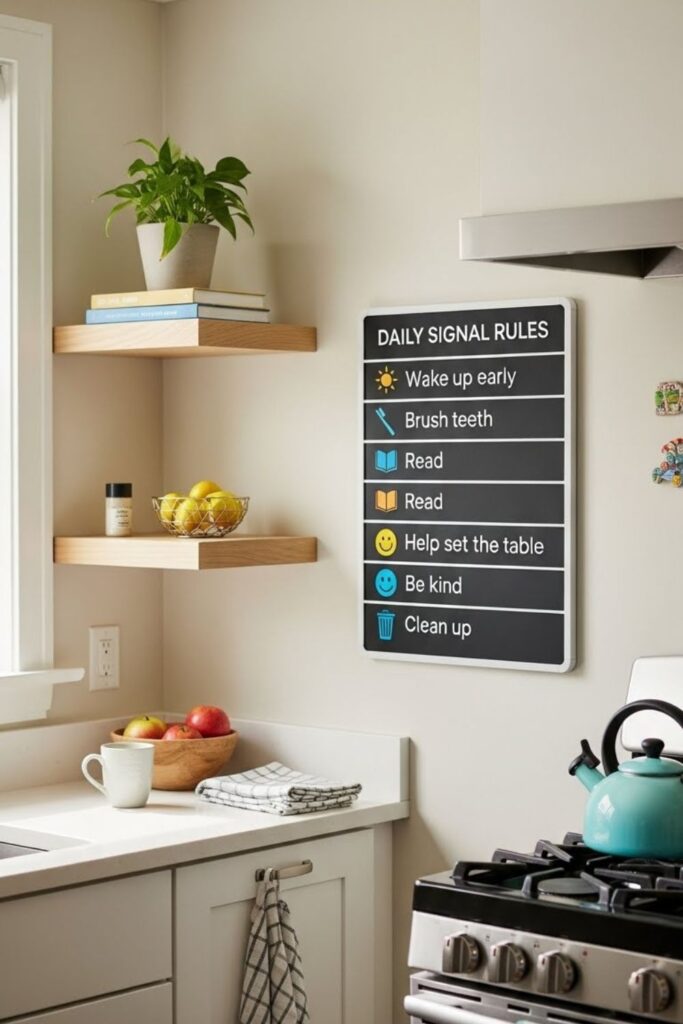
Arguments tend to evaporate quickly when standards are established and people cease going off script.
A signal board transforms every day expectations into a subtle prompt employing colored icons or brief sentences.
Position these near kitchens or corridors the common hotspots for behavior issues. And refresh the signals weekly.
Rotation Rail
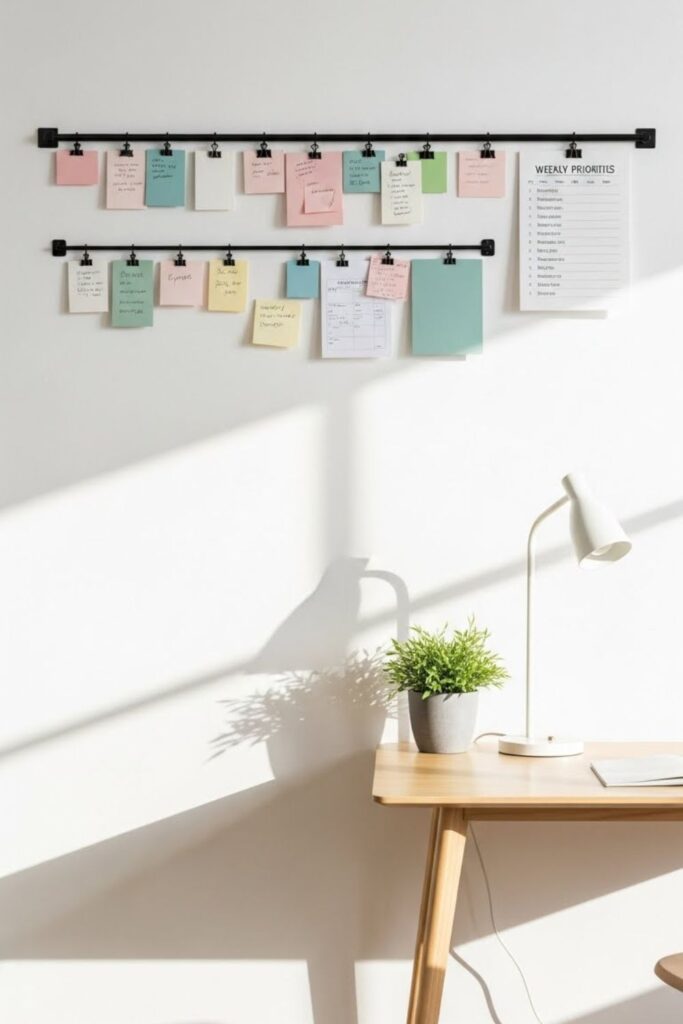
Decision fatigue shrinks and if only what matters stays visible. A slim rail system lets you clip rotating priorities.
Weekly goal and the school emphasis areas or family reminder these are the kinds of thing that work nicely here.
Its a good fit for above workstations or command centers. To keep things fresh and avoid a jumble of old plans, switch up the items every Sunday.
Routine Ladder
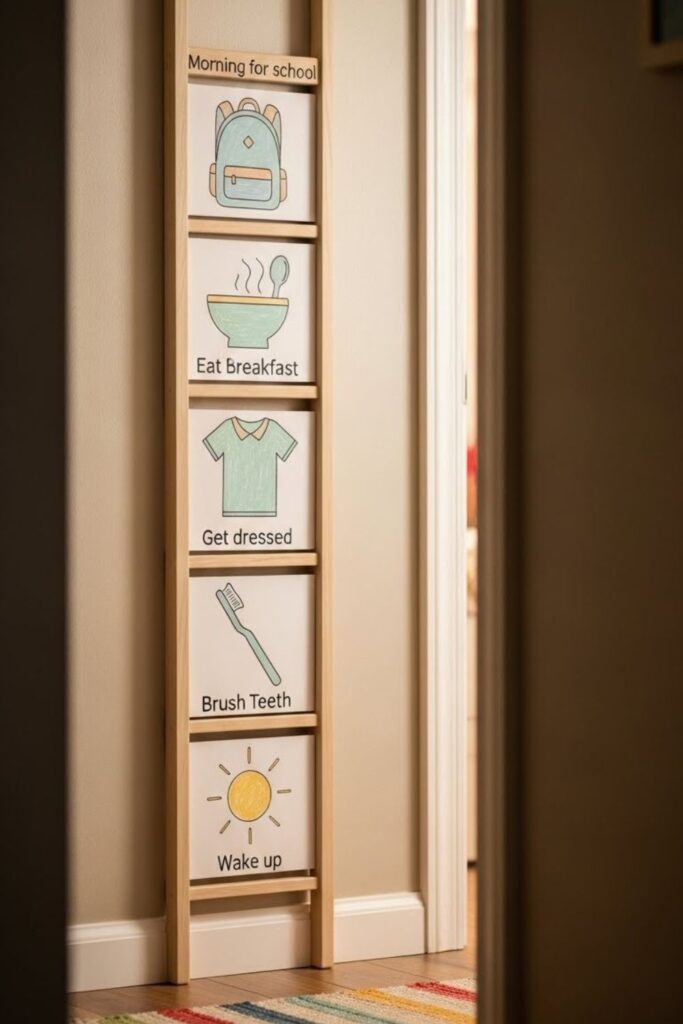
Mornings run smoother and when steps are visible not just barked orders. A wall-mounted, vertical ladder style chart lays out the daily tasks.
Placing this visual guide, with its simple actions or icons near the bathroom or bedroom door is especially helpful.
This visual cue helps kids learn to do things for themselves, rather than needing constant verbal nudges.
Tech Parking
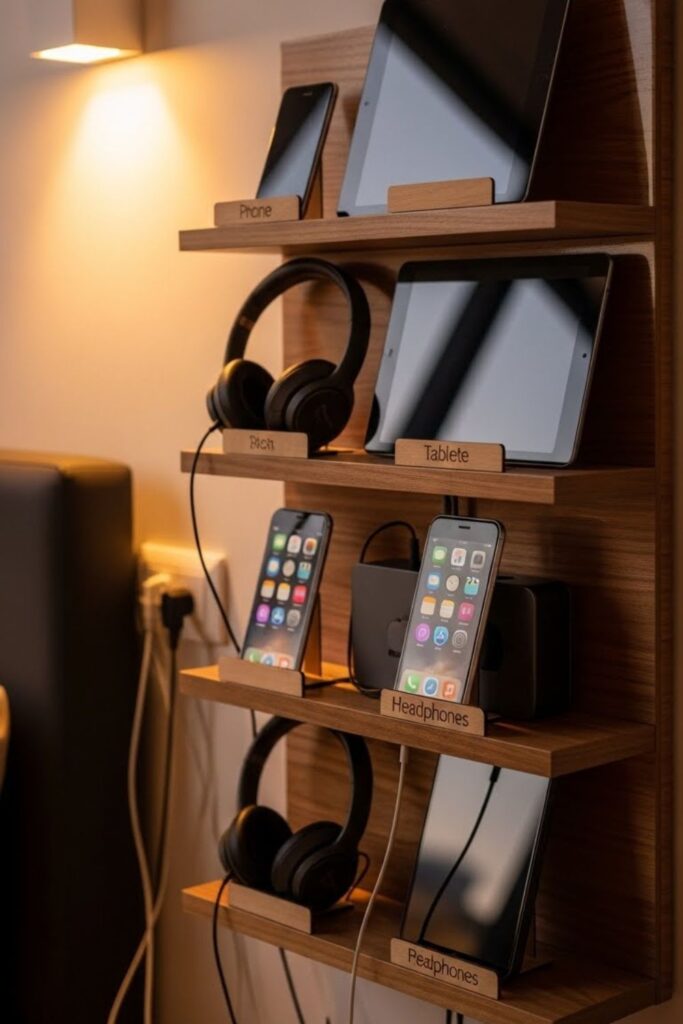
Evenings feel calmer once screens know where to rest. A wall mounted charging shelf creates a clear end point for phones, tablets and headphones.
This arrangement is ideal for locations outside of beds, helping to minimize disturbances during the night.
To eliminate squabbles over chargers and the inevitable lost cords simply designate a specific, labeled slot for each device.
Decision Strip
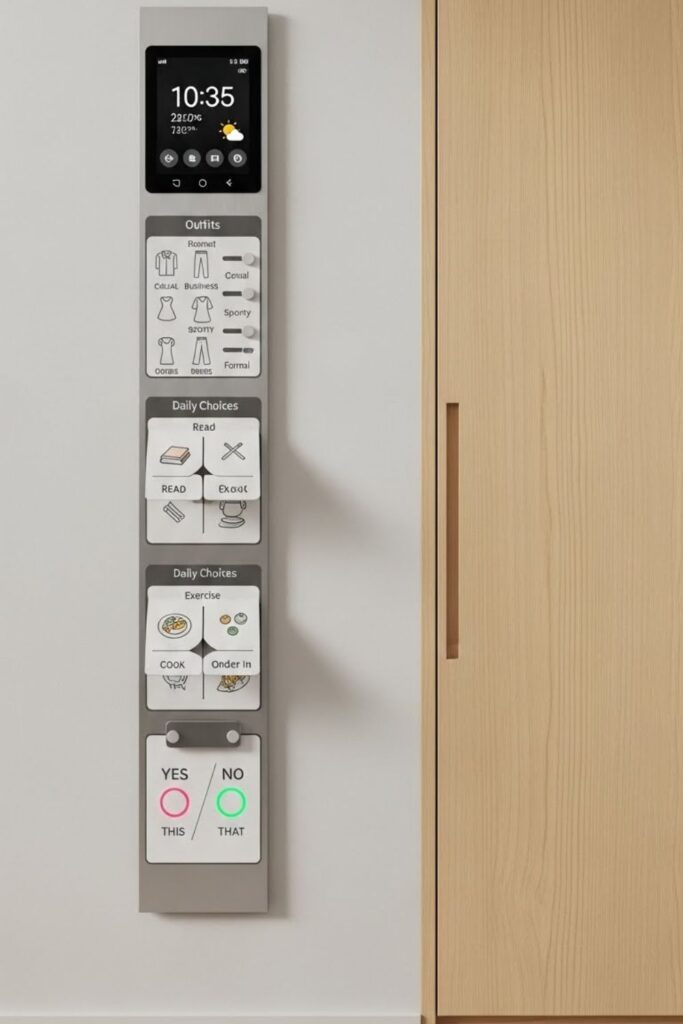
Small choices steal more energy than big ones. A narrow wall strip handles repeat decisions like outfits lunches.
For weekly priorities, consider utilizing flip cards or sliders. These are particularly effective when placed near closets or kitchens.
By moving decisions onto the wall and you may reduce mental clutter without the need to maintain yet another list.
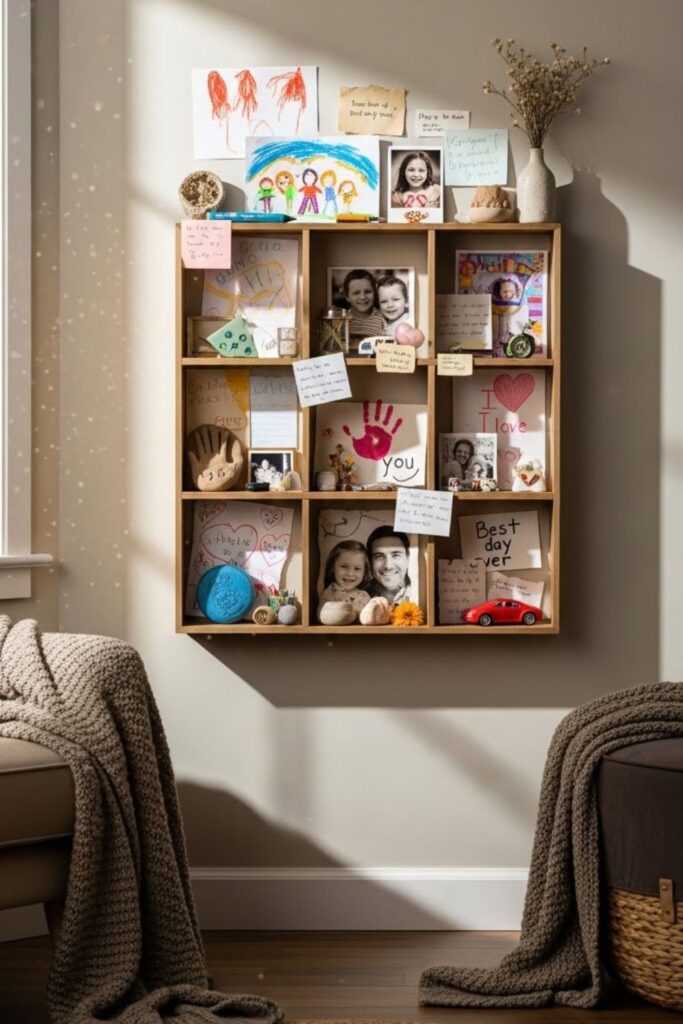
Memory Inbox
Emotional clutter builds just like physical clutter. A wall-mounted inbox collects drawings, notes, photos.
Store mementos and keepsakes temporarily, rather than letting them accumulate haphazardly.
Revisit the contents each month, retaining only the items that truly resonate, and let go of the rest without feeling bad or stressed.
FAQs
How do you keep a family organization wall from turning into another clutter spot?
Clutter takes over when a wall tries to do too much. Assign each portion a specific purpose, and get rid of anything that doesn’t fit.
A fast weekly tidy-up is far more effective than a massive, infrequent clean. If anything hasn’t earned its place after two weeks, it’s time to let it go.
Should a family organization wall replace digital tools like calendars and apps?
No, it should be the other way around. Phones are great for reminders, sure but walls are better for really seeing things.
Use the wall for shared schedules and daily routines, and keep the apps for personal notifications and backups.
You may like to read!
- 27 Pantry Organization Ideas
- 25 Small Apartment Organization
- 20 Pegboard Organization Ideas
- 20 Shelf Organization Ideas
- 21 Shower Organization Ideas

Fasial is the founder of the Fizzy Flare. He has been a passionate blogger since 2021. He ran three different websites in the past few years. Now he is focusing on Fizzy Flare to build an audience and help them organize their life.