22 Drop Zone Organization Ideas for 2026
This post may contain affiliate links: full affiliate disclosure.
In my house, every morning used to start the same way. Someone lost their keys. There were a lot of shoes beside the entryway.
Someone threw a bag on the floor. The terminal had mail that hadn’t been opened. And we were already behind schedule.
You’re not dirty if your foyer looks like a little storage unit blew up. You don’t have a plan.
The little area outside your door sets the mood for the rest of the day. Everything seems to be going too fast when it’s chaotic. Mornings are easier when it works.
In this article, you will see 22 clever drop zone organization solutions you can try. Each one focuses on making your home easier to manage every day.
Let’s jump in!
Contents
- 1 How Can You Create a Functional Entryway Drop Zone in Small Spaces?
- 1.1 Cubby Zones
- 1.2 Layered Storage
- 1.3 Family Stations
- 1.4 Bag Hooks
- 1.5 Corner Bench
- 1.6 Vertical Cubbies
- 1.7 Wall Niche
- 1.8 Stair Nook
- 1.9 Shoe Wall
- 1.10 Name Zones
- 1.11 Hidden Drawers
- 1.12 Stair Hooks
- 1.13 Storage Locker
- 1.14 Long Lockers
- 1.15 Entry Console
- 1.16 Bench Nook
- 1.17 Statement Wall
- 1.18 Entry Locker
- 1.19 Arch Cubbies
- 1.20 Coat Columns
- 1.21 Family Hooks
- 1.22 Hook Rail
- 2 FAQs
How Can You Create a Functional Entryway Drop Zone in Small Spaces?
You don’t need extra space in your foyer; you need a better way to set it up. First, figure out what goes there every day: shoes, bags, keys, and mail.
Don’t put things in order that don’t belong. Next, go up. Instead of putting your bags and coats on the floor, hang them on the wall. Put in a small cabinet or a slim shoe rack.
A depth of 8 to 12 inches works well. Put up a little floating shelf with a tray for keys so they don’t keep getting lost.
Add a bench with hidden storage if you have room. If not, put baskets under the hooks. Don’t make it too complicated. If everything has a place, clutter ceases winning.
Save this article for later! 👇👇

Cubby Zones
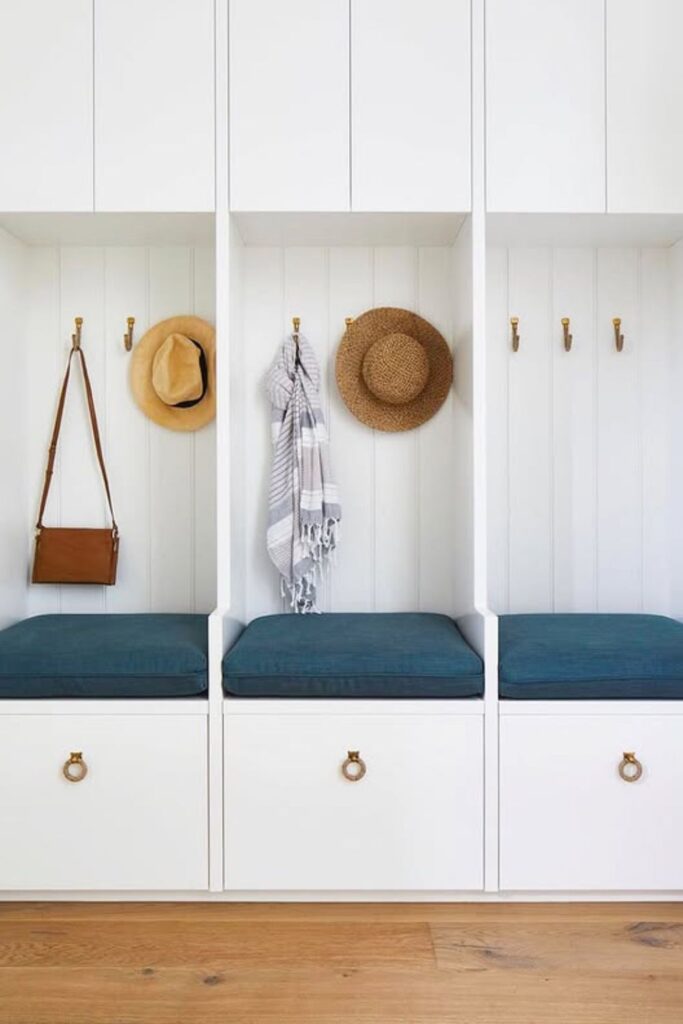
Nothing keeps an entryway under control like giving every person their own lane. Built-in cubbies turn a chaotic drop spot into a clear system where bags, hats, and jackets.
Naturally fall into place. Vertical dividers keep things from piling up in one dirty corner by keeping everyone’s space separate.
Brass hooks within each cubby keep things like hats, scarves, and crossbody purses that you need to grab and go.
A soft seat below makes it easy to sit down and put on shoes, which keeps shoes from spreading out on the floor.
The hidden drawers underneath silently take care of the messier things, such additional shoes, gloves, or dog leashes.
Layered Storage
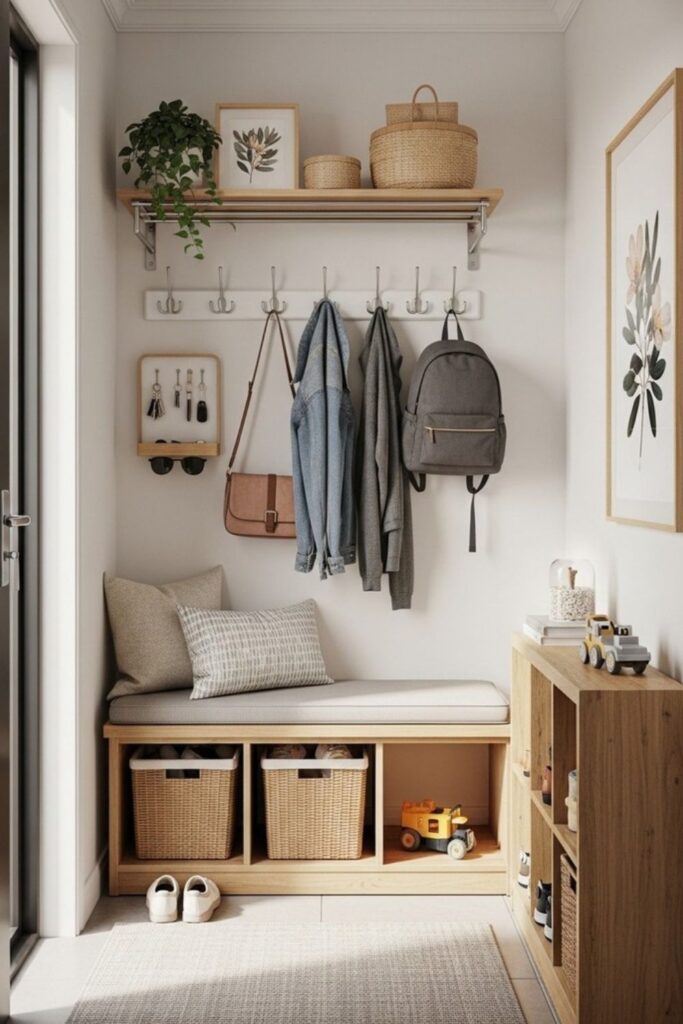
Busy entryways work better when storage happens in layers instead of one crowded surface. A wall-mounted hook rail keeps jackets and bags off the floor.
The shelf above is the perfect place for baskets that hold seasonal items like gloves, scarves, or additional tote bags.
A little keyboard next to the hooks takes care of another daily annoyance.
Finally, keys, sunglasses, and other little objects that you can take and go have a set place to stay instead of drifting around the house.
A bench with open cubbies underneath serves two key purposes at once: it provides seating and keeps shoes in order.
Woven baskets fit into the compartments to hold shoes or small items without making the area look cluttered.
Family Stations
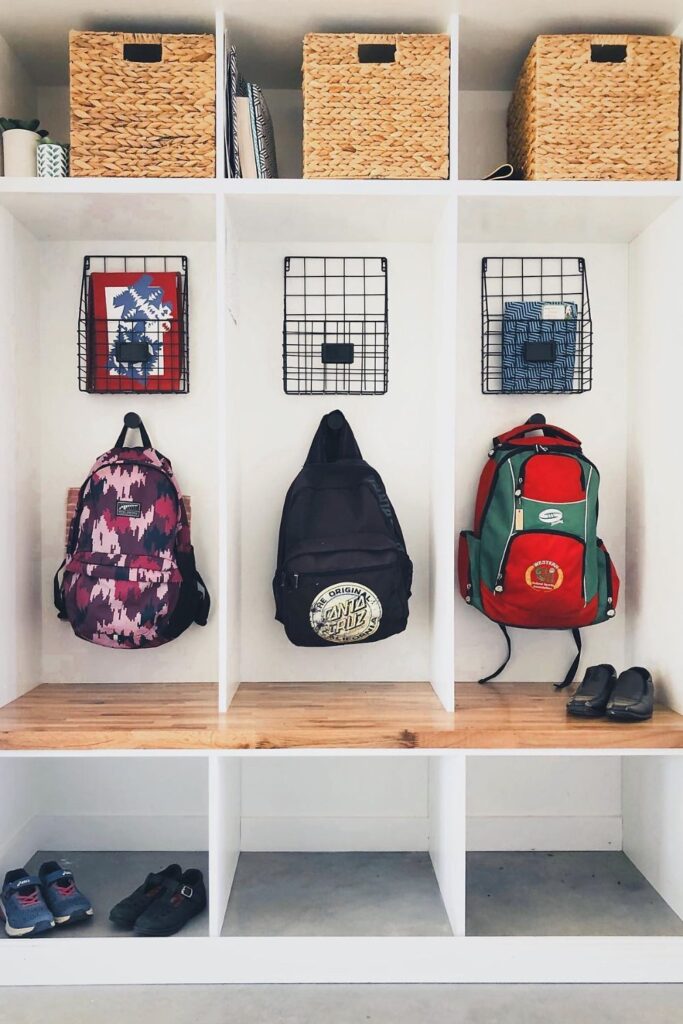
Morning chaos fades fast once everyone gets their own spot. Separate cubbies create a simple rule: bags, shoes, and daily gear return to the same place every time someone walks in.
There are hooks in each portion of the school that hold the bags neatly, making it easy to grab them when you’re in a hurry.
Wire wall baskets are a sensible addition. With them, paperwork won’t get lost in backpacks anymore. You may slide in homework folders, permission slips, or little notebooks.
Woven baskets on top hold extra stuff like sports gear, hats, or seasonal items that don’t need to be used every day.
A strong bench in the middle makes things work. Kids can sit down to the put on their shoes and the lower compartments keep shoes from making the floor a mess.
Bag Hooks
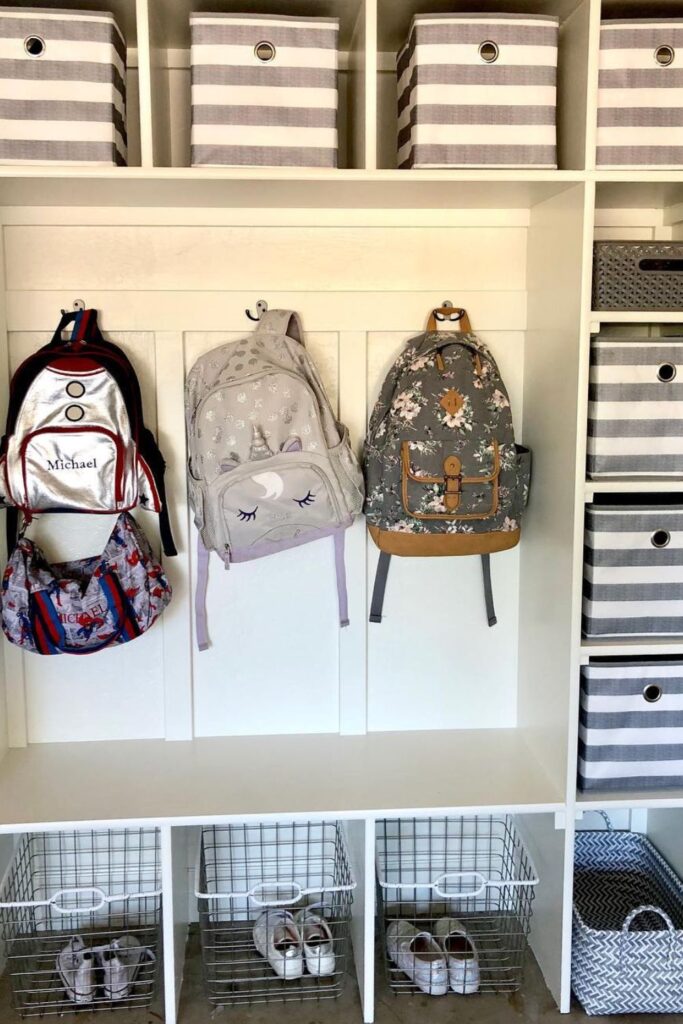
Morning routines get smoother once backpacks stop wandering around the house. Dedicated hooks inside a built in drop zone give each bag a permanent parking spot.
A simple wall panel behind the hooks protects the surface from scratches and makes the setup look neat.
Above, fabric storage boxes hold seasonal extras like lunch bags, caps, or sports gear that you don’t need to use every day.
Keeping those things higher stops the area below from getting messy. The metal wire baskets below the handle solve the shoe problem in a useful way.
The open design lets youngsters see their shoes easily, and the ventilation keeps smells away. Vertical storage keeps things neat and tidy without taking up area to walk about in.
Corner Bench
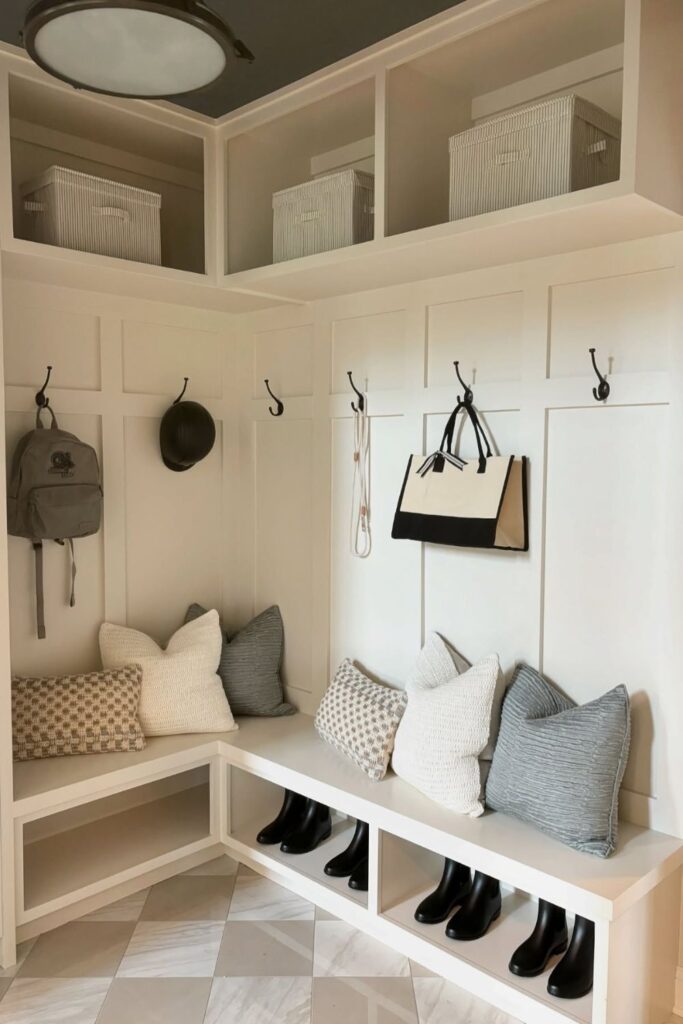
Corners often become wasted space near entryways, but turning one into a built-in bench instantly creates a practical drop zone.
An L-shaped seating arrangement allows you enough area to sit comfortably when putting on shoes, which keeps shoes from spreading on the floor.
Wall hooks over the bench make it easy to get to things you need every day. The bags, caps, and leashes hang neatly without taking up too much space on the seat.
Panel molding below the hooks gives the wall more support and protects it from scratches that arise when you use it every day.
Open cubbies underneath make it easy to store boots and shoes. People can find their shoes easily in the morning if they are visible.
Vertical Cubbies
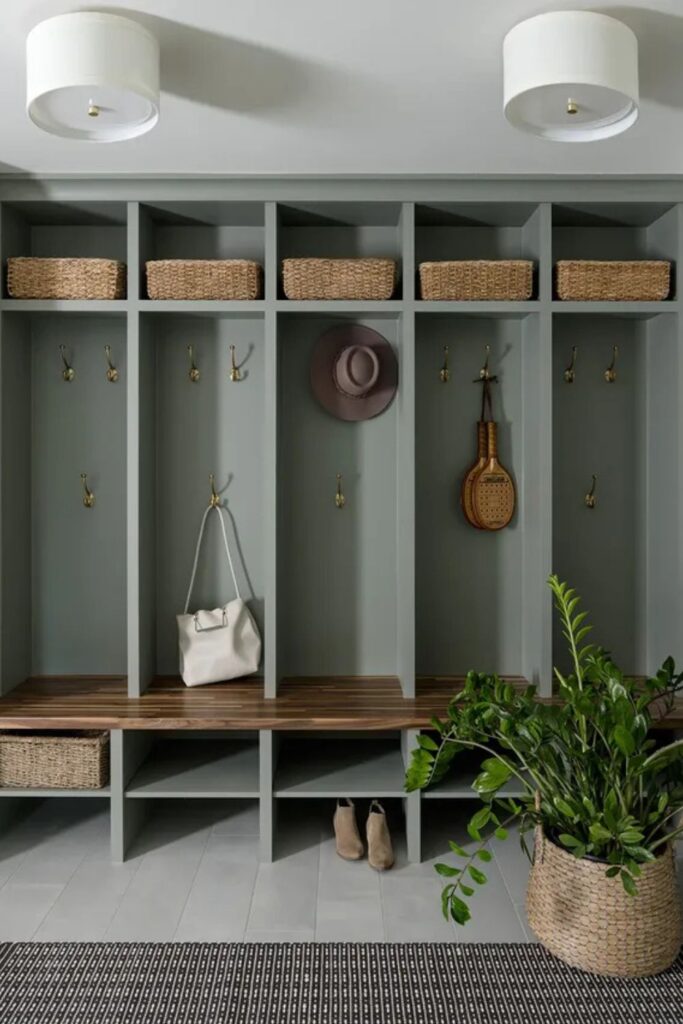
Shared entryways stay organized longer once storage moves upward instead of spreading across the floor.
Tall cubbies break up the wall into clear personal spaces, so coats, hats, and bags don’t get mixed up.
The columns act like separate stations, so it’s easy to see where things go as soon as someone walks in.
Brass hooks in each area hold ordinary items, and the bench below is a nice place to sit and take off your shoes.
The lower sections keep shoes from being lost while still letting people see them, which makes it easier for everyone to find their shoes before they leave.
Wall Niche
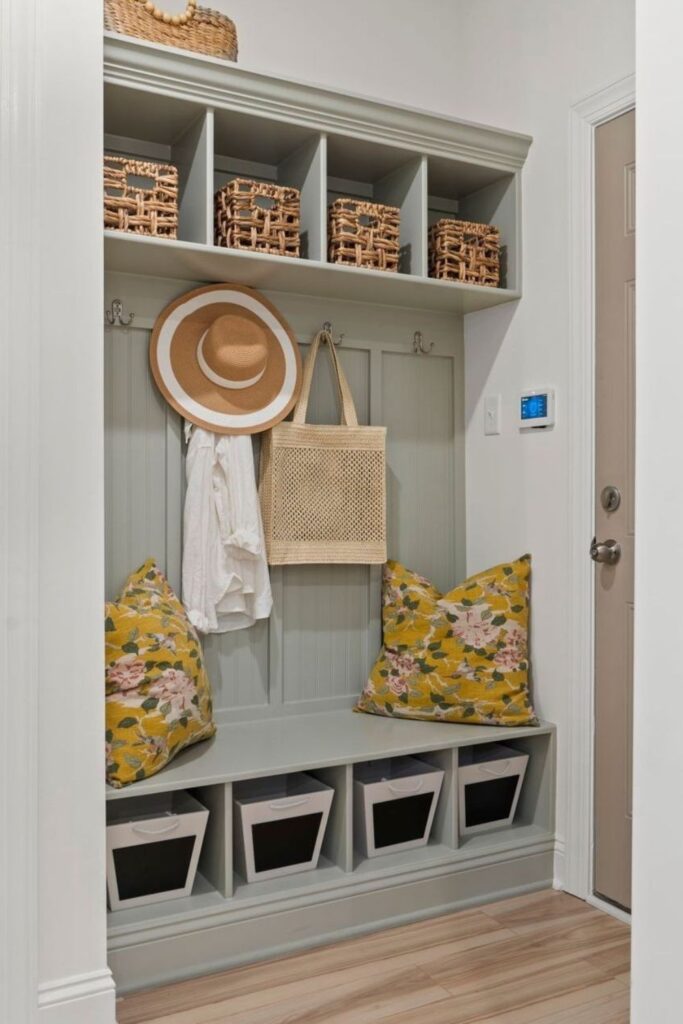
Some entryways already hide the perfect drop zone you just need to use the wall recess wisely.
A built-in nook makes a natural frame for storage, which limits the setup from spilling into the hallway.
Hooks along the middle line hold things like hats, tote bags, and light jackets that you need to grab and go.
Putting them against a paneled backboard protects the wall and makes the space look like it was planned, not thrown together.
Open cubbies above the hooks are an excellent place to put woven baskets that keep smaller things like gloves, reusable shopping bags, or pet supplies.
Stair Nook
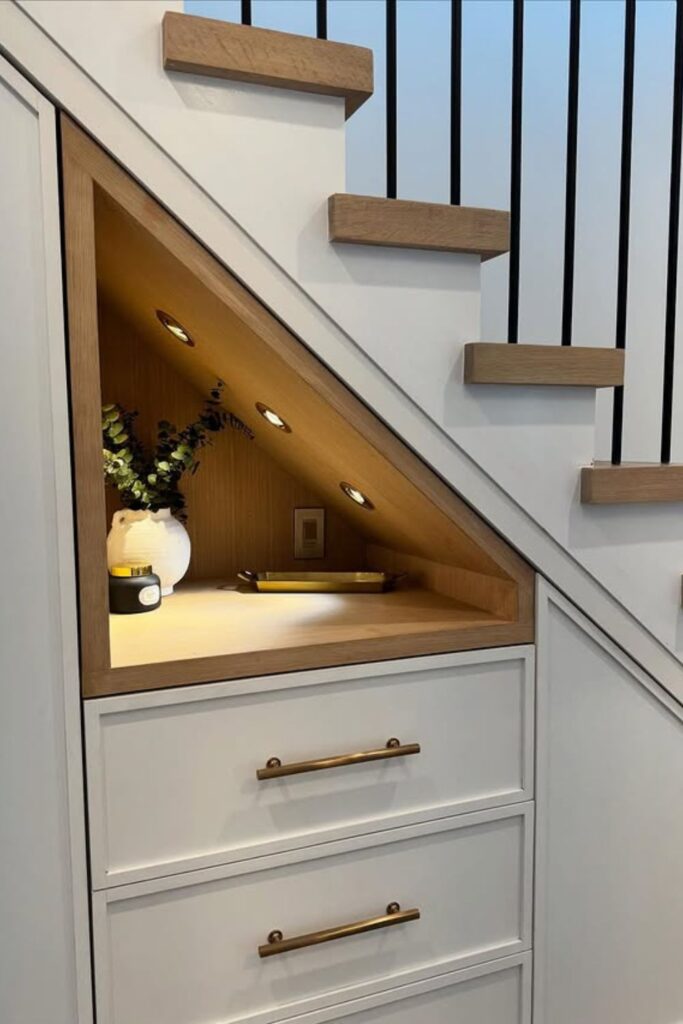
Dead space under the stairs often turns into wasted square footage, but shaping it into a small drop zone solves a daily problem.
This built-in nook makes it easy for people to drop off their things as soon as they walk in.
A simple tray on the counter stops keys, sunglasses, and wallets from moving about. The soft lighting in the nook makes the space feel planned.
And easy to use at night, which reminds everyone to put things back where they belong. The drawers below silently hold things that don’t need to be seen.
Including extra mail, charging cords, dog leashes, or small accessories. This layout works well in entryways that are close to staircases because the angled space is already there.
Shoe Wall
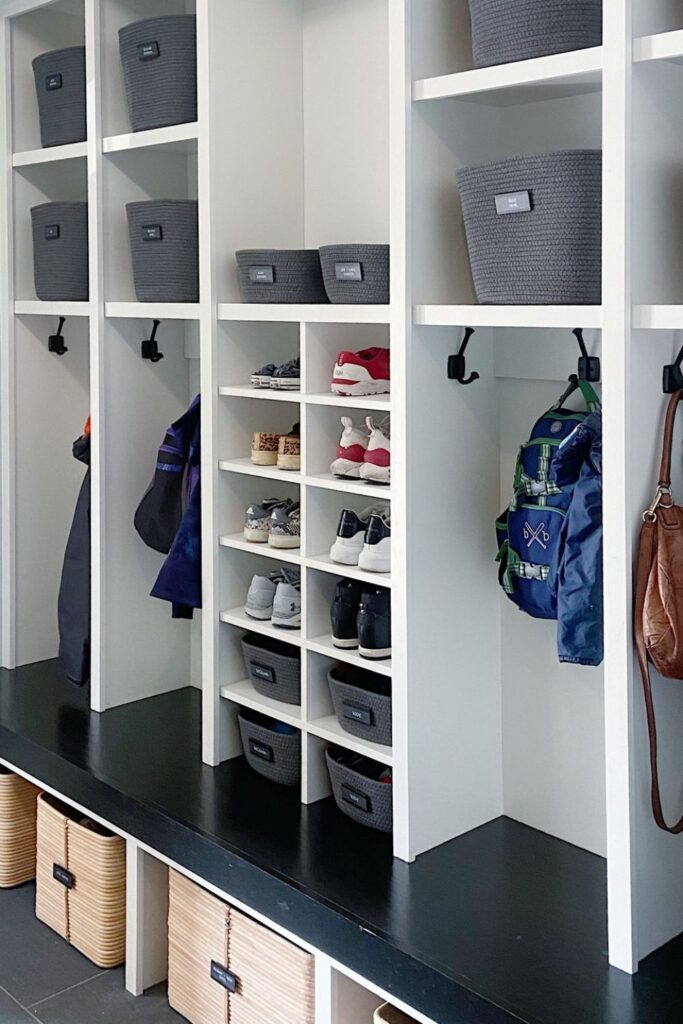
Crowded entryways usually suffer from one main problem too many shoes and nowhere to put them.
A dedicated shoe wall fixes that right away by giving shoes their own vertical storage space instead of letting them spread out on the floor.
Tall cubbies break up the space into personal areas, which keeps jackets, bags, and everyday things orderly without getting in the way of each other.
The narrow shelves in the middle column stack several pairs of shoes on top of each other, which lets the wall hold a lot more shoes than a normal rack.
There are hooks inside each cubby to hold coats and backpacks, so everything that has to be taken out of the house stays in one location.
Name Zones
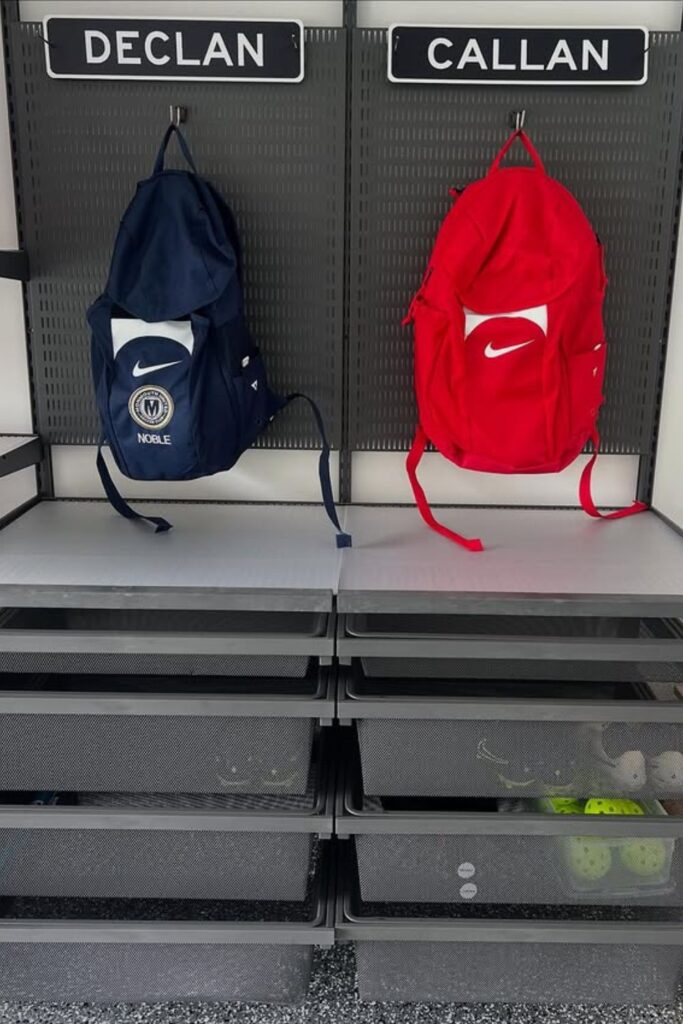
Morning routines get much easier once everyone has a clearly labeled space. Personal name plates above each section instantly tell kids where their bags belong.
It stops people from throwing their backpacks near the entryway. A pegboard wall behind the hooks makes them more useful.
Hooks can relocate as routines alter, including when sports seasons change, when you get a new bag, or when you get more gear.
That little thing makes the drop zone flexible, so it doesn’t get old after a few months. The mesh pull-out drawers underneath take care of the real mess.
You can easily grab shoes, sports gear, lunch bags, or other unexpected school things that are hidden.
Hidden Drawers
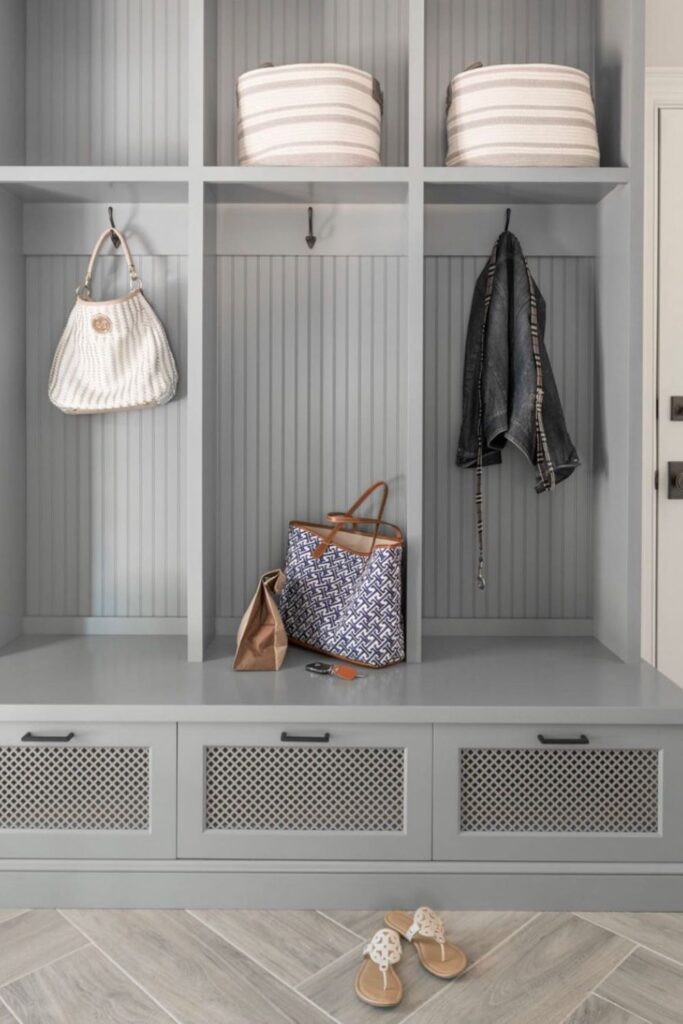
Clutter disappears quickly once storage hides beneath the bench instead of piling near the door.
A long bench with drawers built in keeps the doorway neat while hiding the things that usually make it messy, including extra shoes, scarves, dog leashes, or reusable bags.
There are open wall pieces above the seat that make it easy to get to everyday things. A few hooks on each vertical panel can hold jackets, purses, or tote bags.
Without making the room too crowded. Tall cubbies at the top make another level where baskets can hold seasonal items that doesn’t need to be within reach.
Ventilated drawer fronts are a clever touch since they help keep odors from building up when shoes or wet things go inside.
Stair Hooks
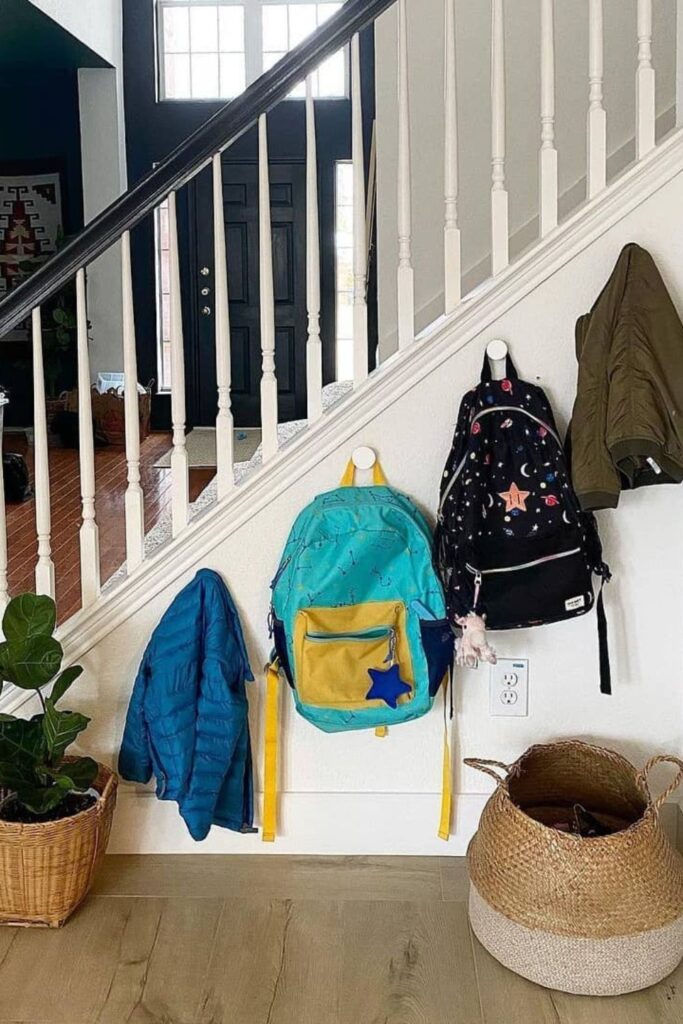
Unused wall space under the staircase can quietly become the most practical drop zone in the house.
A few well-placed hooks on the wall of the stairs give students a clear spot to put their bags and jackets as soon as they walk in.
Putting the hooks lower makes a major difference here. Kids can hang their own bags without help, which helps them learn to put things away instead than leaving them on the floor.
Evenly spacing the hooks protects the bags from getting tangled up. A big woven basket on the floor holds things like shoes, sports gear, or winter accessories that don’t need a hook.
This solution works best in homes where the front entrance opens near the stairs since the drop zone fits in with the rest of the house without having extra furniture or built-in storage.
Storage Locker
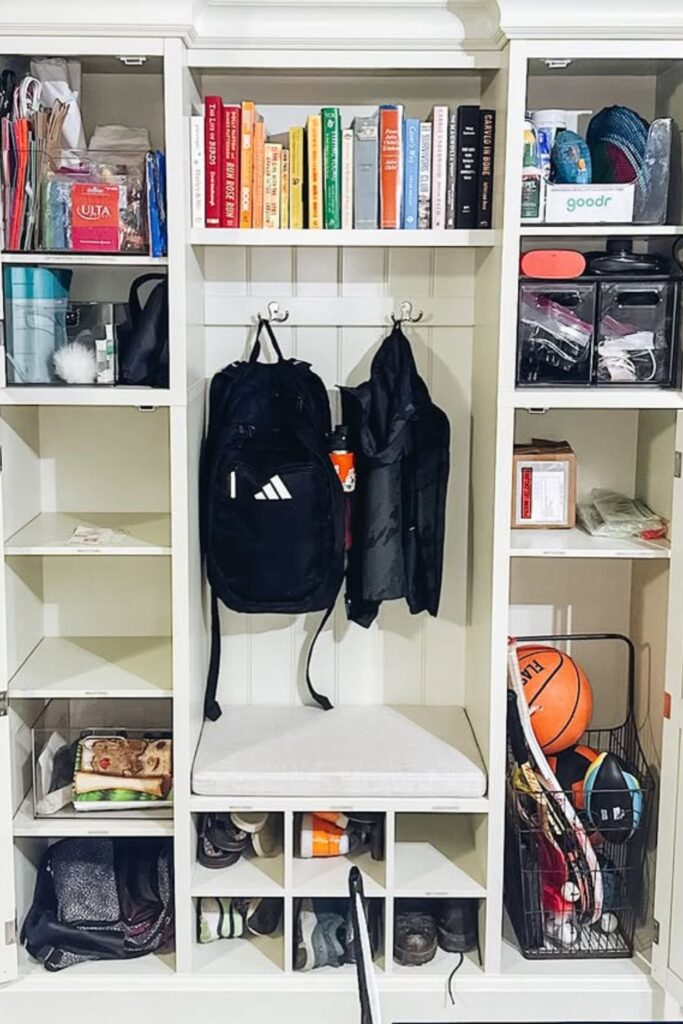
Busy households need more than just hooks they need a system that hides clutter while keeping essentials easy to grab.
A locker-style drop zone fixes that by putting cabinets, cubbies, and hooks all on one neat wall.
Tall side cabinets hold bigger things that generally make the entryway messy, including sports gear, additional bags, seasonal accessories, or cleaning materials.
Putting those things behind doors makes the room feel less congested, even when it’s full of stuff.
The middle part is where you land every day. The hooks hold jackets and bags, and the seat underneath gives you a place to relax while you take off your shoes.
Long Lockers
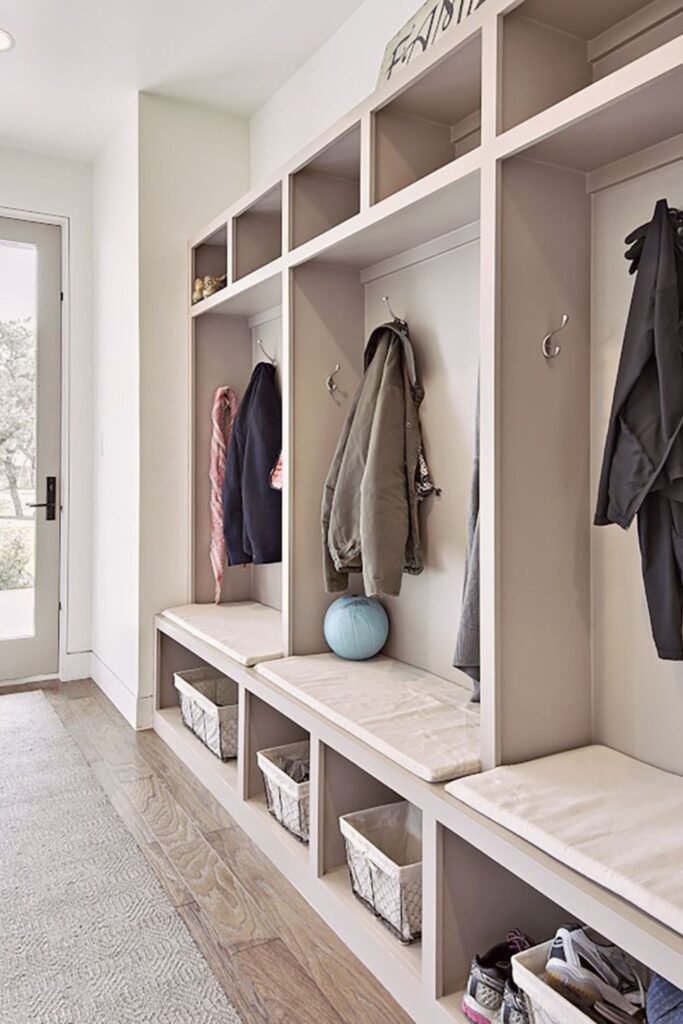
Large families bring more coats, bags, and shoes through the door, so a long locker-style drop zone keeps everything from piling up.
Individual portions make it easy to choose a place to hang jackets without having to stack them on one hook.
A bench that runs the whole length of the wall makes it more comfortable and useful. Putting on shoes while sitting down naturally stops shoes from getting all over the entryway.
Underneath, there are open cubbies that carry baskets for ordinary things like sneakers, gloves, or small bags.
Baskets inside these cubbies keep seasonal items or accessories that aren’t used very often out of sight yet easy to get to.
Entry Console
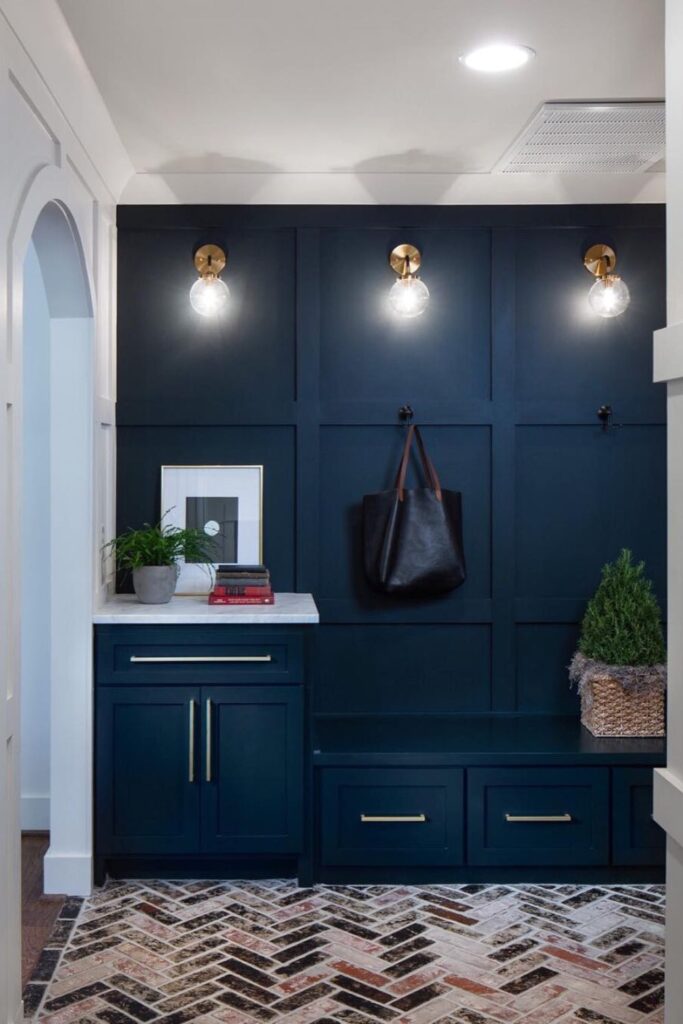
Some entryways don’t have space for large cubbies, but a compact console-style drop zone still keeps daily clutter under control.
As soon as someone steps in, a tiny counter surface becomes the obvious place to put keys, mail, and sunglasses.
There are hooks on the wall above the counter that hold bags and jackets so they don’t end up on the floor or over chairs.
Wall paneling behind the hooks gives the space more structure and protects the surface from scratches that happen when you use it every day.
Drawers and cabinets below silently hide things that tend to pile up, such extra shoes, reusable bags, or pet supplies.
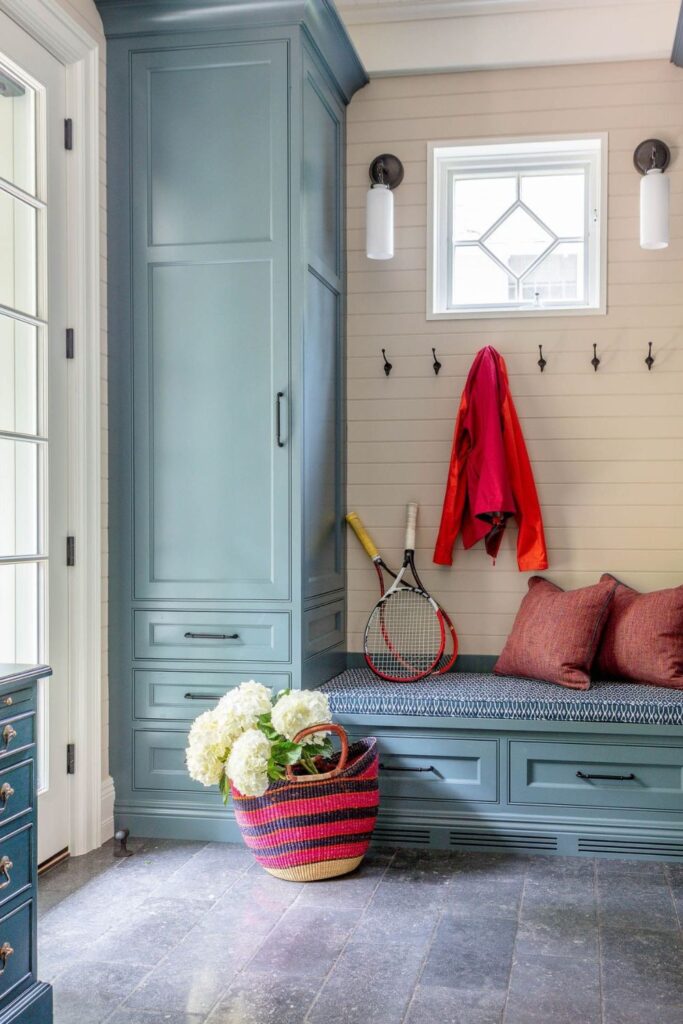
Bench Nook
Long days outside usually end with jackets, bags, and gear tossed near the door. A bench nook solves that problem by turning one wall into a comfortable landing spot the moment.
A row of neatly placed hooks keeps coats, bags, and outdoor layers from building up on chairs or counters.
Putting the hooks just above the bench makes it easy to get to things while yet making the seating space usable.
Deep drawers under the bench keep shoes, scarves, and sporting gear that usually get in the way on the floor out of sight.
A tall cabinet next to the bench gives you more vertical space to store bigger things like backpacks, umbrellas, or seasonal apparel.
Statement Wall
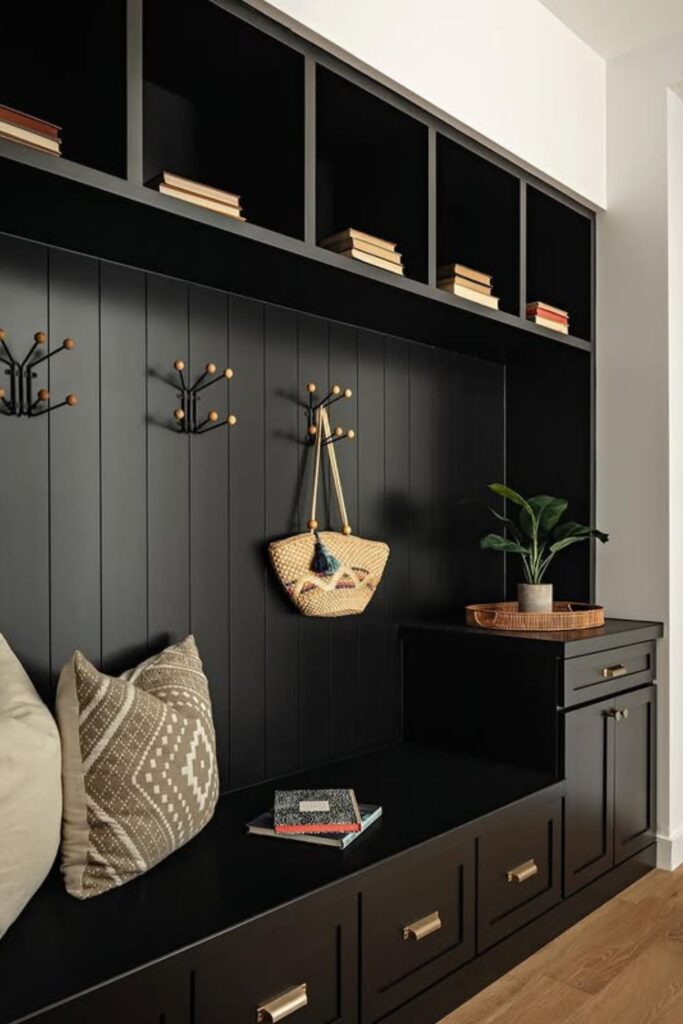
Some entryways need more than storage they need a wall that works hard while still looking polished.
A paneled feature wall with coat hooks attached to it converts an empty wall into a useful drop zone right away, without taking up space with big furniture.
Wall hooks that are uniformly spread out across the paneling make it easy to grab and hang up handbags, jackets, or ordinary totes.
The floor stays clear and the entryway feels wide instead of crammed because everything is hanging straight down.
There are drawers inside the bench that gently hold shoes, scarves, or small accessories that generally end up all over the floor at the entryway.
Entry Locker
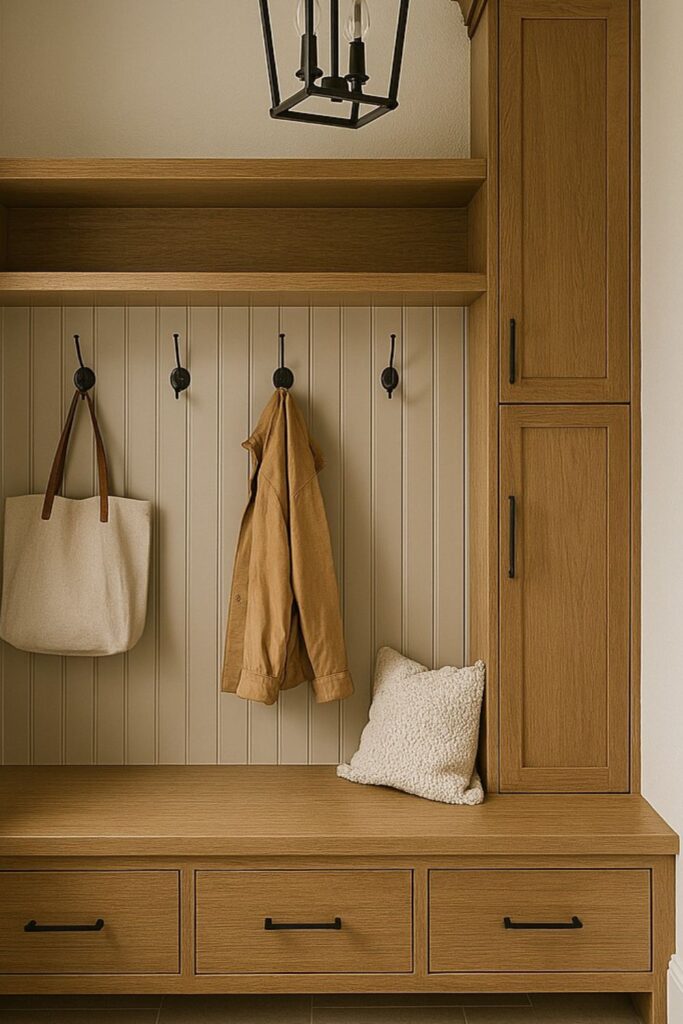
Busy mornings feel easier once one small corner becomes the home’s launch station. A compact locker-style drop zone keeps daily essentials in one predictable place.
So that nothing is lost when you go. Wall hooks hold the things that come and go the most, such tote bags, light jackets, and everyday coats.
Hanging them on a beadboard panel protects the wall and adds structure that frames the drop area.
There is ample space to sit comfortably when putting on shoes because there is a deep wooden bench underneath.
Built-in drawers in the base gently hide shoes, scarves, or pet supplies that usually make the entryway floor look messy.
Arch Cubbies
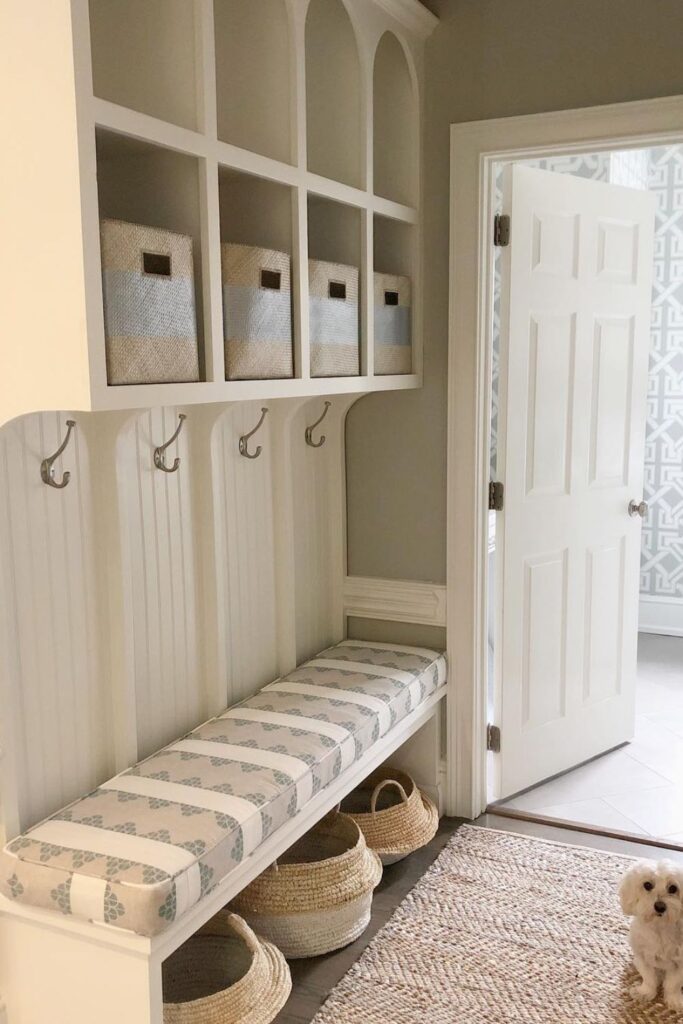
Curved details quietly turn a simple drop zone into something that feels built into the home. Arched cutouts under the upper cubbies soften the storage wall.
While making visible places to hang coats, bags, and other daily needs. A row of baskets above the hooks keeps seasonal goods in order without taking up space on the bench.
You can easily get to gloves, scarves, or reusable shopping bags when you need them. The long bench below is a nice location to sit while you put on your shoes.
There are big woven baskets underneath that hold shoes or pet supplies, which keeps the floor clear and easy to clean.
This kind of layout works well in entryways that are close to corridors or side doors since the vertical structure uses wall space instead of restricting the walkway.
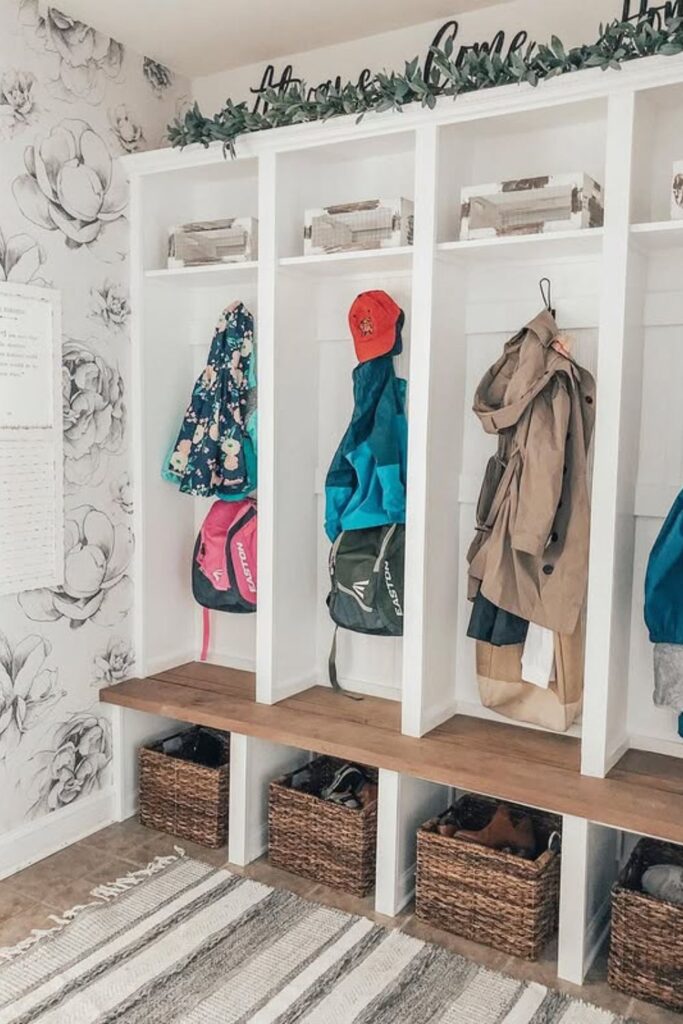
Coat Columns
Multiple coats arriving at the door every day quickly turn into clutter unless each one has its own place.
When you divide the entry wall into tall vertical columns, jackets, backpacks, and bags may hang neatly instead of piling up on one hook.
Hooks in each section make it easy to grab things you use every day while yet keeping things neat.
Everyone in the house instinctively learns where their stuff go because each column is like a small locker.
When you sit down to take off your shoes, they don’t spread out across the floor. Woven baskets underneath catch sneakers, slippers, or seasonal apparel.
Family Hooks
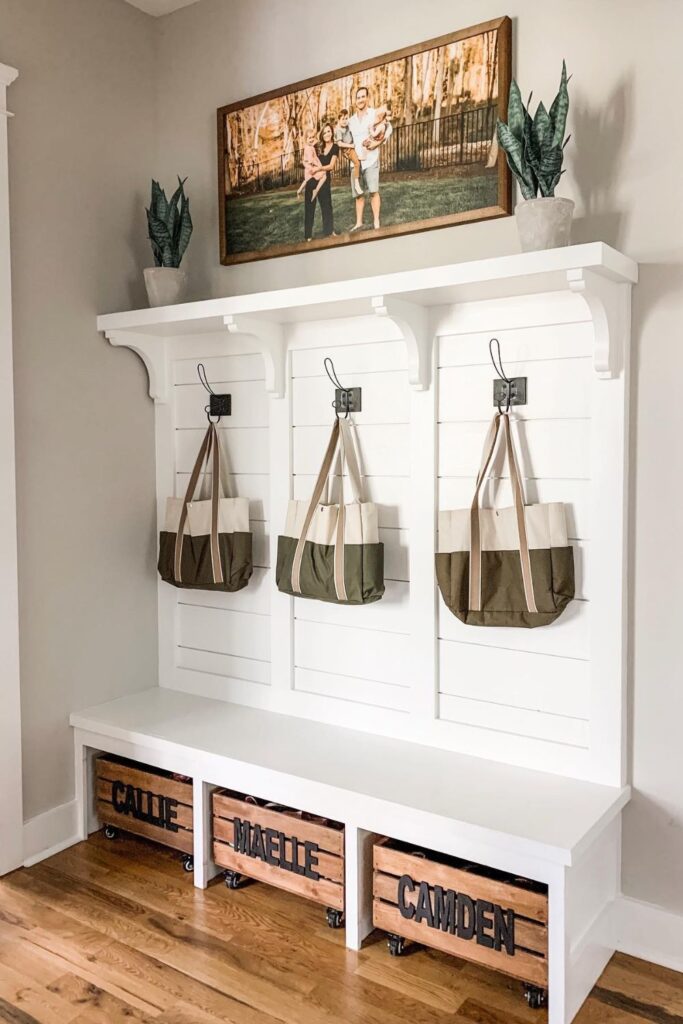
Daily clutter fades quickly once every family member gets a clearly defined spot. Three evenly spaced hook panels turn a plain wall into a personal drop zone.
where bags, jackets, and other daily necessities come back on their own once you walk through the door.
Panels put on the wall behind each hook protect the surface and make the area look like separate stations.
Instead of piling up on a chair, tote bags hang elegantly, which keeps the doorway looking peaceful even on busy mornings.
The big bench underneath makes it easy to take off shoes or put things down. You can easily put wooden crates on wheels under the bench.
Hook Rail
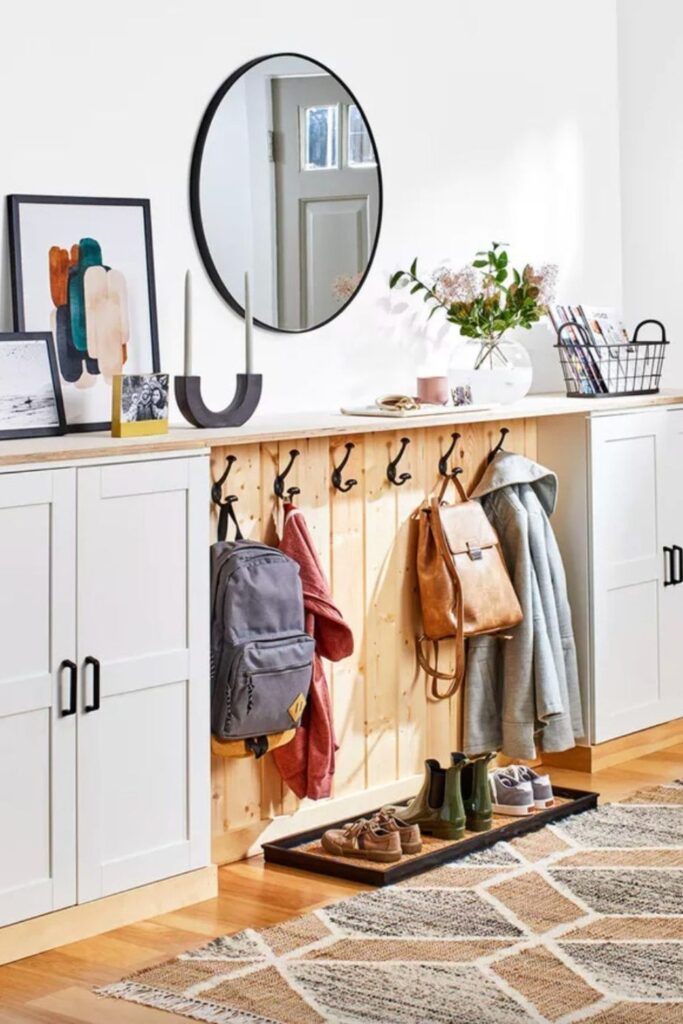
Busy entryways often struggle with one problem nowhere to quickly hang everyday items. A simple hook rail across a wood panel.
Gives jackets, backpacks, and handbags a clear place to land right away. The wood paneling behind the hooks protects the wall from damage.
And makes a warm contrast with the cabinets around it. The hooks are evenly spaced so that things don’t get mixed up, which keeps the drop zone neat instead of turning into a messy pile.
A shallow bowl on the floor protects dirty shoes and boots from spreading dirt about the room.
There are cabinets on both sides that quietly hold things that shouldn’t be left out, such spare shoes, cleaning supplies, or seasonal decorations.
FAQs
What should always be included in a drop zone to keep it functional?
A functional drop zone works best when it can handle the things people bring in every day. Put up wall hooks for jackets and bags so nothing ends up on the floor.
People always lose their keys, wallets, and sunglasses, so provide a tiny surface or tray for them.
A bench makes it easier to put on and take off shoes, while baskets or drawers underneath keep shoes from becoming lost.
Where is the best place in a home to create a drop zone?
The optimum place for a drop zone is immediately where most people come into the house. The mudroom, garage entrance, or wall near the front door are popular places for people.
To put their bags, jackets, and shoes when they first get home. If you live in a small house, you can make a smaller version by using the walls of the hallway.
Everyone will naturally use the arrangement as long as it’s close to the main traffic path, and the mess will cease spreading throughout the rest of the house.
You may like to read!
- 26 Dresser Organization Ideas
- 18 Water Bottle Organization
- 20 Coffee Station Organization
- 23 Dollar Tree Organization Bedroom
- 25 Utility Closet Organization

Fasial is the founder of the Fizzy Flare. He has been a passionate blogger since 2021. He ran three different websites in the past few years. Now he is focusing on Fizzy Flare to build an audience and help them organize their life.