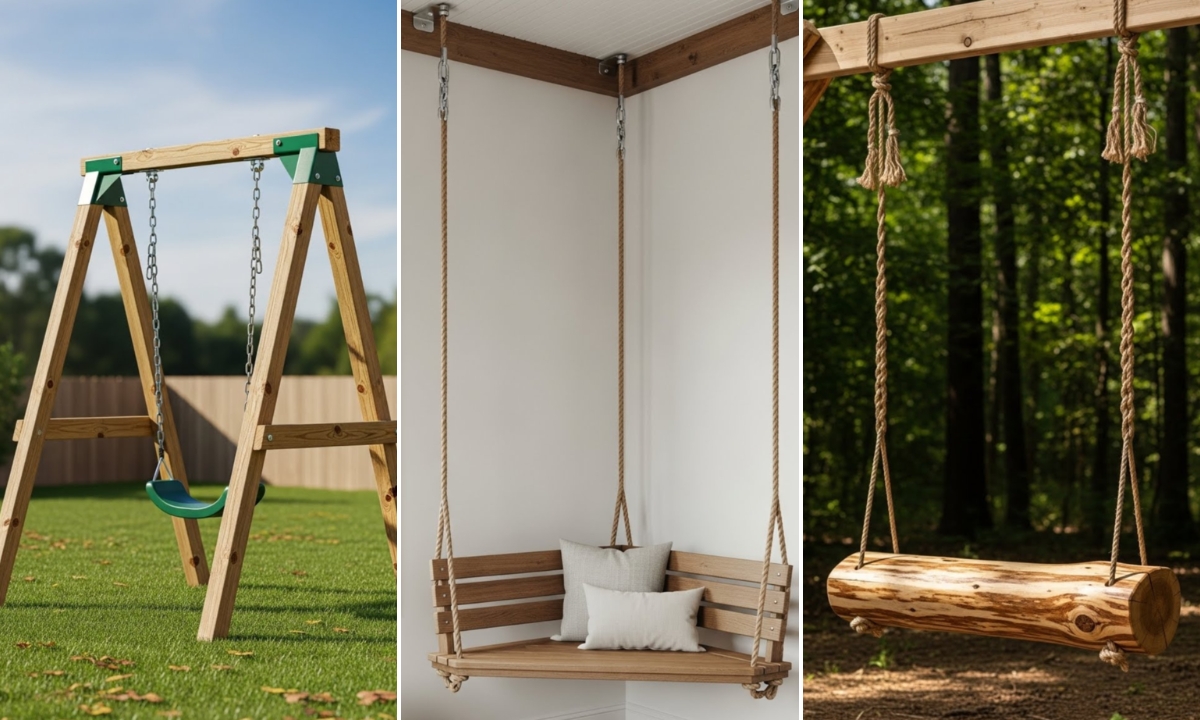
22 DIY Wooden Swing Ideas for 2026
This post may contain affiliate links: full affiliate disclosure.
You’re not the only one who has considered creating a swing set but felt hesitant. The majority of individuals find it appealing to save money and make something themselves.
But they are unsure if the effort is truly worthwhile. It’s difficult to decide which option makes sense between unclear do-it-yourself plans, unstated expenses, and pricey store-bought kits.
This is a clear summary of when construction is less expensive, when purchasing is more wise, and what actually influences the total cost.
In this article, you’ll find 22 Diy Wooden Swing ideas perfect for 2026.
Let’s jump in!
Contents
- 1 Is it cheaper to build or buy a swing set?
- 1.1 Coastal Porch Swing
- 1.2 Minimal Wood Bench
- 1.3 Carved Indoor Swing
- 1.4 Compact Hanging Seat
- 1.5 Balcony Plank Swing
- 1.6 Traditional Wooden Jhula
- 1.7 Modern Indoor Jhula
- 1.8 Daybed Style Swing
- 1.9 Freestanding Garden Swing
- 1.10 Clean Frame Swing
- 1.11 Living Room Swing
- 1.12 Indoor Frame Swing
- 1.13 Canopy Garden Swing
- 1.14 Fire Pit Swings
- 1.15 Modern Yard Swings
- 1.16 Macramé Rope Swing
- 1.17 Tree Branch Swing
- 1.18 Pergola Bench Swing
- 1.19 Kids A-Frame Swing
- 1.20 Corner Porch Swing
- 1.21 Rustic Log Swing
- 1.22 Folding Seat Swing
- 2 FAQs
Is it cheaper to build or buy a swing set?
Money can be saved by building a swing set, but only if you consider the big picture. DIY frequently costs less and gives you greater control over quality.
You already have the basic tools; keep the design simple. However, those expenses quickly mount up if you have to purchase tools.
Fix errors, or dedicate multiple weekends to construction. Store-bought swing sets are typically more expensive initially, but they are less stressful and save time.
The less expensive alternative isn’t just about the price you find online; it also depends on your time, comfort level, and available resources.
Save this article for later! 👇👇
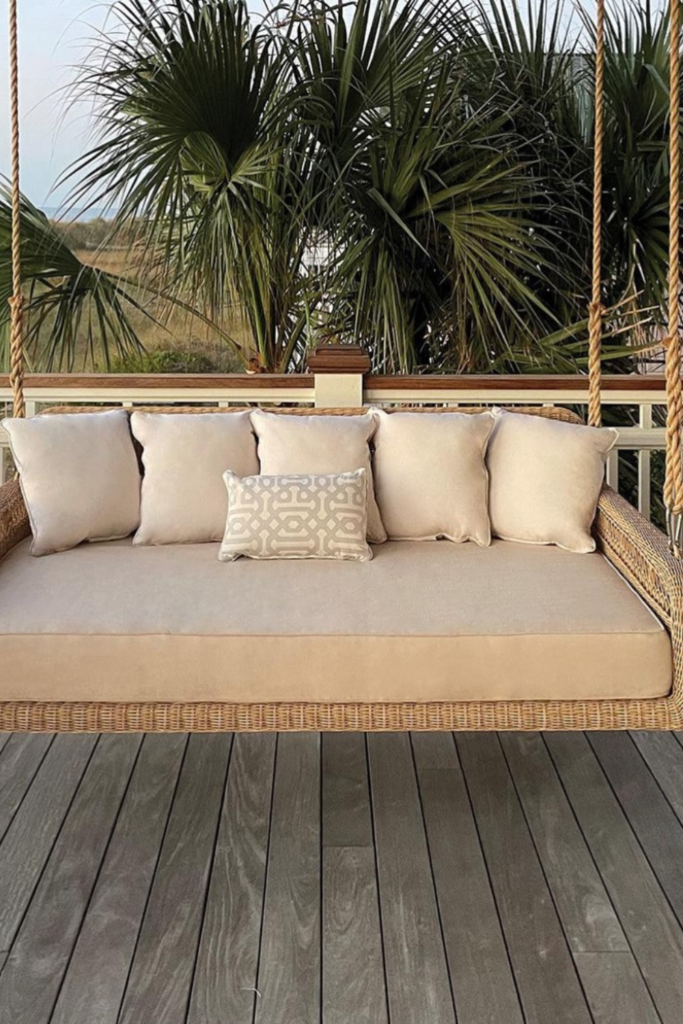
Coastal Porch Swing
This arrangement looks great on a covered porch. You want a laid-back yet elegant look. For a softer, more seaside vibe.
Use a strong wooden or wicker swing frame and suspend it from a thick rope, avoid making the room feel weighty.
Keep the pillows neutral. This style is particularly effective in warm areas where everyday lounging, comfort, and airflow are key.
Minimal Wood Bench
This swing looks great on a contemporary balcony or apartment porch if you prefer simple designs and little clutter.
To keep the bench aesthetically light, use sturdy oak planks and hang it from steel rods or thin cables.
This is most effective when there isn’t much room, and you want to use the space without making it into a large lounge.

Carved Indoor Swing
This type of swing is ideal for a living room or spacious bedroom if you want it to function as furniture.
Use chains concealed above a decorative beam to hang it from ceiling joists. Positioning is more important than appearance.
This arrangement is best suited for leisurely rocking, reading, or unwinding rather than rough movement.
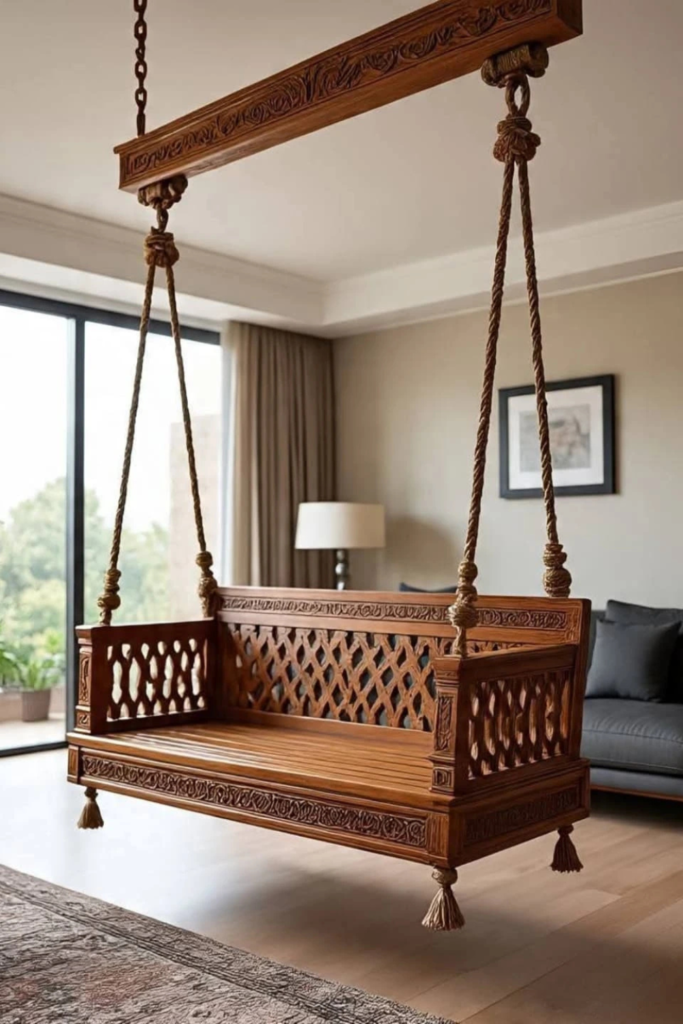
Compact Hanging Seat
You have limited floor space, yet want a swing. Use heavy-duty chains or rope to suspend the seat.
Which should be made of strong hardwood boards. For comfort without clutter, add one firm cushion.
This is best used for calm sitting and light rocking; it is not suitable for large, heavy swings or gatherings.

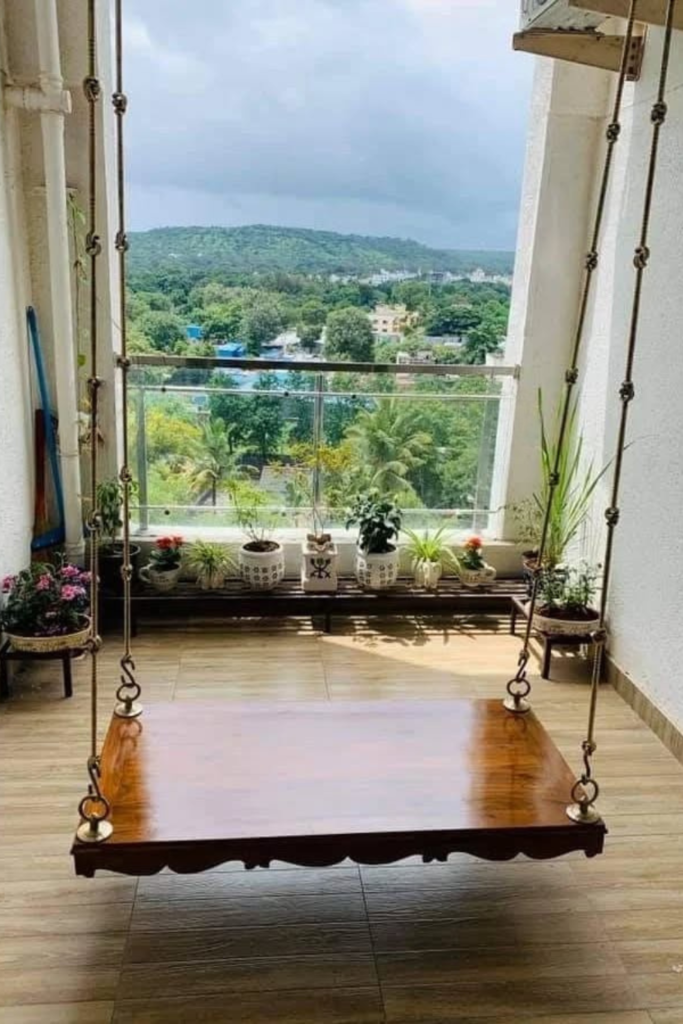
Balcony Plank Swing
This plank-style structure is the simplest way to achieve a basic swing without packing a small balcony.
Keep it sturdy in confined spaces, use a single solid hardwood board, and hang it from metal rods or chains.
Keep the space open and simple to maintain, surround it with plants rather than cushions, works well.
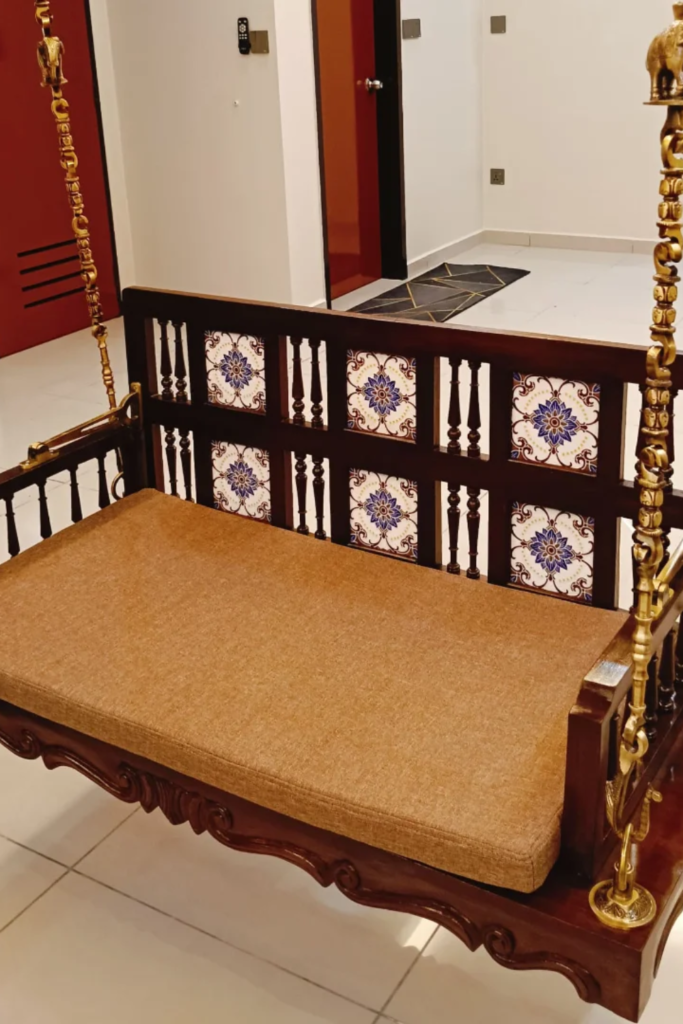
Traditional Wooden Jhula
Works best in a living room or spacious corridor if you’re looking for a swing that seems ageless and entrenched.
Use metal chains to suspend a strong hardwood cushion with carved embellishments, ensuring that the cushion.
Maintains its shape over time, keeps it firm, and is effective in houses where the swing is intended for everyday sitting.
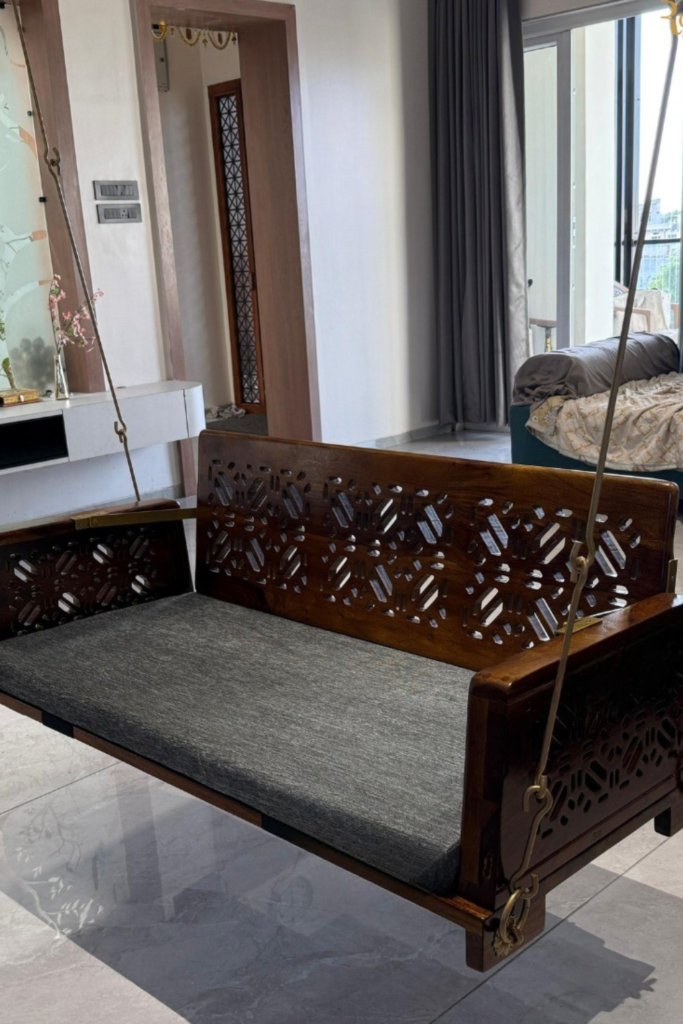
Modern Indoor Jhula
This design is ideal if you want a swing that complements a contemporary house rather than stands out.
Prevent visual cacophony by choosing clean-cut oak panels with delicate cutwork, and keep the cushion simple.
Use thin metal rods or chains fastened to ceiling beams to hang it. Effective in living areas when comfort is desired.
Daybed Style Swing
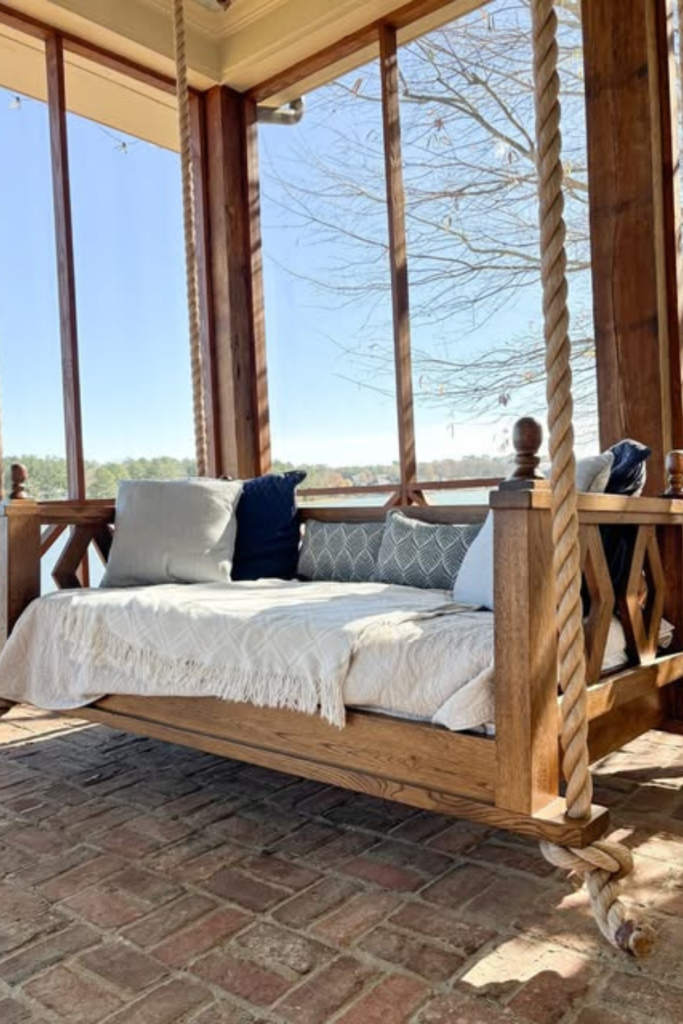
This swing is most effective on a large porch; sitting is insufficient, and you want complete stretch-out comfort.
Support the additional weight, construct it like a low wooden daybed, and hang it on a thick rope. Keep it functional.
Layer it with throws and flat cushions rather than heavy pillows. This is perfect for afternoon naps, reading, or just relaxing.
Freestanding Garden Swing
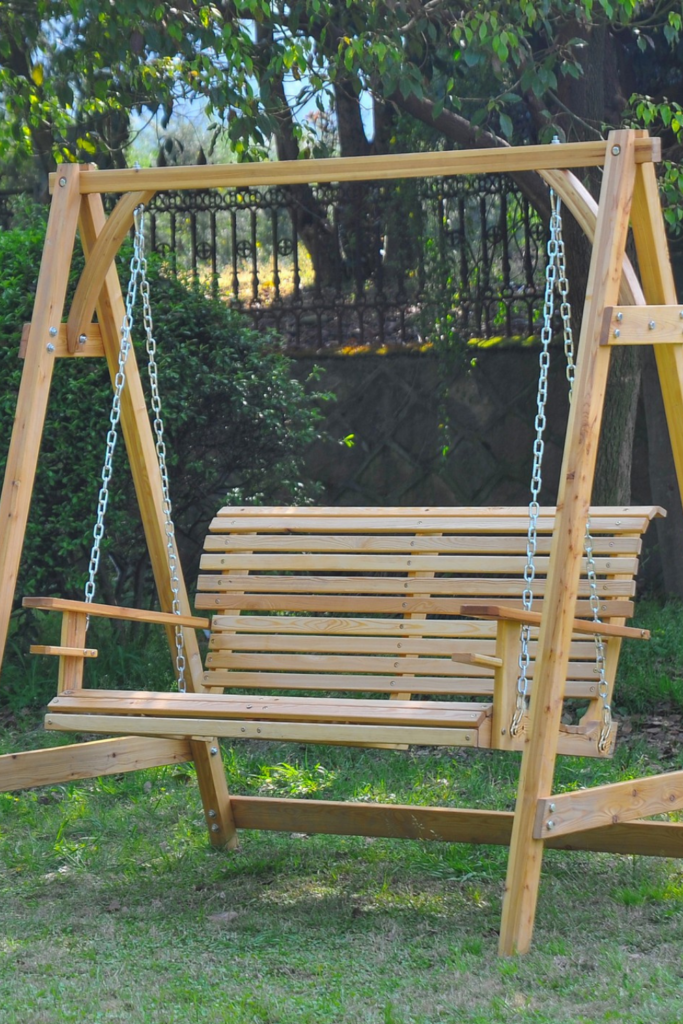
Make an A-frame resilient to weather and movement, use pressure-treated lumber, keep the bench stable over grass or dirt.
Hang it using chains. When you want flexibility without disrupting existing structures, this works best in open yards.
Clean Frame Swing
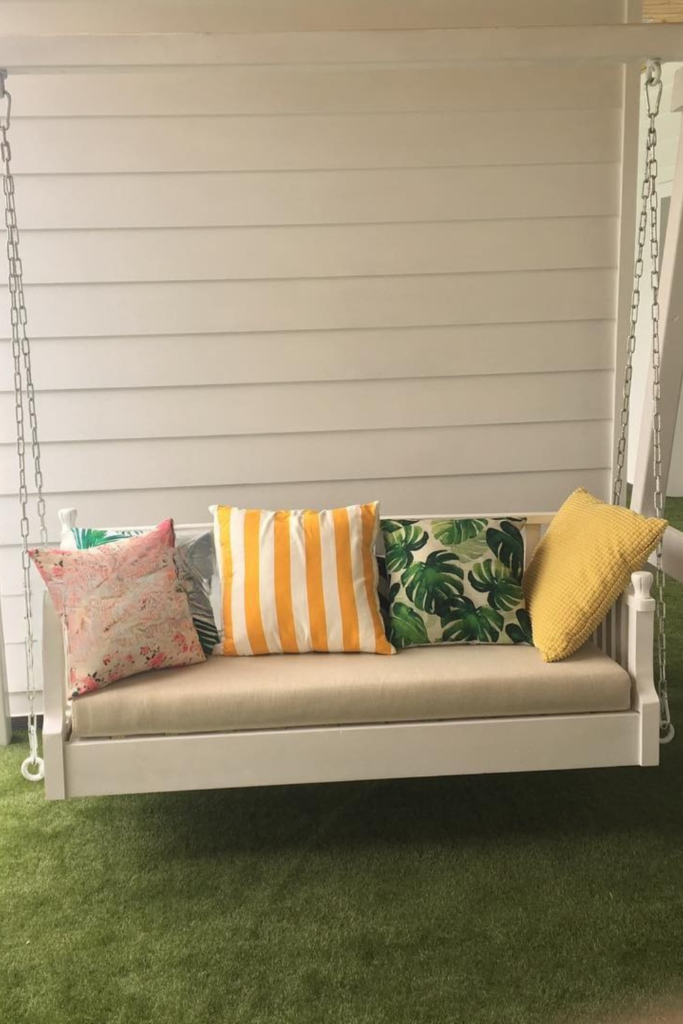
Framed swing is ideal for a patio or poolside space if you want something that looks polished and purposeful.
Hang the seat with chains after building a basic, painted wood frame. To add personality, keep the cushions colorful.
You want a stand-alone swing that feels polished and permanent rather than transient or impromptu, this is perfect.
Living Room Swing
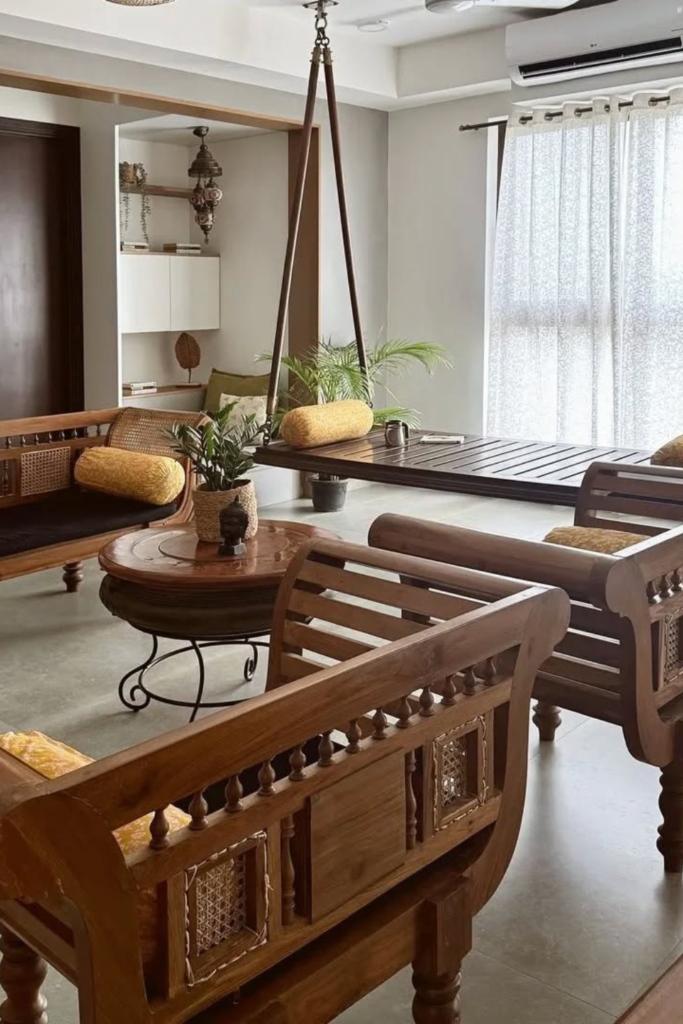
This method works best if you want a swing that blends with your furnishings rather than stands out as a curiosity.
Make it blend in naturally, use solid hardwood, and maintain proportions that are similar to those of a typical sofa.
For stability, use metal rods to hang it from ceiling beams, ideal for daily use and moderate movement.
Indoor Frame Swing
You want a swing that complements your furniture rather than stands out as an oddity. This approach works best.
Use solid hardwood and keep the proportions close to those of a conventional sofa to make it blend in organically.
Use metal rods to suspend it from ceiling beams for support, everyday use, and moderate mobility. This is perfect.
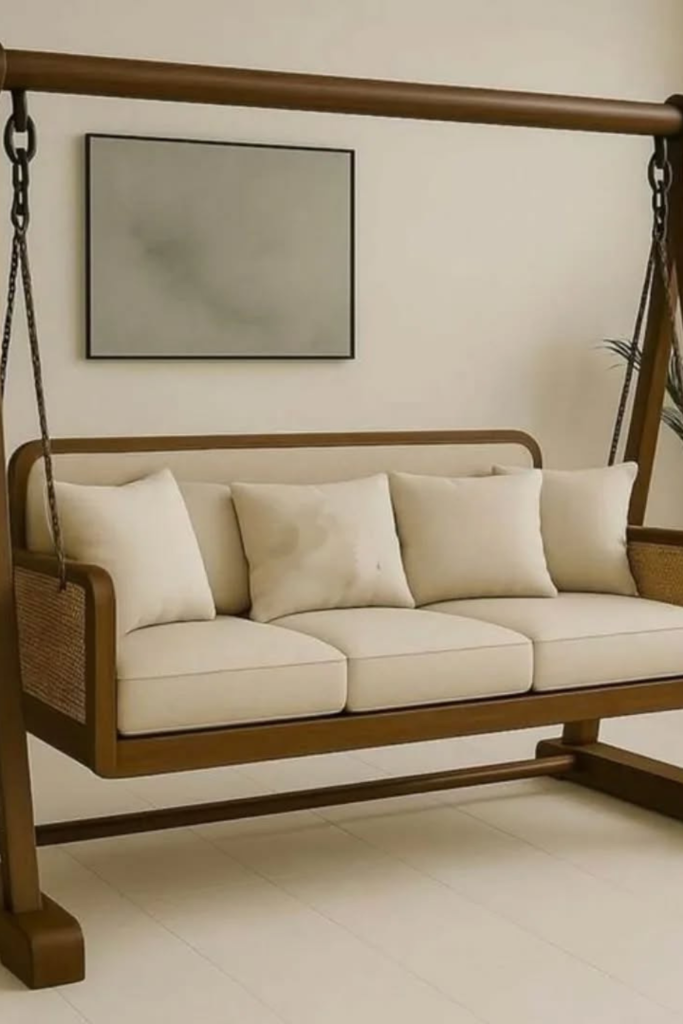
Canopy Garden Swing
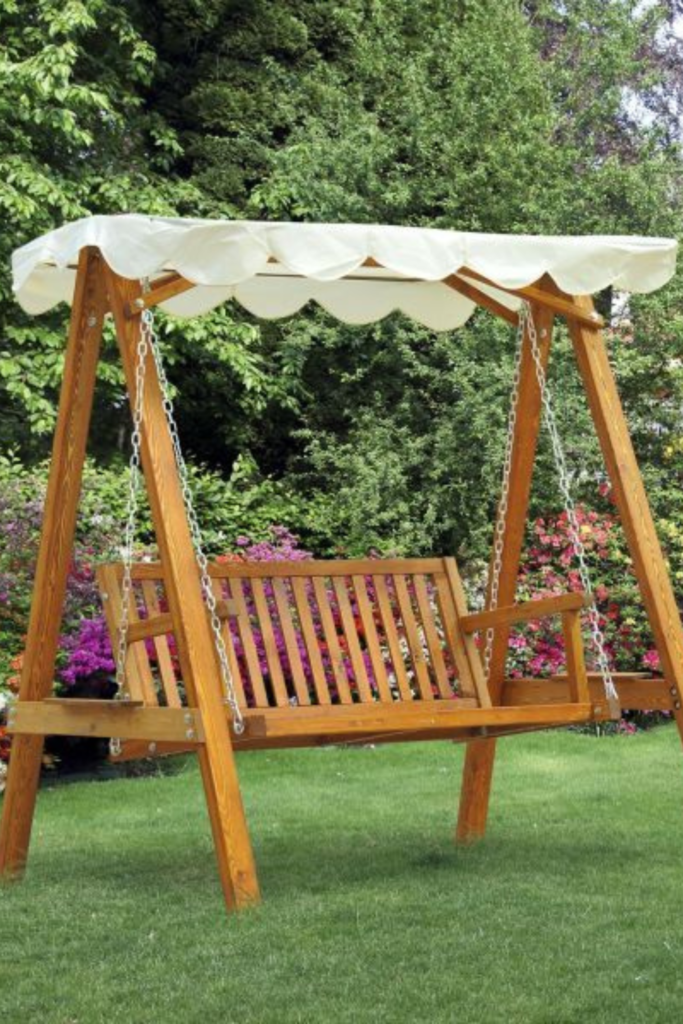
Adding a canopy alters how often you use the swing, especially if your yard experiences intense sun or mild rain.
Construct a typical A-frame and cover it with a fabric or poly canopy to provide shade. Let the cover do the work.
Keep the bench basic. For open landscapes where comfort is just as important as aesthetics, it works well.
Fire Pit Swings
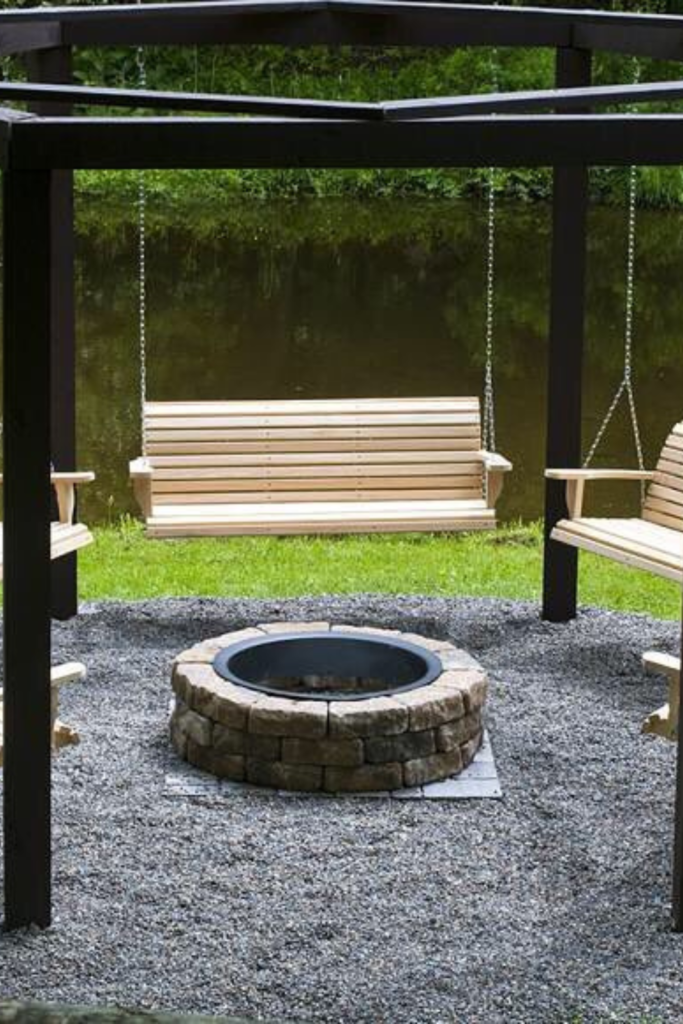
You want a swing setup that brings people together. Around a fire pit, construct a strong pergola-style frame.
Hang several wooden swings with evenly spaced chains, make getting in and out of the seats easier, and keep them simple.
This concept is ideal for use in the evening, particularly when talk rather than movement is the main focus.
Modern Yard Swings
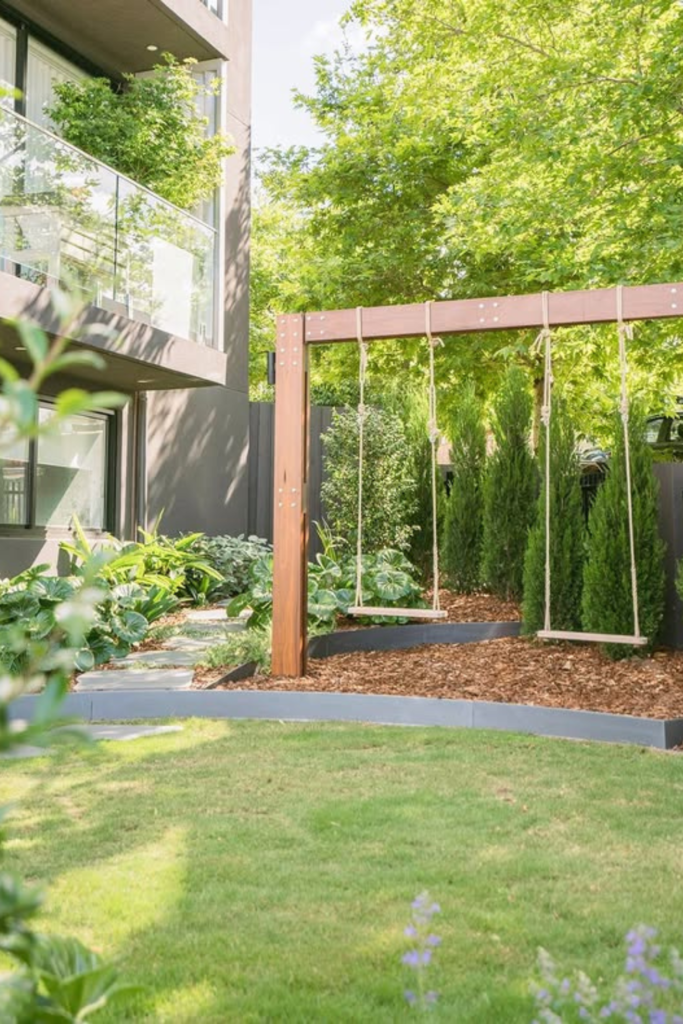
This simple design is ideal for modern homes if you want swings that feel deliberate rather than fun.
Use rope and flat wooden benches to create a basic rectangle structure with thick poles and a few swings.
Design is just as important as functionality, and visual impact comes from the spacing and vegetation.
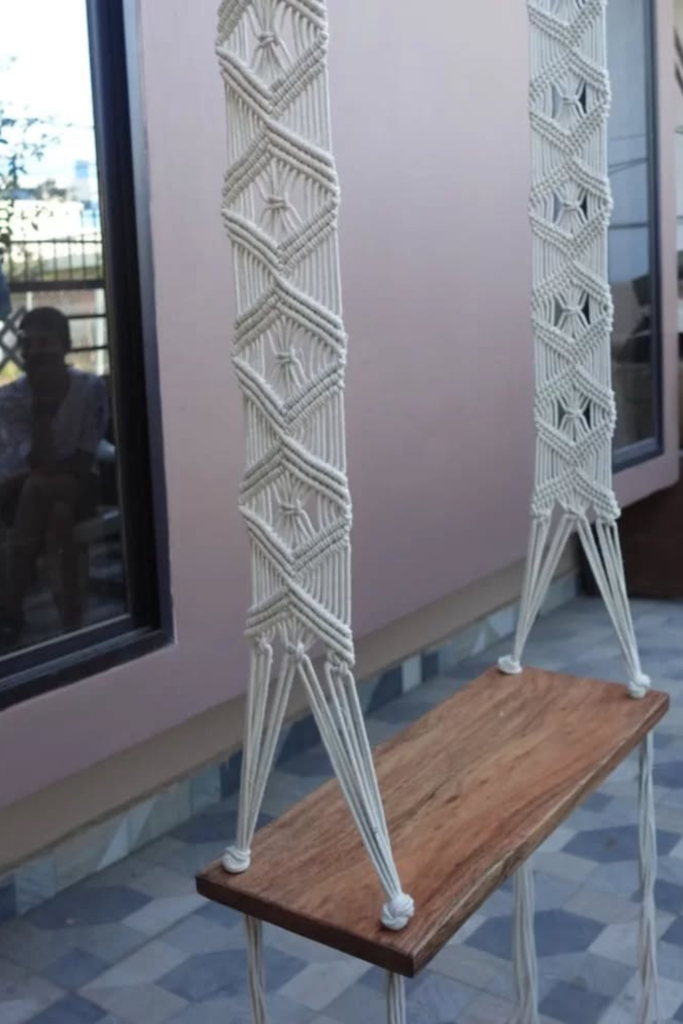
Macramé Rope Swing
This macramé style is ideal for balconies or covered patios if you want a swing that feels airy and ornamental.
For the seat, use a sturdy hardwood plank. To properly support the weight, make thick, knotted rope sides.
Keep it under a roof. You want softness and texture without using large pillows, this arrangement is perfect.
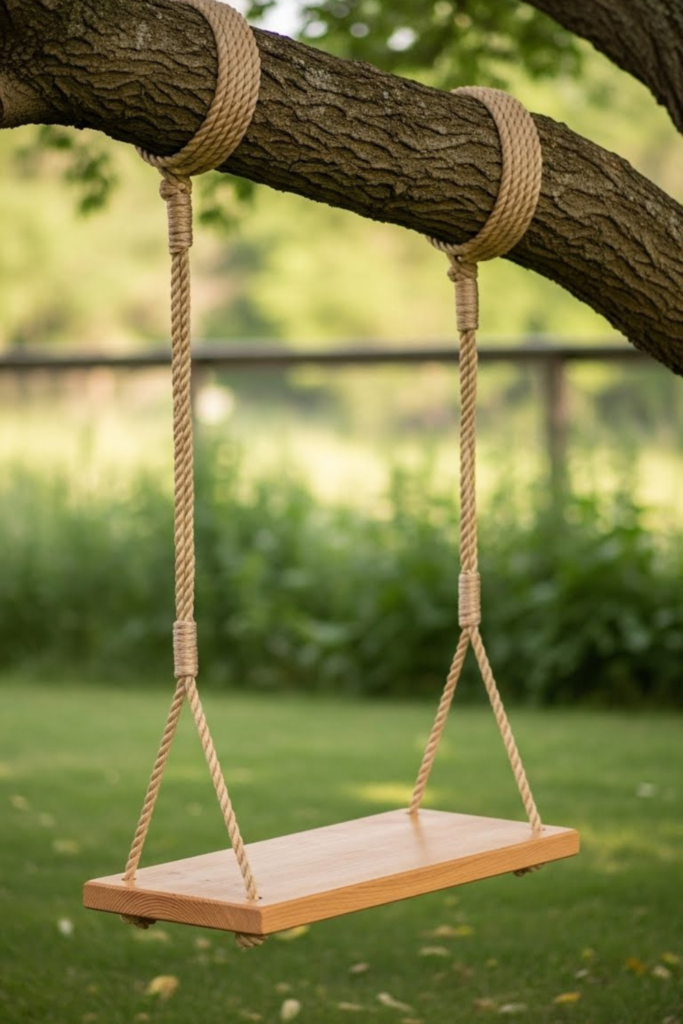
Tree Branch Swing
You already have a robust, healthy tree in your yard. This plan will work best if you use a wide rope and a sturdy wooden plank.
Make it simple to get on and off, maintain a moderate swing height, and best for leisurely garden use rather than vigorous swinging.
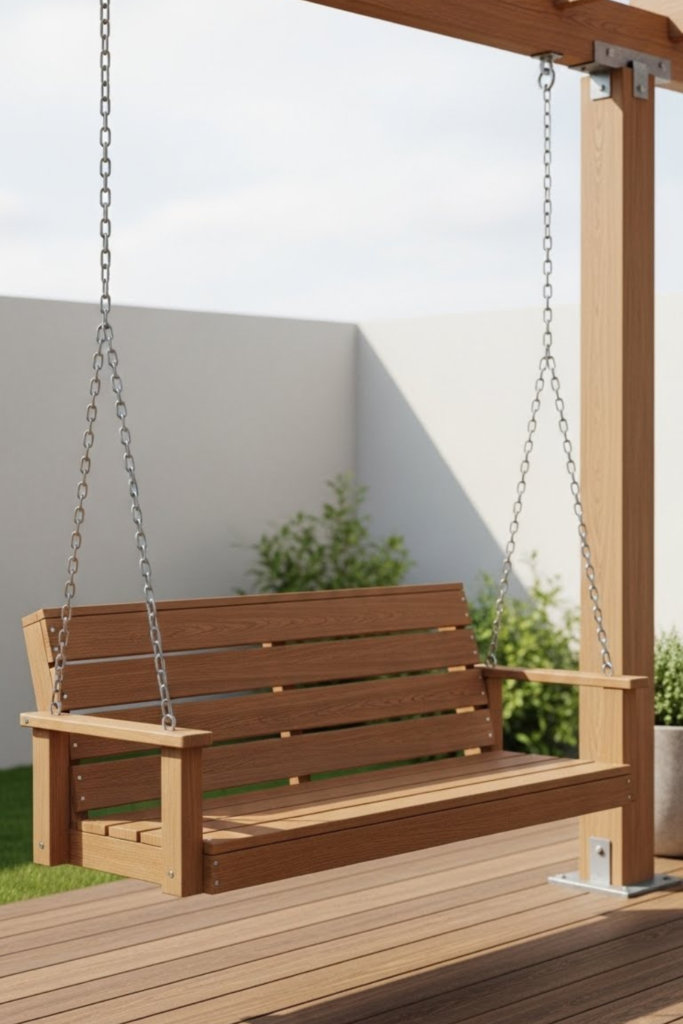
Pergola Bench Swing
Making a swing out of a pergola on your patio makes sense. Construct a basic bench seat and suspend it from the main beams using chains.
You want seating that moves a little but still feels like a part of the structure, this is a great option, appearance is softened with outdoor cushions.
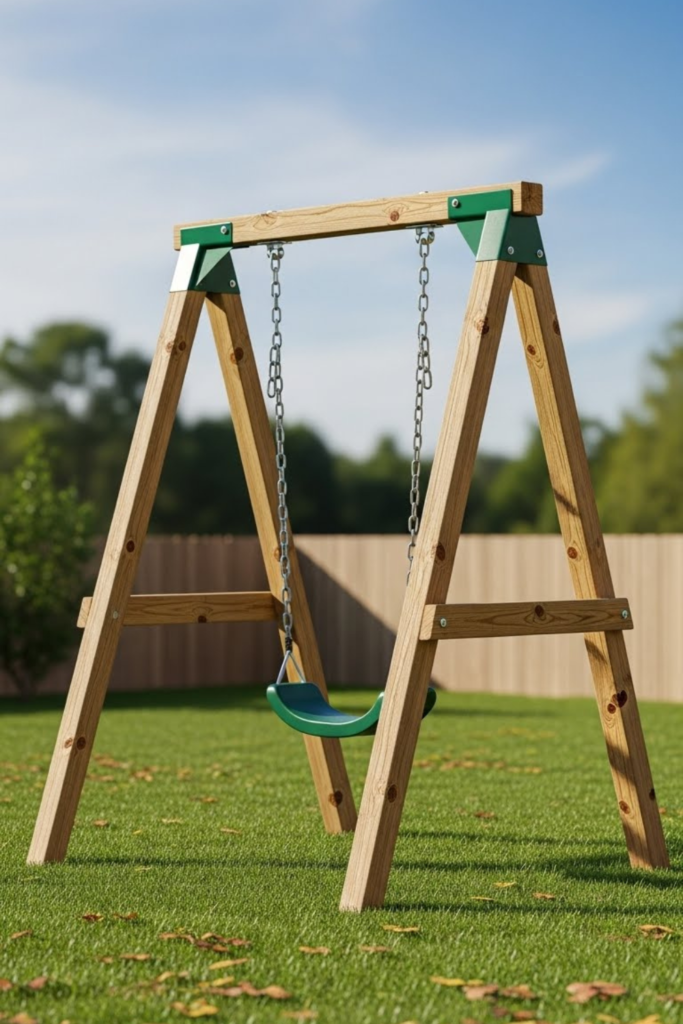
Kids A-Frame Swing
Keep everything low and solid. Smaller yards are ideal for a tiny A-frame constructed of pressure-treated wood.
Use lightweight swing seats. Limit the height to prevent risk, prioritizing ordinary play and safety above specific design elements.
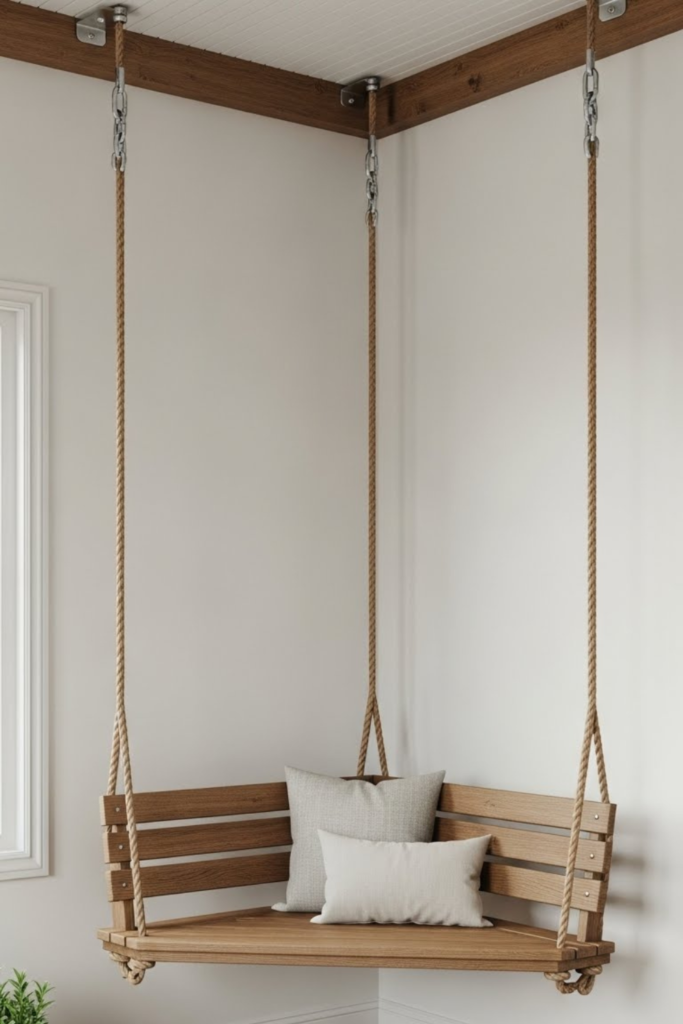
Corner Porch Swing
A corner swing is a wise choice if your porch seems constricted. Construct a slender bench and hang it diagonally from two ceiling points.
Adds chairs while maintaining walking space, ideal for reading, sitting quietly, or having coffee in the morning without obstructing doorways.
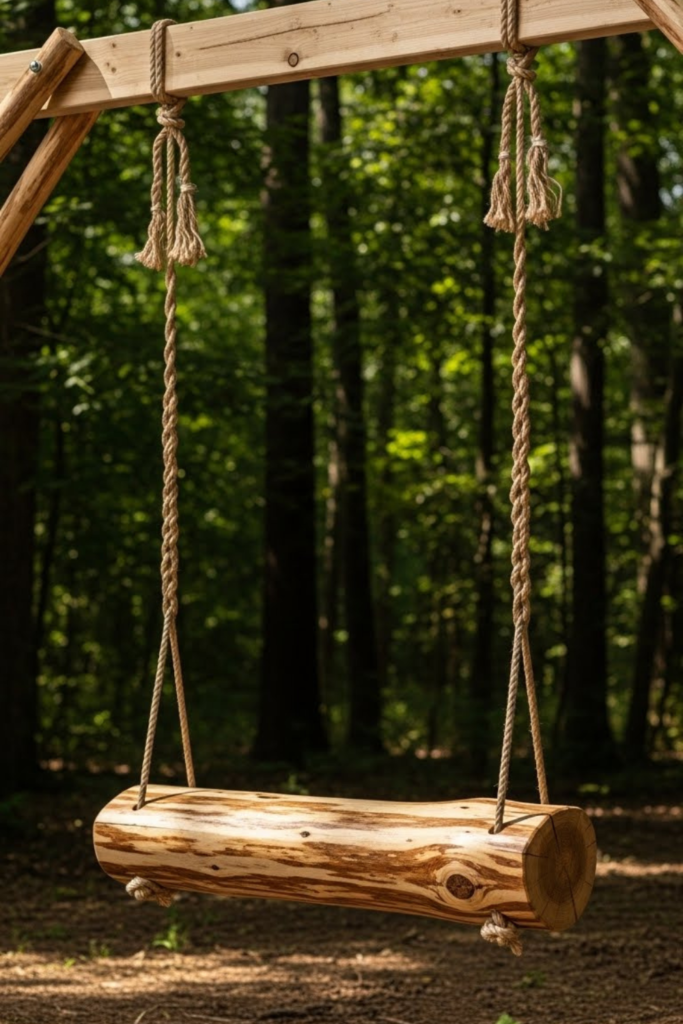
Rustic Log Swing
Ideal for natural or wooded spaces where polished furniture feels out of place. Use solid logs for the seat and hang them with rope or chain.
Sand all contact areas well so it’s comfortable. This works best in cabins, garden corners, or shaded outdoor spots.
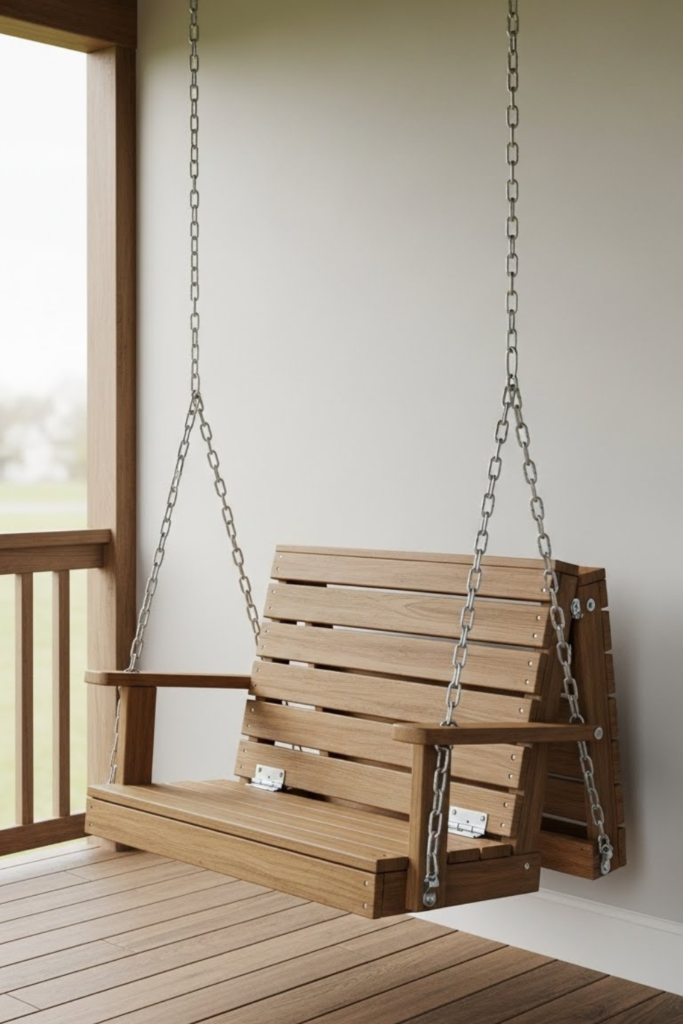
Folding Seat Swing
A folding swing offers versatility if you have limited space. Construct a wooden seat that folds up when not in use using hinges.
Use chains to hang it from a beam or frame. This is ideal for small porches where you want seating only when needed.
FAQs
Which wood is best for a swing?
The ideal wood for a swing will depend on its intended purpose and location, because it naturally resists decay, insects, and dampness without requiring much treatment.
It is sturdy and reasonably priced, pressure-treated pine is a good choice for outdoor swing sets; however, it must be sealed to avoid cracking.
Hardwoods like oak or teak are good weight bearers for indoor swings and eventually take on a more polished appearance.
What type of swing set lasts the longest?
The longest-lasting swing sets have straightforward designs and sturdy frames. Standing alone, A-frame sets are composed of cedar.
Pressure-treated wood often withstands outdoor conditions the best. Failure rates decrease when there are fewer moving parts.
Sets that are securely fastened and covered with paint or sealer typically outlast thin-wood or lightweight-metal models by several years.
You may like to read!

Fasial is the founder of the Fizzy Flare. He has been a passionate blogger since 2021. He ran three different websites in the past few years. Now he is focusing on Fizzy Flare to build an audience and help them organize their life.