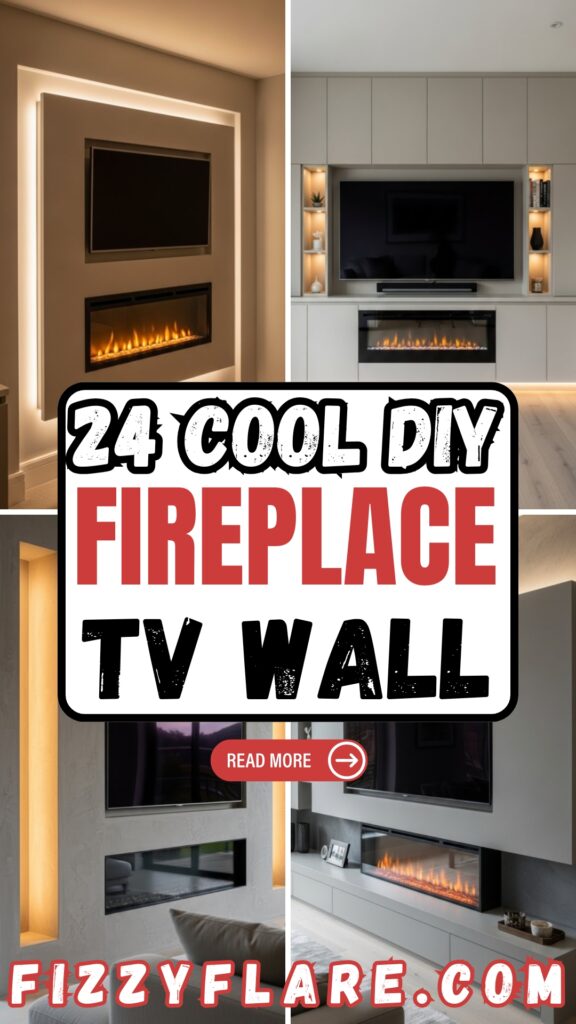
24 DIY Fireplace TV Wall Ideas for 2026
This post may contain affiliate links: full affiliate disclosure.
If you’re considering creating a do-it-yourself media wall, you’re undoubtedly both anxious and delighted. You’re concerned about damaging the wall.
Putting the TV too high, or spending money on something that ends up looking bad, but you still want that tidy fireplace-and-TV combination.
In actuality, a do-it-yourself media wall isn’t as difficult as people believe, and the process becomes much more doable after you figure out what really counts.
In this article, you’ll explore 24 Diy Fireplace TV Wall ideas that work in 2026.
Contents
- 1 Is it hard to build a DIY media wall?
- 1.1 Floating Mantel Focus
- 1.2 Built-In Balance
- 1.3 Stone Panel Center
- 1.4 Stone Column Wrap
- 1.5 Brick Stove Feature
- 1.6 Full Wall Built-In
- 1.7 Shelf Lighting Layers
- 1.8 Vaulted Stone Feature
- 1.9 LED Shelf Glow
- 1.10 Recessed Shelf Niches
- 1.11 Compact Corner Build
- 1.12 Shiplap Center Strip
- 1.13 Layered Shelf Warmth
- 1.14 Framed Fireplace Core
- 1.15 Stone Symmetry Wall
- 1.16 Soft Panel Contrast
- 1.17 Artwork Over TV
- 1.18 Dark Panel Statement
- 1.19 Vertical Slat Frame
- 1.20 Minimal Plaster Wall
- 1.21 Offset Fireplace Design
- 1.22 Textured Microcement Look
- 1.23 Hidden Storage Wall
- 1.24 Slim Linear Focus
- 2 FAQs
Is it hard to build a DIY media wall?
Most people imagine everything going wrong at once, which makes it difficult at first. In reality, creating a DIY media wall is not particularly challenging.
You don’t have a plan. Although you don’t require any specialized equipment or expert talents, you should consider the arrangement before beginning.
The construction is simple if you know where the TV will be placed, how deep the wall must be, and where the power will travel.
Slowing down, taking precise measurements, and completing each step correctly before continuing are the true challenges, not the task itself.
Save this article for later! 👇👇
Floating Mantel Focus
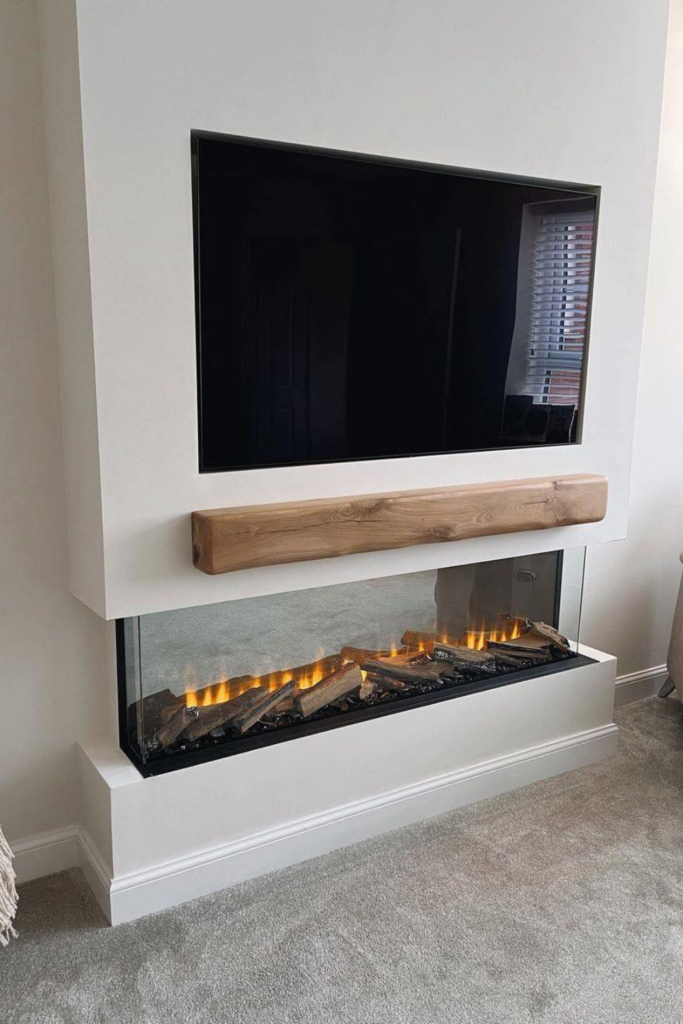
You want a sleek, clean media wall without any visual clutter. This arrangement is ideal. To break up the white space.
Construct a basic box frame, recess the TV and fireplace, and then add a large timber beam as a floating mantel.
The fireplace’s glow serves as ambient lighting, so I don’t really need anything else. Just keep the overhead lights low.
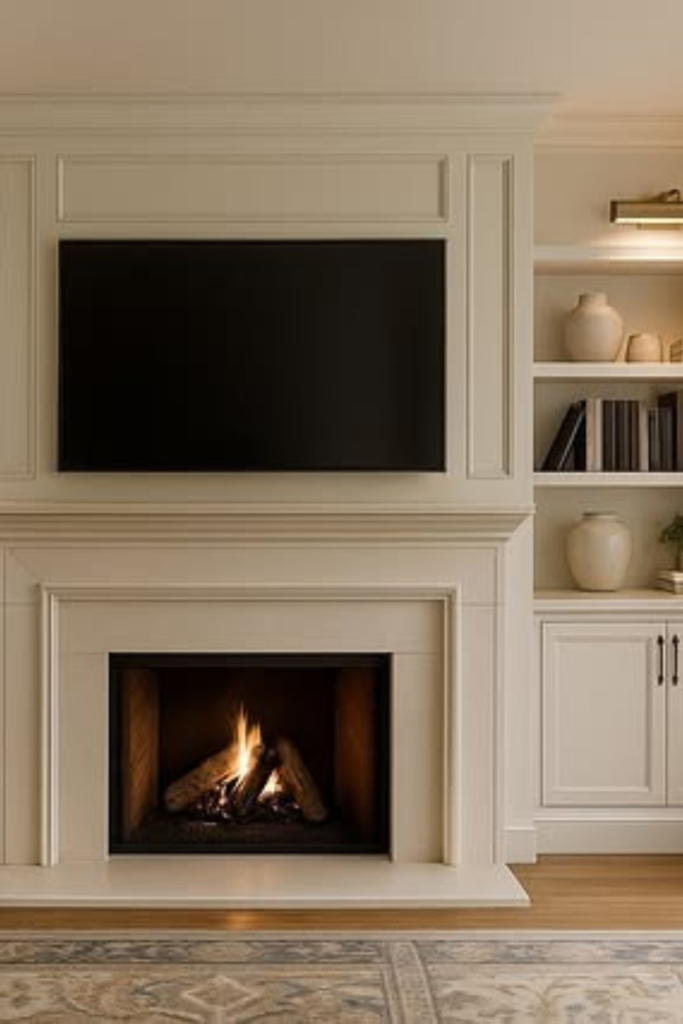
Built-In Balance
This concept is most effective in living areas, where the fireplace wall should feel like furniture rather than an added element.
Maintain symmetry, build short built-ins on each side after framing the middle area, prevent heaviness.
Keep finishes light while shelf lights add subtle layers; wall sconces offer concentrated accent lighting.
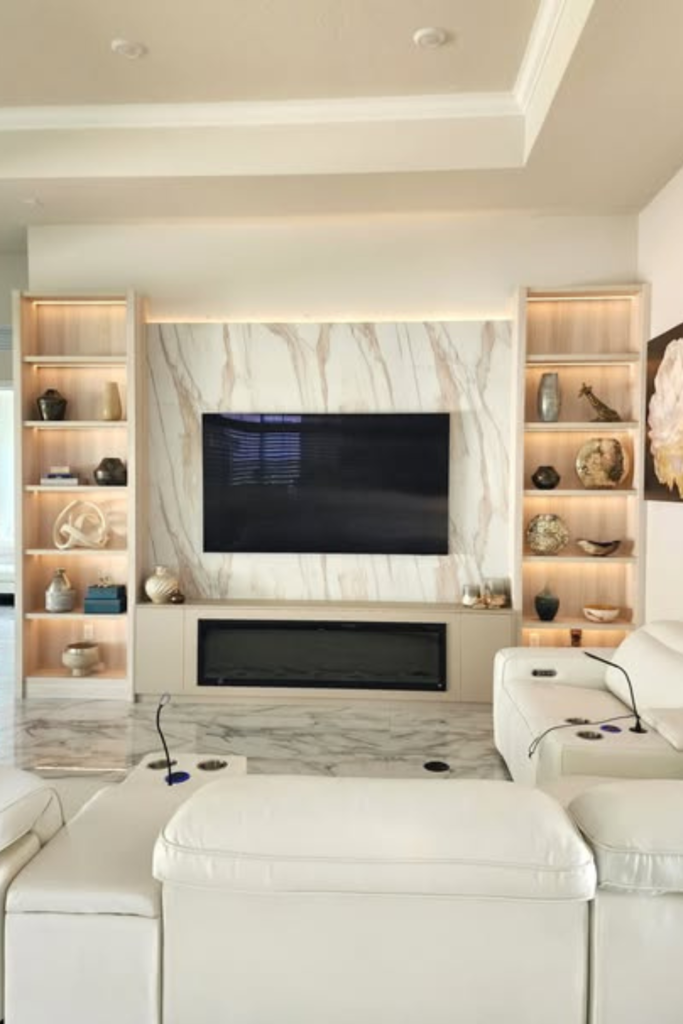
Stone Panel Center
You want the media wall to be striking, this method works well for open-plan areas without taking over the space.
Keep the sides simple with open shelving and use a large-format stone or marble-look panel as the focal point.
Recess the TV and fireplace into the panel, while ceiling lights are kept to a minimum, warm shelf LEDs create depth.
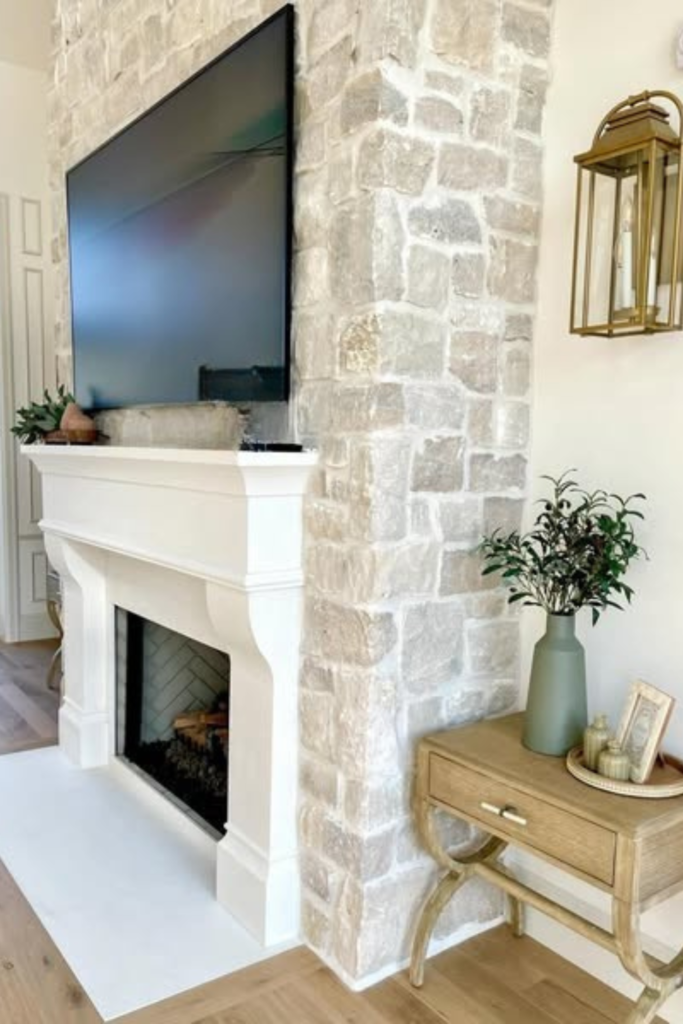
Stone Column Wrap
You want character, cramming everything into a single flat box. Cover the fireplace area with stone and a TV that floats slightly.
Keep it do-it-yourself, using lightweight stone veneer. Natural daylight prevents the stone from feeling heavy.
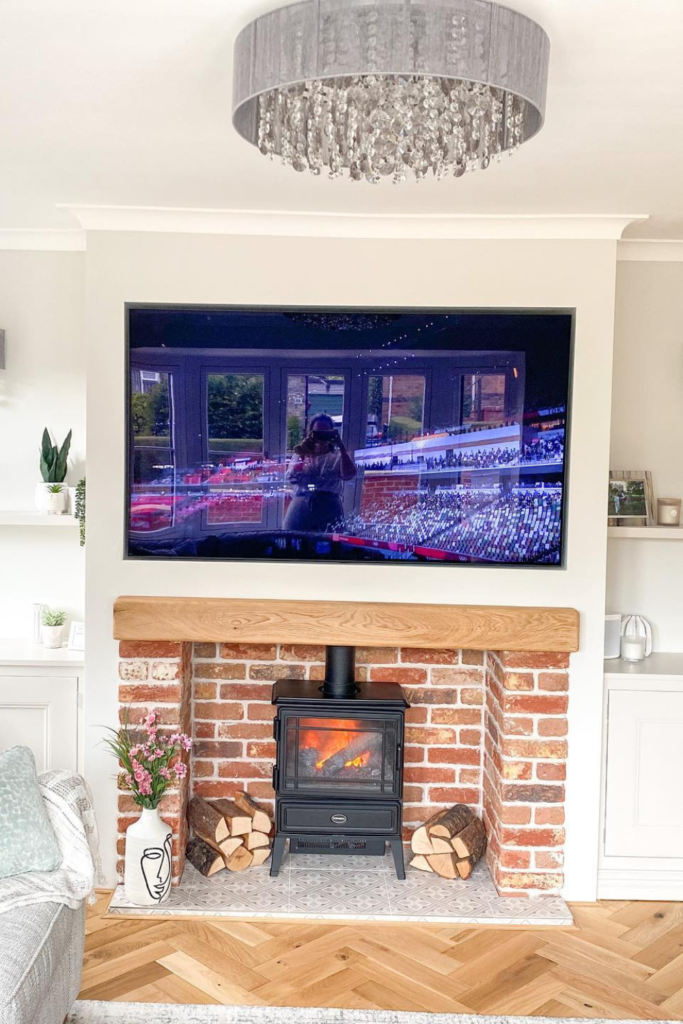
Brick Stove Feature
You want warmth and personality without a completely modern build, keep everything feeling purposeful.
Frame the TV securely above, and either preserve the original brick. In addition to protecting the TV from heat.
Wood beam softens the appearance, stove itself becomes the primary ambient glow, with wall soft side lighting.
Full Wall Built-In
This is most effective in larger living rooms, where the media wall serves as the room’s focal point.
Build the TV and fireplace in the middle, add shelving and cabinets along the wall for a personalized appearance.
Maintain consistency in finishes to prevent visual noise, maintain the fireplace’s central glow, recessed shelf lights.
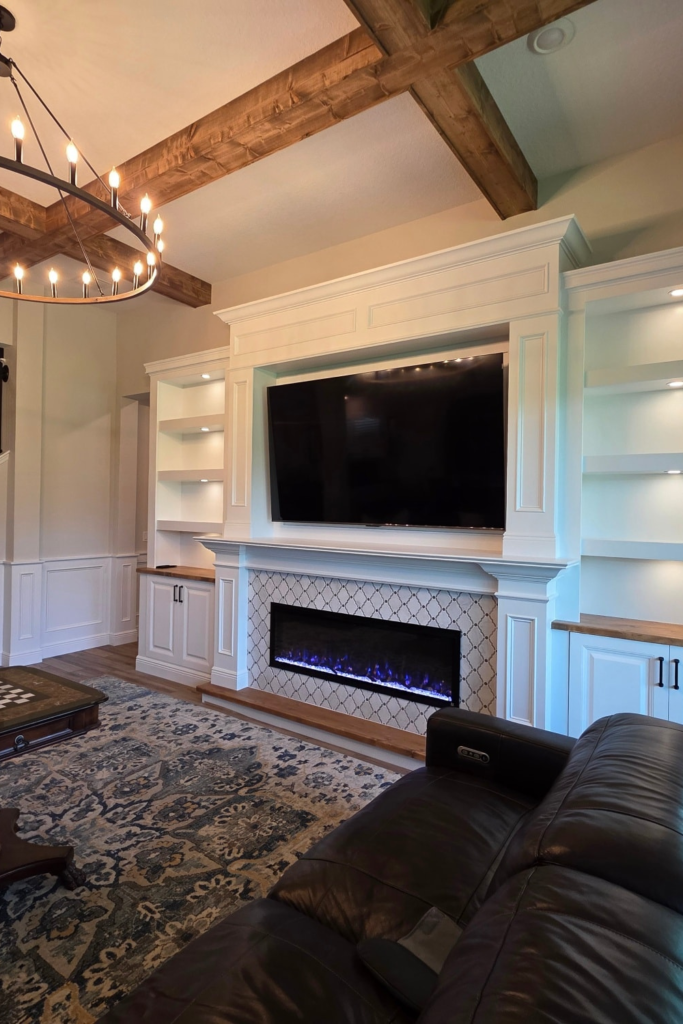
Shelf Lighting Layers
This concept looks great in family rooms and reading areas if you prefer a polished, lived-in vibe.
Construct open shelves around the TV and fireplace, then use multiple lighting sources rather than just one.
Track lights manage task lighting, the stove glow keeps the room warm, little pendant drops give flair.
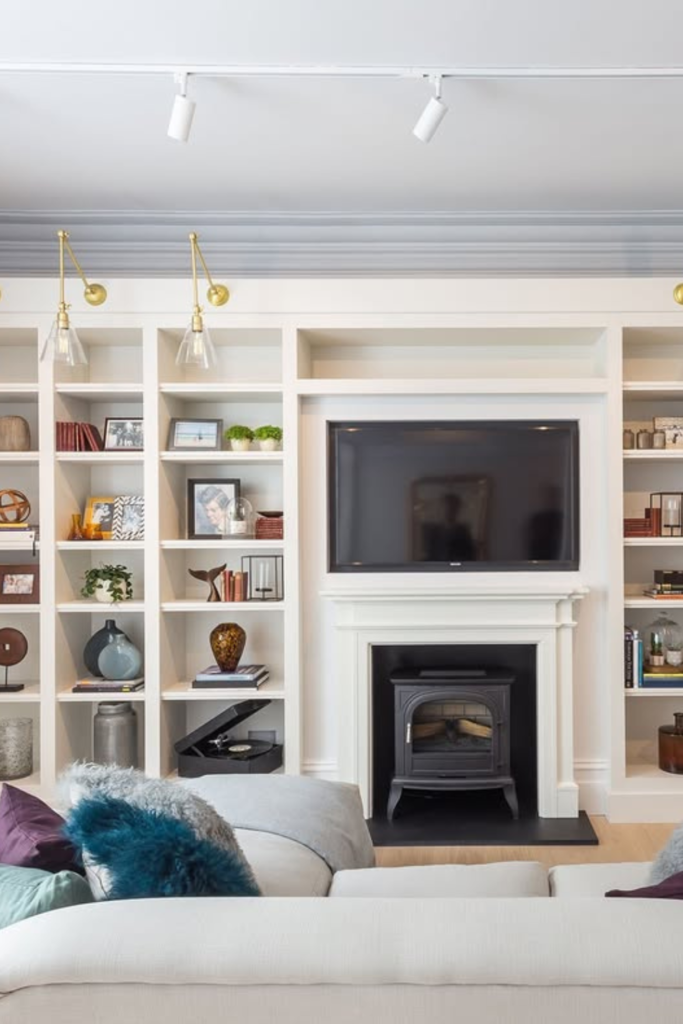
Vaulted Stone Feature
Keep the TV and fireplace in the center and run stone or textured panels all the way up to match the ceiling line.
With delicate ceiling spots for evening balancing, natural sunshine and soft light does most of the work here.
Works well in spaces where a flat media wall would seem out of place due to high or sloping ceilings.
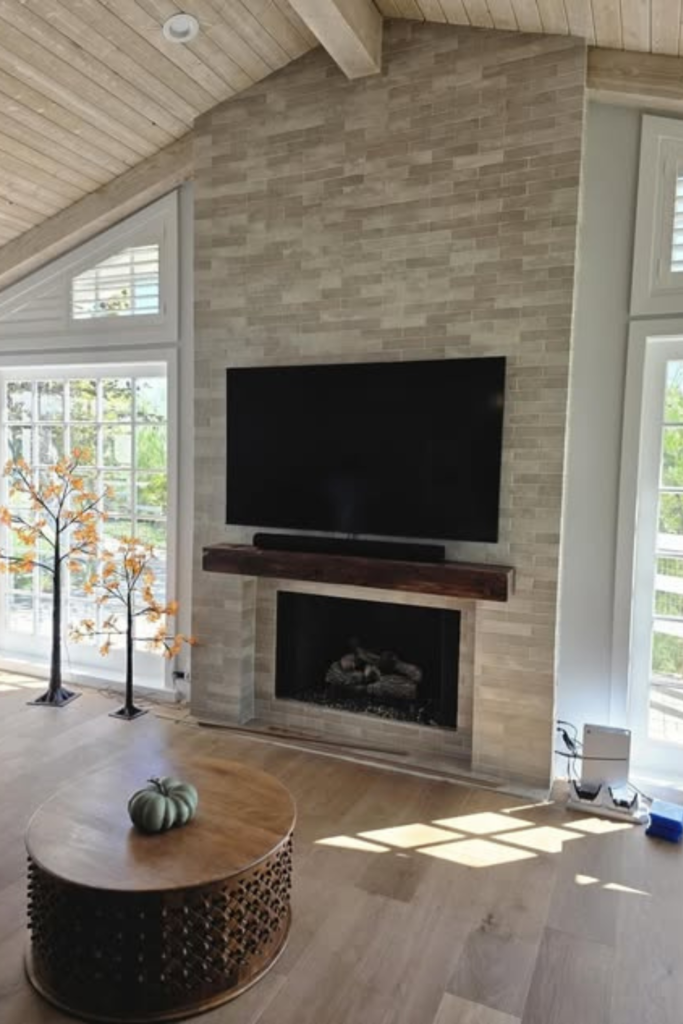
LED Shelf Glow
You want a contemporary appearance without creating complete cabinets, this arrangement is perfect.
Generate gentle wall washes, install thin floating shelves on each side, and conceal the LED strips behind them.
Use neutral or cool LEDs; in the evening, let the fireplace’s color create contrast and atmosphere.
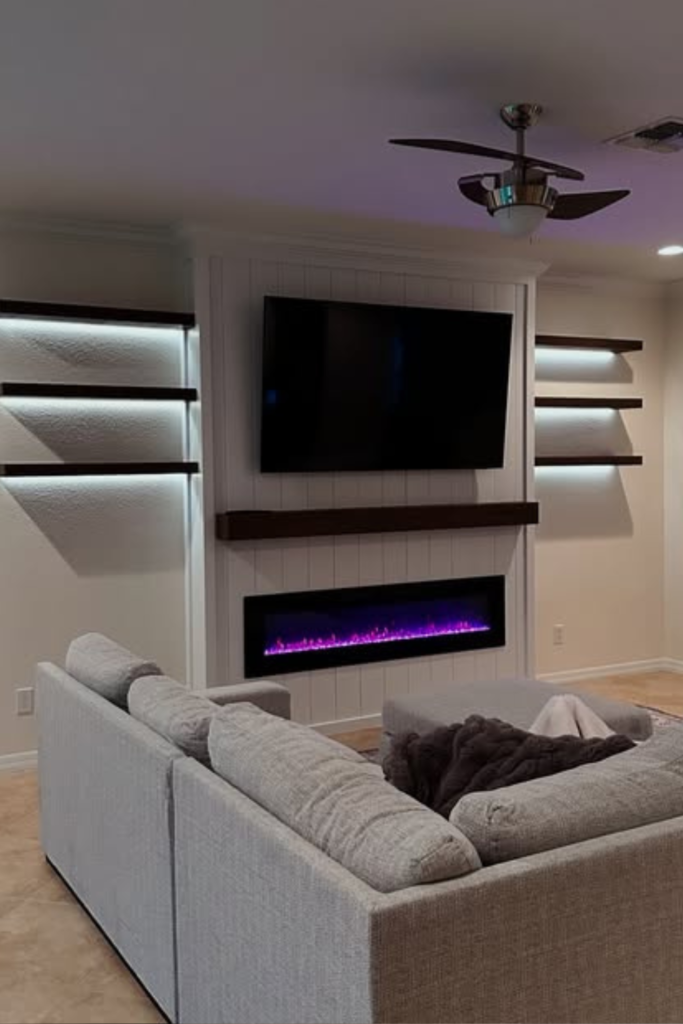
Recessed Shelf Niches
Maintain the TV and fireplace’s dominance, cut narrow recesses into the wall on both sides, and keep the middle tidy.
Prevent visual breaks by painting everything the same color. Warm pools of light are produced by tiny recessed spotlights.
Inside each niche, a gentle glow from the fireplace is added at eye level. You want mood and storage, this is good.
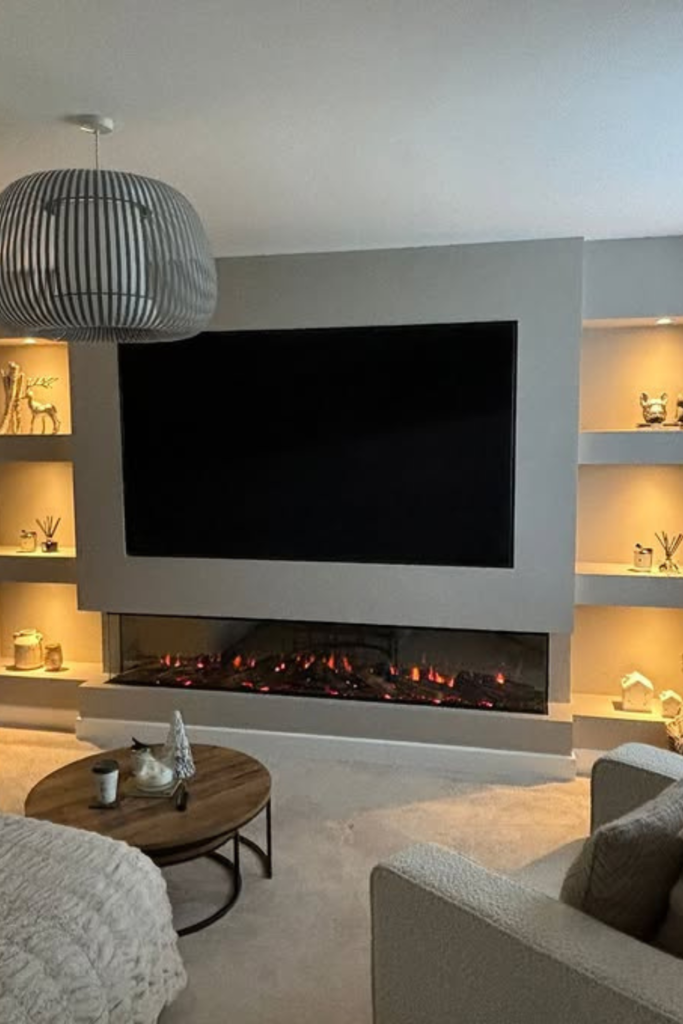
Compact Corner Build
You want impact but don’t have a large wall to work with, this concept is ideal. Keep the fireplace small.
Construct a shallow media wall in the corner, and add height without adding bulk by using vertical panels.
Natural light and the glow from the fireplace are sufficient to keep the room feeling airy, avoid using a lot of lighting.
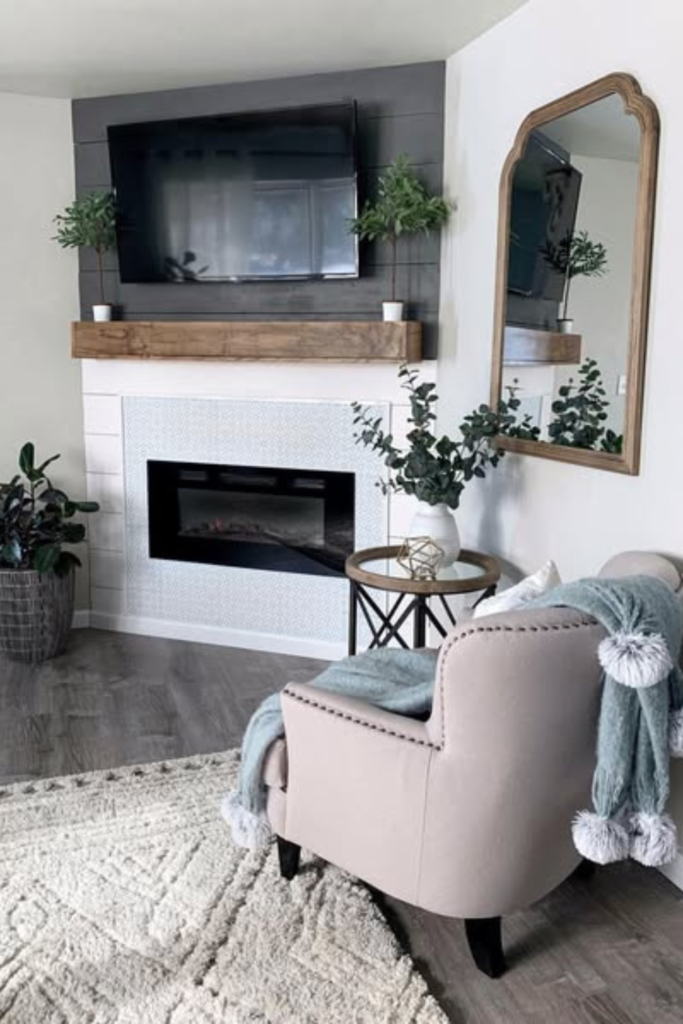
Shiplap Center Strip
You want contrast without committing to a full feature wall, this option works well. To frame the TV and fireplace.
Run vertical shiplap simply through the center part. Use base cabinets and shelving to keep the sides open.
Allow the fireplace to provide the primary ambient glow, with subtle shelf lighting on the sides.
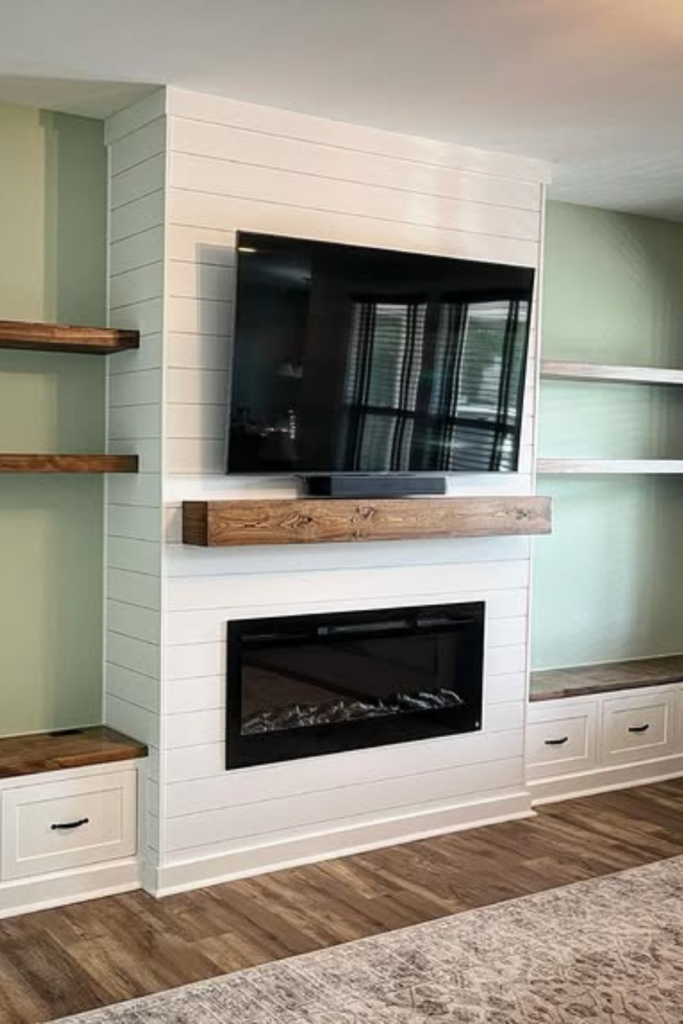
Layered Shelf Warmth
You want your media wall to look fashionable even when the TV is off. Frame the screen and create depth around it.
Use thick floating shelves, conceal wires beneath them, and evenly space them for balance at night.
Fireplace flame serves as the primary mood lighting, while warm puck lights beneath each shelf offer gentle layers.
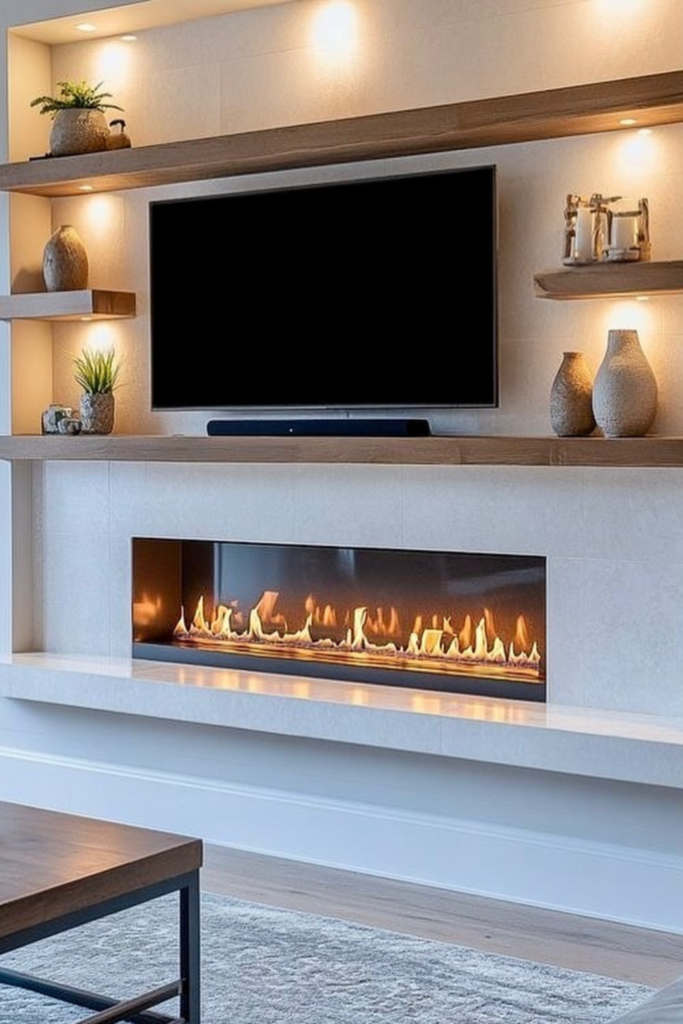
Framed Fireplace Core
Mount the TV tightly above the fireplace so that it appears as a single vertical feature, and keep the fireplace enclosed.
Storage is increased by built-in cabinets on the edges without taking up space in the middle. While the fireplace glows.
Keeps the center comfortable and grounded; warm shelf lighting accentuates the decor. This concept works well.
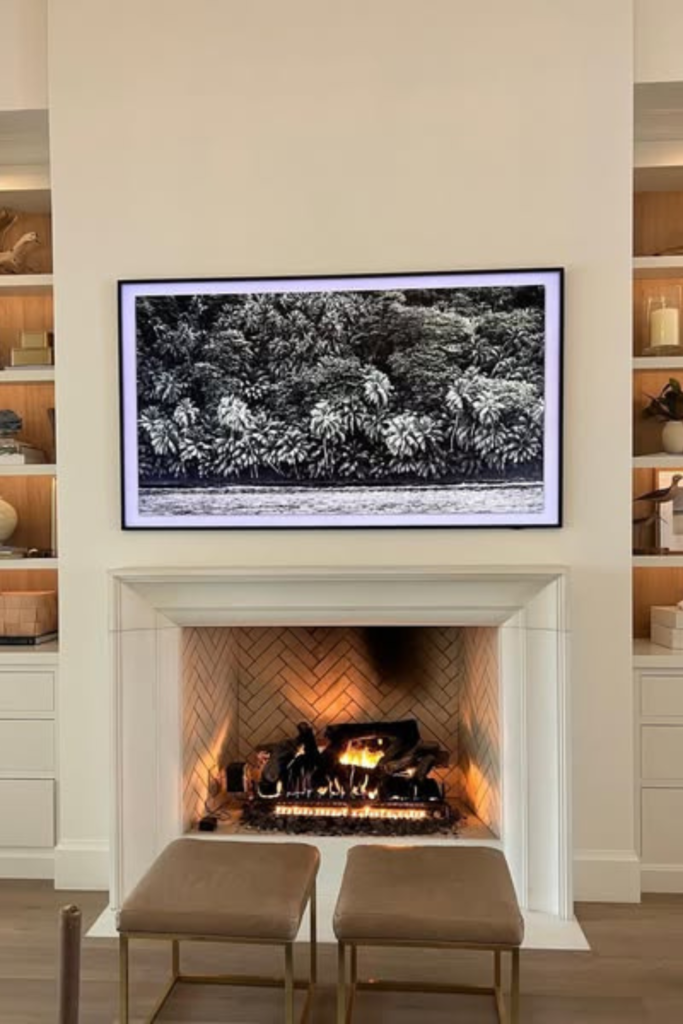
Stone Symmetry Wall
You want a high-end, polished appearance without making the structure too complicated. This arrangement is ideal.
Frame the TV and fireplace as a single unit, keep the stone finish in the center. Balance it with the same built-ins.
Use a solid floating mantel and lightweight stone veneer. The fire provides the primary ambient warmth.
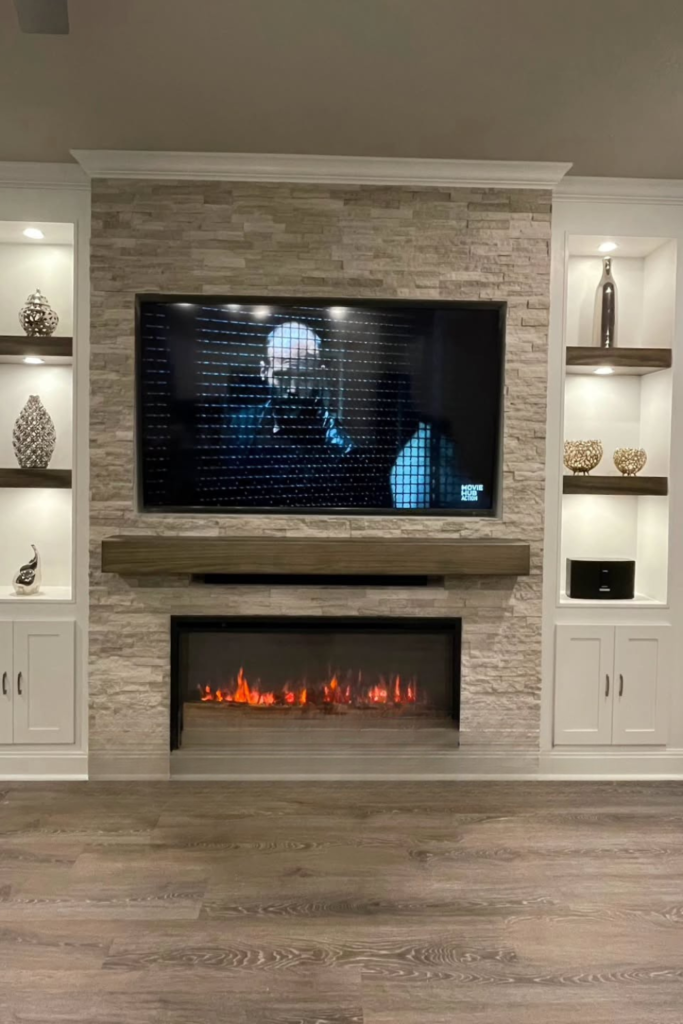
Soft Panel Contrast
You want a comfortable design. This concept is fantastic. Add contrast by using dark vertical panels behind the TV.
Avoid making the room feel cramped, leave the fireplace’s surround light on, and add a large wooden mantel.
Interrupts the color change and adds warmth; room is kept balanced and serene by the glow of the fireplace and natural light.
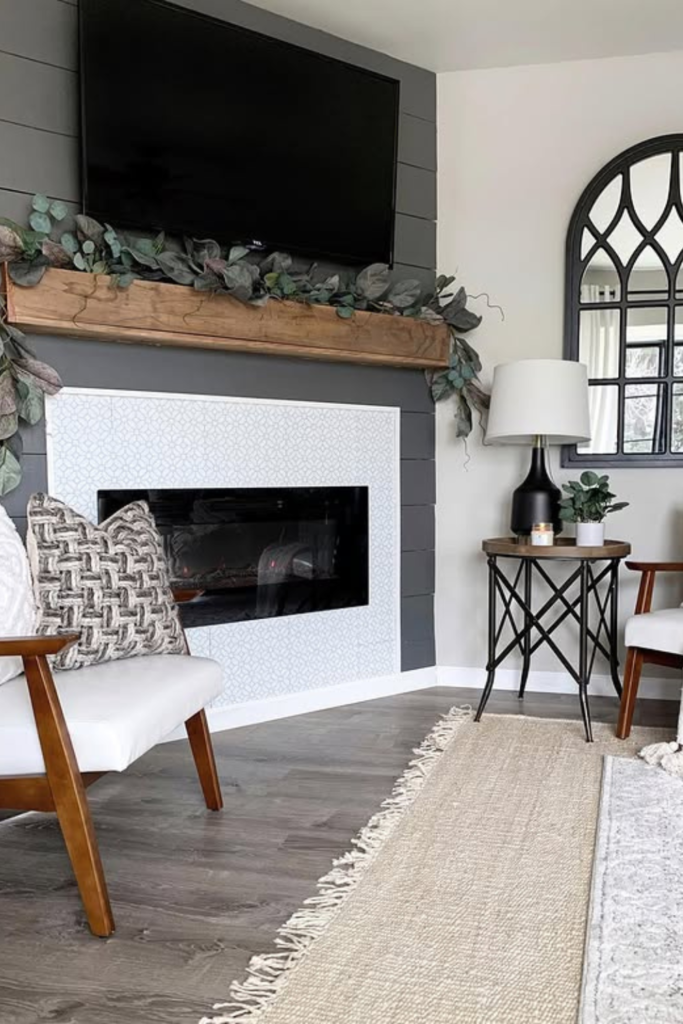
Artwork Over TV
You don’t want a black screen to take over the wall, make it read like art most of the time, mount a drop-down TV.
Use a solid wood mantel and stone or slab finishes to keep the surroundings simple, letting natural light shine through.
A few bulbs maintain the attention on the artwork and fireplace, so no additional lighting is required, and it works best.
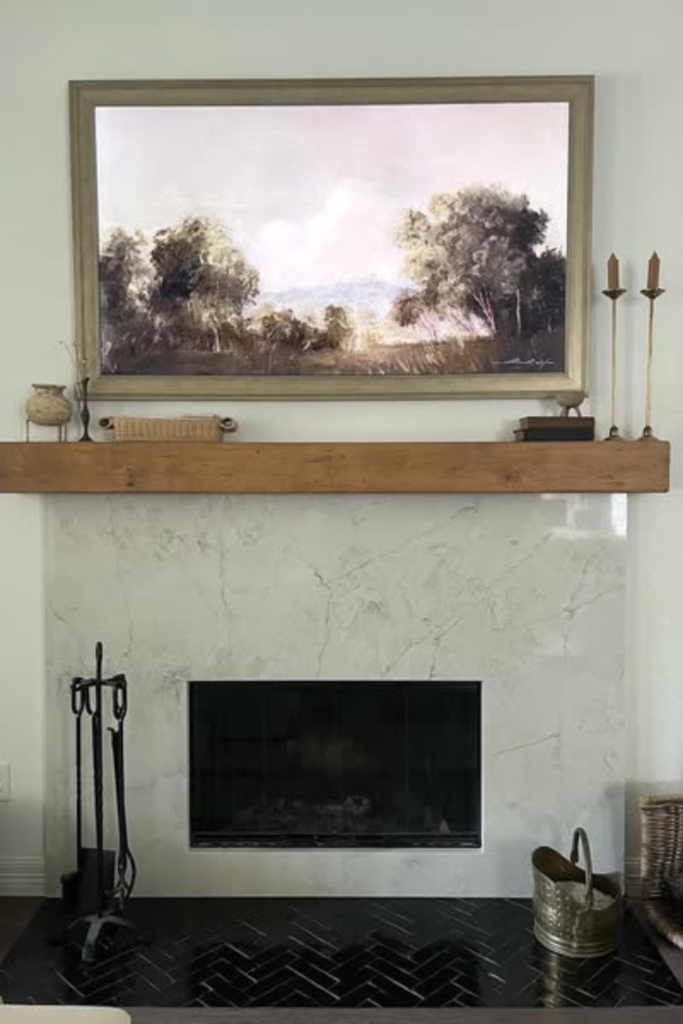
Dark Panel Statement
You want the media wall to be bold, this option works well. To make the fireplace stand out and the TV vanish.
When it is off, cover the entire structure with dark horizontal panels. Keep the depth shallow, using painted MDF panels.
Employ ceiling lights for balance, and let the flame be the focal point rather than ornamental illumination.
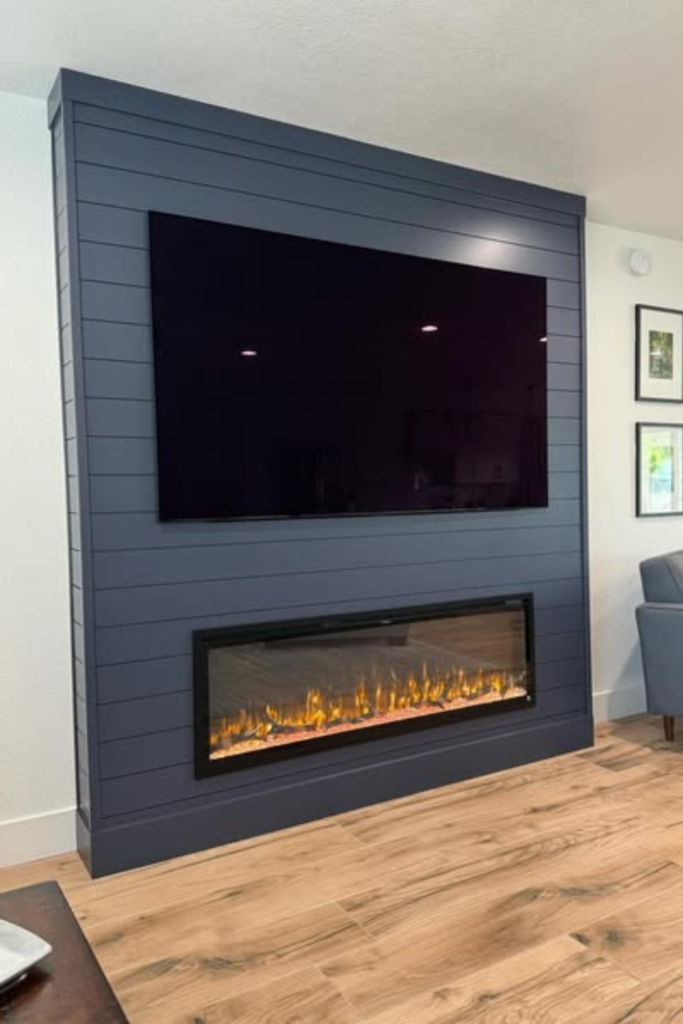
Vertical Slat Frame
Vertical slats provide quick height, construct a thin, slatted panel only around the fireplace and TV.
Leaving the remainder of the wall unaltered. Use uniformly spaced MDF battens and paint them.
A shade darker than the wall. To provide depth, use backlighting or gentle uplighting behind the slats.
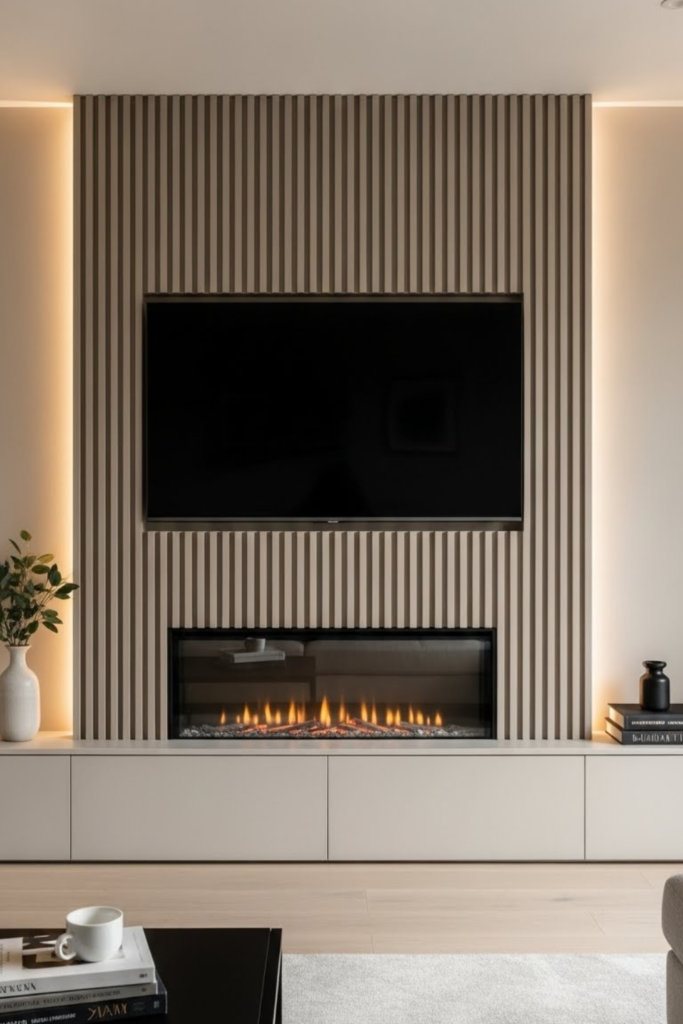
Minimal Plaster Wall
You want the wall to feel seamless rather than “built.” This concept works. Skim-coat everything smooth.
Frame everything flush, and completely avoid shelving. The TV floats above, the wall seems as a single surface.
Place a fireplace rest low for faint illumination, place hidden LED strips beneath the TV, and use gentle overhead lighting.
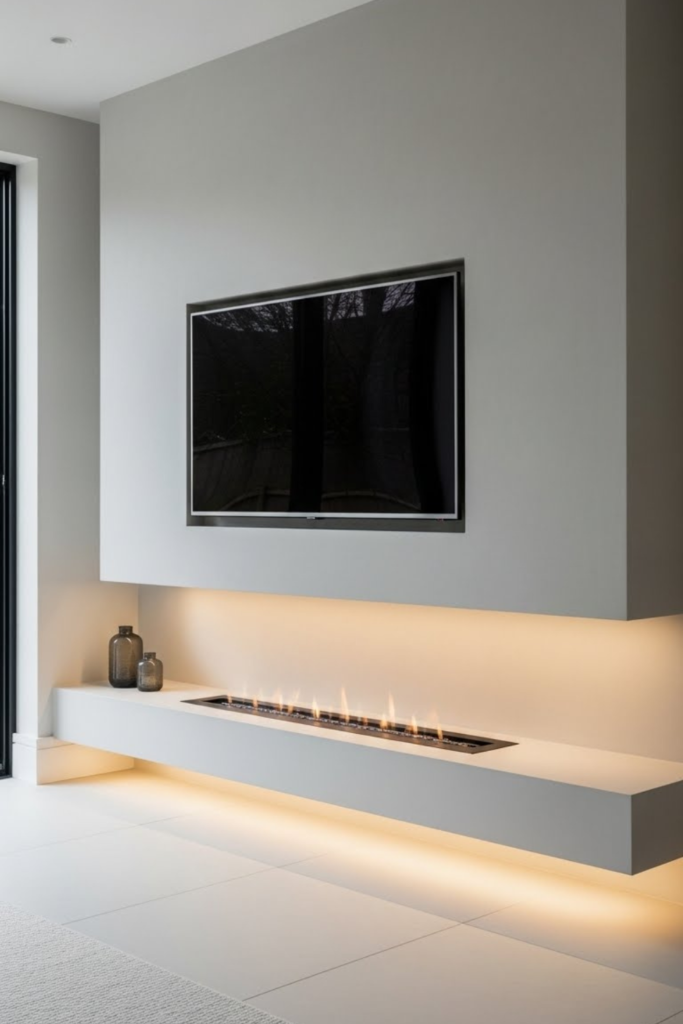
Offset Fireplace Design
Centered layouts seem monotonous, move the fireplace a little off-center and allow the TV to align visually.
Create a small wall bump-out, use simple finishes, and use furniture arrangement to balance the offset.
Maintain an intentional layout, use side spotlights or wall washers. This is effective in asymmetrical or modern spaces.
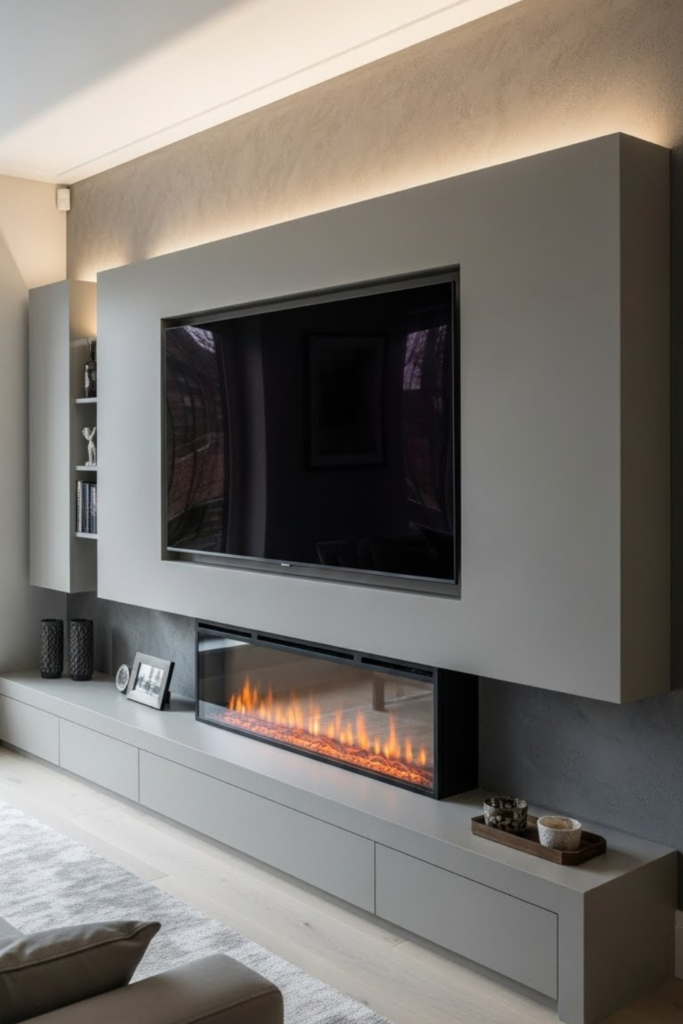
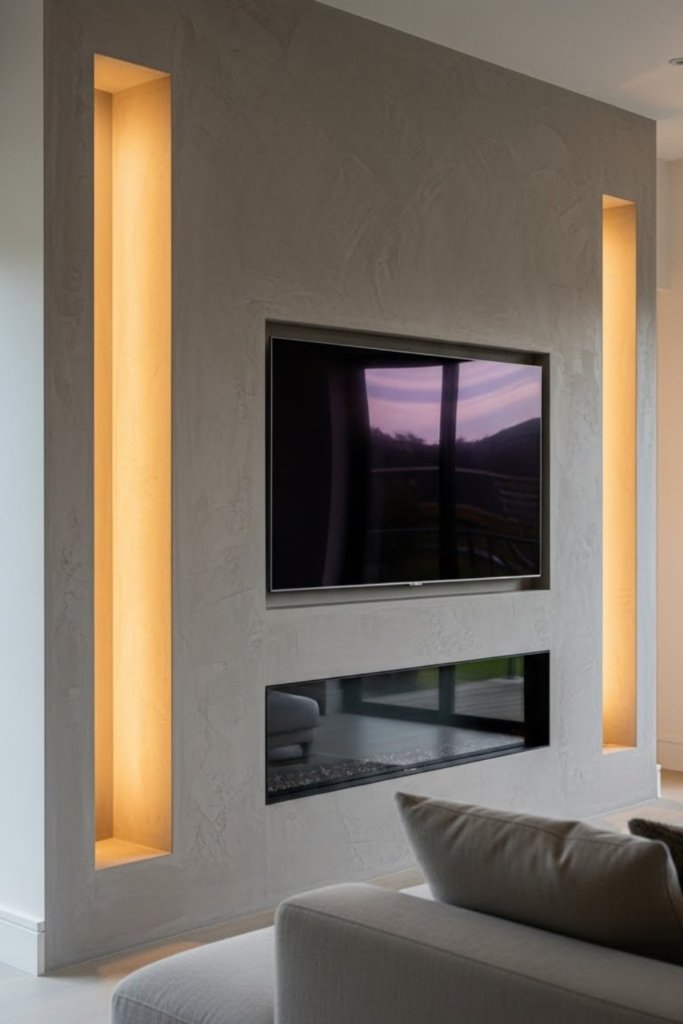
Textured Microcement Look
Adds depth for a contemporary, architectural effect. Make the TV and fireplace feel integrated rather than detached.
Use it throughout the media wall. At night, let the texture catch gentle shadows by placing warm LEDs beneath the TV.
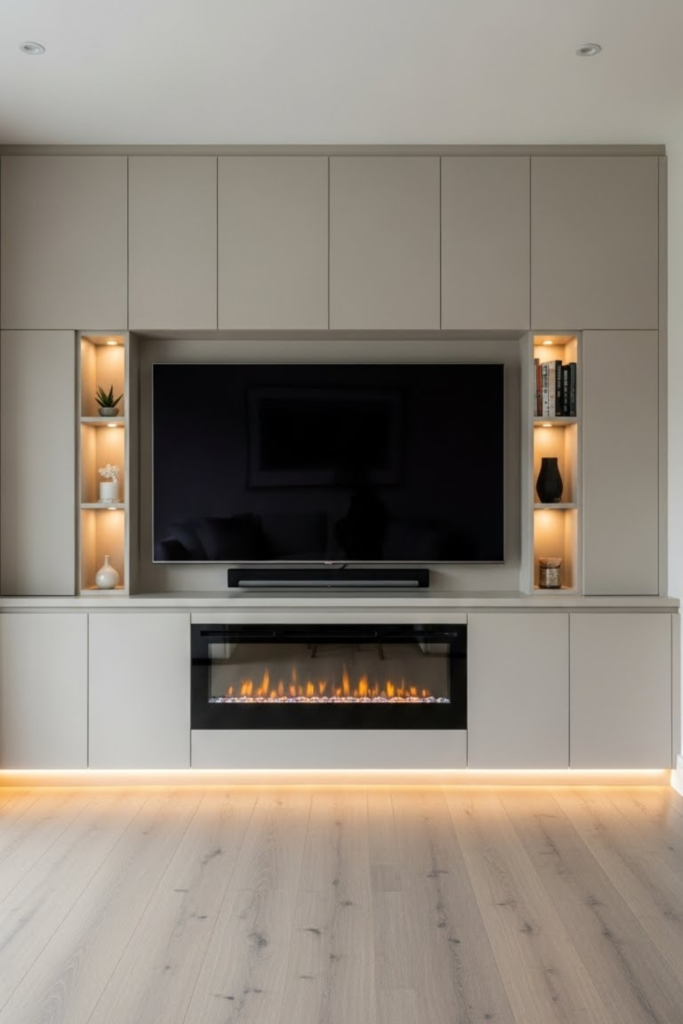
Hidden Storage Wall
Construct flat panel cabinets with push-to-open doors around the TV and fireplace. Family rooms are the finest places for this.
The primary ambient light comes from the fireplace, but you can add discreet toe-kick or shelf lighting for direction.
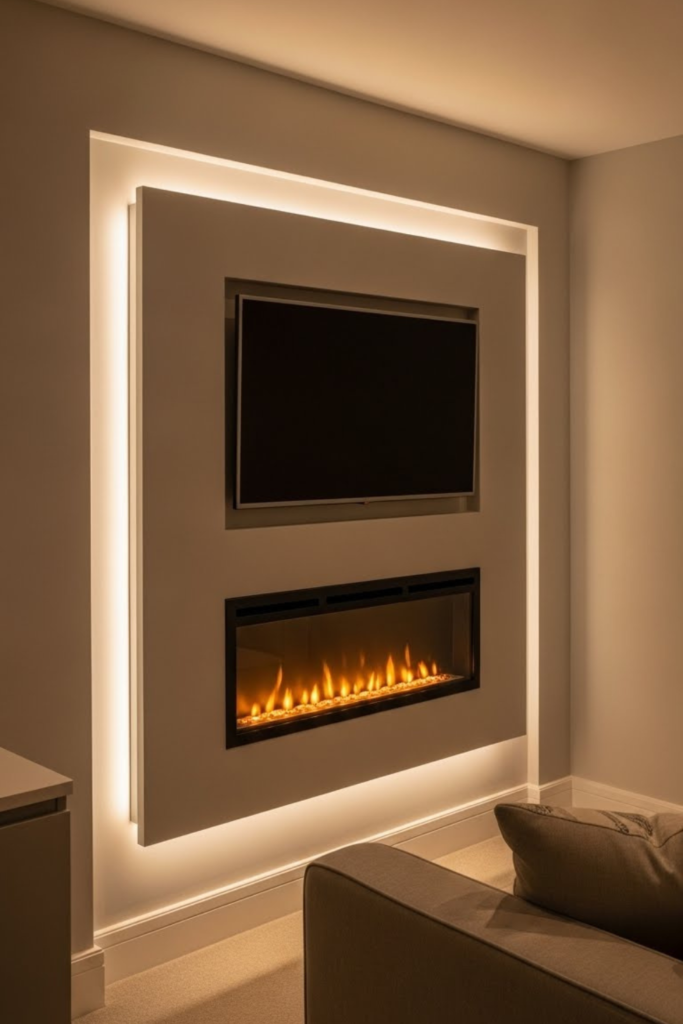
Slim Linear Focus
Go horizontal rather than chunky when space is limited. Select a linear fireplace that is extremely thin.
Set the TV directly above it. To ensure that nothing stands out, frame both inside a shallow box wall.
Add indirect cozy, soft, LED strips down the sides instead of shelves, and let clean lines handle the rest.
FAQs
What materials work best for a fireplace wall?
The best materials are those that withstand heat, look good up close, and finish cleanly. MDF panels, shiplap, plaster, microcement.
Stone veneer is all the rage because they’re DIY-friendly and stable. Electric inserts give you the most freedom since they don’t need heavy heat shielding.
You want a seamless look, plaster or microcement works best. For texture and contrast, stone veneer or wood slats add depth.
What to put on a fireplace wall?
Keep it simple and intentional. The TV is usually the main feature, so everything else should support it rather than compete with it.
A floating mantel helps break up the wall visually and protects the TV from heat. Built-in shelves, recessed niches, or side cabinets add storage.
Use lighting sparingly; LED strips, shelf lights, or wall washers are enough. If the wall already has texture, skip extra décor and let the finish do the work.
You may like to read!

Fasial is the founder of the Fizzy Flare. He has been a passionate blogger since 2021. He ran three different websites in the past few years. Now he is focusing on Fizzy Flare to build an audience and help them organize their life.