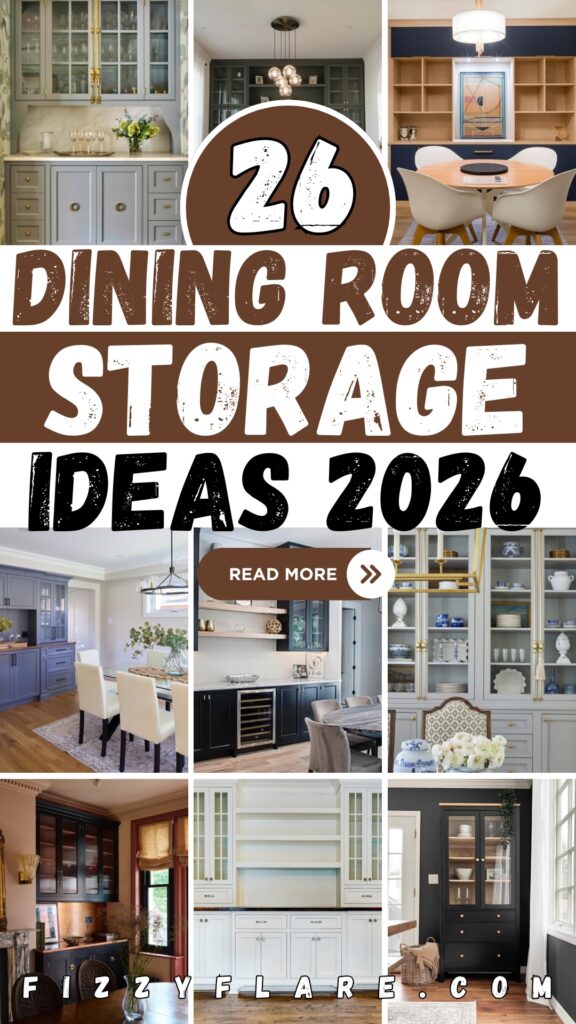
26 Dining Room Storage Ideas for 2026
This post may contain affiliate links: full affiliate disclosure.
If your dining room always feels cramped, it’s usually not because you have too much stuff – it’s because there’s nowhere smart to put it.
The table becomes a dumping spot, chairs get pushed around, and the room starts feeling more stressful than useful.
In this article, you’ll learn how to organize a dining room with limited space and 26 dining room storage ideas that work in 2026.
Let’s jump in!
Contents
- 1 How Do I Organize a Dining Room with Limited Space?
- 1.1 Built-In Wall Storage
- 1.2 Glass Cabinet Storage
- 1.3 Full-Wall Storage
- 1.4 Display-First Storage
- 1.5 Entertaining Storage Wall
- 1.6 Sideboard Cabinet Setup
- 1.7 Slim China Cabinet
- 1.8 Bar Cabinet Niche
- 1.9 Symmetrical Storage Run
- 1.10 Fireplace Storage Moment
- 1.11 Pantry-Style Storage
- 1.12 Beverage Storage Center
- 1.13 Library Wall Storage
- 1.14 Balanced Beverage Storage
- 1.15 Low Sideboard Storage
- 1.16 Vintage Hutch Storage
- 1.17 Floor-to-Ceiling Cabinets
- 1.18 Wine Storage Feature
- 1.19 Kitchen-Style Storage
- 1.20 Open Shelf Balance
- 1.21 Bar Drawer Storage
- 1.22 Storage Seating Combo
- 1.23 Art-Centered Storage
- 1.24 Corner Display Cabinet
- 1.25 Glass Wall Storage
- 1.26 Tall Corner Storage
- 2 FAQs
How Do I Organize a Dining Room with Limited Space?
When space is tight, the goal isn’t to fit more furniture into the room it’s to make the room work harder with less.
A small dining room only feels crowded when items don’t have a clear place to live. Once you decide what actually belongs in the dining area.
Choose storage that uses walls, corners, and hidden spaces, the room instantly feels calmer and more open.
Organizing a limited dining room is about smart placement, not perfection. If you set up simple systems that match.
How to you use the room every day, you can keep it functional, clutter-free, and easy to maintain without constant rearranging.
Save this article for later! 👇👇
Built-In Wall Storage
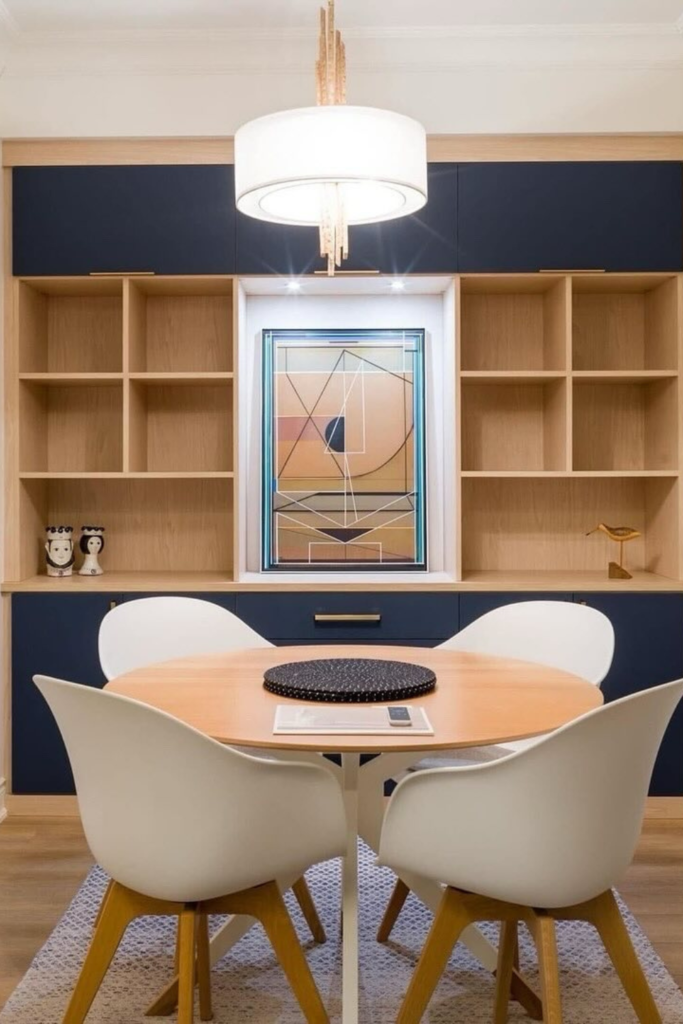
Floor space stays untouched while the wall does all the work. Built-in shelving suits narrow dining rooms where cabinets would feel bulky.
Recreate the look by mixing closed base cabinets for clutter with open shelves for display, keeping everything symmetrical.
Centering artwork gives the storage purpose beyond function. A statement pendant handles task lighting, keeps the wall from feeling heavy.
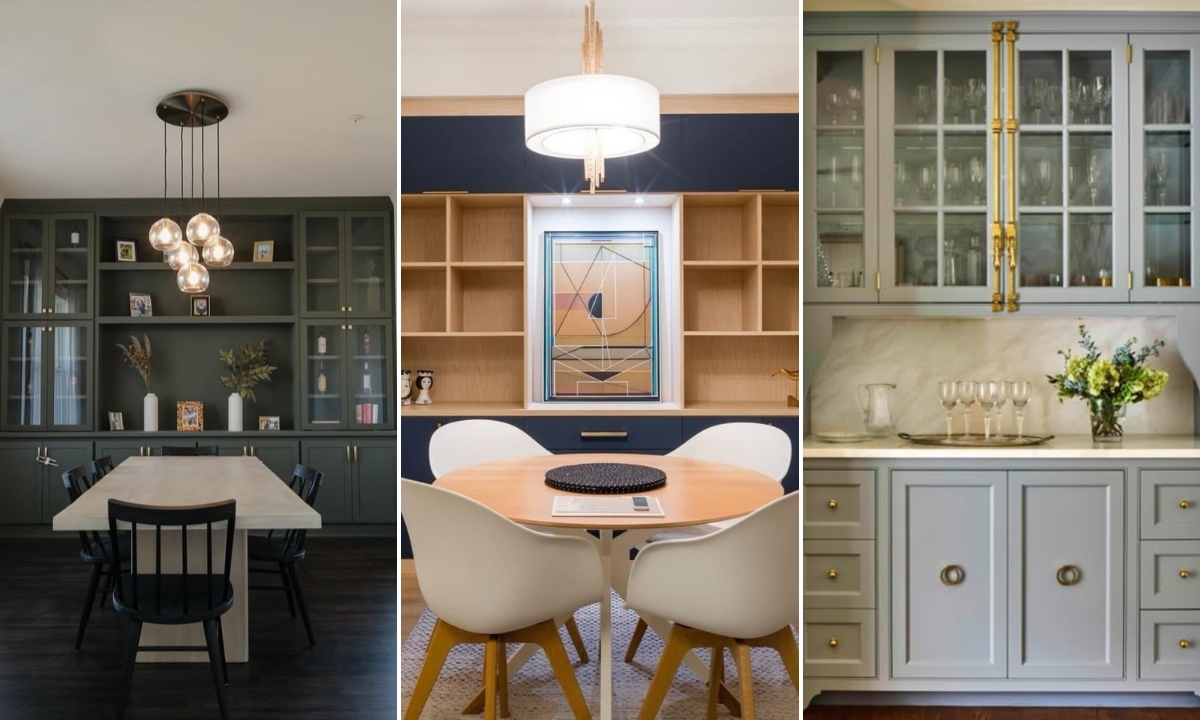
Glass Cabinet Storage
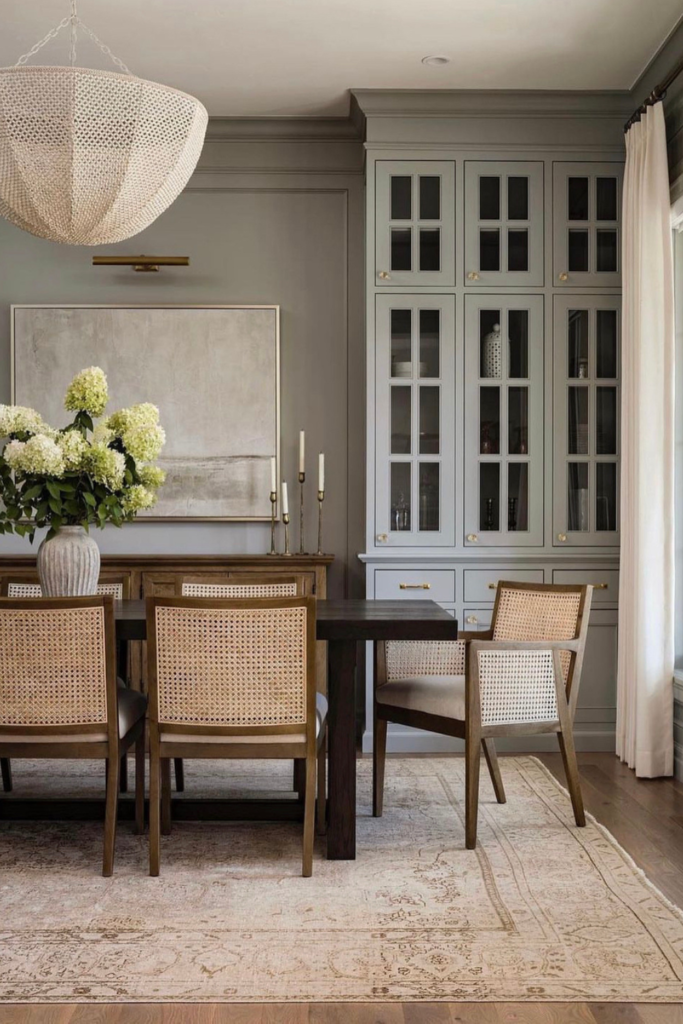
Dinnerware stays visible but never messy when glass-front cabinets take over a blank dining wall, works best.
Depth is limited, but height is available, use shallow uppers for glassware and deep base cabinets for linens and serving pieces.
Soft under-cabinet lighting highlights shelves, while ambient room lighting keeps the space warm and balanced.
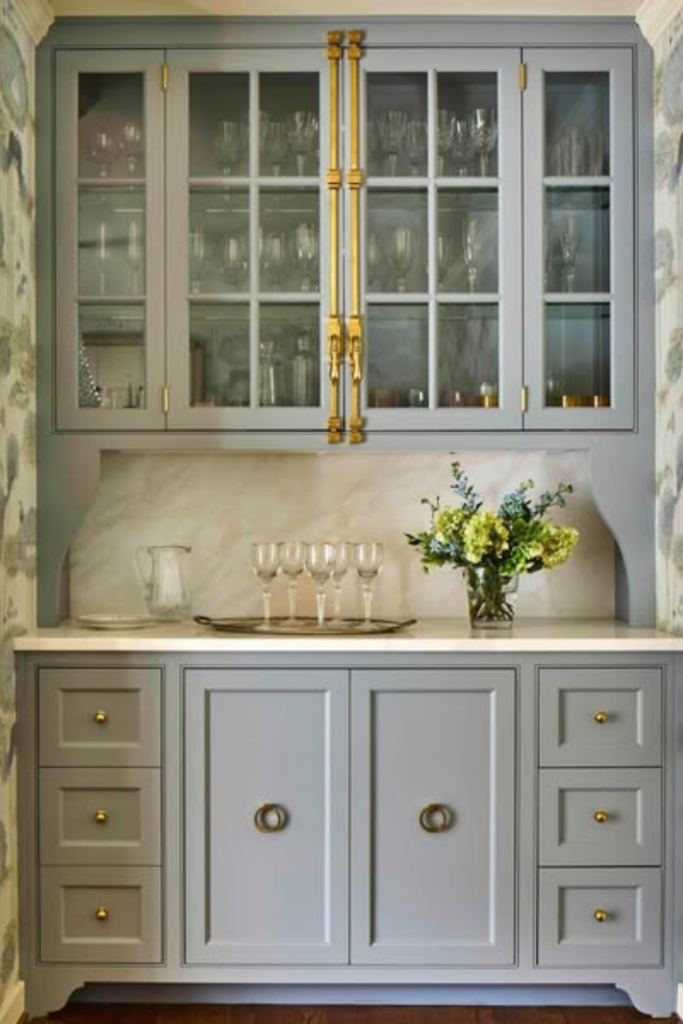
Full-Wall Storage
Walking into a dining room like this, the storage feels intentional. Full-wall cabinetry works best in long or open dining rooms.
Where one wall can anchor the space, recreate it by combining closed lower cabinets with glass or open uppers for balance.
A clustered pendant handles task lighting over the table, while natural window light keeps the wall from feeling too heavy.
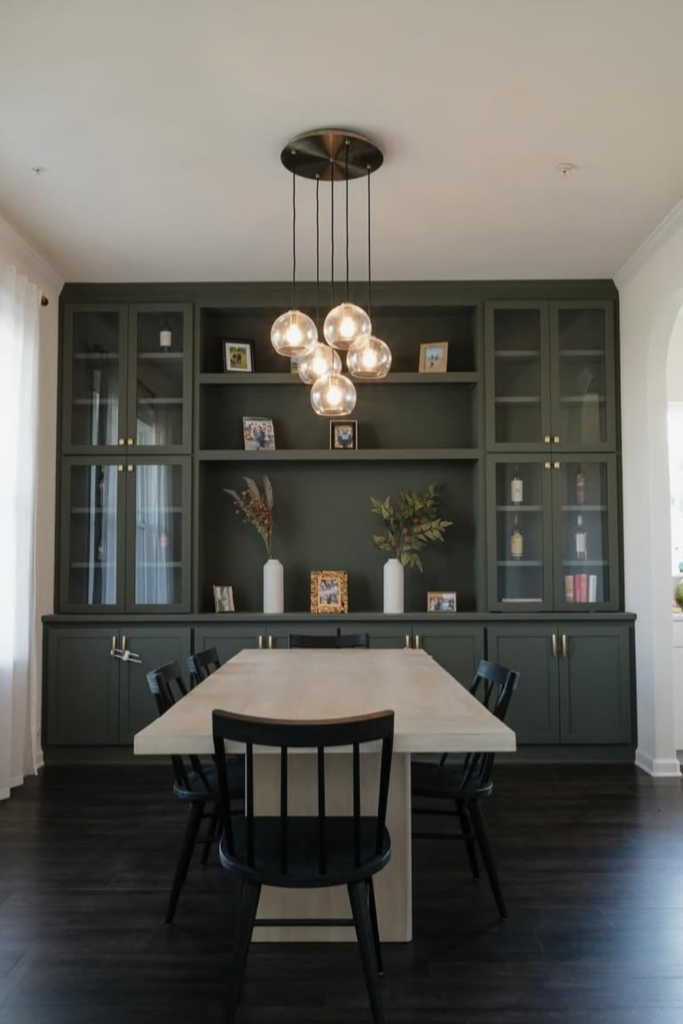
Display-First Storage
Showing your dishes on purpose helps cabinets feel less like hidden clutter zones, works best in dining rooms.
Used for hosting, recreate it with glass-front cabinets and a tight color palette so shelves stay calm, not busy.
Linear pendant lighting adds focus over the table, while soft ambient light keeps reflections clean and elegant.
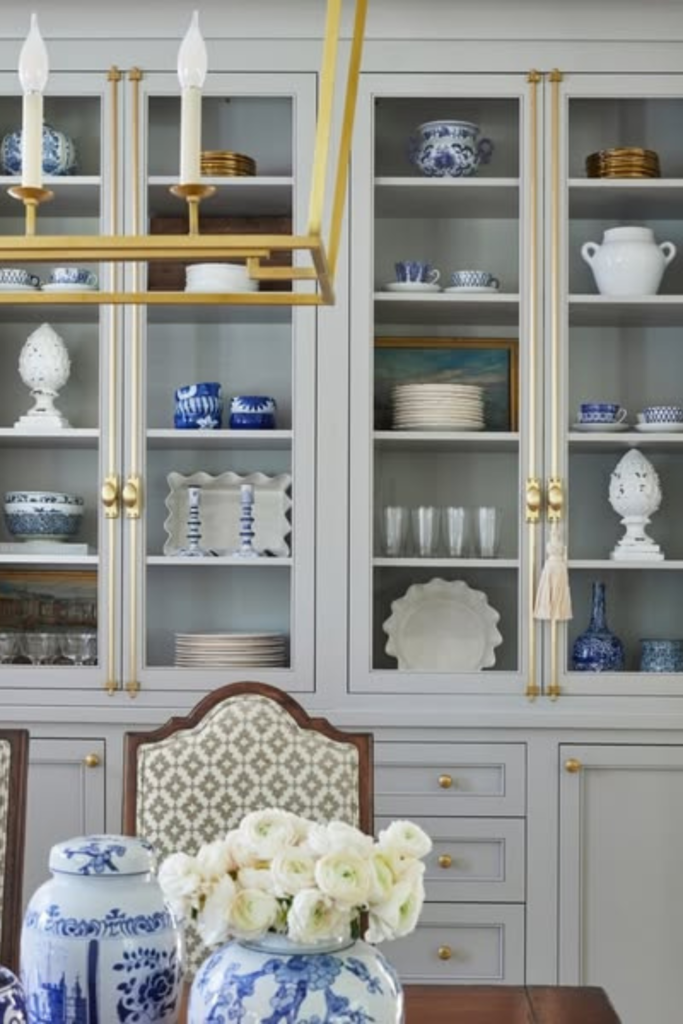
Entertaining Storage Wall
Hosting gets easier when dining storage works like a serving station, works for open dining rooms connected to kitchens.
Recreate it by pairing closed lower cabinets with open wood shelves for everyday reach. A built-in wine fridge.
Adds function with recessed ceiling lights handle ambient glow, while a geometric pendant defines the dining zone.
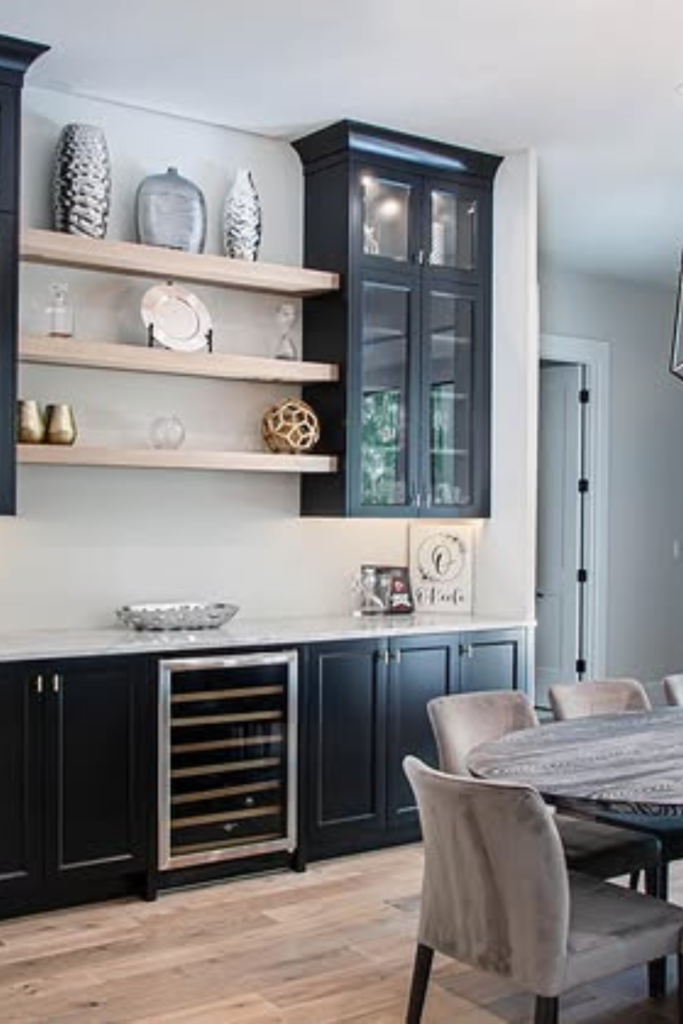
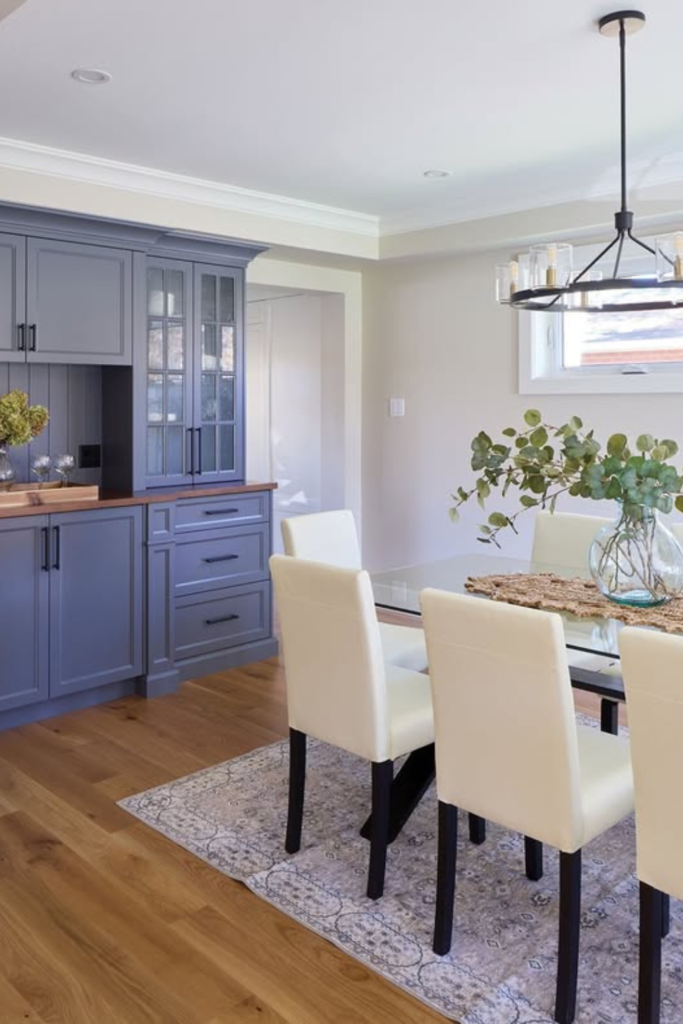
Sideboard Cabinet Setup
Meals feel less chaotic when storage stays close but not in the way. A built-in sideboard works best in dining rooms.
Sit between the kitchen and living space. Use tall cabinets on one side and drawers below for linens and serving tools.
Recessed ceiling lights handle general brightness, while a statement chandelier anchors the table and adds warmth.
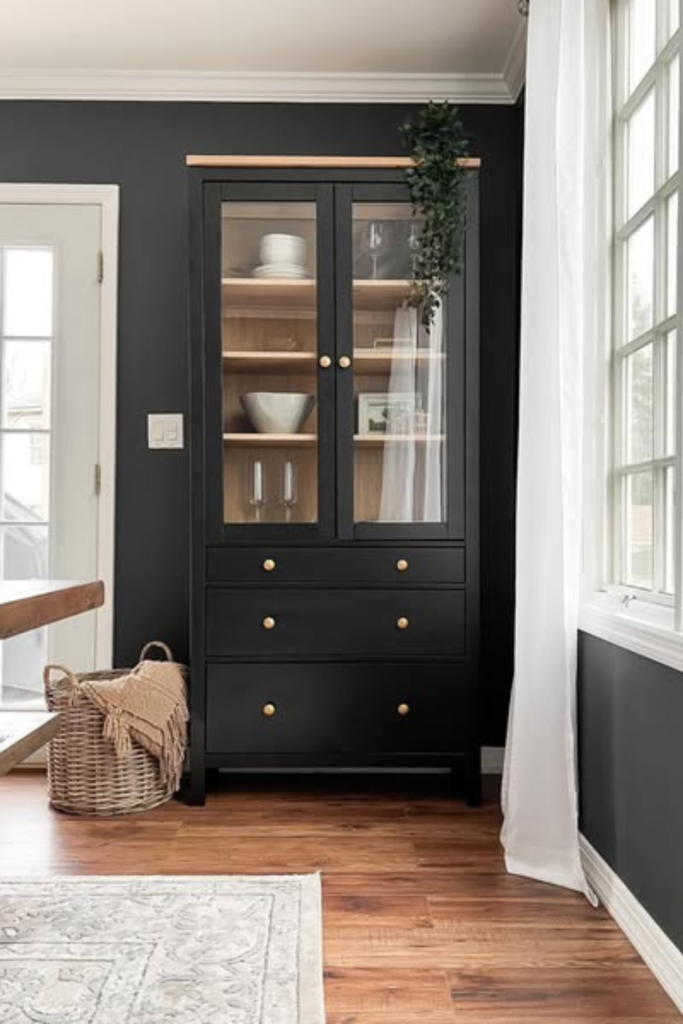
Slim China Cabinet
Corners stop going to waste when a tall, narrow cabinet handles storage vertically. This idea works best in small dining rooms.
Floor space is limited, but ceiling height isn’t, choosing a cabinet with glass doors on top, drawers below for mixed storage.
Natural window light keeps it light during the day, while soft ambient ceiling lighting prevents the dark finish from feeling heavy.
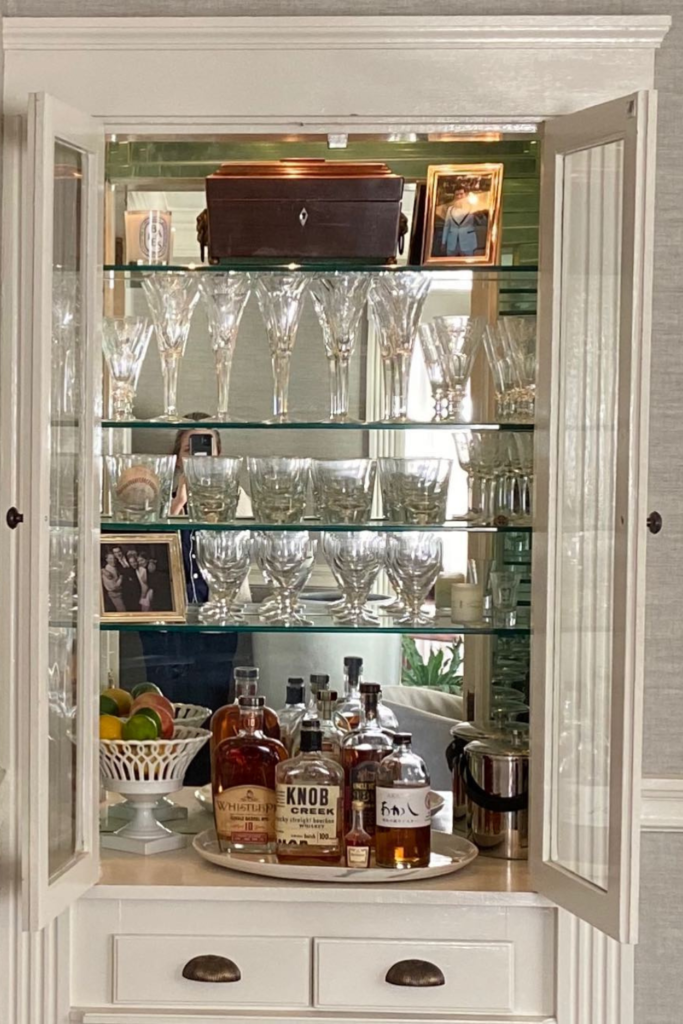
Bar Cabinet Niche
Even a small recessed wall can turn into serious storage when it’s treated like a destination, recreate it by adding glass shelves.
Mirrored backing to amplify light and depth. Glass bar cabinet works best in dining rooms that connect to hallways or living areas.
Interior cabinet lighting highlights glassware, while nearby ambient room lighting keeps the setup from feeling isolated.
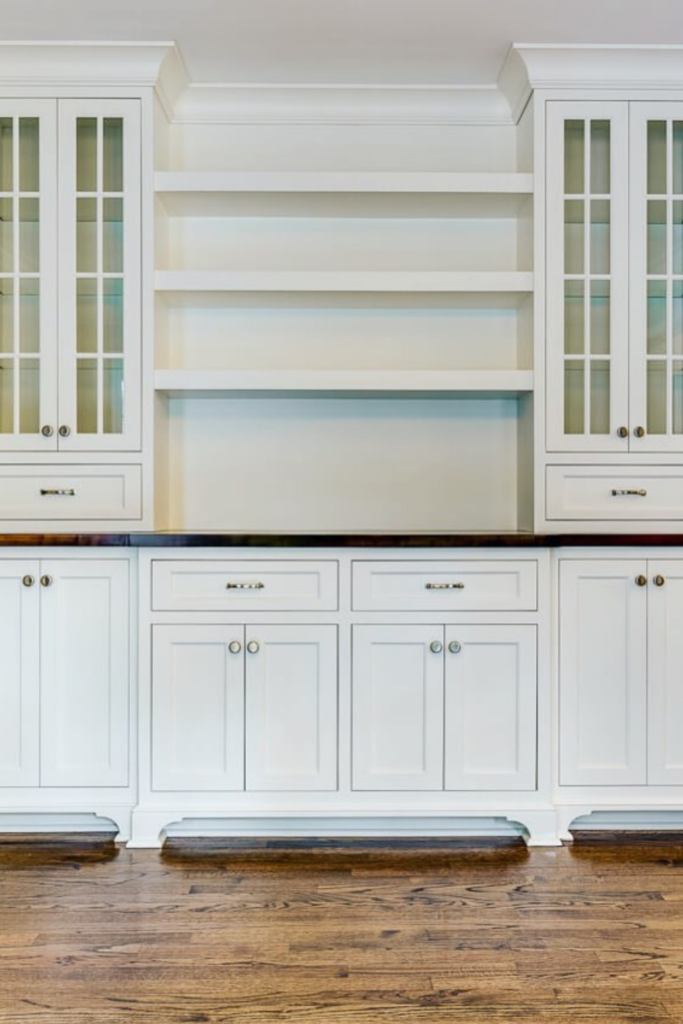
Symmetrical Storage Run
Balance makes a dining room feel calmer before anything gets organized. This setup works best on long walls.
Anchoring the space with base cabinets, adding matching glass-front towers, and keeping the center open for serving.
Recessed ceiling lights provide even brightness, while natural light keeps the white cabinetry from feeling flat.
Fireplace Storage Moment
Dead space around a fireplace turns useful when storage is built to frame it, works best in formal dining rooms.
Adding closed base cabinets with glass uppers to store serve ware while keeping the fireplace visually centered.
Wall sconces add warmth, the ambient ceiling light softens the room, and daylight keeps the cabinetry rich, not heavy.
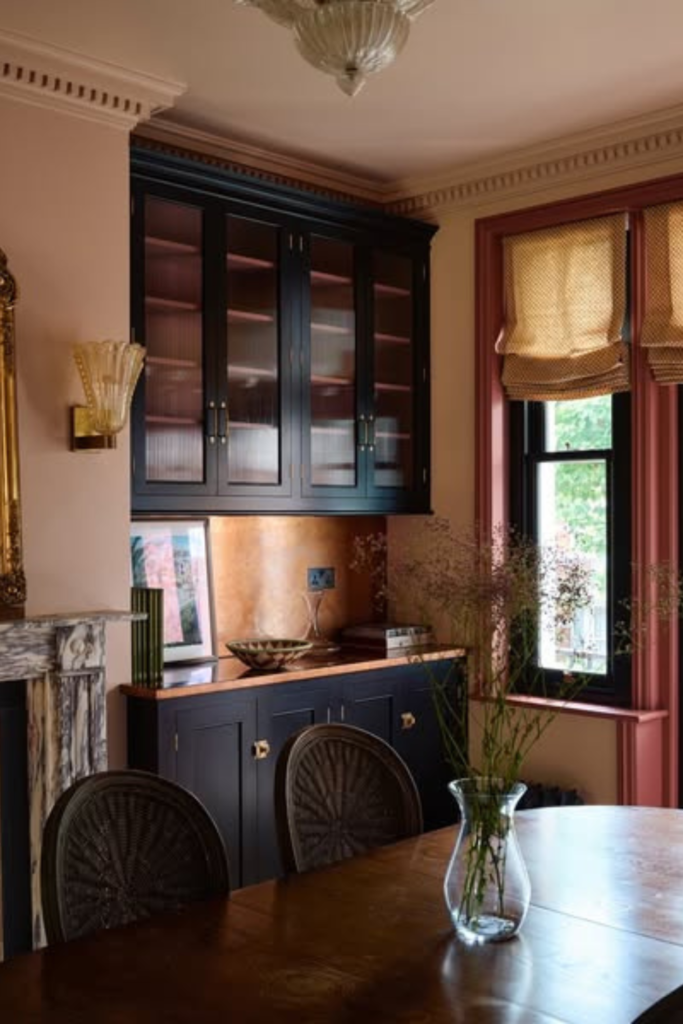
Pantry-Style Storage
Overflow disappears fast when dining storage borrows pantry thinking. Tall glass cabinets arranged in a row.
This setup works best for families who use the dining room daily and need quick access to food, jars, and small appliances.
A single dome pendant provides task light over the table, while natural daylight keeps the wall from feeling crowded.
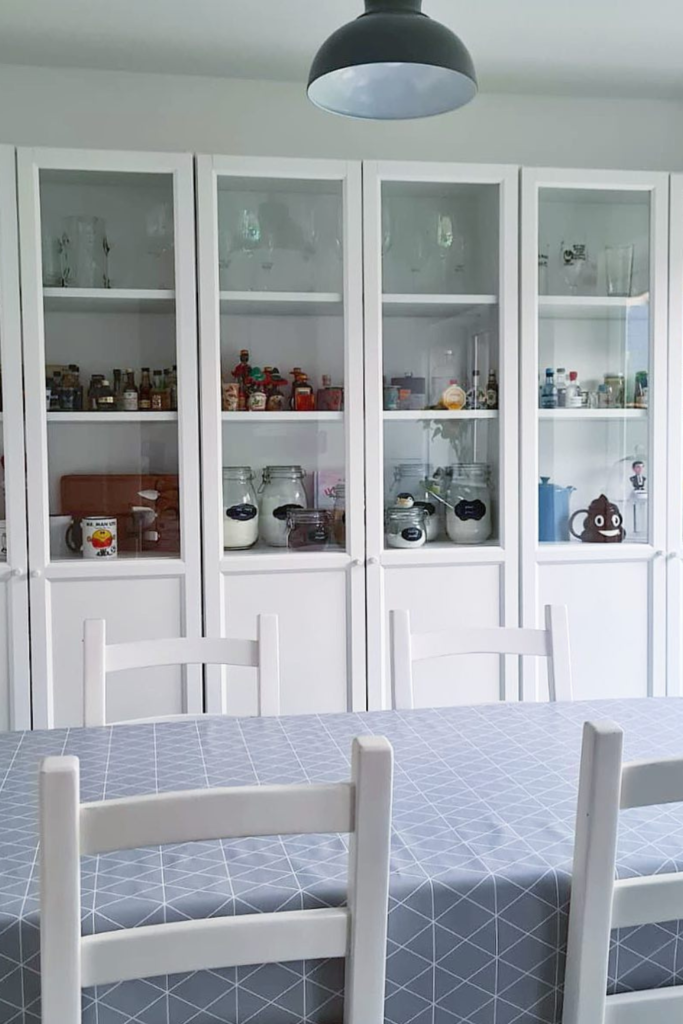
Beverage Storage Center
Daily routines feel smoother when drinks get their own zone. Framing a central counter with tall cabinets on both sides.
Keeping everything within reach, works best in dining rooms that double as entertaining spaces or sit near outdoor access.
Large pendants handle task lighting over the table, ceiling lights and daylight from nearby doors keep the storage wall balanced.
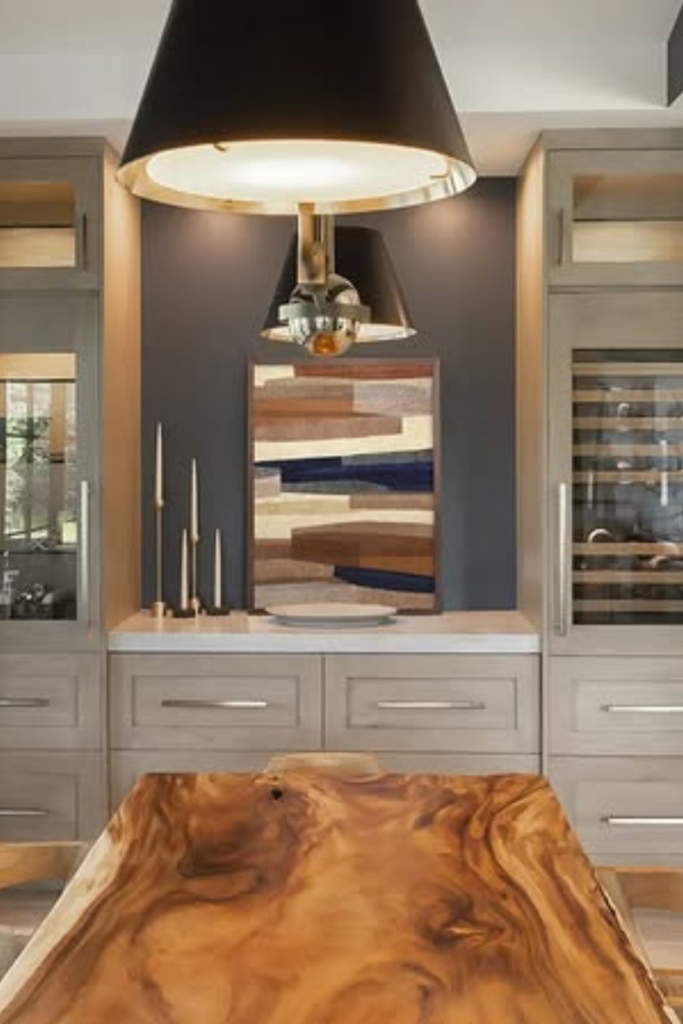
Library Wall Storage
Meals slow down naturally when storage wraps the room. Floor-to-ceiling shelving works best in formal dining rooms.
Recreate this with slim shelves spaced consistently so books, baskets, or serving pieces stay visually calm.
A sculptural chandelier anchors the table, while daylight from tall windows keeps the wall from feeling dense or heavy.
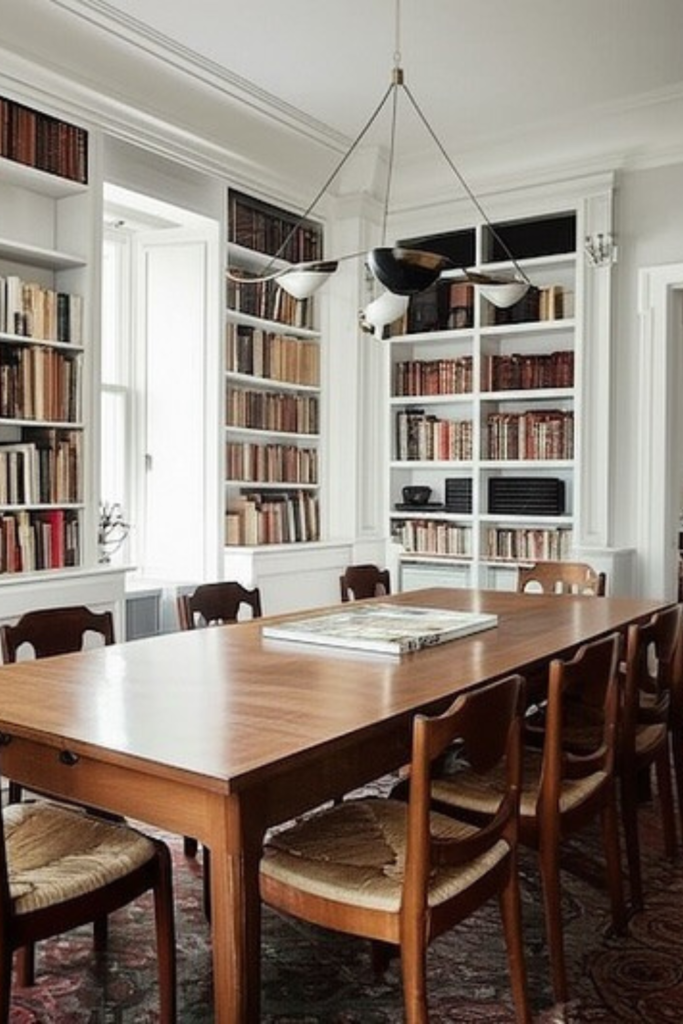
Balanced Beverage Storage
Visual balance makes heavy storage feel lighter wi. This idea works best in dining rooms with a strong focal wall.
Placing tall cabinets on both sides, adding under-counter wine storage below, and leaving the center open for serving.
A layered chandelier provides focused light over the table, while recessed ceiling lighting and natural light soften the cabinetry edges.
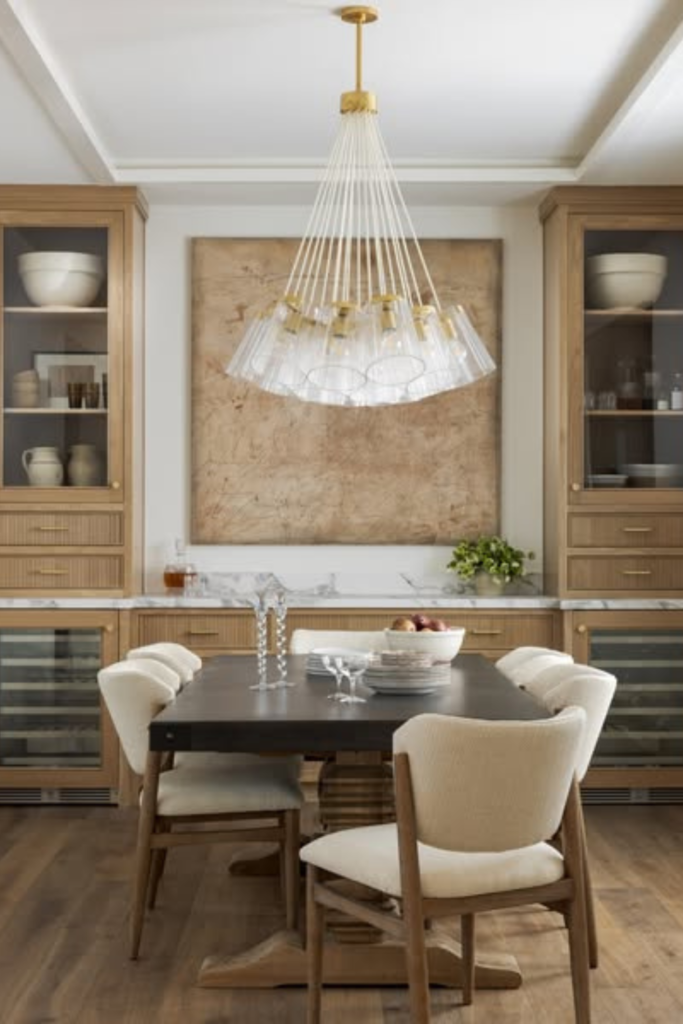
Low Sideboard Storage
Wide storage works better than tall cabinets when you want the room to feel open. A low sideboard fits best in dining rooms.
Share space with living areas or media walls, choosing deep cabinets with clean fronts, everything stays hidden, free of visual noise.
Wall paneling adds interest above the storage, ambient ceiling lighting handles the room, while soft daylight keeps the dark finish grounded.
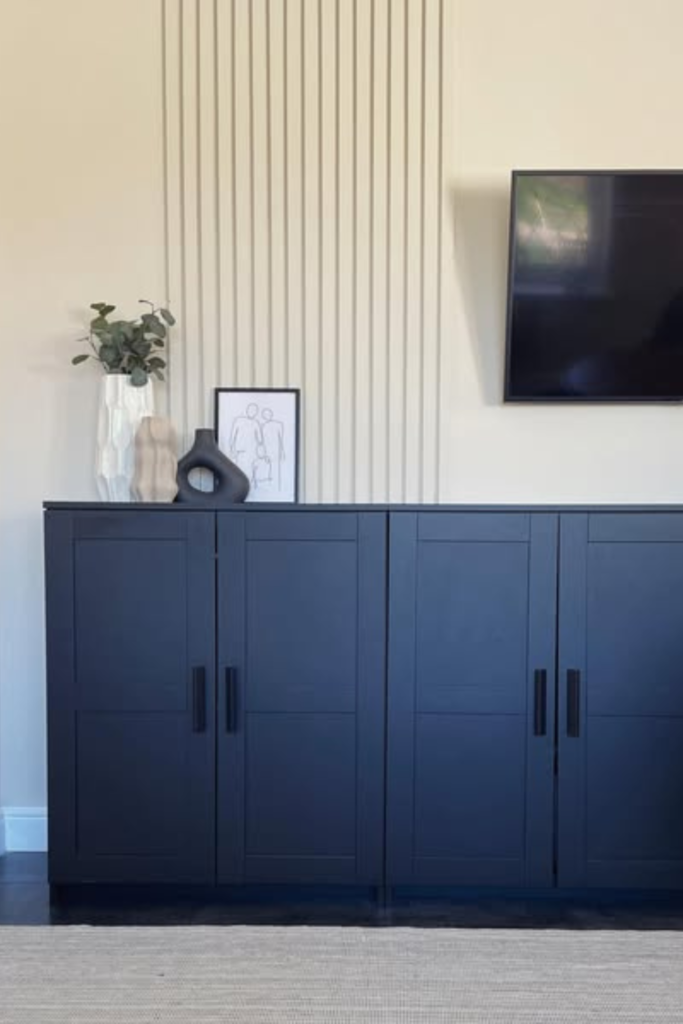
Vintage Hutch Storage
Older furniture solves modern storage problems. A vintage hutch works best in dining rooms with character.
Recreate it by choosing a hutch with open upper shelving and closed drawers below so display and storage stay balanced.
Natural light brings out the wood grain, while ambient ceiling lighting keeps the piece from feeling too heavy in the room.
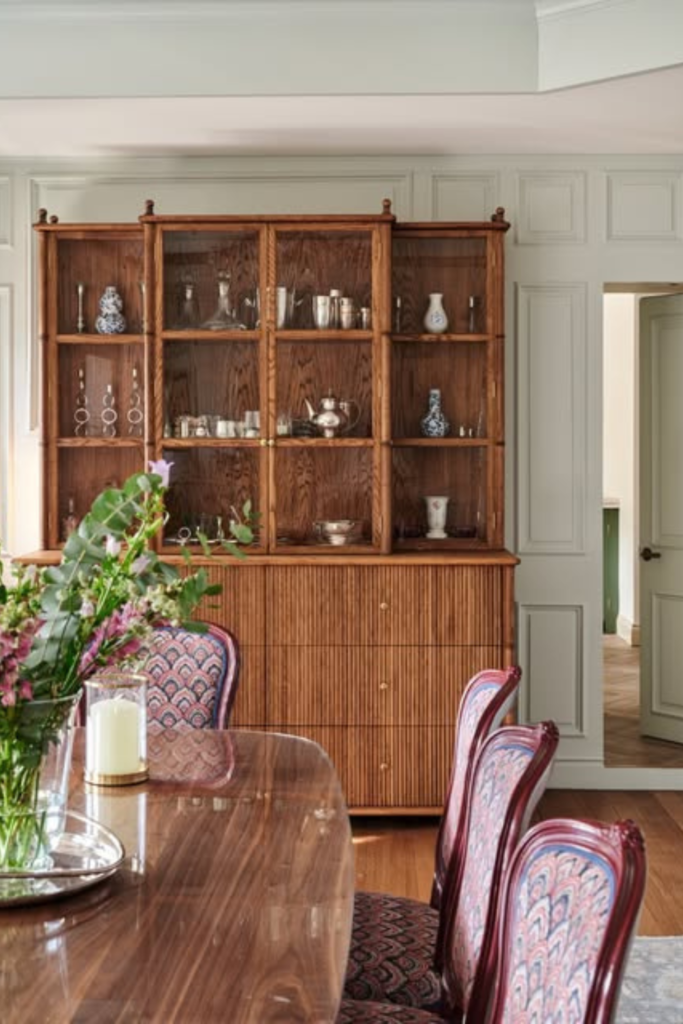
Floor-to-Ceiling Cabinets
Walls feel taller when storage runs all the way up, this idea works best in dining rooms with high ceilings.
Recreate it by using full-height cabinets for rarely used items and drawers below for daily essentials.
Soft chandelier light adds warmth at the table, while ambient ceiling lighting keeps the tall cabinets from feeling imposing.
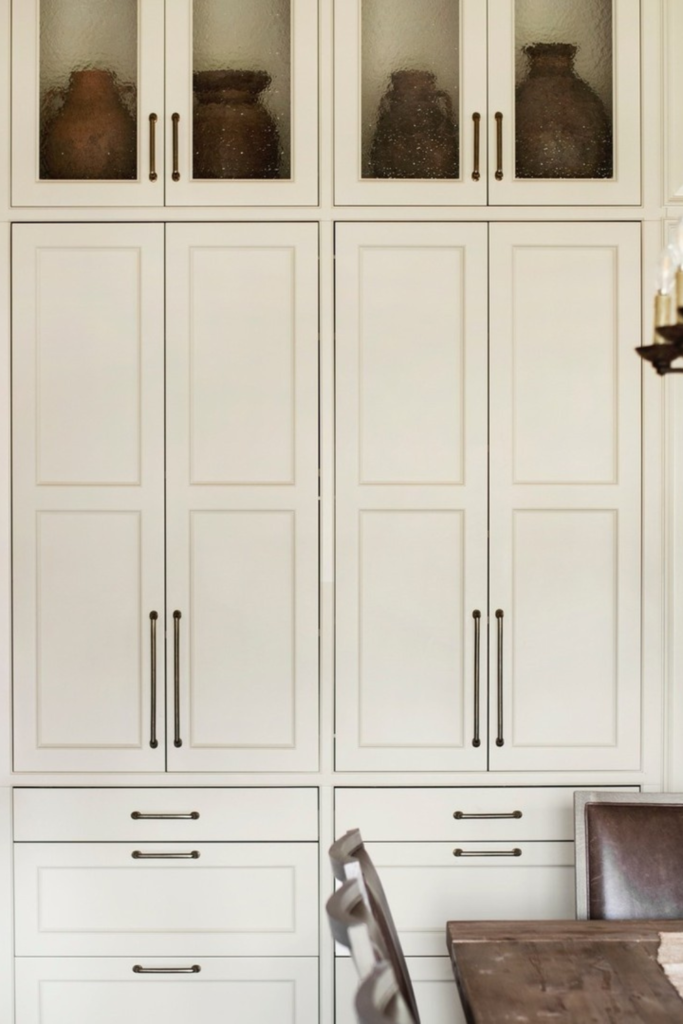
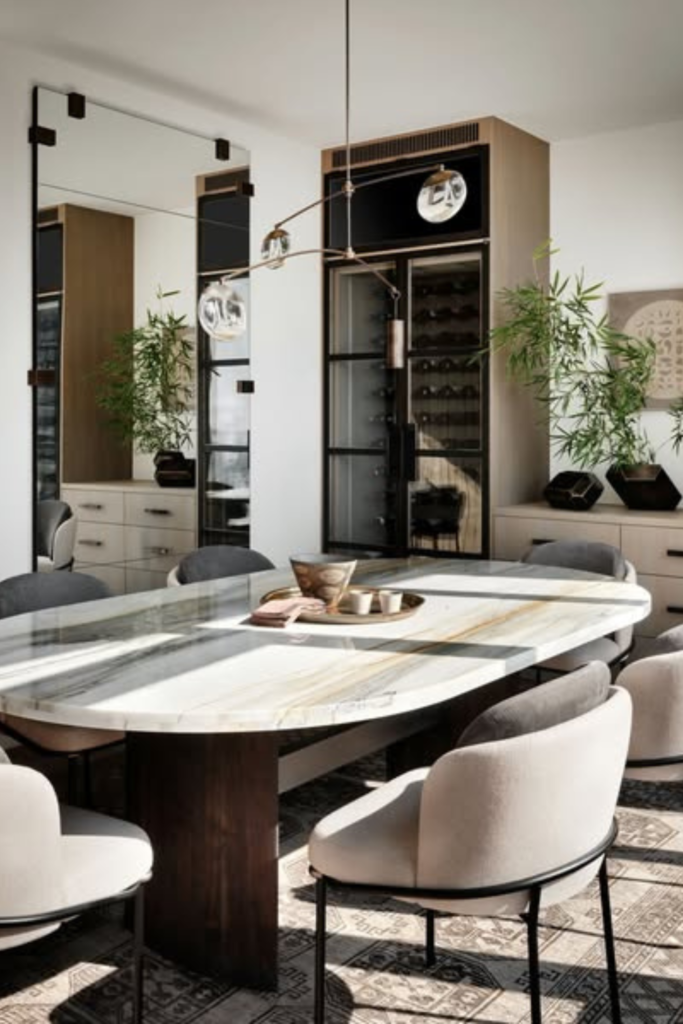
Wine Storage Feature
Storage becomes part of the room’s personality, pairing a vertical wine unit with low drawers for bar tools and linens.
A glass wine cabinet works best in dining rooms that are often used and need temperature-controlled storage.
Sculptural pendants handle task lighting, while recessed ceiling lights and reflected daylight keep the glass from feeling dark.
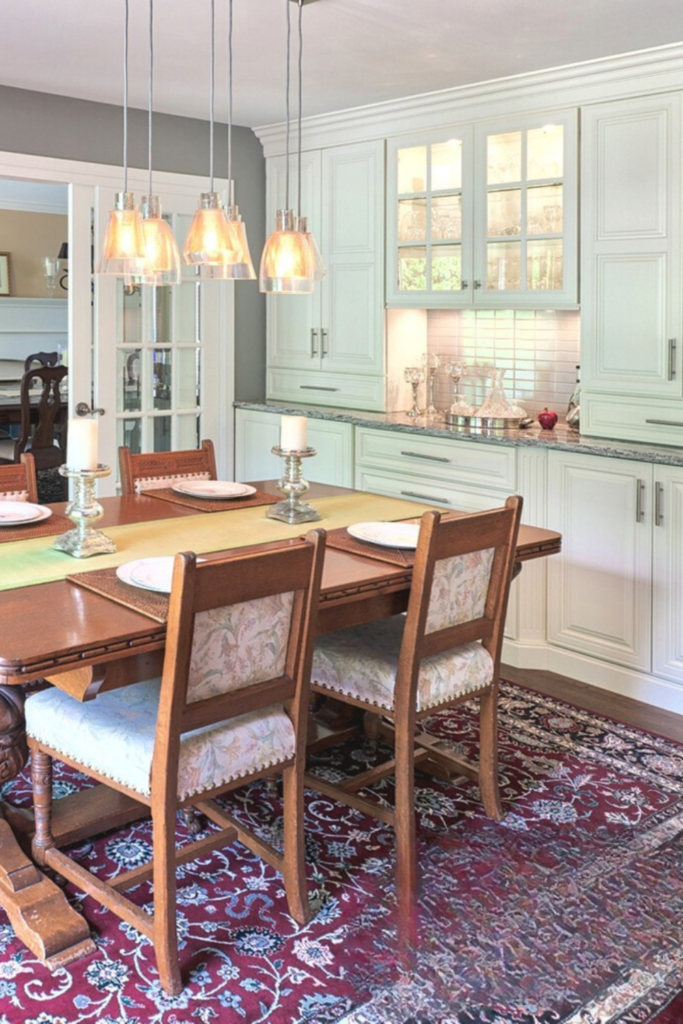
Kitchen-Style Storage
Overflow vanishes when dining storage borrows kitchen logic. Use full cabinets with counter space for serving or coffee setups.
This approach works best in homes where the dining room sits next to the kitchen but needs its own function.
Glass uppers keep it light, pendant lights handle task lighting, and under-cabinet lighting adds depth and evening warmth.
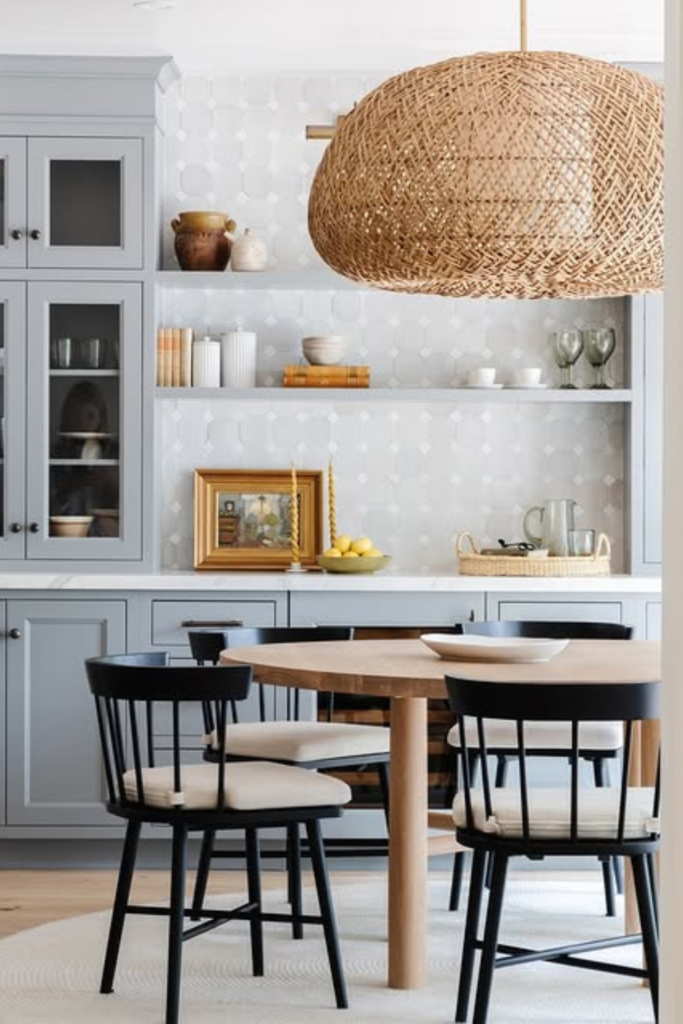
Open Shelf Balance
Storage feels lighter when some pieces stay visible on purpose. This idea works best in dining rooms that need storage.
Pairing base cabinets with a few open shelves for everyday dishes and decor, keeping colors tight, shelves don’t look messy.
A woven pendant adds warm task lighting over the table, while ambient daylight keeps the wall feeling open and relaxed.
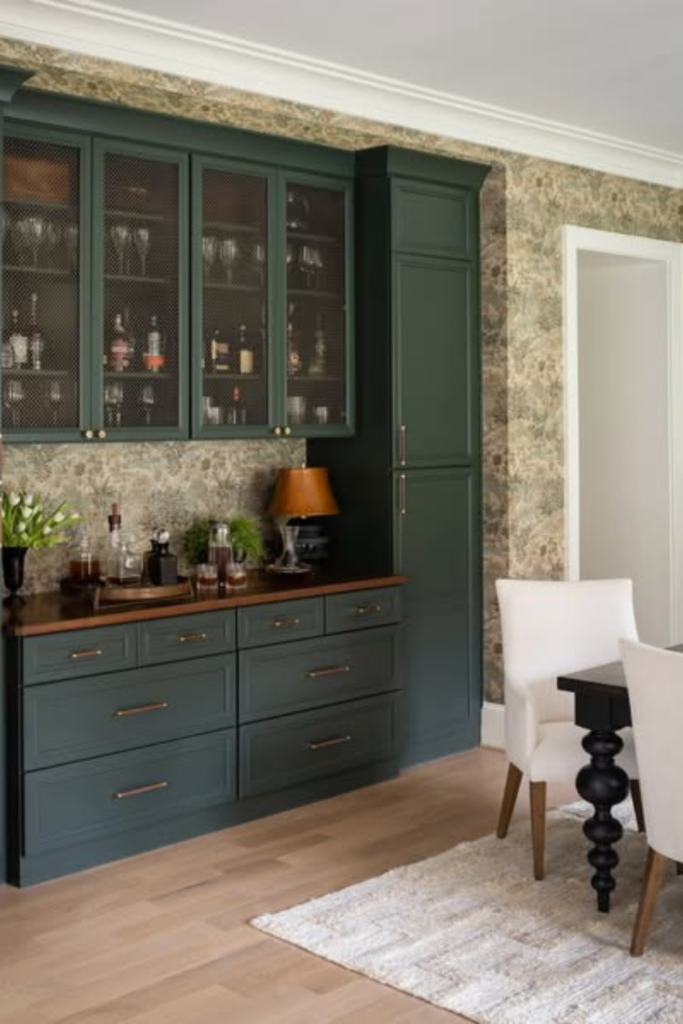
Bar Drawer Storage
Drinks stay organized when storage is organized into zones, works best in dining rooms that double as evening hangout spaces.
Use deep drawers for bottles, bar tools, and mixers, then add mesh or glass-front uppers so contents stay visible.
A table lamp adds soft accent lighting, while ambient ceiling light keeps the cabinetry rich and grounded.
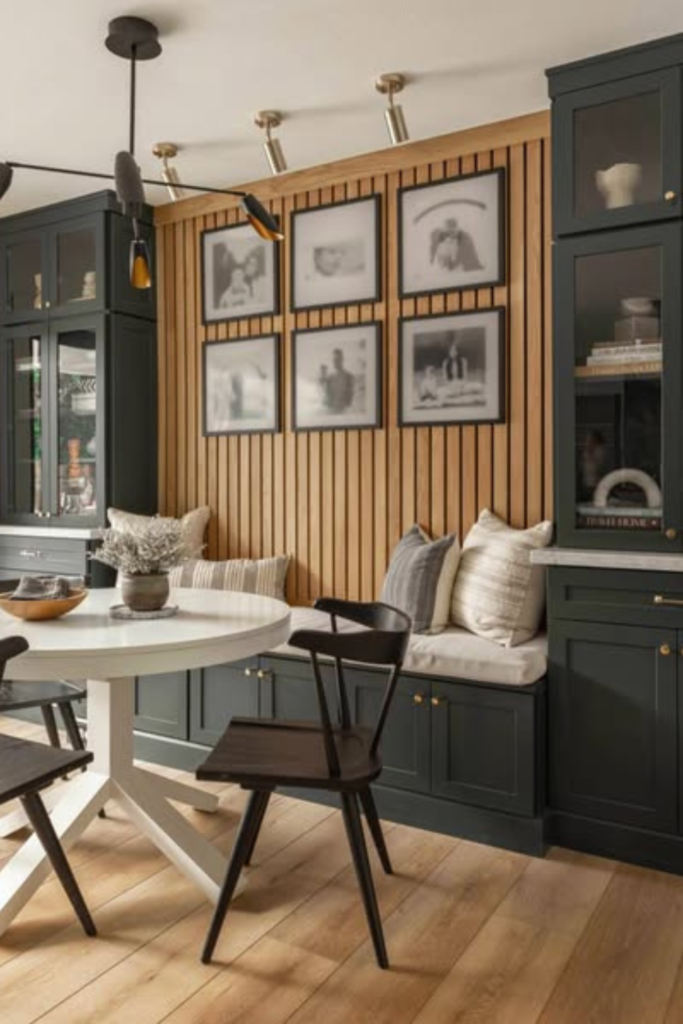
Storage Seating Combo
Seating solves storage problems when both are planned together. This setup works best in small dining rooms.
Adding extra cabinets would make the space feel crowded. Building a bench with drawers underneath and tall cabinets.
Wall-mounted picture lights highlight artwork and add a soft glow, while adjustable ceiling fixtures handle task lighting over the table.
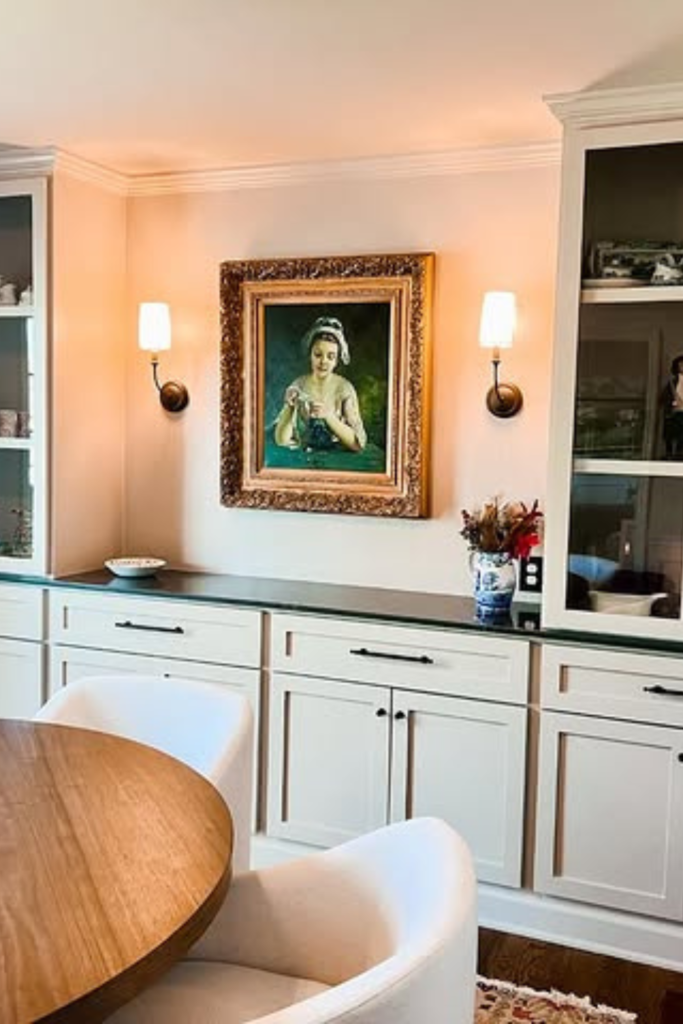
Art-Centered Storage
Storage feels intentional when it gives something meaningful a place to land. This idea works best in dining rooms.
Use running base cabinets along the wall, adding glass-front towers on either side, and leaving the center for art or a mirror.
Wall sconces highlight the focal piece, while ambient ceiling lighting evenly illuminates the cabinetry.
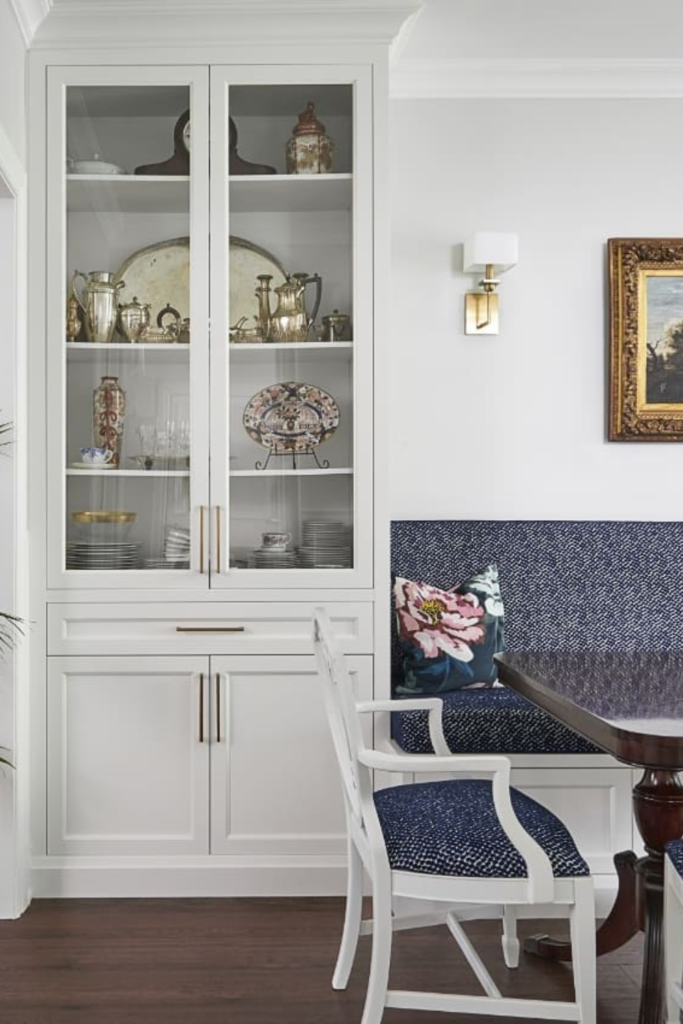
Corner Display Cabinet
Corners feel less awkward when storage is designed to fit them, installing a tall glass-front cabinet sized to the corner.
This idea works best in dining rooms with banquettes or built-in seating where wall space is broken up.
A wall sconce adds focused glow nearby, while ambient ceiling lighting keeps the corner connected to the rest of the room.
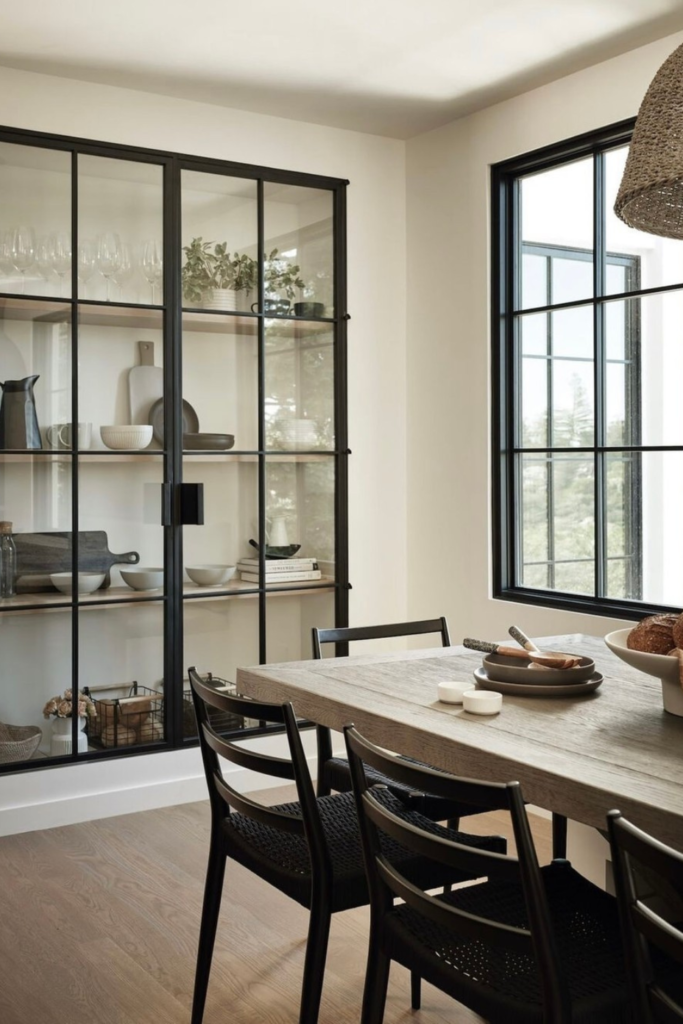
Glass Wall Storage
Walls feel deeper when storage lets light through rather than blocking it. This idea works best in small dining rooms.
Recreate it by installing a glass-front cabinet with a slim metal frame so dishes stay visible but contained.
Daylight does most of the work here, while a woven pendant adds warm task lighting without overpowering the space.
Tall Corner Storage
Corners turn functional when storage rises. Use tall glass-front cabinet with narrow framing, light still moves through the room.
This setup works best in dining rooms where windows take up most wall space and storage needs to stay compact.
Sheer curtains filter daylight, soft pendant over the table and subtle ceiling lighting keep the corner from fading at night.
FAQs
What’s the best storage furniture for a small dining room?
Go for pieces that use height rather than floor space. A tall, slim cabinet or a wall-to-wall built-in gives you real storage without shrinking the walking path.
For everyday use, pick drawers and closed doors so the room doesn’t look messy. Glass fronts work, too, but only if you keep shelves simple and not overstuffed.
How do I keep open shelves from looking cluttered?
Limit what lives there and repeat a few items on purpose. Use matching dishes, stack plates, and group glasses in sets so the shelf reads “organized,” not “random.”
Hide the ugly stuff in drawers or closed cabinets. Add one small lamp or under-shelf light so the shelf looks styled even at night.
You may like to read!

Fasial is the founder of the Fizzy Flare. He has been a passionate blogger since 2021. He ran three different websites in the past few years. Now he is focusing on Fizzy Flare to build an audience and help them organize their life.