16 Cast Iron Wall Storage Ideas for 2026
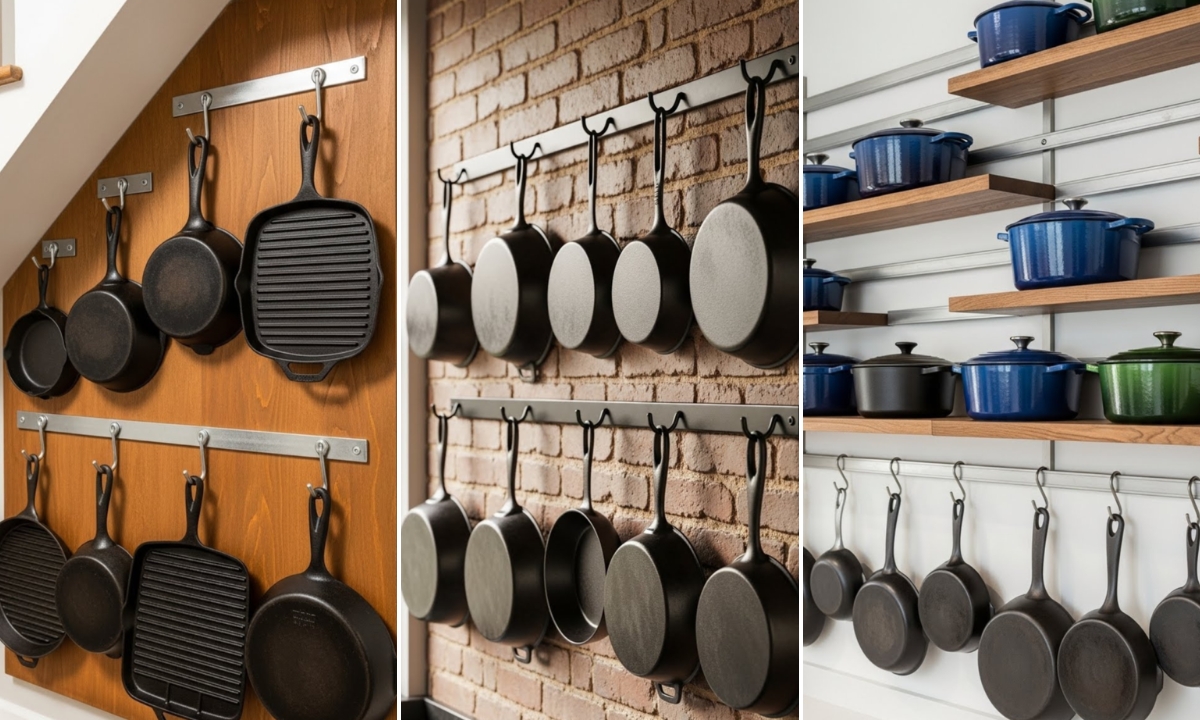
This post may contain affiliate links: full affiliate disclosure.
If you own cast iron, you already know the struggle. These pans are heavy, awkward, and hard to store. Stack them, and you trap moisture that leads to rust.
Hide them in cabinets, and the shelves start to sag or crack. Leave them out the wrong way, and you risk damaging the seasoning you worked so hard to build.
Focuses on fixing storage mistakes that cause these problems and shows you how to store cast iron to protect both your pans and your space.
In this article, you’ll find 16 Cast Iron Wall Storage ideas that are perfect in 2026.
Contents
- 1 What is the Best Way to Store Cast Iron?
- 1.1 Vertical Hook Grid
- 1.2 Wood Backer Rail
- 1.3 Live-Edge Beam
- 1.4 Color Coded Wall
- 1.5 Pegboard System
- 1.6 Full Height Panel
- 1.7 Mixed Mold Display
- 1.8 Framed Pipe Rack
- 1.9 Appliance Side Wall
- 1.10 Slim Rail Stack
- 1.11 Floating Shelf Hooks
- 1.12 Ladder Style Rack
- 1.13 Cabinet Side Face
- 1.14 Under Stair Wall
- 1.15 Brick Wall Mount
- 1.16 Rail With Shelves
- 2 FAQs
What is the Best Way to Store Cast Iron?
The best way to store cast iron is to keep it dry, separated, and properly supported. Cast iron needs airflow to prevent moisture buildup.
It requires strong support due to its weight. When pans touch or sit flat in stacks, they trap humidity, which can wear down seasoning.
When shelves or cabinets are overloaded, they fail over time. Proper cast iron storage solves both problems by using vertical space.
Enough spacing to let each piece breathe. If storage protects the pan and removes stress from your kitchen, it’s doing its job.
Save this article for later! 👇👇
Vertical Hook Grid
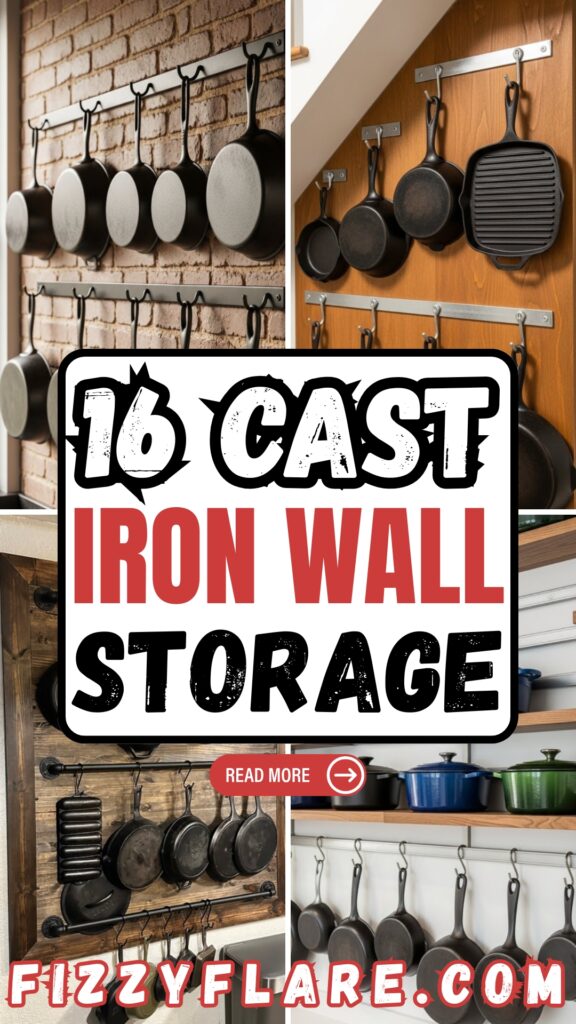
Heavy cast iron hangs flat against a solid wood wall, keeping weight off cabinets, allowing air to circulate around every pan.
Kitchens with unused wall space or rustic interiors benefit most from this setup, screwing heavy-duty hooks directly.
Spacing hooks wider for larger skillets. Warm ambient lighting highlights the texture while soft side light prevents harsh shadows.

Wood Backer Rail
Solid wood turns a drywall wall into a load-bearing surface, which makes this setup ideal for rentals or older kitchens.
A wide plank spreads the weight across multiple studs and gives hooks more flexibility, adding cast-iron hooks.
Soft overhead lighting handles function, while warm wall light brings out the wood grain and pan finish.
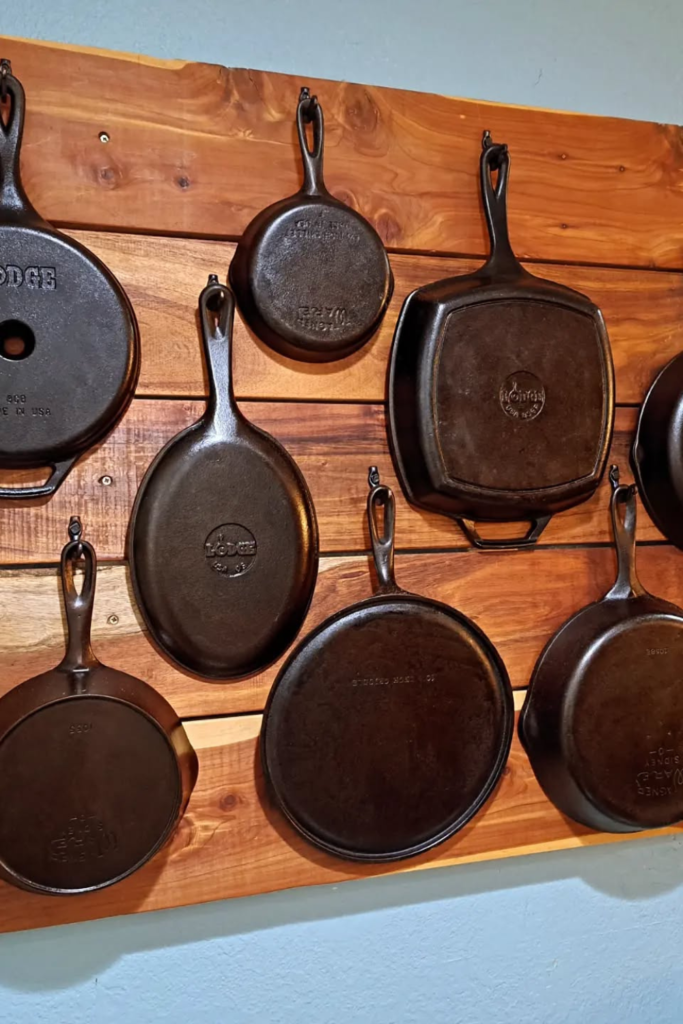
Live-Edge Beam
Raw timber turns storage into a focal point while carrying serious weight. Dining areas or open kitchens works best.
Recreate it by mounting a thick live-edge slab directly into studs, then spacing forged hooks wide enough for airflow.
Natural daylight does the heavy lifting here, with soft ambient room lighting keeping shadows gentle and the grain visible.
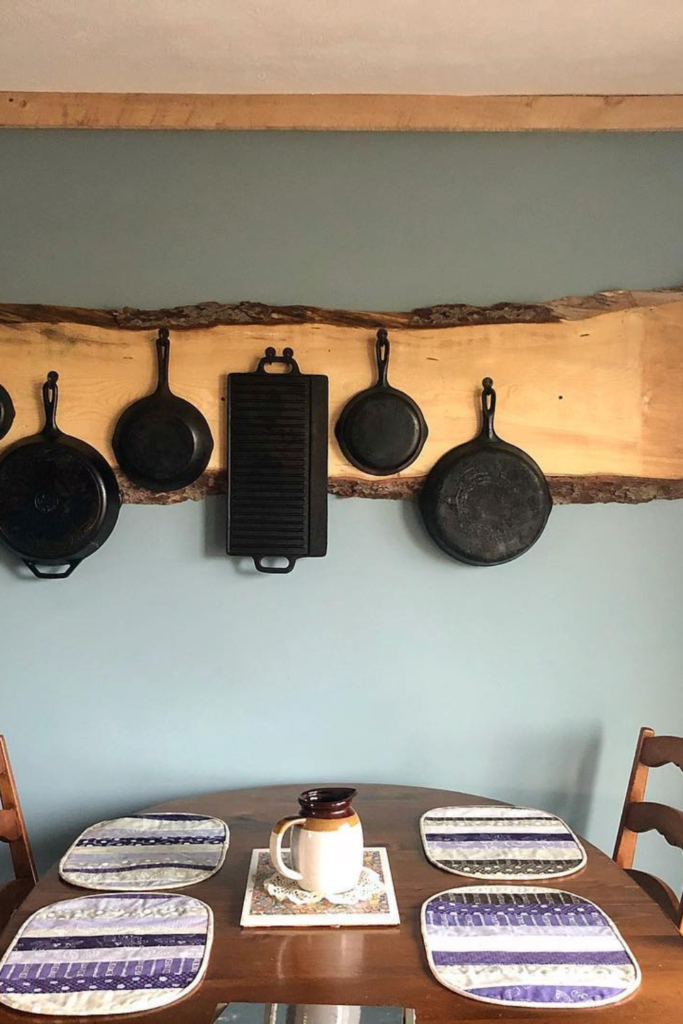
Color Coded Wall
Bright enamel pans turn storage into visual order while keeping cast iron easy to grab, best for small kitchens.
Build it by fixing horizontal rails into studs, then staggering hooks to balance weight and spacing, natural side light.
Keeps colors accurate, while a single overhead light adds enough contrast to separate darker pans from the wall.
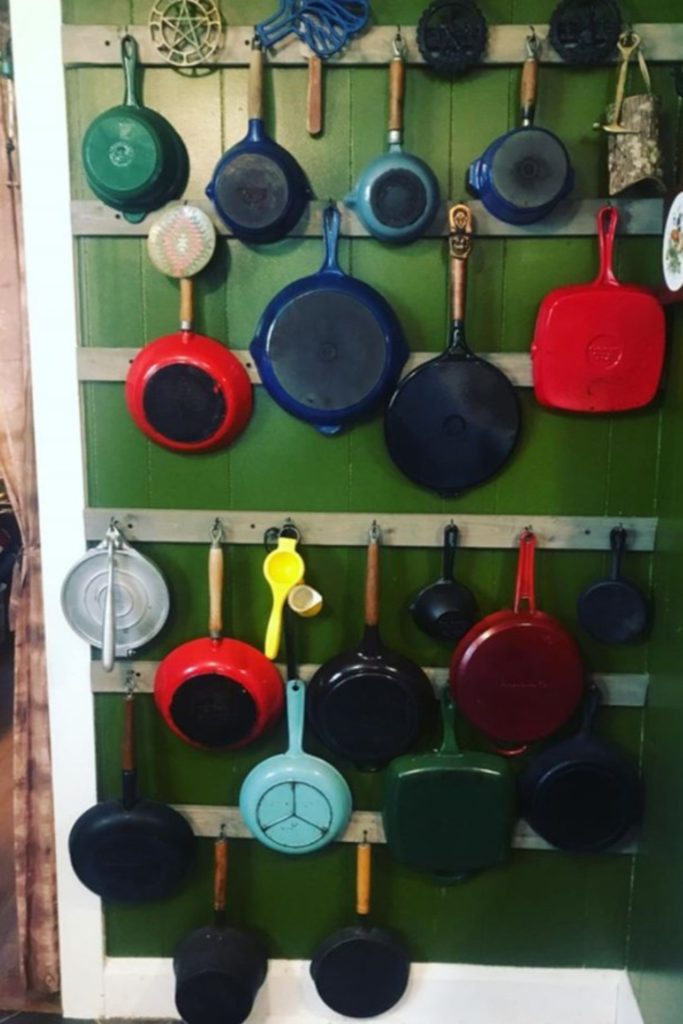
Pegboard System
Flexibility drives this setup, which works best in garages, pantries, or utility kitchens with changing storage needs.
Metal pegboard handles heavy cast iron without stressing walls and lets hooks move as the collection grows.
Bright overhead lighting keeps everything visible, while even ambient light prevents dark corners behind larger pans.
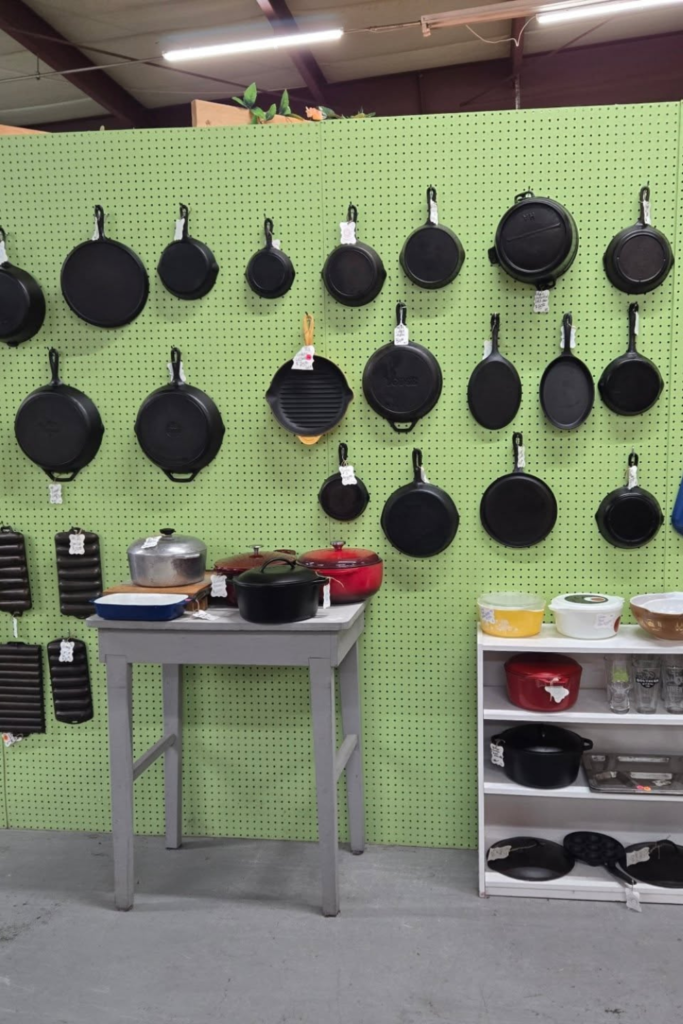
Full Height Panel
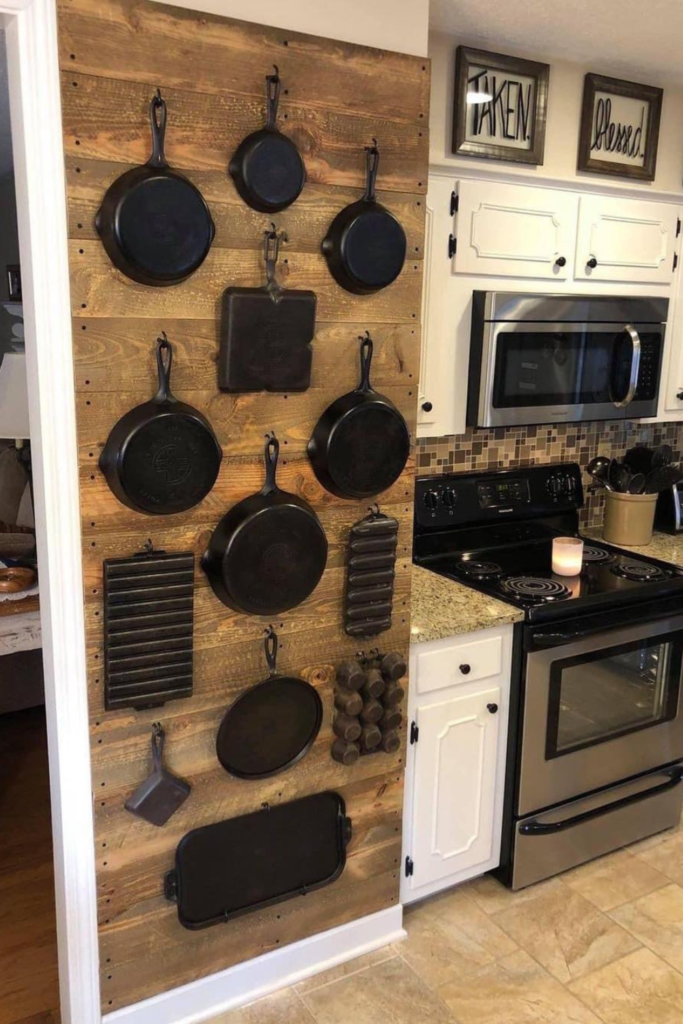
Tall wall sections turn unused vertical space into serious storage. Narrow kitchens or walls beside appliances work best.
Everything stays within arm’s reach. Build it by covering the wall with thick planks, then spacing hooks from top to bottom.
Based on the pan size. Overhead kitchen lighting handles function, while nearby appliance light adds soft spill for depth.
Mixed Mold Display
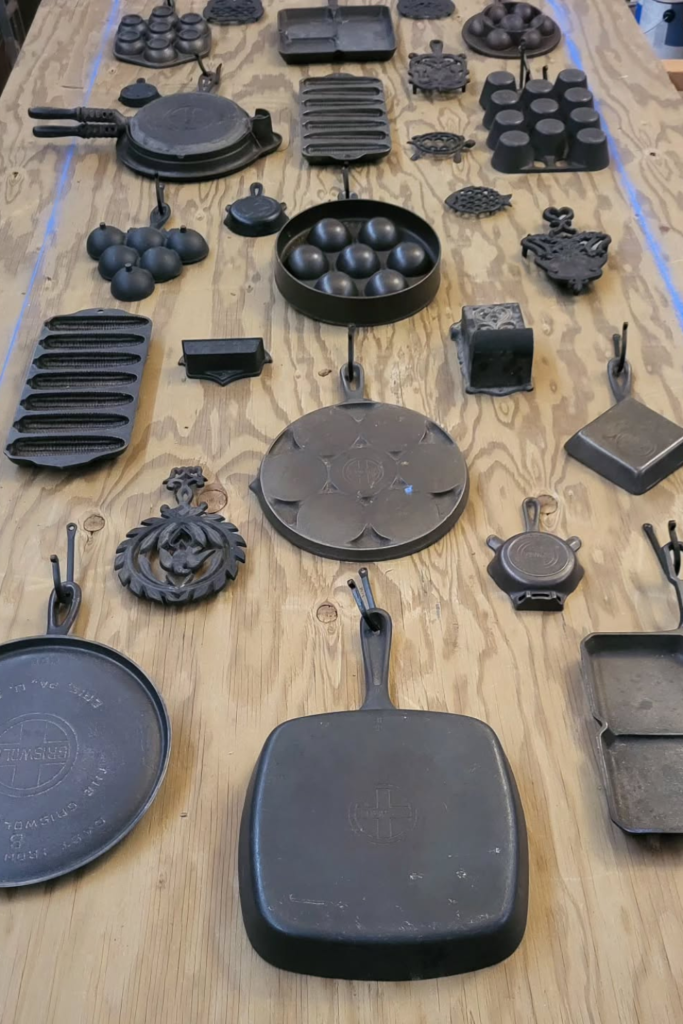
Unusual cast iron pieces deserve storage that keeps them visible and easy to grab. Flat layouts, which prevent awkward stacking.
Mounting individual hooks to a thick plywood backer, spacing each tool according to its shape and weight.
Bright overhead shop lighting handles clarity, while even ambient light avoids deep shadows between smaller molds.
Framed Pipe Rack
Industrial pipe rails turn cast-iron storage into a clean, system works well in kitchens with limited wall space.
Multiple rows spread the weight evenly and keep pans from overlapping. Building a wood frame anchored into studs.
Overhead ceiling lights enhance visibility, while warm ambient light softens the contrast between metal and wood.

Appliance Side Wall
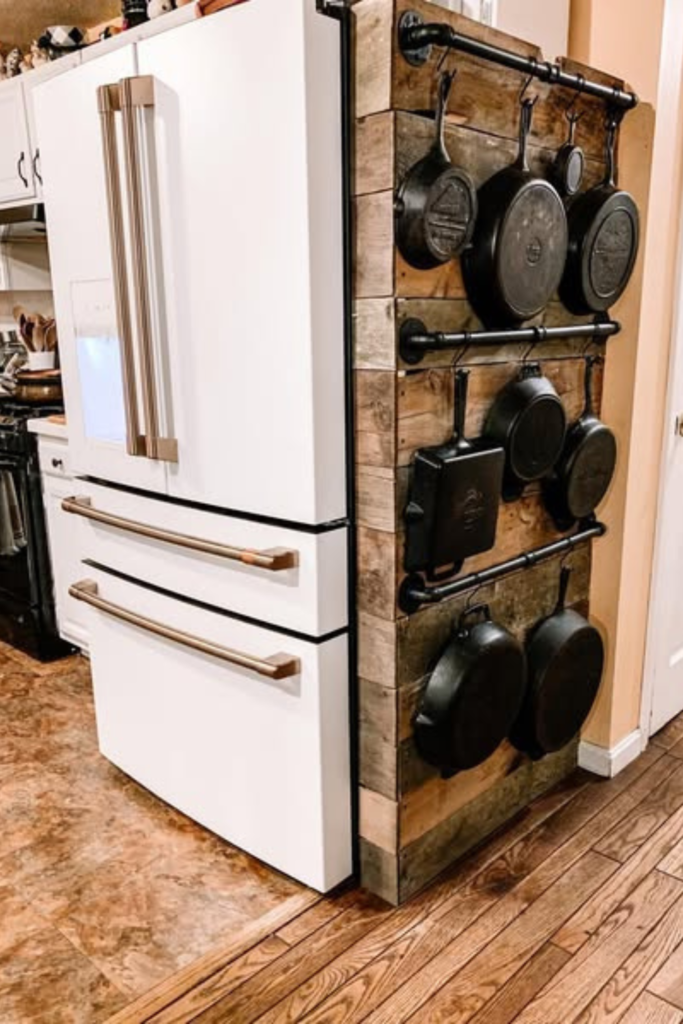
Dead space beside large appliances turns into high-value storage. Tight kitchens best, pans stay close to the stove.
Recreate it by adding a wood backer secured into studs, then running pipe rails vertically for staggered hanging.
Ceiling lighting provides coverage, while reflected light from appliances keeps the area bright without extra fixtures.
Slim Rail Stack
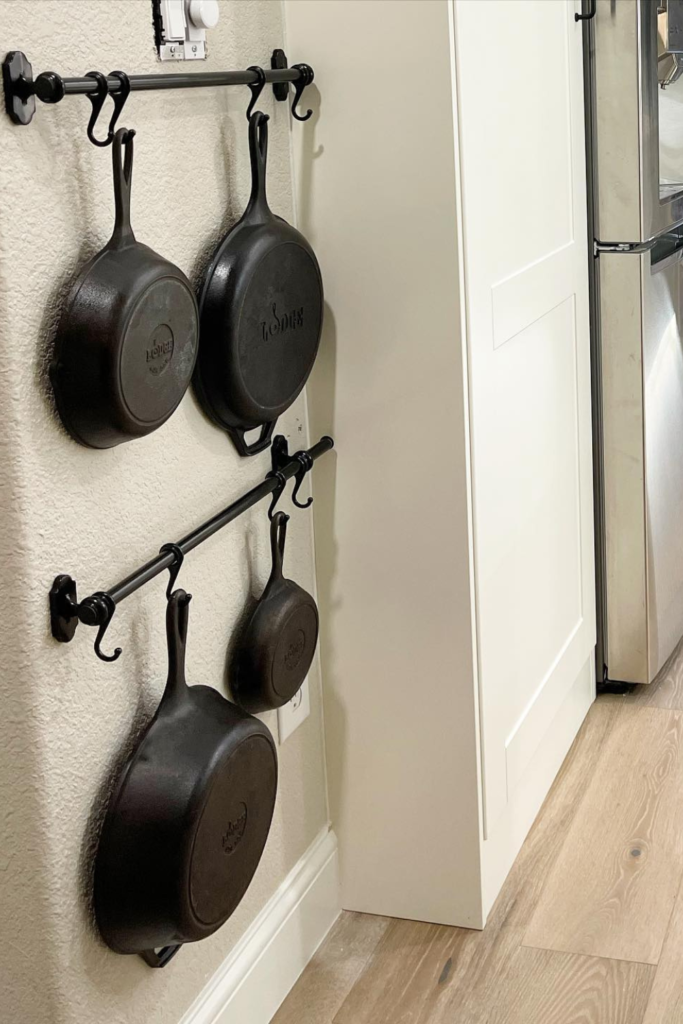
Narrow walls handle cast iron better than cabinets when depth stays minimal. Hallway kitchens work best.
Pans sit flat and never block movement. Mounting two parallel rails into studs and using short hooks to control swing.
Natural daylight from nearby rooms keeps the area bright, while ceiling lights fill in shadows along the walls.
Floating Shelf Hooks
Open shelves solve two problems at once: storage and access. Install a thick floating shelf into studs.
Mount hooks underneath for hanging cast iron. Shelf lighting or under-cabinet lights keep shadows off the pans.
Highlight the wall area. Walls above counters work best because pans stay reachable without blocking prep space.
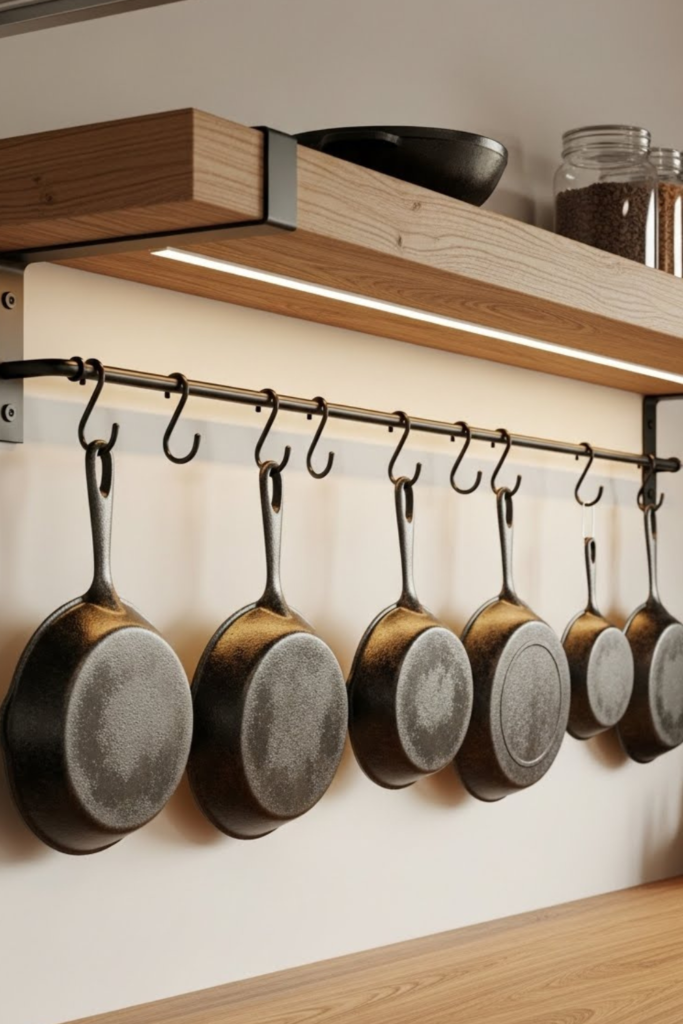
Ladder Style Rack
Vertical ladder racks organize cast iron without spreading across the wall. Narrow kitchens best for this.
Because height replaces width. Mount a solid wood ladder frame into studs and add hooks along each rung.
Overhead kitchen lighting handles visibility, while natural side light prevents the lower pans from sitting in shadow.
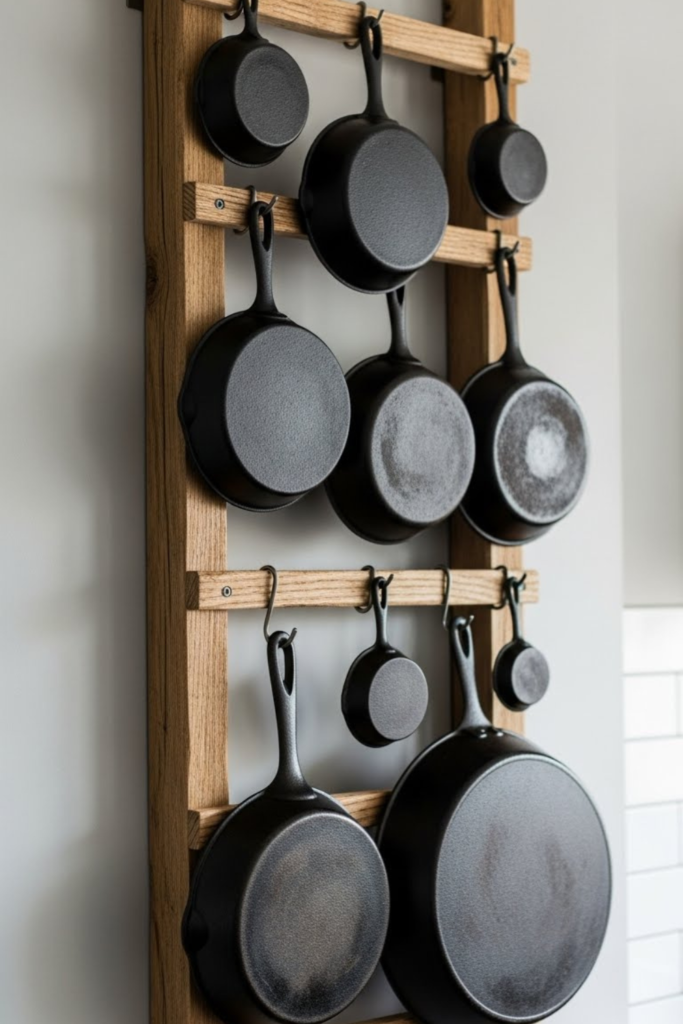
Cabinet Side Face
Cabinet exteriors often sit unused, but can handle serious weight. Secure hooks directly into the cabinet’s structural frame.
Spacing them for airflow. Ceiling lights provide coverage, and nearby task lighting keeps edges clearly visible, works well.
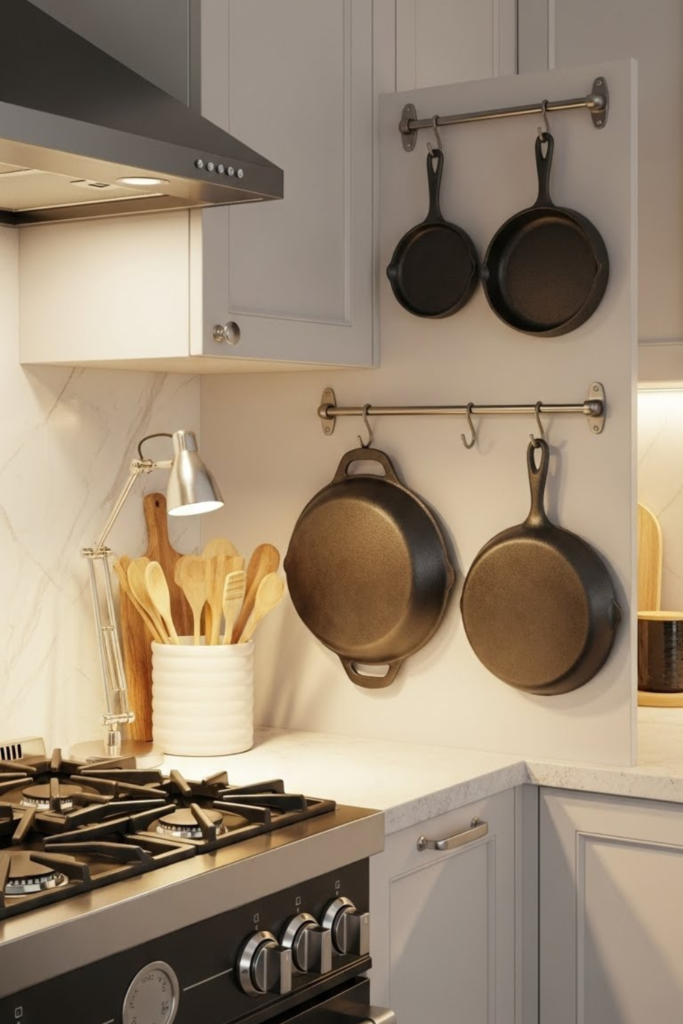
Under Stair Wall
Under-stair walls offer strong framing and wasted space. Entry-adjacent kitchens or basements benefit.
Storage stays out of traffic paths. Anchor a wood backer into stair studs, then stagger hooks to avoid overlap.
Ambient room lighting fills the area, while directional light keeps the iron surfaces readable, this works best.
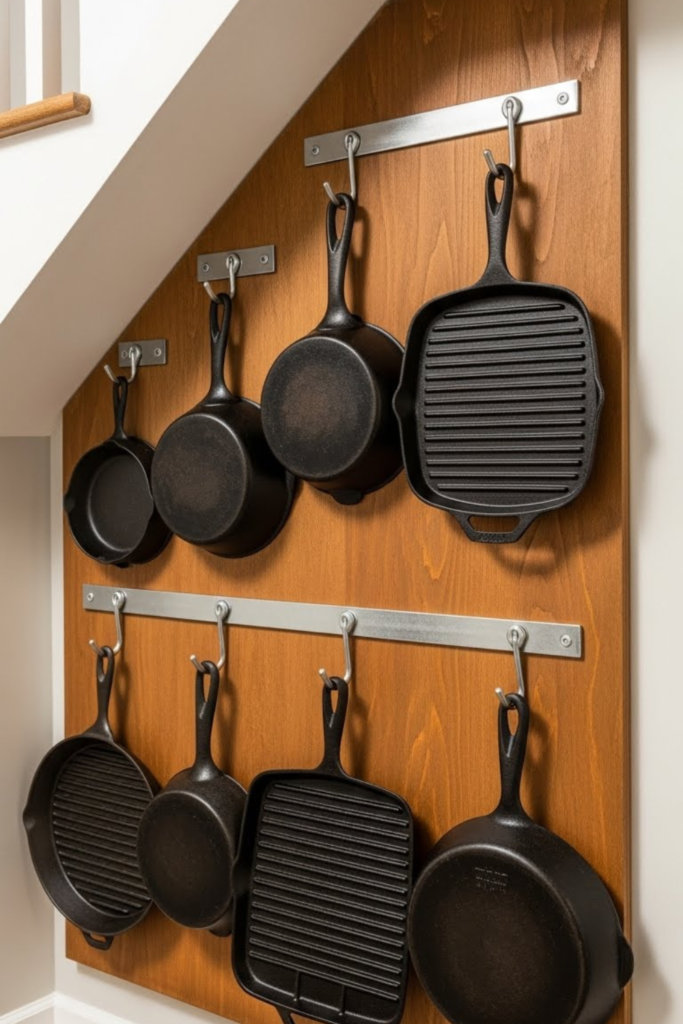
Brick Wall Mount
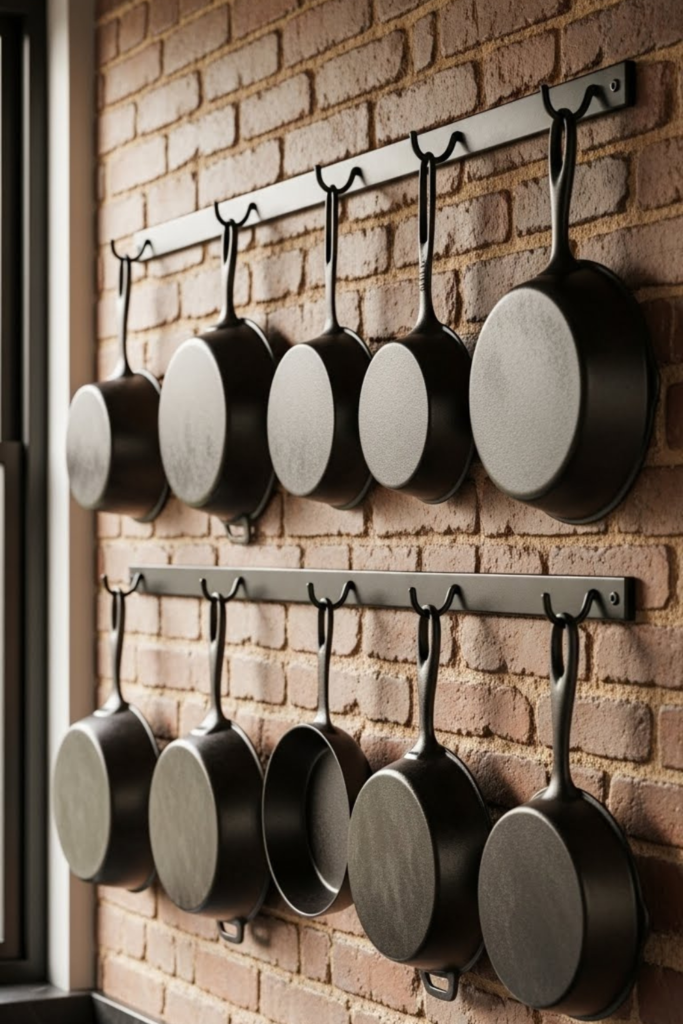
Brick walls hold cast iron effortlessly and add texture. Use masonry anchors and heavy hooks spaced wide for weight balance.
Natural light enhances the rough surface, while warm interior lighting keeps the iron from looking flat or dull, works best.
Rail With Shelves
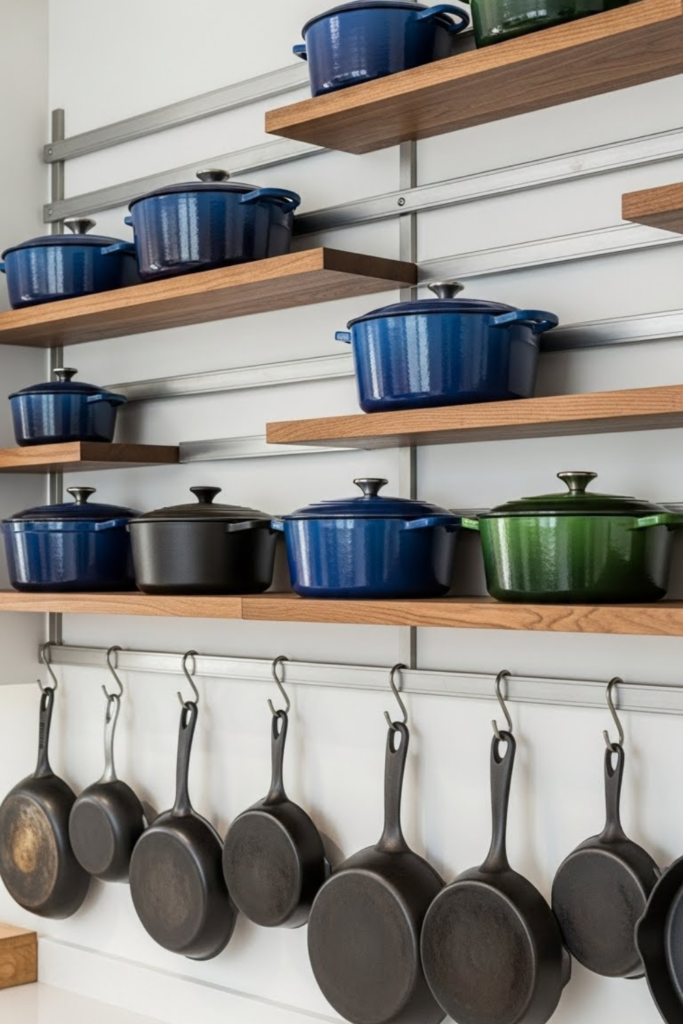
Combining rails and shelves adds flexibility for mixed cast iron sizes. Larger kitchens benefit, shelves hold Dutch ovens, while hooks hold skillets.
Place narrow shelves between rows. Overhead lighting ensures visibility, soft ambient light keeps the setup from feeling heavy.
FAQs
Can cast iron be stored on a wall safely?
Wall storage stays safe when the structure carries the weight. Problems start when hooks rely solely on drywall.
Studs, masonry, or a solid wood backer spread the load and stop movement. Proper spacing also matters because it prevents pans.
From rubbing or pulling to the side. When the wall supports the weight correctly, hanging cast iron is one of the safest storage methods.
Do cast-iron pans damage walls over time?
Walls only get damaged when storage is not properly supported. Hooks mounted into studs or a backer board keep weight from stressing the drywall.
Movement causes most wear, not weight itself. Short hooks and adequate spacing limit the swing, preventing pans from scraping paint or denting surfaces over time.
You may like to read!
- 20 Dress Up Storage Ideas
- 18 Blanket Storage Ideas
- 19 Fishing Rod Storage Ideas
- 21 DVD Storage Ideas

Fasial is the founder of the Fizzy Flare. He has been a passionate blogger since 2021. He ran three different websites in the past few years. Now he is focusing on Fizzy Flare to build an audience and help them organize their life.