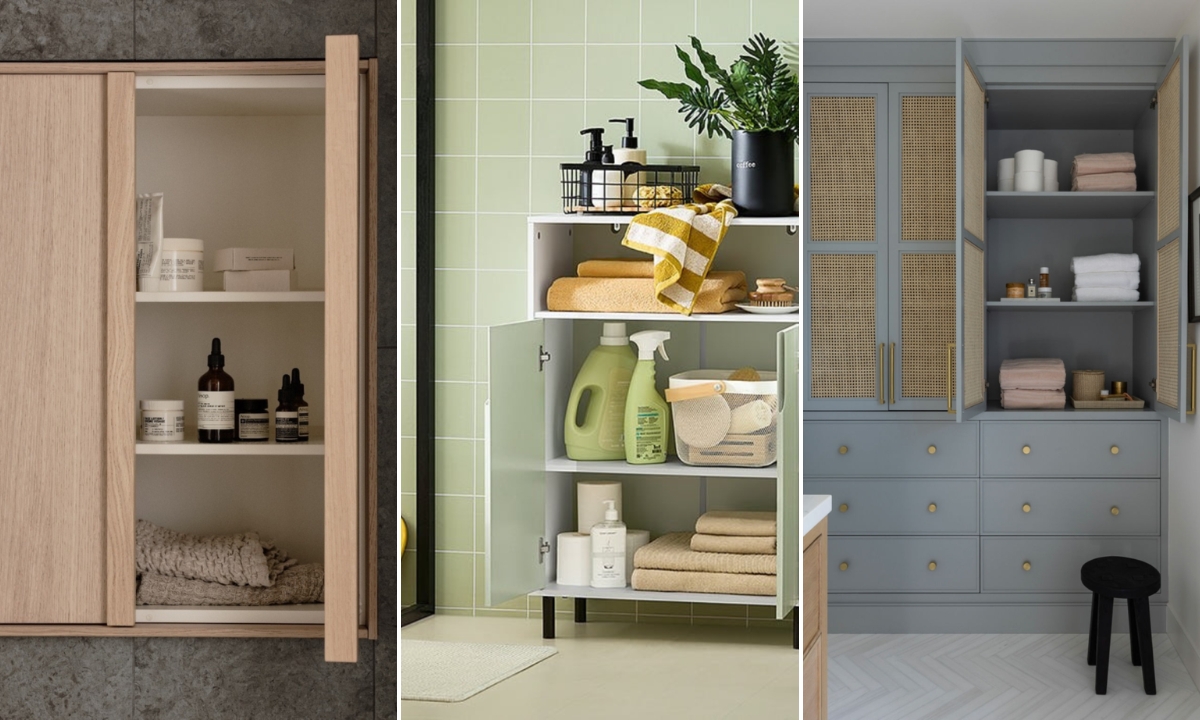
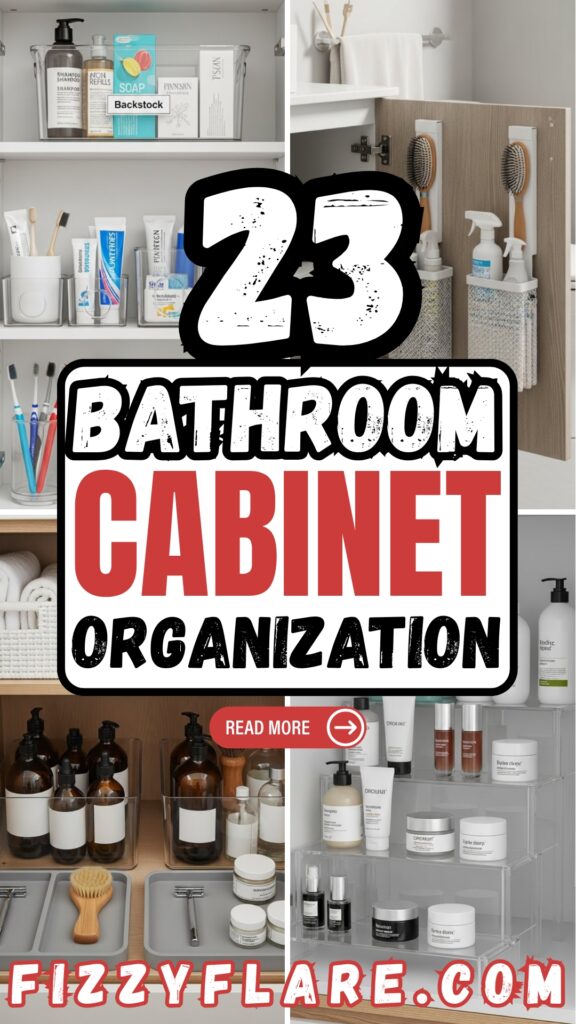
23 Bathroom Cabinet Organization Ideas for 2026
This post may contain affiliate links: full affiliate disclosure.
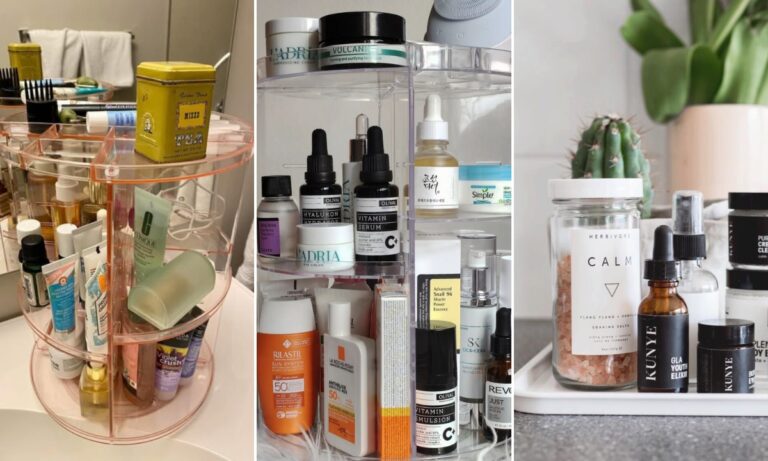
Opening your bathroom cabinet shouldn’t feel annoying, but it usually does. Bottles fall over, things get lost in the back, and you keep buying items you already have.
The problem isn’t the size of your cabinet, it’s how everything is set up inside it. You’ll learn a simple way to organize your bathroom cabinet so it actually stays clean and easy to use.
In this article, you’ll find 23 Bathroom Cabinet Organization ideas that work in 2026.
Let’s jump in!
Contents
- 1 How to Organize Things in the Bathroom Cabinet?
- 1.1 Vertical Product Zoning
- 1.2 Open Shelf Layers
- 1.3 Daily-Use Display
- 1.4 Linen-First Storage
- 1.5 Category Shelf Stacking
- 1.6 Pull-Out Access
- 1.7 Clear Label Control
- 1.8 Tall Cabinet Split
- 1.9 Minimal Shelf Zones
- 1.10 Medical Zone System
- 1.11 Full-Height Sorting
- 1.12 Under-Sink Zones
- 1.13 Tool Drawer Control
- 1.14 Modular Bin Grid
- 1.15 Balanced Sink Storage
- 1.16 Stacked Health Drawers
- 1.17 Drawer-Style Stacking
- 1.18 Door Space Hacks
- 1.19 Backstock Separation
- 1.20 Shelf Risers Use
- 1.21 Texture-Based Grouping
- 1.22 Travel Kit Zone
- 1.23 One-Touch Rule
- 2 FAQs
How to Organize Things in the Bathroom Cabinet?
Start by taking everything out so you can see what you’re really dealing with. If you don’t do this first, you’ll just move the mess around.
Throw away expired products, empty bottles, and things you never use. Group similar items together skincare with skincare.
Hair products with hair products, and backups in one place. When everything has a category, it’s easier to decide where it should live.
The goal isn’t to make it look perfect, but to make sure you can reach what you need without digging or knocking things over.
Save this article for later! 👇👇
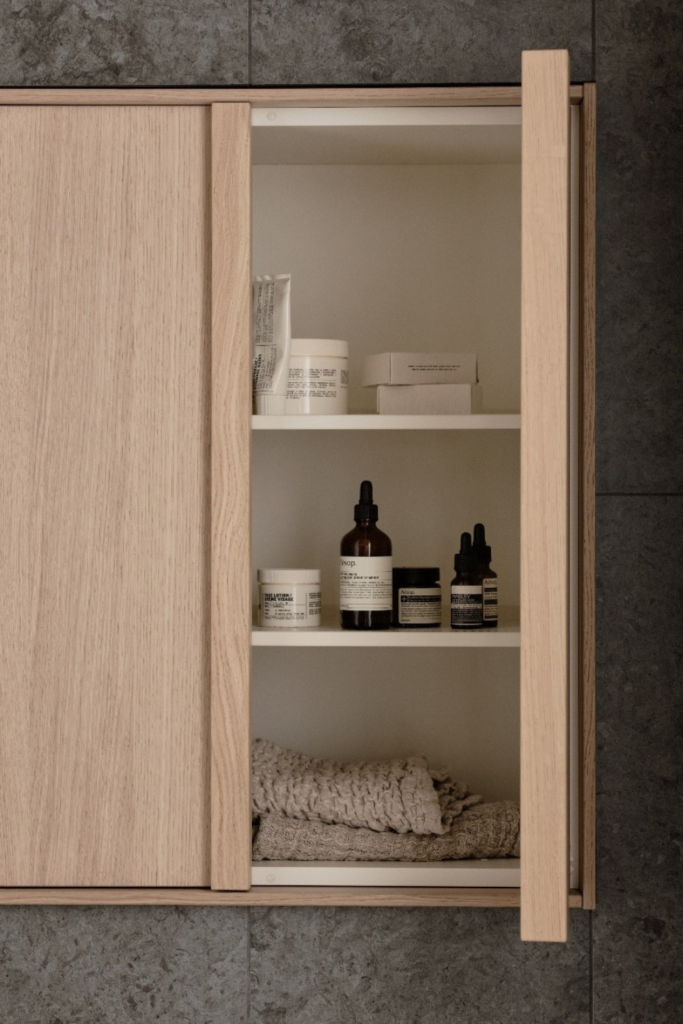
Vertical Product Zoning
Separate shelves by how often items get used so daily routines stay quick, and clutter doesn’t creep back.
Skincare and serums work best at eye level, backups belong higher up, and folded towels fit neatly on the lowest shelf.
Soft ambient lighting from the room pairs with subtle cabinet shadowing to keep everything calm and easy to see.
Open Shelf Layers
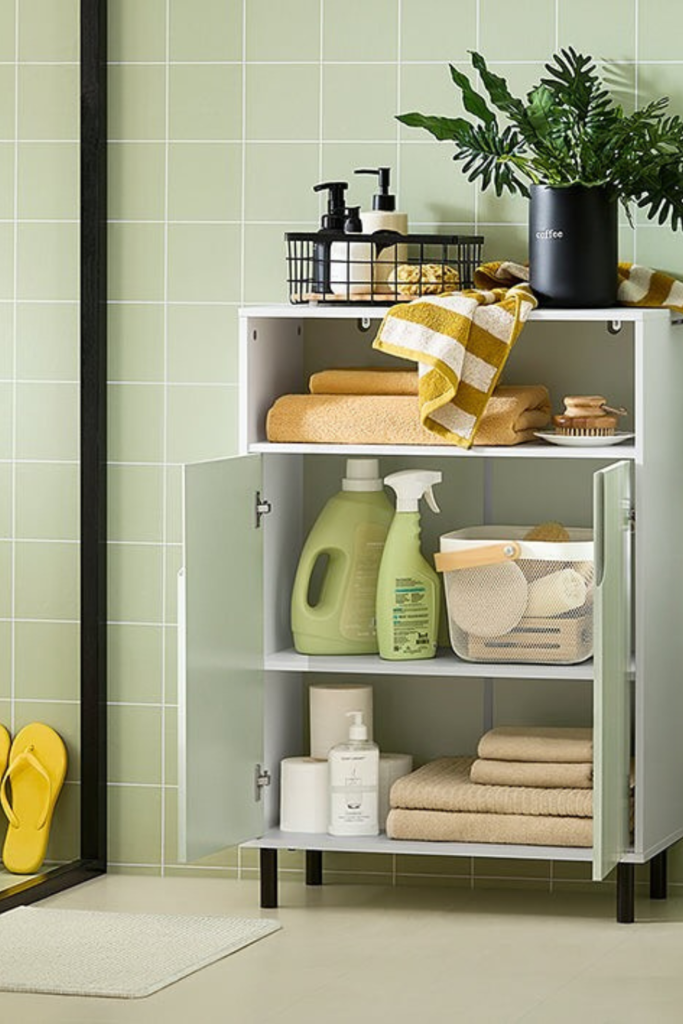
Keep everyday items visible so nothing gets forgotten or shoved to the back. Towels and cleaning supplies work well.
Baskets control smaller bottles in the middle. Mixing open shelving with one or two containers to prevent visual clutter.
Natural daylight acts as the main light source, supported by soft ambient room lighting that keeps everything clear.
Daily-Use Display
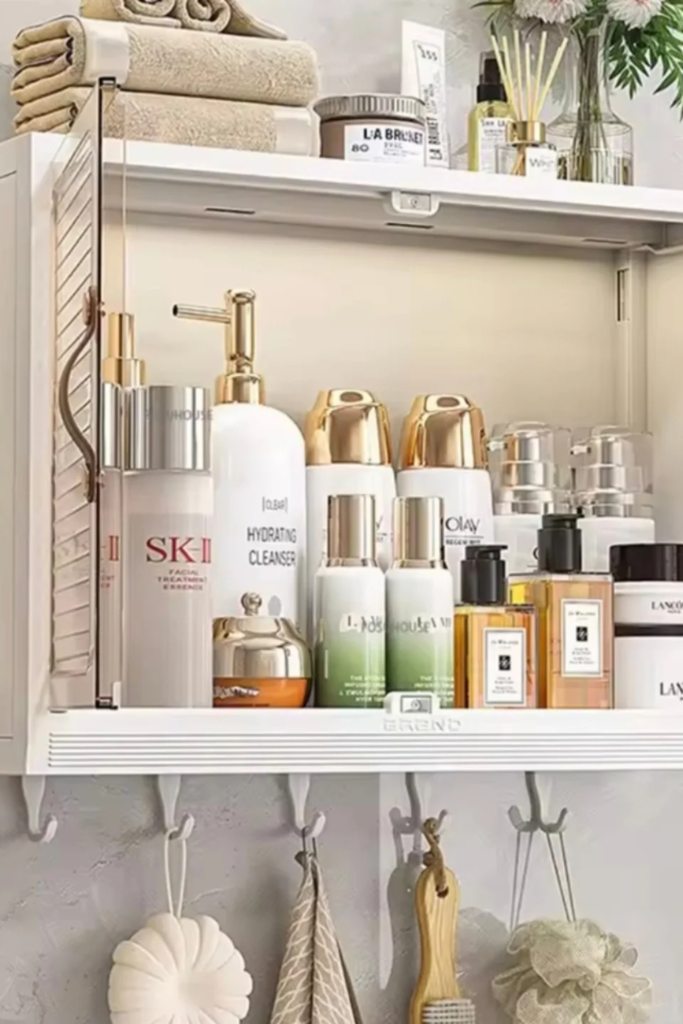
Keep products you reach for every morning right at the front so routines stay fast and frustration-free.
Tall bottles line up best along the back, grouping daily skincare products in the cabinet and moving backups elsewhere.
Built-in cabinet lighting works as task lighting here, supported by soft ambient bathroom light to avoid harsh shadows.
Linen-First Storage
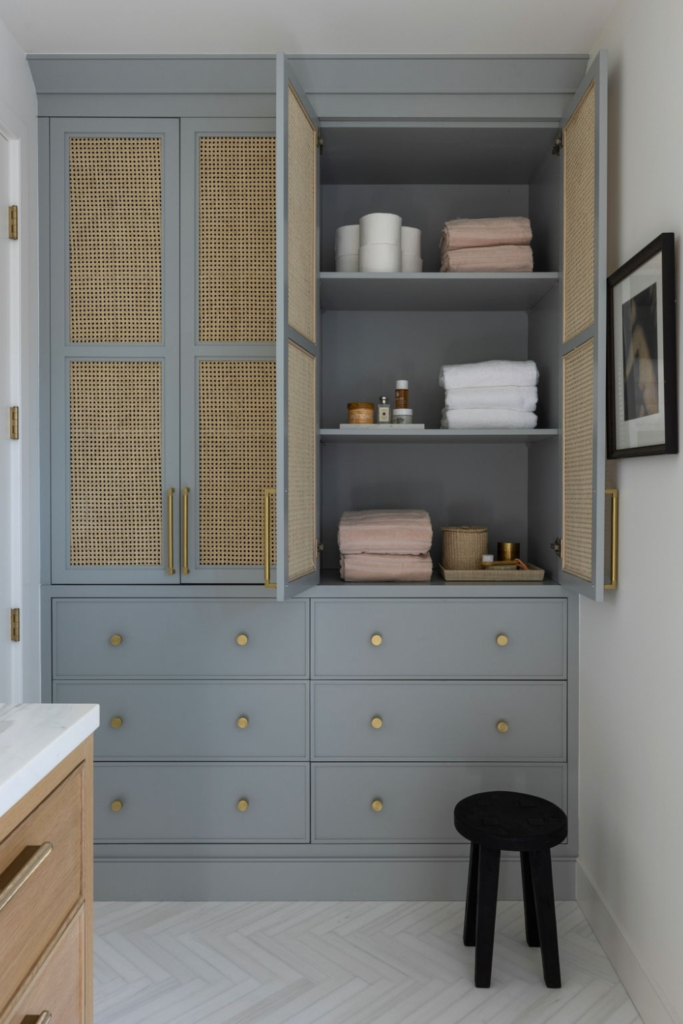
Reserve tall cabinets for towels and bulk items so smaller cabinets don’t get overwhelmed. Fold towels to a uniform size.
Stack them by type to keep shelves neat. Dedicating each shelf to one linen category and using trays for small extras like soaps.
Even overhead ambient lighting keeps the cabinet bright, while the closed panels soften visual clutter when doors shut.
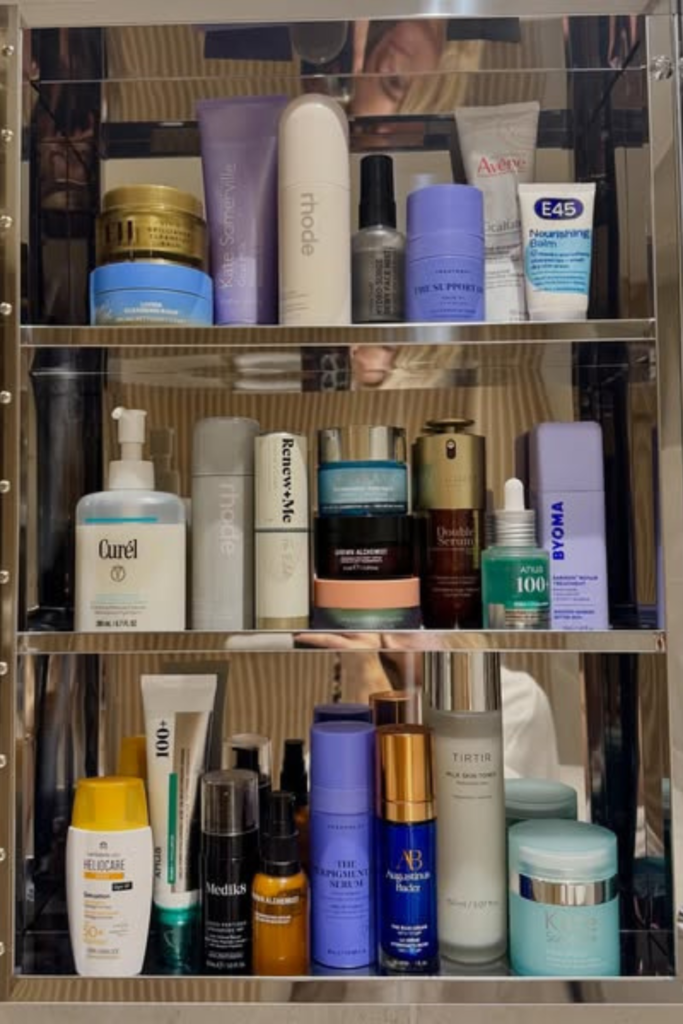
Category Shelf Stacking
Keep similar products grouped by function so routines stay smooth and decision-making stays simple.
Skincare steps work best stacked from cleanser to treatment to moisturizer, shelf by shelf. Assigning one purpose.
Per shelf and lining products front-facing for quick grabs. Reflective cabinet interiors bounce light around.
Pull-Out Access
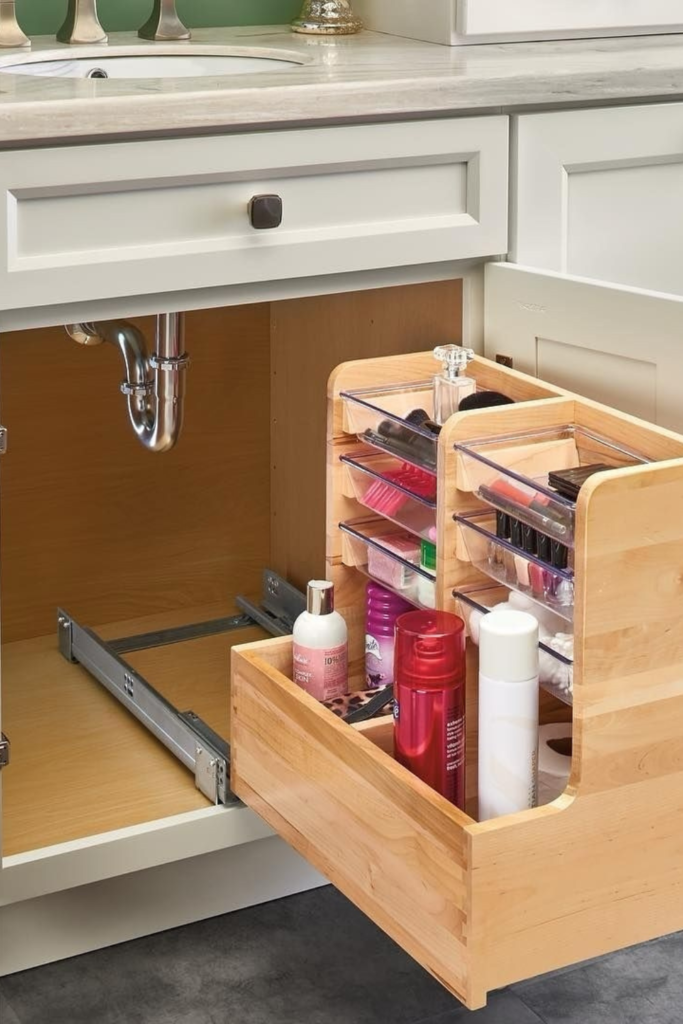
Turn deep under-sink cabinets into usable storage so nothing gets lost behind plumbing. Sliding organizers work best.
Daily hair products that need quick access, installing a pull-out frame that fits around pipes and sorting items by height.
Overhead bathroom lighting provides ambient light, while the open drawer position naturally brings items into clear view.
Clear Label Control
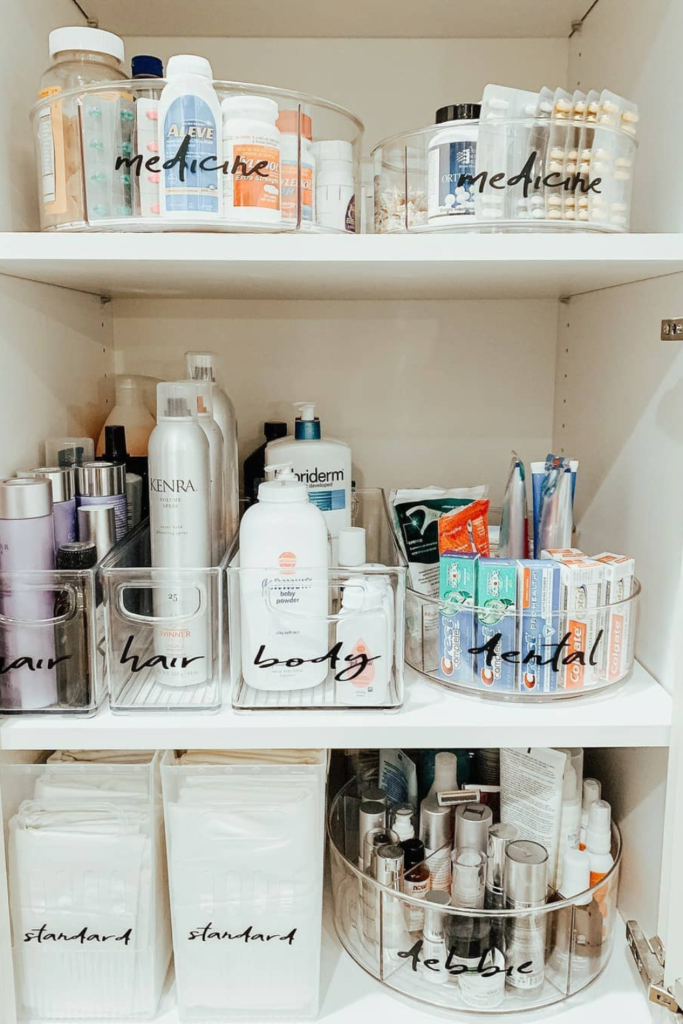
Stop digging through mixed products by giving every category its own clear container. Hair, body, dental, and meds stay easy to spot.
Using transparent bins and simple handwritten labels so items return to the right place automatically.
Bright white cabinet interiors reflect ambient bathroom light, while clear containers let light pass through, keep everything visible.
Tall Cabinet Split
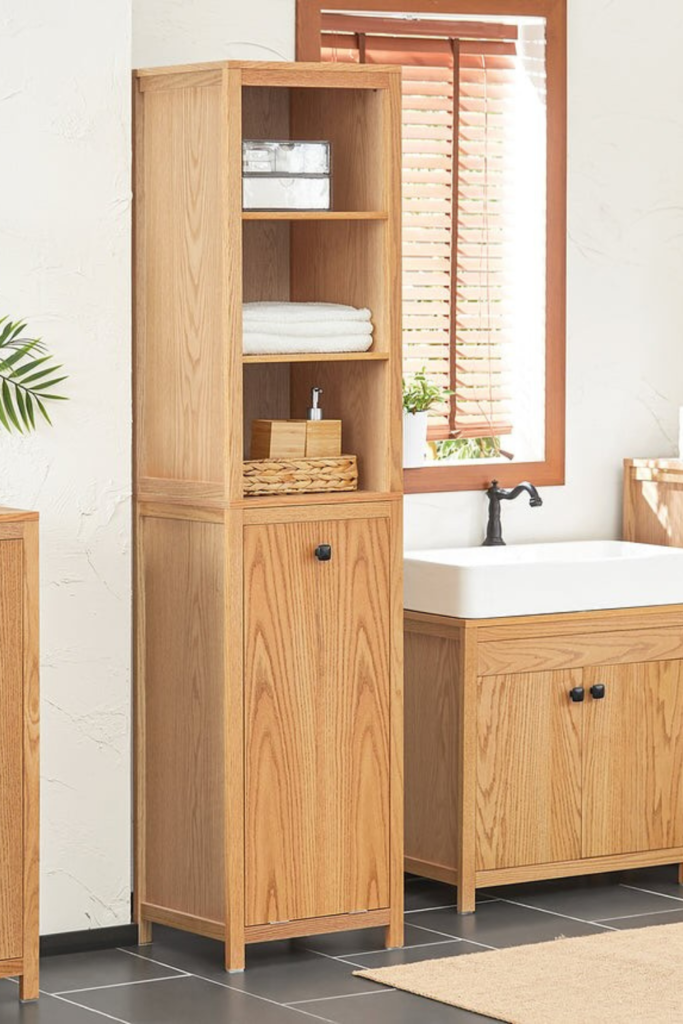
Use vertical cabinets to separate clean storage from hidden laundry so one zone doesn’t take over the whole bathroom.
Open shelves handle towels and daily items, while the lower compartment hides hampers or bulky supplies.
Natural daylight does most of the work here, with soft ambient lighting keeping shelves usable after dark.
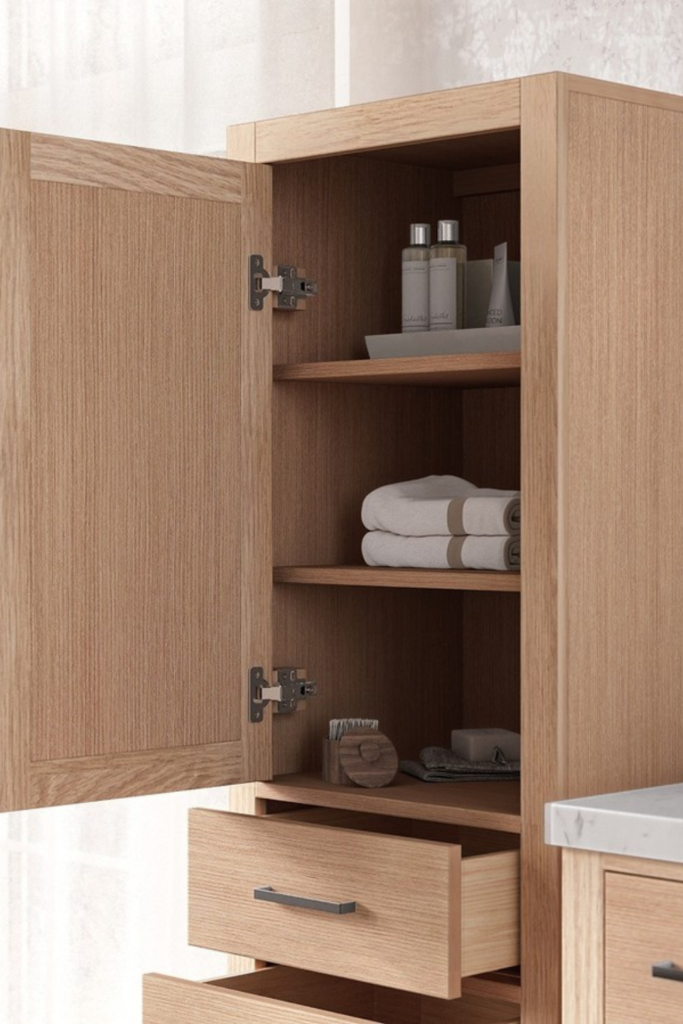
Minimal Shelf Zones
Limit each shelf to only a few essentials so the cabinet stays calm and easy to manage. Daily bottles work best on the top shelf.
Folded towels sit neatly in the middle, and small tools belong lower where hands naturally reach, and leaving space around items.
Soft natural light highlights the wood tones, while gentle ambient bathroom lighting keeps everything usable after sunset.
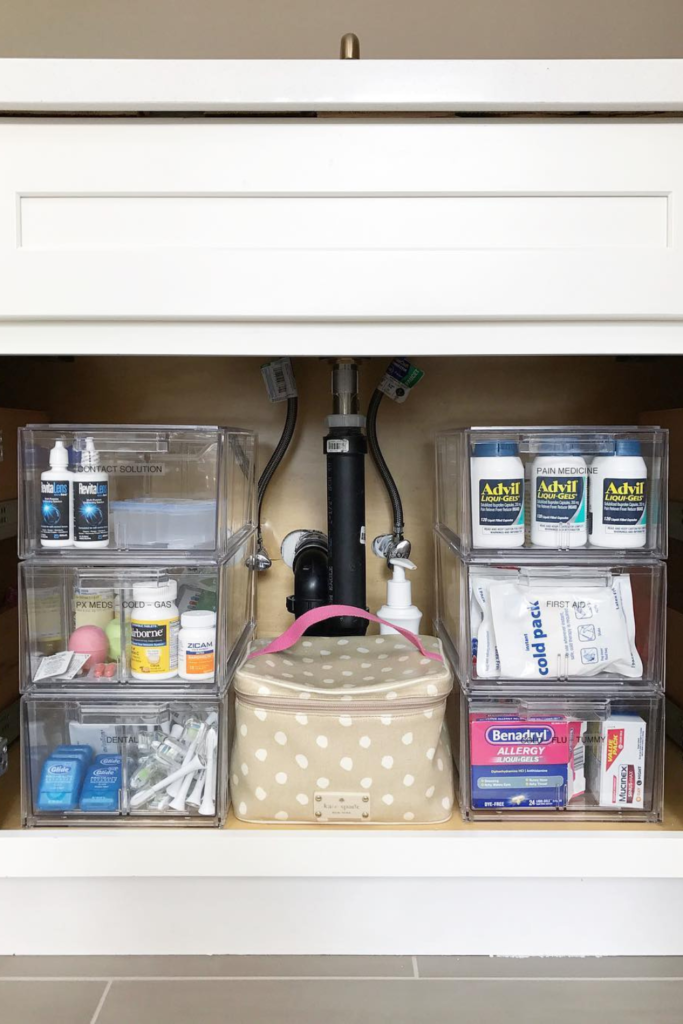
Medical Zone System
Keep health items separate so you don’t have to search during an emergency. Pain relief, first aid, dental care, work best.
When each has its own container, recreate this by using stackable clear bins that fit around plumbing and labeling them.
Bright ambient ceiling light fills the cabinet, while clear containers serve as task lighting, keeping labels visible at a glance.
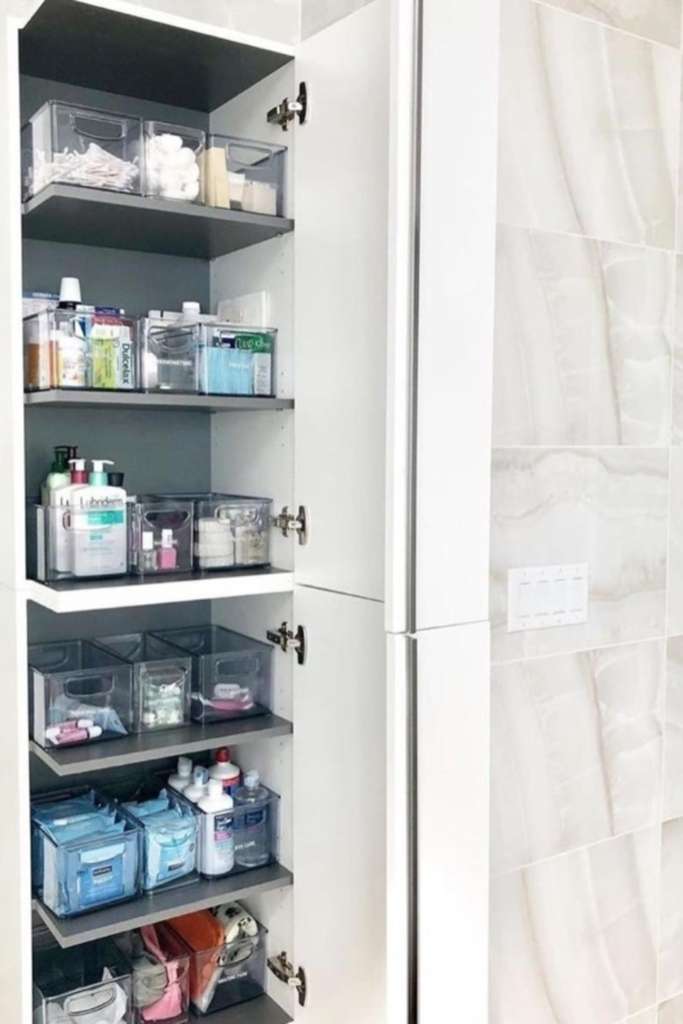
Full-Height Sorting
Use tall cabinets to separate supplies by frequency, rather than cramming everything into a single shelf.
Daily items stay at eye level, occasional products move higher, and backups sit lower where access isn’t urgent.
Natural light from the bathroom balances with soft ambient lighting, the uniform containers keep visual noise to a minimum.
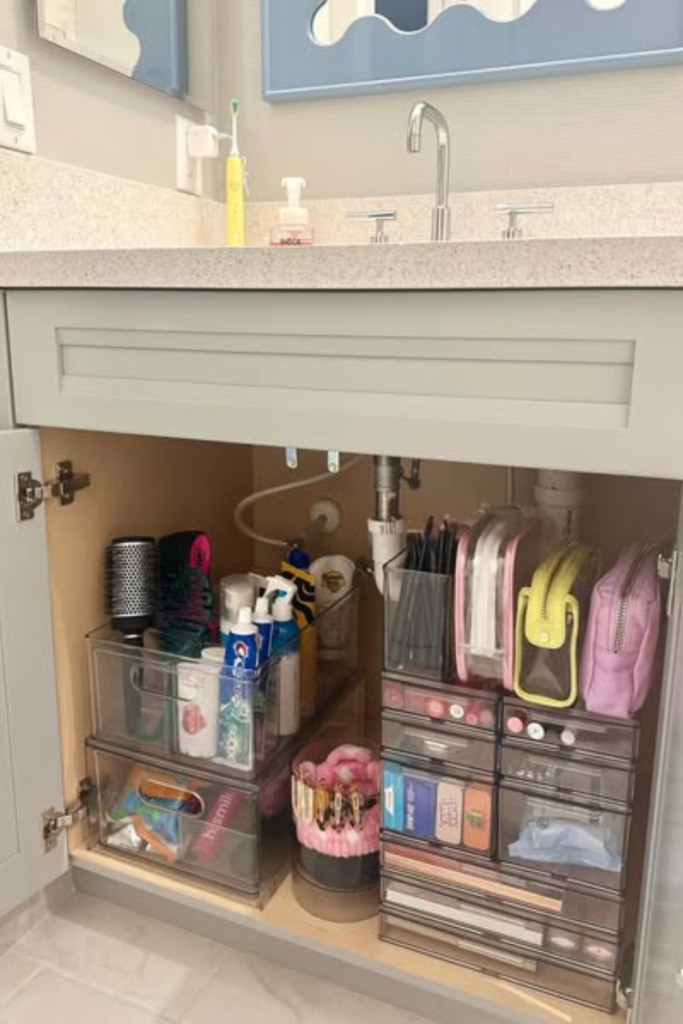
Under-Sink Zones
Grooming tools fit best along one side, makeup storage works well stacked in drawers, and tall bottles stay upright at the back.
Recreate this by measuring pipe clearance first, then choosing modular clear organizers that slide in cleanly.
Overhead vanity lighting provides ambient light, while the open cabinet design naturally acts as task lighting for quick access.
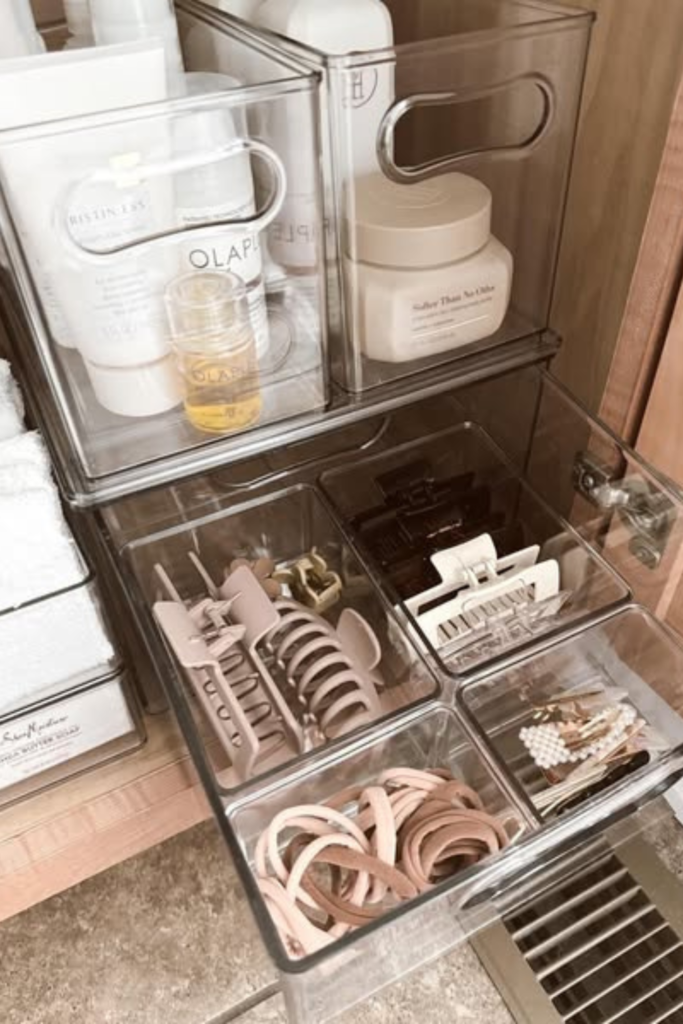
Tool Drawer Control
Keep small grooming tools from turning into a tangled mess by giving every piece its own compartment.
Hair clips, ties, and rollers stay usable when divided by type and size. Stacking shallow, clear trays inside a cabinet.
Limiting each section to a single tool category. Bright overhead lighting provides clear visibility, and access.
Modular Bin Grid
Break under-sink storage into repeatable blocks so every item has a predictable home, work well for towels and tools.
Bins handle first-aid, dental, and illness supplies, choosing matching containers that fit side by side and stack cleanly around plumbing.
Overhead vanity lighting provides ambient light, and the open bin fronts serve as task lighting, keeping contents visible.
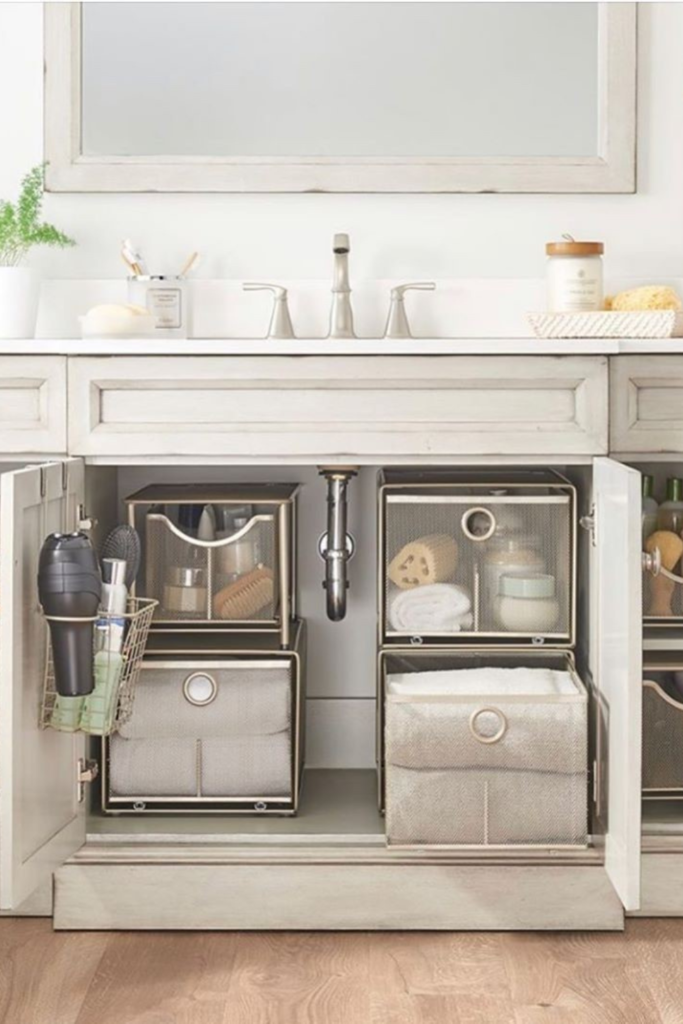
Balanced Sink Storage
Divide the under-sink space evenly so neither side becomes a dumping zone. Toiletries and grooming tools fit better.
Arranged left-to-right, with taller bins near the doors and deeper drawers toward the center, using matching storage units.
Ambient vanity lighting fills the cabinet, while mesh fronts soften shadows and keep contents easy to spot.
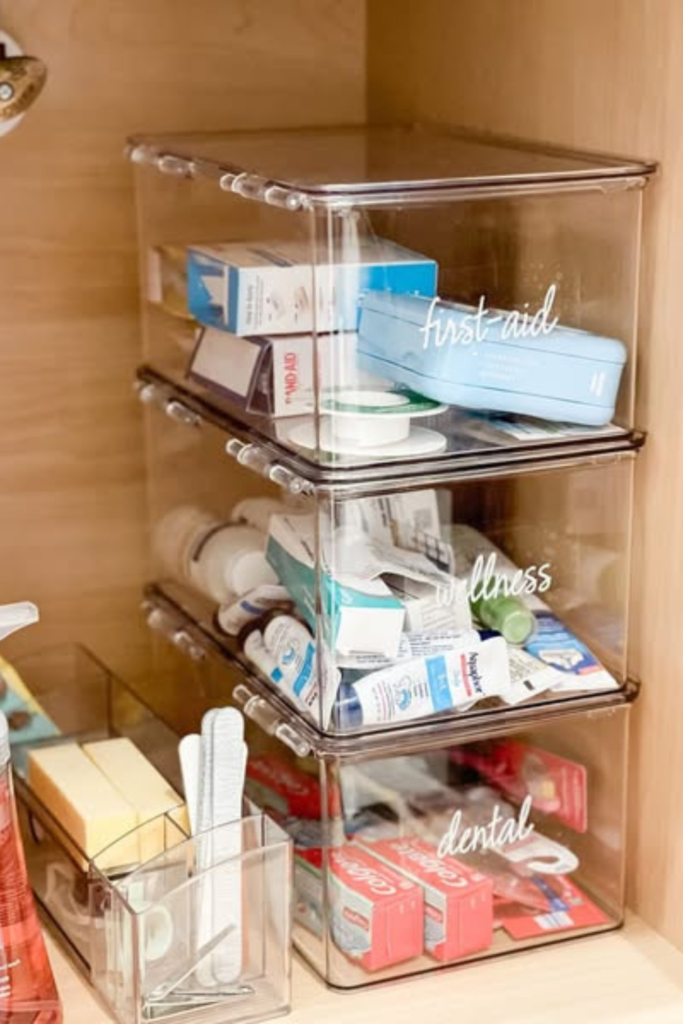
Stacked Health Drawers
Avoid mixing medical items by separating them into stacked, pull-out drawers. First aid, illness care, and dental supplies stay easy to grab.
Soft ambient bathroom lighting fills the space, while the transparent sides serve as task lighting, keeping labels readable without digging.
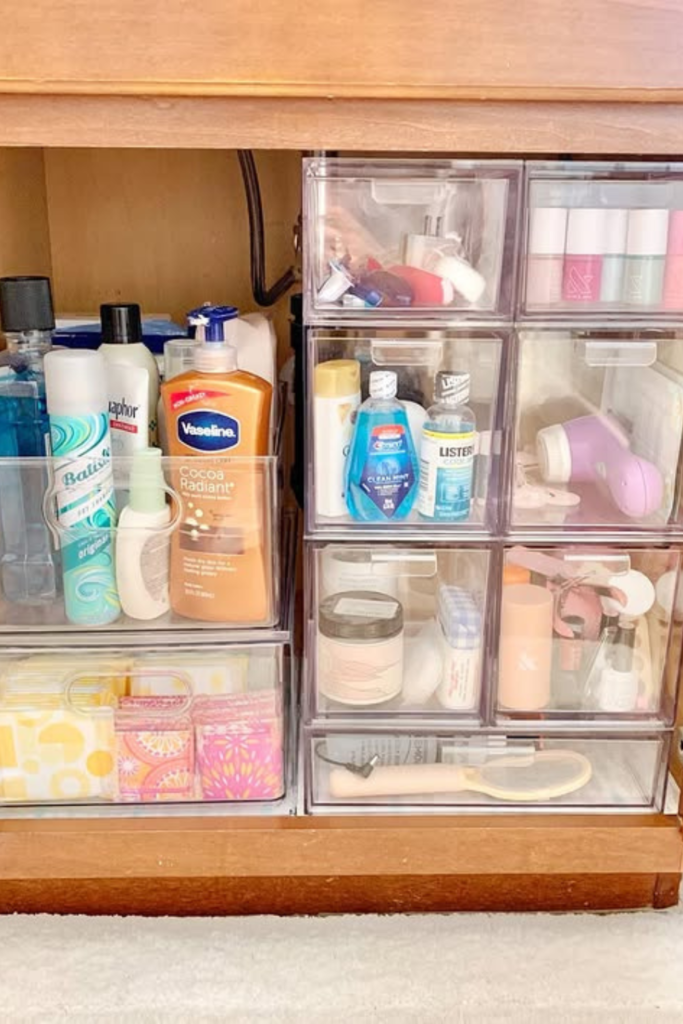
Drawer-Style Stacking
Use vertical drawer units to turn a deep cabinet into small, easy sections. Skincare, dental, and grooming tools stay separated.
When each drawer handles one type of item, placing stackable clear drawers on one side and taller bins for bottles on the other.
Ambient vanity lighting fills the cabinet, while clear drawer fronts serve as task lighting, keeping everything visible.
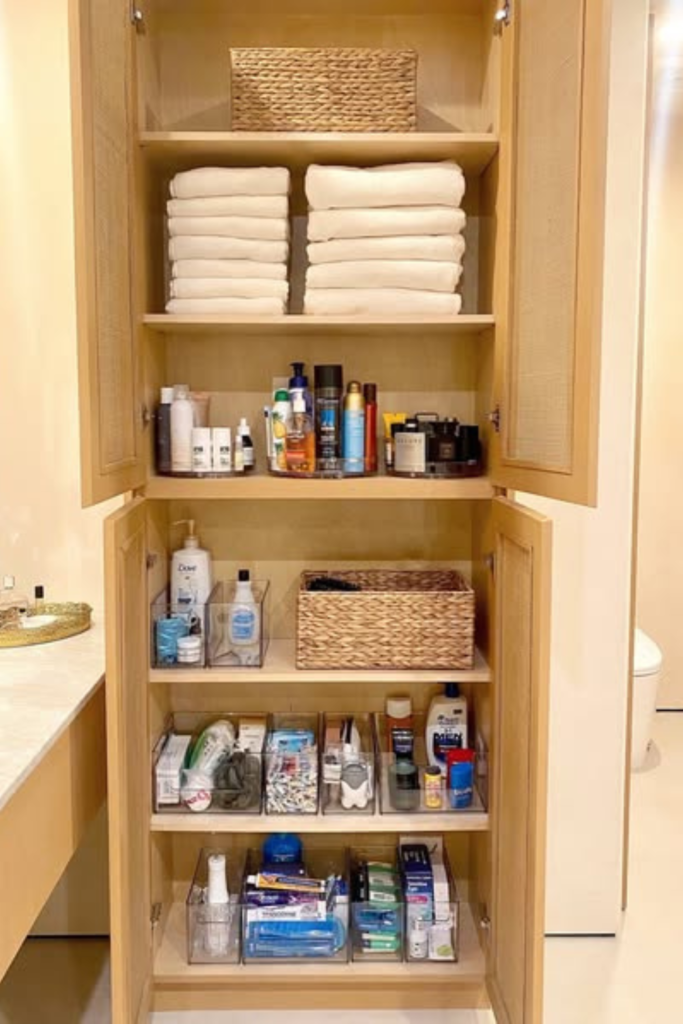
Door Space Hacks
Cabinet doors hide usable space that usually goes ignored. Slim racks or adhesive pockets hold brushes, sprays, or cleaning cloths.
Overhead bathroom lighting provides ambient light, while the open-door angle naturally acts as task lighting when you reach inside.
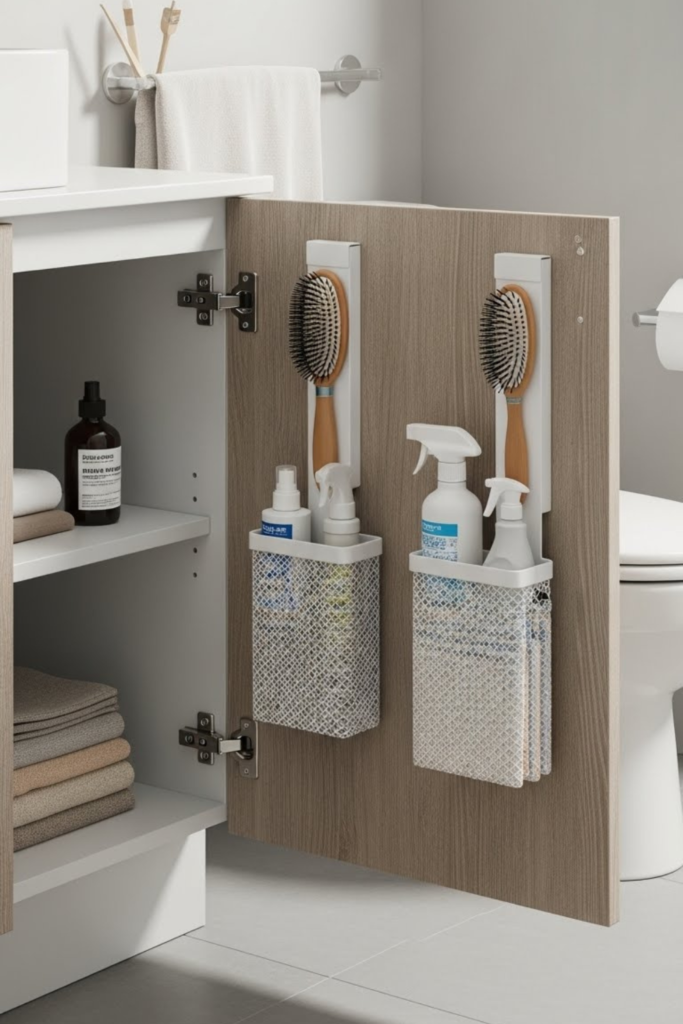
Backstock Separation
Overflow products cause clutter when mixed with daily items. Extra shampoos and refills work better stored together in one dedicated bin.
Placing a labeled backstock container on the highest or lowest shelf and only refilling daily bins when needed.
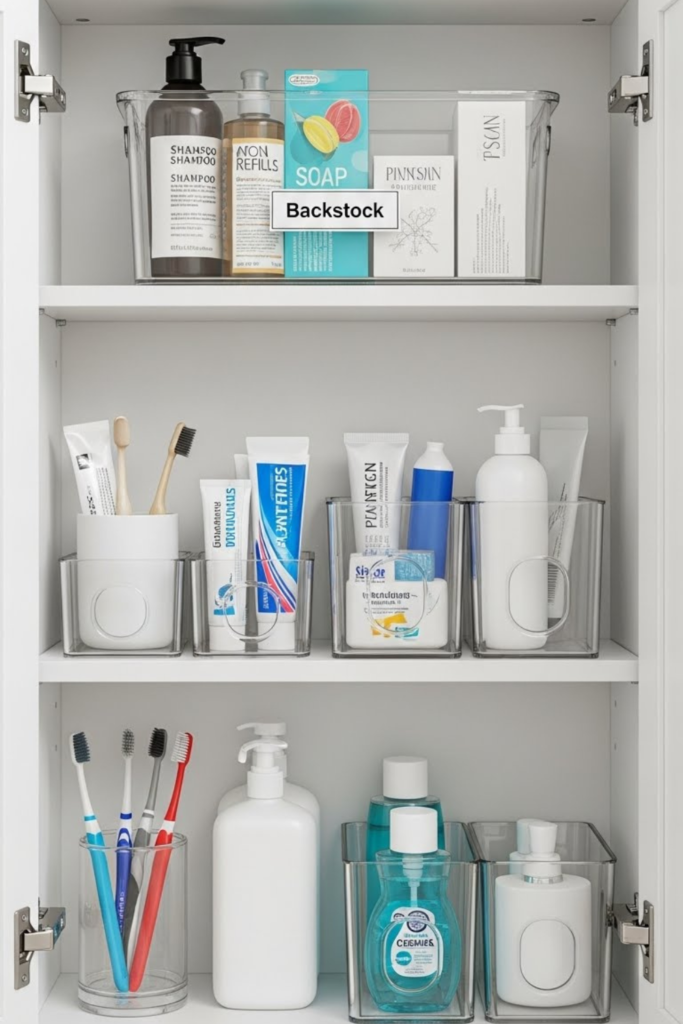
Shelf Risers Use
Flat shelves waste vertical space when bottles vary in height. Simple risers create instant layers, so smaller items.
Don’t get lost behind taller ones. Recreate this by adding acrylic or metal risers and placing shorter products underneath.
Soft ambient lighting fills the cabinet, while raised tiers reduce shadows and improve visibility, so it works best.
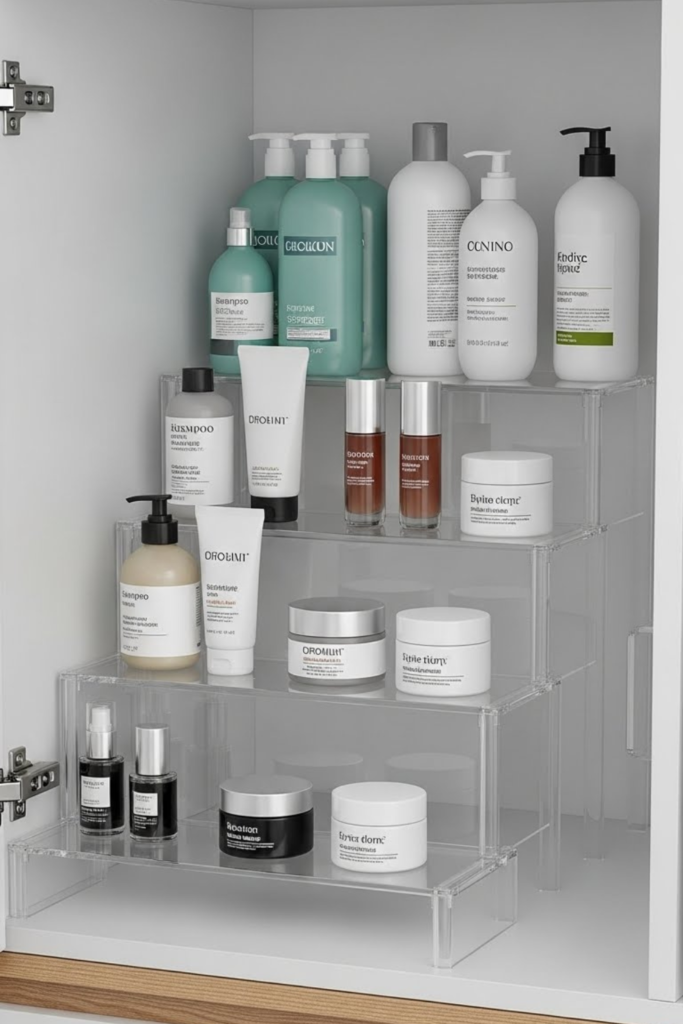
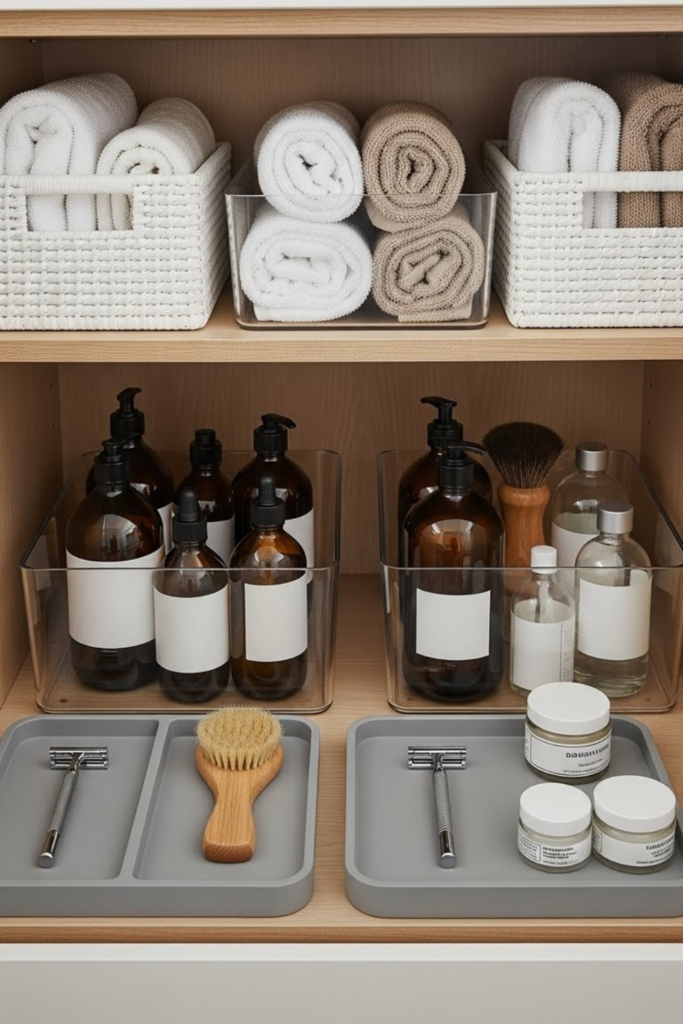
Texture-Based Grouping
Mixing materials helps the brain recognize zones faster. Towels, bottles, and tools feel easier to manage.
Each category uses a different container type. Recreate this by pairing baskets for linens, clear bins for liquids.
Trays for tools. Even ambient lighting highlights texture differences and keeps everything readable at a glance.
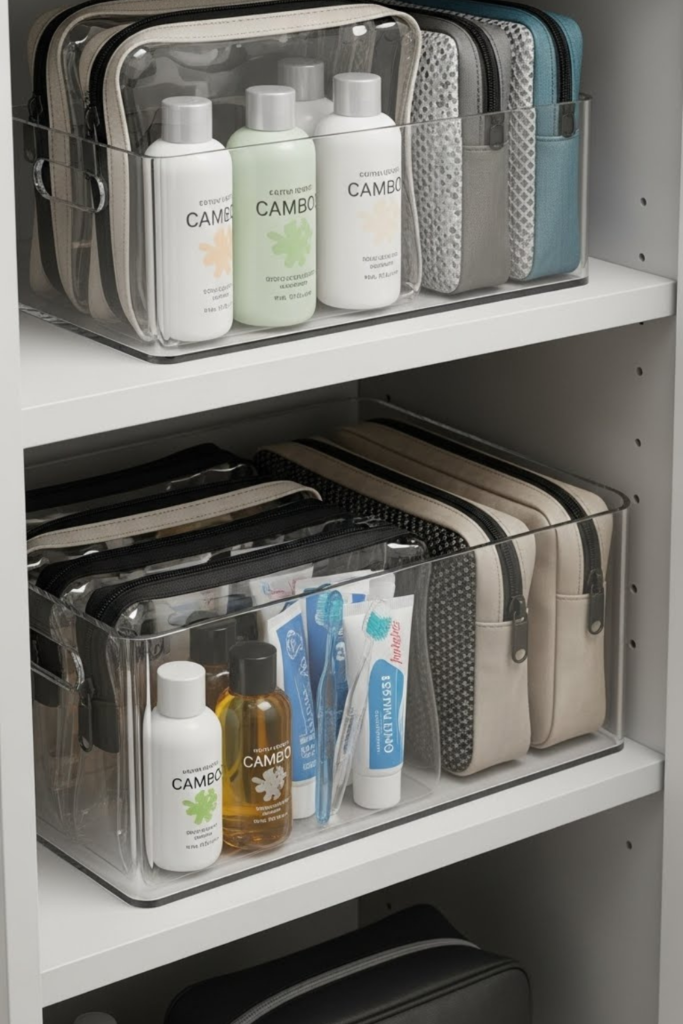
Travel Kit Zone
Loose travel items create chaos when scattered. Small pouches work best grouped together in one grab-and-go area.
Storing travel-size products in zip bags or cases inside a single bin near the front. Standard cabinet lighting works fine.
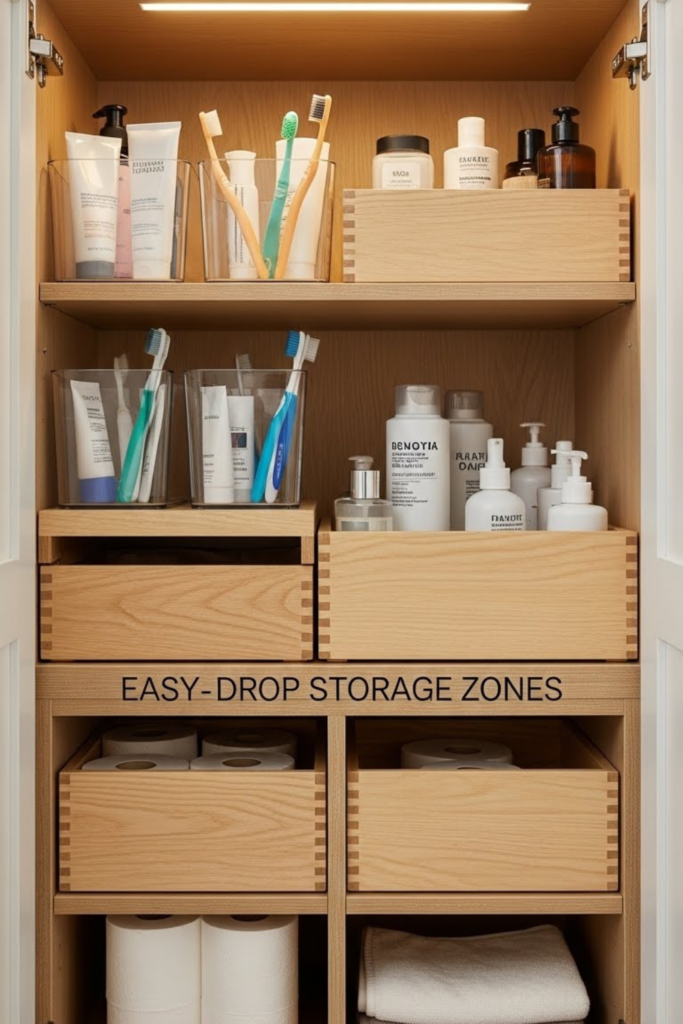
One-Touch Rule
Systems fail when items require extra effort to put back. Storage works best when everything returns in one motion.
Recreate this by avoiding lids, deep stacking, or overfilled bins and choosing open containers instead.
Ambient bathroom lighting keeps the cabinet usable, while simple layouts prevent shadows and frustration.
FAQs
What are common bathroom cabinet problems?
Most bathroom cabinet problems come from poor setup, not a lack of space. Items get stacked on top of each other.
So things fall or disappear into the back. Different categories mix together, slowing down daily routines. Cabinets also collect.
Expired products and backups that don’t belong there. Without clear zones, the mess keeps coming back, no matter how often you clean it.
What should be in a bathroom cabinet?
Only items used in that bathroom should live in the cabinet. Skincare, hair care, dental products, and everyday grooming tools.
Deserve the most accessible spots. Medicines and first aid can stay if stored safely and organized. Towels and backups work only.
When space allows and don’t block daily items. Keeping the cabinet limited prevents clutter from taking over again.
You may like to read!
- 27 Pantry Organization Ideas
- 24 Family Organization Wall
- 26 Kitchen Drawer Organization
- 20 Shelf Organization Ideas
- 25 Hallway Closet Organization

Fasial is the founder of the Fizzy Flare. He has been a passionate blogger since 2021. He ran three different websites in the past few years. Now he is focusing on Fizzy Flare to build an audience and help them organize their life.