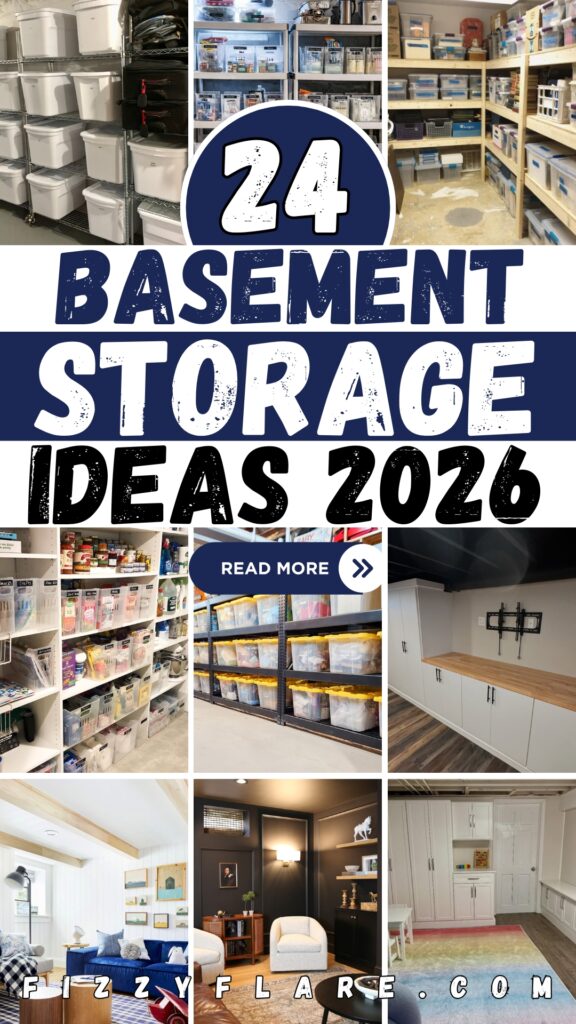
24 Basement Storage Ideas for 2026
This post may contain affiliate links: full affiliate disclosure.
Basements usually become dumping grounds. Boxes pile up, things get lost, and sooner or later, you notice a musty smell that makes you worry.
What’s getting ruined down there. You store stuff in the basement because you need space, but no one ever tells you what actually belongs there.
In this aritcle, you’ll see what people really store in basements and 24 Basement Storage ideas that work in 2026.
Let’s jump in!
Contents
- 1 What Do People Store in Basements?
- 1.1 Clear Bin System
- 1.2 Labeled Memory Bins
- 1.3 Category Shelf Zones
- 1.4 Bulk Storage Wall
- 1.5 Built-In Cabinets
- 1.6 Kid-Safe Storage
- 1.7 Hidden Display Storage
- 1.8 Furniture Does Double
- 1.9 DIY Shelf Build
- 1.10 Wire Rack Rows
- 1.11 Custom Wall Shelves
- 1.12 Library-Style Storage
- 1.13 Media Wall Storage
- 1.14 Staircase Storage Nook
- 1.15 Under-Stair Pantry
- 1.16 Playroom Wall Storage
- 1.17 Seasonal Swap Shelves
- 1.18 Labeled Zone Storage
- 1.19 Framed Media Storage
- 1.20 Pantry-Style Bins
- 1.21 Bookcase Base Storage
- 1.22 Bench Locker Storage
- 1.23 Low-Profile Built-Ins
- 1.24 Full-Wall Closets
- 2 FAQs
What Do People Store in Basements?
People use basements to store things they don’t need every day but can’t get rid of. Seasonal decorations, tools, sports gear, extra furniture.
Household supplies usually end up there first. Some people store clothes, documents, or sentimental items simply because they run out of space upstairs.
The problem isn’t what goes into the basement, it’s how it’s stored. Basements come with moisture, low light, and temperature changes.
If you don’t plan for those conditions. Understanding what people store here helps you decide what stays, what needs protection, and what should never go down there.
Save this article for later! 👇👇
Clear Bin System
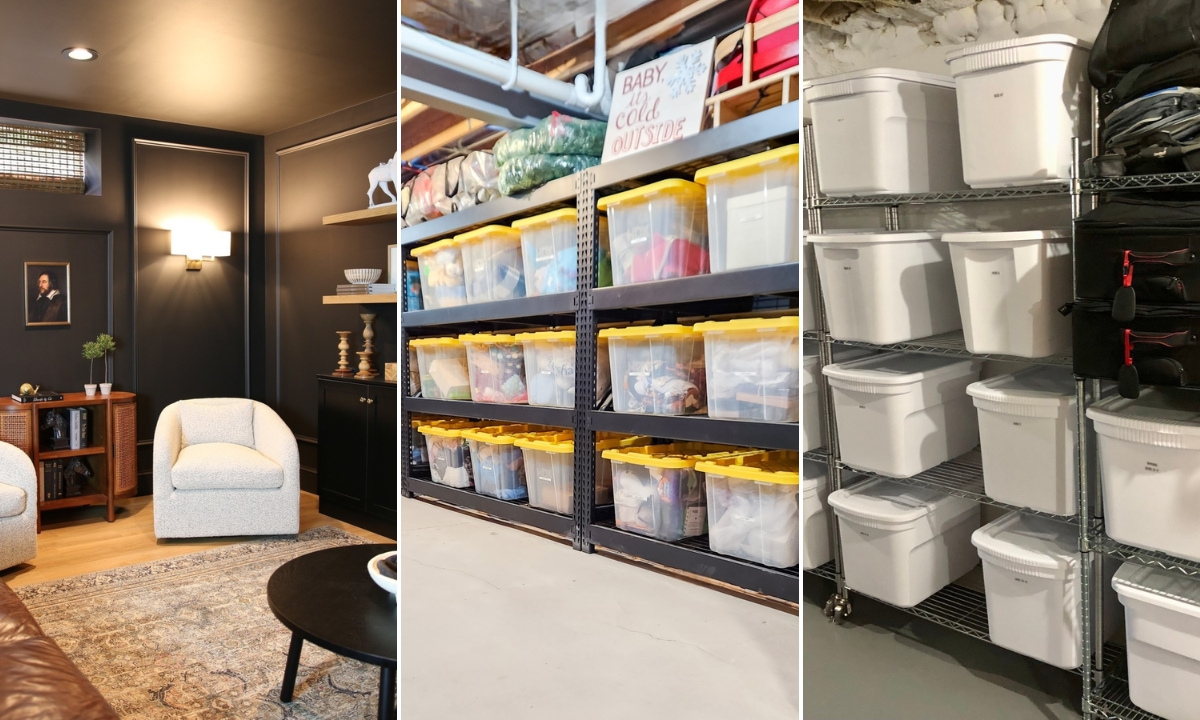
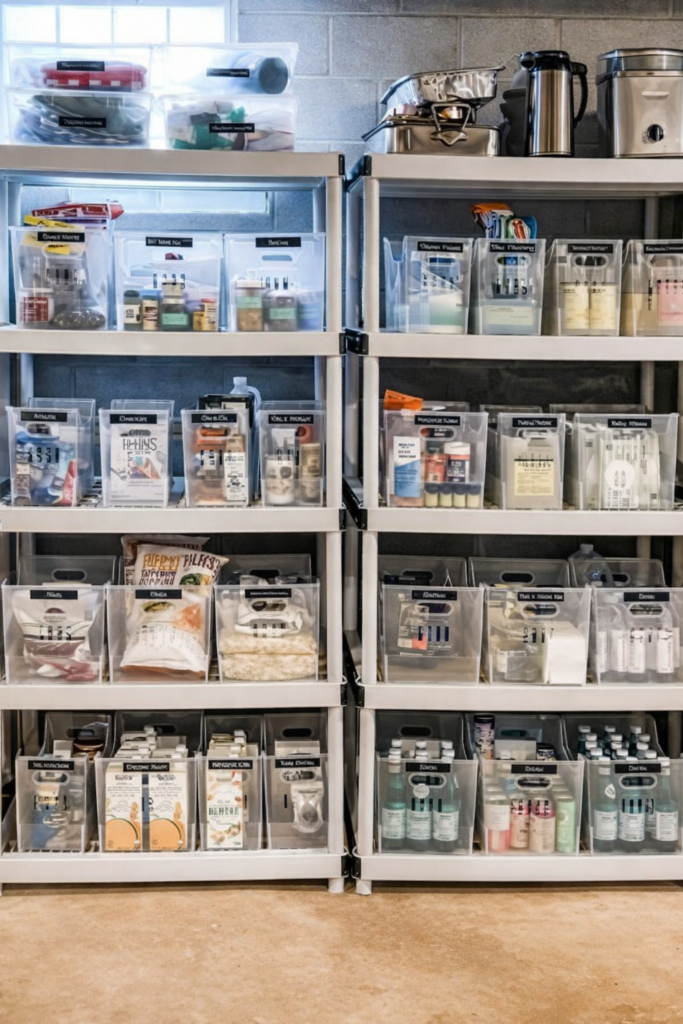
Open shelving paired with labeled clear bins turns a basement wall into a grab-and-go storage zone.
Use sturdy utility shelves, group items by category, and label every bin. This setup works best along long, unfinished walls.
Overhead ambient lighting keeps everything visible, while clear containers eliminate digging and duplicate buying.
Labeled Memory Bins
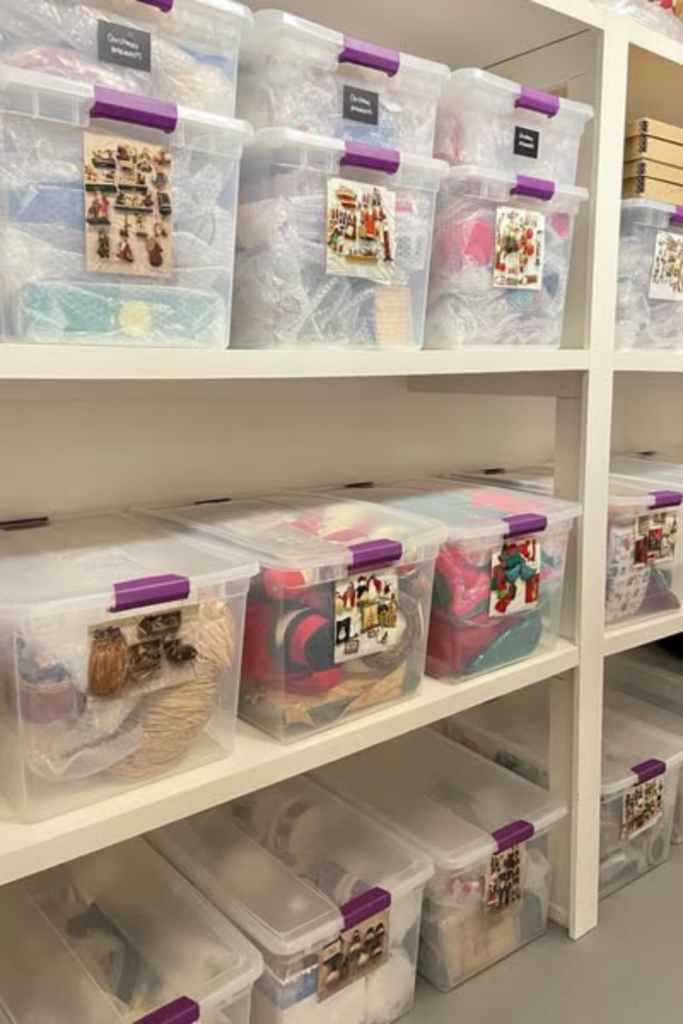
Sentimental items stay protected when sealed bins replace loose boxes, fits basements used for long-term keepsakes.
Choose uniform, clear containers, cushion fragile pieces with soft wraps, and attach photo labels so memories stay visible.
Bright ambient lighting across the shelves keeps labels readable and prevents forgotten boxes from disappearing into the back row.
Category Shelf Zones
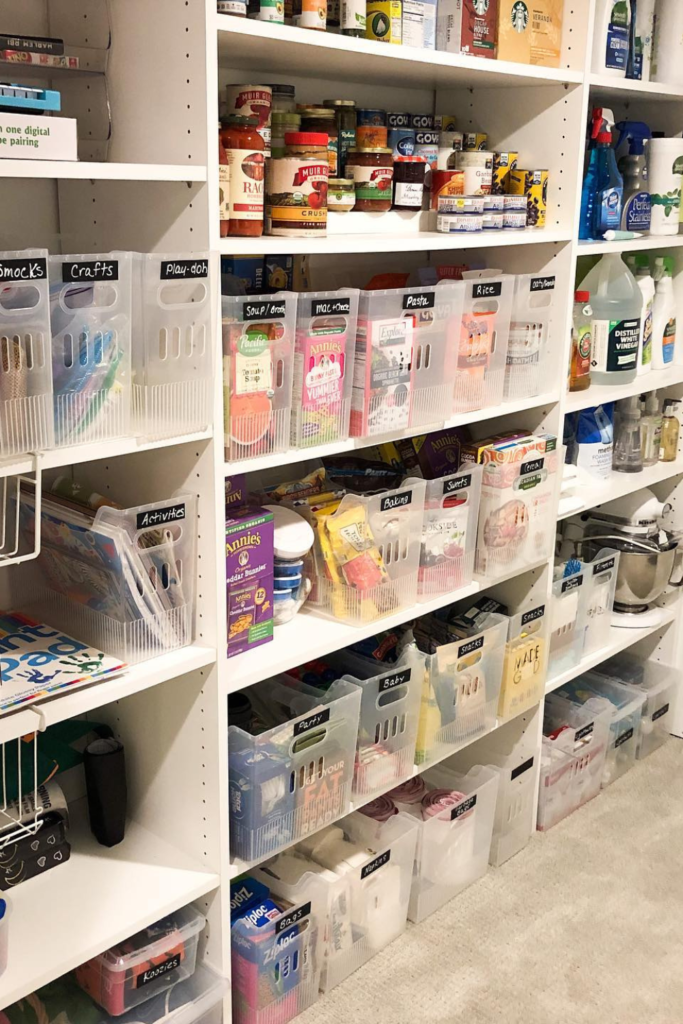
Assign one shelf per category as daily-use supplies, keep bins shallow for quick access, and label from the front.
This setup works best in finished or semi-finished basements that act as overflow pantries or utility rooms.
Even overhead ambient lighting, paired with simple task lighting, makes labels readable and restocking easier.
Bulk Storage Wall
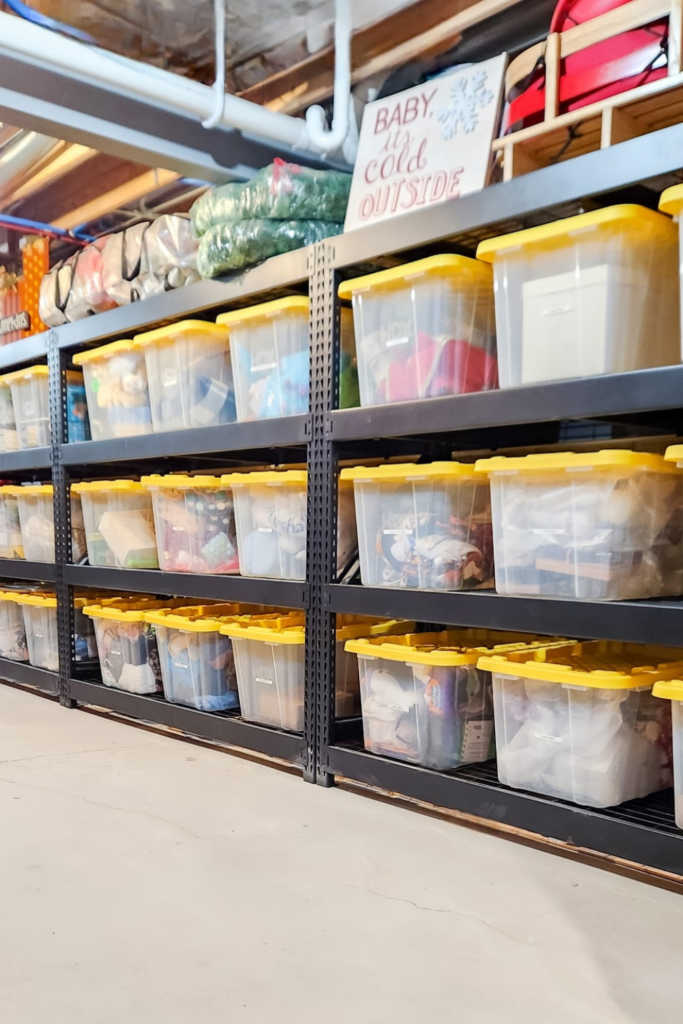
Long basement walls are best suited for bulk storage when shelving runs uninterrupted from end to end.
Heavy-duty racks hold large lidded bins, making this ideal for seasonal clothes, kids’ items, or gear you rotate once.
Keep bins uniform for stacking strength and label lids for visibility. Bright overhead ambient lighting prevents dark corners.
Built-In Cabinets
Clean cabinets turn a basement into controlled storage instead of visual clutter, works best in finished basements.
Install base cabinets with durable countertops that double as work surfaces, then add tall units for bulky items.
Recessed ceiling lights provide ambient lighting, while under-cabinet lighting adds task lighting where sorting.
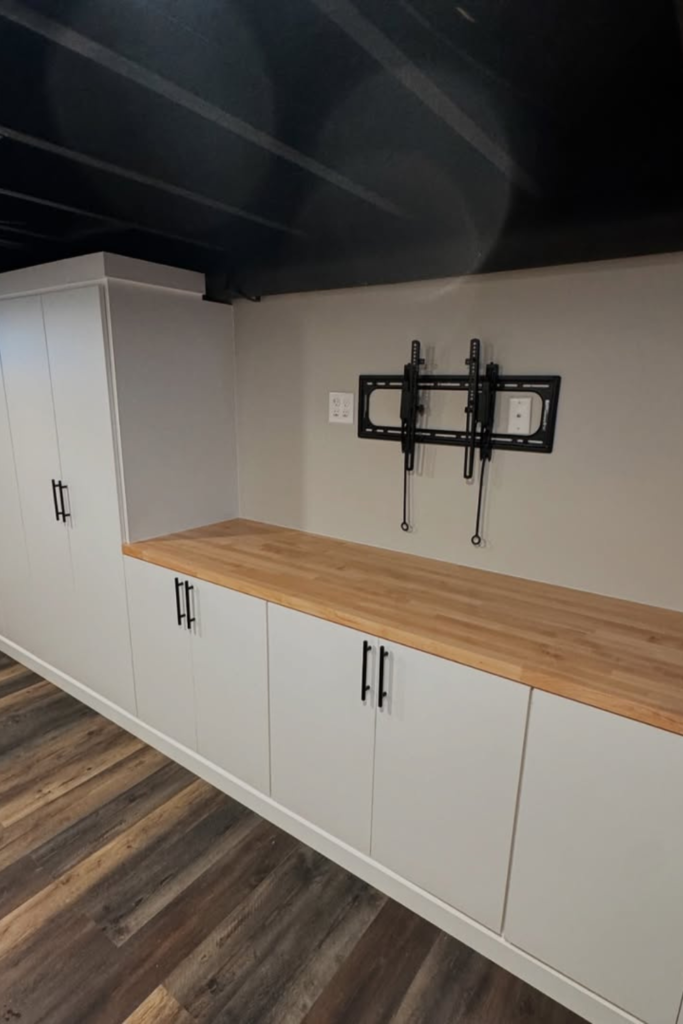
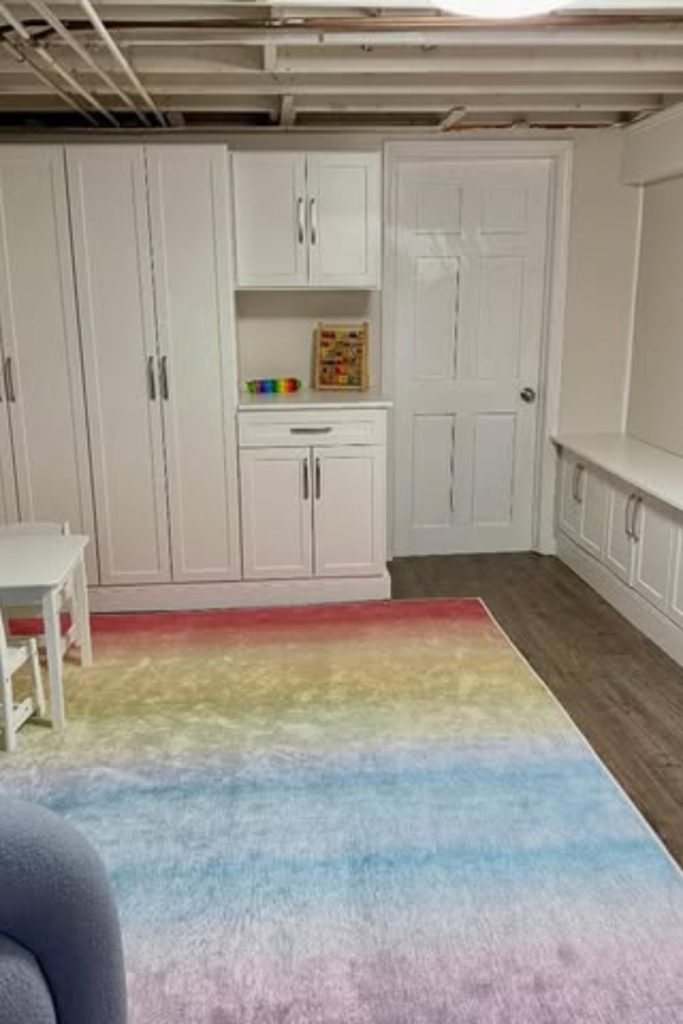
Kid-Safe Storage
Toy clutter stays under control when storage works around how kids actually play. Low cabinets keep toys reachable.
Leave a long counter for activities and sorting. This setup fits family basements that double as playrooms or learning spaces.
Soft ambient ceiling lighting keeps the room bright, and natural light near walls makes the space feel calm and safe.
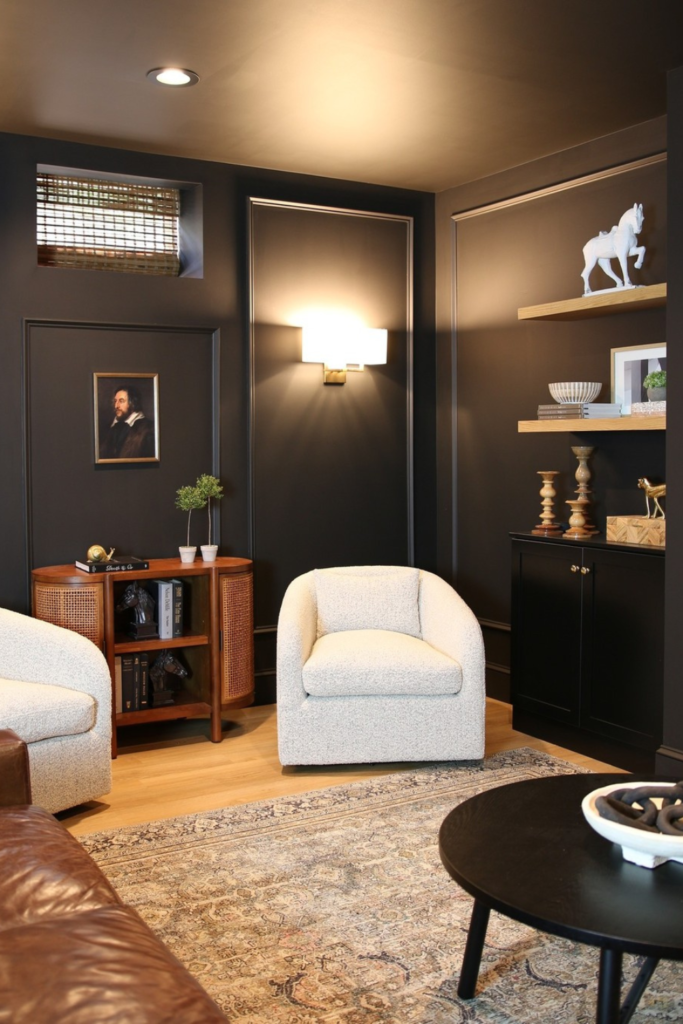
Hidden Display Storage
Finished basements handle storage best when it blends into the room. Closed cabinets anchor the space.
Floating shelves hold decor, books, or media without feeling heavy. This works well in lounge-style basements.
Accent lighting on shelves adds depth, wall sconces soften the room, and recessed ceiling lights provide steady ambient light.
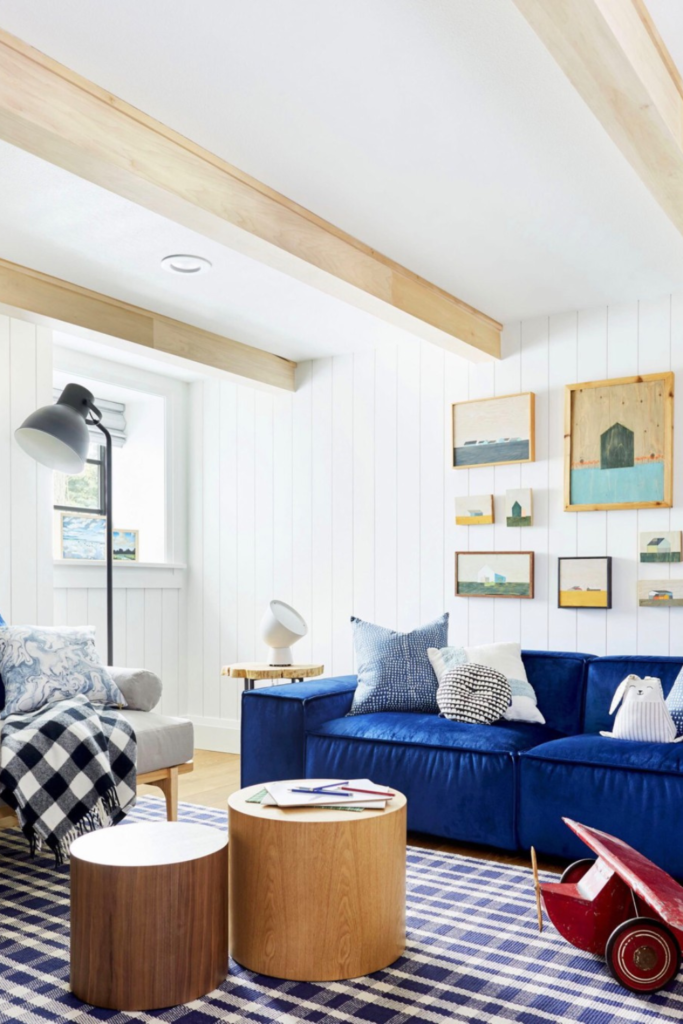
Furniture Does Double
Living-style basements hide storage best when furniture pulls extra weight. This works well in family rooms.
Round tables and benches with hollow interiors keep toys, blankets, or games close without adding bins.
Built-in ambient ceiling lights set the base glow, floor lamps handle task lighting, and wall art adds soft visual depth.
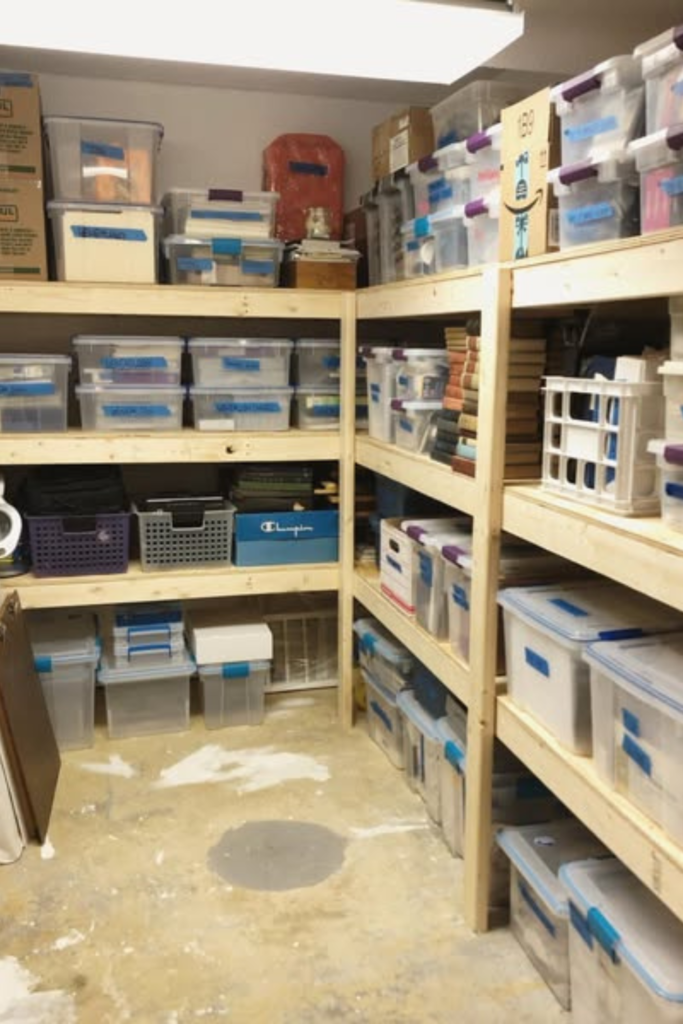
DIY Shelf Build
Raw basements benefit from simple wood shelving that adapts as storage grows. Open spacing allows airflow around containers.
Build shelves with basic lumber, anchor them into studs, and size each level to fit your bins exactly, this works best.
Single overhead shop lights provide strong ambient lighting, keeping every shelf visible without shadows.
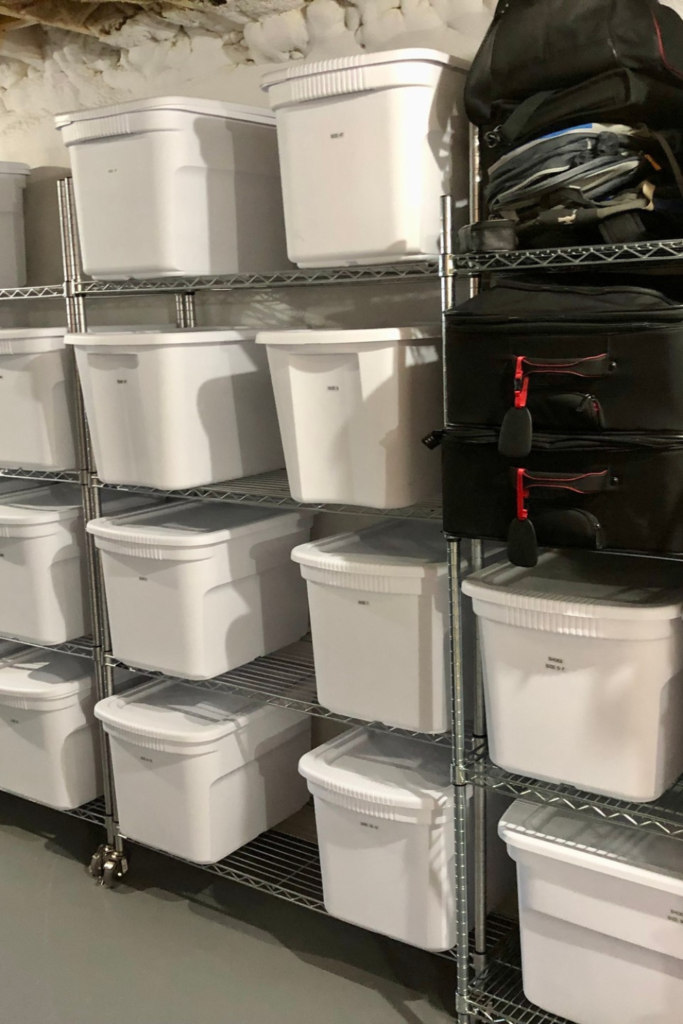
Wire Rack Rows
Basements with moisture risk benefit from wire shelving that lets air move freely. Choose adjustable racks on wheels, this setup works well.
Solid white containers keep things uniform and easy to label. Bright overhead ambient lighting keeps the entire run visible and practical.
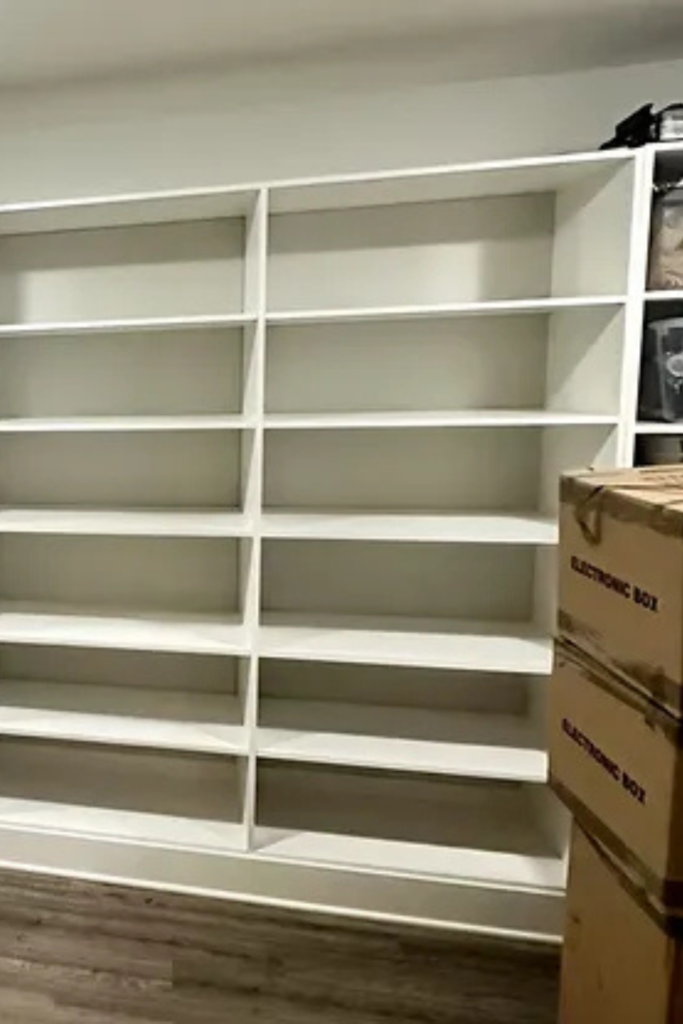
Custom Wall Shelves
Wide basements benefit from built-in shelving that adapts to changing storage needs. Keep shelf heights varied, works best in finished spaces.
Painting shelves the same color as the walls helps them blend in. Ceiling lights create even ambient lighting across the entire wall.
Library-Style Storage
Entertainment basements benefit from shelving that feels intentional. Full-wall built-ins hold books, games, and media.
Keeping the room balanced around the TV. Adjustable shelves make future changes easy, and a rolling ladder adds access.
Recessed ceiling lights handle ambient lighting, while table lamps introduce warm task lighting behind seating areas.
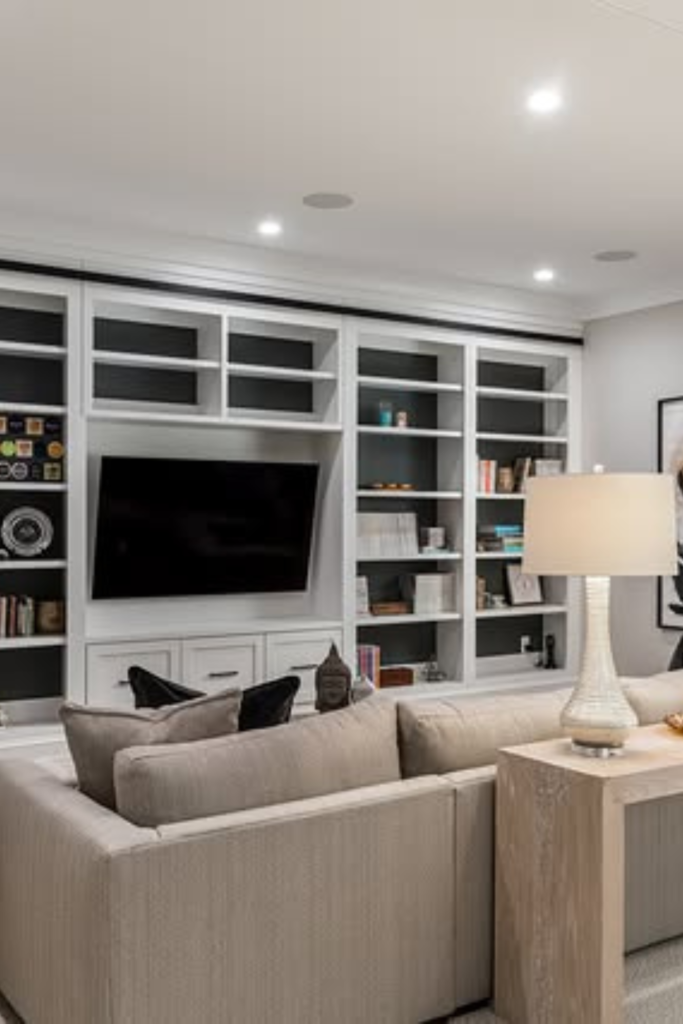
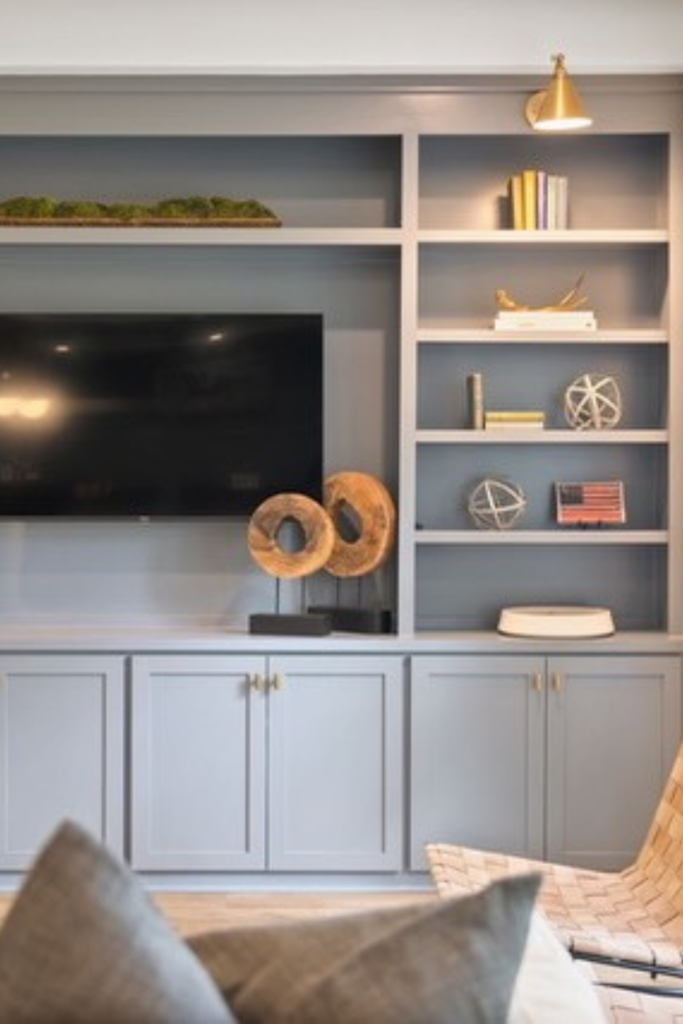
Media Wall Storage
TV areas feel calmer when storage frames the screen. This setup works best in finished basements used for relaxing.
Base cabinets hide games, remotes, and tech clutter, while open shelves keep decor light and balanced.
Accent lights above shelves add warmth, ceiling lights handle ambient glow, natural light keeps the space from feeling closed in.
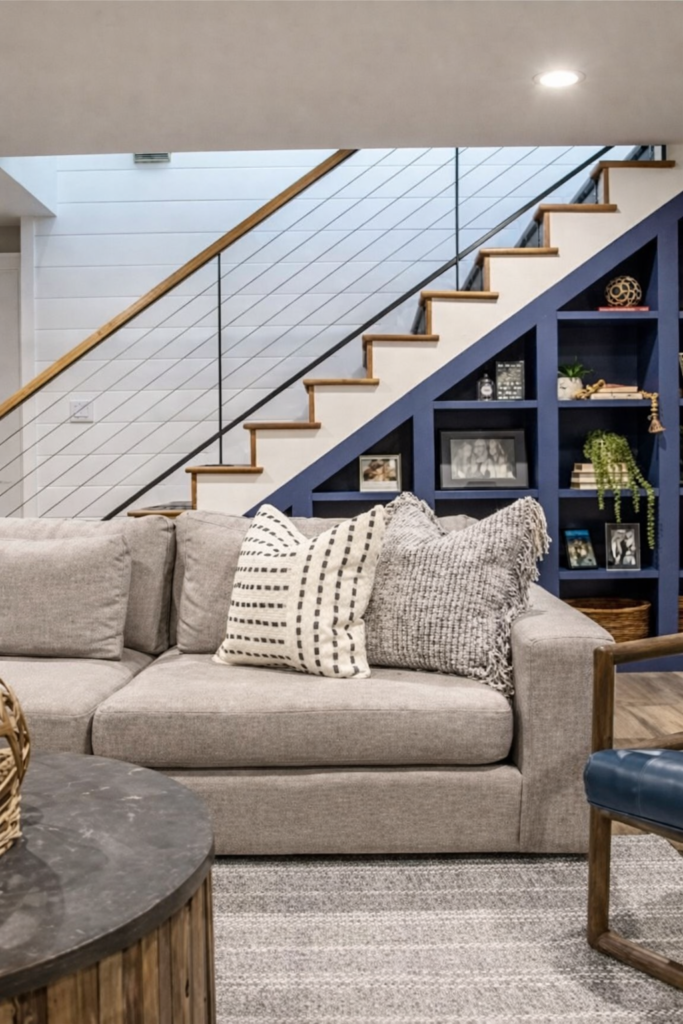
Staircase Storage Nook
Dead space under stairs becomes valuable once shelving follows the stair line. Build custom shelves or cabinets.
This idea works best in walkout or open-layout basements. Reserve the lower sections for everyday items.
Recessed ceiling lights cover ambient needs, while shelf lighting adds depth and makes the nook feel intentional.
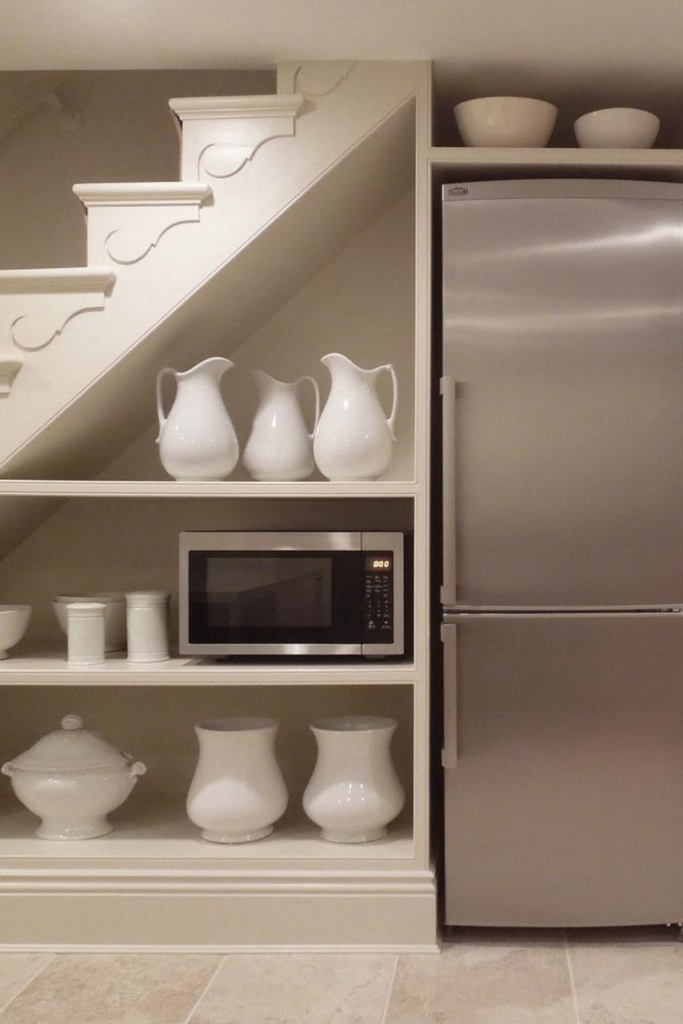
Under-Stair Pantry
Extra storage appears fast when the space under the stairs is treated like a cabinet wall. Use closed cabinetry for appliances.
Mix in open shelves for easy access items, works in finished basements that include entertaining or guest areas.
Recessed ceiling lights provide ambient light, while shelf lighting keeps deeper areas usable without shadows.
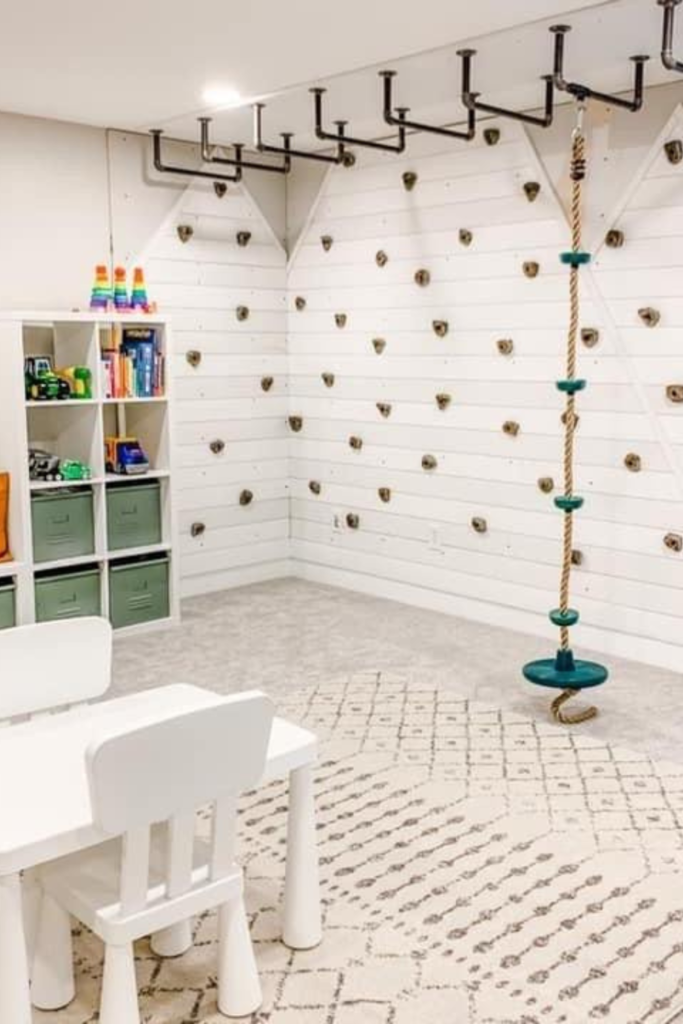
Playroom Wall Storage
Active kids’ basements need storage that stays out of the way. Wall cubbies and low bins keep toys organized.
Leaving floor space open for movement. This setup works best in finished basements used as play zones or activity rooms.
Mount storage tightly to the wall and keep bins lightweight for easy cleanups. Focused spotlights keep the wall area bright.
Seasonal Swap Shelves
Rotation storage works best when shelves stay tall and consistent. This setup fits unfinished basements.
Holiday décor, extra bedding, or seasonal gear needs a predictable home. Stack clear bins by season.
Leave the top shelves for lightweight, bulky pieces. Strong overhead ambient lighting keeps labels readable even on upper levels.
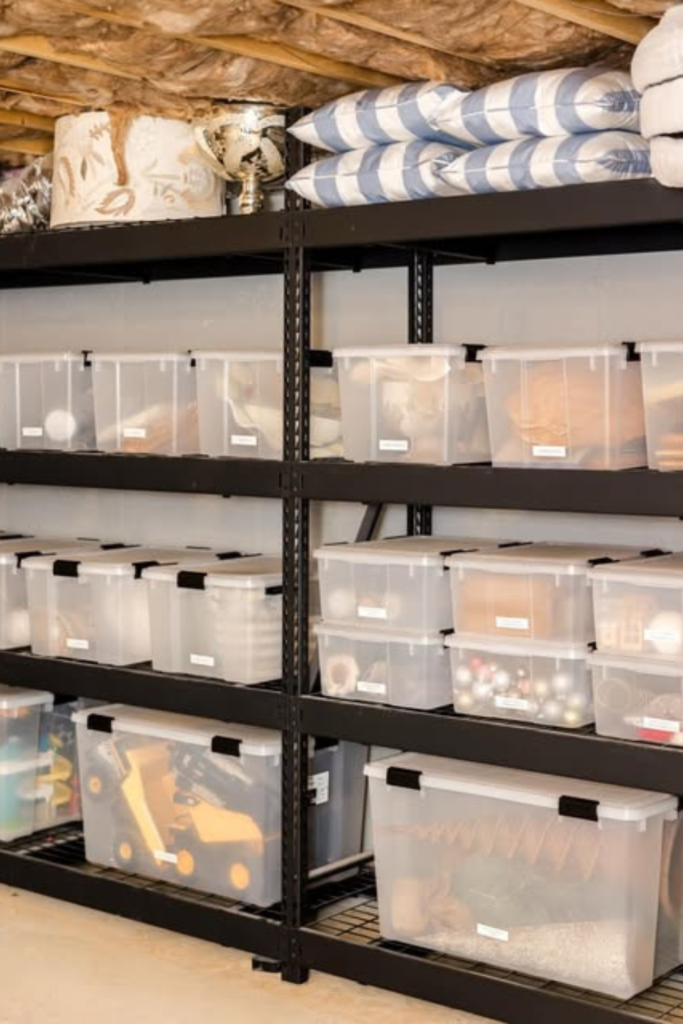
Labeled Zone Storage
Basements stay manageable when every shelf has a clear purpose. Open wooden shelving makes swapping bins easy.
Assign one bin per category, keep labels bold and visible, and group related zones side by side, this setup works best.
Even overhead ambient lighting keeps every label readable and prevents forgotten boxes from piling up.
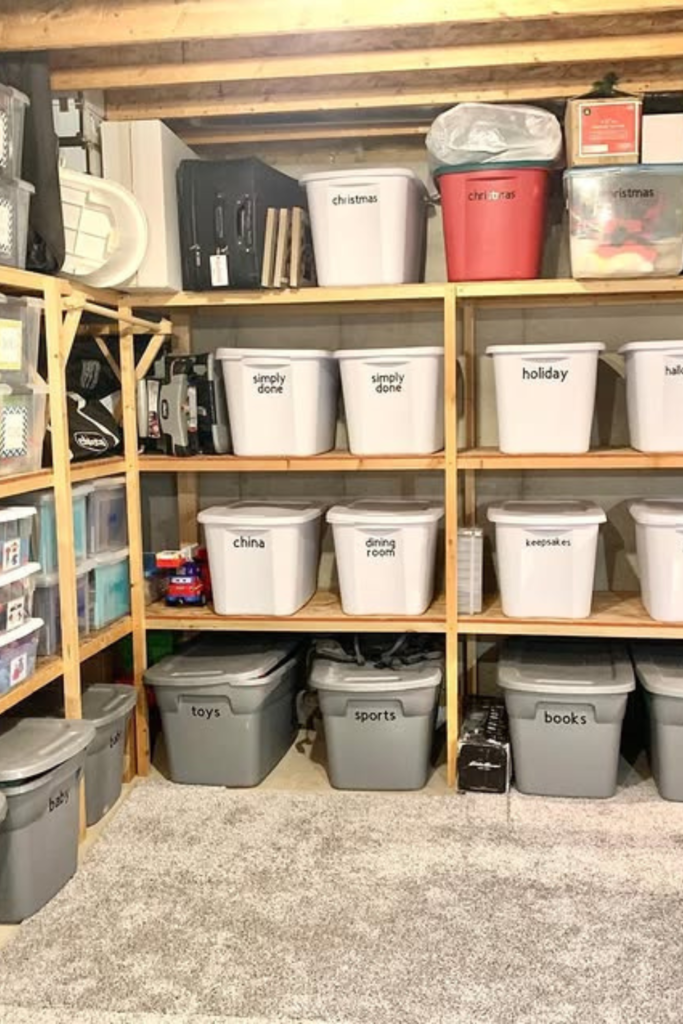
Framed Media Storage
TV walls stay cleaner when storage wraps around the screen, works best in finished basements meant for relaxing.
Deep base cabinets hide games, cables, and electronics, while side shelves balance decor and books.
Recessed ceiling lights create even ambient lighting, and wall sconces add soft accent light without screen glare.
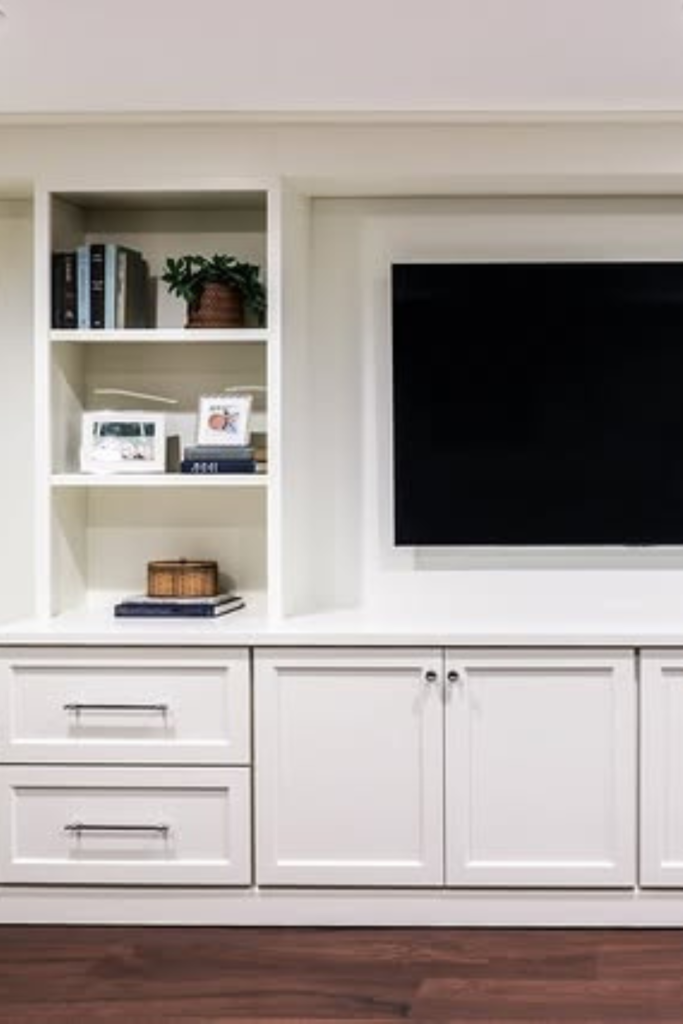
Pantry-Style Bins
Basements work harder when storage mimics a walk-in pantry. This setup fits finished or semi-finished spaces.
Use clear stackable bins on adjustable shelves, contents stay visible and flexible. Group items by use, not size.
Recessed ceiling lights provide ambient lighting, while shelf-mounted lights make deeper bins easier to see.
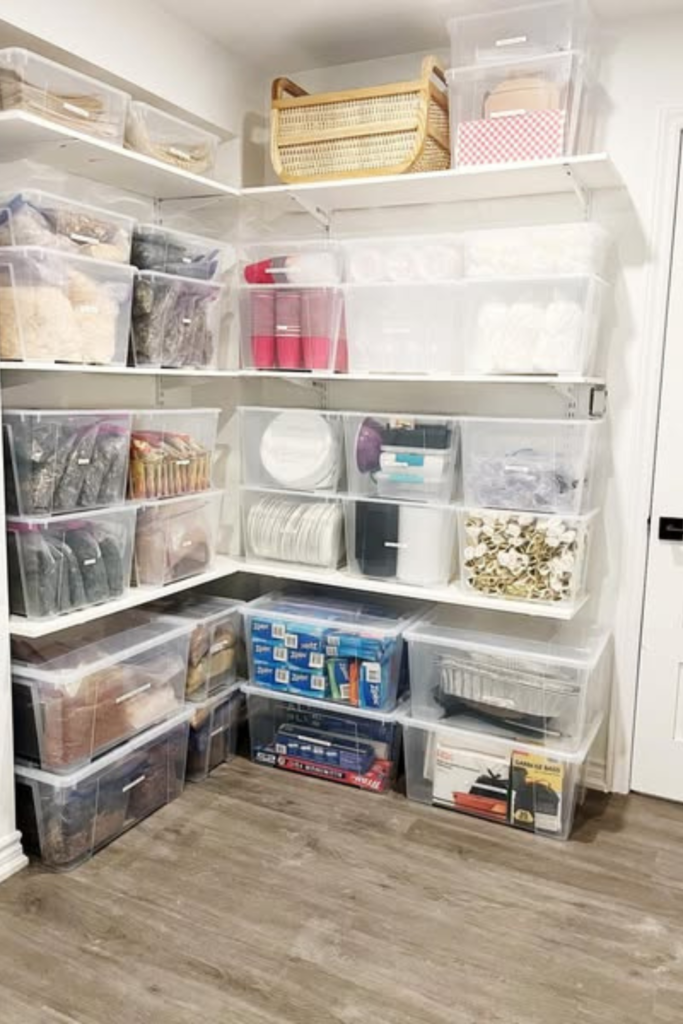
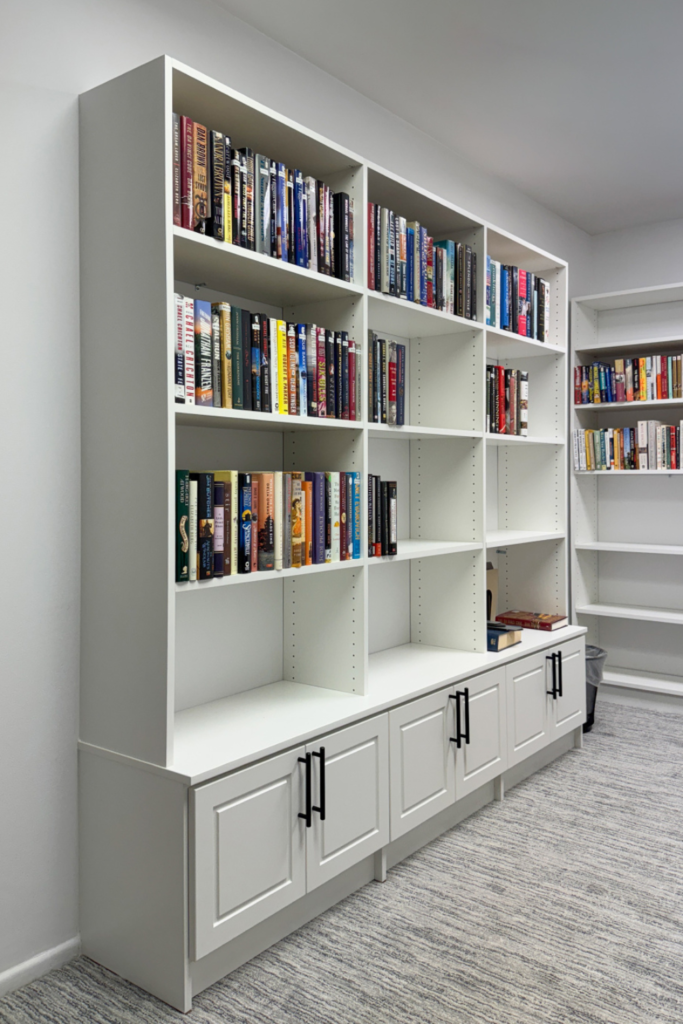
Bookcase Base Storage
Reading-friendly basements stay organized when shelves sit above closed storage, works best in spaces used as libraries.
Keep books and display items at eye level, then hide overflow in base cabinets below. Adjustable shelves allow growth.
Recessed ceiling lights provide steady ambient lighting, while nearby lamps add focused task light for reading zones.
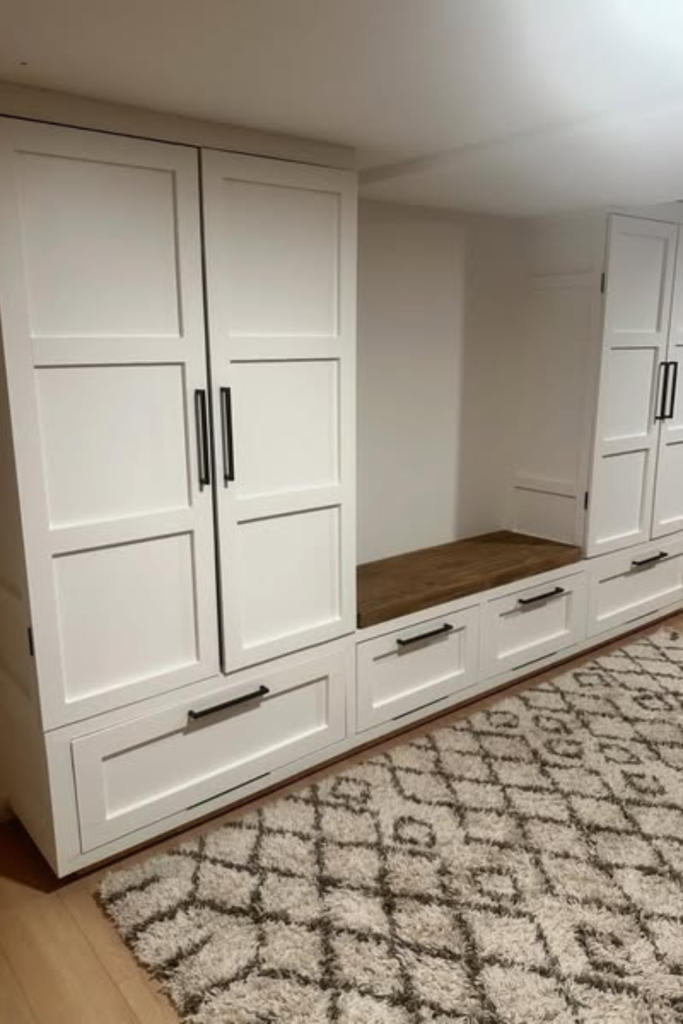
Bench Locker Storage
Entry-style basements stay organized when storage works like a mudroom. Use deep drawers below for overflow.
Tall cabinets handle coats, gear, and bulky items, while a built-in bench gives a drop zone for shoes or bags.
Recessed ceiling lights provide even ambient light, and wall-mounted fixtures keep the bench area well-lit for daily use.
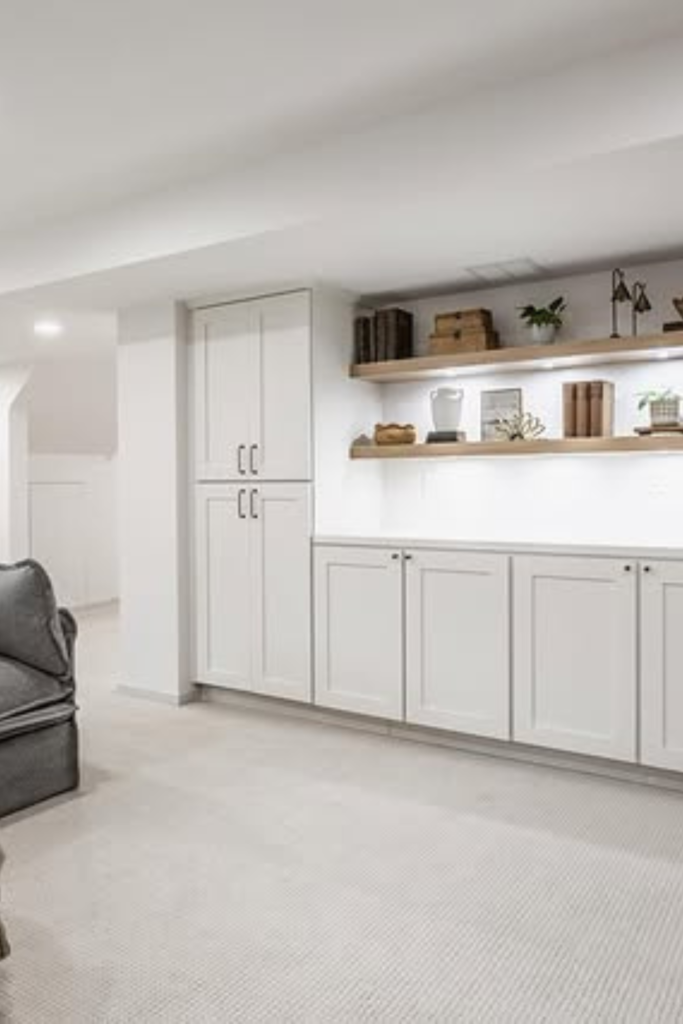
Low-Profile Built-Ins
Basements with low ceilings feel larger when storage stays long and horizontal, works best in finished family rooms.
Keep base cabinets shallow, mix in a single open shelf for display, and push everything tight to the wall.
Recessed ceiling lights spread even ambient light, while subtle shelf lighting adds warmth without drawing the eye upward.
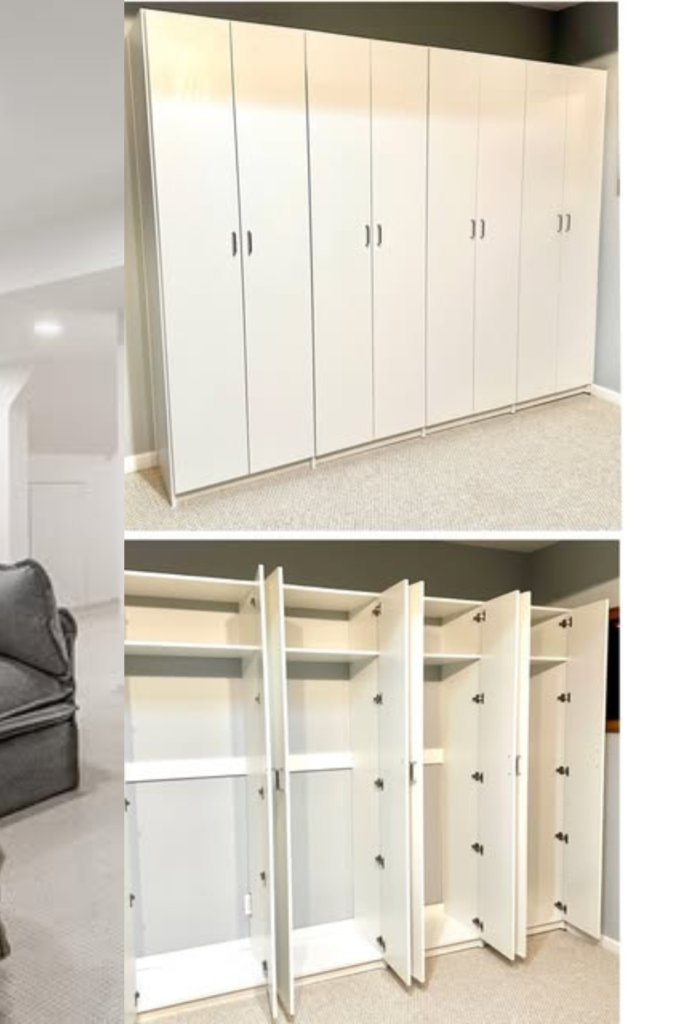
Full-Wall Closets
Works best in finished basements that need flexible, hidden storage for everything from seasonal gear to household overflow.
Use adjustable shelves inside. Keep doors flat and simple. Recessed ceiling lights provide clean ambient lighting, making the wall feel seamless.
FAQs
How to create storage in basement?
Start by fixing moisture and lighting first, because storage fails fast in damp, dark basements. Once that’s handled, build storage around how you use the space.
Open shelving works for bins and seasonal items, while cabinets make sense for finished basements where clutter needs to disappear.
Keep everything off the floor, label by category, and use vertical wall space before adding more furniture. If storage feels hard to reach or hard to see, it won’t stay organized.
What adds the most value to a basement?
Usable storage adds the most value when it feels intentional, not like leftover space. Built-in cabinets, wall-to-wall shelving.
Under-stair storage increase function without shrinking the room. Storage that hides clutter while supporting how the basement is used.
Such as a family room, guest space, playroom, or office, has the biggest impact. Clean lines, good lighting, and flexible layouts matter more.
You may like to read!

Fasial is the founder of the Fizzy Flare. He has been a passionate blogger since 2021. He ran three different websites in the past few years. Now he is focusing on Fizzy Flare to build an audience and help them organize their life.