20 Baby Bottle Organization Ideas for 2026
This post may contain affiliate links: full affiliate disclosure.
If your baby starts crying at 2 AM and you’re walking to the kitchen hunting for a clean bottle, you’re not alone. Night feedings sound simple until you’re half asleep.
The lights are off, and the bottle parts are scattered everywhere. One bottle is clean but not assembled. The nipples are in another drawer.
In this article, you’ll learn exactly where to store baby bottles with 20 organization ideas.
Let’s jump in!
Contents
- 1 Where Should I Store Baby Bottles for Quick Nighttime Access?
- 2 Rolling Bottle Station
- 3 Countertop Prep Hub
- 4 Drying Cart Corner
- 5 Drawer-Style Organizer
- 6 Vertical Wall Rack
- 7 Clear Stack Bins
- 8 Minimal Drying Rack
- 9 Compact Drawer Tower
- 10 Full Bottle Station
- 11 Labeled Dual Cabinets
- 12 Cabinet Side Stack
- 13 Flow-Labeled Shelf
- 14 Labeled Cabinet Zones
- 15 Covered Counter Case
- 16 Open Air Rack
- 17 Nursery Drying Tray
- 18 Grab-and-Go Basket
- 19 Portable Bottle Box
- 20 Simple Shelf System
- 21 Organized Prep Drawer
- 22 FAQs
Where Should I Store Baby Bottles for Quick Nighttime Access?
If you’re feeding your baby at night, your bottles should not be in the kitchen. They should be as close to your bed as possible.
The goal is simple: fewer steps, less thinking, faster feeding, set up a small night-feeding station on your bedside table or a rolling cart.
Keep 2–3 clean, fully assembled bottles ready to use. Store extra nipples and caps in a small container.
Nothing gets lost, if you use a formula, keep pre-measured portions in dispensers so you don’t have to scoop in the dark.
If you pump, keep the pump parts in one basket so they stay together. The closer everything is to where you feed.
The easier your nights become. When your system matches your routine, you don’t scramble; you simply reach, prepare, and feed.
Save this article for later! 👇👇
Rolling Bottle Station
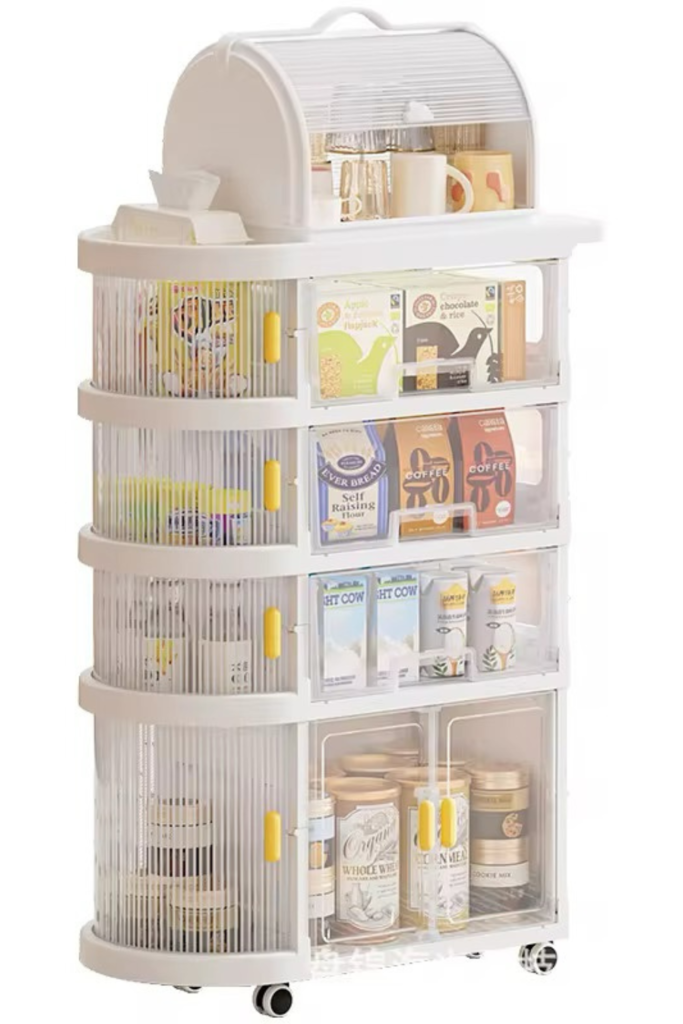
Middle-of-the-night feeds feel lighter when everything moves with you. Roll it closer during feeds, push it back in the morning.
Keep the top shelf for ready-to-use bottles and wipes. Use the middle shelves for formula cans, extra nipples, and burp cloths.
Lower shelves can hold backups or sterilized bottles in clear bins. The enclosed sides protect items from dust.
Matters if you prep bottles ahead of time. Soft bedside lamp light layered with low hallway lighting keeps visibility gentle.
Countertop Prep Hub
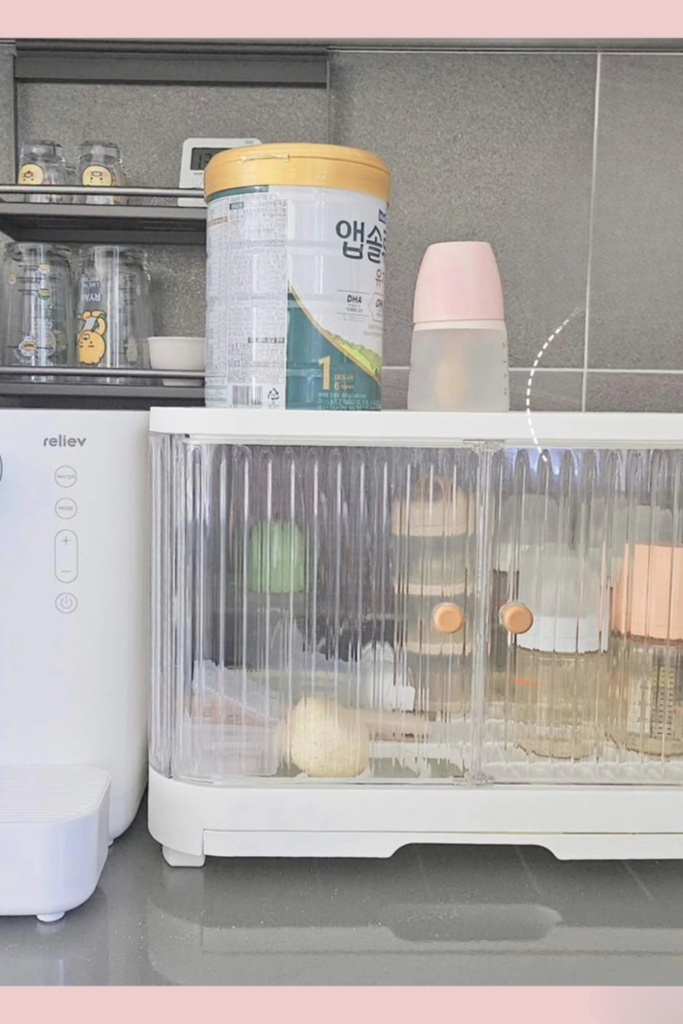
Kitchen feeds run smoother when everything stays in one tight zone. Keep clean bottles inside, fully dry and grouped by size.
Covered countertop box like this works best beside your sterilizer or water dispenser. Store nipples in a small inner bin.
Prevent them from rolling around. Place the formula right on top so you can grab it without opening cabinets.
Ribbed doors protect against dust, letting you see what’s inside quickly. Overhead kitchen lighting combined with under-cabinet lights.
Keeps the space bright during evening prep. One compact station means no wandering around the kitchen.
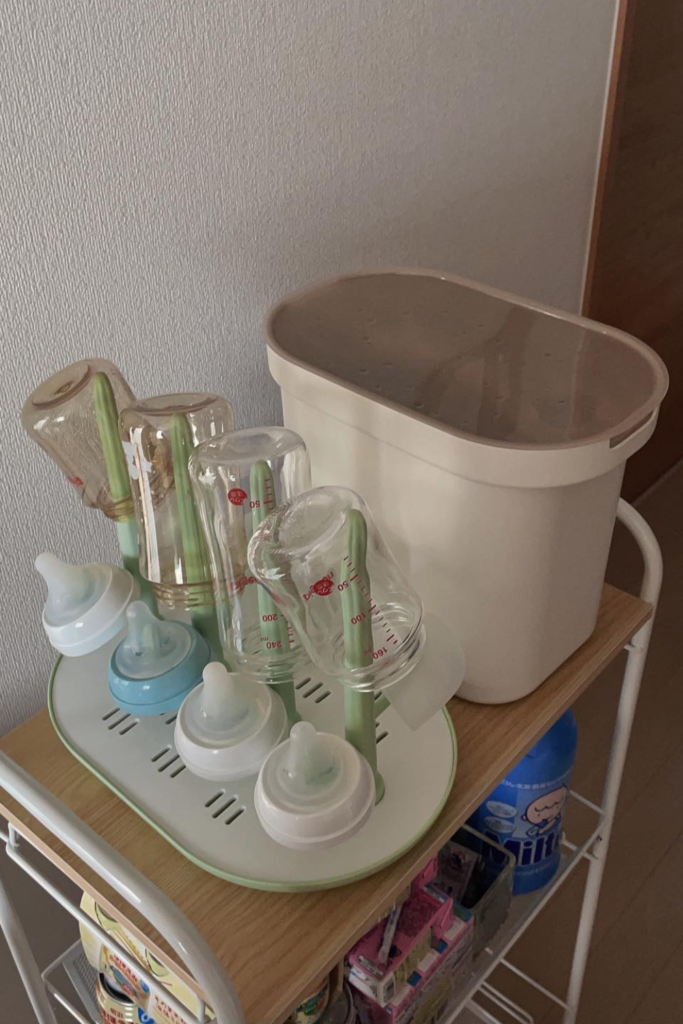
Drying Cart Corner
Hallway space can turn into a quiet bottle zone. A slim cart like this works well near the nursery or just outside your bedroom.
Place a proper drying rack on top so bottles stand upside down and air out fully. Keep a covered bin beside it.
For freshly sterilized items waiting to rotate in. Lower shelves can hold cleaning tablets, extra brushes, or backups.
Natural daylight from a nearby window helps bottles dry faster during the day. Use at night, a soft, warm lamp nearby.
Keeps visibility low and calm. Separation between washing and feeding zones keeps everything cleaner and easier to manage.
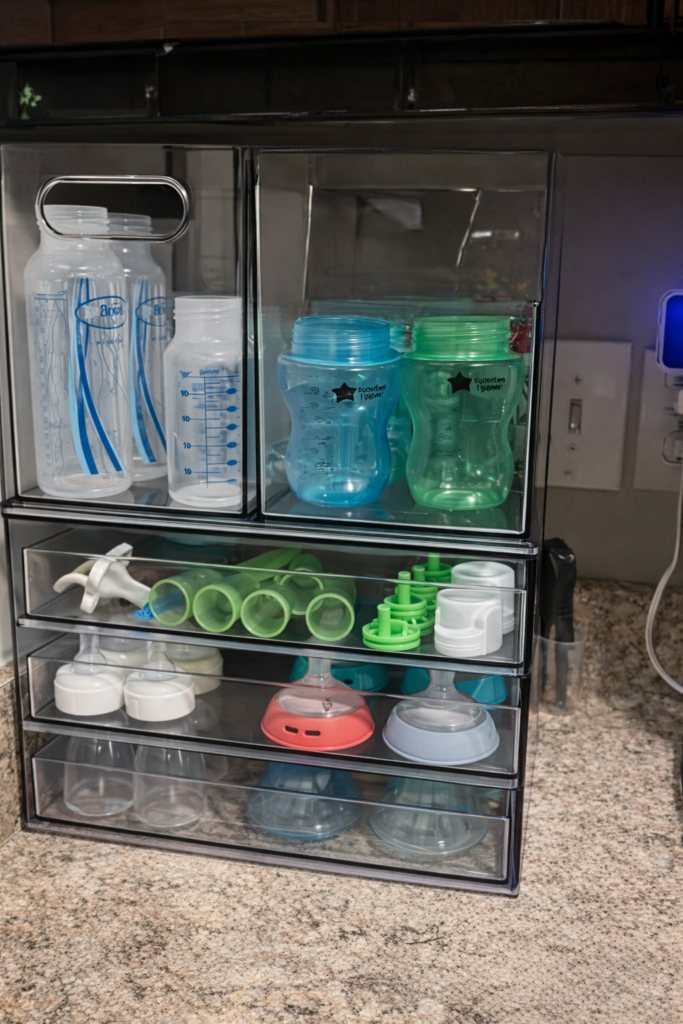
Drawer-Style Organizer
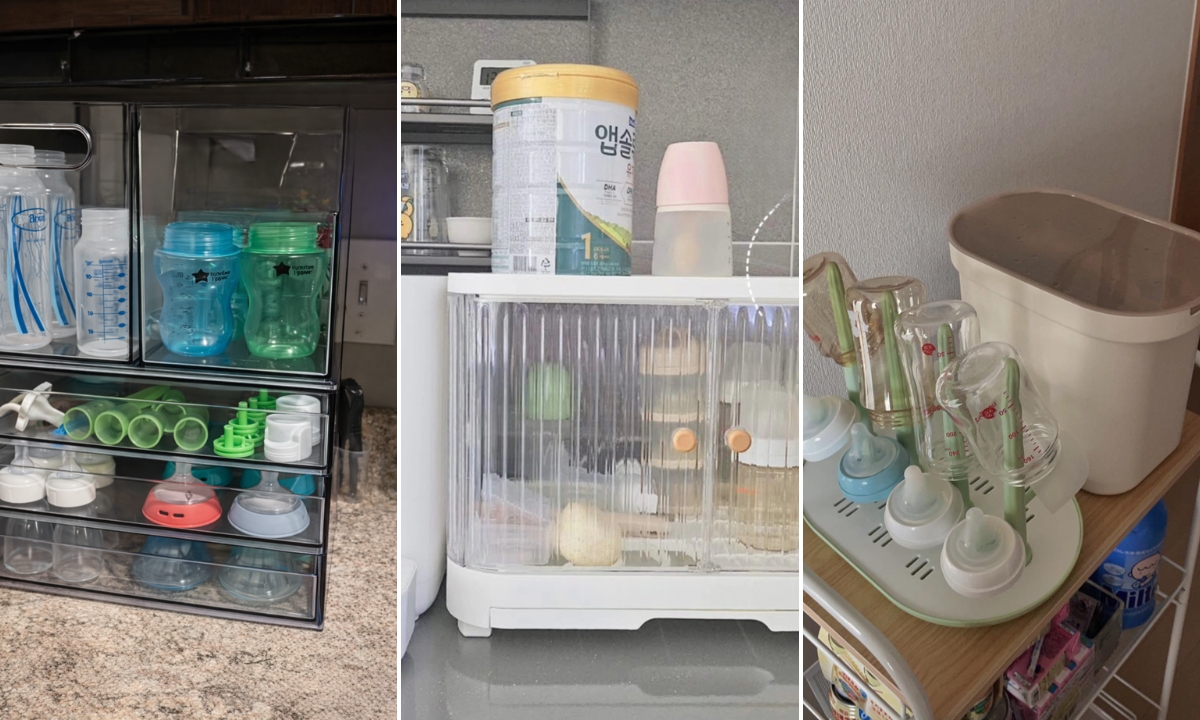
Digging through cabinets wastes the time you don’t have at night. Clean lines and clear sections make grabbing parts automatic.
Clear drawer organizer like this keeps every bottle part visible and separated. Store full bottles upright in the top bins.
Use shallow drawers for nipples, rings, and valves to prevent them from mixing. Assign one drawer just for lids and travel caps.
Keep it on the kitchen counter if you prep there daily, or move it to a bedside table during newborn months.
Bright kitchen ceiling light works for daytime sorting, while a small plug-in nightlight nearby helps you open a drawer quietly.
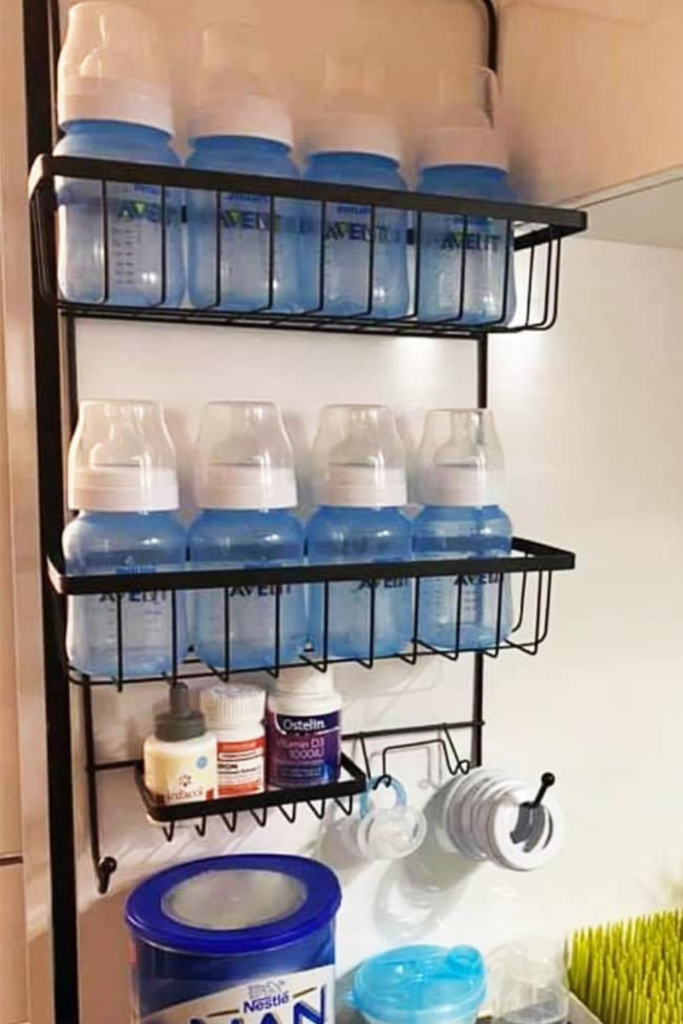
Vertical Wall Rack
Counter space disappears fast once bottles come into play. Going vertical frees up space and keeps your setup organized.
Mounting a vertical rack like this inside a cabinet or on an empty wall keeps everything off your work surface.
Line up clean, assembled bottles on the top tiers so they’re ready to grab. Use lower hooks for measuring spoons.
Also use spare rings so small parts don’t vanish into drawers. Position it close to your prep area to avoid extra steps.
Overhead kitchen lighting hits the shelves directly, and under-cabinet lights add clear visibility during late-night mixing.
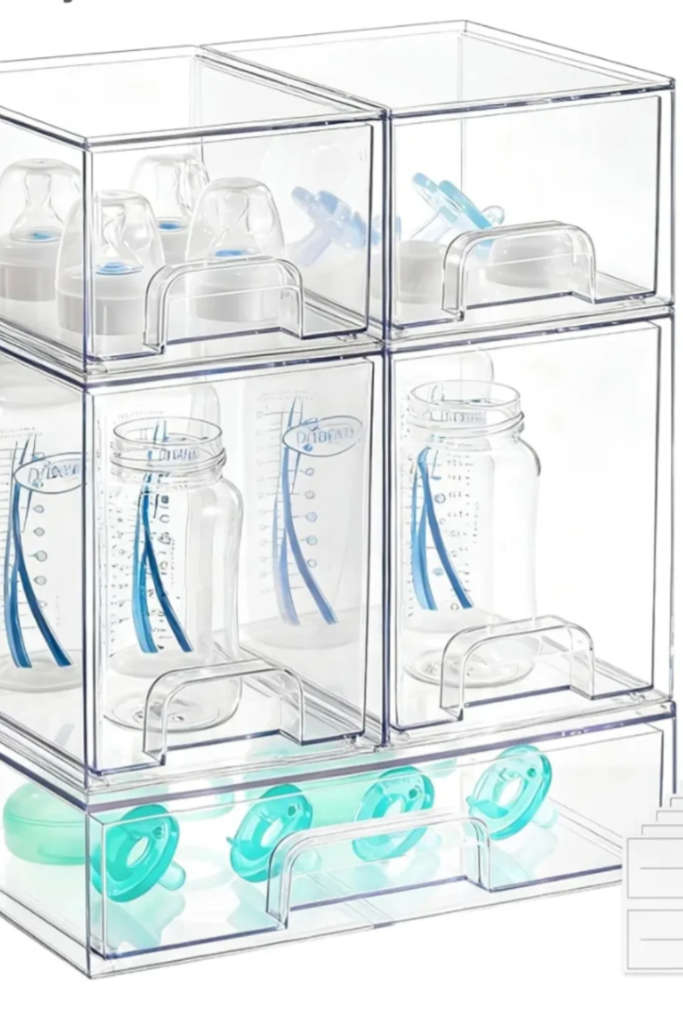
Clear Stack Bins
Opening one drawer and seeing everything at once changes how fast you move at night. Keep lids in their own section.
You don’t have to dig for matches. Stackable clear bins like these work best inside a cabinet or on a deep shelf.
Store assembled bottles in the bottom cubes to keep them upright and dust-free. Use the smaller top bins for nipples and pacifiers.
Clear sides let you check supply levels without opening every box. Bright cabinet lighting or a small motion light inside.
Keeps visibility sharp during late feeds. Stacking upward keeps your system tight without spreading across the counter.
Minimal Drying Rack
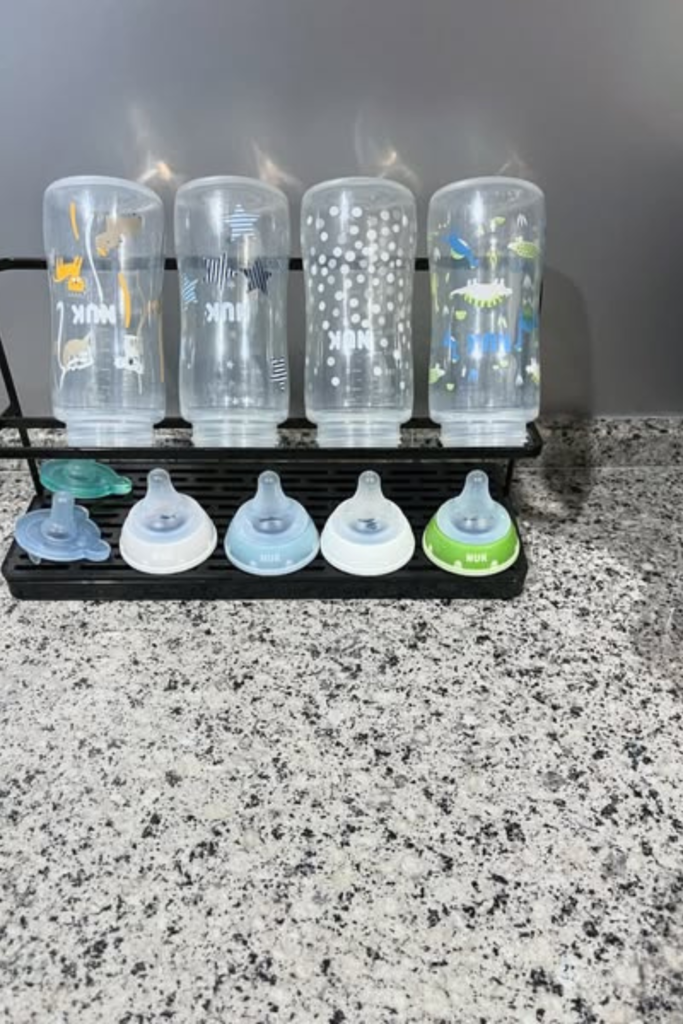
Too many drying racks eat up your counter before you notice. A slim metal rack like this keeps bottles upright.
Without spreading everywhere, place it against a backsplash near the sink so water drips straight down and doesn’t pool.
Line nipples along the bottom bar so they dry fully instead of sitting in a bowl. Limit the rack to daily-use bottles only.
Move backups to a cabinet once dry. Overhead kitchen lighting reflects off the backsplash, keeping everything visible.
Natural daylight speeds up air-drying during the day. Keeping it narrow forces you to stay organized.
Compact Drawer Tower
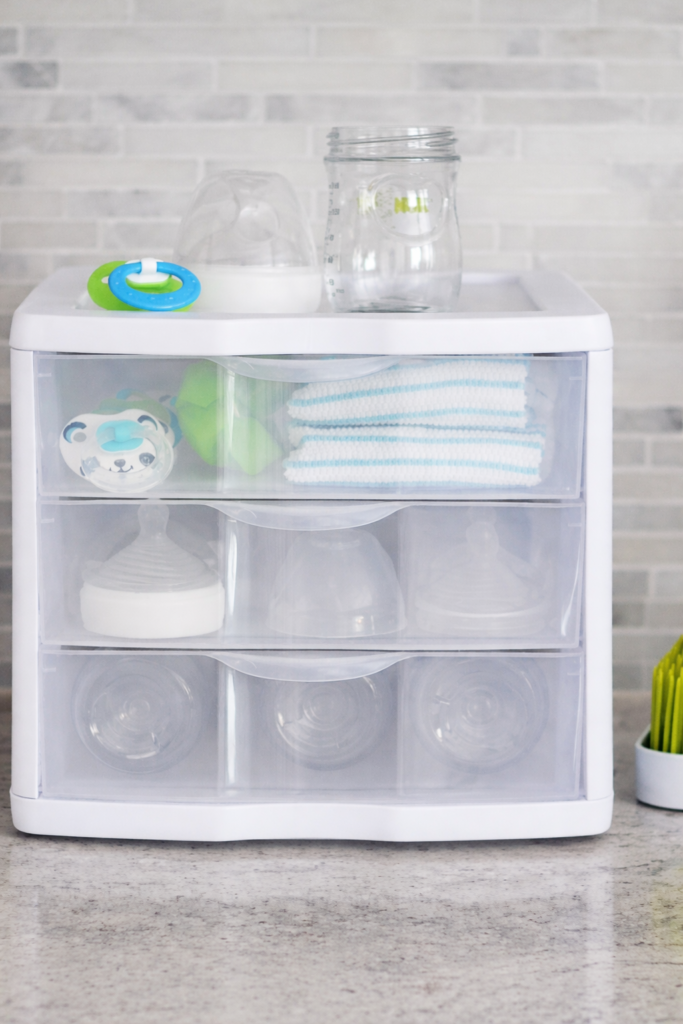
Small kitchens need systems that stack instead of spread. A compact drawer tower like this fits right on the counter.
Store folded burp cloths in the top drawer so they’re within reach during feeds. Keep nipples separated in one section.
Bottle bodies in another so parts stay matched. Dedicate the bottom drawer to assembled bottles ready to use.
Position it near your drying rack so the transfer from dry to storage takes seconds. Use bright kitchen lighting.
Keeps everything easy to see, under-cabinet lights help during late-night prep. Vertical drawers keep your routine tight.
Full Bottle Station
Running back and forth between cabinets slows everything down. A full bottle station like this keeps every step in one place.
Store clean bottle bodies in the bottom drawers to keep them upright and dust-free. Use the middle drawers for rings, lids.
Keep sterilized pieces on the top shelf so they’re easy to grab. Place the station next to your water dispenser or formula machine.
Prep happens in one smooth motion. Install bright task lighting over the counter keeps parts easy to see, works best.
Soft ambient kitchen light works for early mornings. Keeping prep and storage together turns chaos into a daily routine you can repeat.
Labeled Dual Cabinets
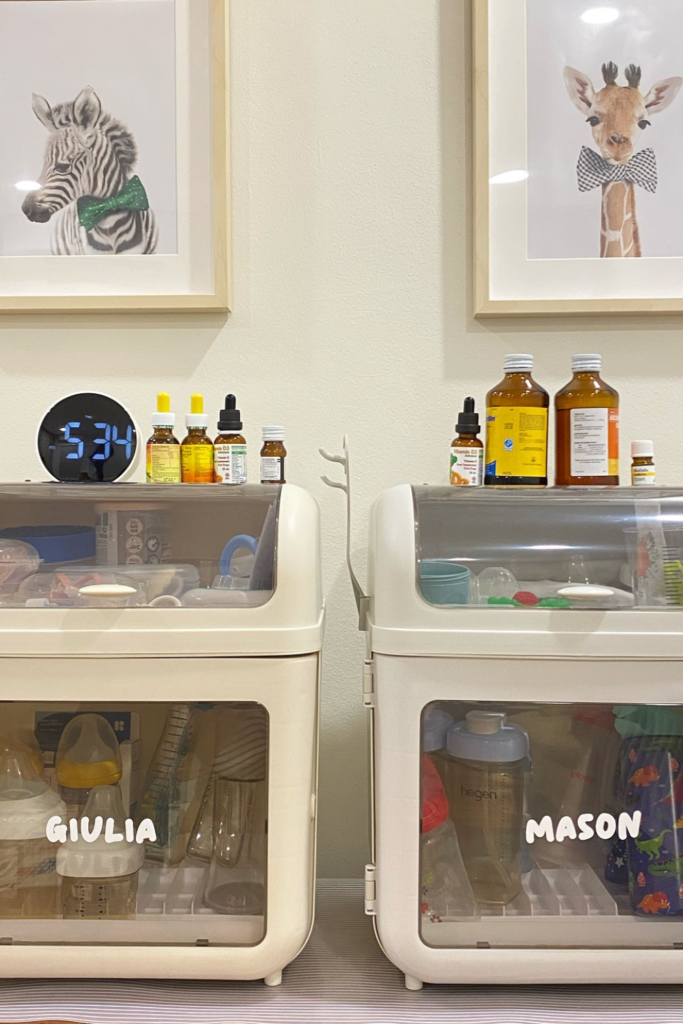
Twins or shared spaces demand clear separation. Clear doors protect from dust while letting you check supplies.
Two enclosed cabinets like these keep each child’s bottles and parts completely divided. Assign one unit per baby.
Store daily-use bottles on the lower rack and smaller items in the top section for quick access, this works well.
Adding name labels on the doors removes guesswork during night feeds. Position them against a bedroom wall or nursery corner.
Everything stays within reach. Warm bedside lamp lighting, layered with soft overhead light, keeps the space calm yet visible.
Cabinet Side Stack
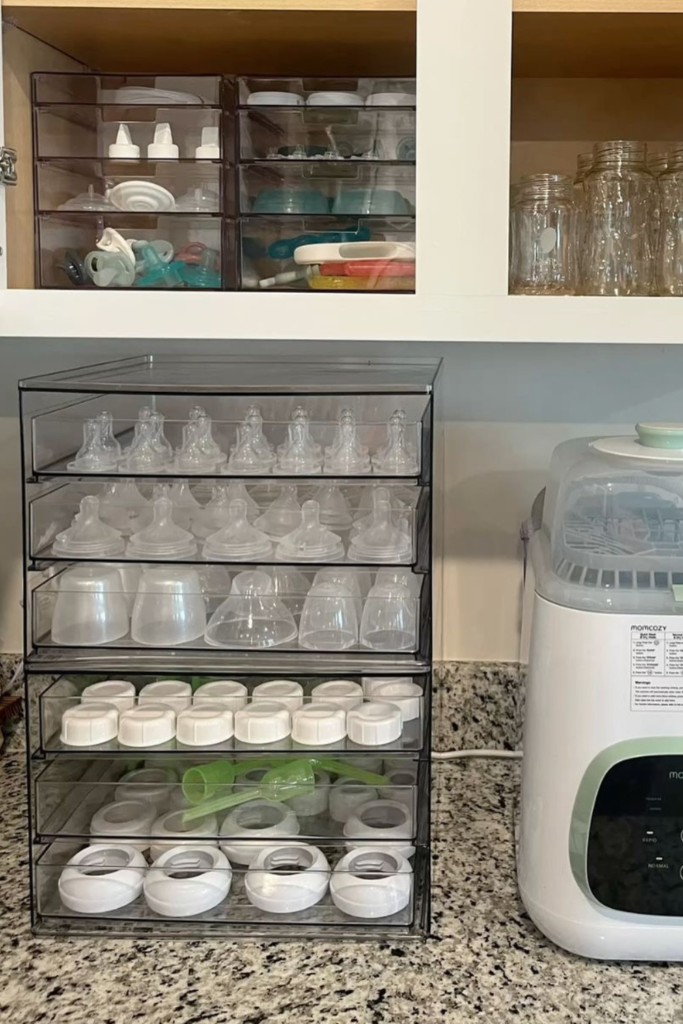
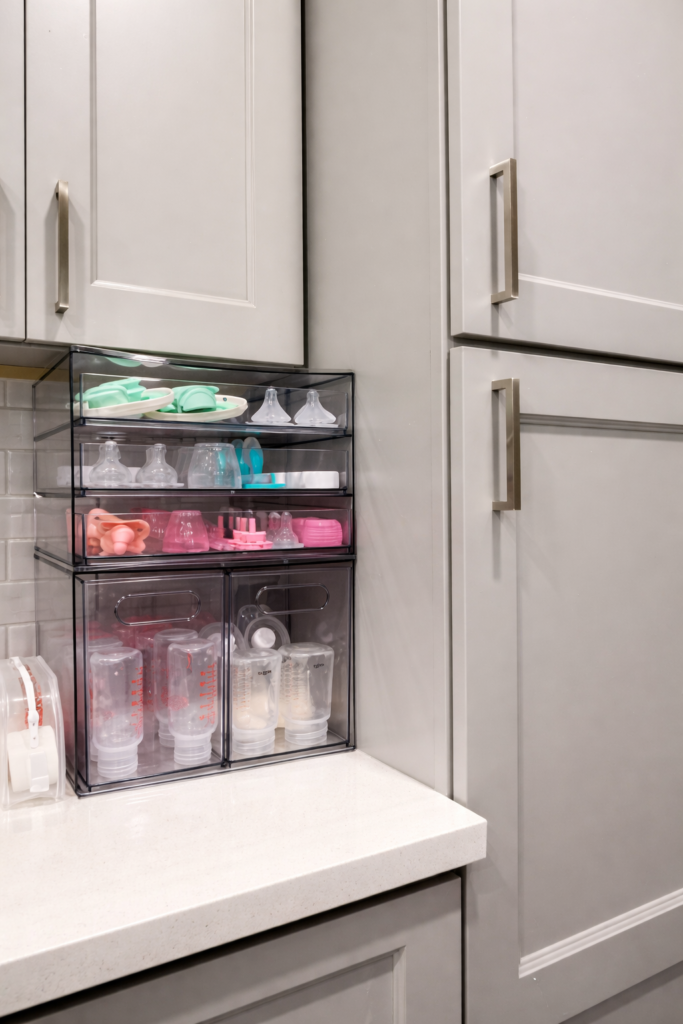
Empty wall space beside cabinets often goes unused. Keep assembled bottles in the lower cubes so they’re stable and easy to grab.
Sliding a narrow stacked organizer into that gap turns it into a full bottle zone without touching your main counter.
Store pacifiers and small extras in the top section to stop them from disappearing into kitchen drawers.
Overhead ceiling lights keep the area bright, while under-cabinet lighting provides focused visibility during late prep.
Using vertical side space keeps your main cooking area clear and still gives bottles a permanent home.
Flow-Labeled Shelf
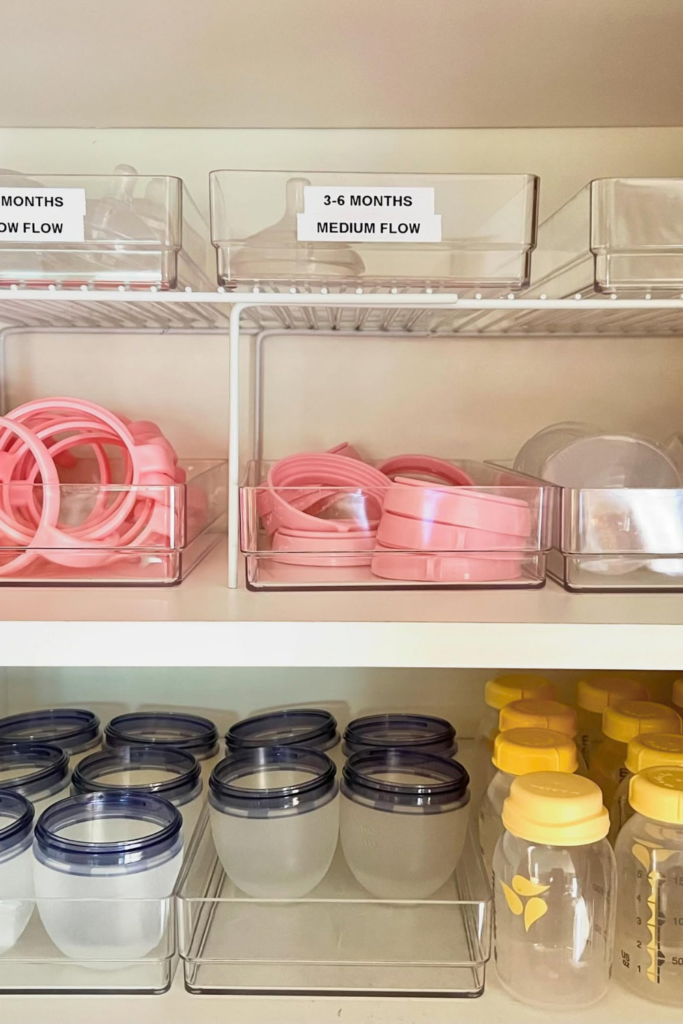
Mixing nipple sizes slows you down more than you realize. Sorting by flow stage like this keeps every feeding smooth as your baby grows.
Use clear bins on an open shelf and label them by age or flow speed so you grab the right one without checking tiny markings.
Store rings and matching parts together in lower bins so sets stay complete. Keep assembled bottles lined up underneath.
Grouped by size or brand. Install a small motion light inside the cabinet so you can see labels clearly at night.
Without turning on full kitchen lights. Organizing by stage removes guesswork and keeps transitions simple as feeding needs change.
Labeled Cabinet Zones
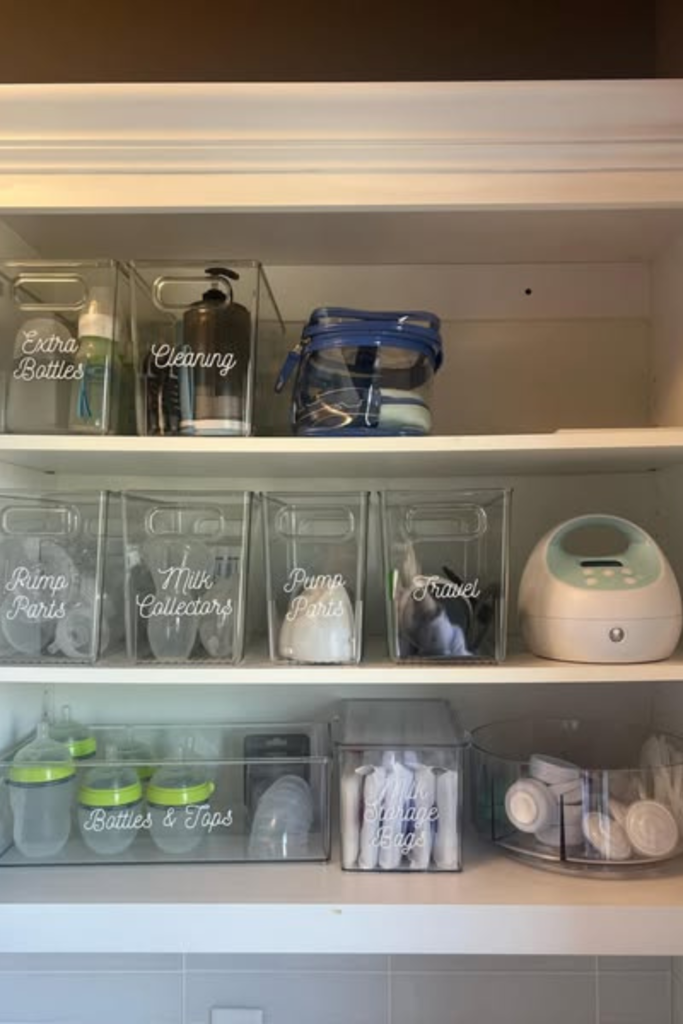
Opening a cabinet and knowing exactly where everything lives saves mental energy. Defined zones stop parts from mixing.
Keep your routine predictable every single day. Clear labeled bins work best for pumping families or anyone juggling extra parts.
Dedicate one bin for pump parts, one for milk storage bags, one for travel items, and one for backup bottles.
Place daily-use bottles on the lowest shelf for quick reach. Keep cleaning tools grouped for easy to access.
Install a small battery motion light inside the cabinet so labels stay visible at night without turning on full kitchen lights.
Covered Counter Case
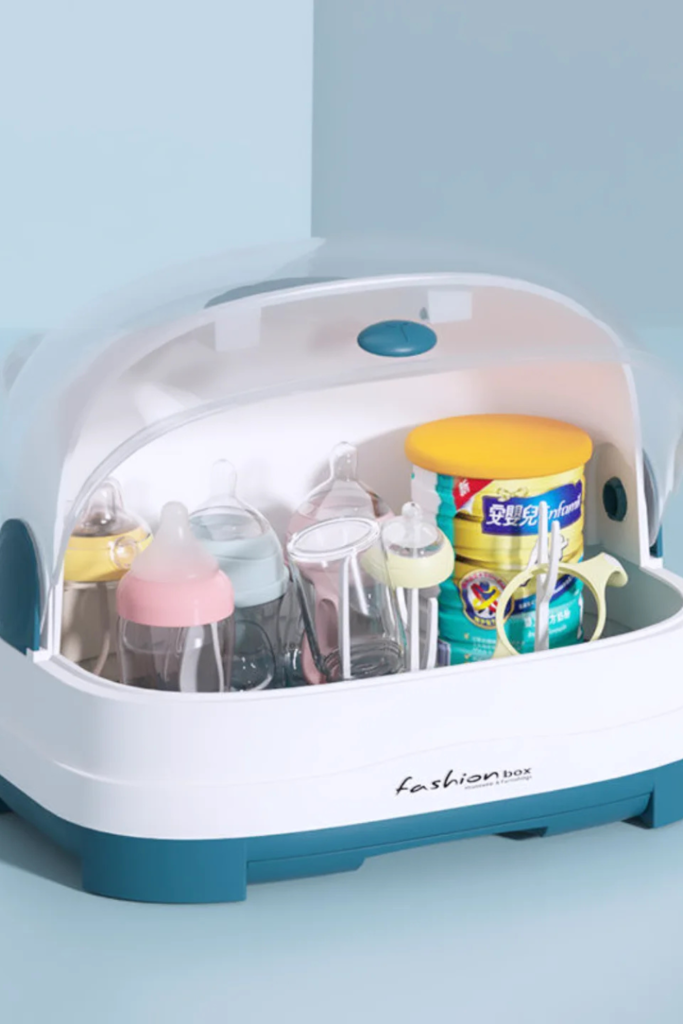
Dust builds up faster than you think, especially on open drying racks. Enclosed storage keeps everything clean.
Covered countertop case like this keeps clean bottles protected while still letting them air out. Place it near your prep area.
Bottles move straight from drying to storage without crossing the kitchen. Keep assembled bottles upright inside.
Tuck formula or scoops along the side for quick access. The curved lid blocks kitchen grease and floating dust.
Bright overhead kitchen light keeps the inside visible through the clear cover, soft ambient lighting works fine for late-night feeds.
Open Air Rack
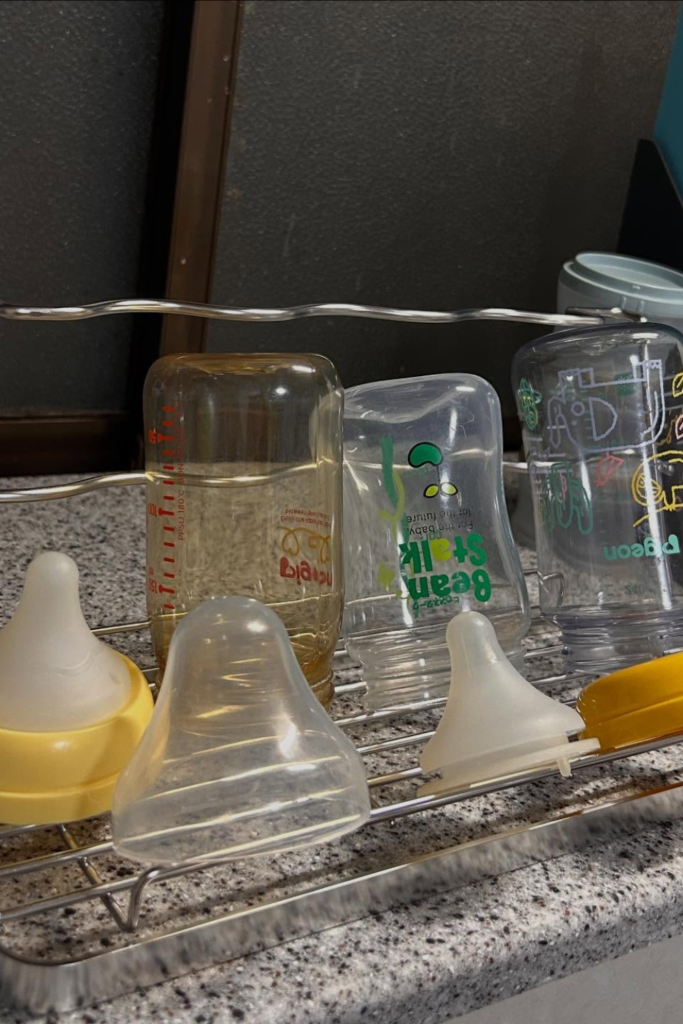
Sometimes, simple works better than bulky plastic towers. A basic metal rack like this keeps bottles upside down.
Air flows freely, and water drains fast. Place it near the sink but away from splashes so clean parts stay clean.
Line nipples and collars along the front edge so they dry separately, rather than sitting trapped inside bottles.
Limit the rack to one day’s rotation. Bright overhead lighting reflects off the counter, making it easy to spot leftover moisture.
During daytime, natural window light speeds up drying. Keeping the setup open and minimal makes daily washing feel less overwhelming.
Nursery Drying Tray
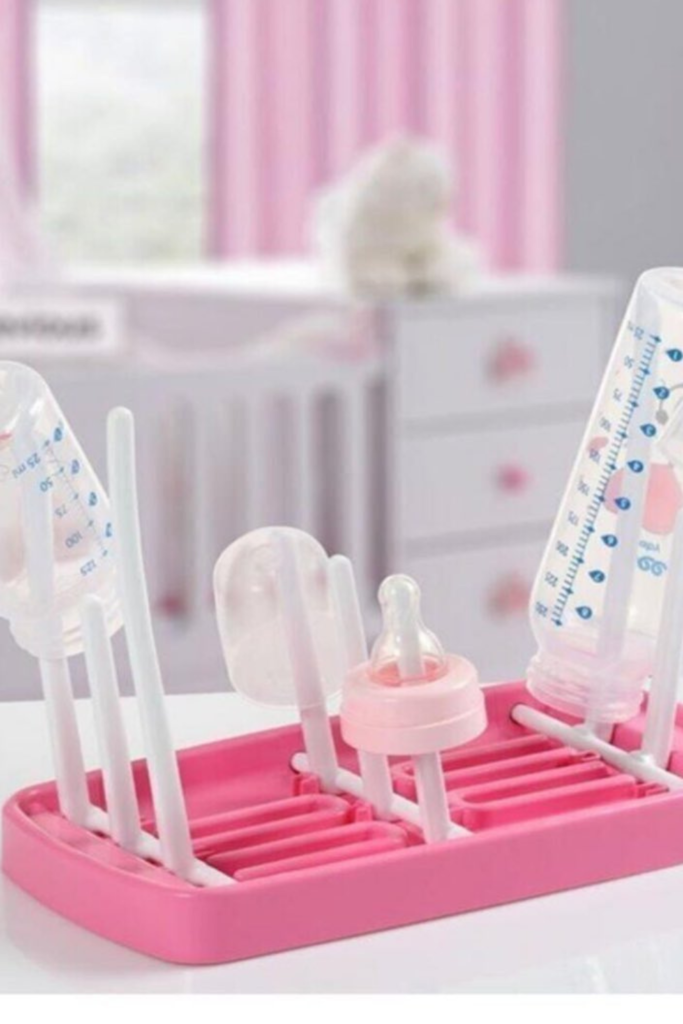
Walking back to the kitchen after every wash gets old fast. A small drying tray like this works well inside the nursery.
You rinse bottles in a nearby bathroom. Stand bottles and nipples upright so air flows evenly through each piece.
Keep it on a dresser corner or a changing table shelf where it won’t get bumped. Rotate dry bottles into a closed bin once ready.
Dust doesn’t settle overnight. Keeping a mini-drying spot upstairs reduces the need for extra trips and saves energy.
Soft nursery lamp light keeps visibility gentle during late feeds, while daylight from the window helps parts dry faster during the day.
Grab-and-Go Basket
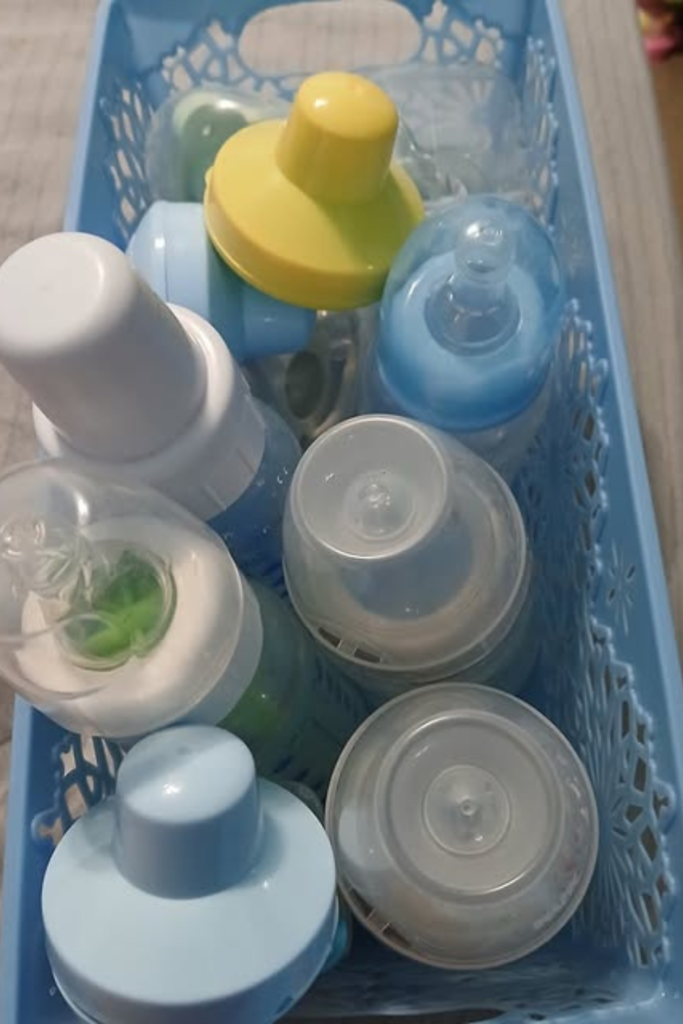
Late nights don’t leave room for digging through cabinets. Simple open basket like this keeps daily bottles contained but easy to carry.
Use it only for fully assembled bottles ready for the next feed. Place it on a bedside shelf, inside a nightstand, or on a rolling cart.
You can lift the whole set at once. Limit it to two or three bottles so it never turns into a pile. One basket, one motion, no searching.
Soft bedside lamp light is enough to see inside without waking everyone. Open-weave sides allow airflow while keeping everything grouped together.
Portable Bottle Box
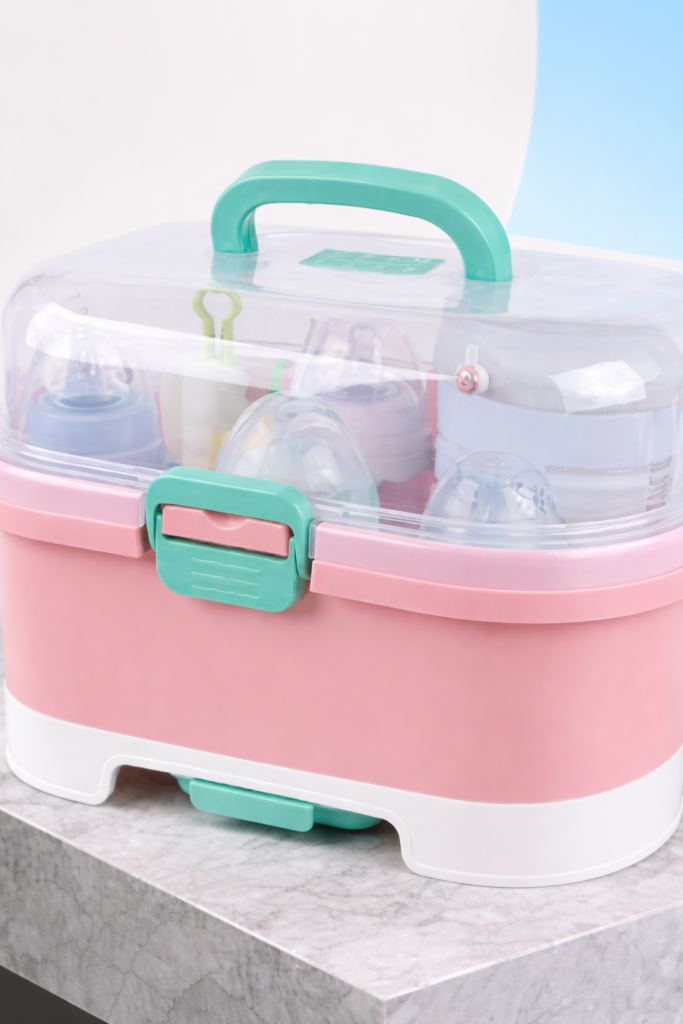
Feeding doesn’t always happen in one room. A portable box like this keeps bottles protected and ready to move.
Store assembled bottles upright inside and tuck nipples into the top tray so small parts stay separated.
Lock the lid before carrying it to the bedroom, living room, or even a short trip outside. Keep it on a dresser or shelf during the day.
It stays off the floor and away from dust. Clear top panels let you check supply levels without opening it.
Natural daylight keeps visibility clear, bedside lamp is enough for quiet night feeds. One handle, one lift, everything contained.
Simple Shelf System
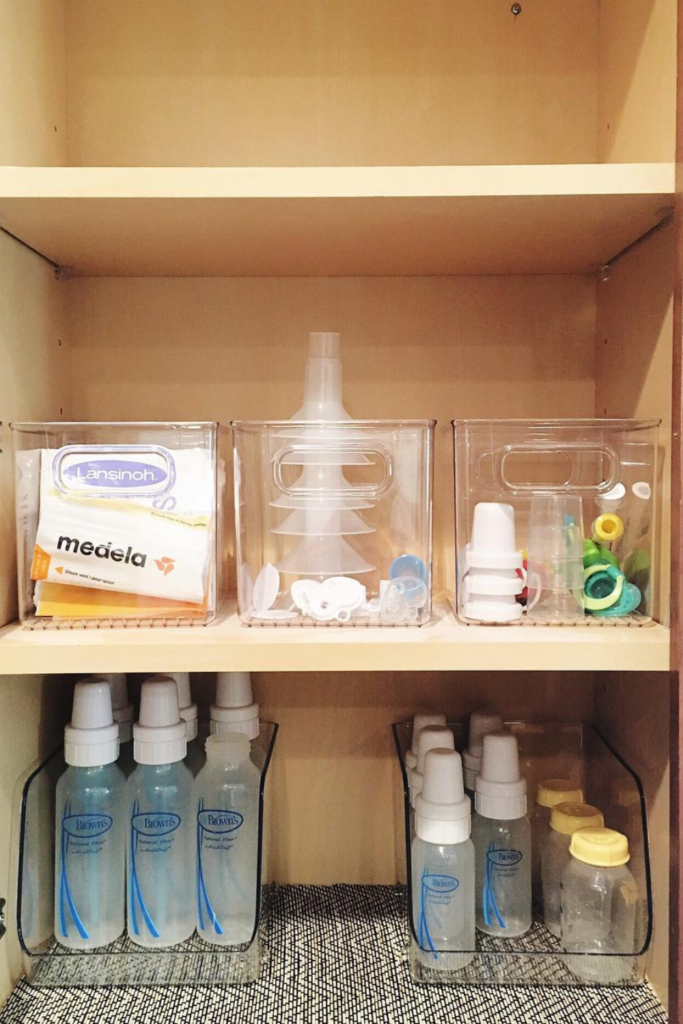
Open a cabinet and see order instead of piles. Clear bins on a basic shelf keep everything grouped without fancy organizers.
Store pump bags and manuals in one bin, small parts like valves and rings in another, and larger funnels upright.
Line assembled bottles in deep bottom bins so they stay stable and don’t tip over. Add a shelf liner underneath to stop sliding.
Catch small drips and clean sections on one shelf, keep your feeding routine tight and easy to reset every day.
Overhead kitchen light keeps the inside bright, and a small stick-on cabinet light helps during late-night grabs.
Organized Prep Drawer
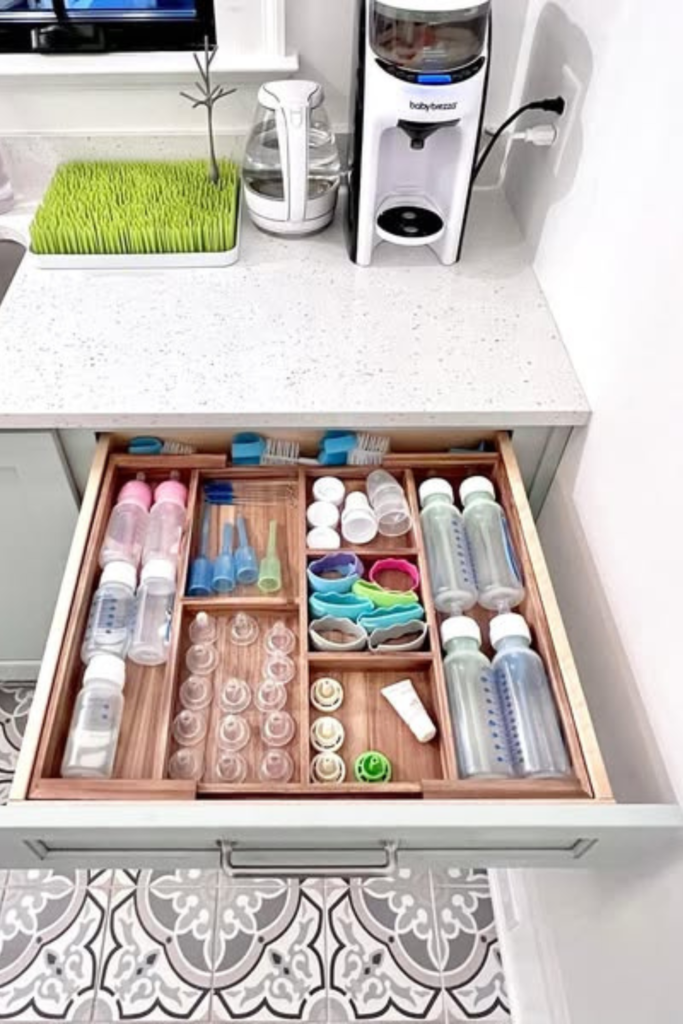
Opening one drawer and seeing every part in its place makes prep almost automatic. Hidden storage keeps your counters clear.
Your routine fast and controlled deep kitchen drawer with dividers works best right under your bottle station or formula machine.
Store full bottles along one side so they stay upright and separated. Use small compartments for nipples, sorted by flow rate.
Dedicate sections for syringes, spoons, and cleaning brushes. Keep lids and rings together so matching takes seconds.
Natural window light over the sink brightens the counter above, while under-cabinet lighting keeps the drawer visible at night.
FAQs
How many bottles should you keep ready for night feeds?
Keep 2–3 clean, fully assembled bottles ready before you go to bed. That covers most nights without turning your room into a bottle warehouse.
Rotating a small set also keeps washing manageable, because you’re not waking up to a mountain of parts the next morning.
Can you store clean bottles in the bedroom safely?
Yes, as long as they’re fully dry and stored in a clean, covered container or a closed drawer. Open-air storage collects dust faster, especially near fans or windows.
If you prep bottles with milk or formula ahead of time, keep them in the fridge and only bring them to the bedroom when you’re ready to use them.
You may like to read!
- 26 Dresser Organization Ideas
- 18 Water Bottle Organization
- 20 Coffee Station Organization
- 20 Watch Organization Ideas
- 15 Car Seat Organization Ideas

Fasial is the founder of the Fizzy Flare. He has been a passionate blogger since 2021. He ran three different websites in the past few years. Now he is focusing on Fizzy Flare to build an audience and help them organize their life.