24 Art Studio Organization Ideas for 2026
This post may contain affiliate links: full affiliate disclosure.
You settle in to make something, and the chaos immediately confronts you. Paints are lost beneath a mountain of paper, brushes are nowhere to be found.
And there’s no room to even begin. Five minutes stretch into twenty, and just like that, the spark is extinguished.
If this resonates, the issue isn’t your artistic ability; it’s your workspace. Most artists don’t require more room or additional storage.
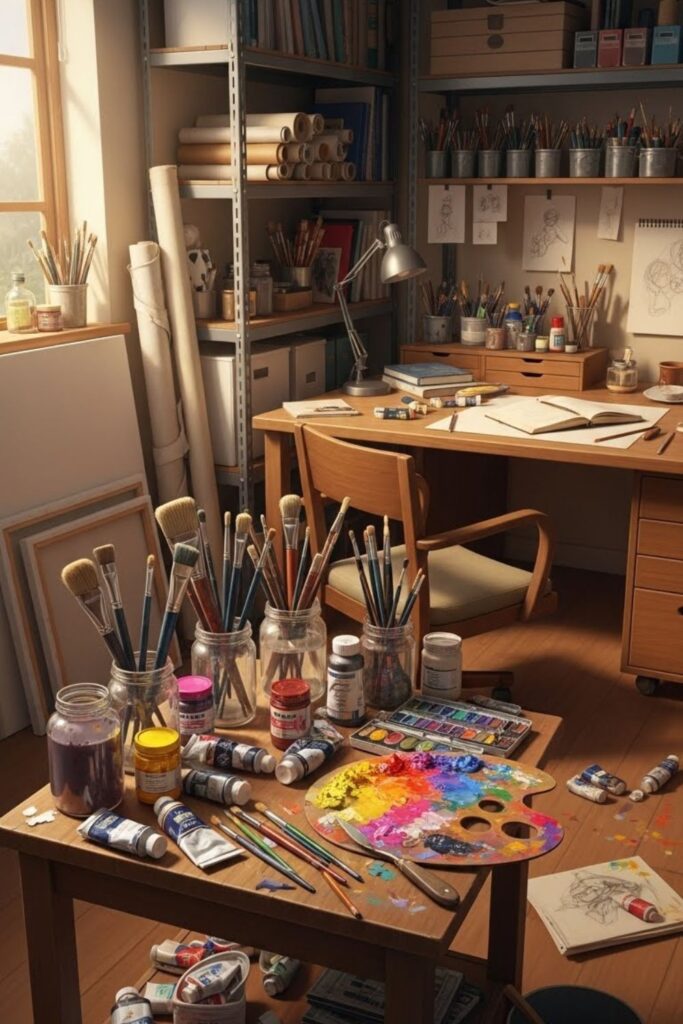
In this article, I’m sharing 24 Art Studio Organization ideas to help you create a clutter free home in 2026.
Let’s jump in!
Contents
- 1 How Can You Set Up an Art Studio in a Small Space?
- 2 How Do You Organize an Art Studio Without Killing Creativity?
- 2.1 Vertical Harmony
- 2.2 Living Gallery
- 2.3 Color Stations
- 2.4 Modular Storage
- 2.5 Mobile Carts
- 2.6 Pegboard Flow
- 2.7 Reach Control
- 2.8 Clear Layers
- 2.9 Clean Station
- 2.10 Display Storage
- 2.11 Hidden Workshop
- 2.12 Worktable Core
- 2.13 Idea Wall
- 2.14 Color Archives
- 2.15 Shelf Rhythm
- 2.16 Compact Loop
- 2.17 Open Library
- 2.18 Rolling Islands
- 2.19 Tool Rotation
- 2.20 Project Parking
- 2.21 Surface Reset
- 2.22 Supply Shadows
- 2.23 Medium Batching
- 2.24 Creative Buffer
- 3 FAQs
How Can You Set Up an Art Studio in a Small Space?
A cramped room becomes a source of irritation when it’s forced to accommodate everything.
Cramming a desk into a corner and scattering supplies haphazardly will always make the space feel constricted.
The solution? Define a single dedicated work area and design the rest of the room around it. Utilize walls for storage, rather than the floor.
When your space is organized to match your workflow even the smallest studio can feel surprisingly spacious and functional.
Save this article for later! 👇👇
How Do You Organize an Art Studio Without Killing Creativity?
Creativity falters when you are bogged down by disorganization. If you’re rummaging through five drawers just to locate a paintbrush, the joy of creation evaporates.
The aim isn’t a picture-perfect studio it’s a space that responds swiftly to your inspirations. Keep your most frequently used tools readily accessible.
Organize supplies based on their function, not their aesthetic appeal. Allow some creative chaos in your workspace, but maintain order elsewhere.
Vertical Harmony
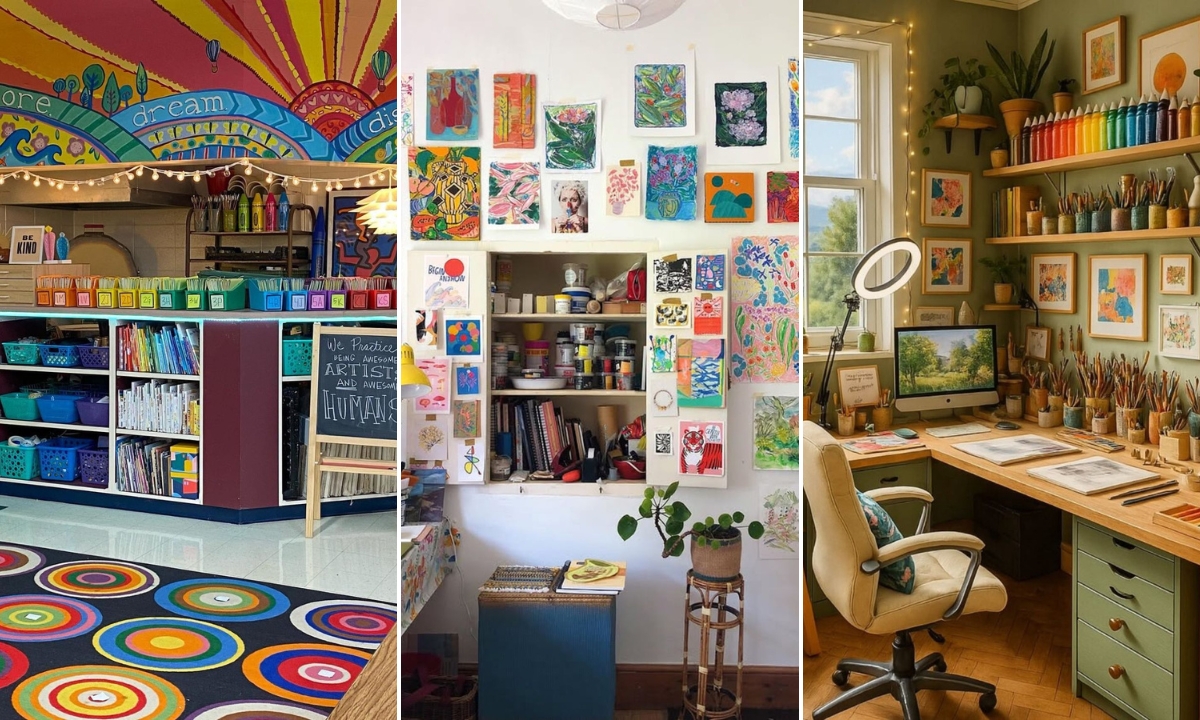
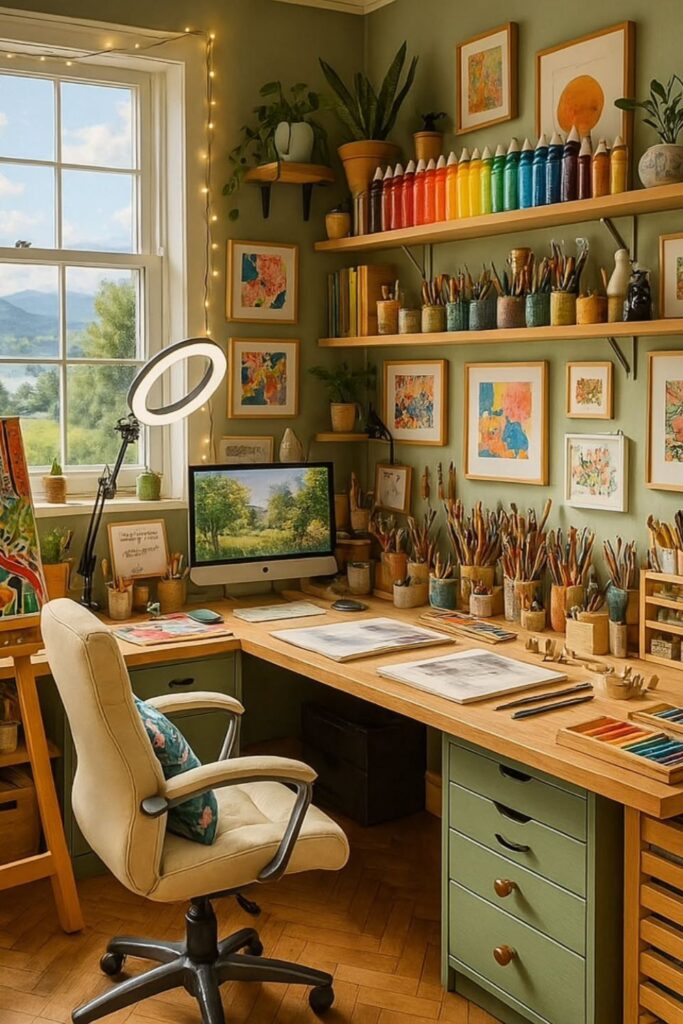
Color-coded paints and tools lined along open shelves turn storage into instant visual order.
Having supplies within easy reach, at eye level, streamlines the process of selecting the correct color and minimizes the time spent preparing.
Floating shelves are ideal for compact studios, where maximizing desk space is a priority over bulky cabinets.
Living Gallery
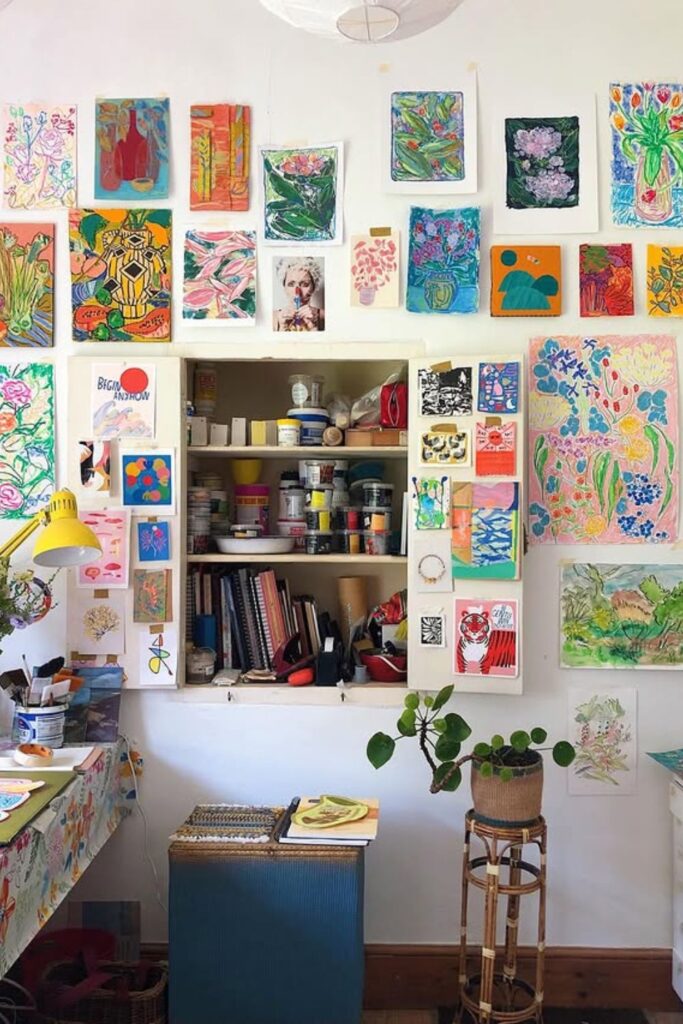
Walls pull double duty here, acting as storage and inspiration at the same time. Rotating finished pieces and works-in-progress on the wall.
A recessed cabinet conceals supplies, maintaining a clean visual line ideal for compact studios where things can quickly get messy.
Change out artwork frequently and put materials back in the cabinet when you are done to prevent a cramped feeling.
Color Stations
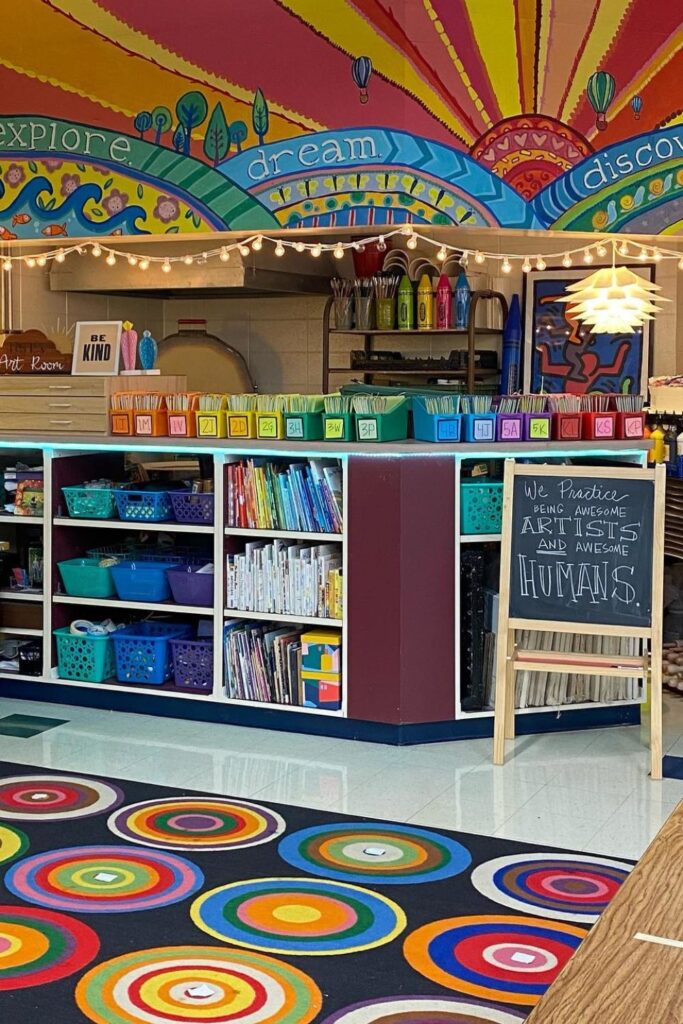
Color-coded bins turn chaos into muscle memory. Each shade family lives in its own container so hands move and without over thinking.
Cleanup is a matter of the seconds not minutes. This approach is a godsend for busy studios, classrooms and shared spaces, since it eliminates the need for deliberation.
This way, anybody can easily grab, use and return goods, all without interrupting their creative process.
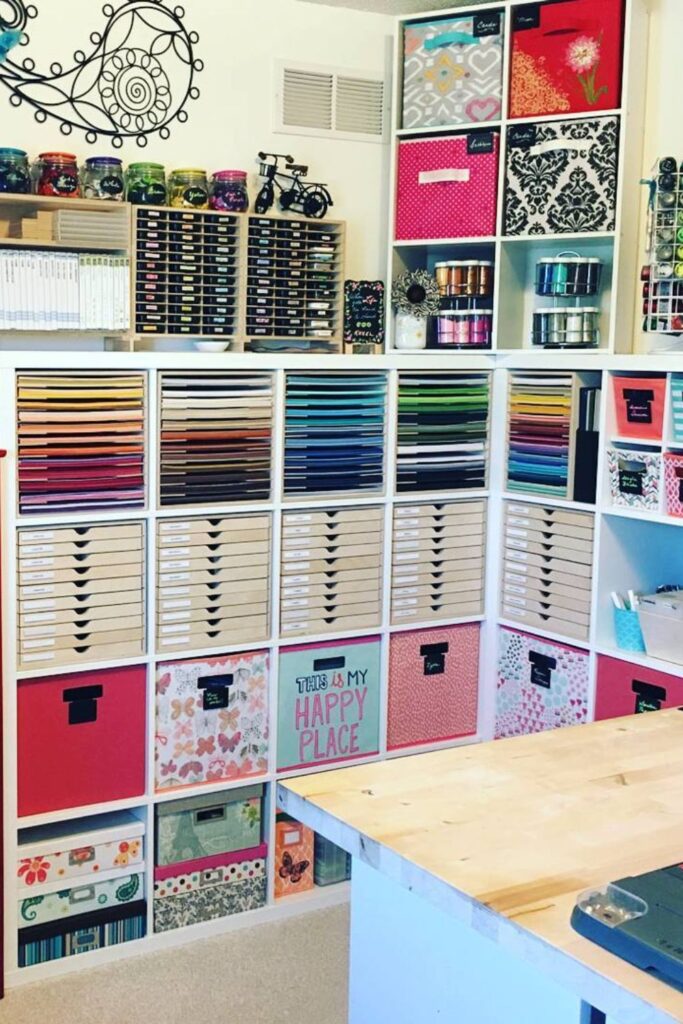
Modular Storage
Order shows up when everything slides into a system built to grow. Cubby units stacked with drawers, paper trays.
Bins sort supplies by category, offering flexibility in how you arrange things. This approach works particularly well in studios where a variety of materials are used.
By using the same modules you ensure that components are interchangeable, simplifying the process of reconfiguring your workspace as your tools or projects evolve.
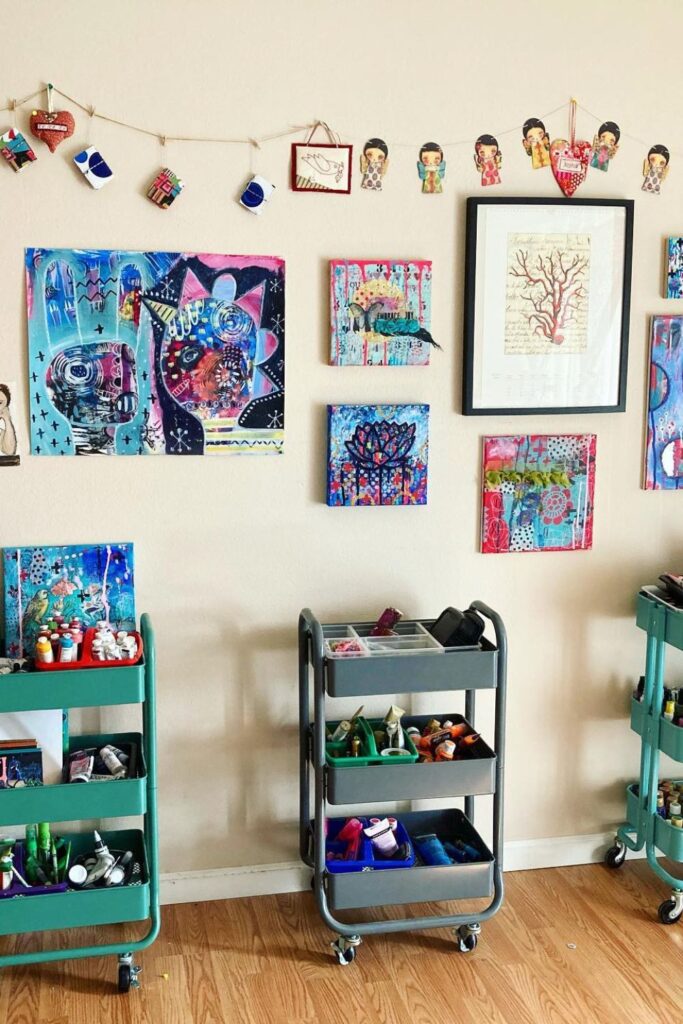
Mobile Carts
Movement replaces clutter in setups like this. Rolling carts let supplies travel to wherever work happens instead of piling up on one table.
Small studios gain the most from this approach, as it prevents stagnation. Designate a specific function for each cart paint, tools,
Or mixed media and just roll it away when you’re done. This allows the area to reset itself without requiring a complete cleanup.
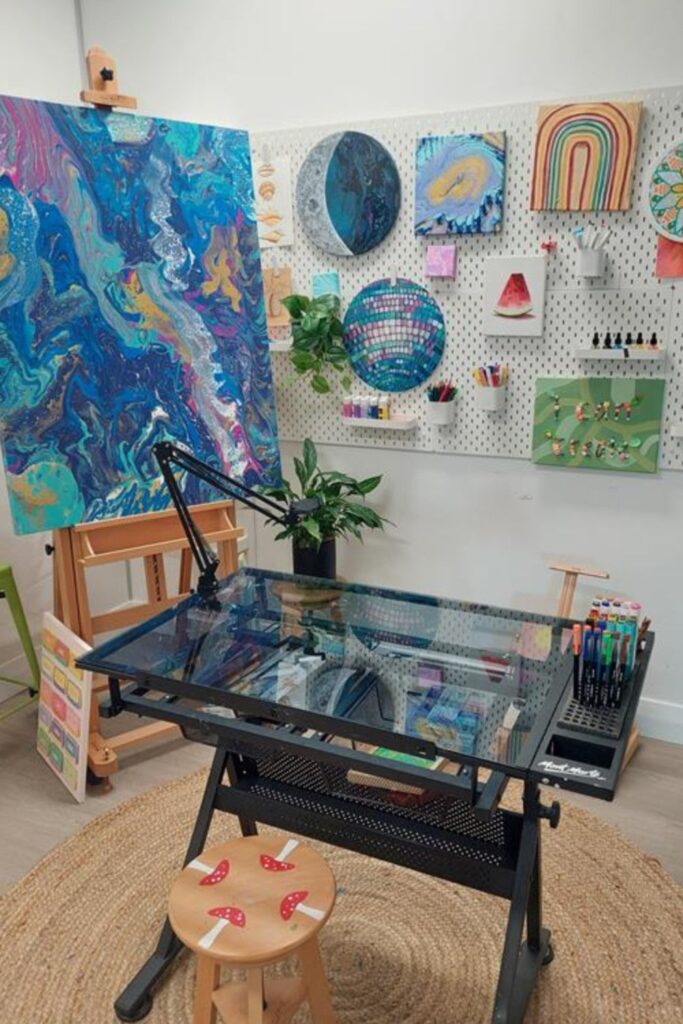
Pegboard Flow
Ideas stay alive when tools stay visible. A pegboard wall keeps brushes paints and small tool off the desk while staying right in your line of sight.
This approach is particularly effective in the smaller studios and where traditional drawers can seem limiting.
Tailor hooks and cups to the tool you use most frequently and easily adjust the arrangement as your ideas evolve all without having to completely overhaul your workspace.
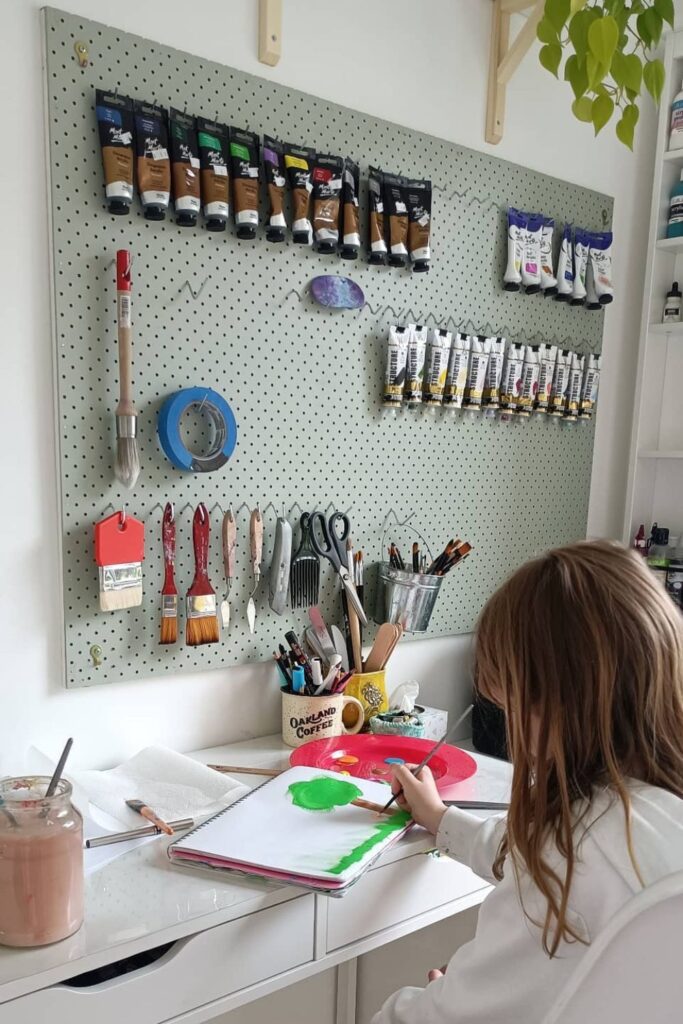
Reach Control
Paint tubes hung in plain sight remove the pause between idea and action. Pegboards shine in busy or kid friendly studios because tools stay visible but off the desk.
Organize paints by size or color making selection instinctive. Incorporate basic hooks and little cups for brushes.
This keeps the workspace functional throughout a project and eliminating the need for frequent tidying.
Clear Layers
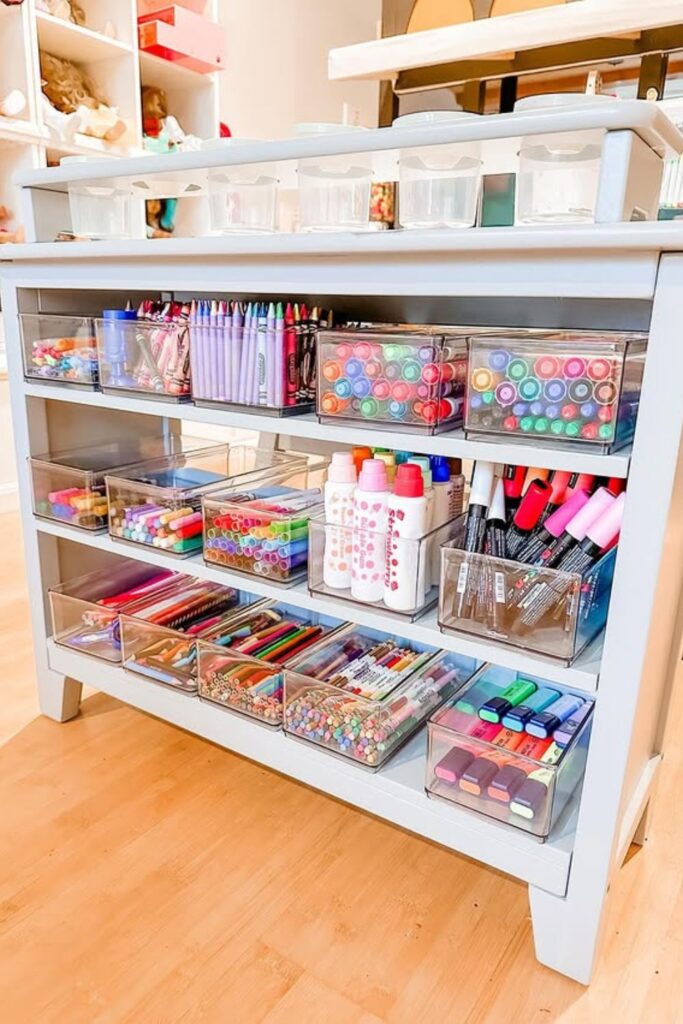
Visibility keeps supplies from multiplying. Transparent drawers let you see exactly what you own, so nothing gets overbought or forgotten.
This arrangement shines in workspaces where vertical space is sometimes overlooked. Organize items by their specific purpose and how often you reach for them.
This keeps everything readily available, neatly stored and quick to put away, allowing you to maintain your concentration.
Clean Station
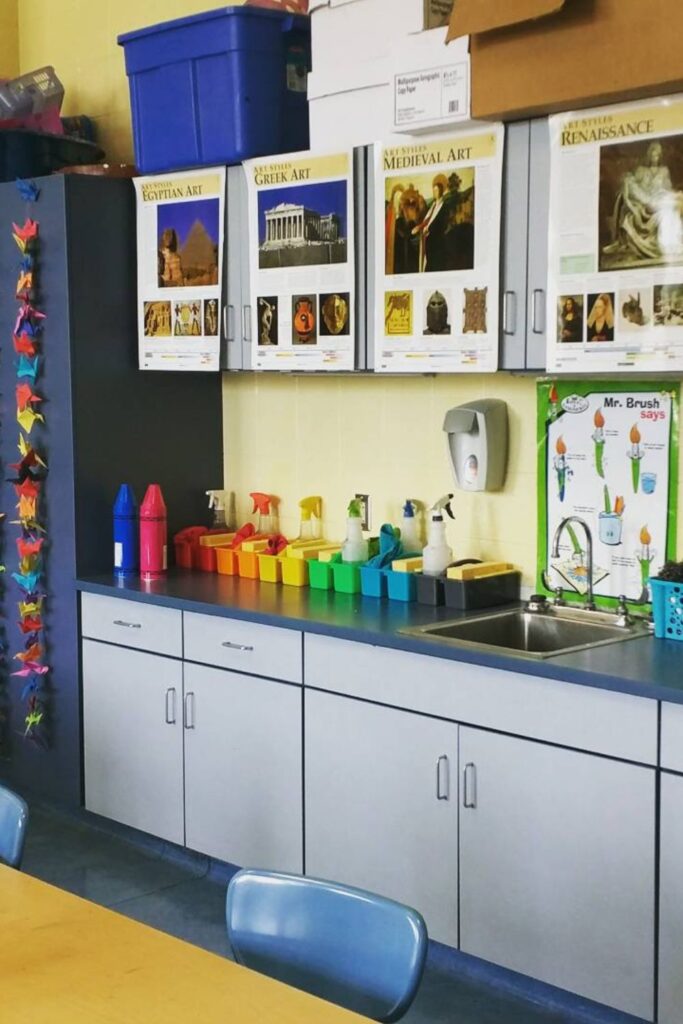
Paint sessions stay stress-free when cleanup has a dedicated home. A sink-side setup with color-coded bins keeps water, sprays and tools contained.
Instead of scattering everything across tables, this approach is most effective in classrooms or when dealing with messy materials like paint and clay.
Keep cleaning supplies readily accessible and organized. This way, wrapping up a session feels swift and effortless, rather than the start of another job.
Display Storage
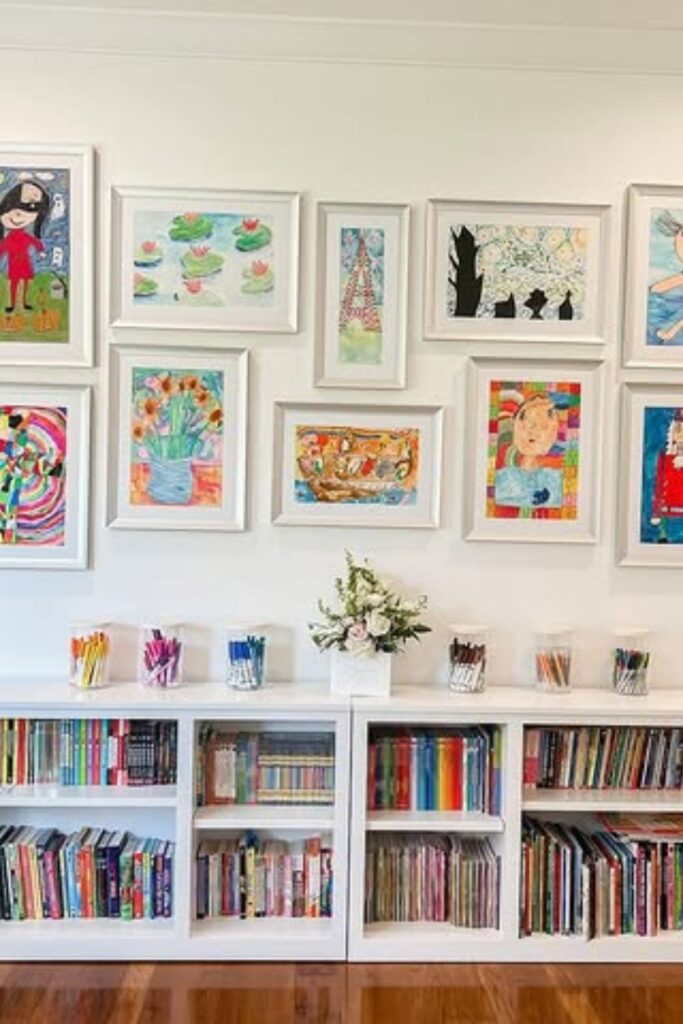
Finished art earns space without stealing it. Framed pieces line the wall while low shelving quietly handles books and supplies underneath.
This arrangement is ideal for shared or family studio and where art needs to be seen but tool and require some level of control.
Keep shelves thin and organized this way storage complements the exhibition rather than detracting from it.
Hidden Workshop
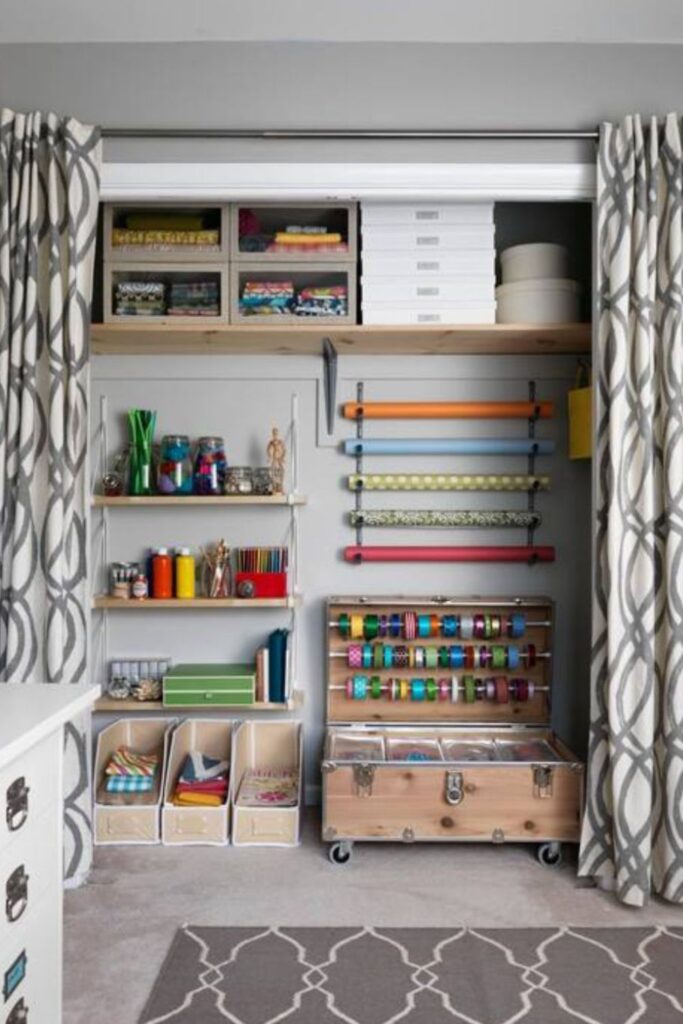
Curtains turn storage into a clean reset button. Open shelves and rolling carts live inside a closet so supplies stay organized but disappear when not in use.
This approach shines in bedrooms and shared areas where a sense of visual tranquility is key.
Place goods you reach for often at waist level reserving the upper shelve for seasonal tools. A quick draw of the curtains instantly transforms the space back into a living area.
Worktable Core
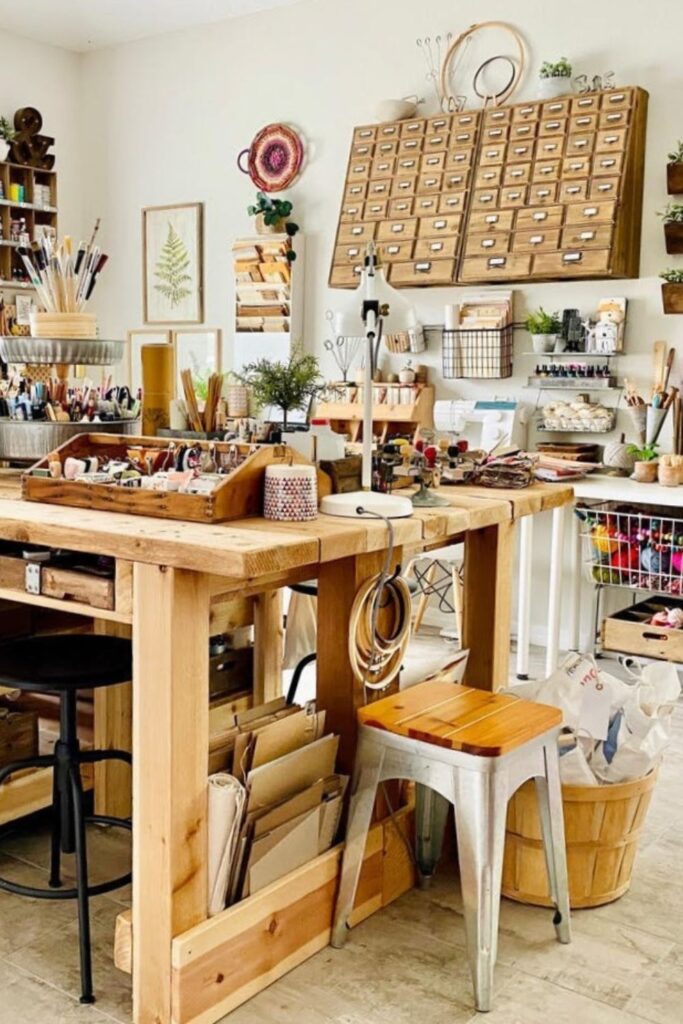
Everything revolves around one solid surface here. A large central table anchors tools, storage and projects so nothing drifts across the room.
This approach shines in studios that juggle many materials and significant production demands.
Incorporating shallow trays and under-table racks keeps frequently used items within easy reach, allowing the workspace to remain functional without devolving into disarray.
Idea Wall
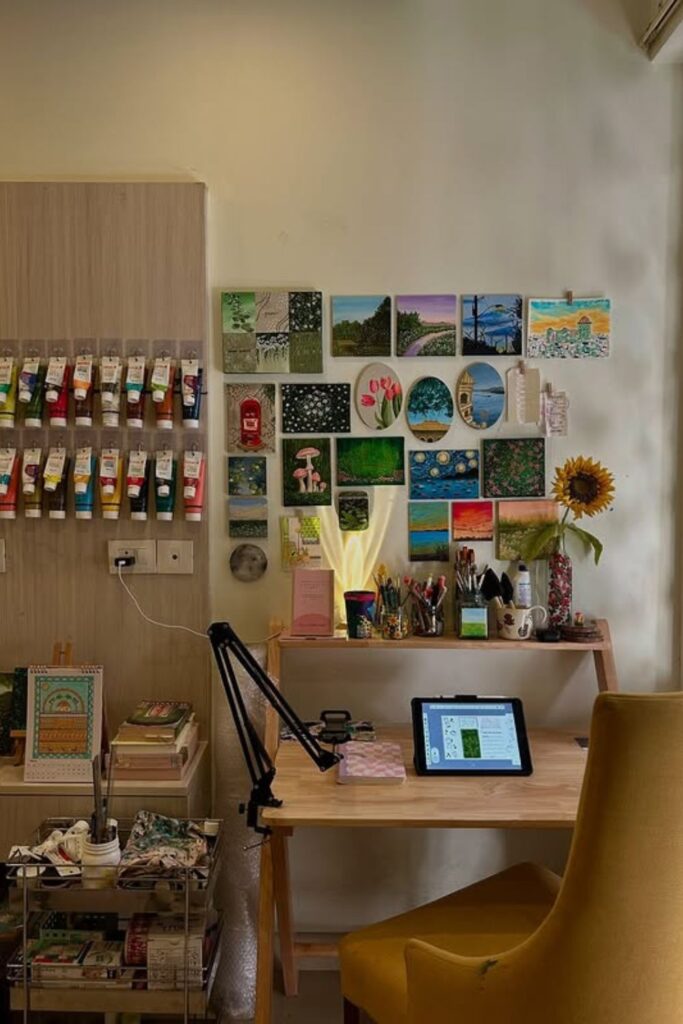
Finished pieces crowding the desk disappear once the wall takes over the thinking. A tight grid of small art works and keeps inspiration visible with out stealing workspace.
This arrangement works beautifully above desks in small studios. As projects evolve, feel free to rearrange the pieces.
Keep the display casual, not overly fussy, so the wall remains dynamic, rather than becoming a static display.
Color Archives
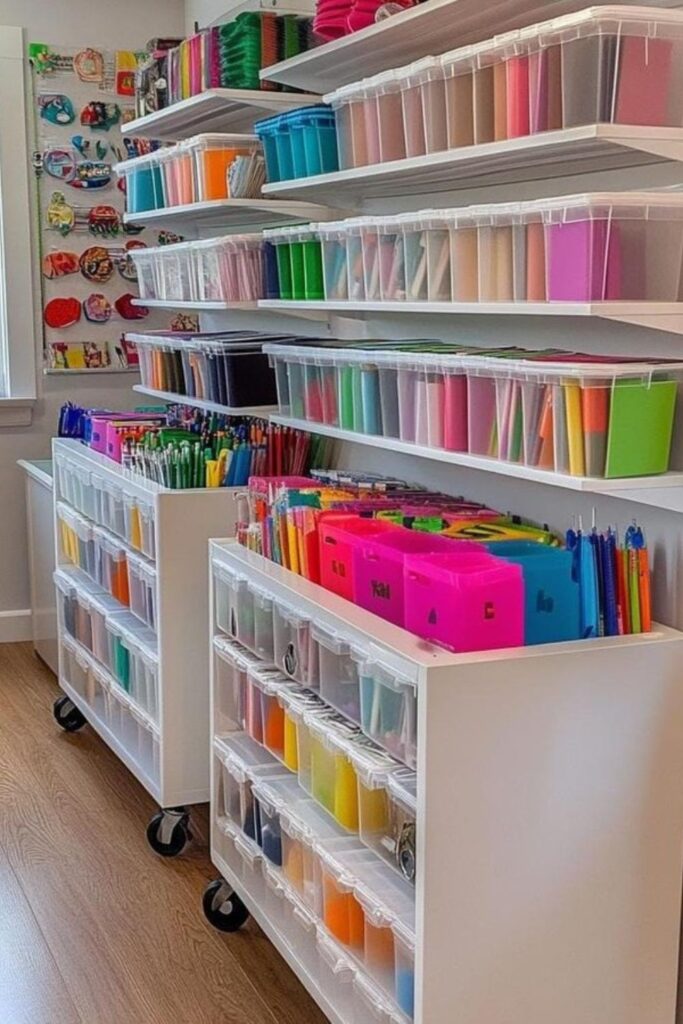
Stacks stop turning messy once colors get their own lanes. Clear bins arranged by shade make it easy to the spot gaps, repeats or exactly.
What a project needs next. This setup is ideal for studios overflowing with paper or vinyl.
Keep the bins shallow and clearly labeled. This way colors can be easily accessed without disrupting the carefully arranged order.
Shelf Rhythm
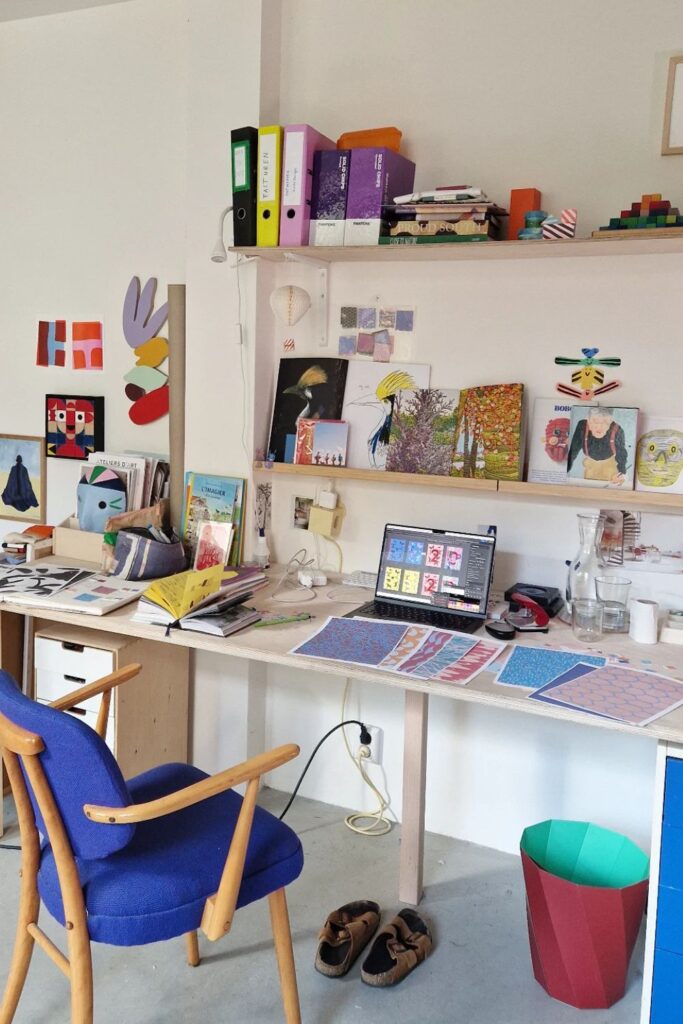
Work stays focused when inspiration lives slightly above it. Open shelves hold reference books, finished pieces and ongoing ideas without crowding the desk itself.
This arrangement works well for illustrators and designers who constantly toggle between conceptualizing and creating.
Maintain a relatively uncluttered desktop, and instead, let the shelves to display visual cues. This keeps ideas readily accessible without disrupting the flow of the job itself.
Compact Loop
Flow improves when tools circle the workspace instead of spreading outward. Shelves stacked close to desk and keep paints mediums.
And brushes all within a single turn of the chair. This arrangement suits tiny studios where the emphasis is on quick breaks.
Keep everyday equipment within easy reach, backups stored further down and use rolling carts to fill in the spaces.
Open Library
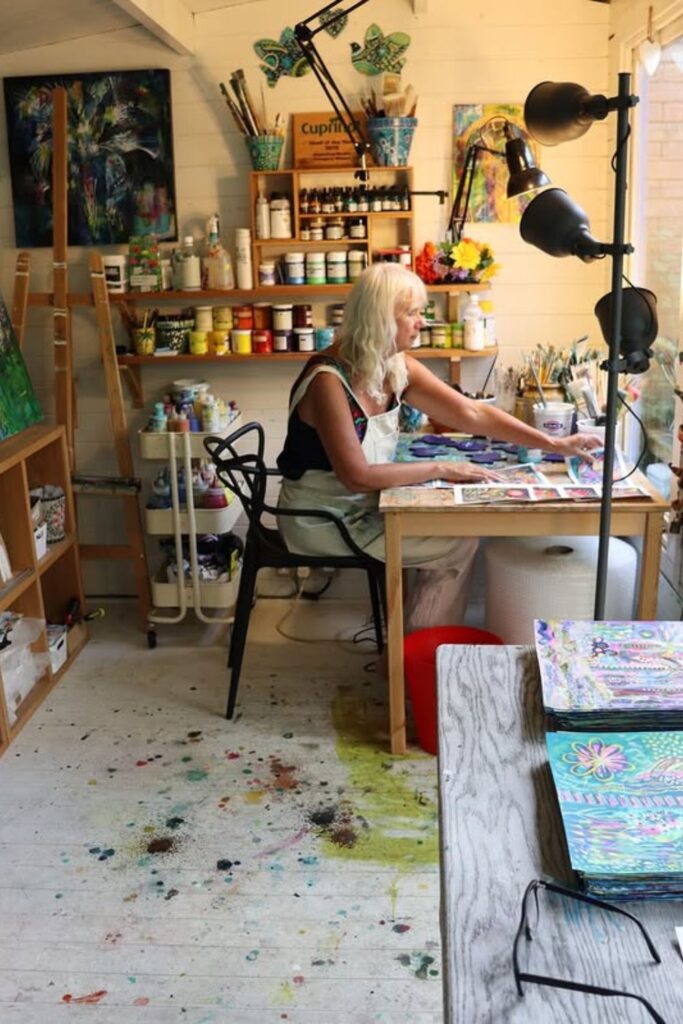
Nothing hides so nothing gets forgotten. Open shelving paired with bins keeps supplies visible while still grouped by purpose.
This approach shines in the studios that see constant use where getting things done quickly trumps achieving flawless looks.
Categorize each shelf and let the container manage the clutter. When everything is visible at glance beginning and a session becomes straight forward and not a daunting task.
Rolling Islands
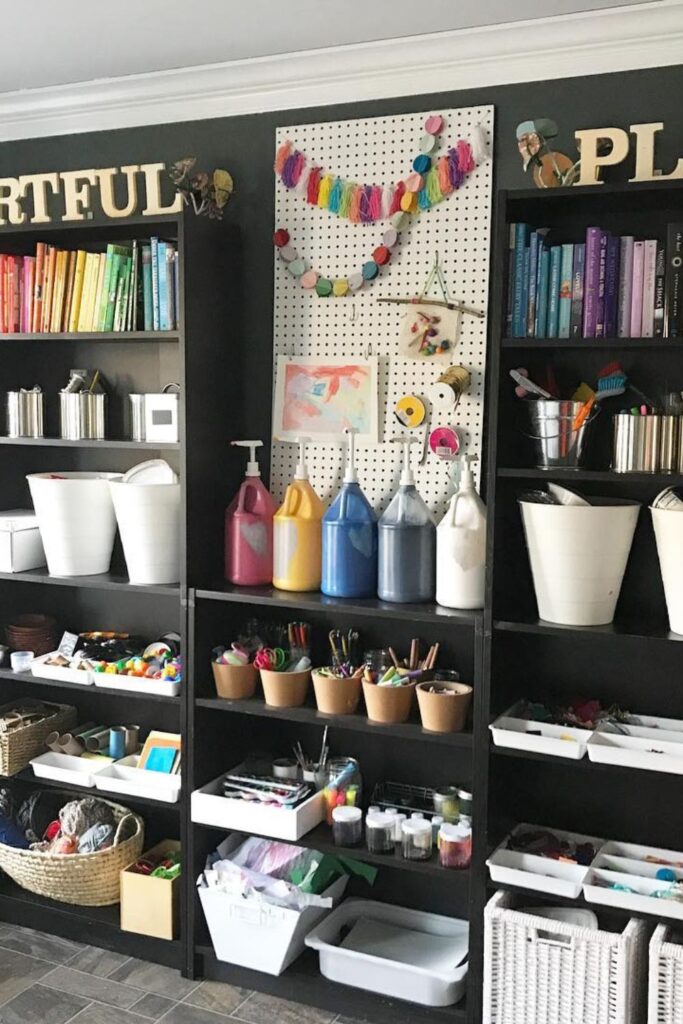
Heavy work stays flexible when tables move instead of locking the layout. Large rolling surface hold active project or wet work shared tools with out eating permanent space.
This arrangement shines in studio and where several projects are in motion simultaneously. Consider incorporating drawers or trays beneath the work surface.
This allows materials to move with the table enabling the space to shift as projects evolve, rather than necessitating a disruptive cleanup in the middle of the creative process.
Tool Rotation
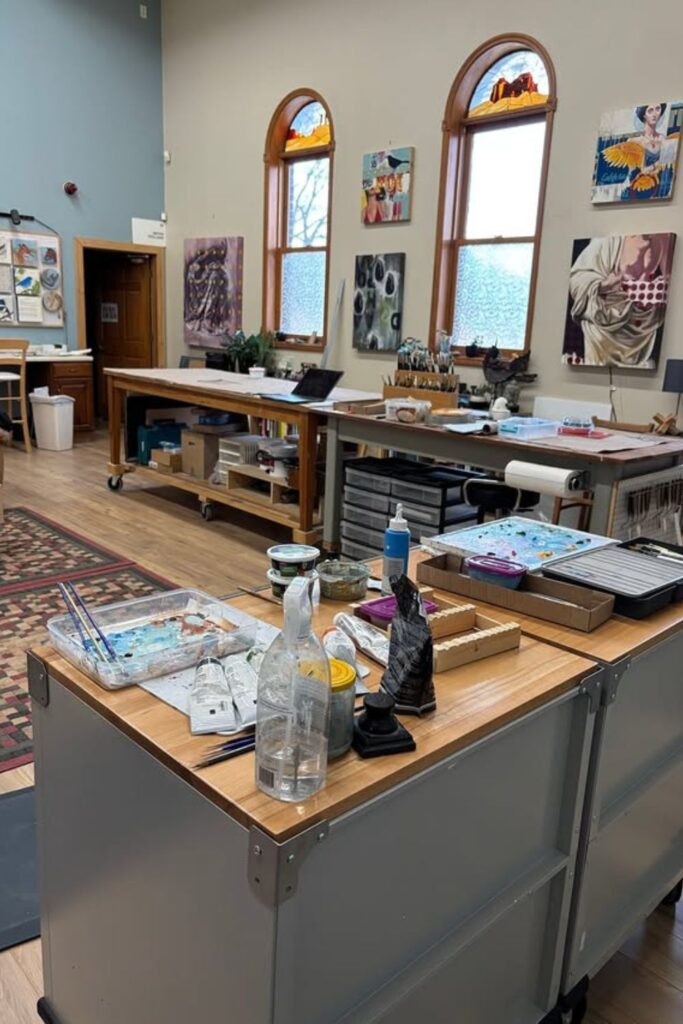
Creativity shifts, but storage usually doesn’t. Rotating tools weekly keeps only current materials within reach while everything else rests out of sight.
Store backups in a box or drawer marked “next rotation.” This approach is particularly useful for the artists who frequently switch between different mediums.
Having fewer apparent choices streamlines decision-making and reduces mental clutter when you’re in the thick of a project.
Project Parking
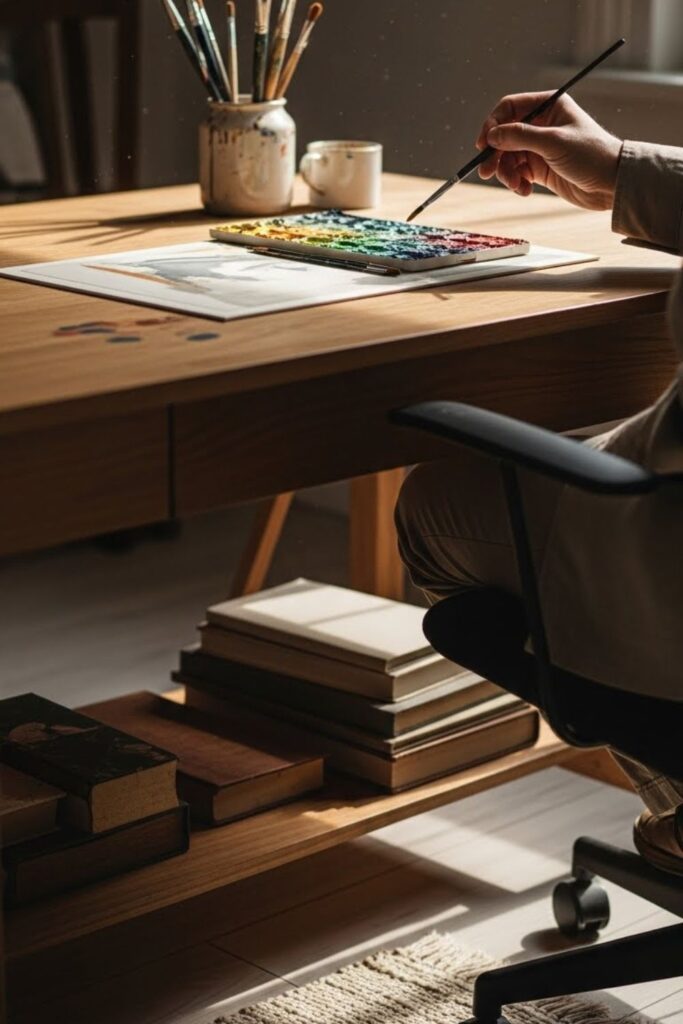
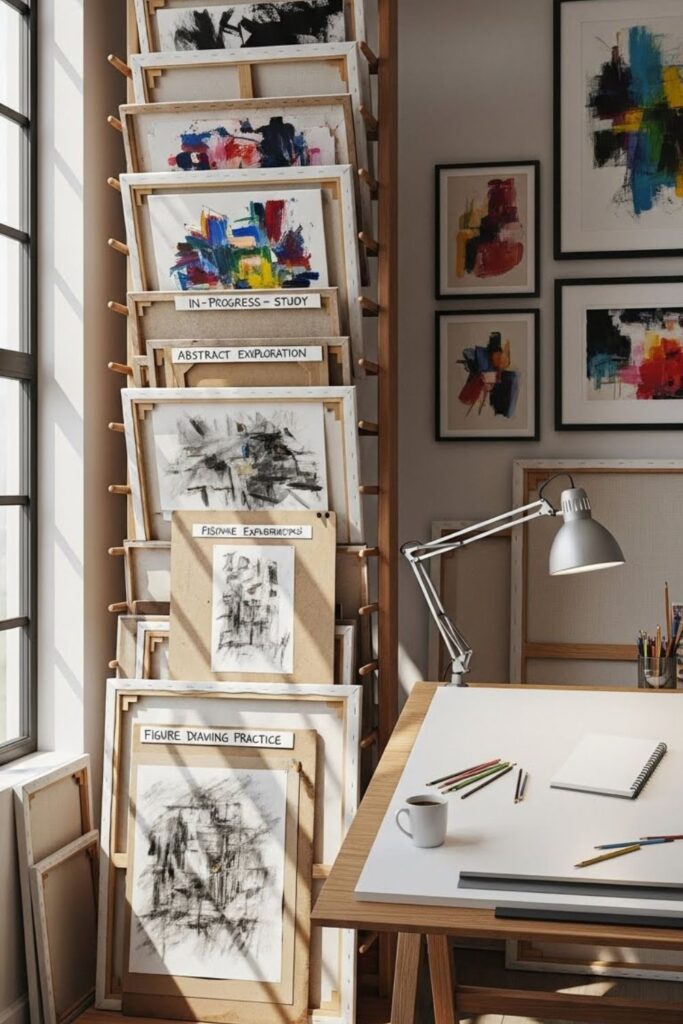
Unfinished work causes more mess than supplies. A vertical rack or shallow shelf dedicated only to in progress pieces.
Gives projects a pause button. Slide your work in when you pause, and pull it out when you’re ready to continue.
This approach is particularly effective in smaller studios, where tidying up the desk doesn’t need discarding ideas completely.
Surface Reset
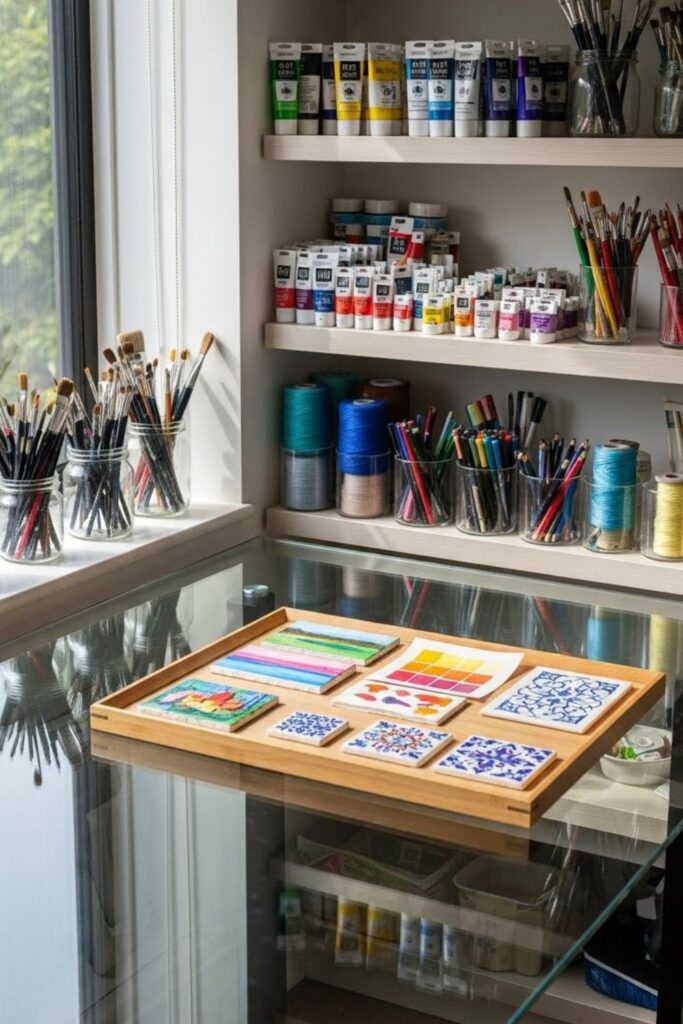
Mess sticks when surfaces have no rules. Assign one clear surface as a daily reset zone nothing stays there overnight.
Use it for sorting, drying, or just to contain the inevitable mess. By resetting this space after each use.
You prevent clutter from taking over. It’s particularly useful for artists who work everyday but dread extensive cleanups.
Supply Shadows
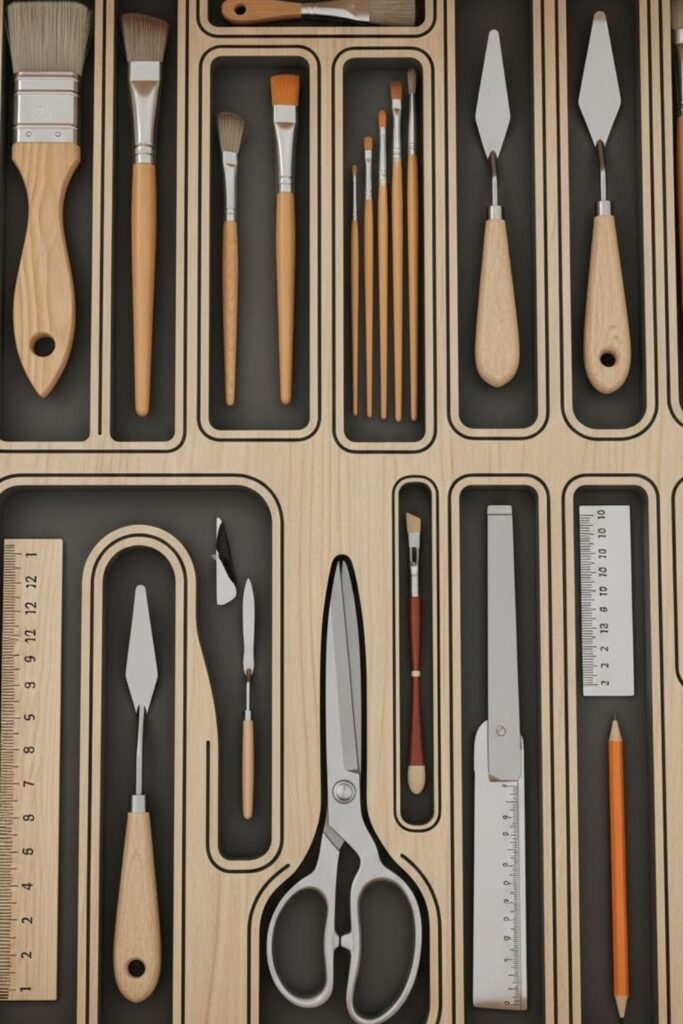
Missing tools waste time because nothing signals where they belong. Outline frequently used tools inside drawers or trays using tape or marker lines.
Empty forms immediately reveal what absent and where it reappears. This approach is particularly effective for brushes and cutters.
And rulers subtly fostering good housekeeping practices without requiring conscious thought or prompting.
Medium Batching
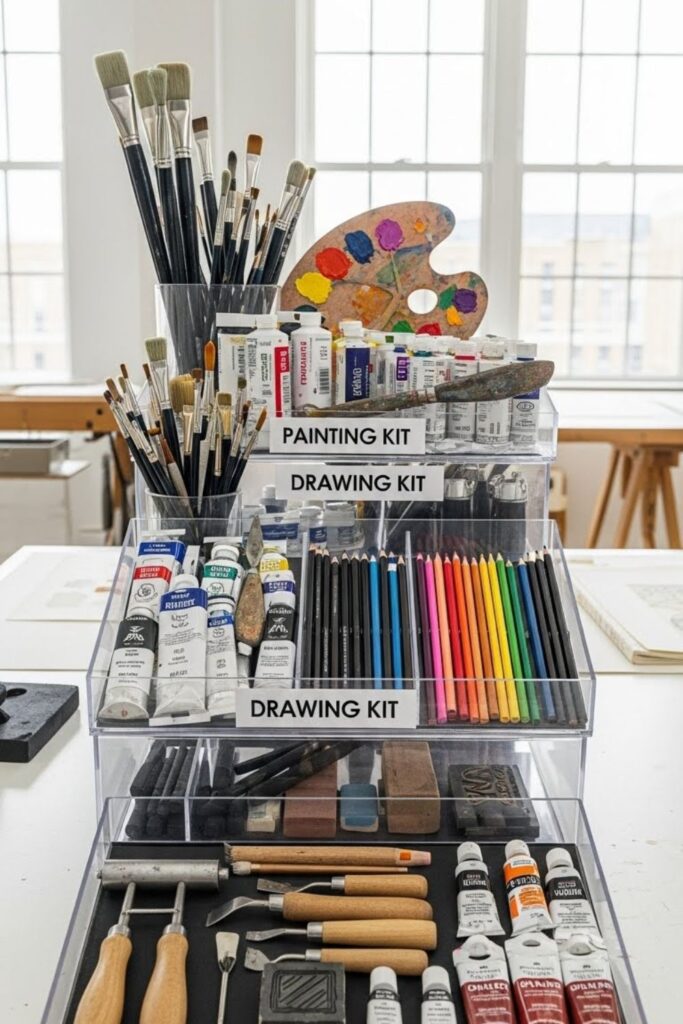
Switching between different art forms can quickly lead to chaos. The solution? Group your supplies by medium and keep them in complete kits a painting kit, a drawing kit, a print kit.
Each kit should have its own container and be portable. This approach is especially helpful for the artists who work in multiple disciplines.
It streamlines both setup and cleanup and reducing them to a single action rather than a series of scattered steps.
Creative Buffer
Energy wanes when a studio goes directly from storage to the work surface. Introduce a small buffer a stool a tray or a side table.
Where tools can rest briefly. This intermediary space catches the clutter without cluttering the main area.
It’s perfect for projects that demand precision and where tools are frequently in use, but don’t require a dedicated spot.
FAQs
How do I stop my art studio from getting messy again after organizing it?
Most studios descend into disarray because the arrangement doesn’t reflect your actual workflow.
Prioritize positioning instruments within easy reach and minimize the number of visible supplies.
When tidying up becomes second nature, rather than a chore, clutter ceases to accumulate without any additional effort.
Is it better to organize art supplies by type or by project?
It really comes down to your creative process. If you are constantly hopping between different mediums, arranging your work by project will save you time.
However, if you tend to focus on one medium at a time, grouping your tools by kind can be more effective.
Ultimately, the best approach is the one that minimizes the number of choices you have to make when you’re really creating.
You may like to read!
- 27 Pantry Organization Ideas
- 24 Family Organization Wall
- 22 Sewing Room Organization
- 20 Shelf Organization Ideas
- 21 Shower Organization Ideas

Fasial is the founder of the Fizzy Flare. He has been a passionate blogger since 2021. He ran three different websites in the past few years. Now he is focusing on Fizzy Flare to build an audience and help them organize their life.