22 DIY Dog Toys Ideas For 2026

This post may contain affiliate links: full affiliate disclosure.
I learnt the hard way that most dog toys you make yourself don’t last long. I’d spend time making one, give it to my dog.
And five minutes later it was torn, disregarded, or worse chewed into pieces that I had to take away. That’s when it hit me: the problem wasn’t the toys we made ourselves.
It was how we made them and what we used to produce them. You’re in the right place if you’re sick of wasting time on toys that don’t last or that your dog doesn’t like.
In this article, you’ll see 22 DIY Dog Toys Ideas you can switch to in 2026.
Contents
- 1 What Materials Are Safe to Use for Homemade Dog Toys?
- 2 How to Make Dog Toys More Interesting?
- 2.1 Weave Poles
- 2.2 Wrapped Stick
- 2.3 Rope Knots
- 2.4 Loop Ring
- 2.5 Bottle Chew
- 2.6 Tug Rope
- 2.7 Ball Strap
- 2.8 Puzzle Mix
- 2.9 Handle Plush
- 2.10 Fabric Ball
- 2.11 Ring Stack
- 2.12 Texture Bundle
- 2.13 Rope Garland
- 2.14 Fleece Tug
- 2.15 Crochet Plush
- 2.16 Treat Tower
- 2.17 Snuffle Towel
- 2.18 Cardboard Maze
- 2.19 Sock Braid
- 2.20 Frozen Lick
- 2.21 Bottle Roller
- 2.22 Scent Box
- 3 FAQs
What Materials Are Safe to Use for Homemade Dog Toys?
Even a simple DIY toy might be an issue if you choose the wrong materials. Think about how your dog plays first.
You need robust, reliable materials if your dog chews vigorously or attempts to rip things apart.
Use thick cotton, fleece, or old denim because they don’t splinter and are easy to keep an eye on. Stay away from things that can break, crack, or come apart into small pieces.
Don’t make it a toy if you wouldn’t feel confident leaving it near your dog’s mouth.
Save this article for later! 👇👇

How to Make Dog Toys More Interesting?
It doesn’t matter how nicely you made a toy if your dog doesn’t like it. Dogs care more about smell, challenge, and new things than how they look.
Your dog will get more involved if you add a food fragrance. They’ll stay focused longer if you hide treats or make them work for them.
Instead than leaving toys out all the time, switch them out so that each one feels new again. You will see a difference right away if you match the toy to your dog’s energy level.
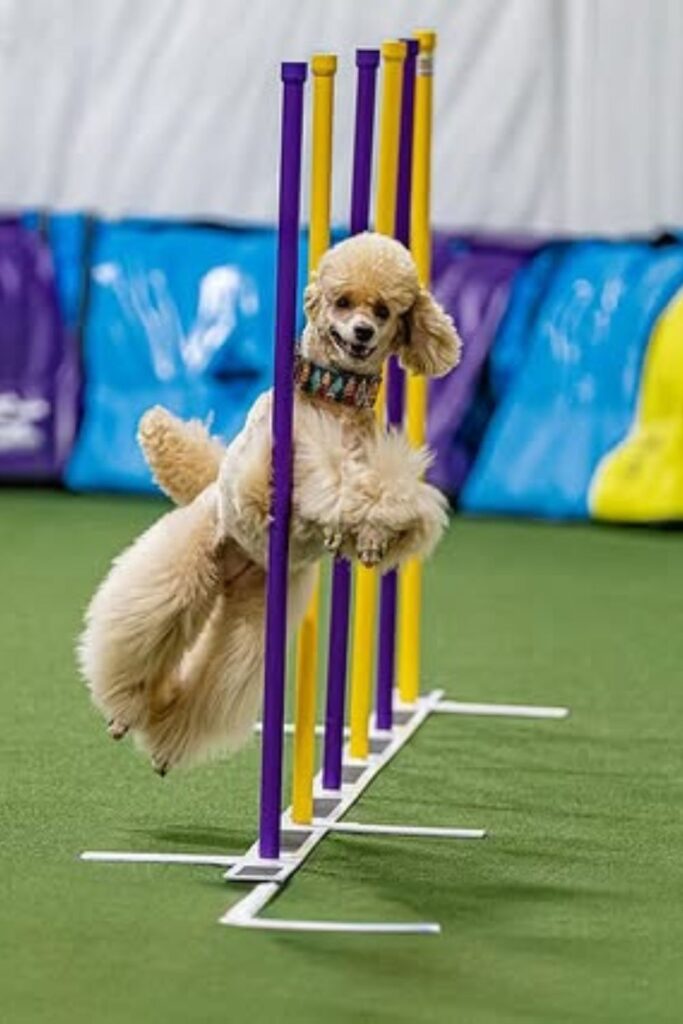
Weave Poles
Burning off mental and physical energy at the same time is hard to beat. Weave poles convert fun into an exercise for the mind.
Which is great for dogs that get bored inside and have a lot of activity. Use PVC pipes or garden stakes that are spaced out equally to set them up.
Start off slowly, use incentives to help your dog along, and then accelerate up with time. Short sessions are excellent since they keep frustration down.
Wrapped Stick
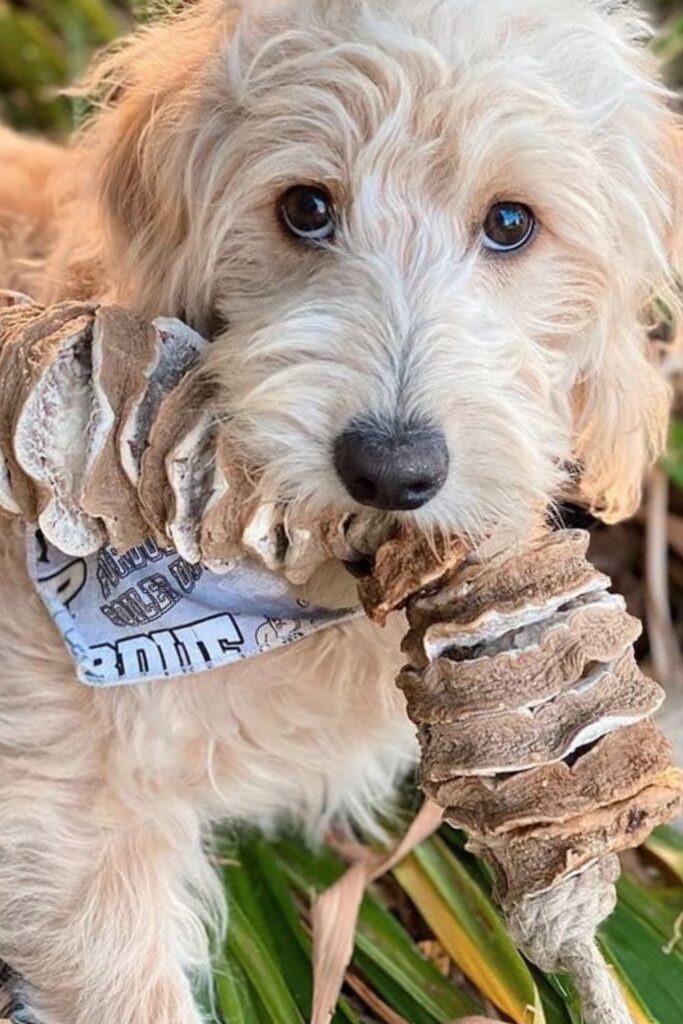
Natural chewing feels better when splinters stay out of the picture. Wrapping a sturdy stick with strips of old fabric.
Or fleece turns risky outdoor chewing into something safer. Tight layers slow down damage and offer teeth something to hold on to.
Best used when playing outside with supervision, especially for dogs that love sticks but tend to break them too quickly.
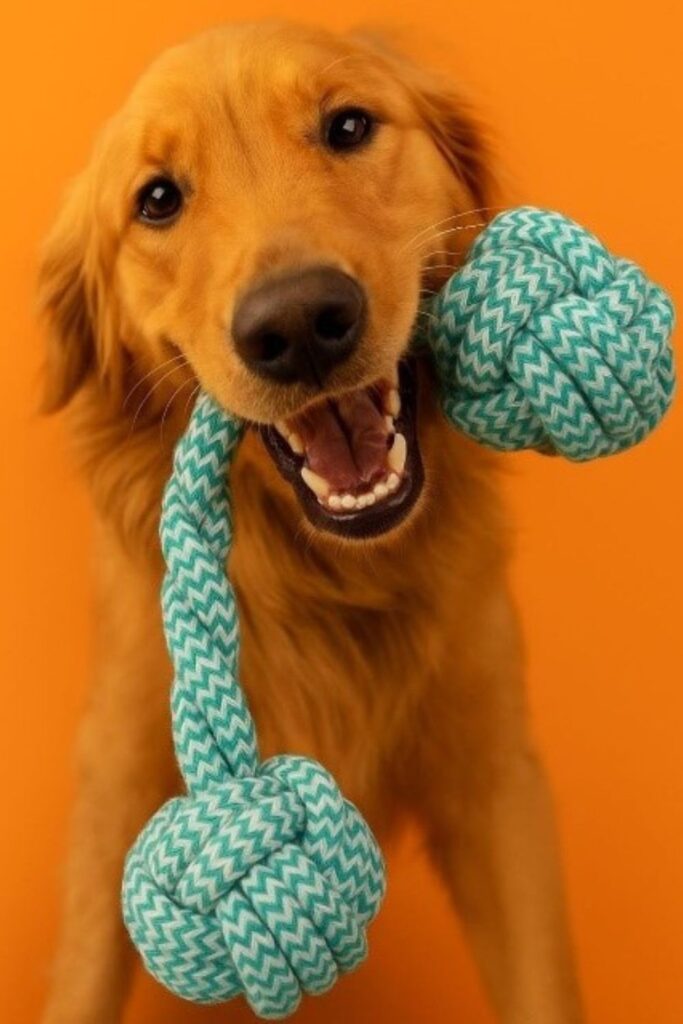
Rope Knots
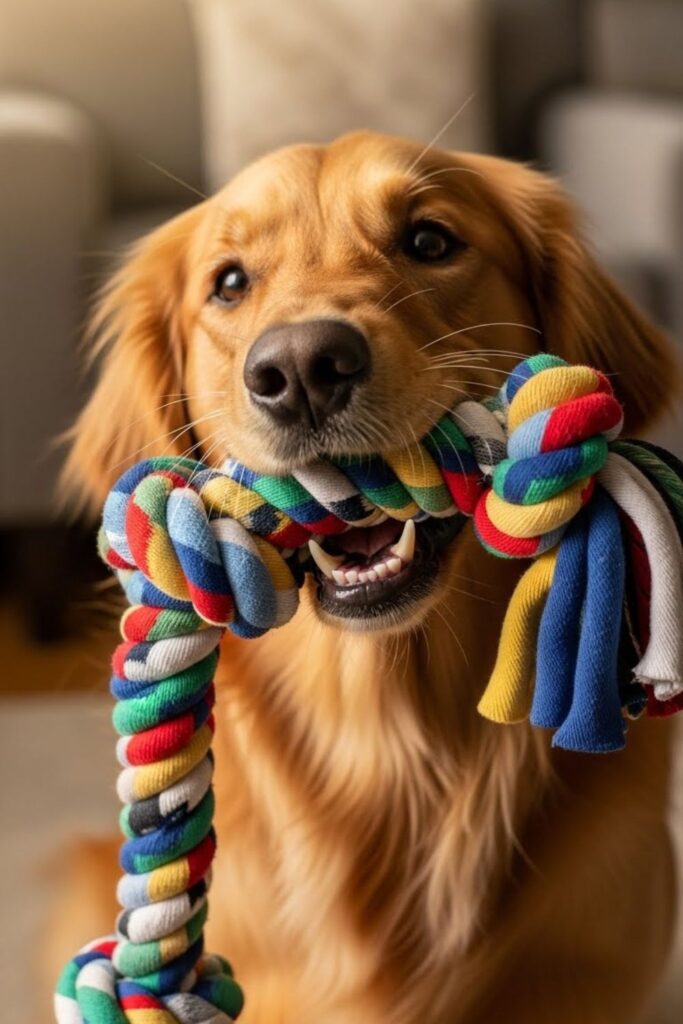
Tug games are most fun when both ends give your dog something to hold on to. Thick rope with big knots on it makes it harder.
And it keeps teeth busy without breaking too quickly. Cotton rope is superior than synthetic rope since it doesn’t wear out as quickly.
Great for play periods when you stay interested, but not for chewing and then leaving.
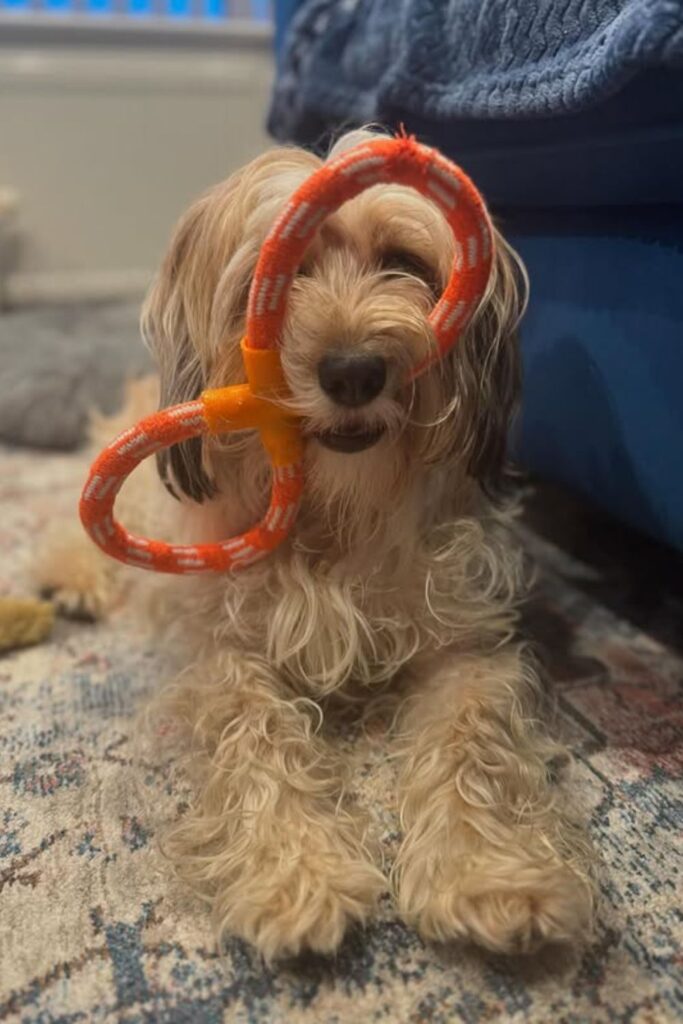
Loop Ring
Twisting rope into a figure-eight shape creates two grab points, which instantly makes play more engaging.
One loop lets your dog take charge, and the other one invites tugging or shaking. Thicker rope lasts longer and is easier for tiny lips to hold on to.
Best for short spurts of play indoors when you want to interact without full-on turmoil.
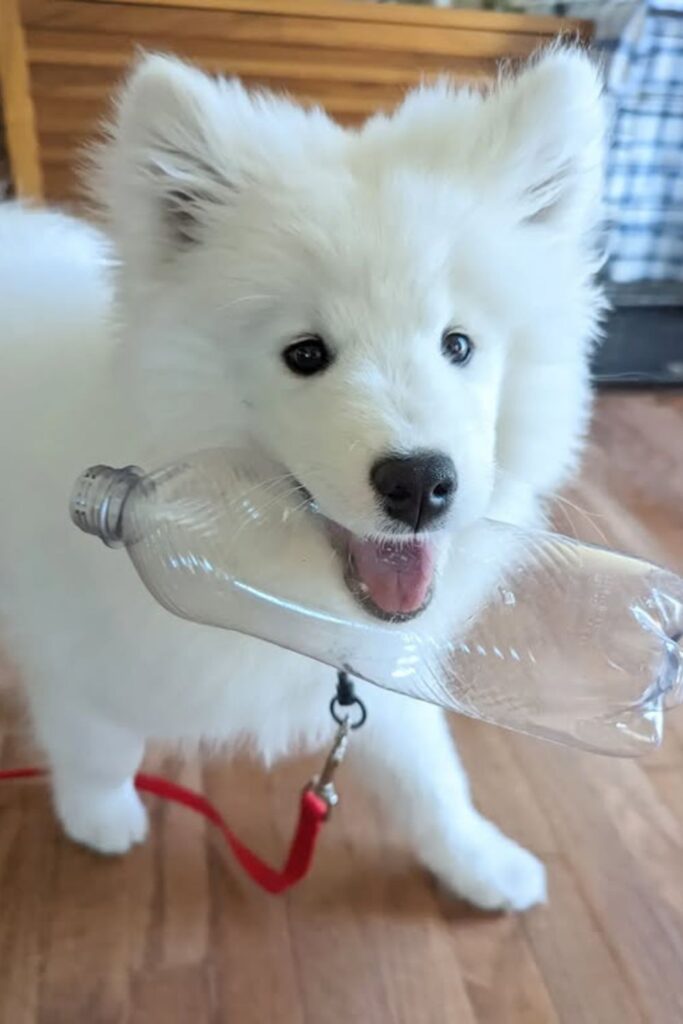
Bottle Chew
Crunchy noise alone can keep a puppy busy longer than most fancy toys. An empty plastic bottle works best during supervised play.
Especially for the dogs still exploring textures. Take off the cap and ring first. Then, to make it tougher to collapse.
And swallow, gently flatten the bottle. Short sessions stop too much chewing and help keep sharp edges from growing.
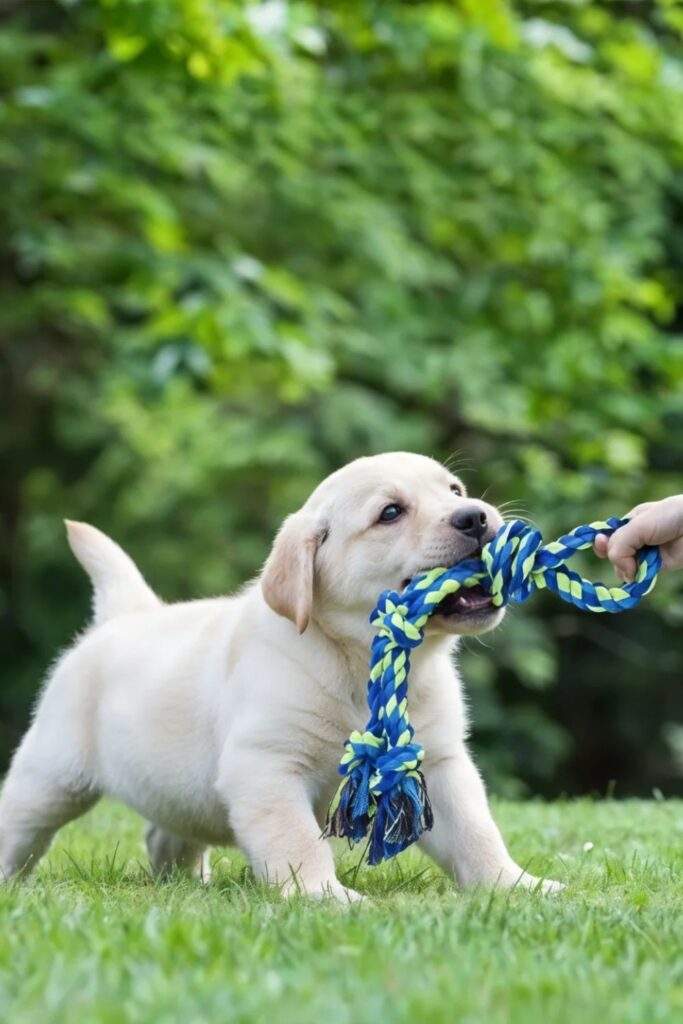
Tug Rope
Young puppies get a lot of energy quickly, and tugging gives them a clear way to use it. Braiding thick cotton rope makes something strong enough to pull on without hurting teeth.
Make the knots big enough that nothing can fit in the mouth. You should play this game with other people, not by yourself.
Because controlled resistance teaches you how to control your impulses and burn off enthusiasm.
Ball Strap
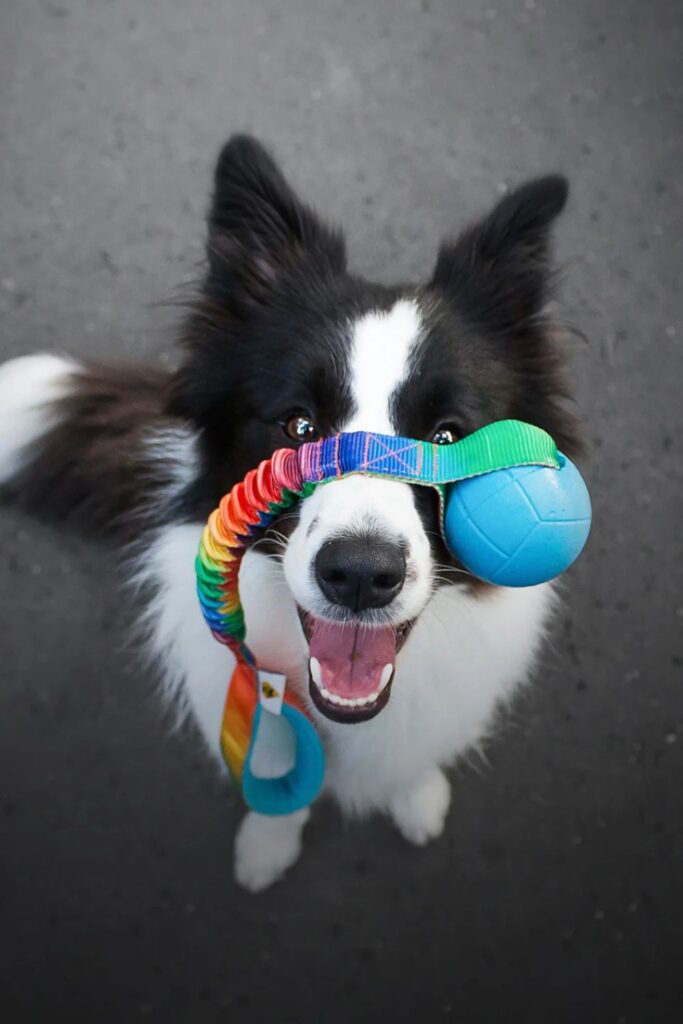
Chasing instinct kicks in harder when a toy adds movement and resistance. Attaching a rubber ball to a sturdy strap or old leash.
Makes it possible for fetch or tug hybrids to grasp and go. Hold the ball tightly so it doesn’t come loose.
Works well for dogs that get bored with basic balls but get excited when they move and pull.
Puzzle Mix
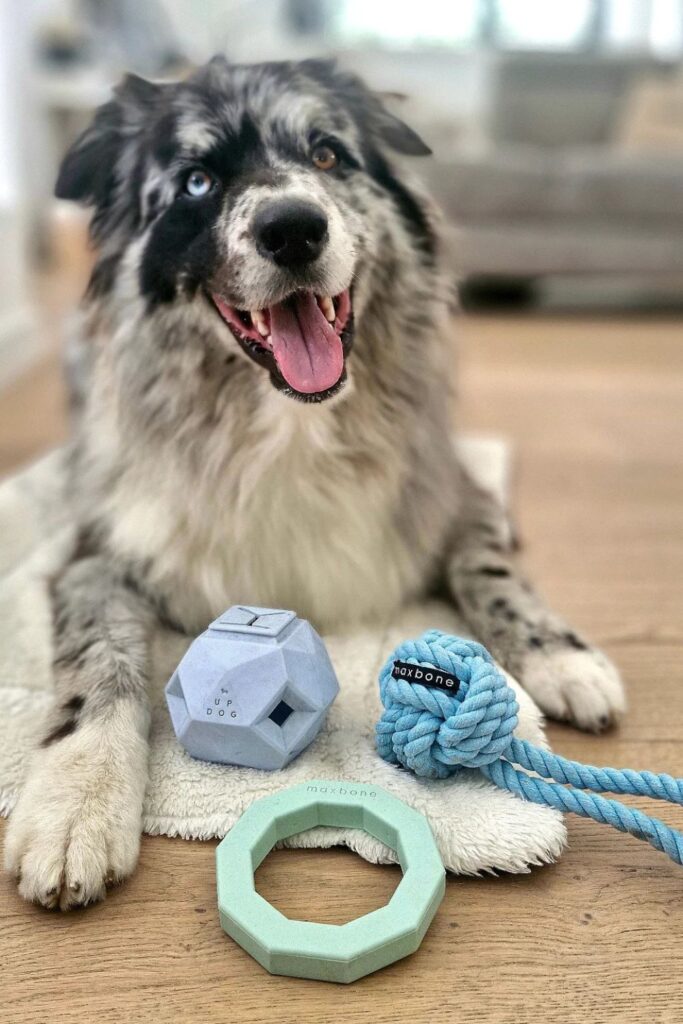
Mental work slows everything down in a good way. Combining a simple treat puzzle with a rope element keeps play from turning chaotic.
You may make this again by cutting treat slots into a strong rubber toy and giving it a short rope to carry or pull.
Best for dogs that chew through toys quickly and need something to make them wait.
Handle Plush
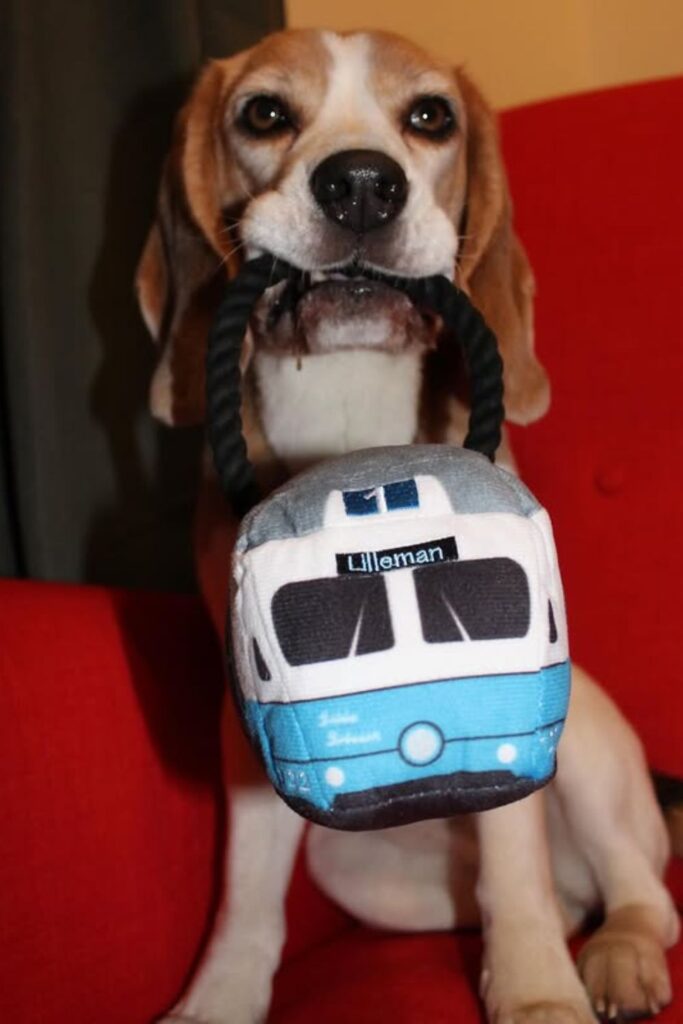
Carrying instincts kick in when a toy gives the mouth a clear job. Adding a short rope or fabric handle to a soft plush.
Makes it simpler to grab, shake, and show off around the house. Sew the handle deep into the body.
So it doesn’t come off easily. Good for dogs that like to play fetch inside but prefer soft toys to rough chews.
Fabric Ball
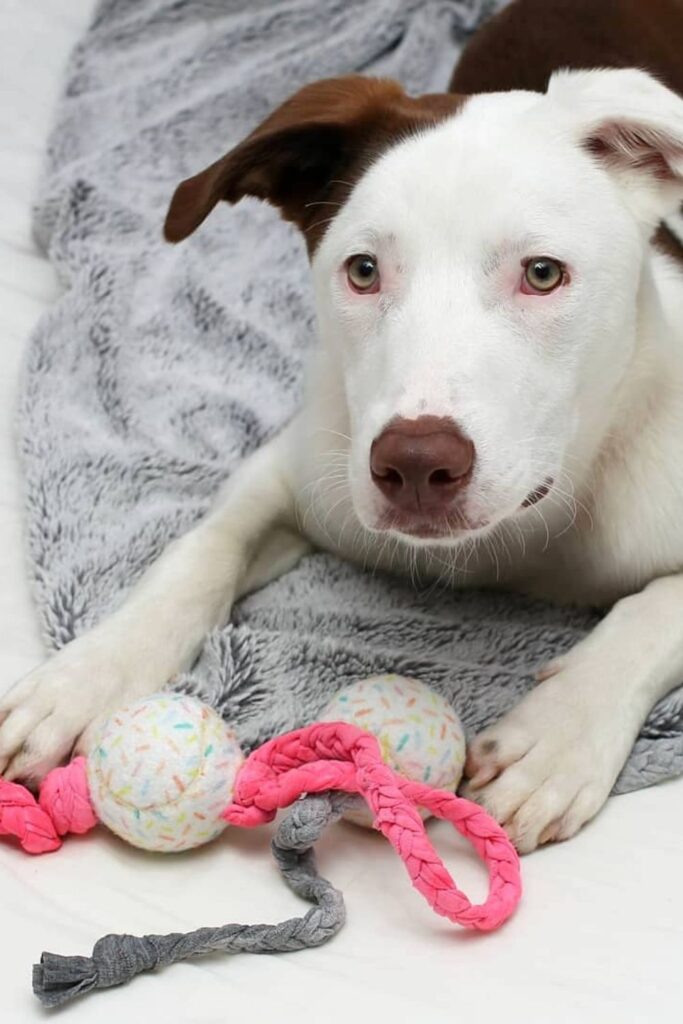
Texture variety keeps mouths busy longer than plain toys. Wrapping a soft ball inside layered fabric strips adds grip, bounce.
And chew resistance in one go. Tight knots on both sides make it hard to untie and provide you places to pull.
Works well for dogs that want to tote toys around and chew on them between play sessions, especially inside where the impact is milder.
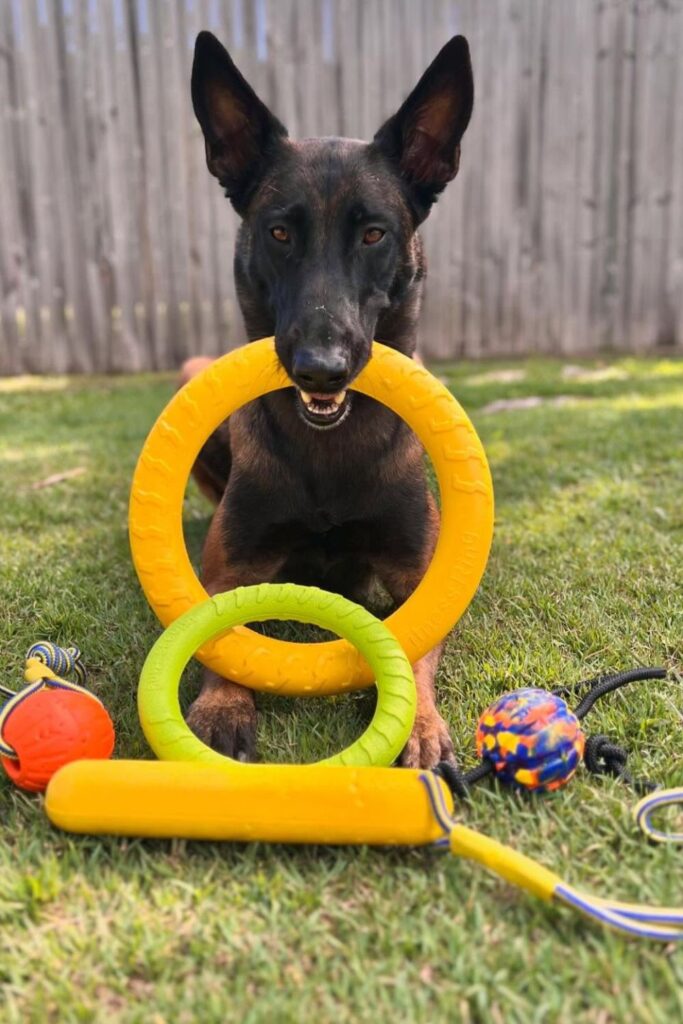
Ring Stack
Choice makes play more powerful. Offering multiple rings at once lets your dog decide how to engage carry, chew, tug, or switch mid-game.
You may do this again by putting strong rubber rings on a short strap or rope.
Change the grip and resistance by using different sizes. Best for dogs that are smart and full of energy but grow bored when playtime gets too repetitive.
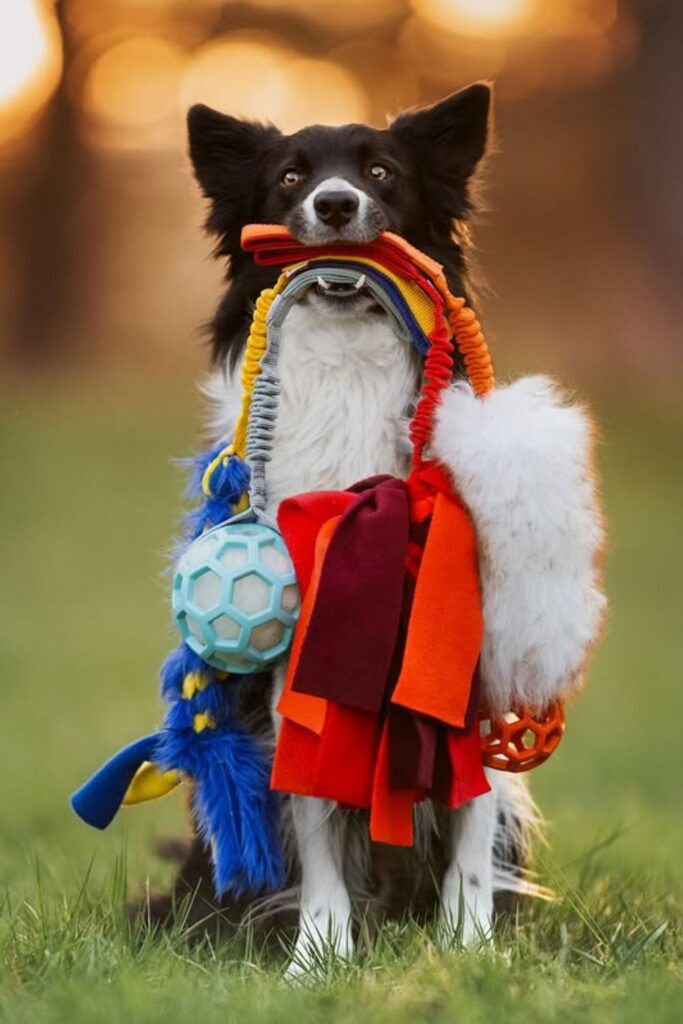
Texture Bundle
Variety keeps mouths busy longer than strength ever will. Mixing rope, fleece, rubber, and soft fabric into one bundle.
Gives your dog multiple ways to play without losing interest fast. Securely tie or sew each item to a central rope so that nothing falls loose.
Works well for dogs that drop toys quickly since they get bored with the same texture.
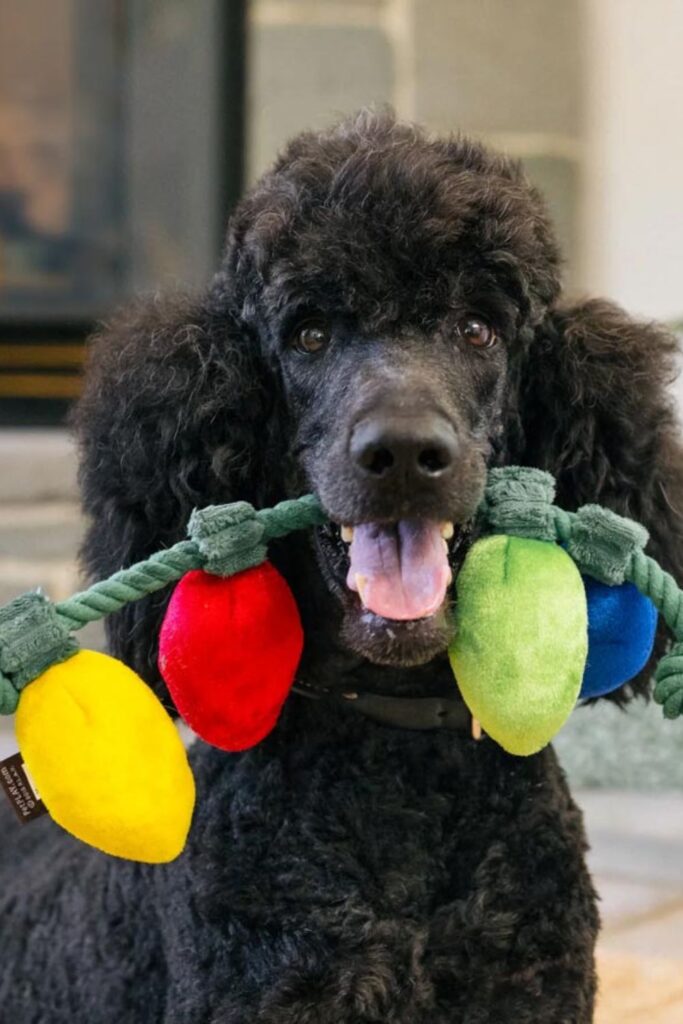
Rope Garland
Seasonal boredom hits hard when routines don’t change. Stringing soft shapes along a thick rope turns one toy into many small targets your dog can grab, shake, or carry.
Make sure there is enough space between each piece so that tearing one doesn’t spoil the others.
Good for playing inside when you want to roam around and connect without flinging things around.
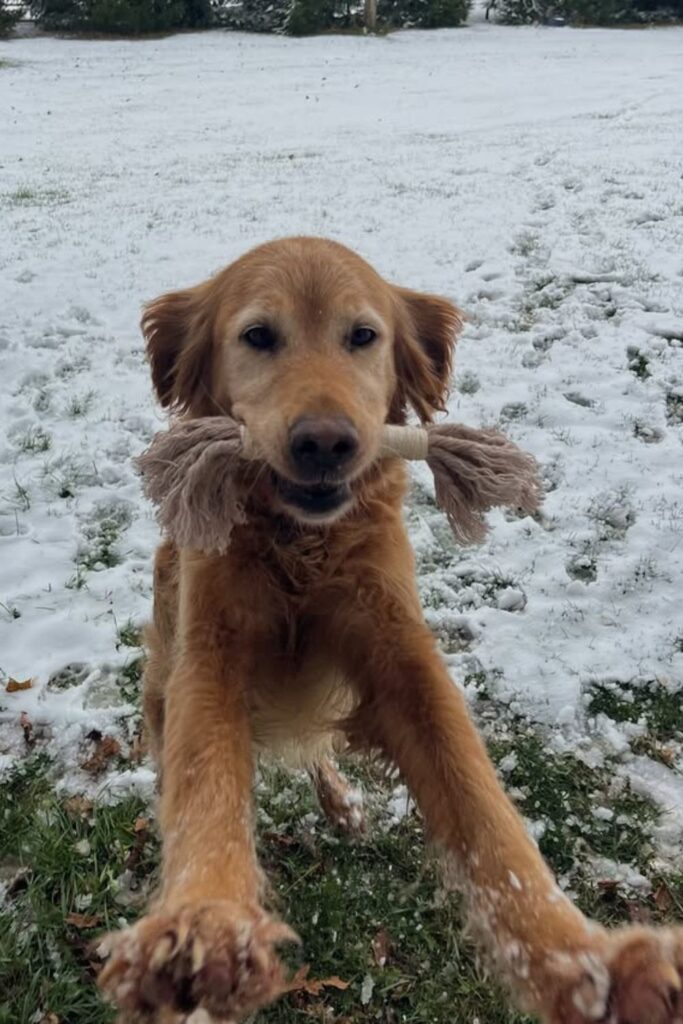
Fleece Tug
Cold weather doesn’t stop dogs from needing an outlet. Braided fleece grips stay flexible even when temperatures drop, making them perfect for winter play.
Thick strips made into tight knots are strong enough to hold things together without harming teeth.
Use shorter lengths outside so you can keep control and the game doesn’t develop into a chaotic chase on slippery ground.
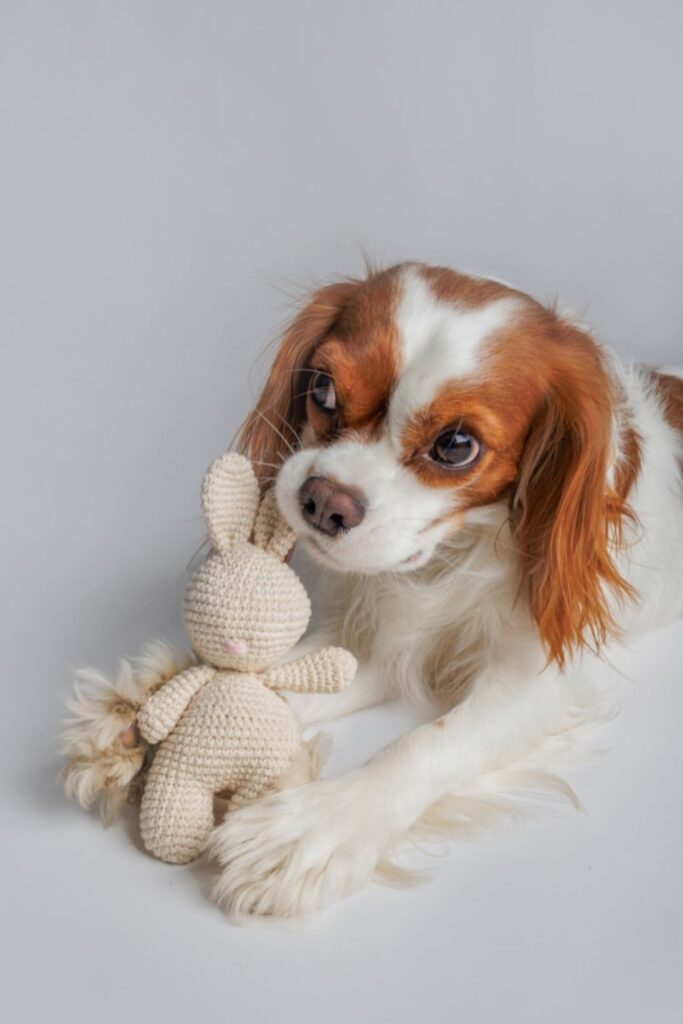
Crochet Plush
Gentle chewers need comfort more than resistance. Soft crochet toys made with thick cotton yarn give the mouths something soothing and hold without tearing easily.
Keep the stitches tight and stuffing to a minimum to help the shape last longer.
Best for peaceful play, nightly routines, or dogs that love their toys and don’t want to break them.
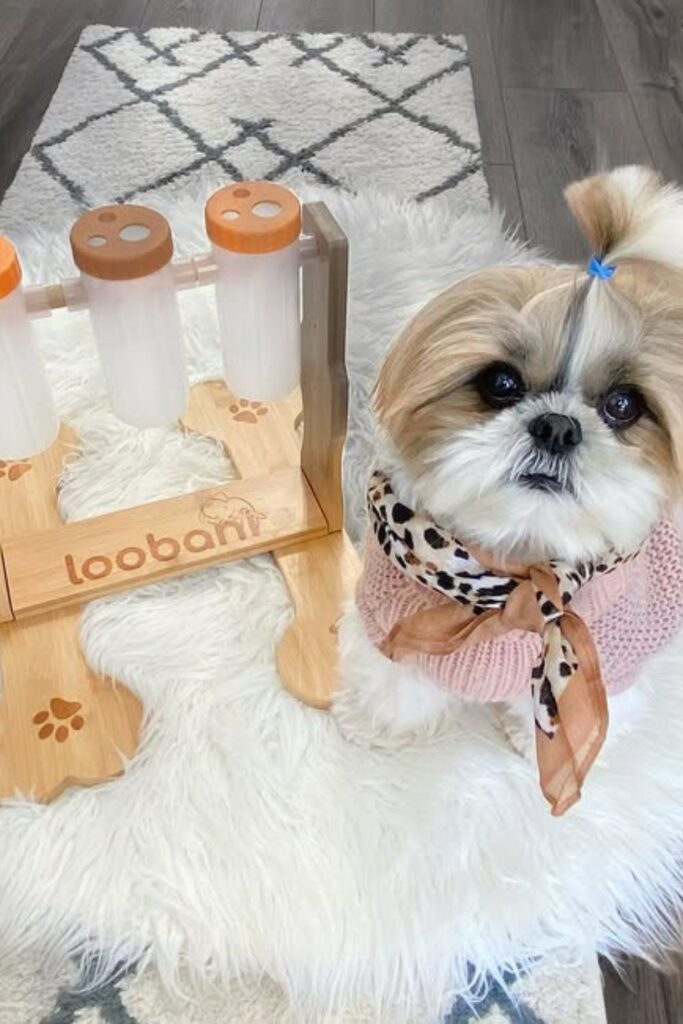
Treat Tower
Problem-solving slows fast eaters and drains mental energy without chaos. And simple wooden stand with upright tubes turns snack time into a thinking game.
Drill little holes close to the bottom so that treats only fall when you push them just right. Start with easy drops.
And as your dog gets better, make the holes smaller. Great for little dogs that get bored easily but love challenges that involve food.
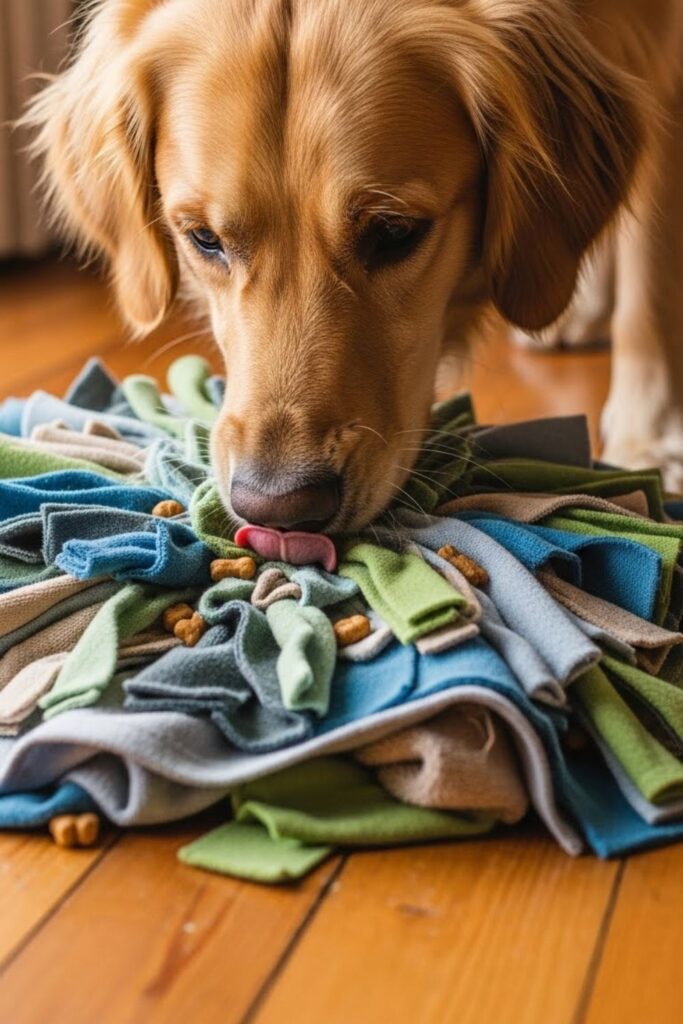
Snuffle Towel
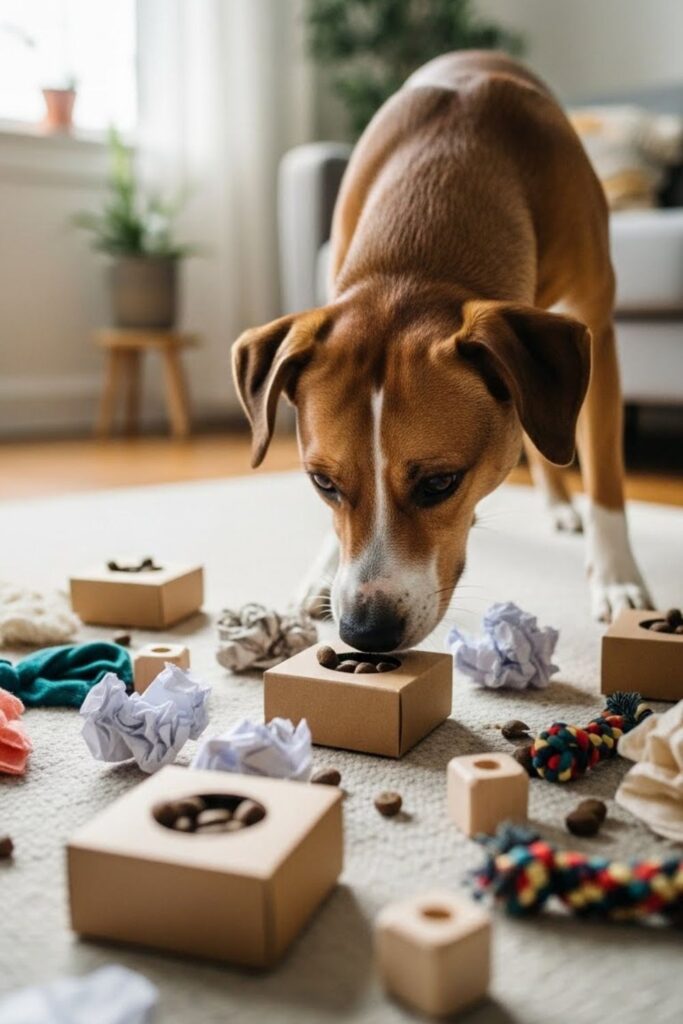
Hunger turns into focus when food isn’t easy to grab. Hiding treats inside a rolled towel slows eating.
And pushes your dog to use their nose instead of rushing. Make the challenge harder by making the knots tighter or adding more folds.
Works best when it’s terrible weather, quiet at night, or when your dog wants to think but not move around a lot.
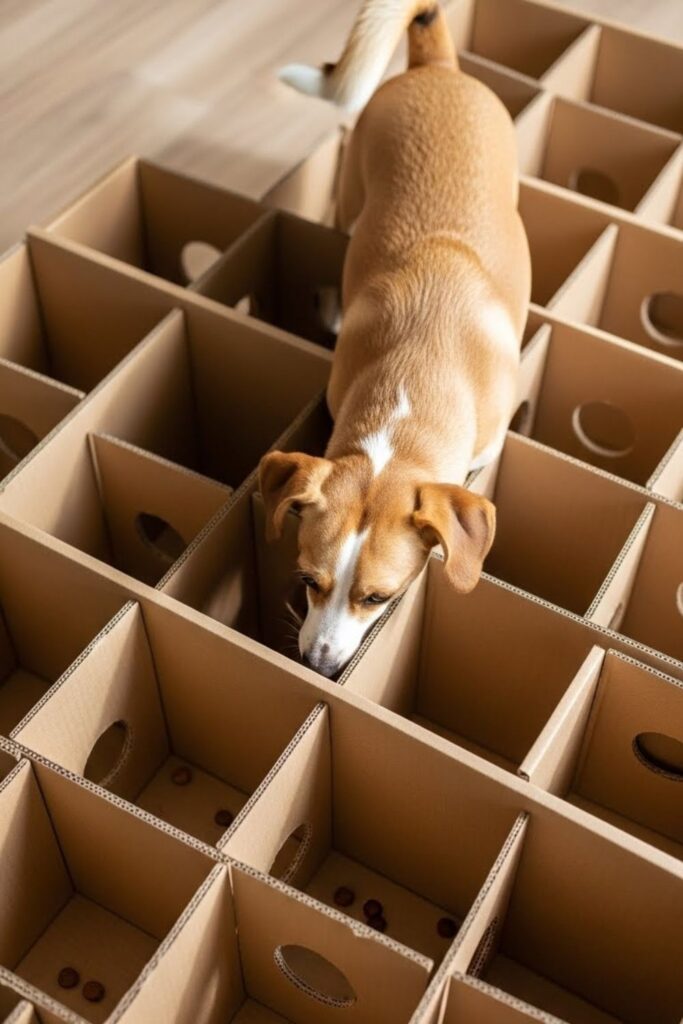
Cardboard Maze
Curiosity needs somewhere safe to go. Creating a treat maze from clean cardboard boxes gives your dog permission to rip, dig.
And search without touching your furniture. And cut holes, put incentives inside, and change the layout often to keep it interesting.
Always watch over and take away bits once the focus changes from searching to swallowing.
Sock Braid
Old socks stop being useless once they work together. Braiding several long socks into one thick strand creates.
A gentle tug toy that won’t hurt teeth. Tight knots at both ends keep the braid from coming apart too soon.
Good for playing inside and for dogs that don’t like hard toys but still like to drag and carry.
Frozen Lick
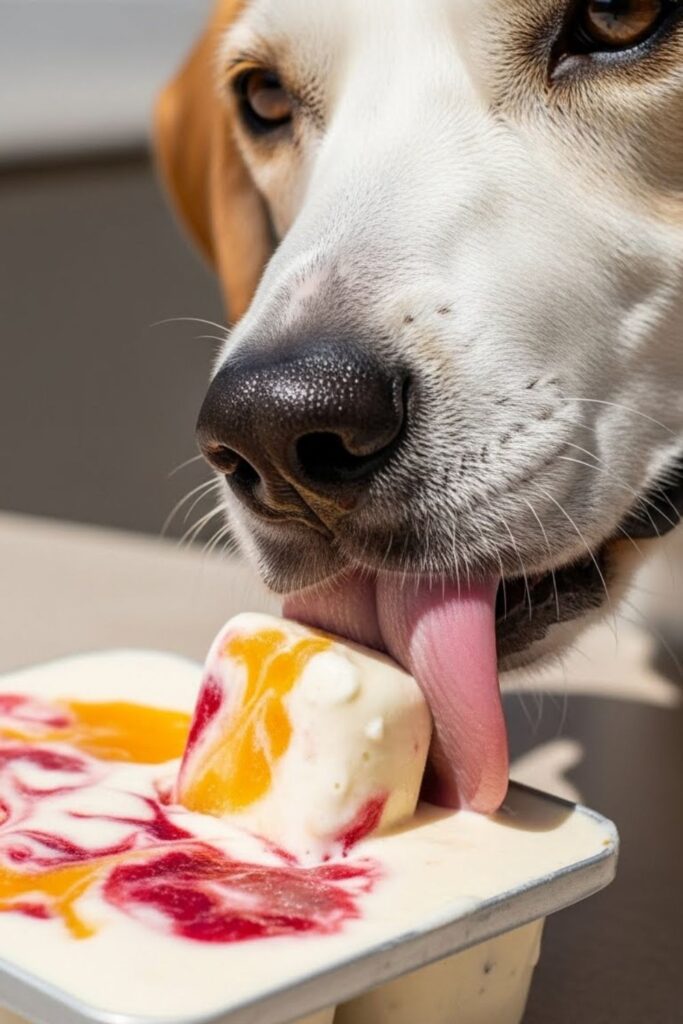
Licking slows everything down in a way chewing never does. Freezing dog-safe yogurt, mashed fruit and broth into a shallow shape.
Gives your dog a calming task that lasts. Smaller amounts keep people interested without going overboard.
Use it best on hot days or any time your dog wants to calm down instead of get excited.
Bottle Roller
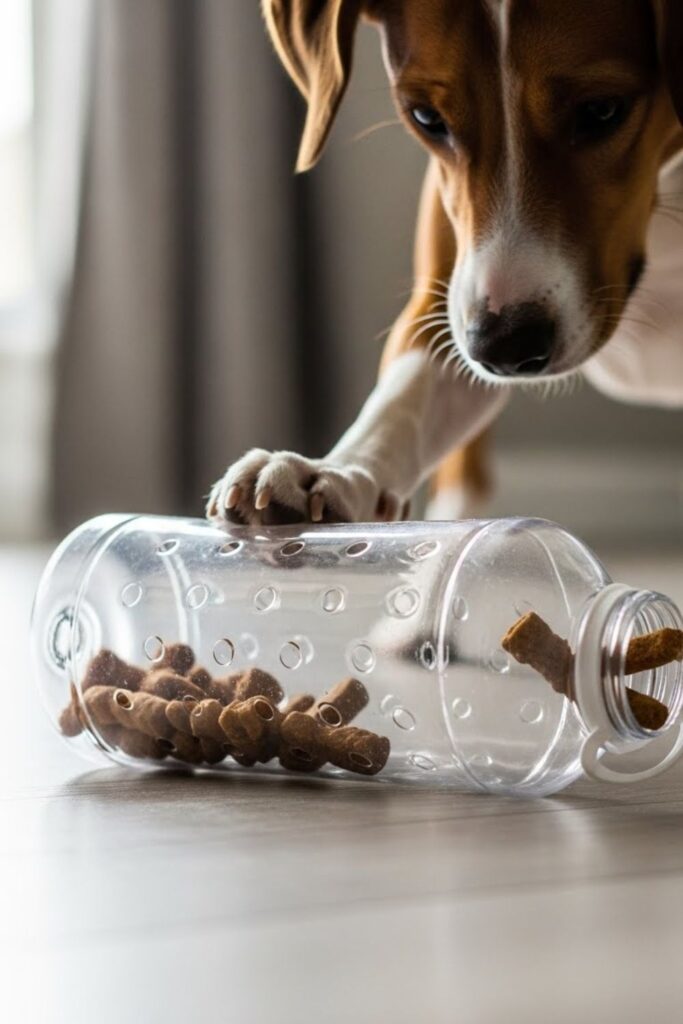
Rolling rewards trigger instant curiosity. Cutting small holes into a sturdy bottle and dropping treats inside turns movement into motivation.
Start with bigger holes so that success comes quickly, and then make it harder over time.
Works great for dogs that become bored with toys that don’t move but stay interested when something does.
Scent Box
Most people search DIY dog toys because store ones cost too much, break too fast, or don’t keep dogs busy.
What they truly want are toys that are safe, last a long time, and keep kids from getting bored or acting out.
Don’t waste time on craft-heavy concepts. Instead, focus on simple projects that last longer, use things around the house, and clearly describe what works, what doesn’t, and why.
FAQs
Are DIY dog toys safe for aggressive chewers?
They can be, but only if you give them the right stuff. People who chew a lot can quickly tear weak fabric, which can cause choking.
Use strong fleece, denim, or tightly braided cotton rope, let the kids play, and toss the toy away as soon as it starts to come apart.
How long should a homemade dog toy last before you replace it?
As soon as pieces break off, seams open, or strings start to form, get a new one.
DIY toys don’t have to “look broken” to be dangerous. Your dog can eat a piece if you can pull it off with your hands.
You may like to read!
- 20 DIY Cat Toy Ideas
- 26 DIY Dog House Ideas
- 19 DIY Lamp Shade Ideas
- 14 DIY Abstract Canvas Art Ideas

Fasial is the founder of the Fizzy Flare. He has been a passionate blogger since 2021. He ran three different websites in the past few years. Now he is focusing on Fizzy Flare to build an audience and help them organize their life.