19 Toy Storage Ideas for 2026
This post may contain affiliate links: full affiliate disclosure.
Have you ever picked up your child’s toys, only to see the same mess a few hours later.
There are cars under the couch, toys on the couch, and LEGO bits that are ready to assault your feet.
Every day, this is something that most parents have to deal with. The usual solution is to throw everything into one big toy box.
But that doesn’t happen very often. The box quickly fills up with toys of all kinds, making it hard to find anything, and youngsters end up throwing everything on the floor again.
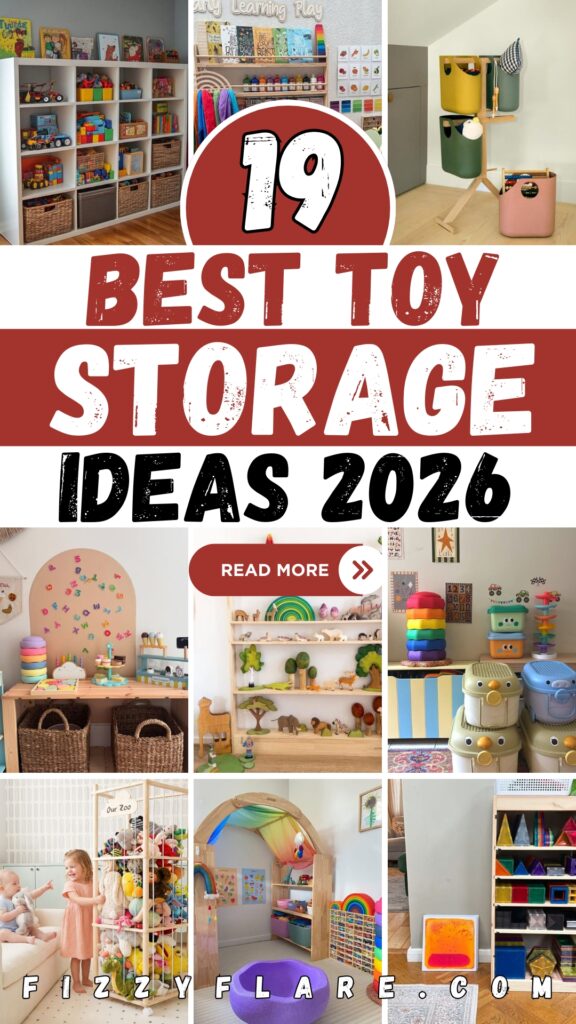
This article will inspire you with 19 amazing Toy storage solutions. Perfect for keeping your home organized.
Let’s jump in!
Contents
- 1 How Can You Keep Toys Organized Without a Toy Box?
- 1.1 Open Shelves
- 1.2 Basket Storage
- 1.3 Stackable Bins
- 1.4 Play Nook
- 1.5 Plush Tower
- 1.6 Display Shelf
- 1.7 Cube Organizer
- 1.8 Bucket Stand
- 1.9 Book Display
- 1.10 Crate Shelves
- 1.11 Storage Bench
- 1.12 Wall Shelves
- 1.13 Play Mat
- 1.14 Toy Display
- 1.15 Low Cubes
- 1.16 Drawer Sorting
- 1.17 Toy Cubes
- 1.18 Pegboard Wall
- 1.19 Clear Bins
- 2 FAQs
How Can You Keep Toys Organized Without a Toy Box?
A big toy box sounds great, but most of the time it just becomes a giant mess where everything gets mixed together.
Kids rummage through it to find one toy, and in a matter of minutes, the whole floor is covered again. Give each toy its own modest home instead of putting them all in one big box.
First, put toys into groups like puzzles, automobiles, dolls, and building blocks. Then put each group in its own basket, bucket, or shelf.
Kids are considerably more inclined to put toys back if they can see where they go. You can also save room by using storage furniture, wall shelves, or bins that go beneath the bed.
When toys have clear areas in the room, it’s easier to clean up and your home stays much less cluttered.
Save this article for later! 👇👇
Open Shelves
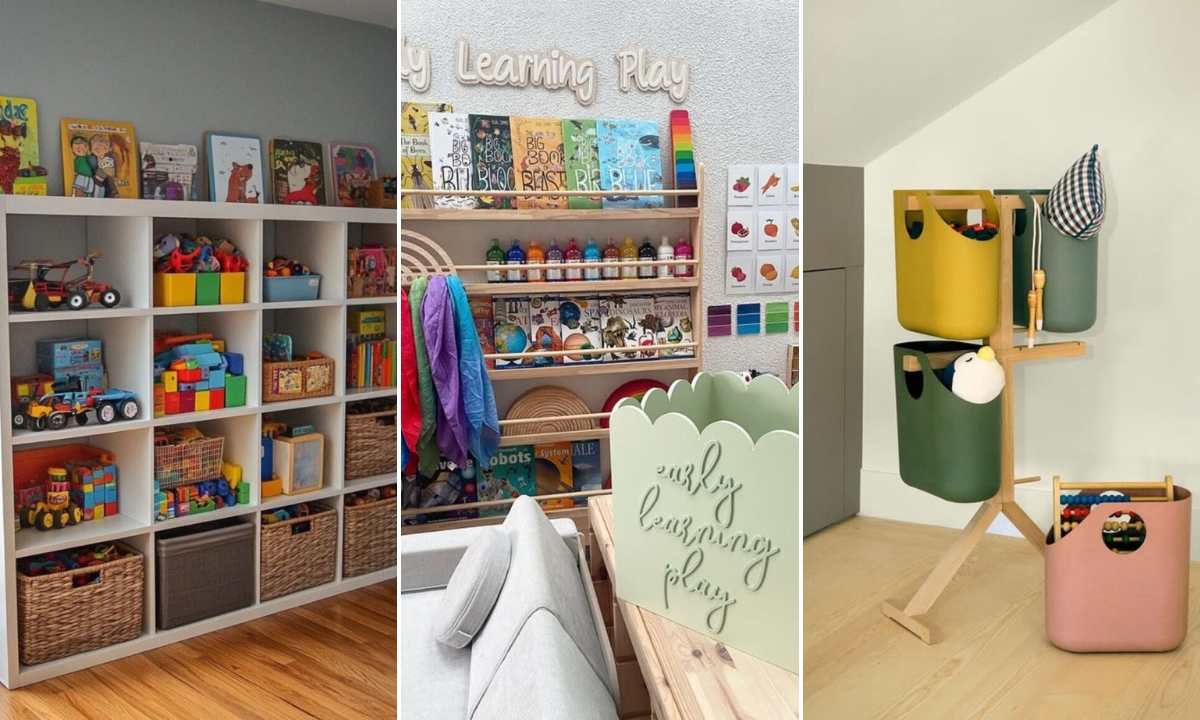
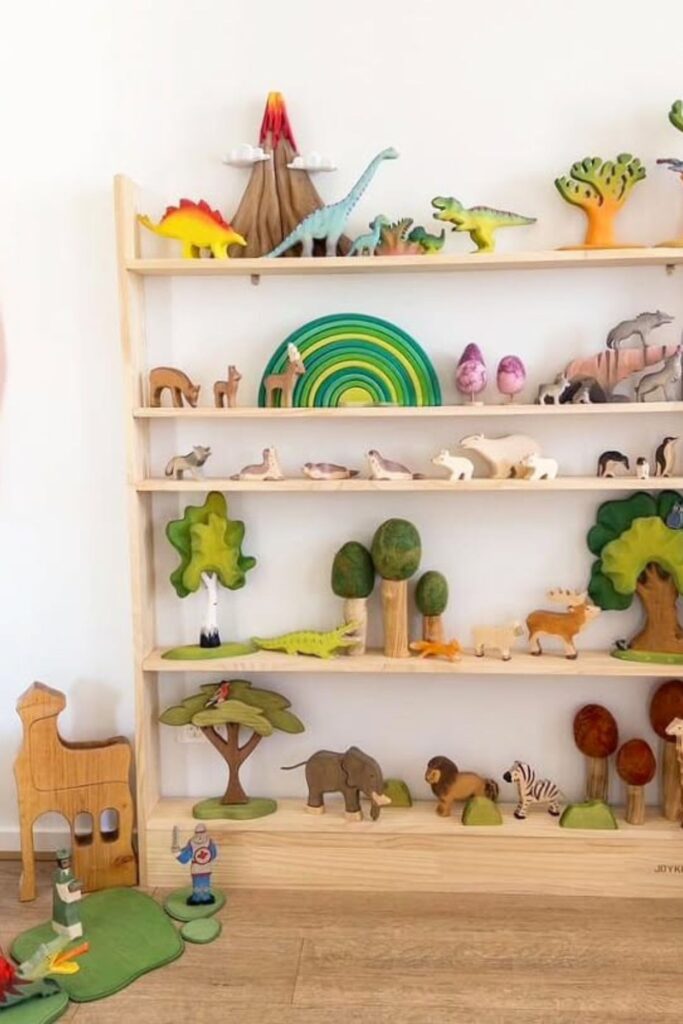
Toy clutter drops fast once toys move out of bins and onto open shelves. Low wooden shelves like this turn toy storage into a simple display.
Where kids can see all the pieces without having to sift through a mound. Put toys that are alike together, such animals on one shelf, dinosaurs on another.
And trees and scenery on the bottom. Playtime is easier and cleanup is faster when things are in clear groups.
Kids automatically put toys back in the same place since they know where each group lives. Put shelves at the right height for kids so they can reach everything without asking for help.
A simple wooden shelf works best because it fits in with the décor and keeps toys from being all over the floor.
Basket Storage
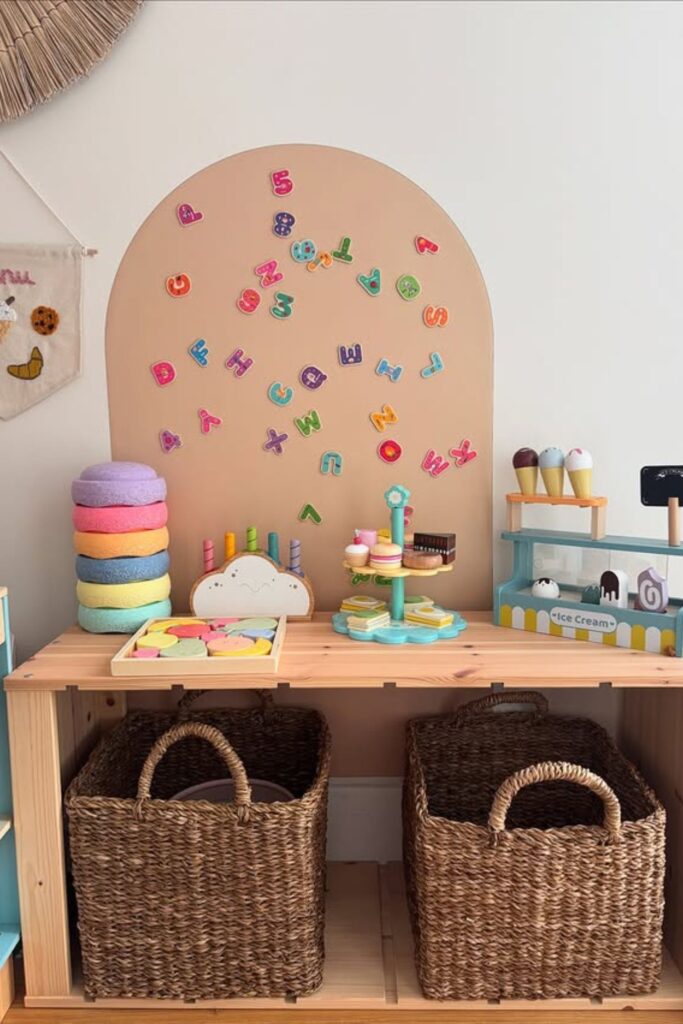
Floor clutter disappears quickly once toys get a simple drop zone under a play table. Large woven baskets like these give kids an easy place to toss toys.
After playtime, without putting everything in order. Put one basket under each side of the table so that toys are close to the play area but not on the floor.
One basket can house building toys, and another can hold puzzles or toys for make-believe play.
Because they look more like decor than storage for toys, natural baskets are great for living rooms and play areas.
Pick strong baskets with handles so youngsters can pull them out, get their toys, and put them back when they’re done.
Stackable Bins
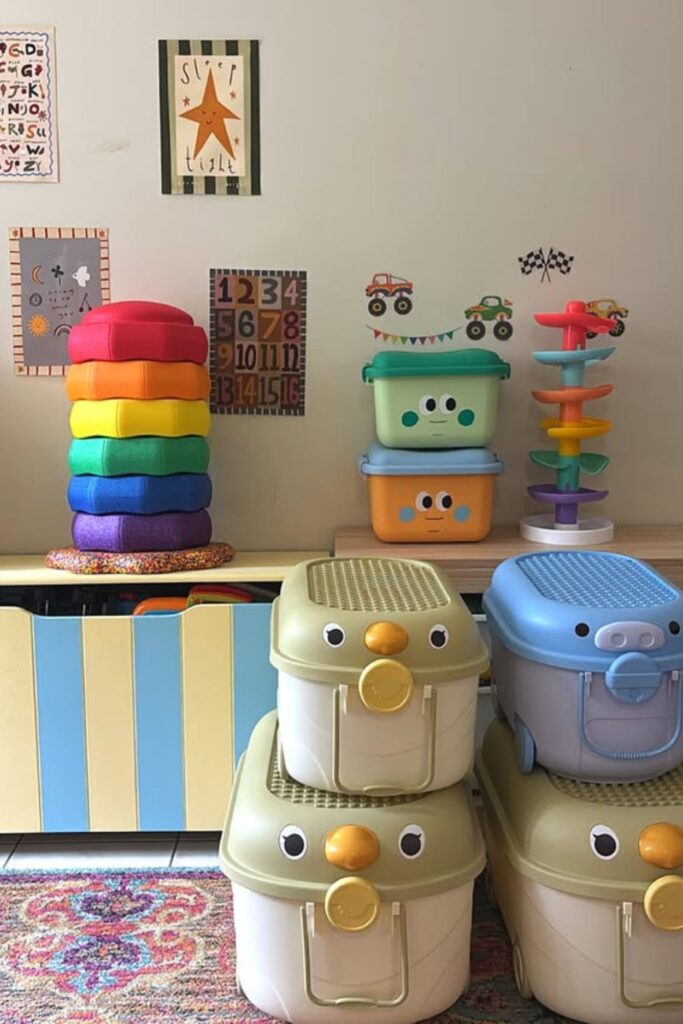
Playroom mess becomes easier to control once toys get their own stackable containers. Colorful storage bins like these keep different toys separated.
And at the same time, saving room on the floor. Put one type of toy in each bin. For example, put blocks in one bin, pretend play things in another, and little toys in the top bins.
Putting the bins on top of each other keeps the area clean without taking up space all around the room.
Lids also help keep the area looking nice by hiding things that are in the way. Pick bins with handles that are easy to open so youngsters can lift the lid, get a toy.
And close it again without help. This solution is great for playrooms with a lot of little toys that need an easy place to store them.
Play Nook
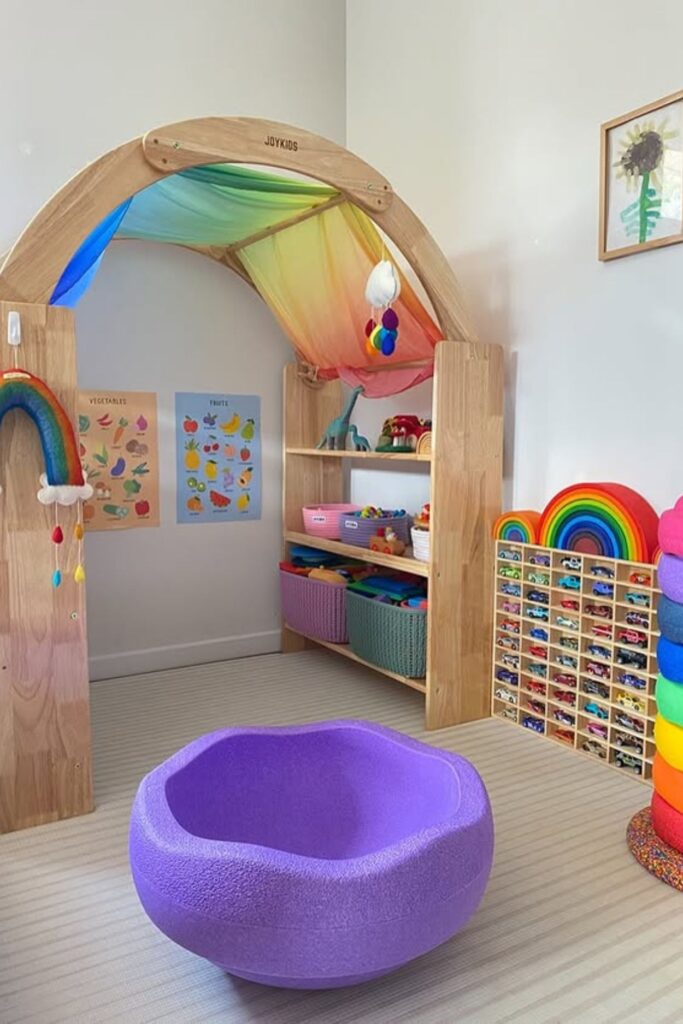
Mess spreads quickly when toys have no clear play zone. Creating a small play nook like this keeps toys contained in one dedicated area.
Instead of going all over the home. A simple wooden play frame with built-in shelves is excellent since it gives kids a place to play and store things at the same time.
Put boxes or baskets on the bottom shelf so youngsters can easily get toys and put them back when they’re done.
Put toys or things you don’t use very often on the top shelves. This arrangement is perfect for playrooms or bedrooms.
Where you want toys to be easy to find yet still organized. When youngsters think of that corner as a place to play, toys naturally stay there instead of going into every room.
Plush Tower
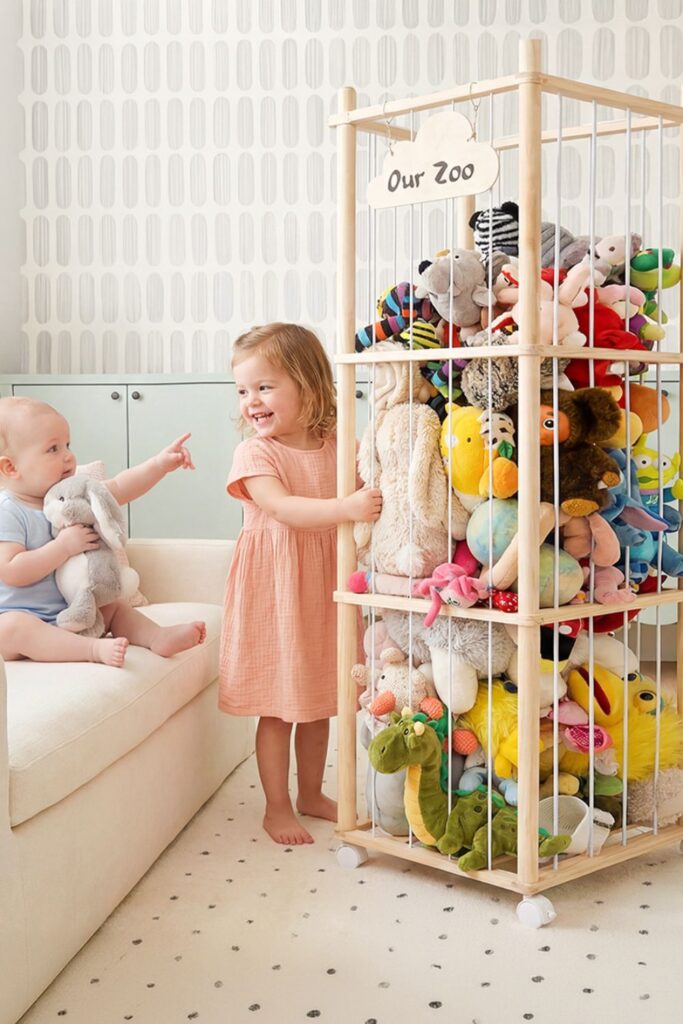
Stuffed animals multiply fast, and regular bins quickly overflow. A tall plush tower like this keeps every soft toy visible while stacking them upward instead of across the floor.
Vertical cages are ideal because youngsters can pull a toy out through the bars and put it back in when they’re done playing.
The wheels on the base make it even easier to transfer the tower from the bedroom to the play area.
This solution is great for families with a lot of stuffed animals that never seem to fit in baskets. Put the tower next to a wall or a couch so it seems like a fun exhibit instead of junk.
Making a vertical “zoo” out of stuffed animals keeps the area neat and makes it easy to get to each one.
Display Shelf
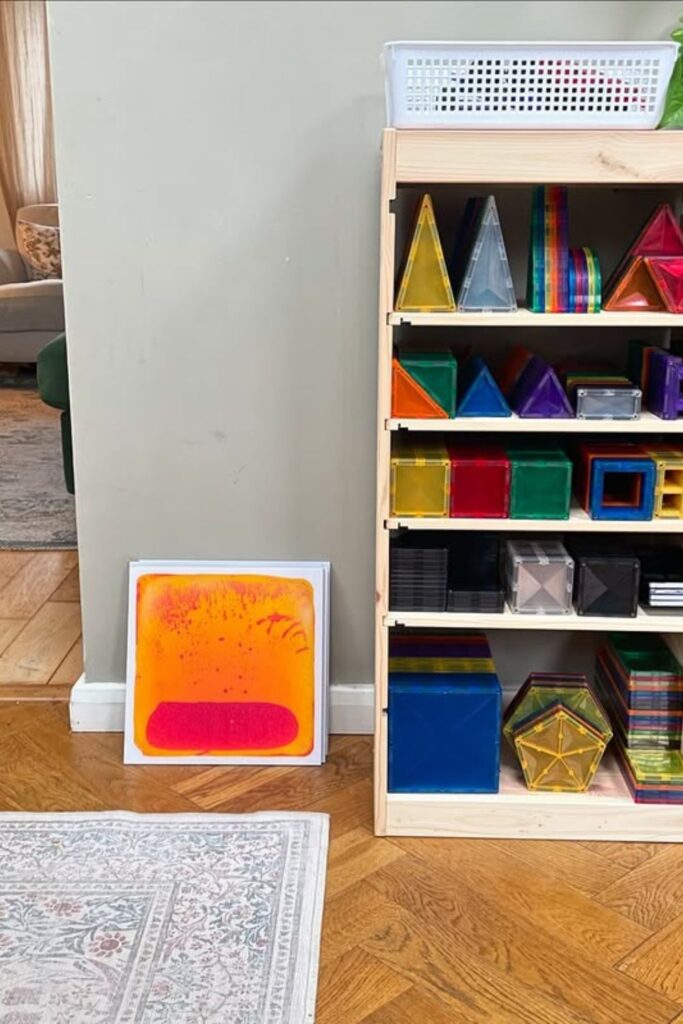
Clear toys deserve storage that keeps them visible instead of buried in bins. A narrow display shelf like this works.
Great for magnetic tiles, building kits, and form toys that fit together well. Put everything on each shelf in order of size or color.
So that kids can see where everything goes. There is no digging or discarding piles simply to find one piece.
This is a terrific option for small play areas or living rooms because tall, narrow shelves save floor space. Set in the same way.
But with a slim wooden shelf against a wall and enough room between shelves for bigger items. Kids can tidy up more easily if you keep toys on display. This makes storage a part of the area.
Cube Organizer
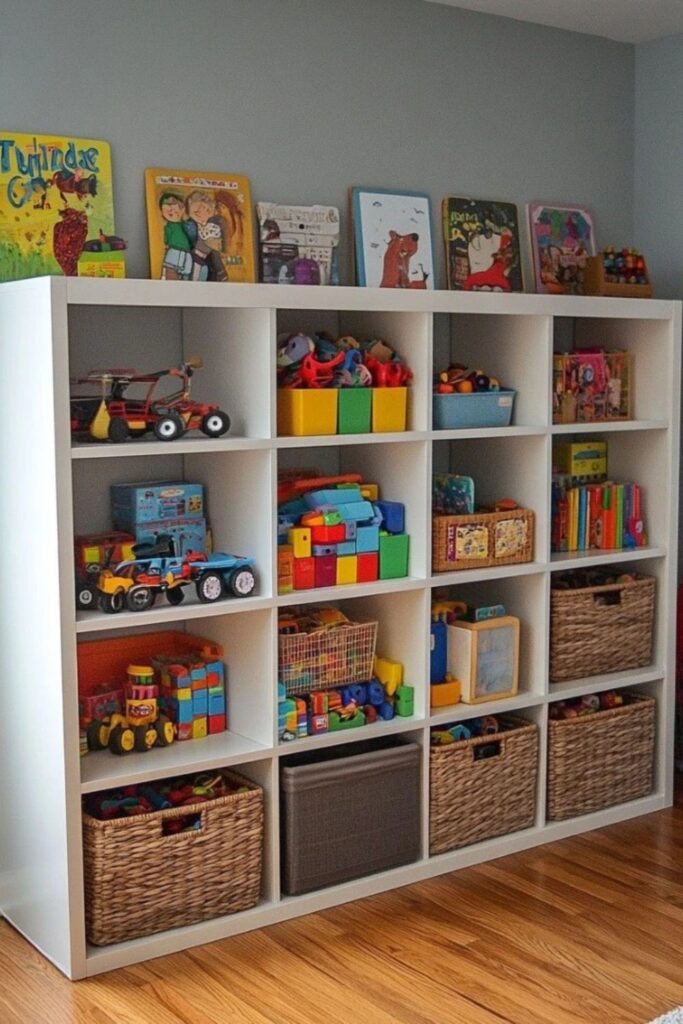
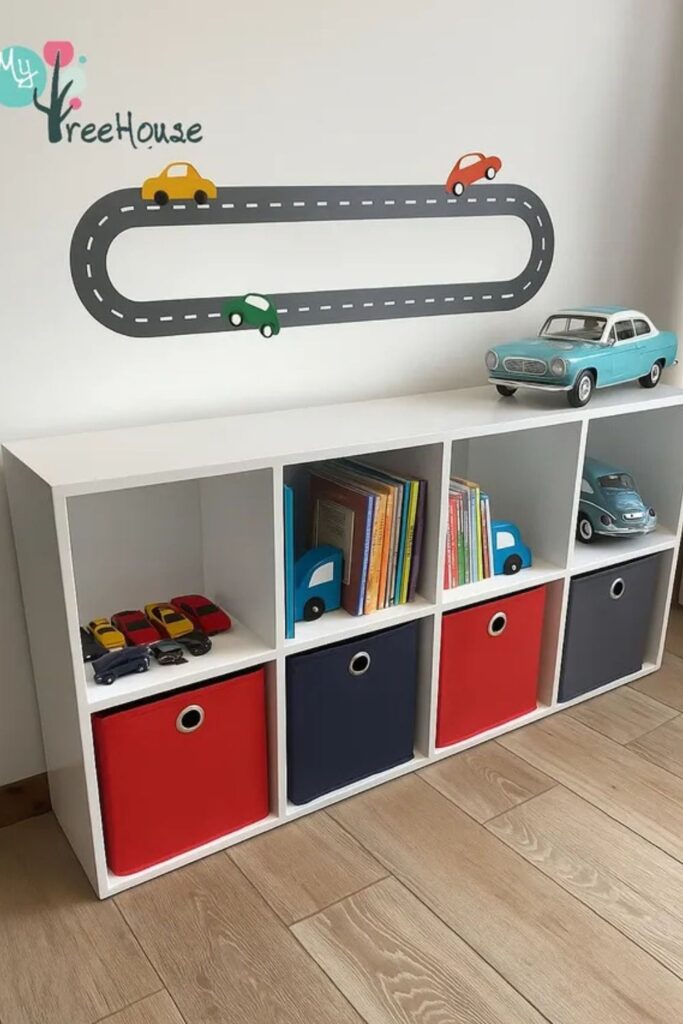
Order starts to appear the moment every toy category gets its own little cubby. A cube organizer like this makes sorting simple.
Each square turns into a little house for a different toy. Put books on top, automobiles in one cube, building blocks in another, and puzzles in the last.
The bigger bins on the bottom row help hide toys that look messy, and the open cubes make it easier to get to common toys.
Low cube shelves are great for playrooms or living rooms where kids need to get to things quickly.
Use a modular cube unit to set up the room again, and mix open spaces with baskets so that some toys are easy to see and others are neatly hidden.
Bucket Stand
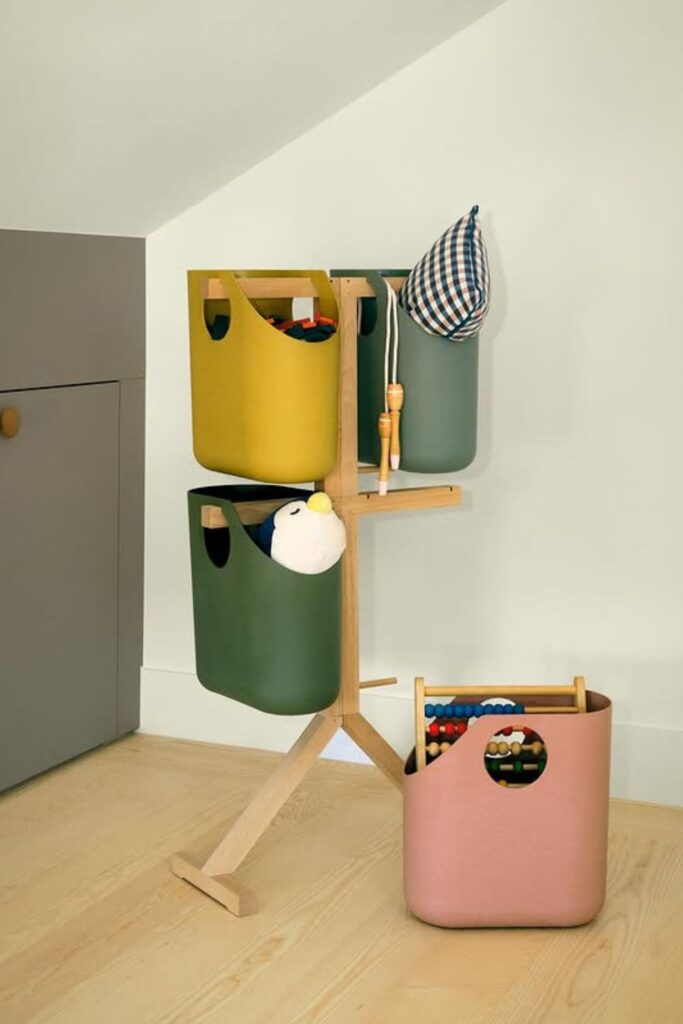
Toy piles shrink fast once storage moves upward instead of spreading across the floor. A bucket stand like this keeps toys sorted.
While taking up very little room in the room. There are several types of toys in each hanging container, such as soft toys, blocks, and little playthings.
Instead than pouring everything out to find one toy, kids just grab the container they need. Vertical stands are great for small bedrooms or areas.
Where shelves might be too big. Use a wooden stand and strong fabric containers that youngsters can easily raise and put back in position to bring the idea to life.
You don’t need elaborate storage solutions to keep toys organized. Simple categories do the trick.
Book Display
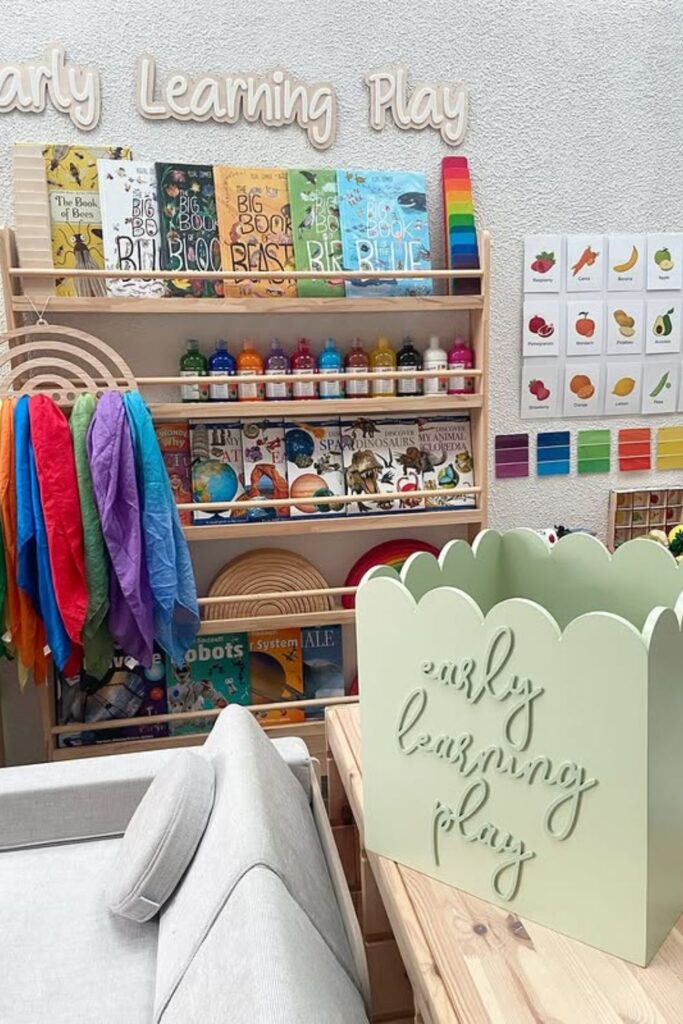
Storytime becomes part of the room once books sit on a forward-facing display instead of hiding in a box.
Kids can see every cover on a low book rack like this, which makes it easier for them to choose a book and return it once they read it.
Put the books on the shelves with the covers facing out so kids may see them right away. You can put study materials, painting supplies, or small activity items on the upper shelves.
To keep everything connected to play and learning in one area. This design is great for reading areas, bedrooms, or playrooms where people read every day.
Put a basic wooden display shelf against the wall to keep the books orderly while yet making it easy for kids to grab them whenever they want.
Crate Shelves
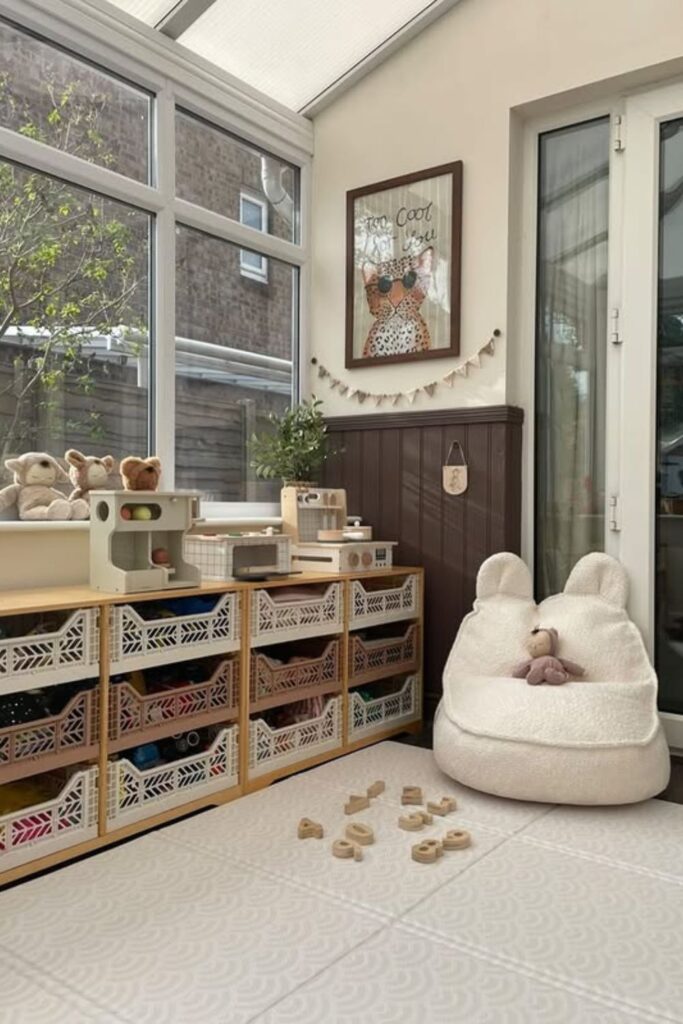
Toy piles stay under control once every category gets its own pull-out crate. A long shelf filled with storage crates like this makes organizing toys much easier.
Each container is like a small drawer. Take out one crate, get the toy, and then slide it back in when you’re done.
You don’t have to dig through deep bins or throw toys on the floor. Put each crate into a simple group, like blocks, automobiles, pretend play things, or art supplies.
This arrangement works best along walls in playrooms or sunrooms where there is enough area for a long storage box.
Wooden frames with plastic or woven crates make it easy to duplicate the design while keeping toys organized and easy for kids to handle on their own.
Storage Bench
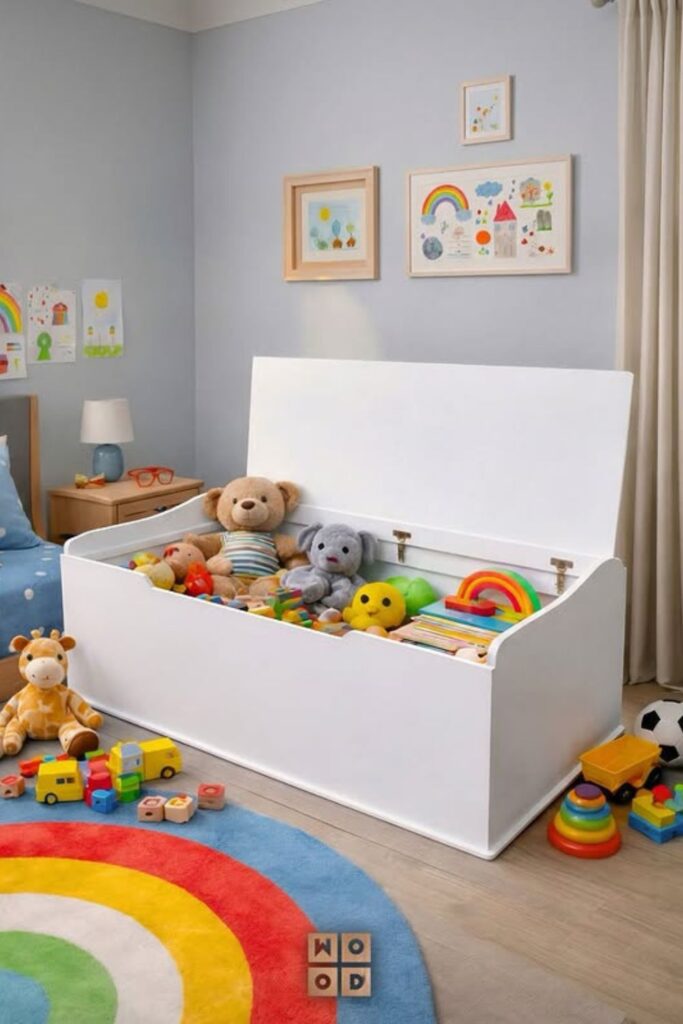
Hidden storage instantly calms a messy room. A large storage bench like this keeps toys out of sight while still giving kids quick access during playtime.
Lift the lid and put in stuffed animals, blocks, or other big objects that generally get in the way on the floor.
When fun is over, everything goes into the bench in a matter of seconds. The flat top is another great feature because it can be used as a seat.
This makes it great for bedrooms or playrooms where extra seating is helpful. To keep the room looking neat and tidy while yet having a lot of toys.
Put the bench at the end of the bed or against a wall. If you can, choose a lid that closes softly so kids may open and close it without getting their fingers pinched.
Wall Shelves
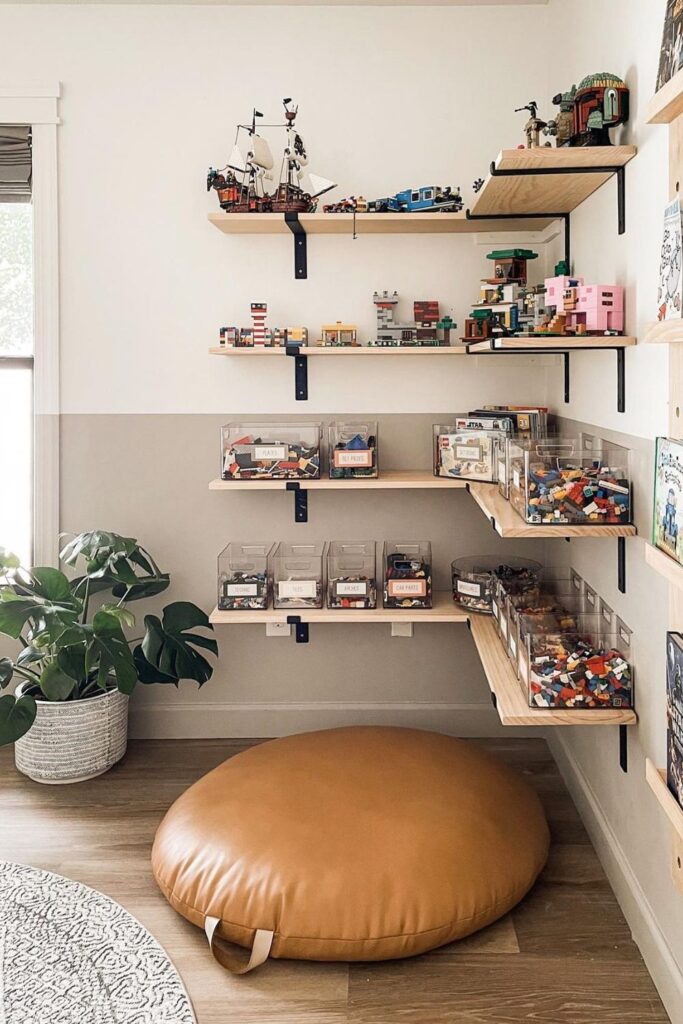
Floor space opens up quickly once toys move onto the wall. Floating shelves like these turn a blank wall into a clean storage zone for building sets, small toys, and collections.
Kids can get what they need without spilling everything out when they use clear containers to keep everything together.
There can be a separate category on each shelf: one for LEGO projects, one for spare pieces, and one for finished masterpieces that need to be shown off.
Wall shelves are great for bedrooms and playrooms when there isn’t enough room on the floor to store things.
Put up numerous strong shelves at varying heights to keep toys tidy and the floor clear for playing.
Play Mat
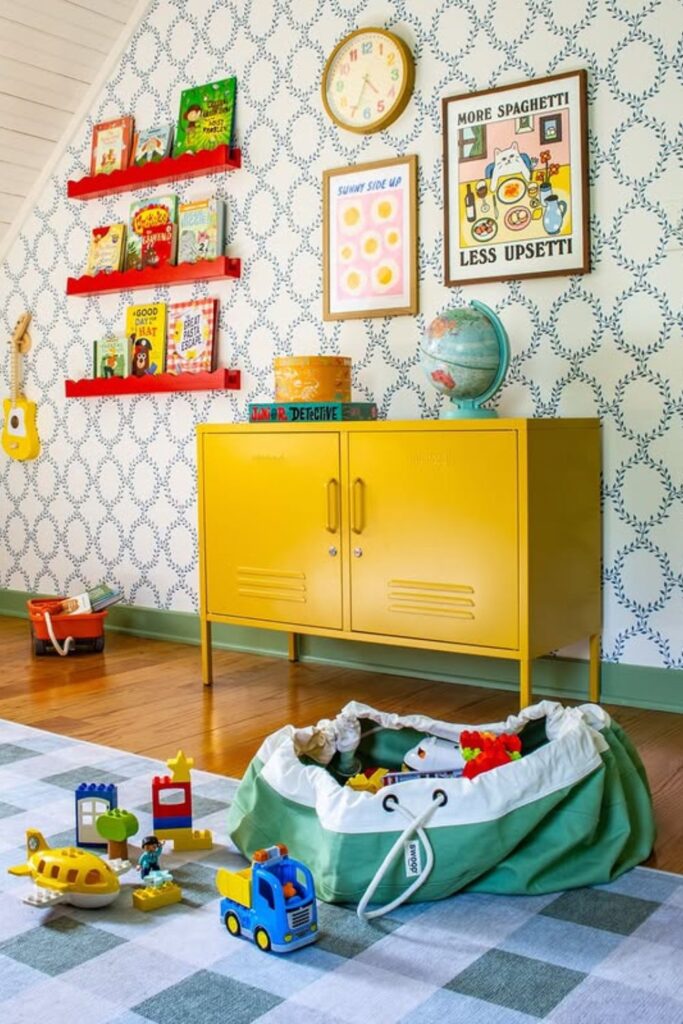
Cleanup becomes almost effortless once toys sit on a play mat that doubles as storage. A drawstring play mat like this spreads open during playtime.
So youngsters may construct and play without toys rolling around the room. When fun is over, just pull the cords.
And the whole mat folds up into a soft storage bag that keeps everything within. No need to sort or chase tiny fragments around the floor.
This configuration is great for building toys like LEGO, little blocks, or figures that like to get all over the place. Put the mat in the middle of the play area.
So that kids would naturally use it as their main place to play. It only takes a few seconds to close the mat, and it instantly makes a dirty play area look neat.
Toy Display
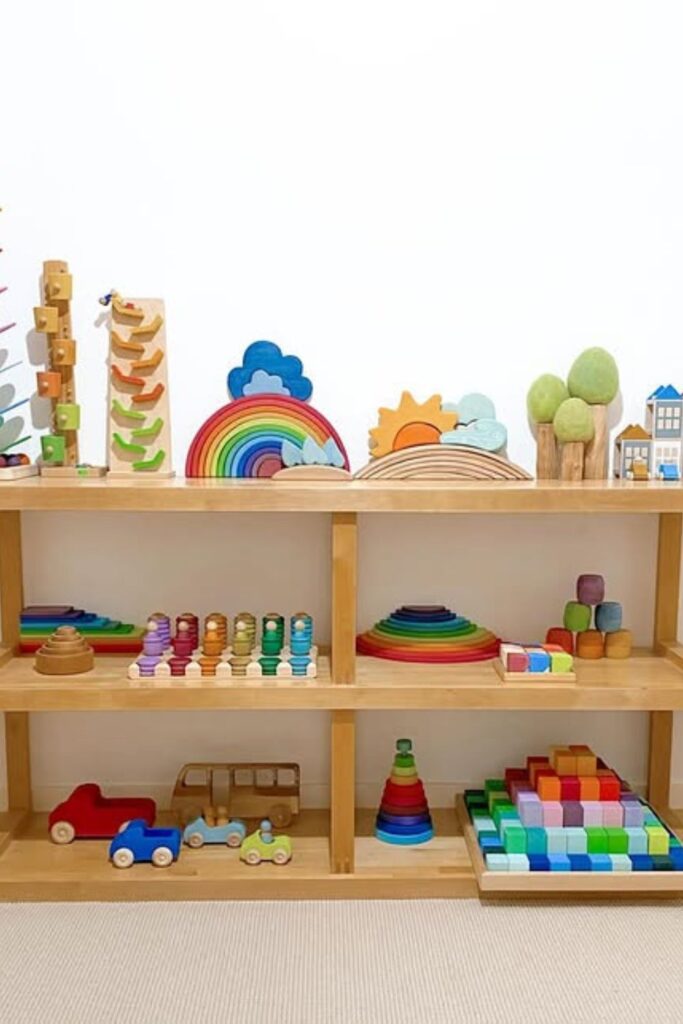
Playtime feels calmer when toys stay arranged instead of piled together. A long open shelf like this works beautifully for wooden toys, stacking sets, and puzzles.
That already have their own form. Putting toys in different compartments lets kids see all of their options without having to take everything out.
One section can hold stacking rings, another can hold cars, and another can hold building blocks. Grouping toys into simple groups helps kids remember.
Where each variety goes after they are done playing. Low display shelves work best in playrooms or bedrooms along a wall where kids can easily reach all of the shelves.
When you organize your toys by type, the storage area stays neat and everything is ready for the next play session.
Low Cubes
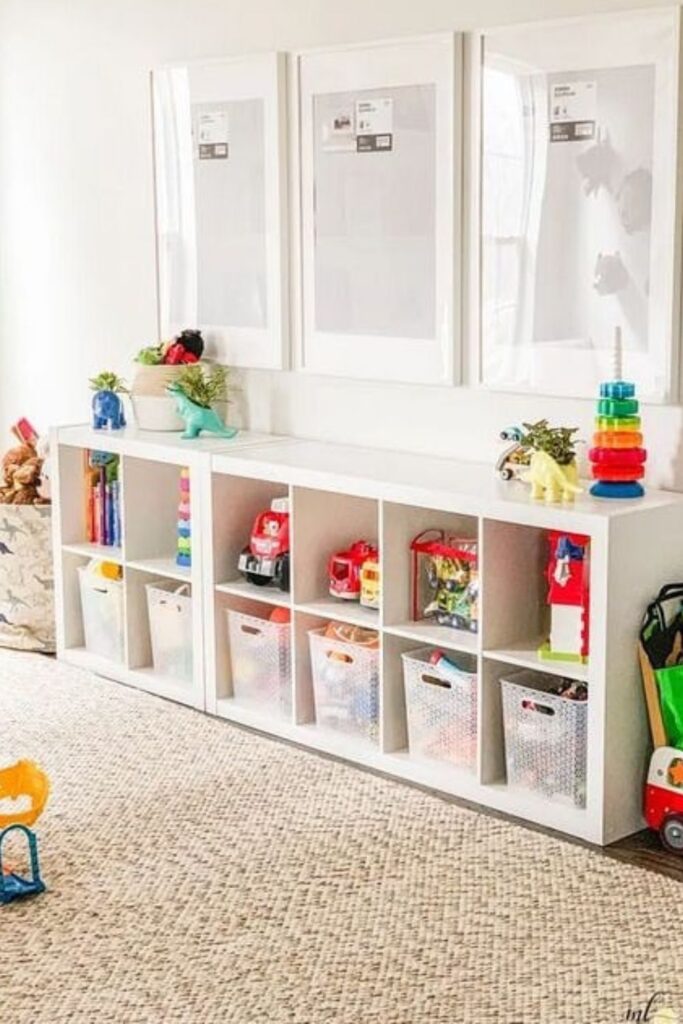
Organization becomes easier when toys stay at kid height instead of hiding in tall cabinets. A long row of low cubes like this keeps everything reachable.
This way, kids can pick up toys and put them back without help. There are small bins within each cube that keep different sorts of toys apart.
For example, vehicles go in one bin, figures go in another, and building blocks go in the next. Open parts are also good for displaying toys or books that are used a lot.
Putting the device against a wall keeps the middle of the room open for playing. Low cube storage is great for playrooms, living rooms, and bedrooms.
Kids are more likely to remember where their toys go if they are in clear bins or labeled containers. This makes cleaning up every day much easier.
Drawer Sorting
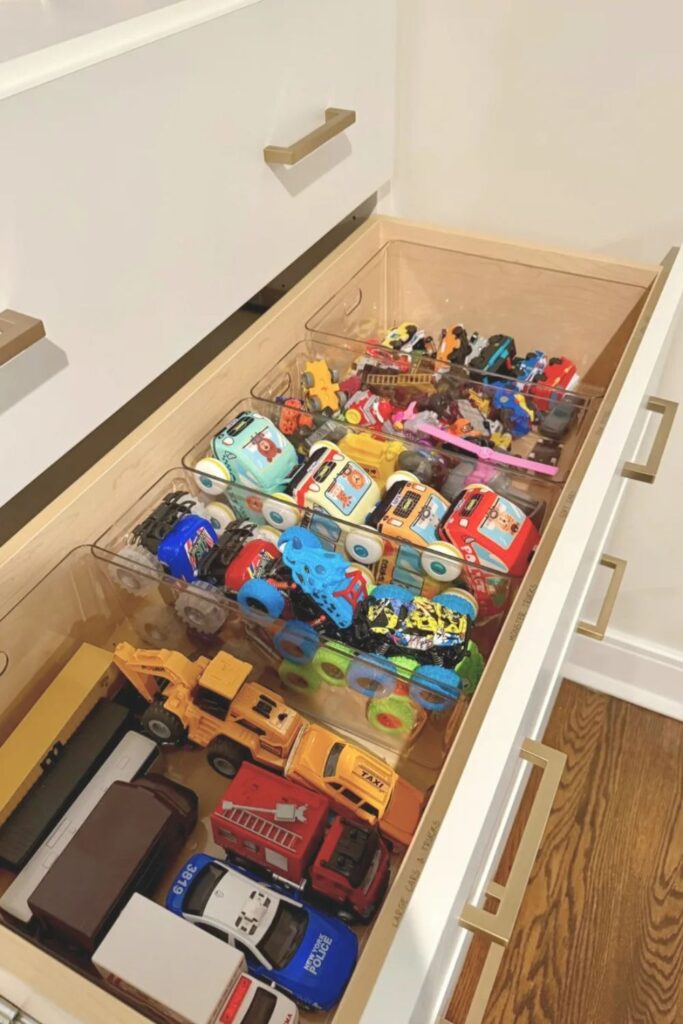
Tiny toy cars spread everywhere until they get a dedicated drawer system. Deep drawers like this turn into perfect organizers once you add clear containers inside.
There are numerous types of vehicles on each tray: race cars in one portion, lorries in another, and bigger vehicles in the front.
Kids can easily see their toys without having to dig through a pile in clear bins. Drawers also hide little toys, which makes the space look neat even.
When it has a lot of toys in it. This technique is great for collections of toys that keep becoming bigger.
Use little plastic trays or adjustable organizers to keep everything separate and easy to find as you play.
Toy Cubes
Toy chaos becomes manageable the moment every category gets its own cube. A long cube unit like this creates small sections.
Where toys stay in their own places instead than becoming mixed together. Put toy vehicles in one cubby, books in another, and use fabric baskets for little parts that tend to get lost.
The combination of open cubes and covered bins helps keep things on exhibit and out of sight.
Open spaces make it easy to see your favorite toys, while the bins hide messes that don’t look good on shelves.
Low cube units are great for walls in bedrooms or playrooms since youngsters can access everything without having to climb.
Pegboard Wall
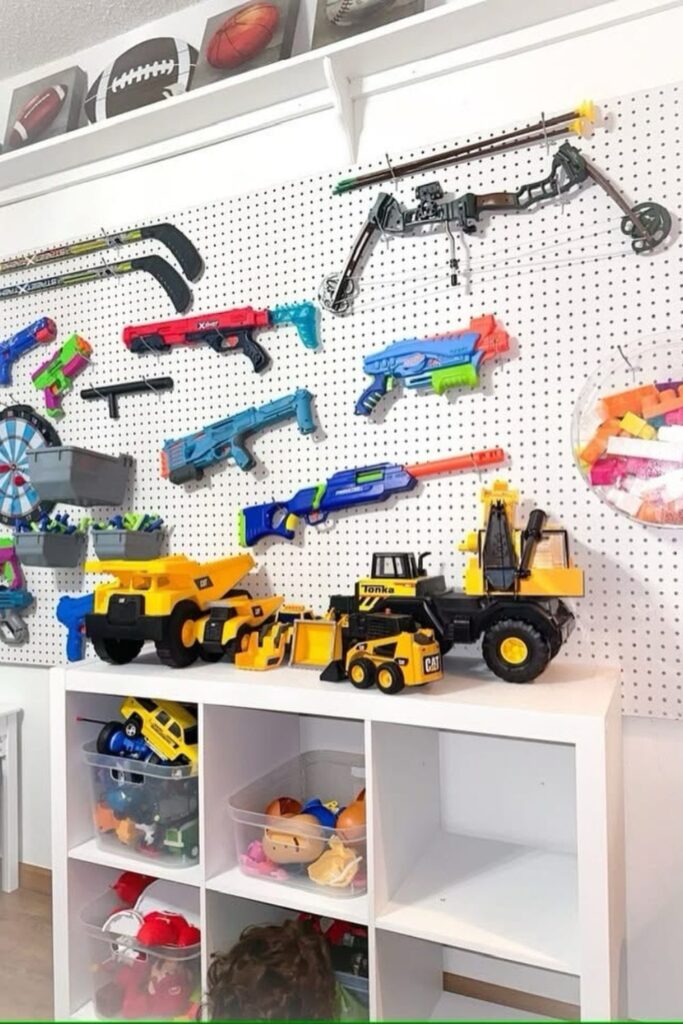
Toy collections stay organized once the wall starts doing the storage work. A pegboard wall like this turns empty space into a flexible system where toys, gear, and accessories.
Can hang up nicely instead of filling containers. Hooks retain bigger toys like play blasters or bows, and small baskets on the board protect darts.
And other small items from getting out of hand. Kids can get what they want without having to search through boxes because everything is still visible.
Pegboards are great for playrooms, game rooms, and garages where a lot of toys need their own space.
Put up a big pegboard panel and add hooks or little boxes to hold the toys you need to store. This kind of vertical storage keeps shelves clear and makes toys part of the room’s decor.
Clear Bins
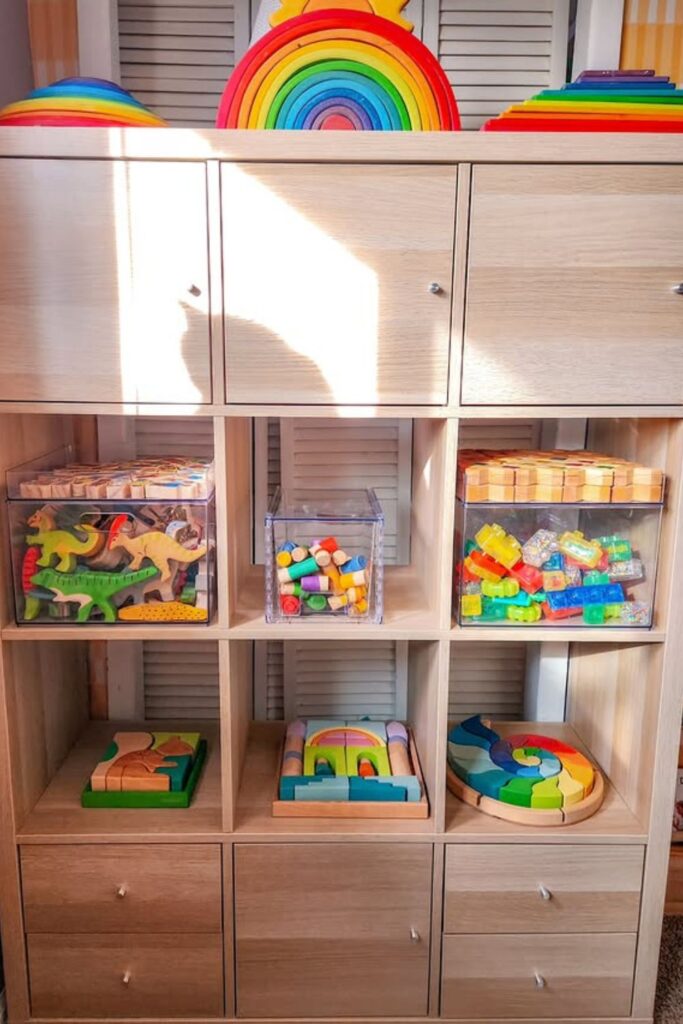
Small toys stay organized once clear bins separate them by category. Transparent containers like these make it easy to spot pieces instantly.
So youngsters don’t have to take everything off a shelf to find what they want.
One container can house dinosaurs, another can hold construction bricks, and a third can hold stacking blocks.
Clear sides also help kids remember where their toys go, which makes it much easier to clean up after playtime.
Put the bins inside cube shelves so they may slide in and out like little drawers. This design is great for toys with a lot of little pieces that usually get mixed up.
Keeping everything in view yet controlled helps keep things in order while still letting youngsters play with their toys.
FAQs
How do you organize toys in a small room without adding bulky furniture?
Use vertical space instead of the floor to begin. Wall shelves, pegboards, and hanging organizers can accommodate a lot of toys without taking up more space.
Low cube shelves are also good since they keep toys out of the way while still giving kids room to play.
Putting toys in tiny containers or baskets helps keep the room from getting too messy.
What is the easiest way to get kids to put their toys away?
Make it easy to get to and store things. Kids are more likely to pick up after themselves when their toys are in boxes, baskets, or cubbies that are clearly labeled.
Putting toys in different bins based on what they are cars in one container, blocks in another helps kids remember where they go.
You may like to read!
- 22 Above Fridge Storage
- 22 Spice Jar Storage Ideas
- 22 Kitchen Wall Storage
- 19 Storage Bench Ideas
- 20 Closet Door Storage

Fasial is the founder of the Fizzy Flare. He has been a passionate blogger since 2021. He ran three different websites in the past few years. Now he is focusing on Fizzy Flare to build an audience and help them organize their life.