22 Under Sink Organization Kitchen Ideas for 2026
This post may contain affiliate links: full affiliate disclosure.
Right now, open the cabinet under your sink. Be honest: do you see bottles falling over, plastic bags piled in the back, or maybe a leak stain that you haven’t noticed.
You move stuff around, close the door, and hope it looks better the next time you try to “organize” it.
You’re not to blame. That area is strange. There are pipes that go through the middle. There isn’t much room on the shelves.
And random bins never seem to clean up the mess for long. But if you lay it up the right way, around the pipes and not against them, it stays neat.
In this article, I will walk you through 26 creative Under Sink organization ideas you can use.
Let’s jump in!
Contents
- 1 What Are the Best Storage Solutions for Under Sink Organization?
- 1.1 Sliding Baskets
- 1.2 Clear Drawers
- 1.3 Basket Towers
- 1.4 Labeled Bins
- 1.5 Category Zones
- 1.6 Pullout Shelves
- 1.7 Shelf Layers
- 1.8 Layered Zones
- 1.9 Tier Racks
- 1.10 Cabinet Pullouts
- 1.11 Acrylic Organizers
- 1.12 Drawer Stacks
- 1.13 Cube Containers
- 1.14 Front Access
- 1.15 Stack Drawers
- 1.16 Vanity Drawers
- 1.17 Product Rows
- 1.18 Door Storage
- 1.19 Clear Layers
- 1.20 Label System
- 1.21 Twin Stacks
- 1.22 Slide Drawers
- 2 FAQs
What Are the Best Storage Solutions for Under Sink Organization?
The greatest storage options are those that don’t get in the way of your pipes. Putting odd baskets in the space will make it look nice for a week.
But then it will go back to being a mess. You need solutions that make use of vertical space, divide areas, and enable you take items out instead of having to rummage in the dark.
That usually means shelves that can be stacked and fit around plumbing, drawers that can be pulled out so nothing gets lost in the back, and simple bins to keep like goods together.
Put a tension rod for spray bottles and a door rack for extra storage in that odd cabinet, and it will start to work for you instead of against you.
Save this article for later! 👇👇
Sliding Baskets
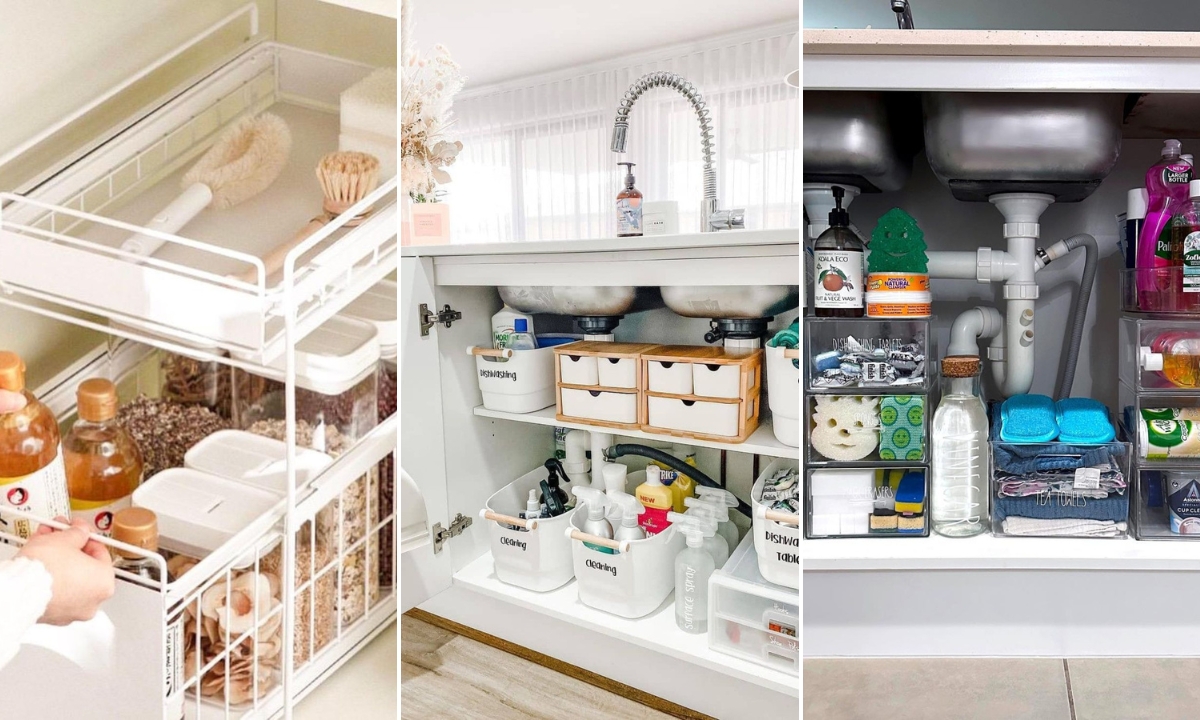
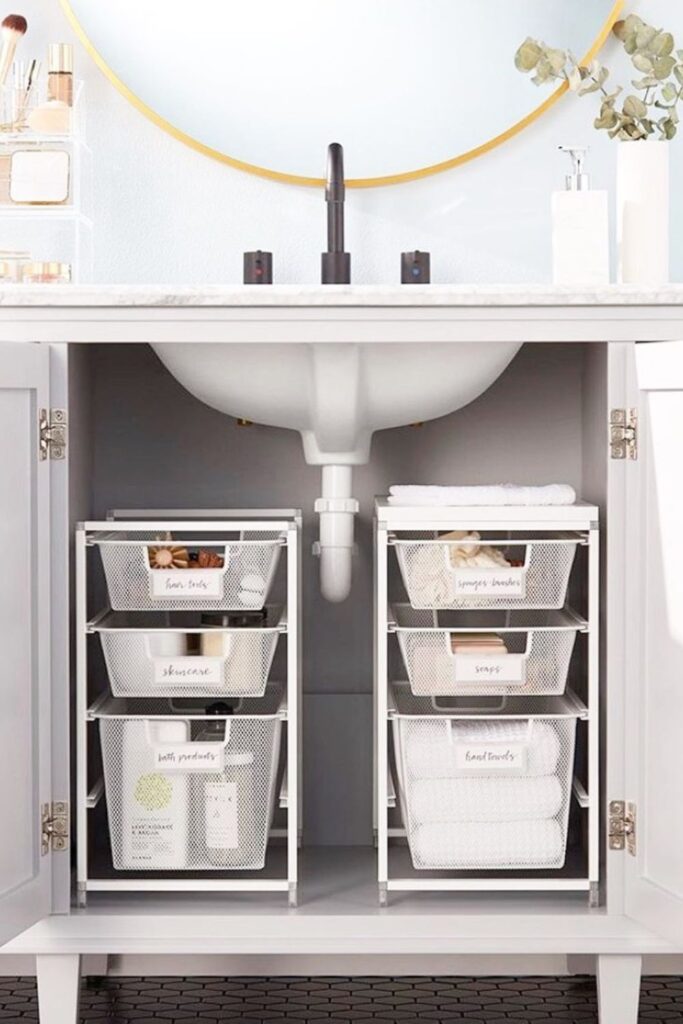
Stop digging through a dark cabinet just to find one small item. A pull-out basket system like this changes how the whole space works.
Instead of putting everything on the floor of the cabinet, put slender metal drawers on both sides of the pipe. This will keep the plumbing clear and quadruple the amount of storage space.
Each basket is like its own area. One drawer can carry cleaning or skincare bottles, another can hold soaps, and a deeper bottom bin can hold bulk products like wipes or refills.
Labels make things even easier no guessing and no digging. It’s easy to set this up again: just measure the space on each side of the pipe and slide in two narrow drawer towers.
Metal mesh is great because air can pass through it, which keeps moisture from building up under the sink.
Clear Drawers
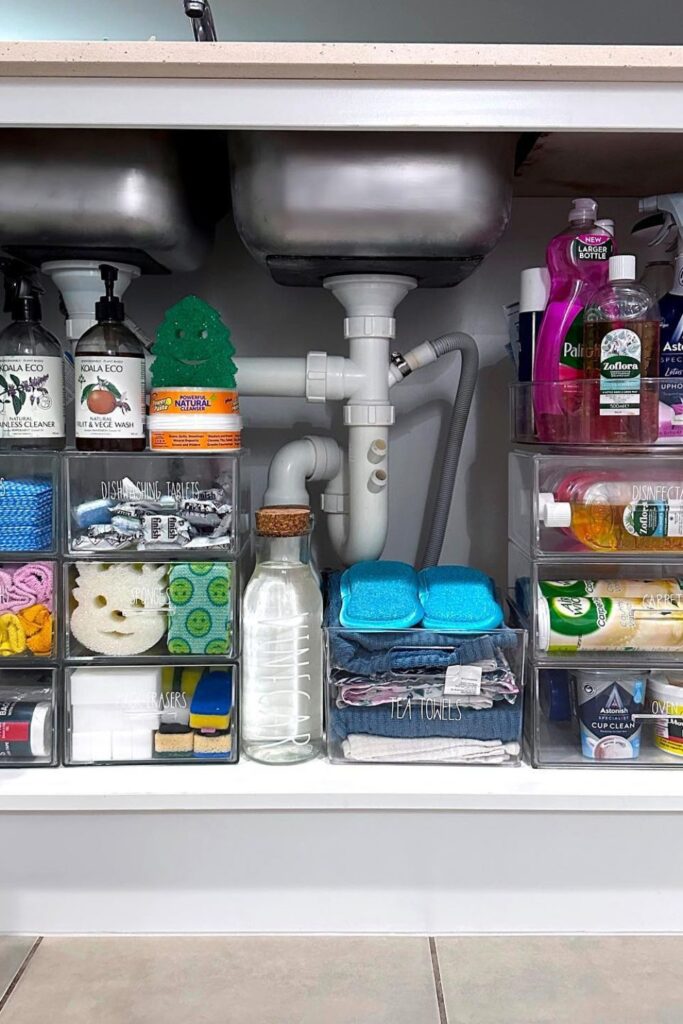
Searching for a sponge or dishwasher tablet shouldn’t require pulling everything out of the cabinet.
If you use clear drawer organizers, you won’t have that problem anymore because you can see where everything goes.
Instead of putting all of your cleaning materials in one big pile, break them up into smaller groups and put each group in its own acrylic drawer.
Cloths keep folded in one place, sponges and scrubbers have their own space, and dishwasher tablets are easy to reach when you need them.
When you put big bottles in a deeper drawer on the side instead of tipping over at the back, they work better.
Basket Towers
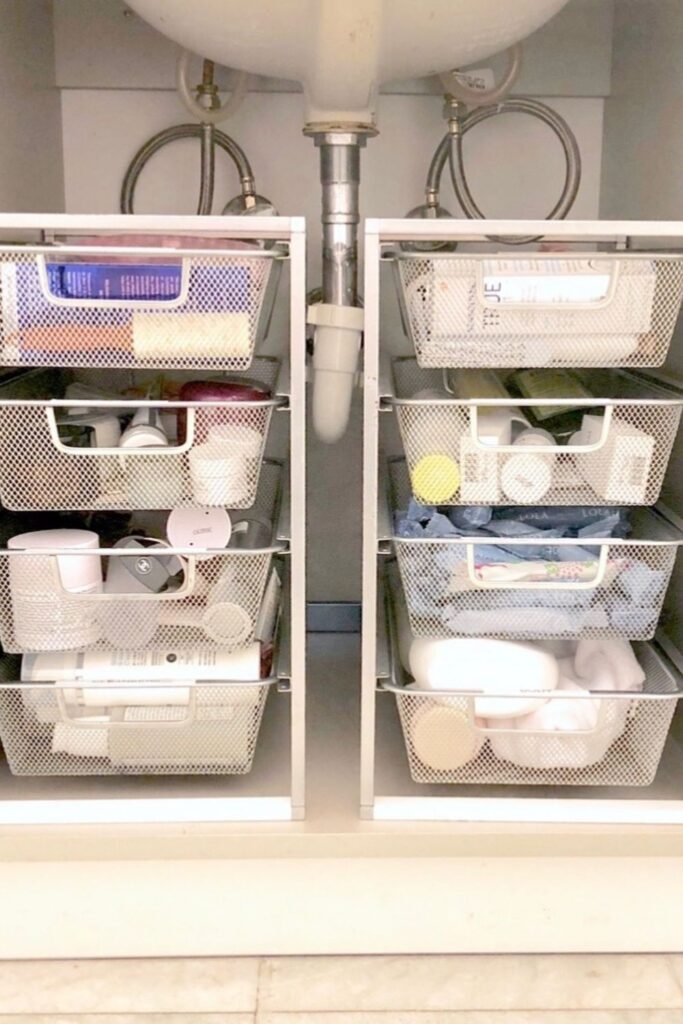
Wasted side space under the sink usually happens because everything sits flat on the cabinet floor. Vertical basket towers completely change that.
Instead of spreading things out over the base, stack pull-out mesh baskets on both sides of the pipes. This way, every inch of height will work for you.
Each level naturally turns into its own group. Things you use every day, like cleaning supplies or skincare products, go in the center baskets where they are easy to get to.
Things that are backups or too big to fit in the middle baskets go in the lower baskets. The top baskets are great for small objects that tend to get lost in the rear.
Narrow metal towers fit next to the pipe very well because they slide right into the empty spaces on the sides. First, measure the space next to the plumbing.
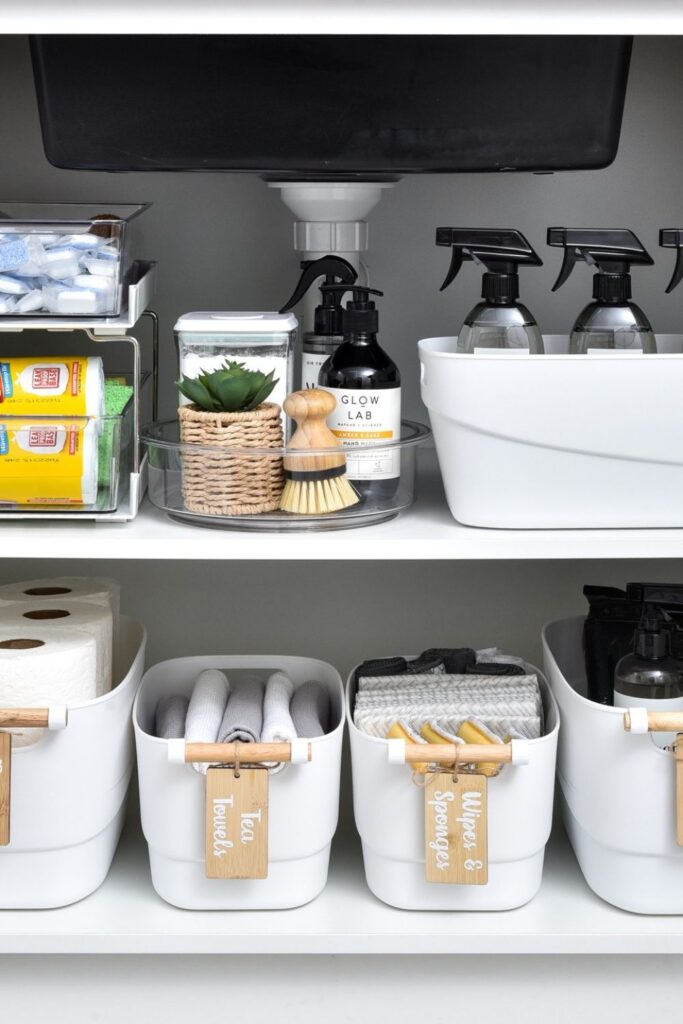
Labeled Bins
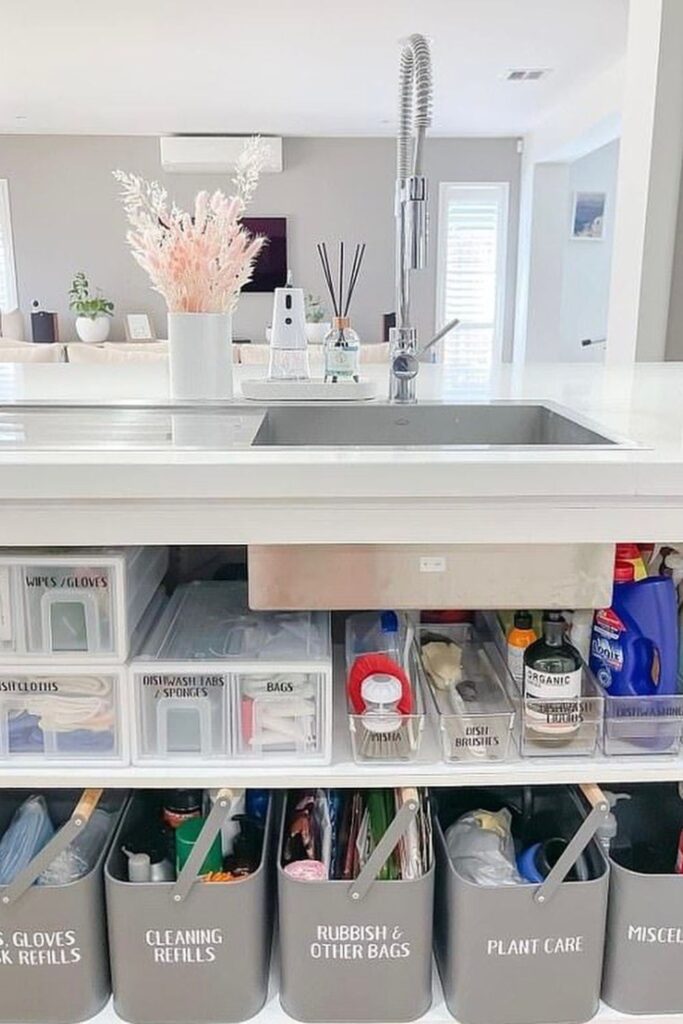
Nothing keeps an under-sink cabinet under control like clearly labeled bins. Instead of letting supplies spread across the shelf, divide everything into simple categories.
Also, give each group its own container. There is a bin for paper towels, a bin for tea towels, an area for cleaning sprays, and a place for tiny tools or sponges to stay together.
Wide open bins with handles are great since you can pull the whole thing out instead of having to reach into the back of the cabinet.
Simple labels or wooden tags also make a great difference. When each bin has a clear purpose, everyone in the house knows where everything goes.
This setup works well in cabinets that already have a shelf or a lot of horizontal space. Put similar products in durable plastic bins that are easy to wash down.
Category Zones
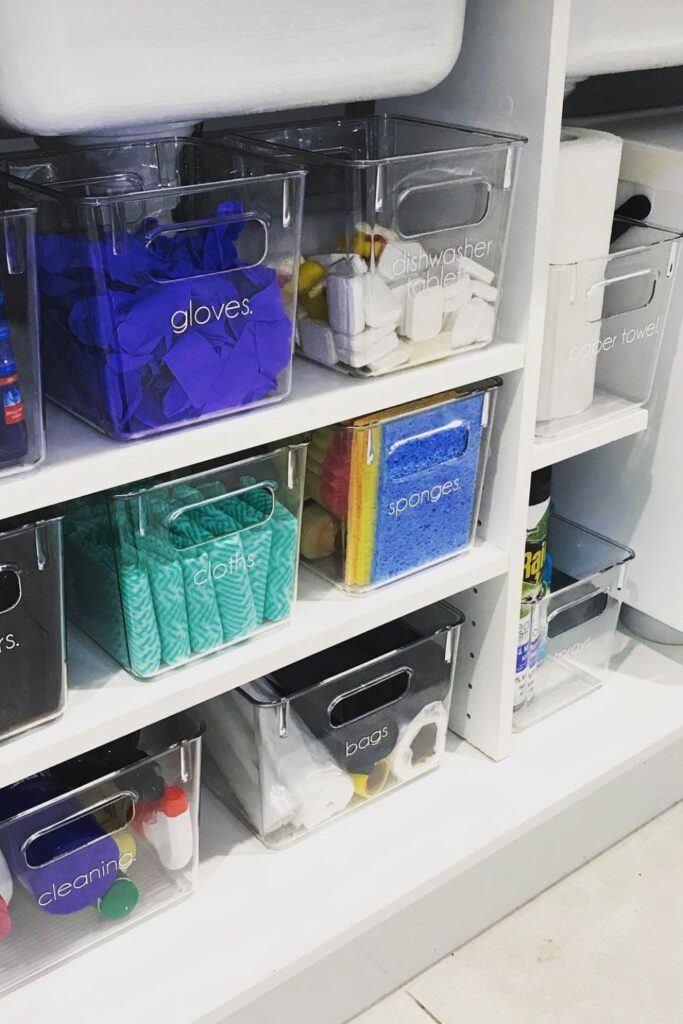
Clutter usually happens when every cleaning item gets tossed into the same space. Creating clear zones fixes that instantly.
Instead of one big mess, put gloves, dishwasher tablets, cloths, sponges, trash bags, and cleaning bottles in separate bins.
This approach works much better with clear acrylic containers because you don’t have to open every bin to see what’s inside.
It is easy to refill when each group of products has its own labeled area. Nothing gets lost in the back.
This setup works best with shelves under the sink. Put things you use a lot, such sponges, cloths, and dishwasher tablets, on the middle level where they are easy to get to.
Pullout Shelves
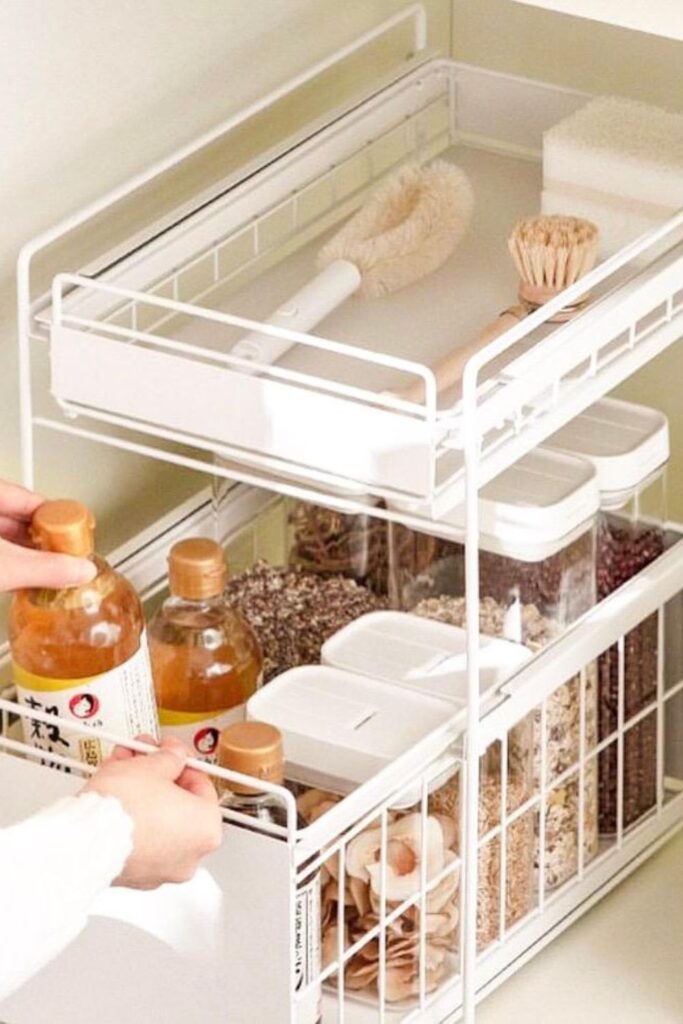
Reaching the back of a deep cabinet usually turns into a guessing game. Items slide behind each other, and whatever you need ends up hiding in the darkest corner.
Pull-out shelves fix that problem right away because the whole layer of storage goes forward. Under the sink, a two-tier sliding organizer works really well.
The lower basket is for larger bottles or containers, and the upper shelf is for smaller tools like brushes, sponges, or refill jars that you can easily reach.
You don’t have to bend down and dig through the mess; just pull the shelf forward and everything comes to you.
This design works well in cabinets that are deep but not too wide around the plumbing. Pick a small metal pull-out rack that can slide easily without touching the pipes.
Shelf Layers
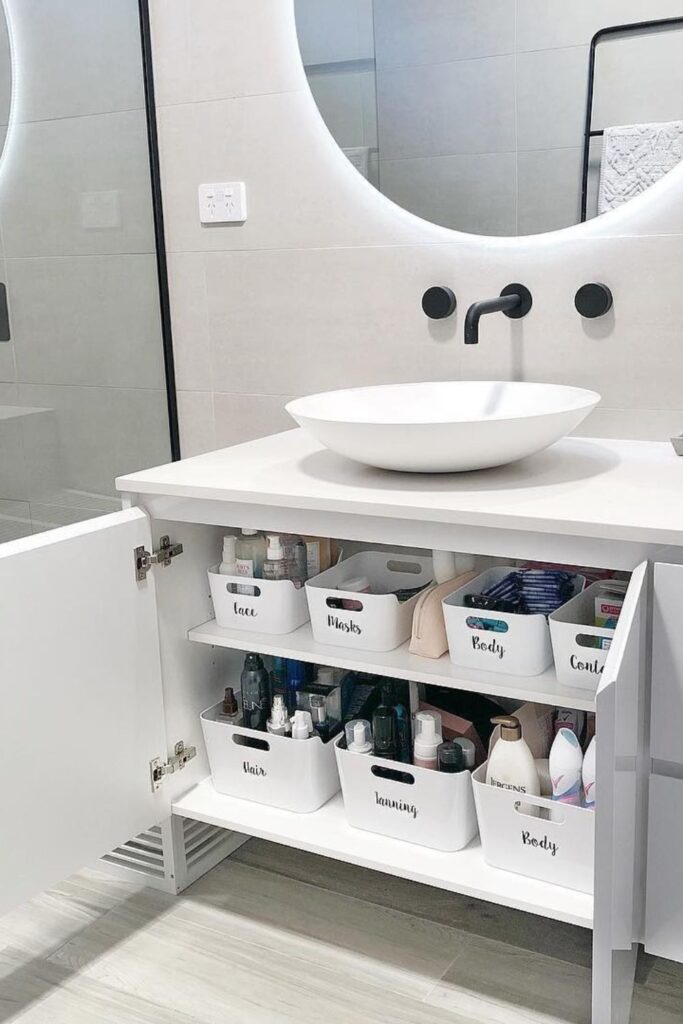
Empty vertical space under a sink often goes unused, even though it can double the storage instantly.
Adding a basic shelf within the cabinet makes a big difference since it turns the cabinet into two working levels instead of one packed floor.
When the space is split up, containers start to make sense. The top shelf has smaller things like skincare products, masks, and grooming tools that are easy to get to.
The taller bottles and bulk items stay below and don’t get in the way of anything else. Bins with handles hold each group together.
So bottles don’t slide around every time the door opens. Labels also help keep the system running smoothly so that nothing progressively slips back into random heaps.
Layered Zones
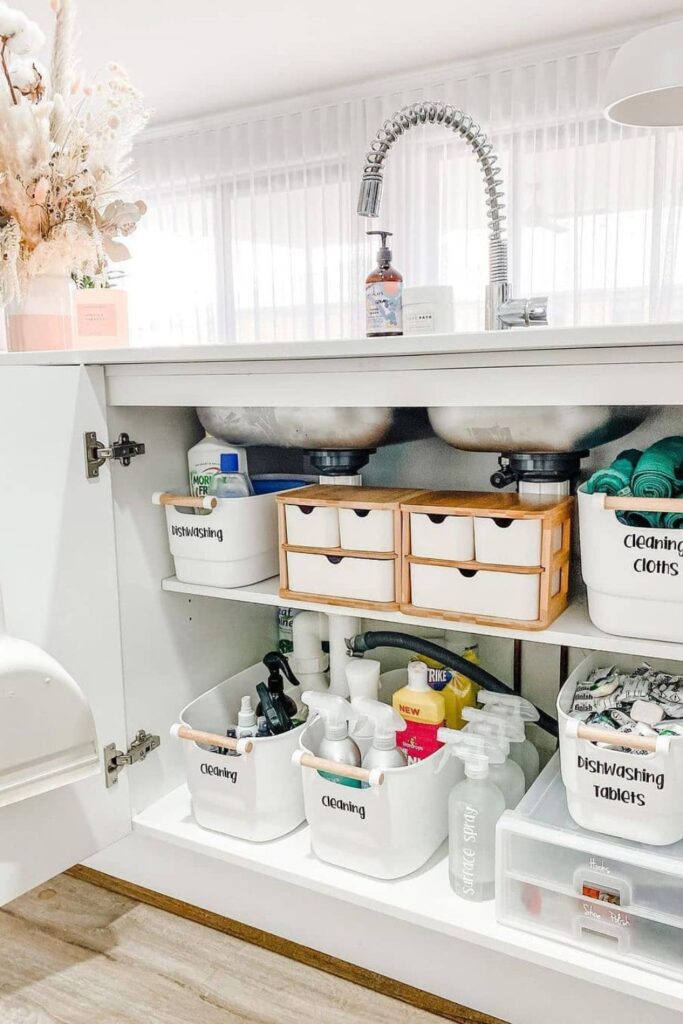
Flat cabinet floors usually turn into a pile of bottles and random supplies. Adding a second layer instantly fixes that by turning one storage level into two organized zones.
After the area is separated, each shelf can hold a particular kind of item instead of all of them fighting for the same space.
Smaller containers and drawer organizers that carry things like tablets, scrubbers, or refill packs work well on the upper shelves.
Lower sections are better for taller bottles, sprays, and bulk cleaning supplies that need greater height.
It’s more easier with bins that have handles because you can lift the whole thing out instead of reaching around pipes.
Tier Racks
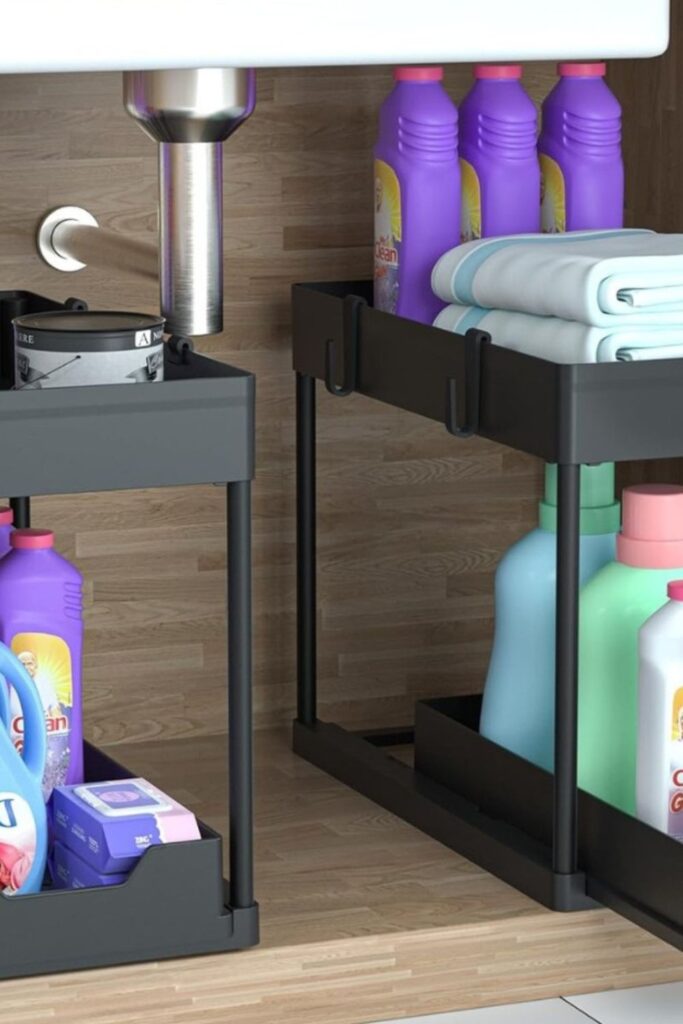
Tall bottles and bulky cleaning products can quickly take over the entire cabinet floor. A two-tier rack solves that problem by stacking storage vertically.
Once the rack is in place, the lower tray holds bigger things like detergent or refill bottles, and the upper tray holds smaller things like towels or other supplies that are simple to reach.
Narrow racks fit well beneath the sink because they slide right next to the plumbing and don’t get in the way of pipes.
Putting one rack on each side makes two balanced storage areas and keeps the middle space open.
Metal or strong plastic frames are better for holding heavier bottles than flimsy organizers. This is vital in cabinets that hold liquid cleansers and detergents.
Cabinet Pullouts
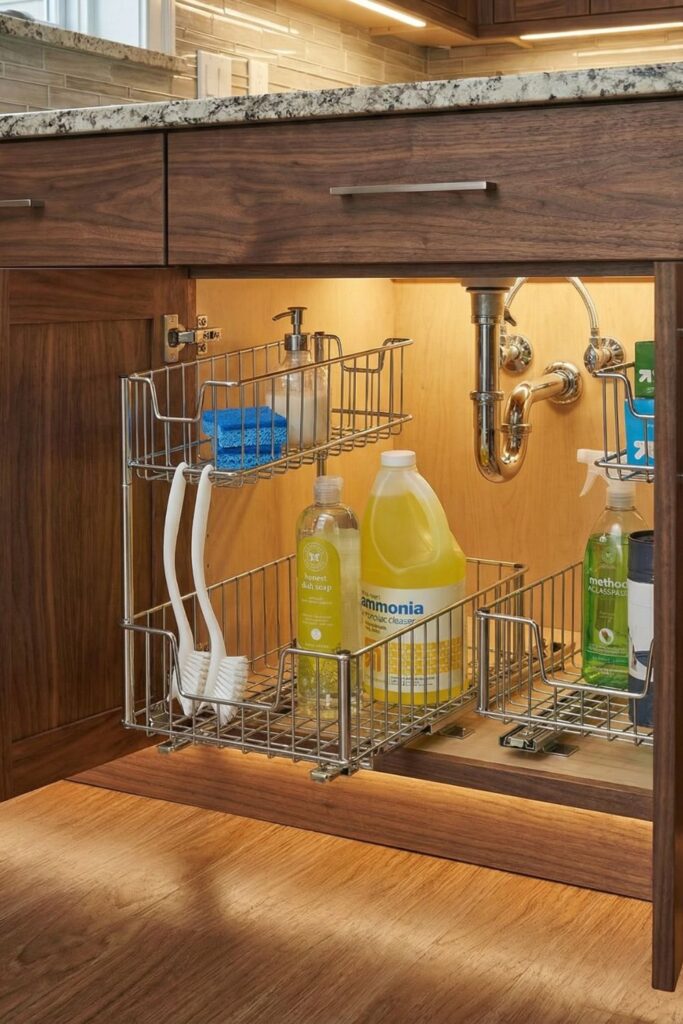
Deep cabinets make supplies disappear fast. A sliding pull-out basket system solves that by bringing everything forward the moment you open the door.
The whole storage rack slides out instead of you having to lean down and rummage under pipes. This makes it easy to see every bottle and brush.
Wire pull-outs are great for under-sink locations since they leave room for plumbing while yet making strong compartments for heavier things.
The bottom basket holds larger bottles like ammonia or detergent, and the upper rack keeps smaller equipment like brushes, sponges, or dish soap organized and easy to reach.
Putting pull-out racks on both sides of the plumbing maintains the middle region accessible for pipes and doubles the amount of storage space.
Acrylic Organizers
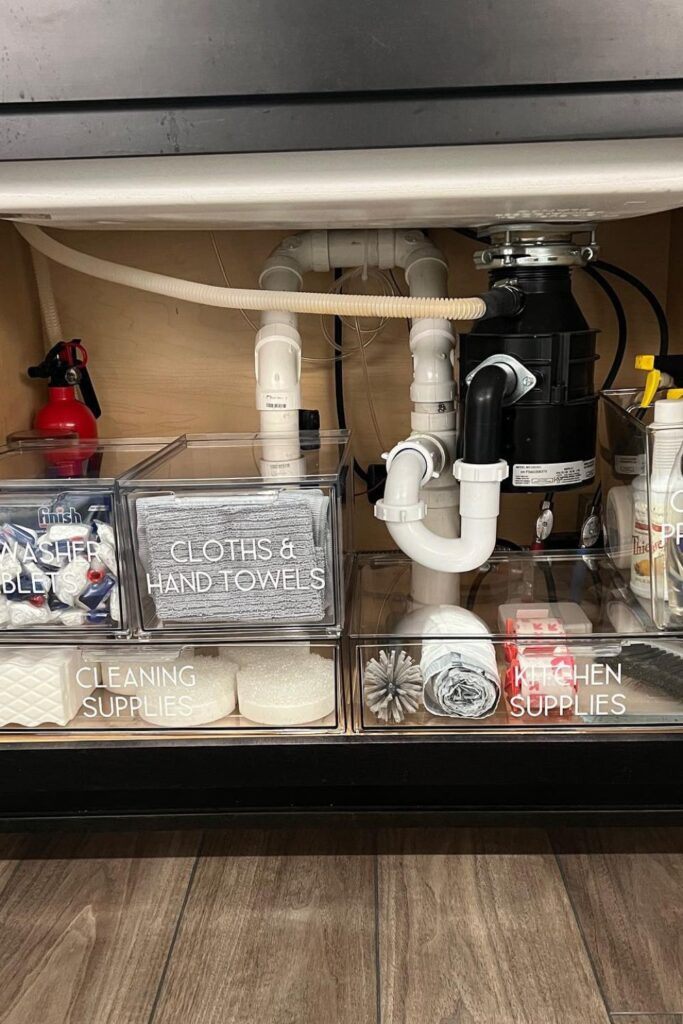
Mess builds up fast when every cleaning item ends up tossed into the same open space. Clear acrylic organizers fix that by giving each category its own visible home.
While yet making the cabinet look neat and tidy. Wide bins are great for big things like dishwasher tablets or folded hand towels.
Slimmer drawers underneath are better for smaller things like scrubbers, brushes, and additional sponges.
Putting these organizers around the front edge of the cabinet makes it easy to get to things you need every day, and the plumbing area in the middle stays free.
This structure is good for cabinets with garbage disposals since the bins can sit nicely around the pipes instead of battling for space.
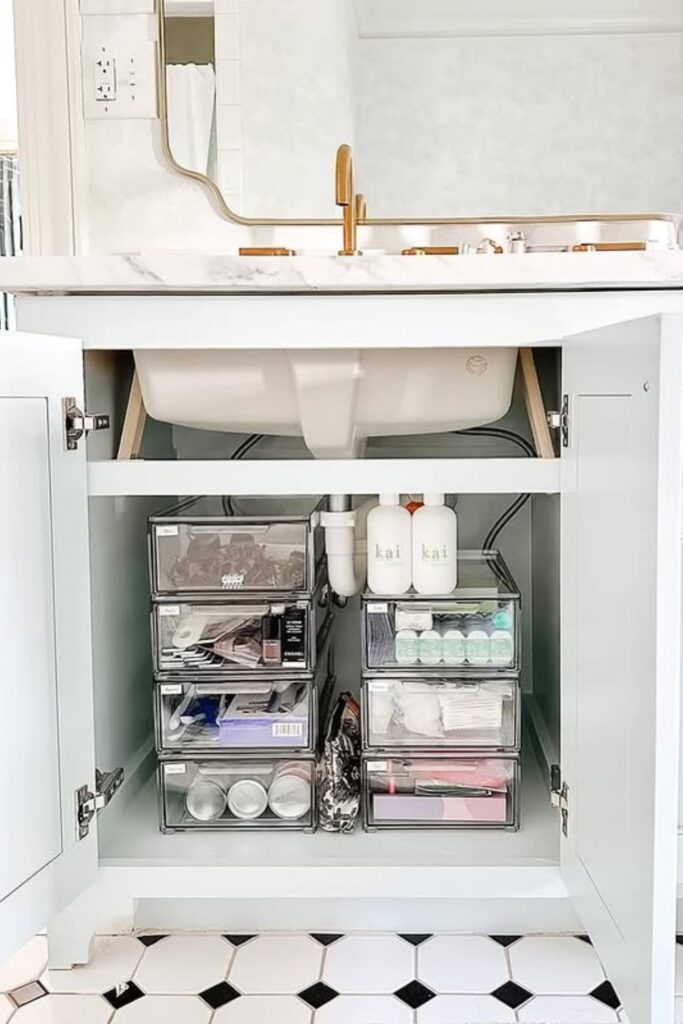
Drawer Stacks
Tiny items are the first things to turn an under-sink cabinet into chaos. Cotton pads, makeup tools, refills, and small containers disappear quickly when everything sits in one open bin.
Stacking tiny drawer organizers fixes that by turning the area into a small storage tower. Every transparent drawer turns into its own category.
One drawer can house cotton pads or wipes, another can hold refills for skin care products, and deeper drawers can hold small bottles or grooming items.
Nothing gets buried beneath other things because the drawers glide forward. It works best to keep the stacks on both sides of the piping.
The middle stays open for pipes, and the edges turn into neat vertical zones. Clear acrylic drawers are great for this because you can see what’s within without having to open each one.
Cube Containers
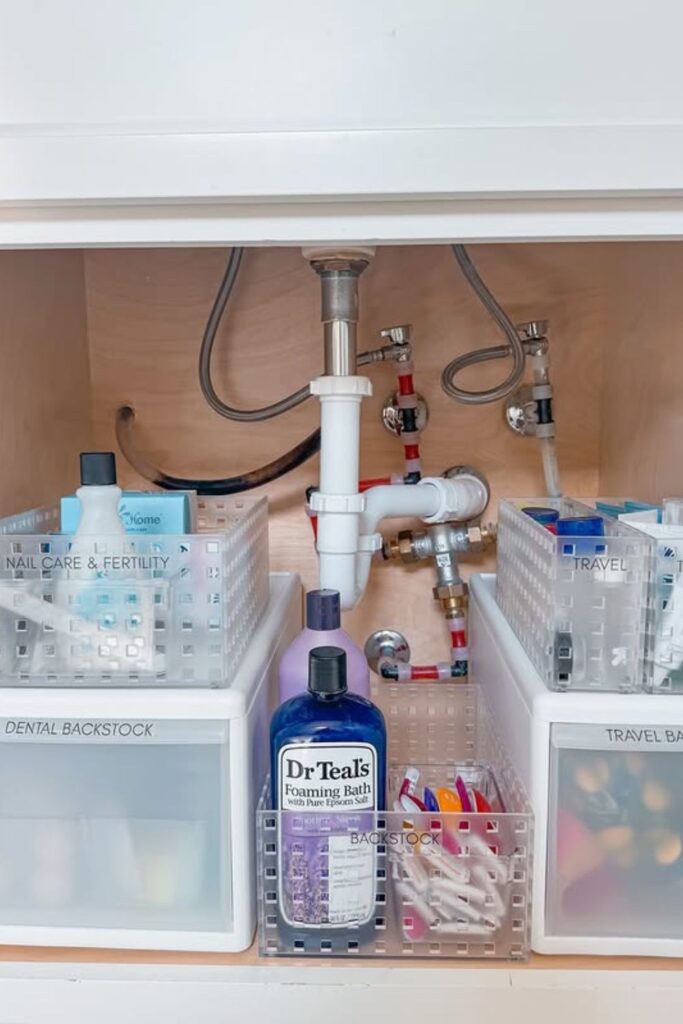
Backstock items often create the biggest mess under the sink. Extra toiletries, travel products, and backup supplies pile up quickly when they don’t have a defined space.
Stackable cube containers are a great way to keep those extras organized without making the whole cabinet messy.
The bigger drawers on the bottom are great for storing things like dental backstock or travel bags, and the smaller baskets on top.
Putting these cube organizers on both sides of the plumbing keeps the middle region open for taller bottles and pipes. Clear baskets are also helpful because you can see.
What’s inside right away. When backup items have their own labeled containers, the cabinet stops being a junk drawer and starts to work like a well-organized supply station.
Front Access
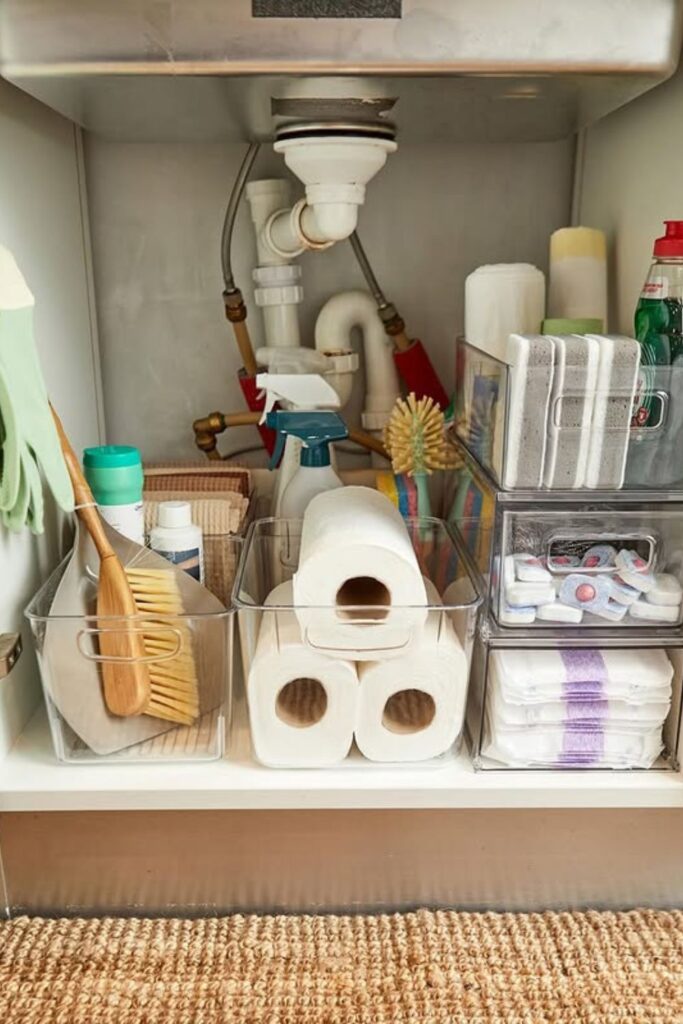
Reaching the back of an under-sink cabinet often turns into a frustrating search mission. Placing everyday items right at the front instantly fixes that problem.
Clear open bins make it easy to get things like brushes, gloves, and spray bottles that you use a lot without having to move half of the cabinet first.
Wider front containers are great for paper towels and bulk rolls since they stay visible and don’t get squashed behind other items.
The smaller stacked drawers on the side hold goods like dishwasher tablets, wipes, or cloth refills that tend to become scattered on the bottom of the cabinet.
It’s also important to keep the core region around the pipes open. The storage fits nicely along the front and sides, leaving the pipes open for use.
Stack Drawers
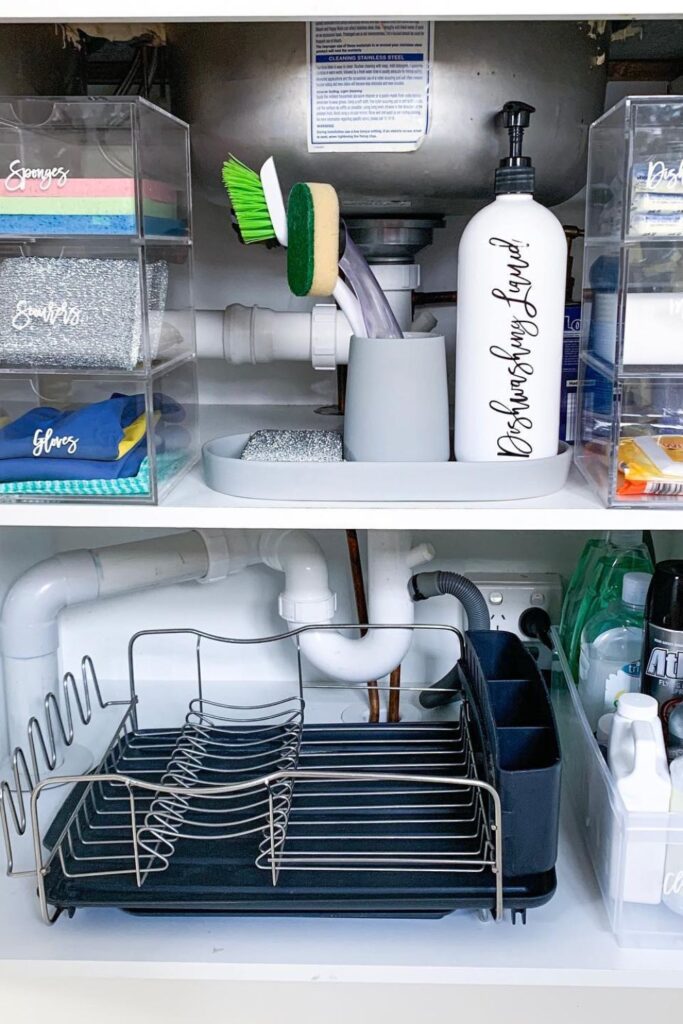
Small cleaning tools disappear quickly when everything shares the same shelf. Stacked drawer organizers prevent that problem by turning one section of the cabinet into vertical storage tower.
There is one category in each drawer: sponges in one layer, cleaning pads in another, and gloves or wipes in separate compartments.
You can find what you’re looking for in seconds instead of having to open several boxes because the containers are clear.
The layered arrangement also protects things safe from dampness that can build up under the sink.
Putting these drawer towers on both sides of the plumbing preserves the middle region clear and makes the most of the space along the cabinet walls.
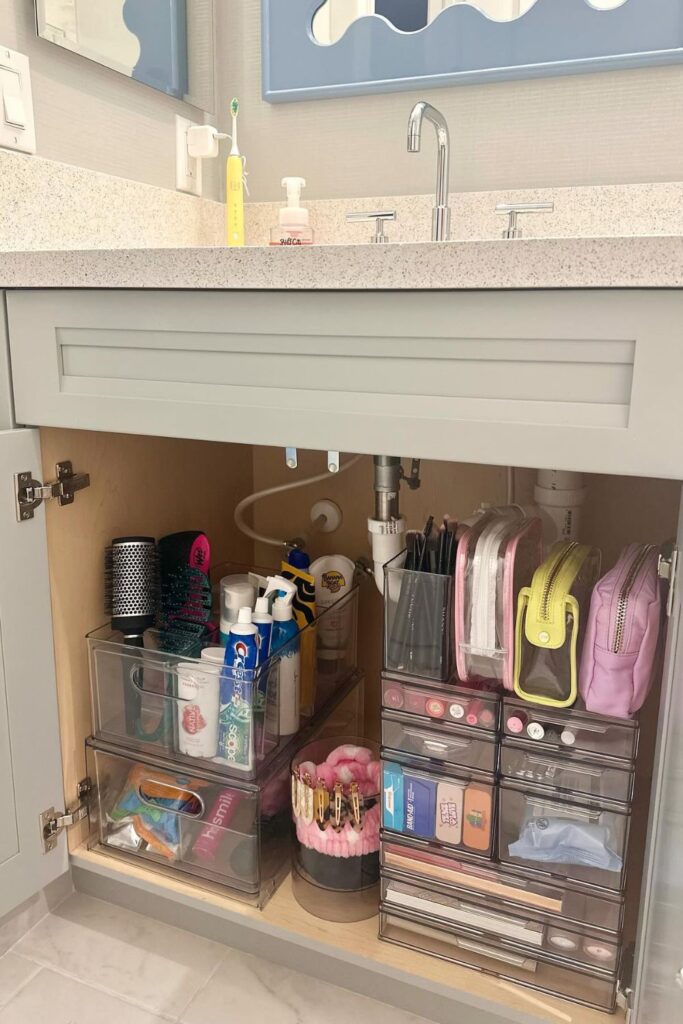
Vanity Drawers
Bathroom cabinets often become the hiding place for random makeup, hair tools, and skincare products.
Without organization, everything gets piled on top of each other, and daily tasks take longer. Clear vanity drawers fix that by making one side of the cabinet into a small beauty station.
Stackable acrylic drawers keep makeup, cotton pads, and small beauty equipment separate so that nothing gets lost in the bottom of the drawer.
Taller organizers next to them keep hair products, toothbrush supplies, and bottles upright. This stops leaks and makes them easier to grasp.
Putting these organizers around the walls of the cabinet is the best idea because the plumbing normally runs through the middle.
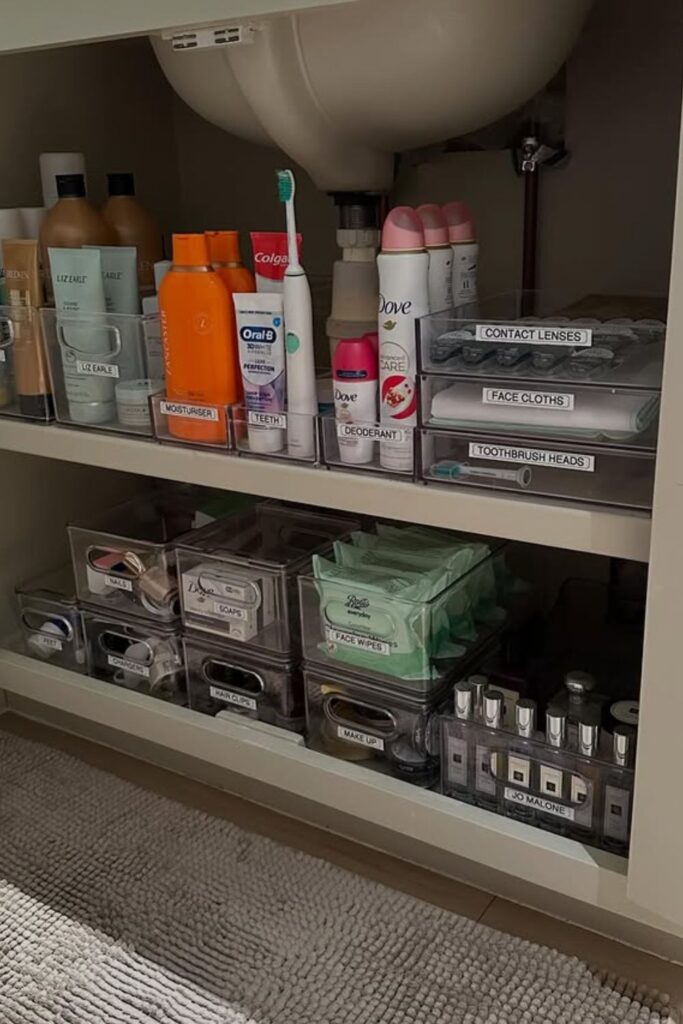
Product Rows
Morning routines move faster when everything lines up where you can see it. Grouping everyday toiletries into clean rows prevents the usual under-sink chaos.
Where bottles are stacked on top of one other. This structure works well with clear organizers.
When the cabinet door opens, taller containers keep things like deodorants, moisturizers, and toothpaste from tipping over.
Smaller boxes placed on top of each other hold things that usually get scattered around, such contact lenses, face towels, wipes, or additional toothbrush heads.
Shelves split the room into two simple levels. The top shelf is where daily items stay, making them easy to get to.
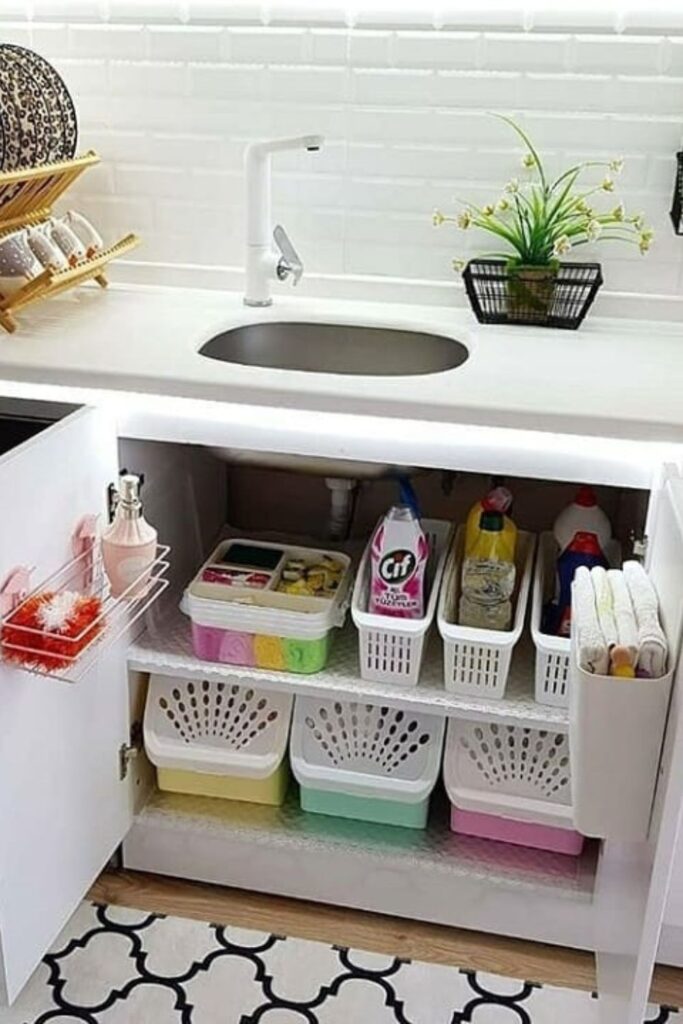
Door Storage
Most people don’t pay much attention to the cabinet doors, even though they might be a great way to store things under the sink.
You may quickly make room for things that generally float around in the cabinet, such soap bottles, sponges, or dish brushes, by adding a little door rack.
Slim wire baskets affixed to the inside of the door keep light items standing up and easy to grasp as soon as the cabinet opens.
Things you use every day work best here because you can get to them quickly without having to search through bins in the cabinet.
Simple shelf dividers and thin baskets inside the cabinet assist keep cleaning materials, cloths, and extra supplies near the plumbing in order.
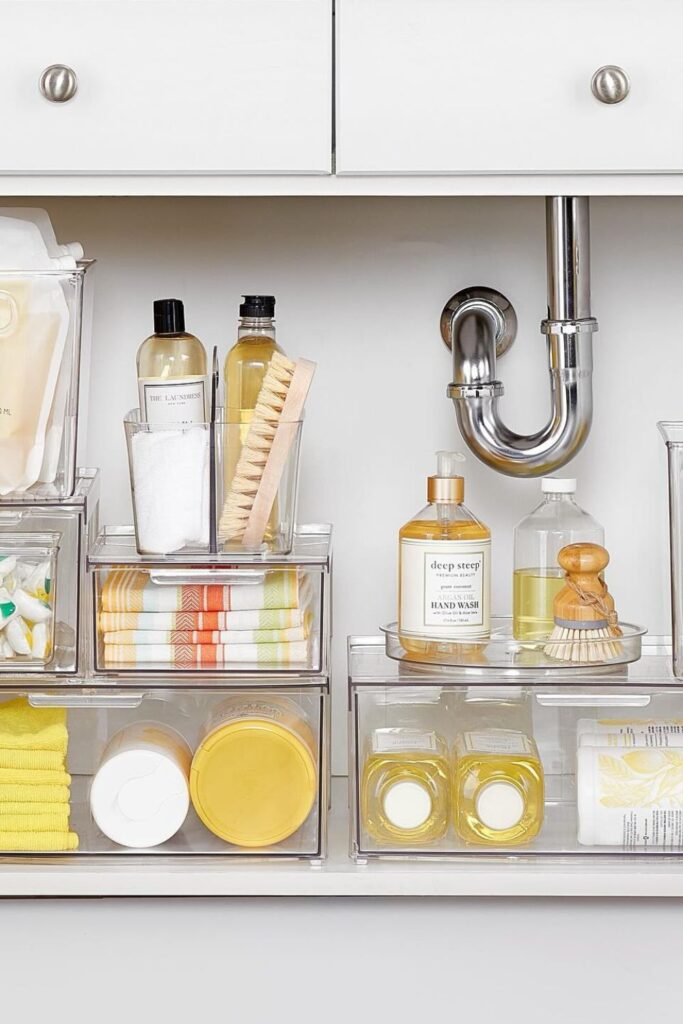
Clear Layers
Under-sink cabinets often feel messy simply because everything sits at the same level. Creating clear layered storage instantly fixes that problem.
When you stack acrylic organizers, the area becomes numerous visible levels, each with its own spot for each thing.
Upper trays keep things like soap bottles, scrub brushes, and cleaning cloths that you use every day close at hand.
The deeper drawers below are great for holding refills, dishwasher pods, folded towels, or extra sponges that might normally get lost beneath other things.
Keeping the middle of the cabinet free around the pipe also helps keep it balanced. There are storage areas on both sides, and the plumbing is still easy to get to.
Label System
Nothing keeps an under-sink cabinet organized longer than a clear labeling system. When every container has a specific purpose, supplies stop drifting into random piles.
Each item, like wipes, gloves, dishcloths, dishwasher tablets, and brushes, is in its own clearly marked organizer so that anyone can quickly find what they need.
The little acrylic bins on the top shelf hold everyday cleaning products and dishware, while the bigger containers below hold extras and bulk things like trash bags or additional wipes.
Using deeper bins for refills also hides backup supplies while still making them easy to get to.
By putting the organizers around the sink basin and plumbing, you can make the most of the storage space on both sides while still leaving adequate room for pipes.
Twin Stacks
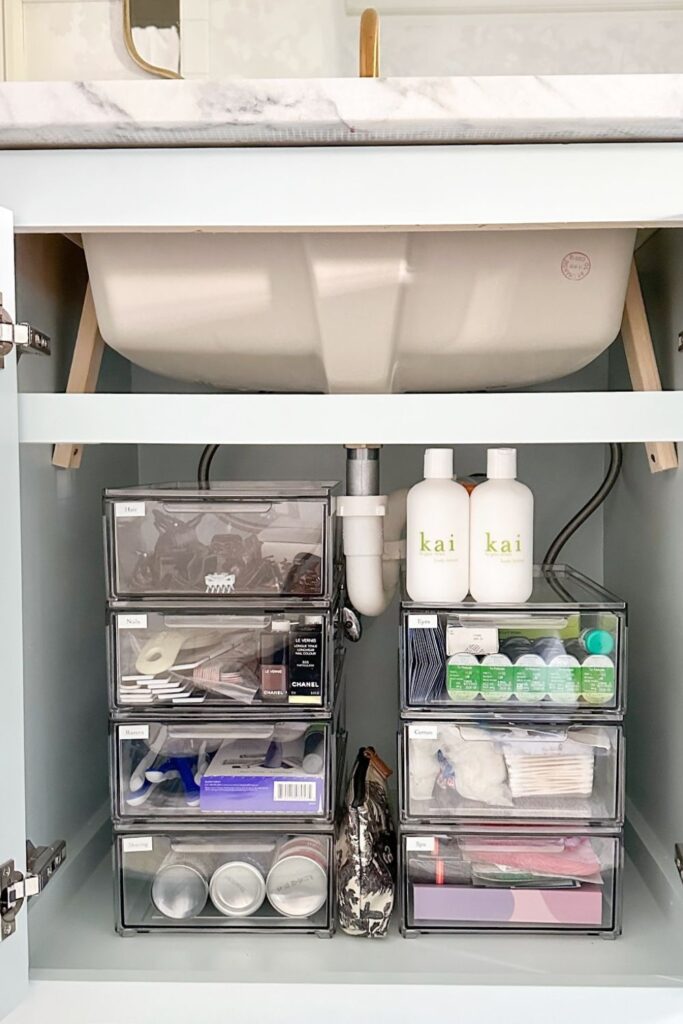
Balancing both sides of the cabinet instantly makes under-sink storage feel cleaner and more intentional.
Mirrored drawer stacks make two neat storage towers that work around the plumbing in the middle instead of putting everything on one side.
Stacked acrylic drawers hold small things that tend to get lost in a mess, like cotton pads, beauty tools, refills, grooming supplies, and other routine goods.
Putting these things in sliding drawers keeps them from spreading out on the cabinet floor and makes it easy to get to everything.
Putting one stack of drawers on each side of the pipe leaves the central space available for plumbing and taller bottles.
Slide Drawers
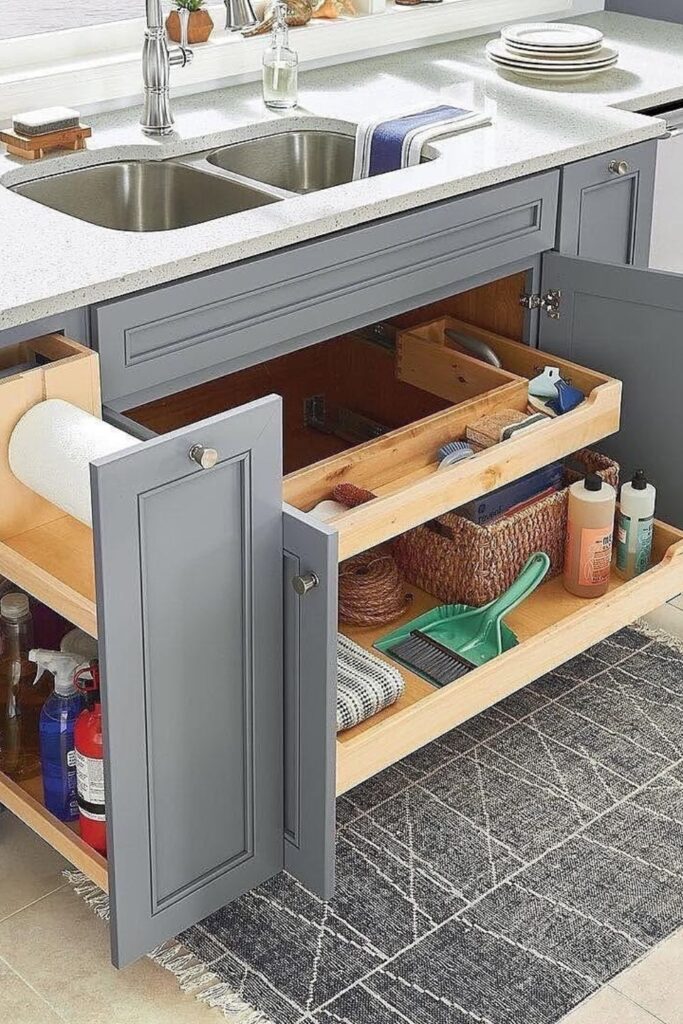
Traditional cabinets waste a lot of space because everything sits hidden behind the front row of bottles. Slide-out wooden drawers completely change that experience.
The whole storage area slides forward instead of going deep into the cabinet, so you can see everything right away.
The top drawer is great for smaller equipment that usually get lost in the cabinet, including scrub brushes, sponges, or dishwashing supplies.
The bottom drawer is for bigger things like spray bottles, cleaning chemicals, and storage baskets.
Because both trays slide out easily, you don’t have to move everything else first to get stuff. Side pockets are another smart feature.
FAQs
How do you organize under the sink when pipes are in the way?
Pipes make it hard to put cabinets under sinks, but you can get around them by putting narrow organizers on each side instead of trying to fill the middle.
Beside the pipes, you can place slim drawer stacks, pull-out racks, or small labeled bins. This leaves the main section open.
Vertical storage is the best way to help here. You can quadruple the useful capacity right away by stacking drawers or adding a small shelf, and you won’t have to touch the pipes.
What should you not store under the kitchen sink?
Don’t keep anything that could get ruined by water or leakage. If a pipe spills or condensation builds up, paper products, unopened food.
Tiny appliances can easily get destroyed. Instead, put cleaning products, dishwasher tablets, rags, and scrub brushes there.
These things should be kept near the sink anyhow, and they are normally kept in containers that can withstand some moisture.
You may like to read!
- 26 Dresser Organization Ideas
- 18 Water Bottle Organization
- 20 Coffee Station Organization
- 20 Baby Bottle Organization
- 21 Small Fridge Organization

Fasial is the founder of the Fizzy Flare. He has been a passionate blogger since 2021. He ran three different websites in the past few years. Now he is focusing on Fizzy Flare to build an audience and help them organize their life.