21 Small Fridge Organization Ideas for 2026
This post may contain affiliate links: full affiliate disclosure.
You have strong reasons for buying groceries. New vegetables. Containers for preparing meals. Maybe even that yogurt that you say you’ll eat this week.
After that, you open your fridge and there isn’t enough room. Bottles tip over. The leftovers are in the back. You smell something, but you don’t know what it is.
Your fridge isn’t too small. It’s working against you. Every inch counts when there isn’t much space.
If you don’t use it appropriately, your fridge will just be a messy box of food you forgot about.
In this article, I will share 21 small fridge organization ideas you can start using right away.
Let’s jump in!
Contents
- 1 What Are the Best Storage Containers for a Small Refrigerator?
- 1.1 Shelf Zoning
- 1.2 Clear Stacking
- 1.3 Produce Bins
- 1.4 Color Coding
- 1.5 Vertical Storage
- 1.6 Labeled Bins
- 1.7 Category Grouping
- 1.8 Produce Sections
- 1.9 Drawer Bins
- 1.10 Jar Storage
- 1.11 Vertical Bins
- 1.12 Meal Prep
- 1.13 Snack Stations
- 1.14 Shelf Labels
- 1.15 Drink Row
- 1.16 Fresh Herb Storage
- 1.17 Category Zones
- 1.18 Stack System
- 1.19 Drink Baskets
- 1.20 Produce Dividers
- 1.21 Lazy Turntable
- 2 FAQs
What Are the Best Storage Containers for a Small Refrigerator?
The size of your fridge isn’t usually the problem; it’s the containers that are too big. Big round dishes, lids that don’t fit, and tall bottles take up room quickly.
You need containers that stack, fit in tight spaces, and let you see the food in a small fridge. Choose containers that are square or rectangular.
They fit together perfectly and don’t leave any empty spaces like circular ones do. Pick low, stackable sets so you can build up instead of out.
You can see what you have with clear containers, so nothing gets lost at the back. And always check the size of your shelves first. It won’t solve your problem if it doesn’t fit in your space.
Save this article for later! 👇👇
Shelf Zoning
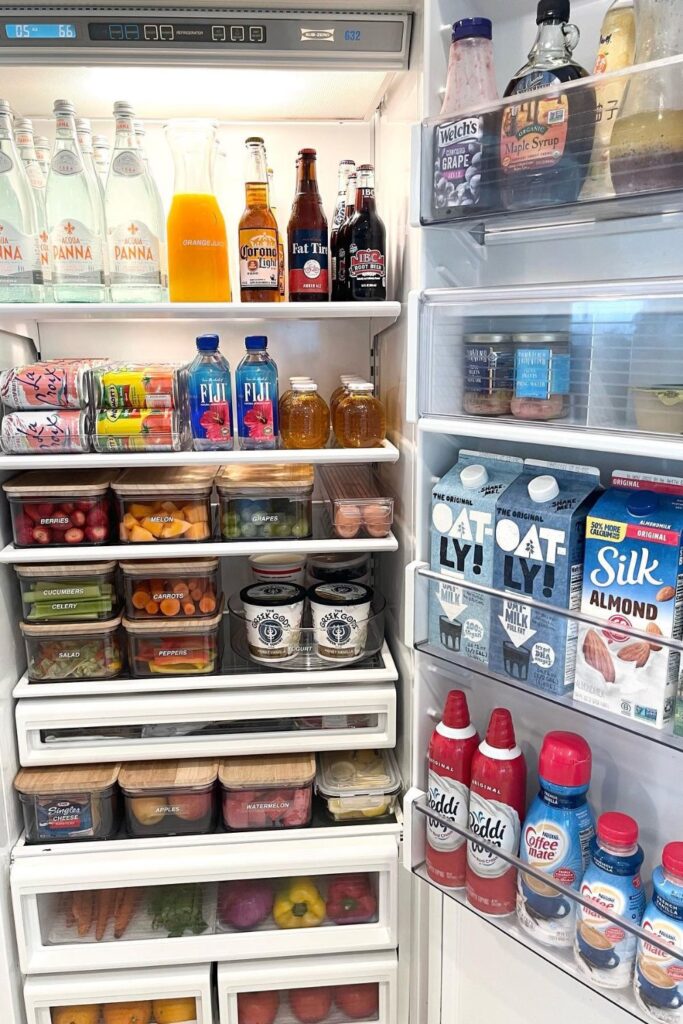
Crowded fridges stop working the moment everything gets mixed together. Separate shelves by category and the entire space starts behaving differently.
See how drinks keep together on the top shelf and ready-to-eat items are in transparent containers below.
Instead of spreading out, bottles line up, which saves room right away and makes it easy to grab things.
Clear produce boxes on the middle shelf keep fruits and vegetables from rolling around or getting lost beneath other products.
There is a different type of fruit in each container, such berries, melon, or grapes, so nothing gets lost in the back and goes bad.
Clear Stacking
Hidden food always turns into wasted food. Transparent containers fix that problem instantly because every item stays visible the moment the fridge door opens.
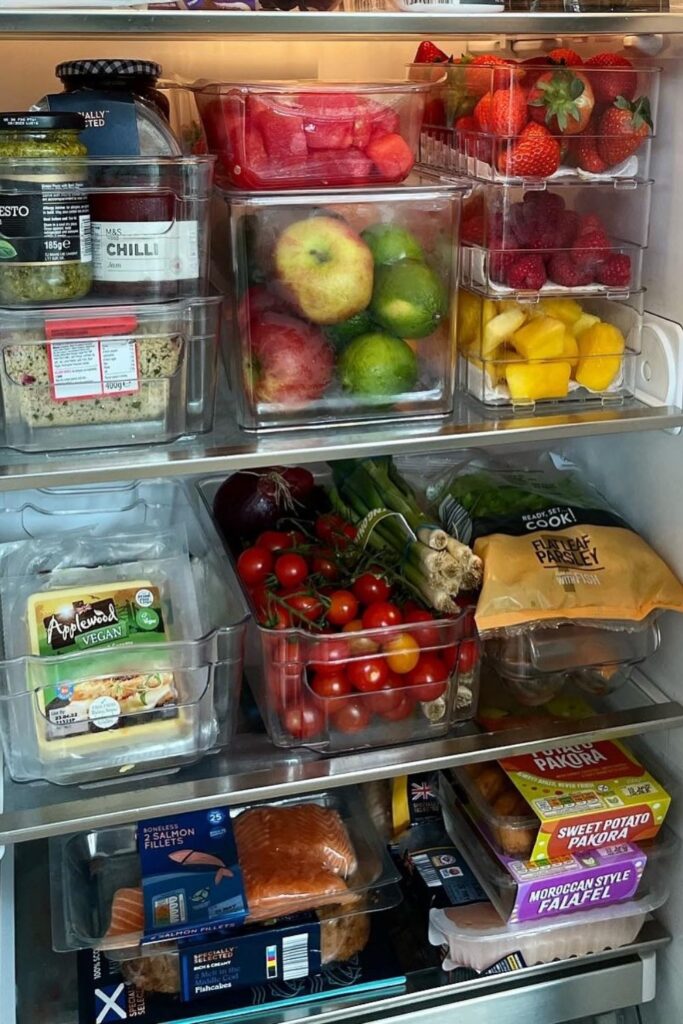
Notice how the fruits, berries, and chopped vegetables are in clear boxes that stack neatly instead of spreading out on the shelf.
When you arrange things vertically, one shelf can hold two or three levels of things. Watermelon cubes are in one container.
While strawberries and raspberries are stacked next to them without getting mixed up. Smaller clear drawers hold fruit portions that are the right amount for a snack ready to grab.
When you put glass jars and packaged foods in open bins, they stay together so that loose products don’t get all over the shelf.
Produce Bins
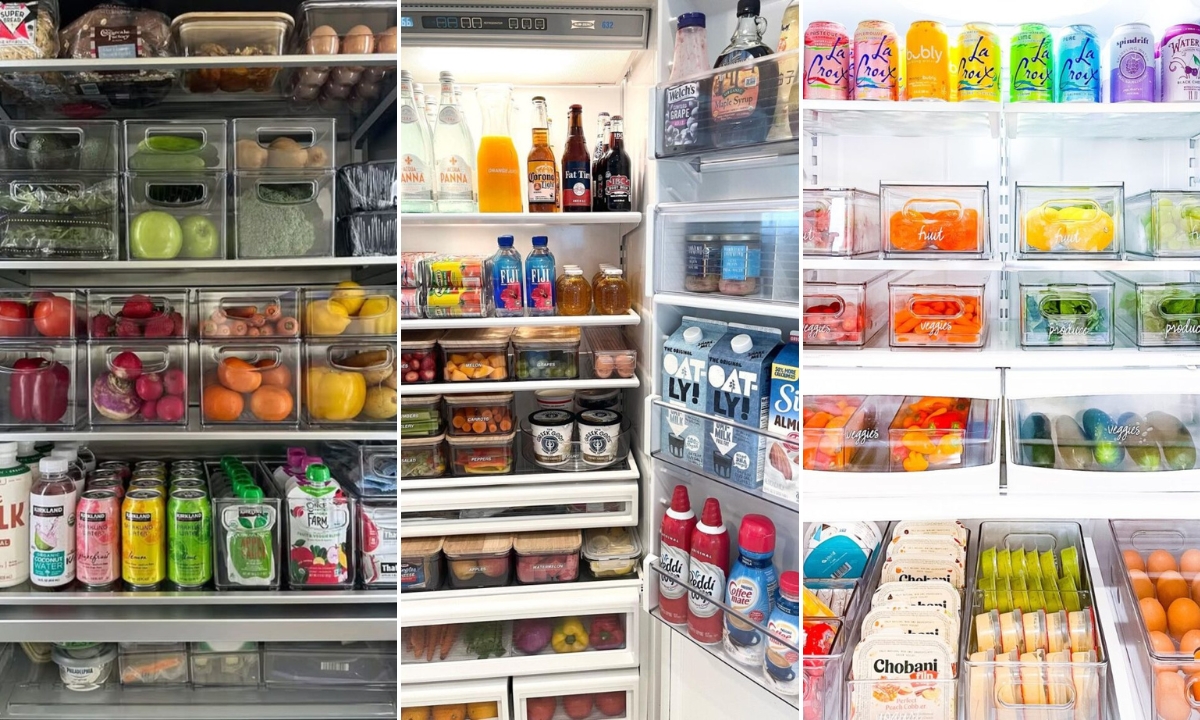
Random fruits rolling across the shelf quickly turn a small fridge into chaos. Separate produce into clear bins and suddenly every item has a home.
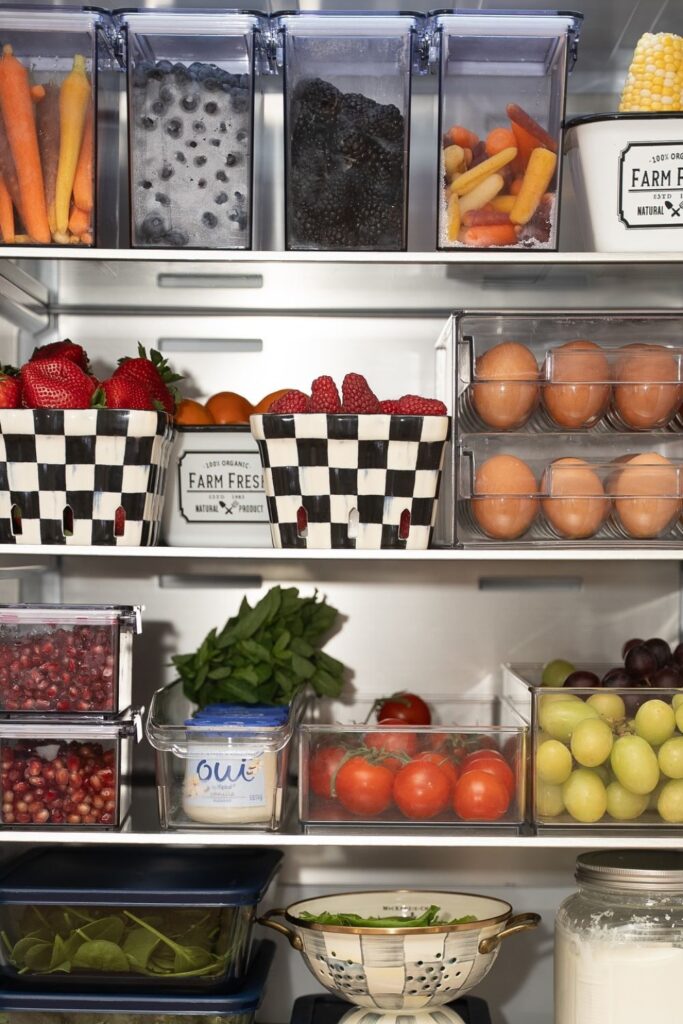
Carrots stand up straight in tall containers, berries keep together in another, and small veggies like baby carrots fit perfectly in their own place. No mixing and no hiding behind other groceries.
Smaller clear boxes are great for fragile things like pomegranate seeds or sliced fruit because they stack without damaging what’s inside.
Wider containers hold tomatoes, grapes, and other fruits and vegetables that are easy to grab and eat. This makes them easier to get to during the day.
The eggs are protected in a little tray that keeps them from moving when the door closes. You only need a few transparent containers of varying heights to make this system again.
Color Coding
Visual order changes everything inside a small fridge. Matching containers and grouped colors make shelves easier to read at a glance.
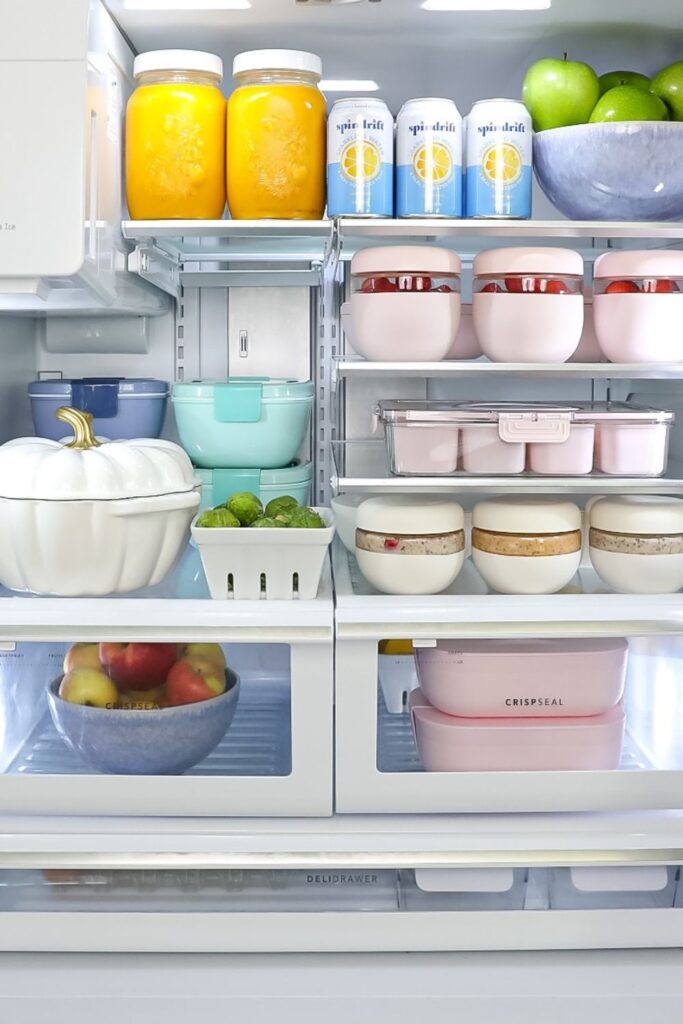
Notice that bowls, jars, and other containers that are similar stick together instead of mixing up random forms on the shelf.
The end product is quiet and structured, and it doesn’t take up any more space. Stackable containers keep the kitchen clean as they hold leftovers and meal prep.
Identical forms fit snugly next to each other, which avoids gaps between containers from being wasted.
Small bowls are great for snacks, yogurt, and chopped fruit since they keep food in small portions.
Vertical Storage
Unused vertical space quietly steals room from small refrigerators. Tall narrow containers solve that problem by turning one shelf into several organized layers.
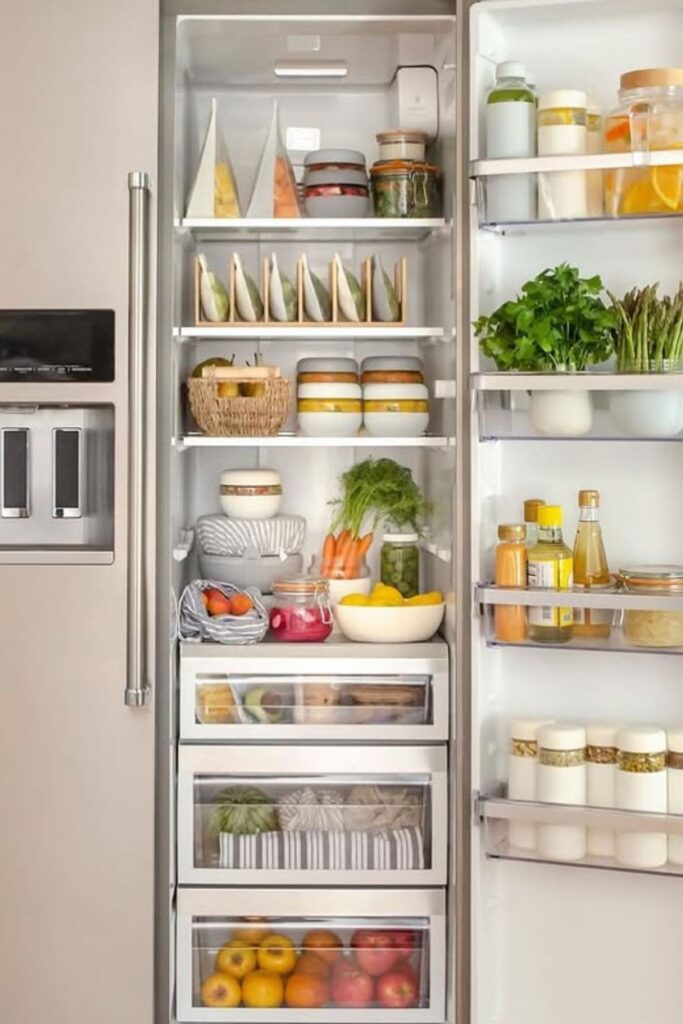
Notice how vertical pouches keep snacks and cut veggies from spilling over the edge of the shelf. The footprint stays modest, yet the food is still easy to see.
Glass jars and small dishes keep sauces, leftovers, and minor ingredients together instead of spreading them out.
When containers are the same height and form, they fit together well and make shelves look less congested.
Fresh herbs and veggies are kept in little cups so they don’t fall over and are easy to grasp while cooking.
Labeled Bins
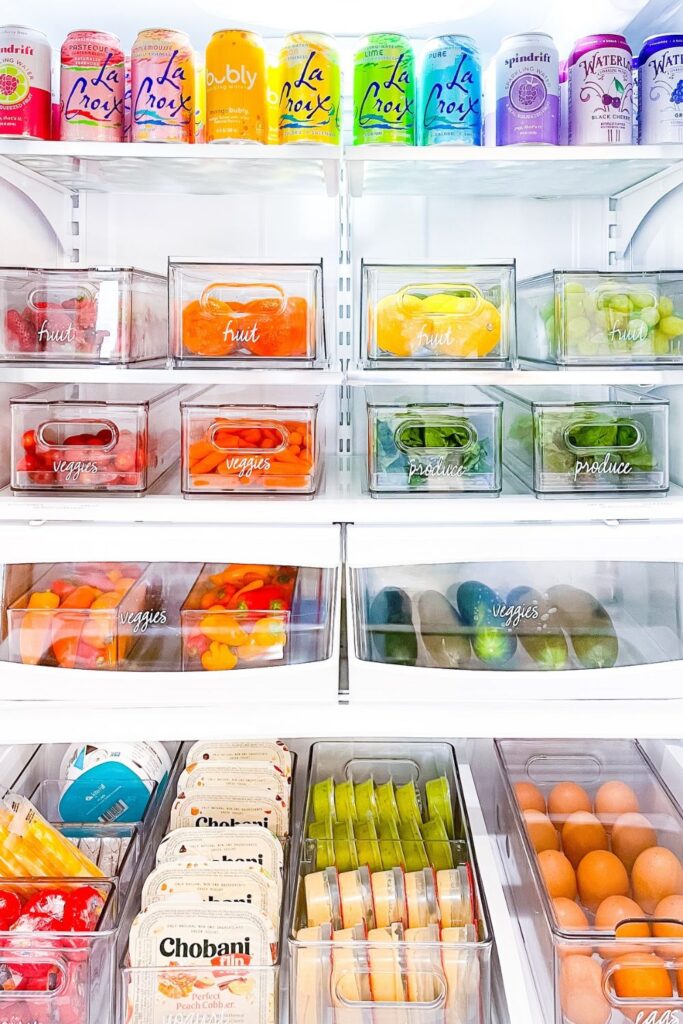
Opening the fridge should feel effortless, not like a search mission. Labeled bins turn random shelves into a simple system anyone can follow.
Fruits and vegetables stay together, and grab-and-go snacks stay in their own containers. No more guessing or searching through stacks of food.
You can see what’s inside clear bins right away, which makes the labels much more handy.
Sliced peppers, grapes, and carrots are in small containers, so healthy snacks are already cut up and ready to eat.
Larger bins can hold yogurt packets, cheese sticks, and other everyday items that tend to fall off the shelf.
Category Grouping
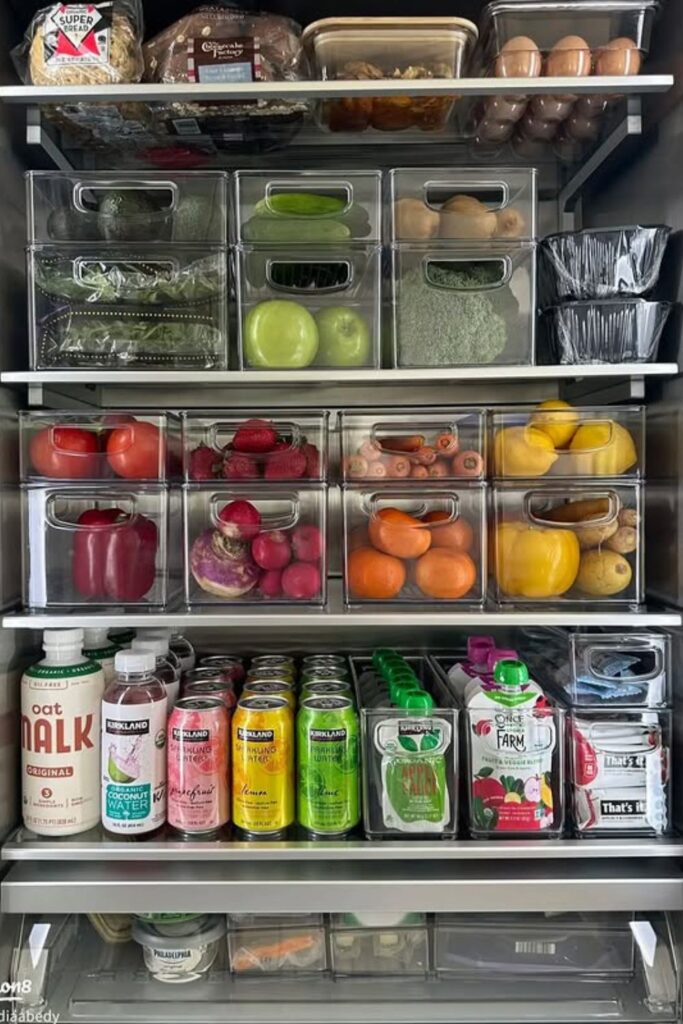
Grocery chaos usually happens when every item fights for the same shelf space. Grouping food by category solves that problem fast.
Instead of being all over the fridge, drinks line up neatly on the bottom shelf, fruits sit together, and veggies stay in their own row.
Clear storage bins keep each group of products together, so they don’t roll around or hide behind other groceries.
Apples, cucumbers, berries, and peppers keep apart, which makes it simpler to assess what you currently have before you buy more.
Things like radishes, carrots, and lemons that tend to get misplaced in bigger drawers also fit well in smaller containers.
Produce Sections
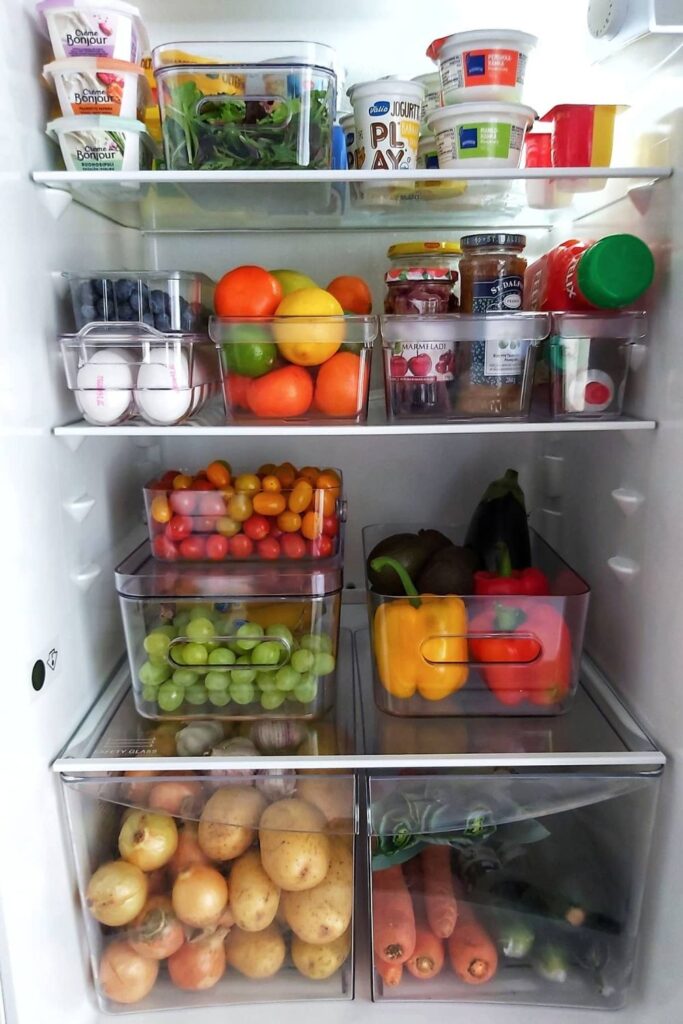
Mixed produce often turns the fridge into a messy pile where softer fruits get crushed and vegetables disappear under heavier items.
Putting different kinds of vegetables in separate containers makes it easier to handle and keeps it from getting damaged.
Notice that grapes, cherry tomatoes, peppers, and citrus fruits are all in their own clear containers instead of being spread out on the shelf.
Smaller containers are great for berries and grapes since they keep the pieces together and easy to see.
Larger bins can accommodate bigger crops like bell peppers or eggplants without taking up too much space on the shelf.
Drawer Bins
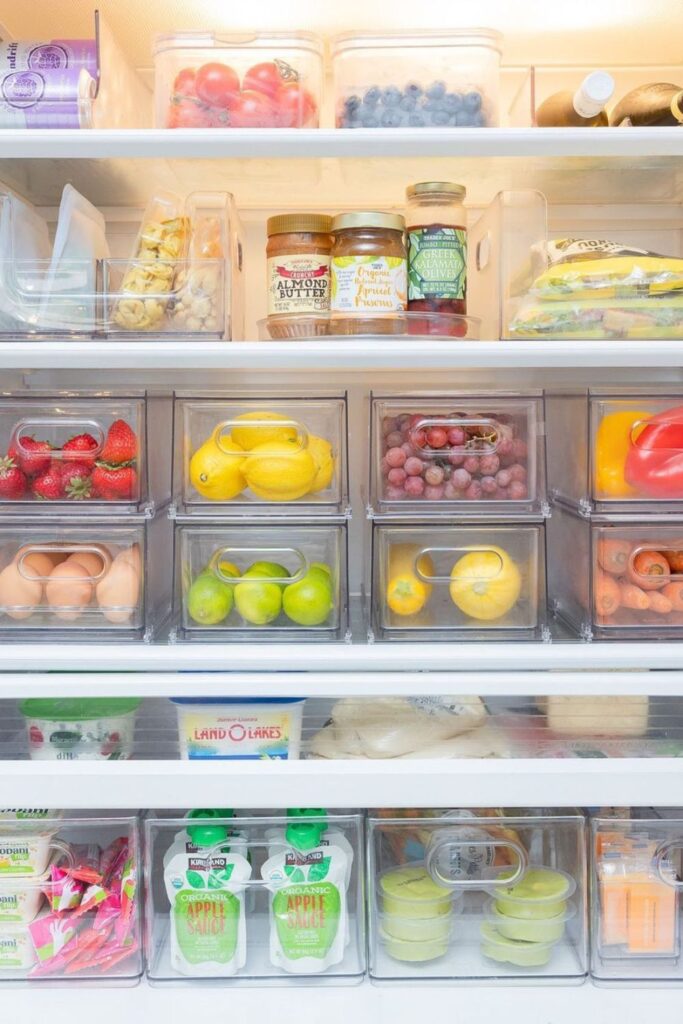
Loose groceries quickly turn a fridge shelf into a cluttered mess. Small pull-out bins solve that problem by giving every ingredient a defined space.
Fruits, vegetables, and eggs are kept in separate containers so that they don’t roll around or get pushed to the back.
Uniform bins make a grid that keeps shelves level and easy to go around. Strawberries, lemons, grapes, and peppers stay apart so that more fragile fruits and vegetables.
Don’t get crushed by heavier ones. Lower containers store yogurt cups, snack packs, and applesauce pouches so that youngsters can easily find and grab food on the go.
These bins are much more useful because they include pull handles. You can see everything within the container without having to take out other food first if you slide it forward.
Jar Storage
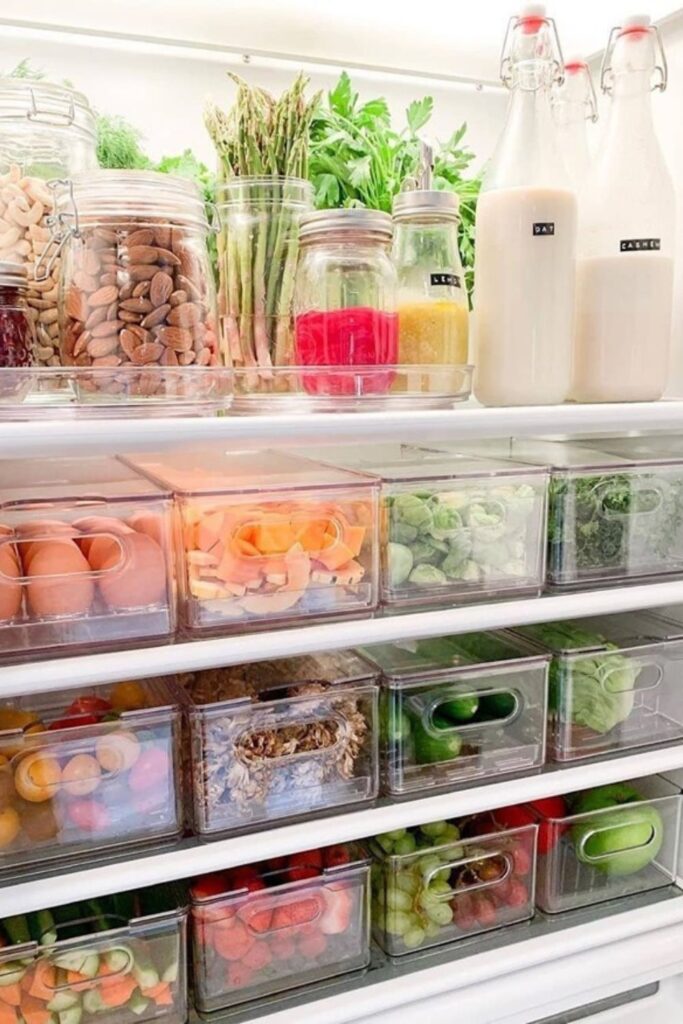
Pantry-style jars bring surprising order to a refrigerator shelf. Dry snacks, nuts, and seeds stay sealed in glass containers while still remaining easy to see and reach.
Instead of packets that are only half-open taking up space, everything fits neatly inside jars that are all the same size and line up across the shelf.
Putting them in jars with a little water and standing them up keeps the stems moist and stops the leaves from getting crushed by other groceries.
Putting milk bottles and drink containers next to the jars makes a clean row that takes up the whole shelf.
Pull-out bins below that keep veggies, eggs, and diced goods in one place so that smaller pieces don’t get lost.
Vertical Bins
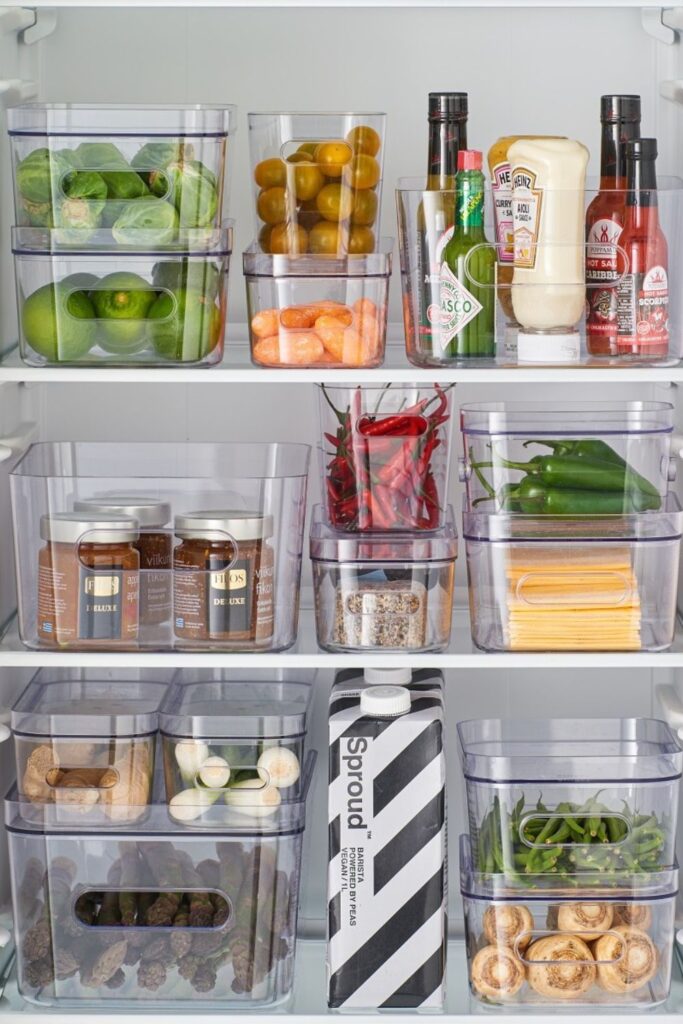
Flat containers waste valuable shelf height. Tall stackable bins flip that problem by using vertical space that usually sits empty.
Instead of spilling out across the shelf, vegetables, fruits, and tiny produce stack neatly. Brussels sprouts, limes, carrots, and cherry tomatoes stay apart but still fit firmly together.
Clear bins with handles built in make cooking every day easier. You can see the ingredients right away as you pull the container forward.
Without having to dig through the back of the fridge. Smaller bins are great for things like peppers, mushrooms, or chopped veggies that tend to get lost in bigger groceries.
A tall organizer keeps sauces and condiments together so that bottles don’t fall over every time the door opens. Using bins that stack evenly is the best way to set this up again.
Meal Prep
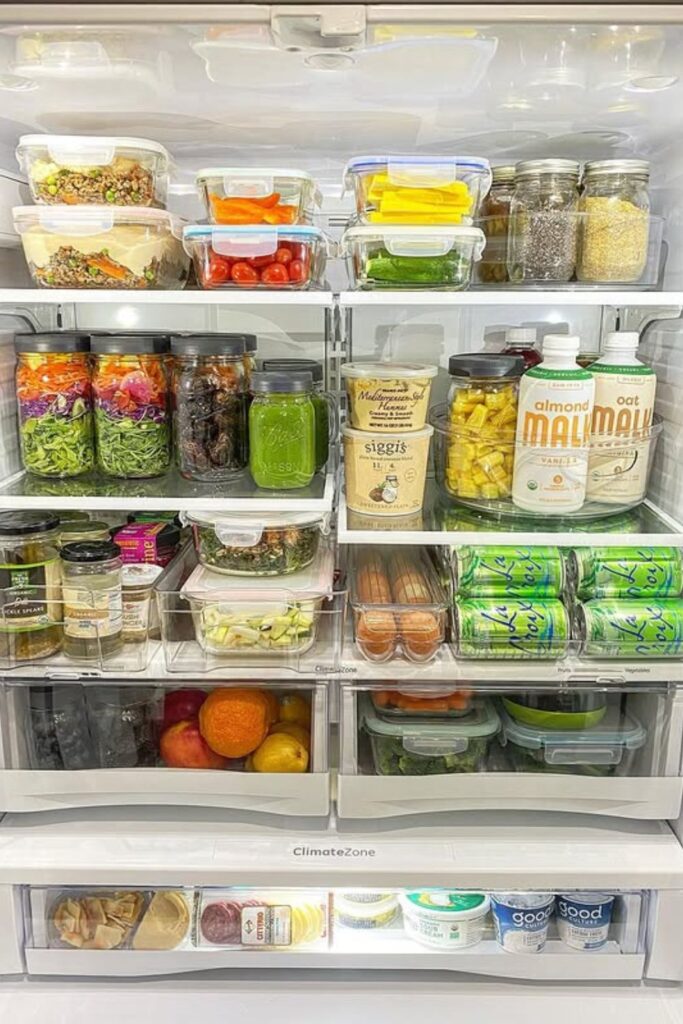
Busy weeks become easier when meals are already portioned and ready to grab. Glass containers stacked neatly across the shelves.
Keep leftovers, chopped vegetables, and prepped items in order without making a mess. Each container retains only one part of a meal, so the foods don’t mix together.
Clear lids make it easy to tell what meals are in the fridge, so you don’t have to look through it to find lunch or dinner.
Mason jars packed with salads or layered items save room since they can stand up and stack nicely next to other containers.
A revolving tray keeps drinks and yogurt together so that little things don’t get lost behind bigger containers.
Snack Stations
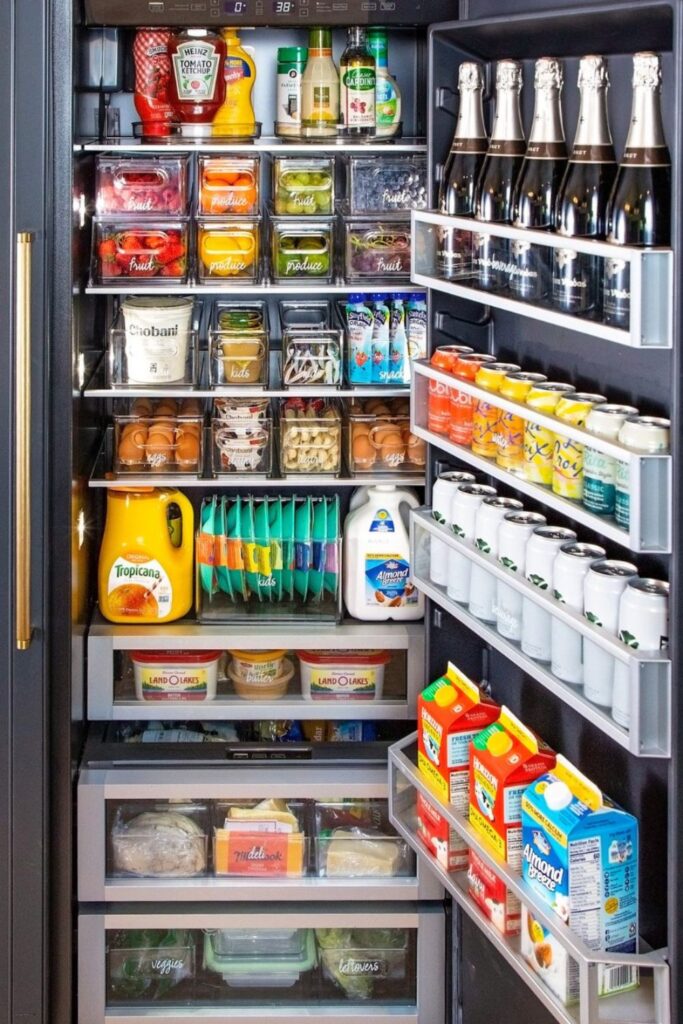
Constant fridge searching usually happens when snacks are scattered across different shelves. Dedicated snack bins fix that instantly.
Small clear containers carry fruit servings, yogurt cups, and kid-friendly snacks so that everything is easy to find and grasp.
Putting labels on each bin gives another level of organization. “Fruit,” “produce,” “kids,” and other groups help everyone in the house get what they need.
Without having to go through the fridge. Drinks and juice pouches stand up in their own containers to keep them from tipping over and making a mess. Eggs are safe in little trays.
Door shelves hold cans and bottles that don’t need to be stored in bins, which leaves the main shelves open for organized food zones.
Shelf Labels
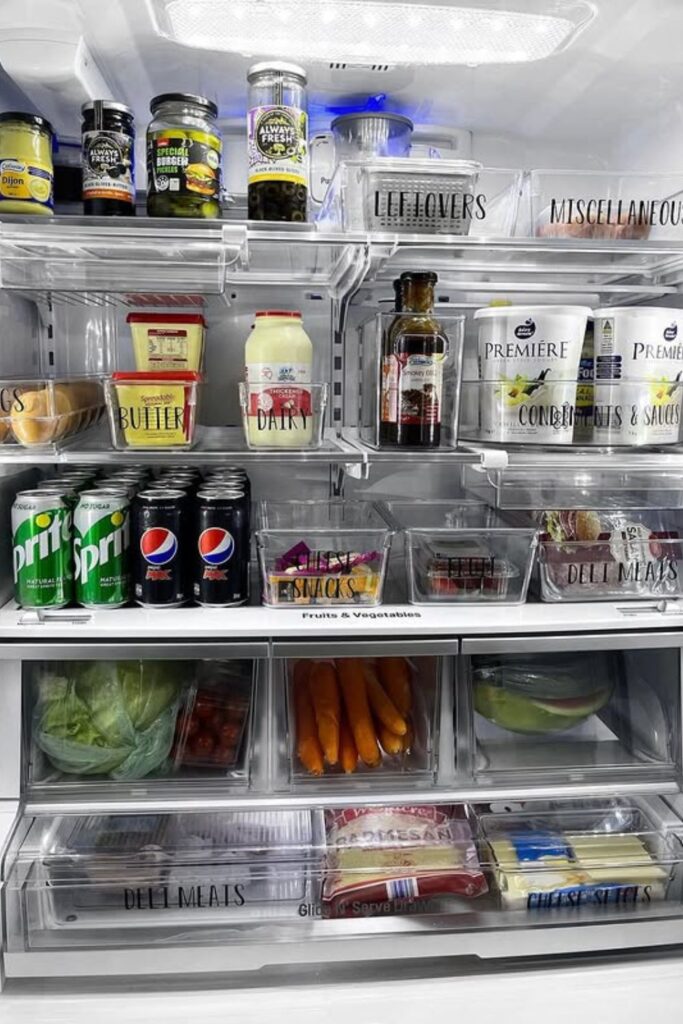
Confusion disappears when every shelf clearly tells you what belongs there. Simple labels turn a fridge into an organized system where food categories stay separated.
Instead of moving around on different shelves. Each type of food eggs, butter, dairy, condiments, and leftovers has its own compartment makes it easy to find what you need quickly.
Clear bins assist keep certain areas clean by keeping small things that usually make a mess. The snack bars stay in one container, the deli meats stay packed neatly in another.
And the sauces stay upright instead of falling over. Drinks are lined up on the shelf so that the cans don’t roll about as the door moves.
The lower drawers are for veggies and bigger fruits, and the specialty drawers are for keeping cheese and deli products fresh.
Drink Row
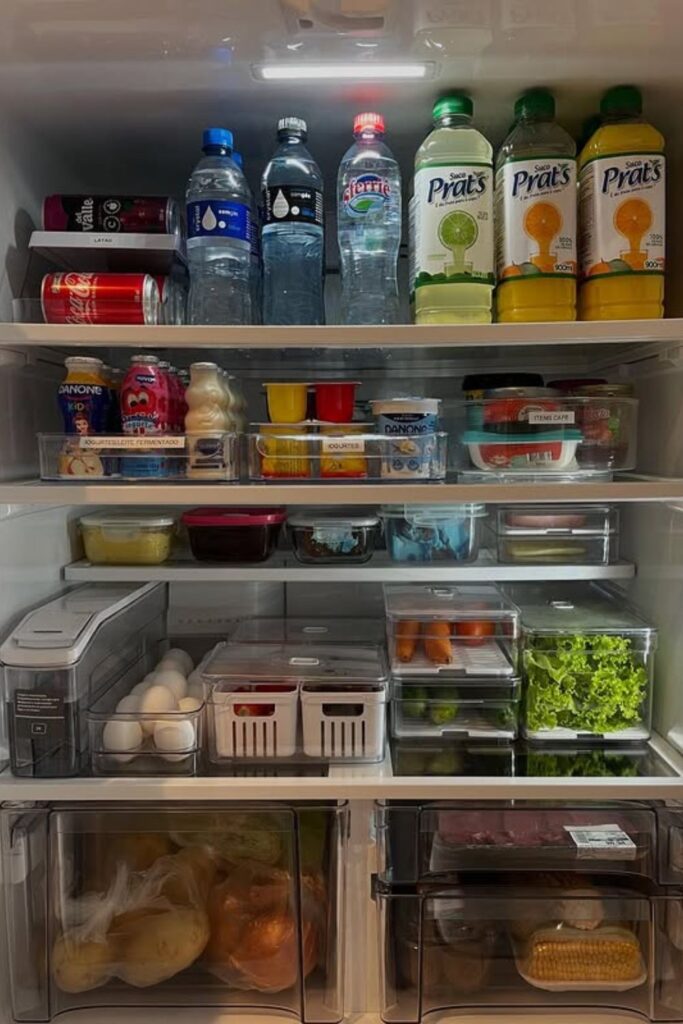
Loose bottles quickly steal half the shelf if they aren’t lined up properly. Keeping drinks in a single row across the top shelf solves that problem immediately.
Instead of spreading out throughout the fridge, water bottles, juice cartons, and sparkling drinks stay together. Short, glass trays help keep little things that tend to make a mess in check.
The shallow organizers hold yogurt cups, snack containers, and pudding cups so they don’t move around when the door opens.
Underneath that, stackable produce boxes keep items like lettuce, carrots, and tomatoes in sight while making good use of vertical space.
Instead of rolling around on the shelf, eggs are carefully stored in a special container. Lower drawers hold large amounts of produce, including onions and potatoes.
Fresh Herb Storage
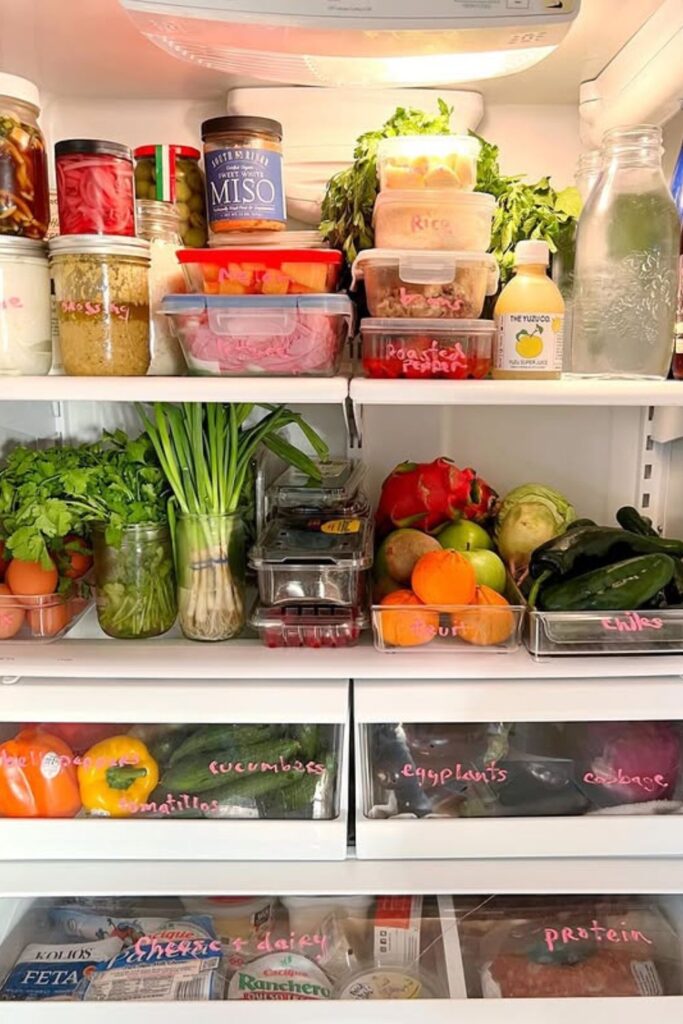
Wilted herbs usually happen when leafy greens get buried under heavier groceries. Standing herbs upright in jars changes that instantly.
A little water keeps the stems moist, and the leaves stay open and fresh instead of getting crushed on a packed shelf.
This is a great application for glass jars since they can hold herbs like cilantro, parsley, or green onions upright without taking up too much space.
There are bins nearby that hold prepared ingredients and leftovers, so everything you need to cook is in one part of the fridge.
The bottom shelves have small bins that hold fruits and vegetables so that delicate items are still simple to see and grab.
Category Zones
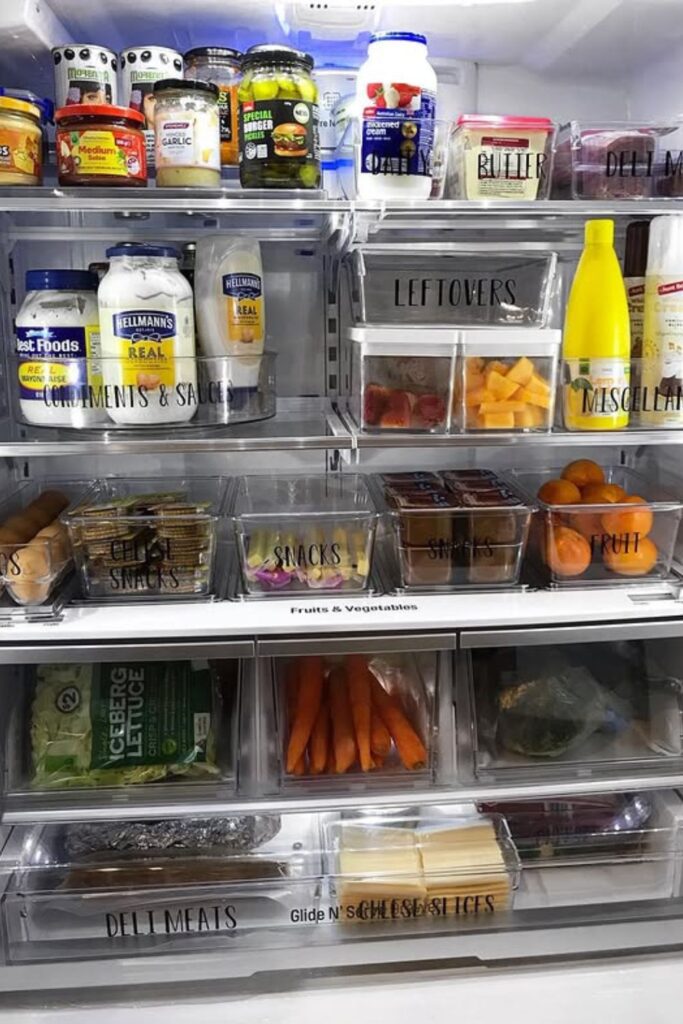
Searching for one item shouldn’t require moving half the fridge. Clear category zones fix that instantly.
Each shelf has a distinct category of items on it. For example, condiments and sauces stay together, leftovers stay in one container, and dairy products stay close to butter and spreads.
Small containers with labels hold snacks, eggs, and fruit so that things don’t roll around on the shelf. Kids’ snacks are stored in their own bin so they can get to them quickly.
A spherical organizer holds condiment bottles inside, which stops jars from tipping over and keeps labels visible.
The lower drawers keep veggies like lettuce and carrots apart so they don’t combine. A special drawer holds deli meats and sliced cheese, making it easier to find sandwich fixings.
Stack System
Small fridges run out of room fast when every item spreads across the shelf. Stacking containers fixes that immediately by turning one layer into two or three organized levels.
There are small bins that hold Brussels sprouts, limes, and cherry tomatoes. These bins build up instead of out.
Tall containers keep sauces and bottles together, so condiments don’t get spread out all over the shelf.
Nearby containers keep vegetables like carrots, jalapeños, and mushrooms organized so that fragile foods are safe and simple to grasp while cooking.
The lowest shelf has wider containers that hold jars and packaged items without impeding your view.
Drink Baskets
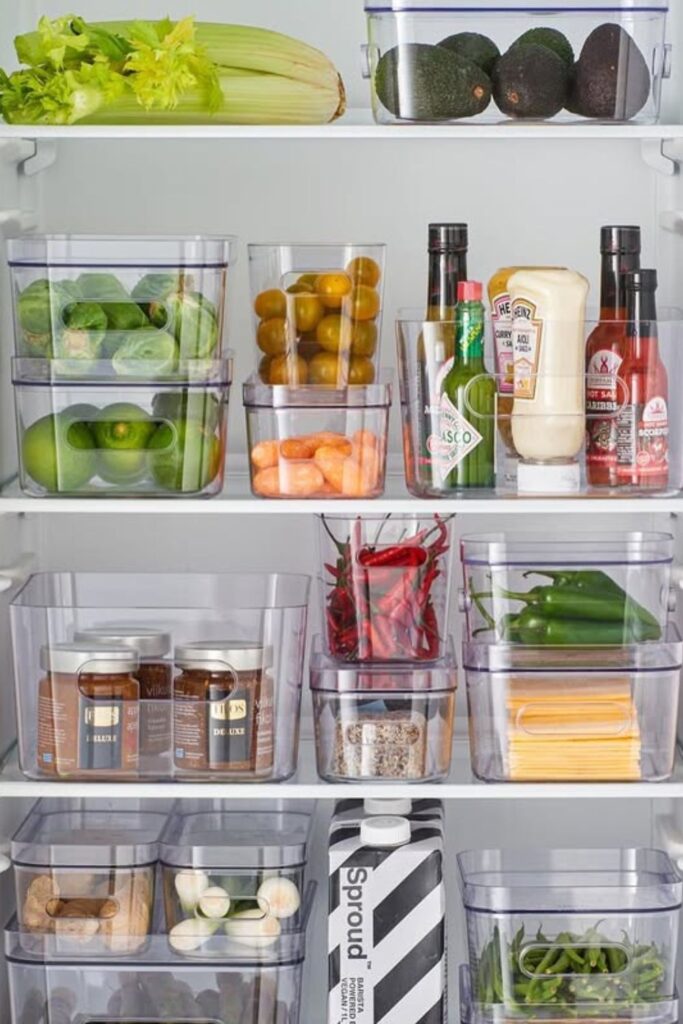
Rolling cans and scattered juice boxes quickly turn a shelf into a mess. Narrow storage baskets stop that problem by keeping beverages contained in one place.
The cans stay in place in the bin instead of falling over every time you open the fridge door.
Slim bins also assist keep smaller drink packs in order, since they tend to get lost behind bigger bottles.
Juice pouches stay upright in one container, so kids can easily grab one without having to search through the fridge.
The same principle works for cans of sparkling water or soda. The basket keeps everything together while still letting air flow.
Produce Dividers
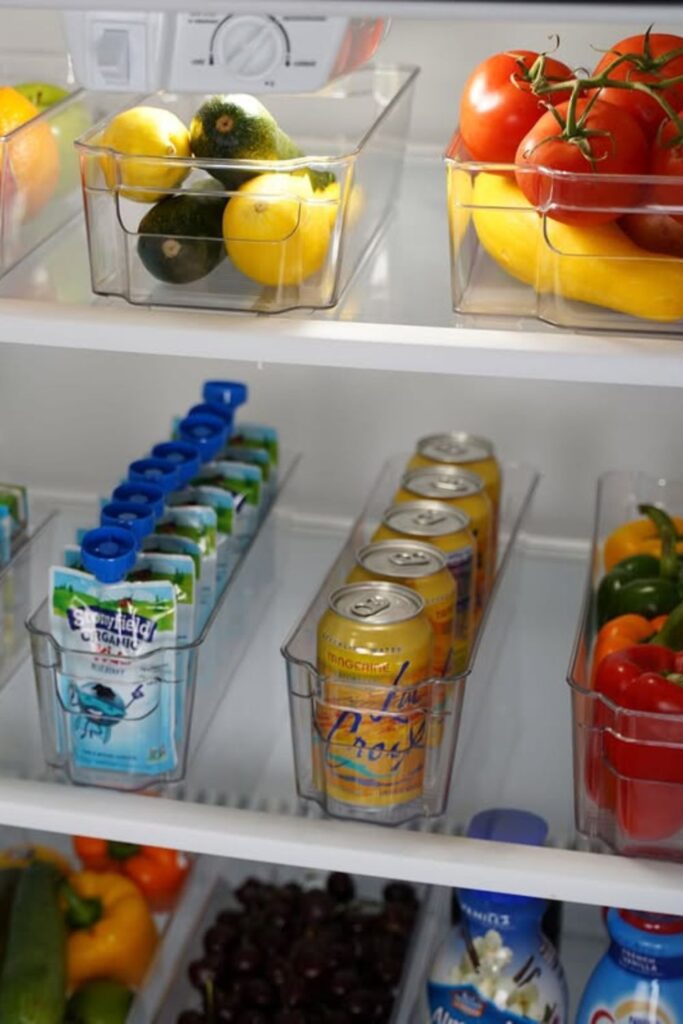
Mixed fruits and vegetables often pile together, which makes shelves look crowded and harder to manage.
Divided containers fix that by keeping different ingredients in the same box apart. There are two compartments: one for cucumbers and strawberries and one for carrots and celery.
The carrots and celery don’t contact the softer fruits and vegetables. It works great to use sectioned containers to get materials ready ahead of time.
Clear dividers keep grapes, cut vegetables, or snack pieces in order so that everything is still visible when the fridge door opens.
There are little trays nearby where you may stack eggs so they don’t move about or take up too much space.
Lazy Turntable
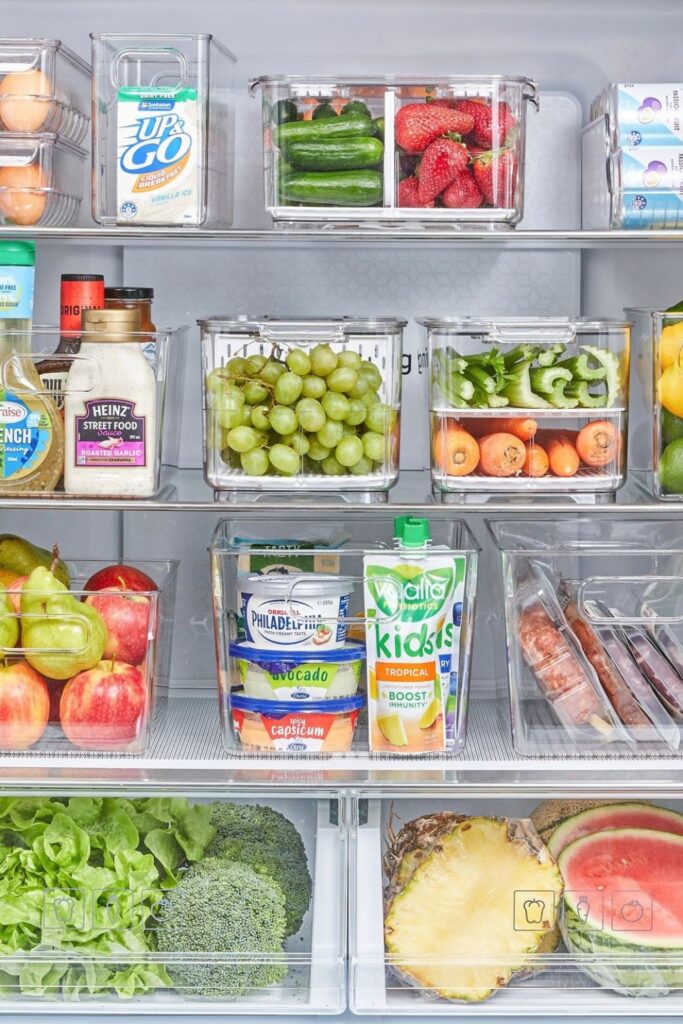
Reaching items at the back of a fridge shelf often means moving half the groceries first. A small rotating tray eliminates that problem.
Yogurt cups are on a turntable, so a quick spin brings every container to the front without moving the shelf.
Clear storage boxes on the bottom keep vegetables and packaged foods from spilling out, which keeps the shelf neat.
In a little bin, bell peppers stay visible and safe instead of rolling around. A vented container that doesn’t smash bread keeps it fresh and saves space.
Leafy greens are kept in a box with holes in it so that extra water may drain out and the leaves stay fresh longer.
FAQs
How do you maximize space in a small refrigerator?
To begin, get rid of big dishes and containers that don’t match and replace them with stackable, square storage bins.
Square containers fit together better and take up less space than round ones. Put comparable things together in clear bins, such snacks, fruits, or sauces.
Putting smaller containers on top of bigger ones converts one shelf into numerous layers of storage without making the fridge too full.
What foods should not be stored in the refrigerator door?
The door of the fridge is the warmest part because it opens a lot. Don’t put things that go bad quickly, like milk, eggs, and fresh meat, in there.
Since fluctuations in temperature might make them go bad faster. Instead, store those foods on shelves inside where the temperature keeps more consistent.
The door is perfect for sauces, condiments, juices, and bottled drinks that don’t mind variations in temperature.
You may like to read!
- 26 Dresser Organization Ideas
- 18 Water Bottle Organization
- 20 Coffee Station Organization
- 20 Baby Bottle Organization
- 18 Vanity Drawer Organization

Fasial is the founder of the Fizzy Flare. He has been a passionate blogger since 2021. He ran three different websites in the past few years. Now he is focusing on Fizzy Flare to build an audience and help them organize their life.