25 Fruit Storage Ideas for 2026
This post may contain affiliate links: full affiliate disclosure.
Fruit goes bad faster than it should. You buy it fresh, bring it home, and somehow, a few days later, the berries are moldy, the bananas are too soft.
Most people think this just “happens,” but the real problem is storage. Different fruits behave differently. When you store them the wrong way, they spoil quickly.
In this article, you’ll find how each fruit should be stored, with 25 unique ideas you can try yourself for fruit storage.
Let’s jump in!
Contents
- 1 How Should Different Fruits be Stored to Stay Fresh Longer?
- 1.1 Tiered Counter Baskets
- 1.2 Rolling Produce Tower
- 1.3 Wooden Crate Stack
- 1.4 Pantry Crate Rack
- 1.5 Split Level Cart
- 1.6 Angled Bin Rack
- 1.7 Lined Crate Storage
- 1.8 Corner Cart Setup
- 1.9 Mixed Tier Stand
- 1.10 Pull-Out Drawers
- 1.11 Open Wire Bowl
- 1.12 Mobile Wood Crates
- 1.13 Counter Crate Layers
- 1.14 Citrus Sorting Grid
- 1.15 Drawer Fruit Zone
- 1.16 Hanging Net Storage
- 1.17 Vented Berry Boxes
- 1.18 Prepped Fruit Boxes
- 1.19 Lined Display Bowl
- 1.20 Labeled Storage Zones
- 1.21 Tiered Serve Bowls
- 1.22 Hanging Basket Stack
- 1.23 Cubby Shelf Sorting
- 1.24 Sectioned Wood Boxes
- 1.25 Built-In Produce Bays
- 2 FAQs
How Should Different Fruits be Stored to Stay Fresh Longer?
To keep fruit fresh longer, you have to stop storing all fruits the same way. Some fruits keep ripening after you bring them home.
While others slow down only when they’re cold. When you mix them or store them in the wrong place, they spoil faster.
The key is understanding three things: where each fruit should live, which fruits should stay apart, and how air and moisture affect them.
Once you get these basics right, your fruit lasts longer, tastes better, and doesn’t end up forgotten or wasted in your kitchen.
Save this article for later! 👇👇
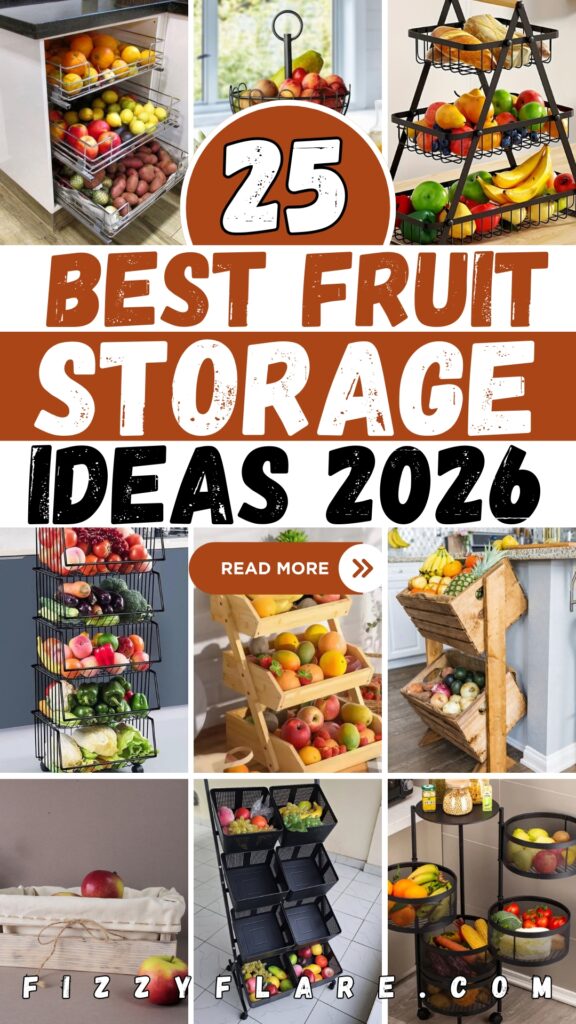
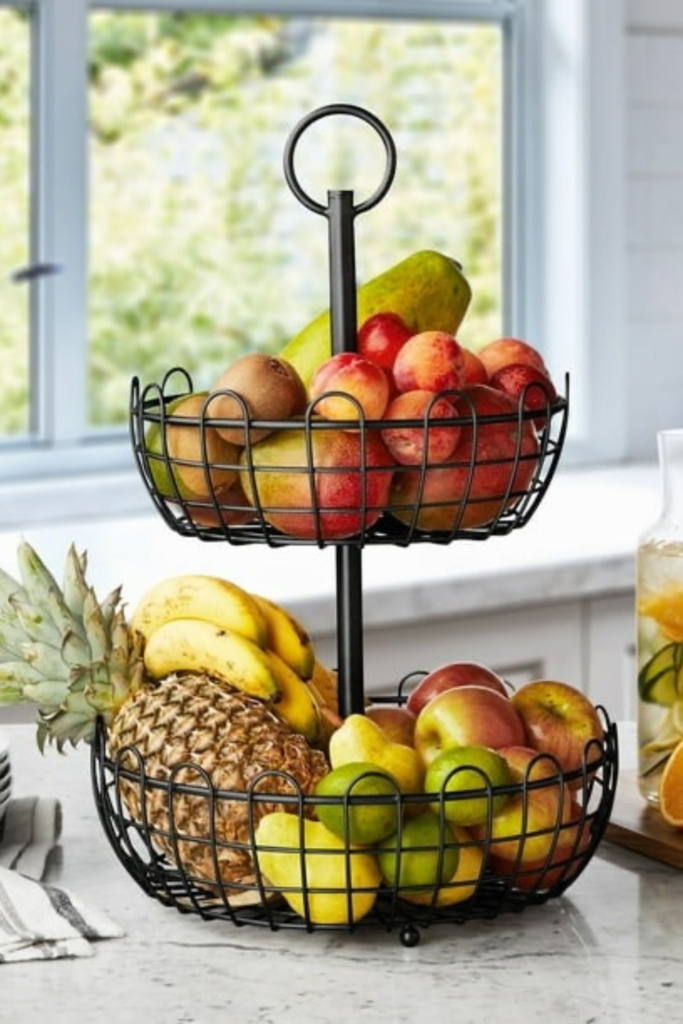
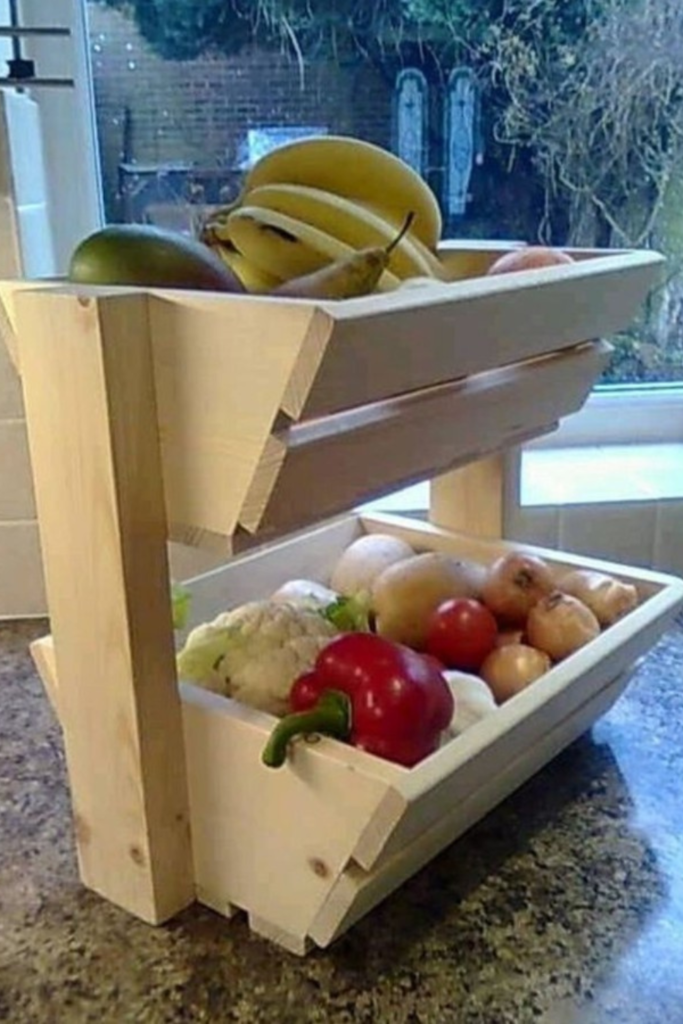
Tiered Counter Baskets
Crowded counters waste fruit faster than you think, so stacking storage vertically fixes that problem instantly.
Keep slower-ripening fruit on top and heavier produce below to avoid bruising. Place it near a window.
Soft natural daylight keeps the setup bright and makes fruit easy to spot before it goes bad, two-tier basket works best.
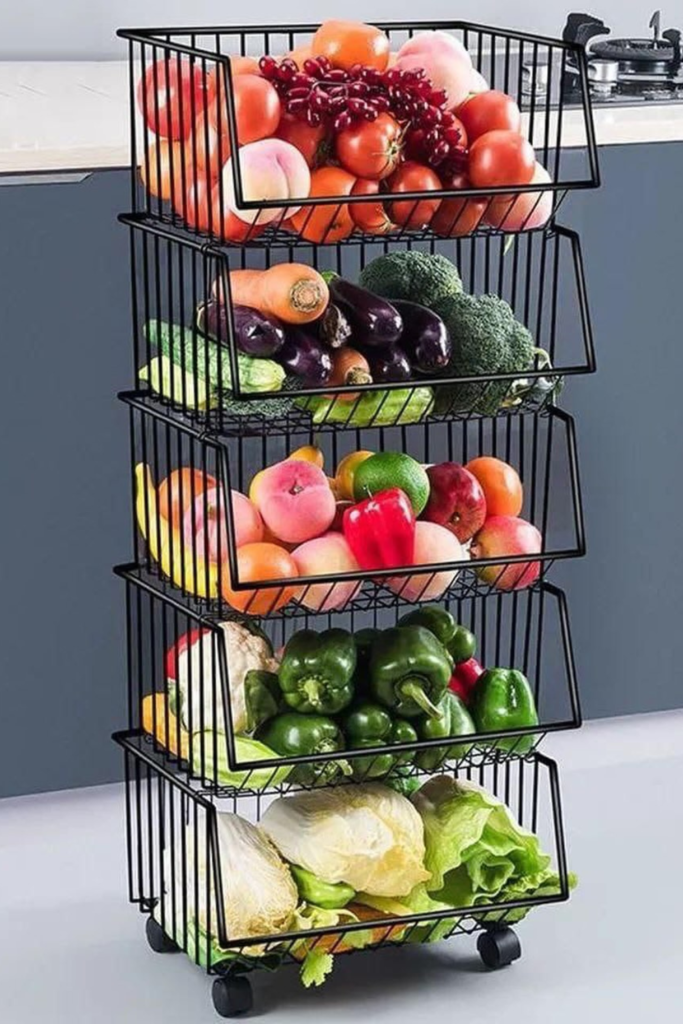
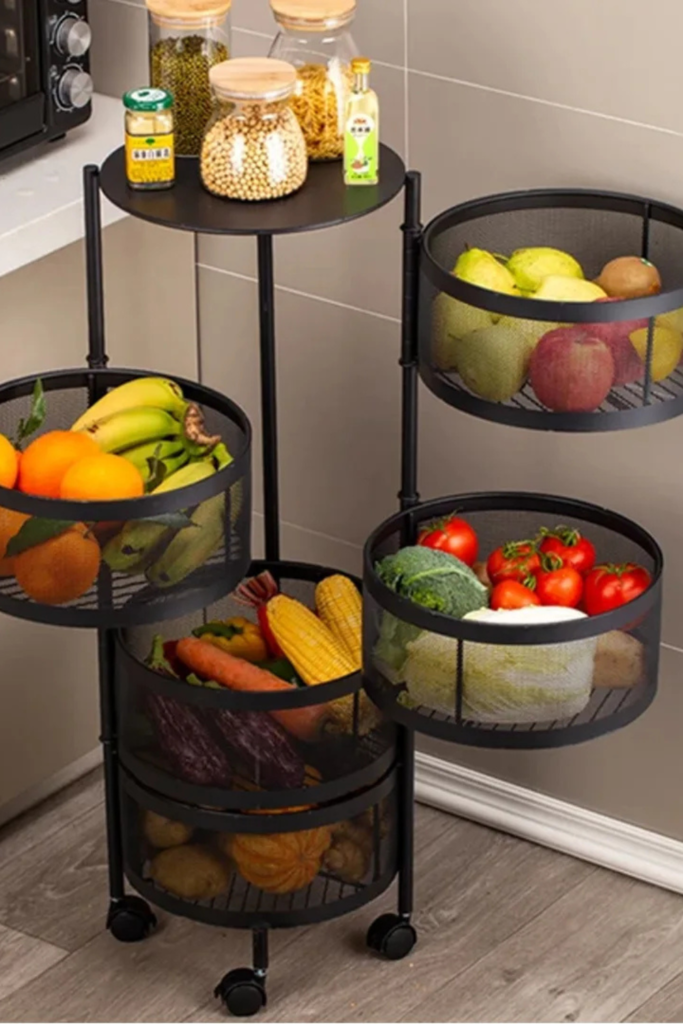
Rolling Produce Tower
Floor space often goes unused. Use top-tier fruits and lower-tier vegetables to avoid ethylene-related issues.
This kind of vertical cart turns it into smart storage works best in small kitchens or near prep areas where storage needed.
Wheels make it easy to move near natural light during the day and under soft overhead kitchen lighting at night.
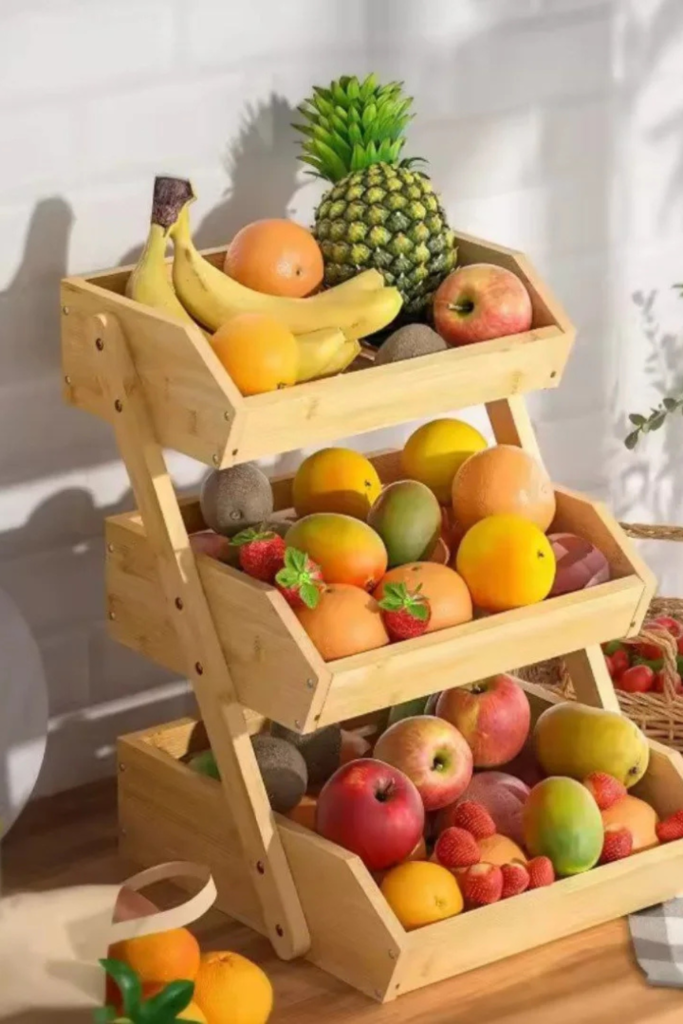
Wooden Crate Stack
Warm wood instantly makes fruit feel intentional instead of cluttered. Stack fruits by ripeness, not by type.
This setup fits perfectly in open kitchens, dining corners, or pantry edges where you want storage to double as decor.
Strong natural side light highlights the wood grain, while soft ambient lighting keeps the colors looking fresh all day.
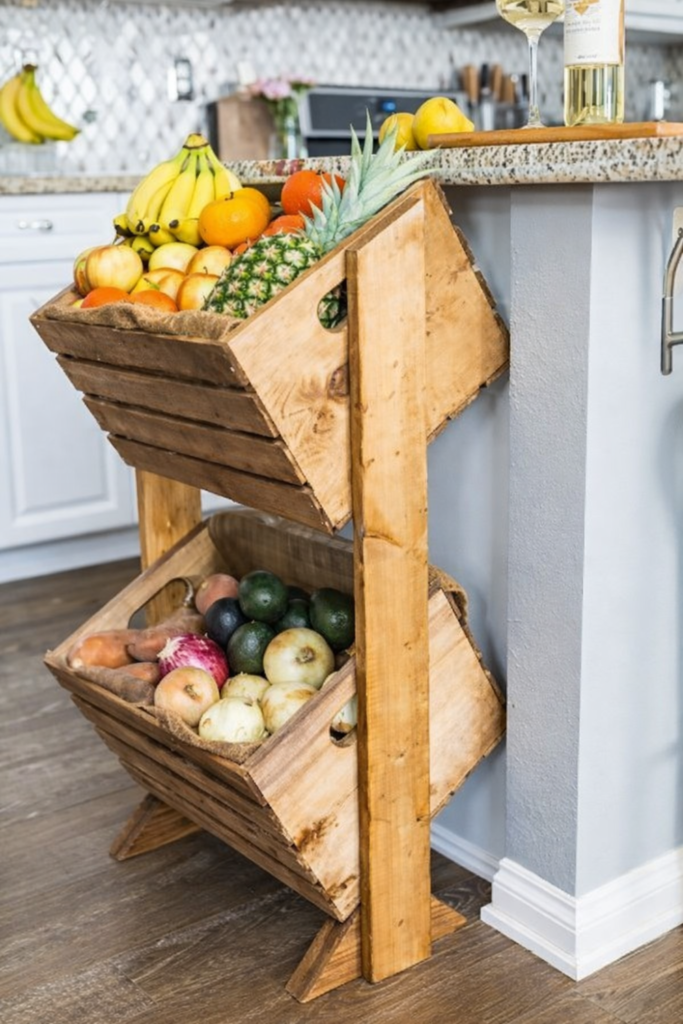
Pantry Crate Rack
When counter space is tight, leaning into vertical pantry storage keeps fruit organized without hiding it.
Use open crates so fruit breathes and moisture doesn’t get trapped. Keep ethylene-heavy fruits higher up.
Soft ambient indoor lighting is enough here since direct sunlight isn’t needed, works best along empty walls.
Split Level Cart
Mixing fruit and vegetables causes faster spoilage, and this layout quietly solves that. Assign one side to fruit.
The other one to vegetables, this works best in tight kitchen corners where counter storage isn’t an option.
Open mesh keeps air moving, which slows moisture buildup. Overhead kitchen lighting is enough here.
Angled Bin Rack
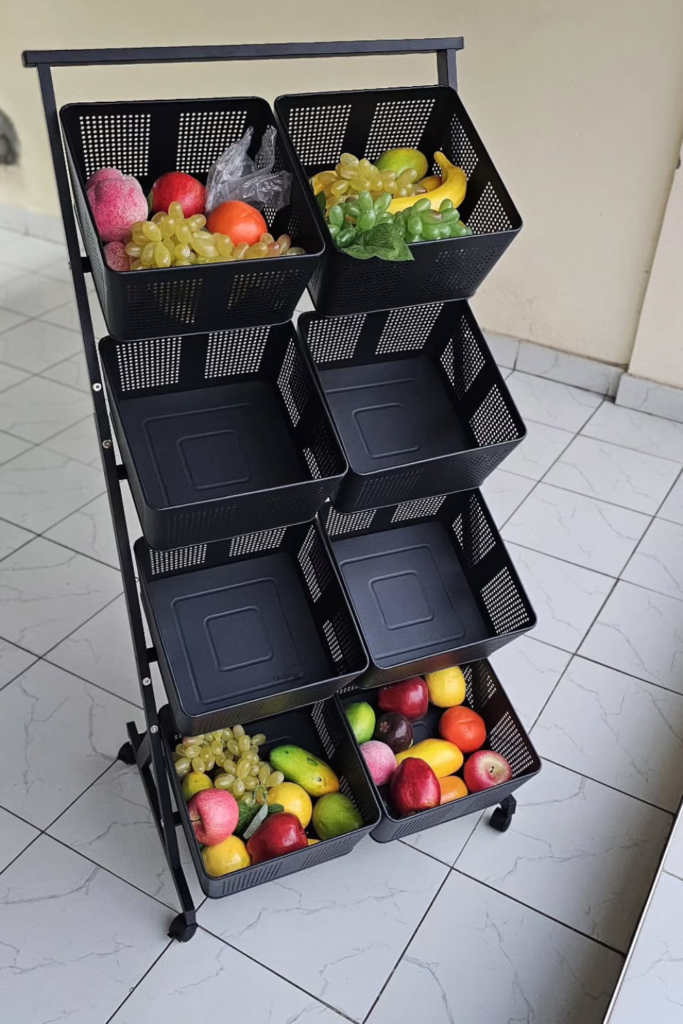
Fruit gets ignored when it sits flat and hidden, and angled bins fix that fast, this rack works best in kitchens.
Slanted baskets keep everything visible, nothing gets forgotten at the back. Assign the upper bins to ready-to-eat fruit.
The lower ones to slower-ripening fruit. Bright ambient daylight keeps colors clear without direct sun exposure.
Lined Crate Storage
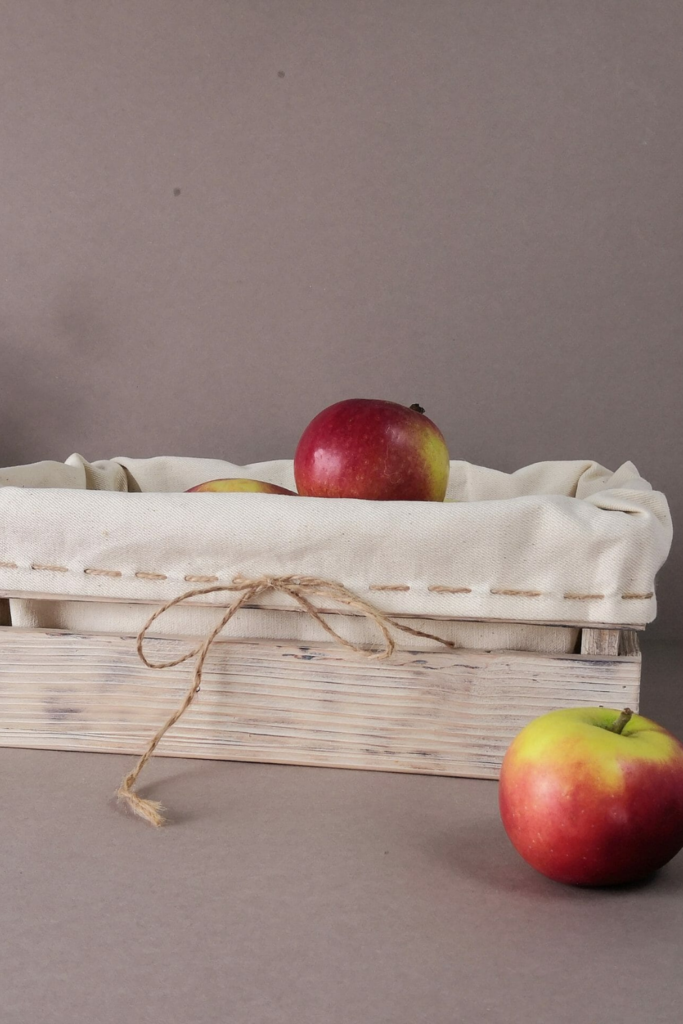
Soft liners slow fruit aging by absorbing excess moisture without trapping it. Use breathable fabric instead of plastic.
Apples and pears stay dry and firm, works best on open shelves, sideboards, or pantry counters where airflow matters.
Gentle diffused daylight keeps the area cool, while warm ambient room lighting adds balance without heating the fruit.
Corner Cart Setup
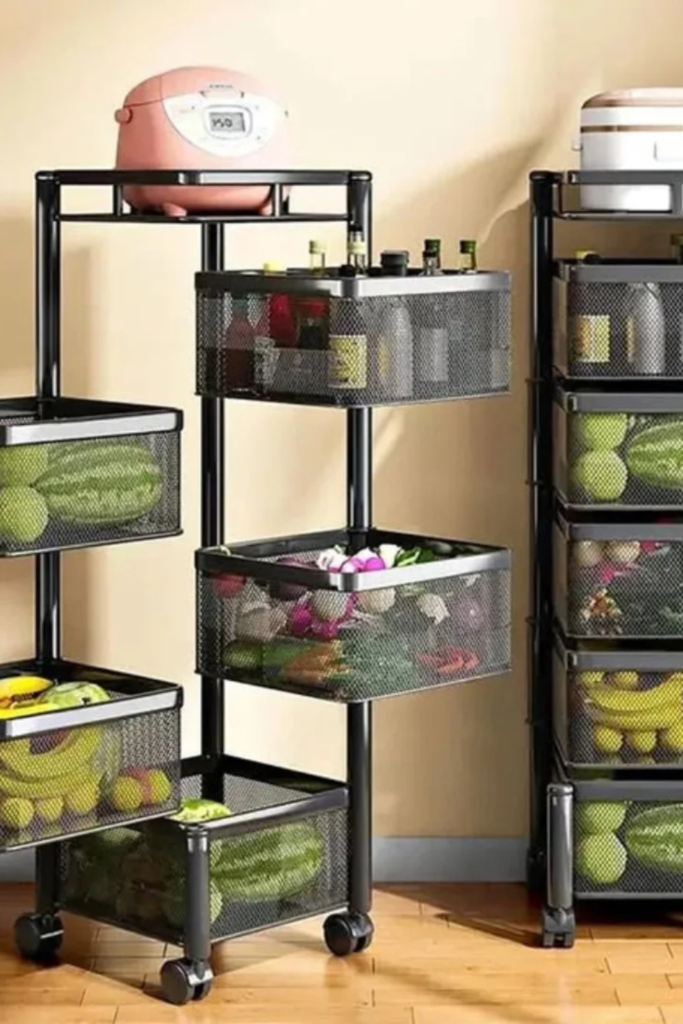
Dead kitchen corners quietly waste space, and this setup turns them into high-use storage, open mesh baskets.
Prevent moisture buildup while keeping everything visible. Separate carts help control ethylene spread.
Soft natural light from the side keeps produce visible, while warm overhead lighting supports evening use.
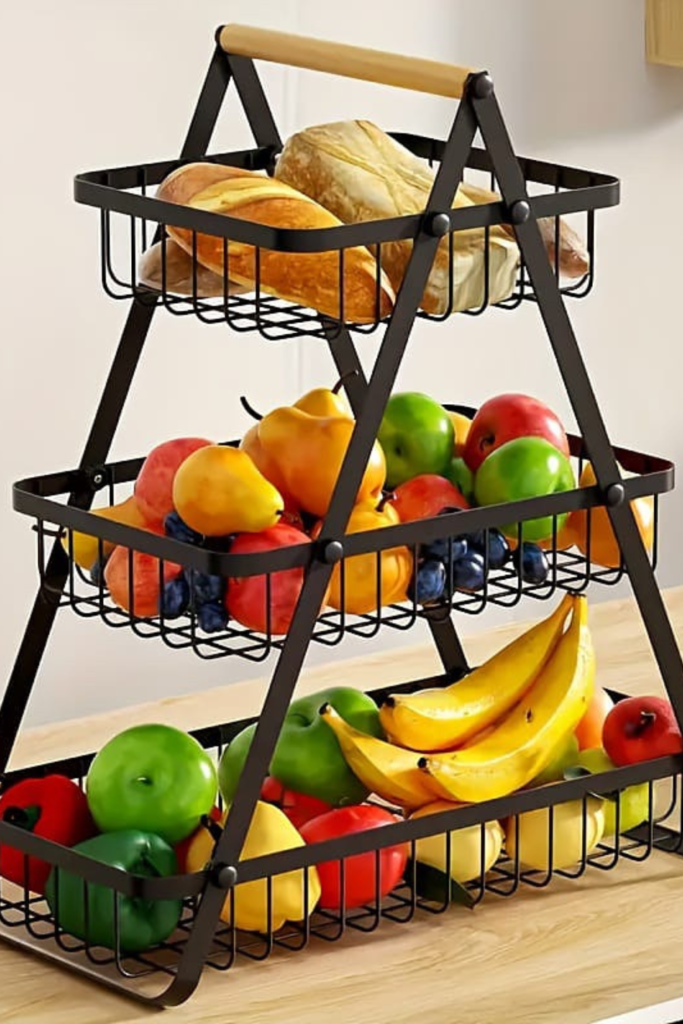
Mixed Tier Stand
Some kitchens need one spot that handles everything. Keep bananas, apples on separate levels to slow ripening issues.
Open wire sides help prevent moisture buildup on fruit. without looking messy, works best on wide counters.
Bright natural daylight keeps colors clear, soft overhead lighting makes it easy to grab items at night.
Pull-Out Drawers
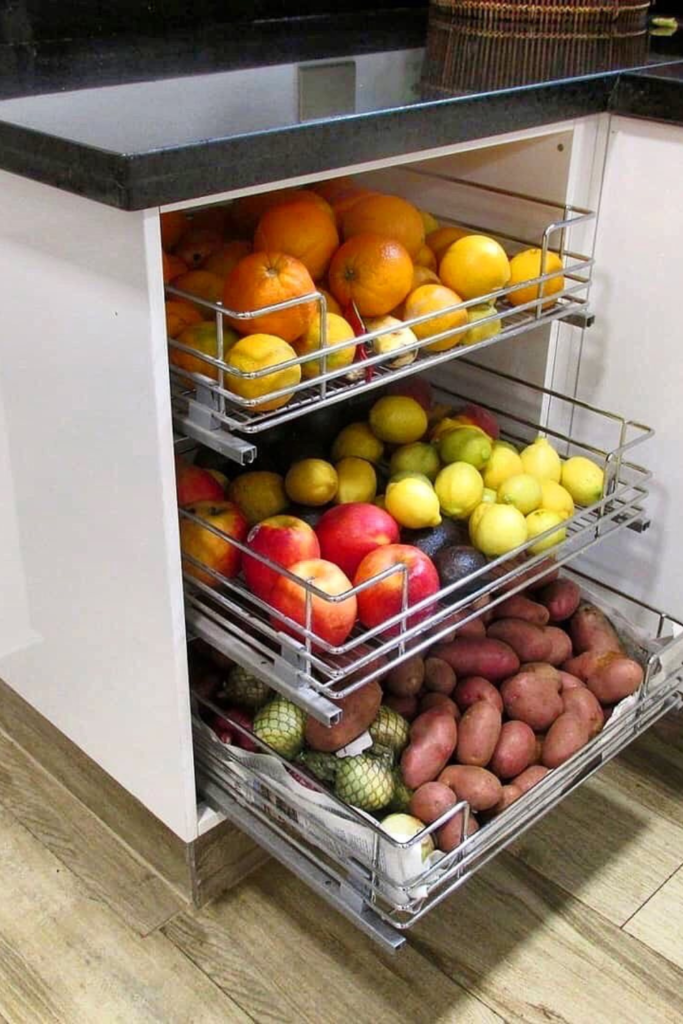
Hidden fruit only works when you can actually see it, and pull-out drawers solve that cleanly, fits best in lower cabinets.
Use separate baskets for citrus, apples, and root vegetables so ripening doesn’t clash. Wire frames allow airflow.
Overhead kitchen lighting combined with cabinet light keeps everything visible without warming the fruit.
Open Wire Bowl
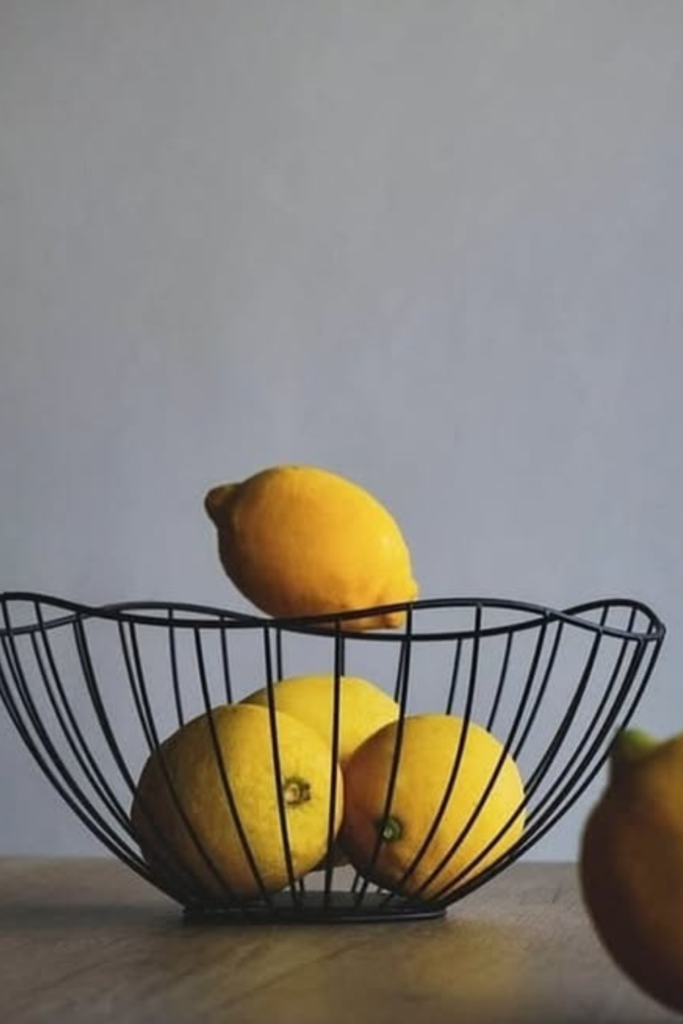
Citrus lasts longer when air can move freely around it, and an open wire bowl does exactly that, best on dining tables or side counters.
Avoid stacking too deeply. Soft natural side light keeps the look fresh, while low ambient lighting prevents heat buildup.
Mobile Wood Crates
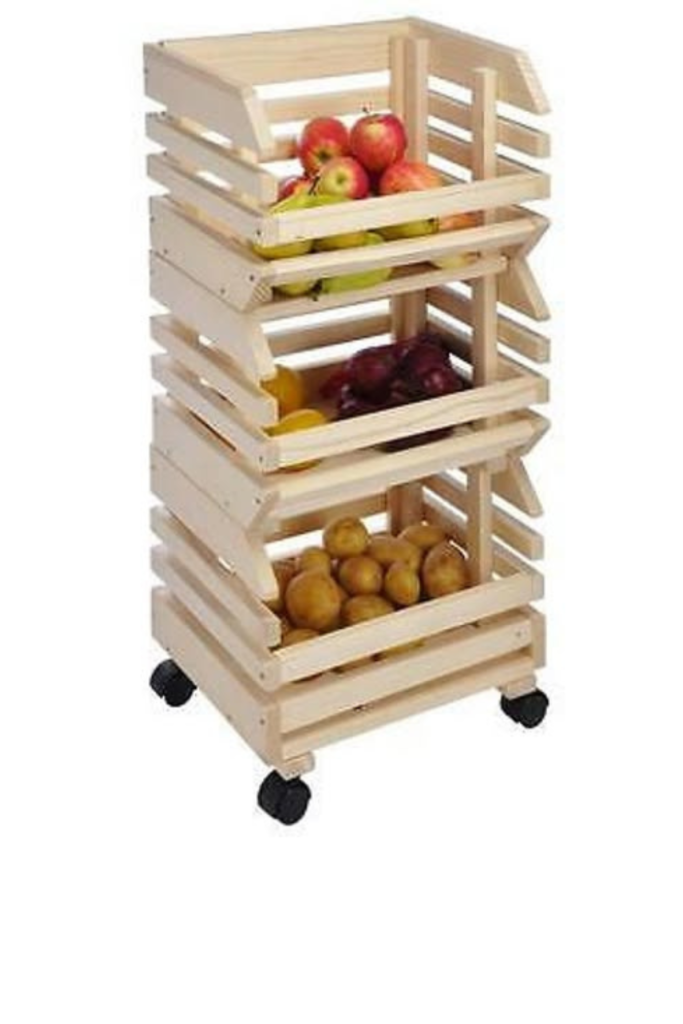
When fruit needs airflow but not clutter, stacked wooden crates strike the balance. Use each crate for one fruit type.
Control ripening speed and bruising. Slatted wood allows steady air circulation without trapping moisture.
Soft natural daylight nearby keeps fruit visible, while general room lighting handles evening use, works well.
Counter Crate Layers
Limited counter space still works when storage grows upward, not outward. Keep bananas and apples on separate tiers.
Layered crate setup fits perfectly near sinks or windows where fruit gets daily use. Solid wood sides protect fruit.
While open tops allow airflow. Bright window daylight keeps fruit visible, soft kitchen lighting covers nighttime use.
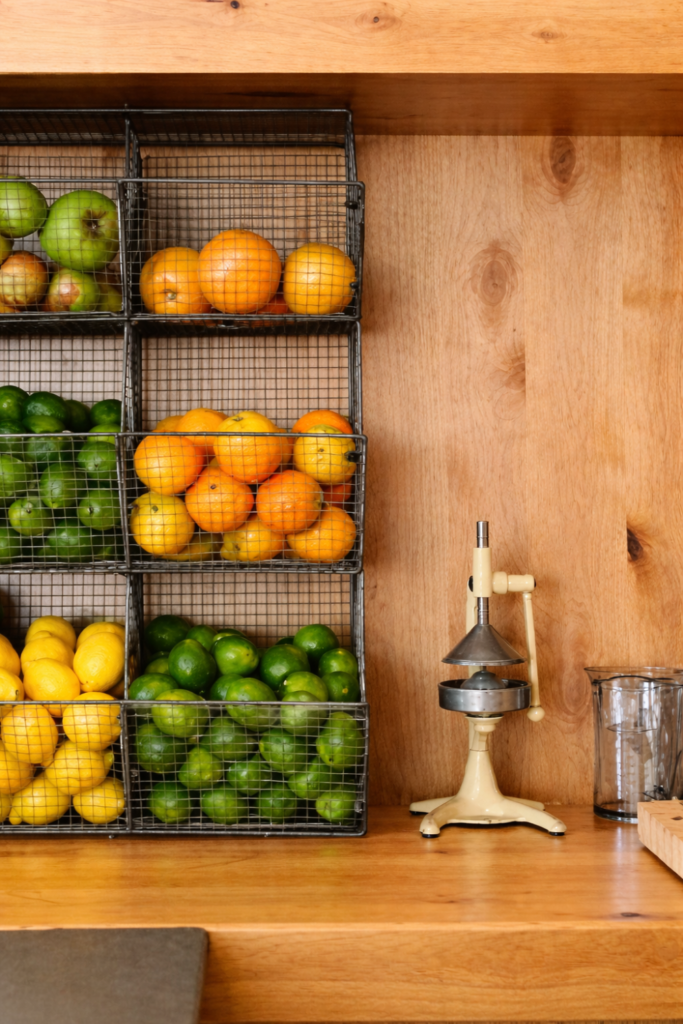
Citrus Sorting Grid
Citrus stays fresher when each type has its own space, and a grid setup makes that easy, works best on pantry shelves.
Separate lemons, limes, and oranges to prevent moisture buildup. Soft natural side light keeps colors clear, with warm task lighting.
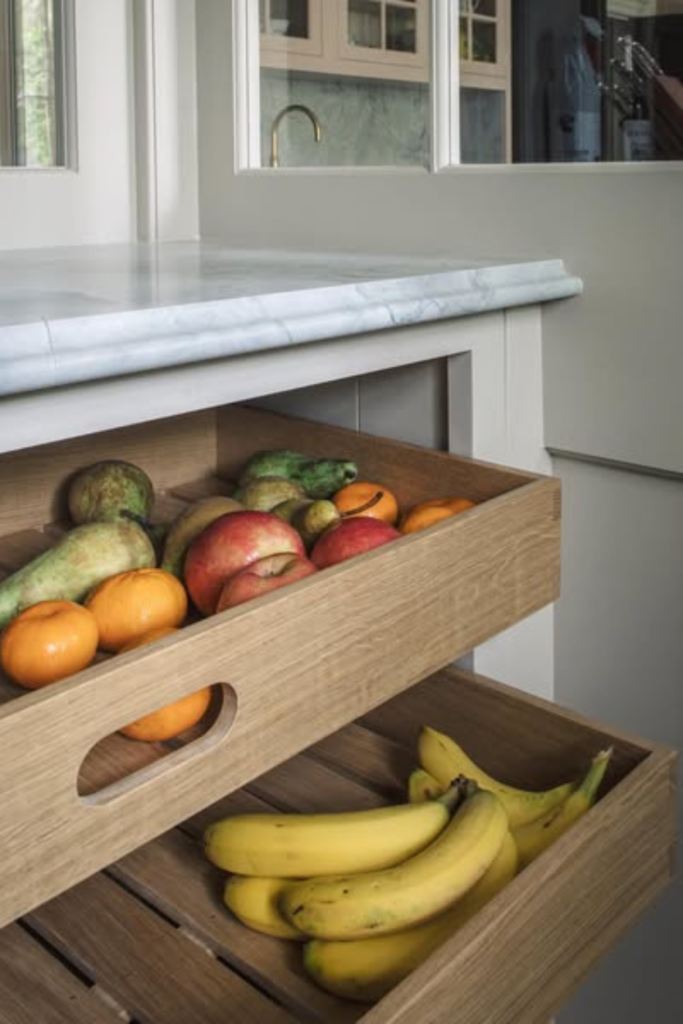
Drawer Fruit Zone
Built-in drawers keep fruit organized without stealing counter space. This setup works best in modern kitchens.
Clean lines matter, but quick access is still needed. Use upper drawers for slower-ripening fruit and lower ones for bananas.
Slatted wood bases improve airflow and reduce moisture. Natural window light nearby keeps fruit visible and easy to grab.
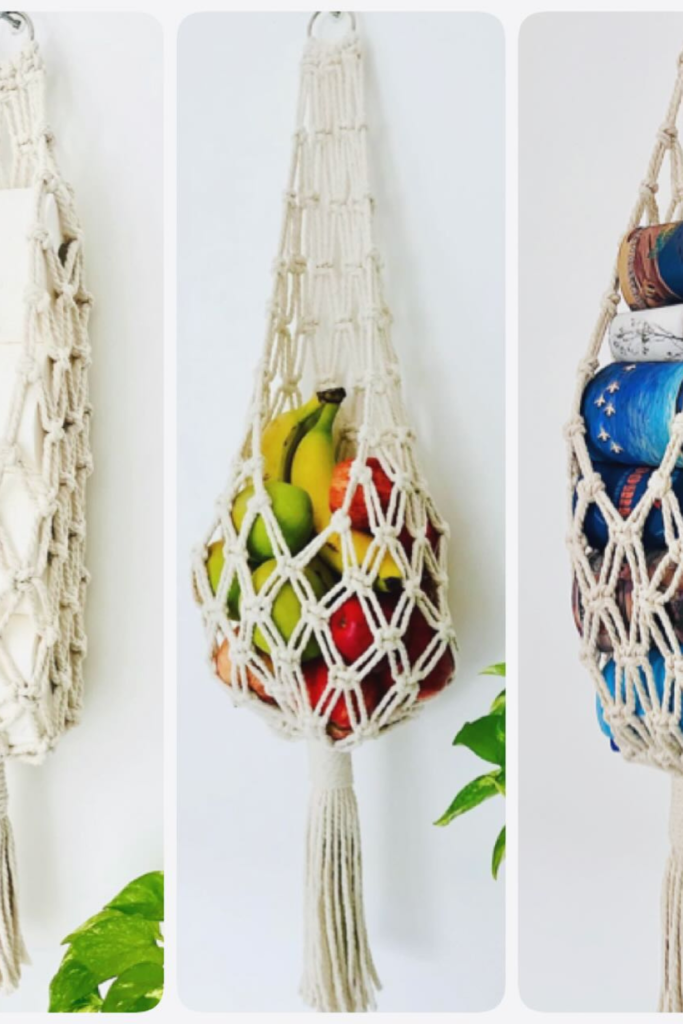
Hanging Net Storage
Counter clutter disappears when the fruit is fully removed from the surface. Hanging nets work best in small kitchens.
Store bananas, citrus, or apples separately, prevent premature ripening, open weave prevents moisture buildup.
Soft natural window light keeps fruit visible, while ambient room lighting handles evening use without heat.
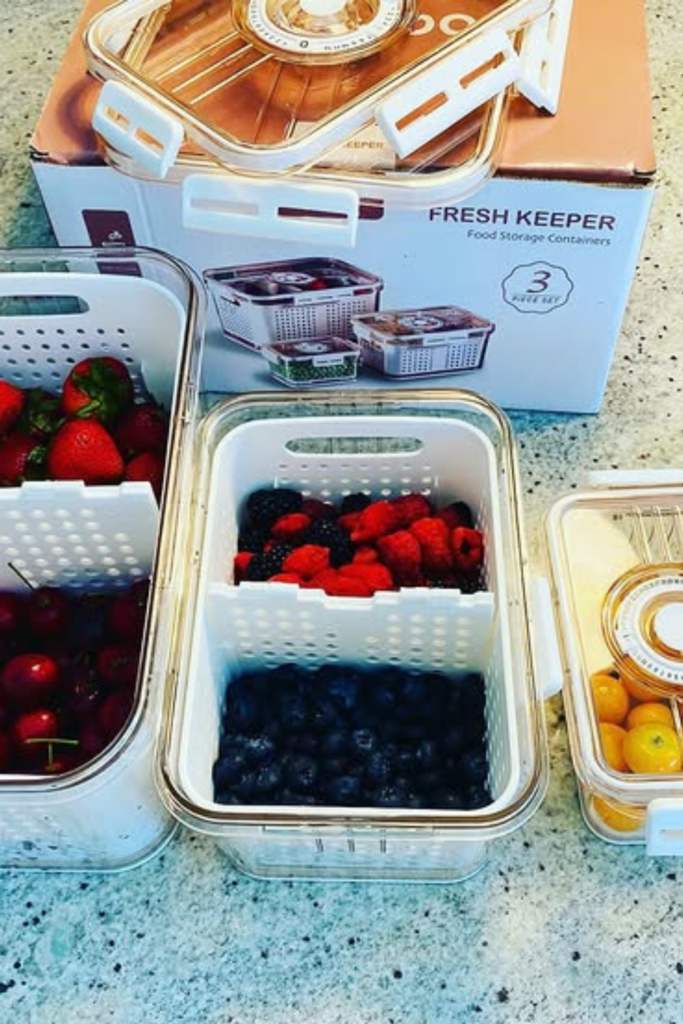
Vented Berry Boxes
Berries spoil fast when moisture gets trapped, and vented containers stop that cycle. Perforated sides allow airflow.
Raised bases keep fruit away from condensation. Line the bottom with a light layer of paper towels to absorb excess moisture.
Cool fridge lighting paired with clear lids makes it easy to spot berries before they turn, works best inside the fridge.
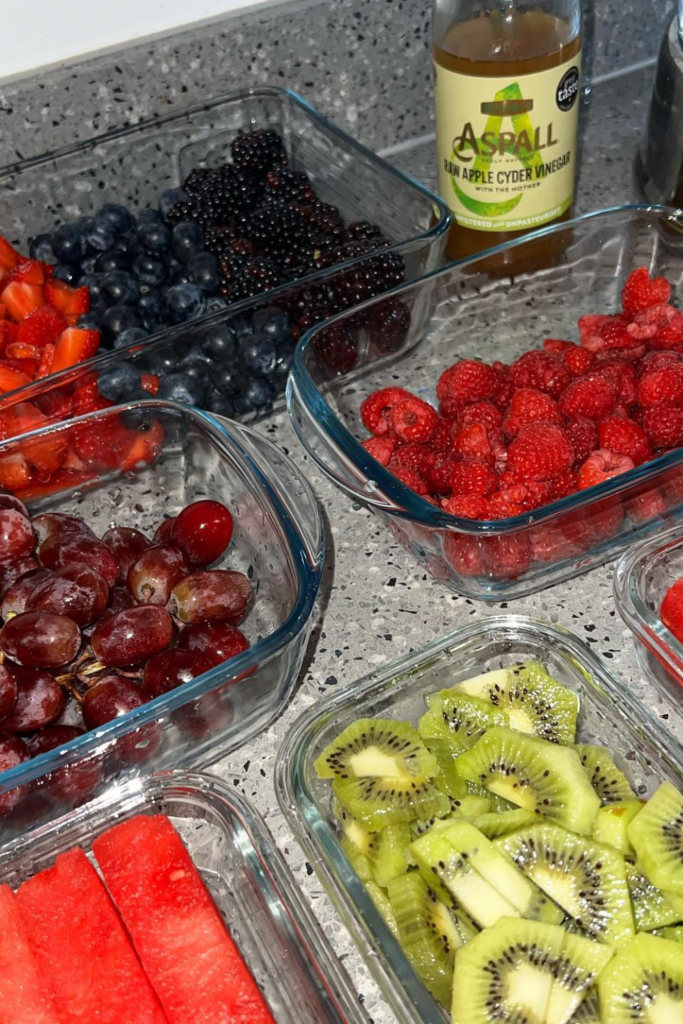
Prepped Fruit Boxes
Cut fruit disappears fast when it’s easy to grab, and this setup makes that happen. Store each fruit separately.
Juices don’t mix, and spoilage doesn’t speed up. Use airtight glass containers to lock in freshness and prevent odors.
Bright fridge lighting keeps everything visible, while clear lids help you spot what needs to be eaten first.
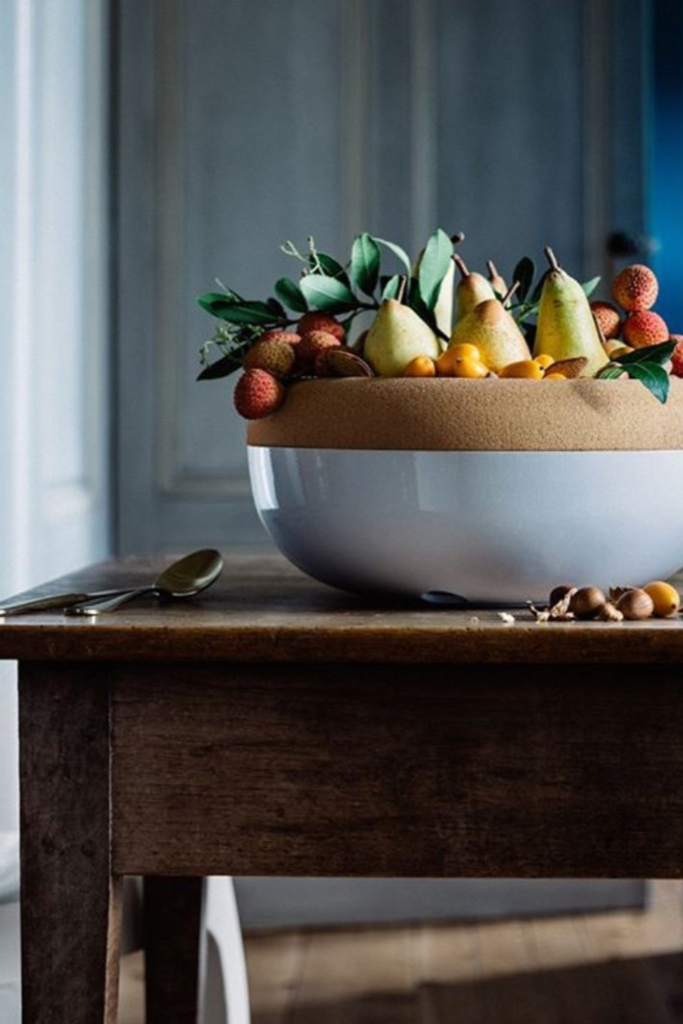
Lined Display Bowl
Decorative bowls can still work for storage when moisture is properly controlled. A soft fabric liner cushions delicate fruit.
Absorbs excess moisture. Keep only ready-to-eat fruit here. This setup fits best on dining tables or sideboards.
Gentle window light highlights the display, while warm ambient lighting keeps the space inviting without heating the fruit.
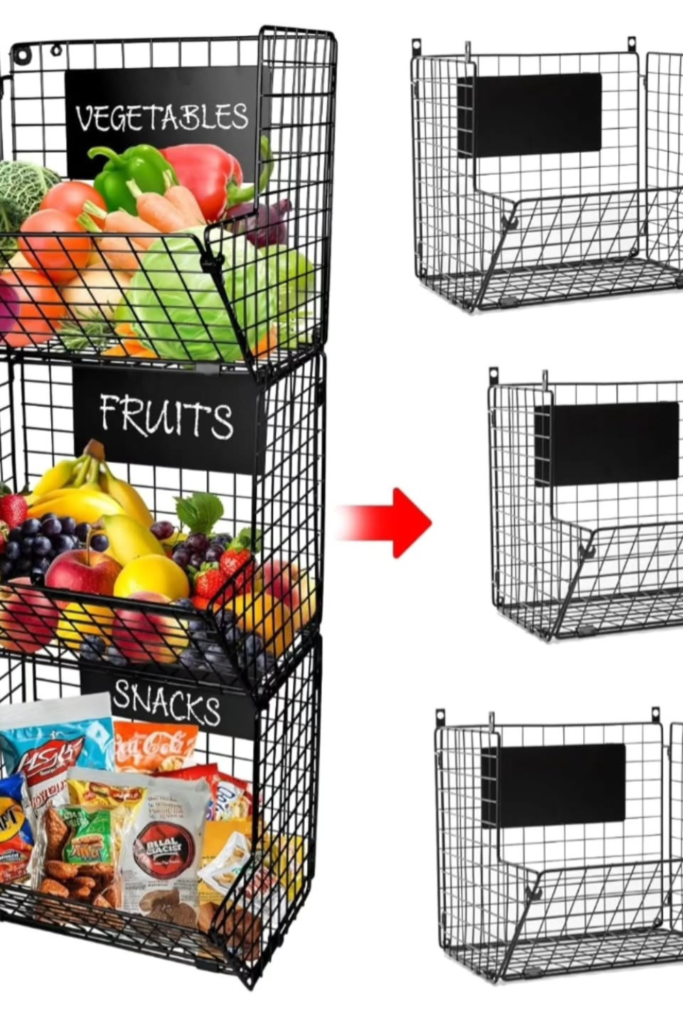
Labeled Storage Zones
Mixing everything together causes faster spoilage and daily confusion. Labeled baskets fix that by giving each food group.
Keep fruit separate from vegetables to control ethylene spread. This setup works best for family kitchens.
Open wire baskets allow airflow, while bright overhead kitchen lighting keeps labels and contents easy to see.
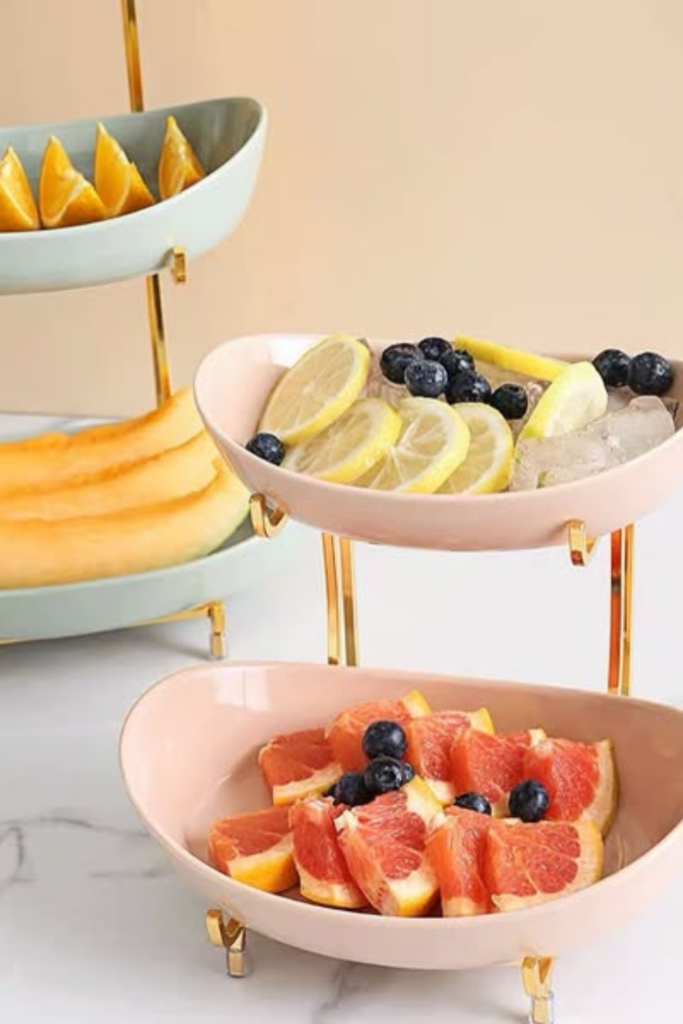
Tiered Serve Bowls
Fruit feels more inviting when it’s stored like it’s ready to eat, works best for entertaining kitchens that snack often.
Use separate tiers for cut citrus, berries, whole fruit to prevent moisture transfer. Keep portions small, nothing sits too long.
Soft diffused lighting highlights the layers, while warm accent lighting adds a clean, styled finish without heat.
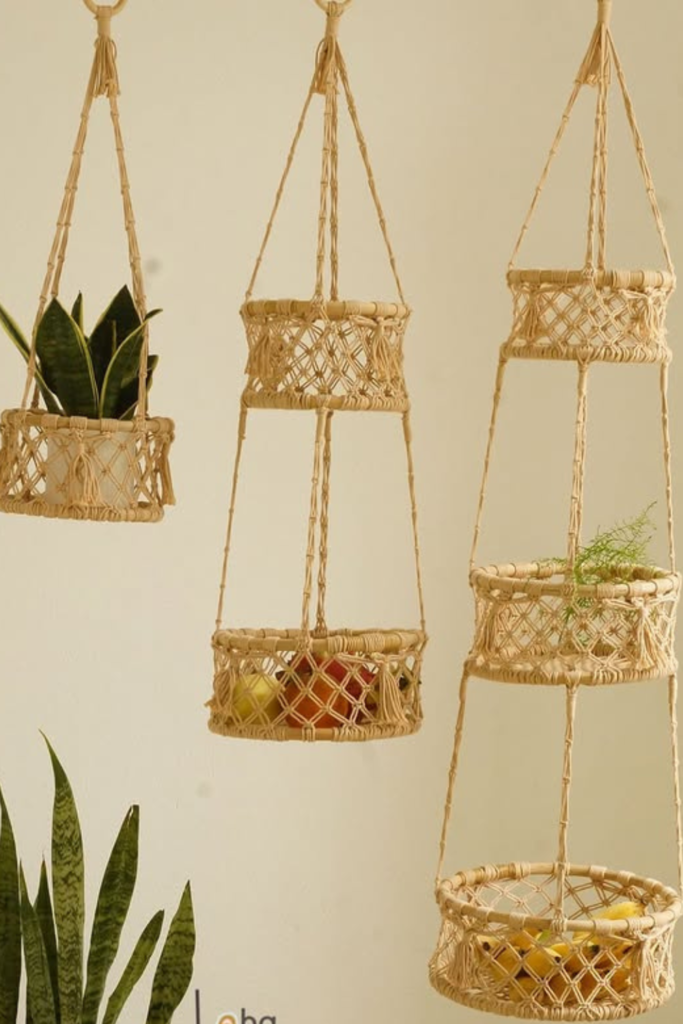
Hanging Basket Stack
Use separate baskets for bananas, citrus, and apples to slow ripening conflicts. Wall space solves storage problems.
The open weave prevents moisture buildup and bruising, works best near windows, pantry walls, or unused corners.
Soft natural daylight keeps fruit visible, while gentle ambient lighting maintains balance without adding heat.
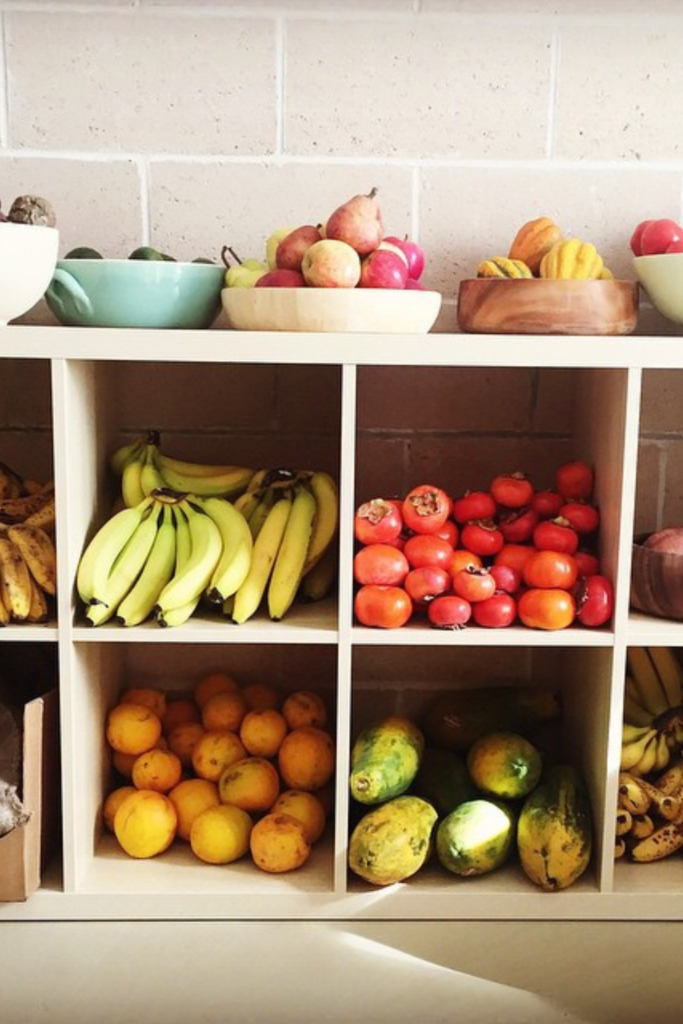
Cubby Shelf Sorting
Fruit stays fresher when each type has its own space. Assign one cubby per fruit to prevent ripening from spreading.
This setup works best on open shelving in pantries or kitchen walls with steady airflowOpen fronts keep everything visible.
Reduces the waste. Even ambient daylight works well here, supported by soft room lighting without direct heat.
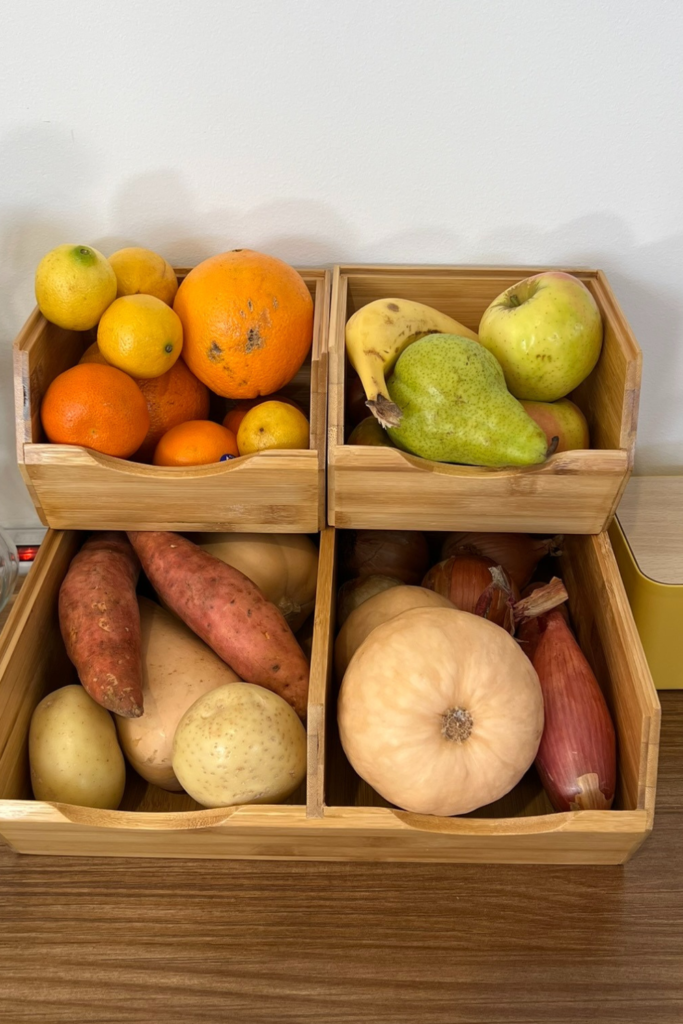
Sectioned Wood Boxes
Separating fruit by type solves most storage problems instantly. This setup works best on counters or pantry shelves.
Use individual compartments for citrus, apples, and pears to keep ripening under control. Solid wood protects fruit.
Open tops allow airflow. Soft natural daylight keeps everything visible, while gentle ambient lighting supports evenings.
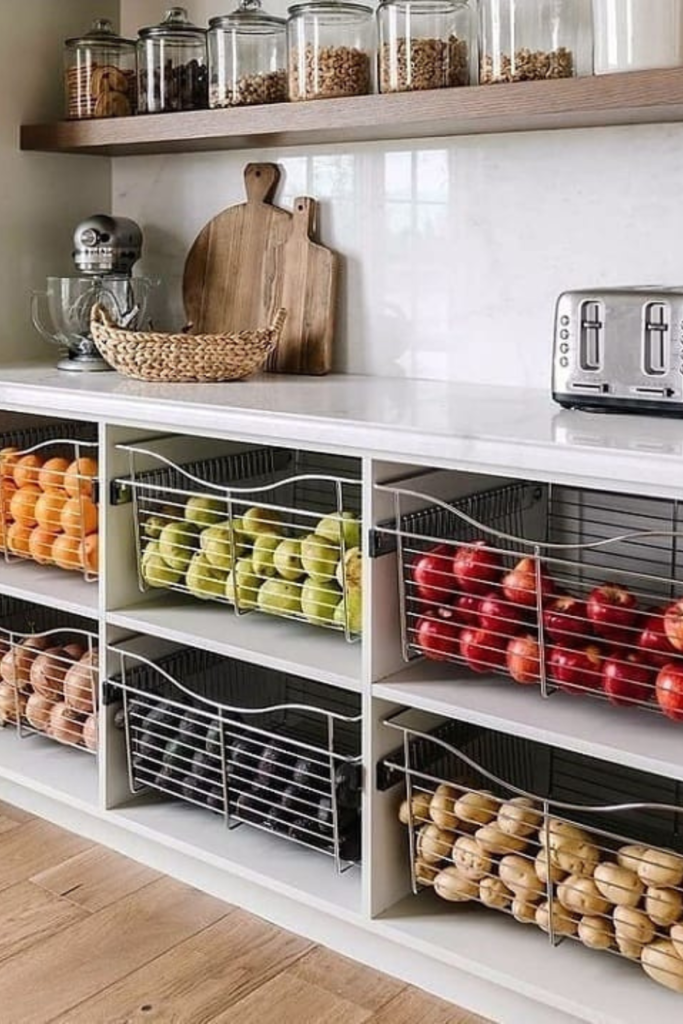
Built-In Produce Bays
When fruit storage becomes part of the kitchen design, it stays organized by default. Each wire bay holds one fruit type.
Preventing ethylene from spreading and speeding up ripening. Open fronts keep air moving and stop moisture buildup.
Natural daylight from nearby windows pairs well with under-shelf lighting for clear visibility, works best in larger kitchens.
FAQs
Do fruits really need to be stored separately?
Yes, and it makes a bigger difference than most people expect. Some fruits release ethylene gas, and that gas speeds up spoilage in nearby fruit.
When you store everything together, you create a chain reaction that ruins produce faster. Separating fruits by type slows ripening, keeps textures firm.
Is countertop storage bad for fruit?
Not always. Countertop storage works well for fruits you plan to eat within a few days, or for those that need to ripen first, like bananas and avocados.
Problems start when ripe fruit sits out too long or gets mixed with ethylene-sensitive types. Once fruit is ripe, moving it to the fridge slows ripening and prevents waste.
You may like to read!

Fasial is the founder of the Fizzy Flare. He has been a passionate blogger since 2021. He ran three different websites in the past few years. Now he is focusing on Fizzy Flare to build an audience and help them organize their life.