22 Yarn Storage Ideas for 2026
This post may contain affiliate links: full affiliate disclosure.
If you work with yarn, space becomes a problem fast. One skein turns into ten, then suddenly your closet, shelves, and chairs are full.
Yarn rolls away, tangles, or gets buried so deep you forget you even own it. The issue usually isn’t how much yarn you have, it’s how you store it.
When you use space the wrong way, even a small stash feels overwhelming. In this article, you’ll learn how to store yarn in the most space-efficient way.
In this article, you’ll find 22 Yarn Storage ideas that work in 2026.
Let’s jump in!
Contents
- 1 What is the Most Space-Efficient Way to Store Yarn?
- 1.1 Color-Sorted Cubes
- 1.2 Open Shelf Storage
- 1.3 Wall-Mounted Shelves
- 1.4 Modular Cube Units
- 1.5 Compartment Wall Shelves
- 1.6 Shelves With Baskets
- 1.7 Stacked Crate Storage
- 1.8 Open-Closed Storage
- 1.9 Tall Yarn Cabinet
- 1.10 Grid Shelf System
- 1.11 Hanging Yarn Holders
- 1.12 Yarn Rail Storage
- 1.13 Hidden Closet Storage
- 1.14 Lightweight Cube System
- 1.15 Deep Cube Shelves
- 1.16 Corner Cube Storage
- 1.17 Tall Shelf Storage
- 1.18 Workspace Yarn Storage
- 1.19 Display And Storage
- 1.20 Project Yarn Baskets
- 1.21 Mixed Storage Zones
- 1.22 Angled Yarn Compartments
- 2 FAQs
What is the Most Space-Efficient Way to Store Yarn?
The most space-efficient way to store yarn is to stop spreading it out and start using vertical, visible, and category-based storage.
When you stack yarn in deep boxes or leave it on the floor, you waste space and lose control fast. If you store yarn upright on shelves, walls, or hanging organizers.
You fit more yarn in the same area and still see what you own. Pair that with containers that match yarn size and separate active projects from stored yarn.
Use clutter stops growing. The goal isn’t fancy storage, it’s a system that uses every inch wisely and stays easy to maintain.
Save this article for later! 👇👇

Color-Sorted Cubes
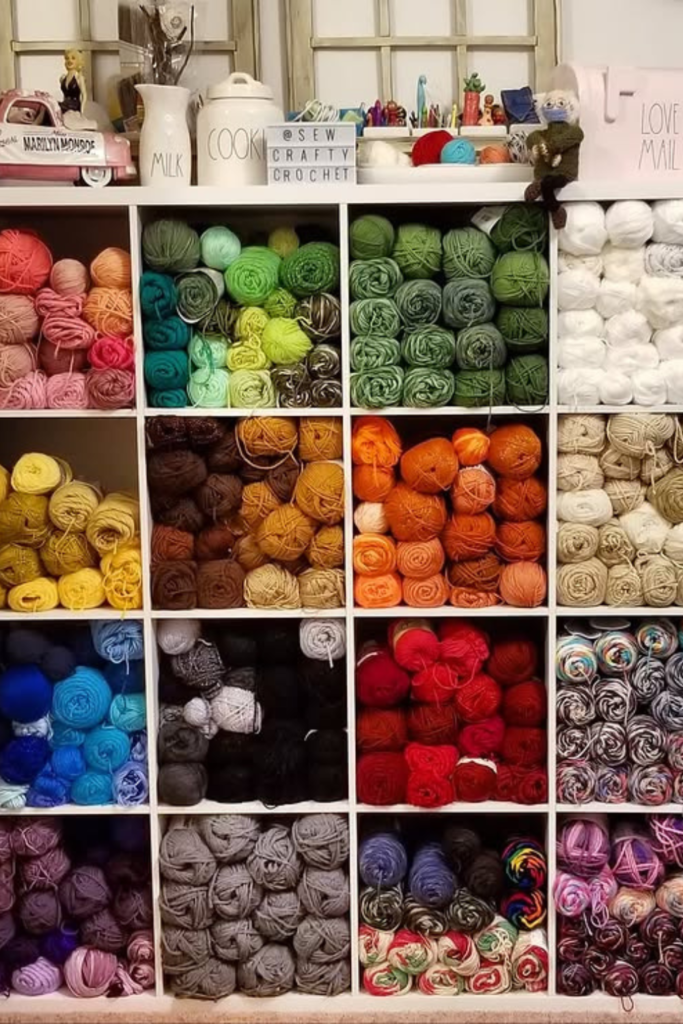
Color chaos disappears fast when yarn lives in individual cube sections. Cube shelves keep yarn upright, packed tight.
Easy to scan before starting a project, works best in craft rooms or spare corners where one wall can handle a full unit.
Use basic cube unit and roll yarn into uniform balls. Soft ambient lighting or daylight from nearby windows keeps colors accurate.
Open Shelf Storage
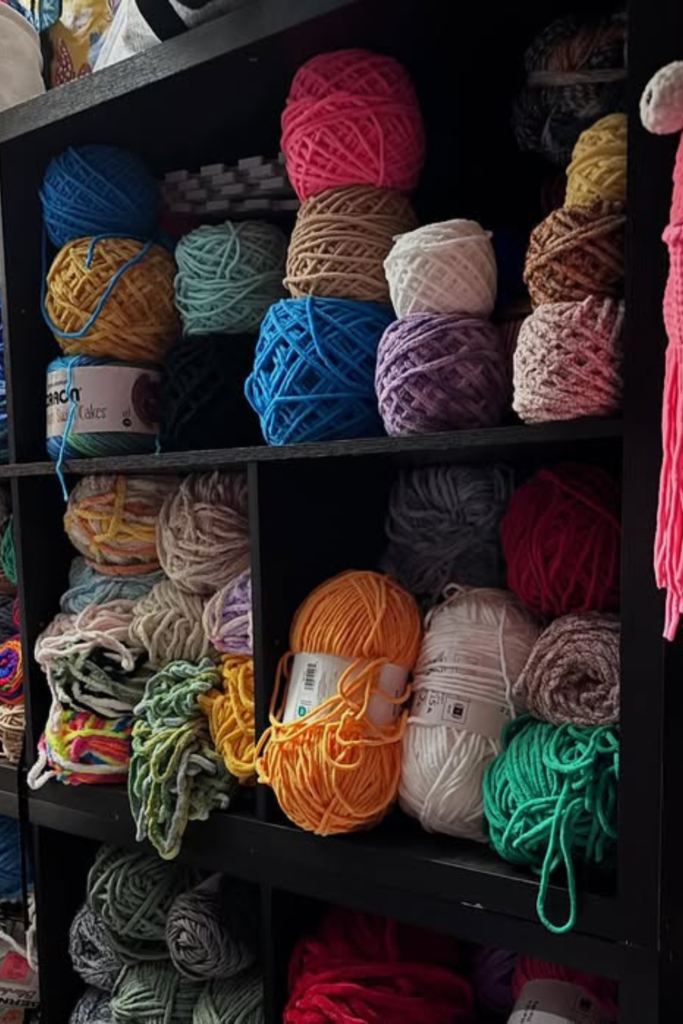
Quick access matters when yarn is part of your daily routine. Open shelves works in craft rooms, and shared spaces.
Side-by-side placement protects skeins while saving space. Recreate this with shallow shelves and clear categories per shelf.
Natural light or soft overhead lighting keeps everything visible and makes color selection easier without rearranging the stash.
Wall-Mounted Shelves
Floor space disappears fast in small rooms, but walls usually sit unused. Wall-mounted shelves work best in apartments.
Stack shelves vertically to store more yarn. Place heavier, often-used skeins at eye level and backups higher up.
Natural daylight or simple overhead lighting helps keep colors visible and prevents forgotten yarn from hiding in dark corners.
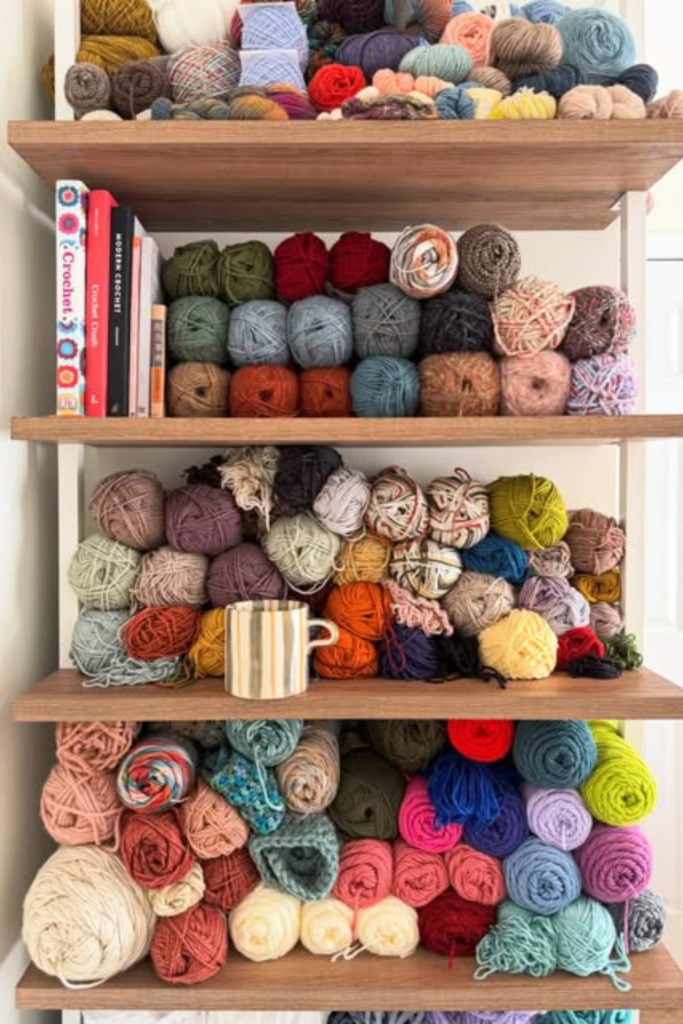
Modular Cube Units
Growth becomes manageable when storage adapts. Each cube holds a single clear category, preventing yarn from mixing and wasting space.
Modular cubes work best in craft rooms. Even overhead lighting keeps every section visible and prevents forgotten yarn from getting buried.
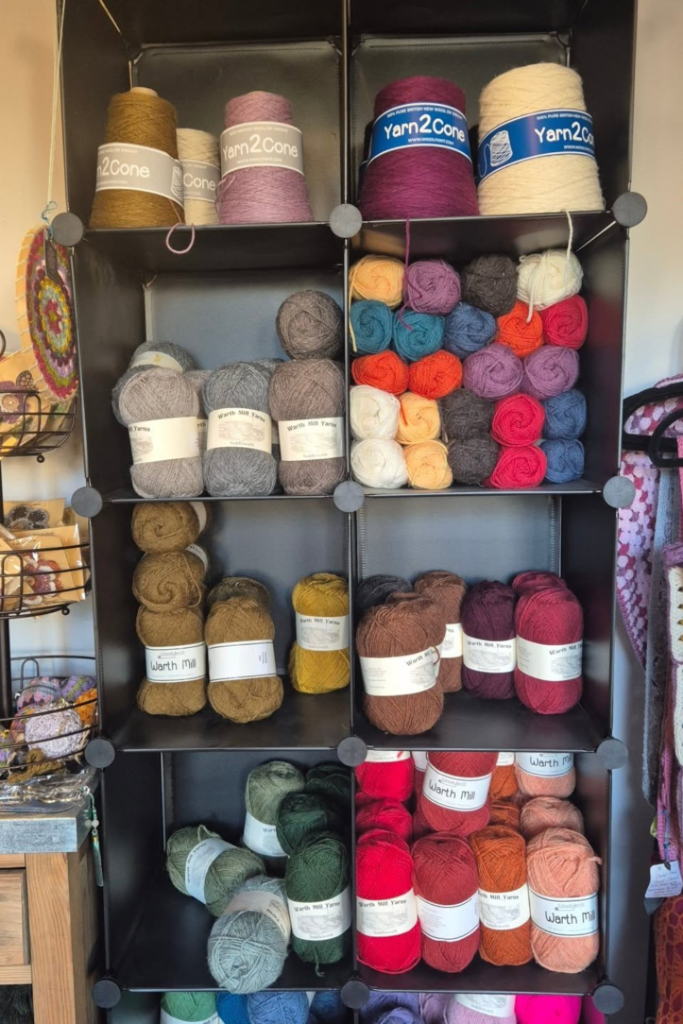
Compartment Wall Shelves
Wall space turns powerful when storage adds structure. Compartment shelves work best in small rooms or narrow walls.
Divided sections keep yarn upright, prevent slumping, and make overflow obvious early. Use shelves with built-in dividers.
Bright ambient or track lighting helps each compartment stay visible and keeps colors from blending into the background.
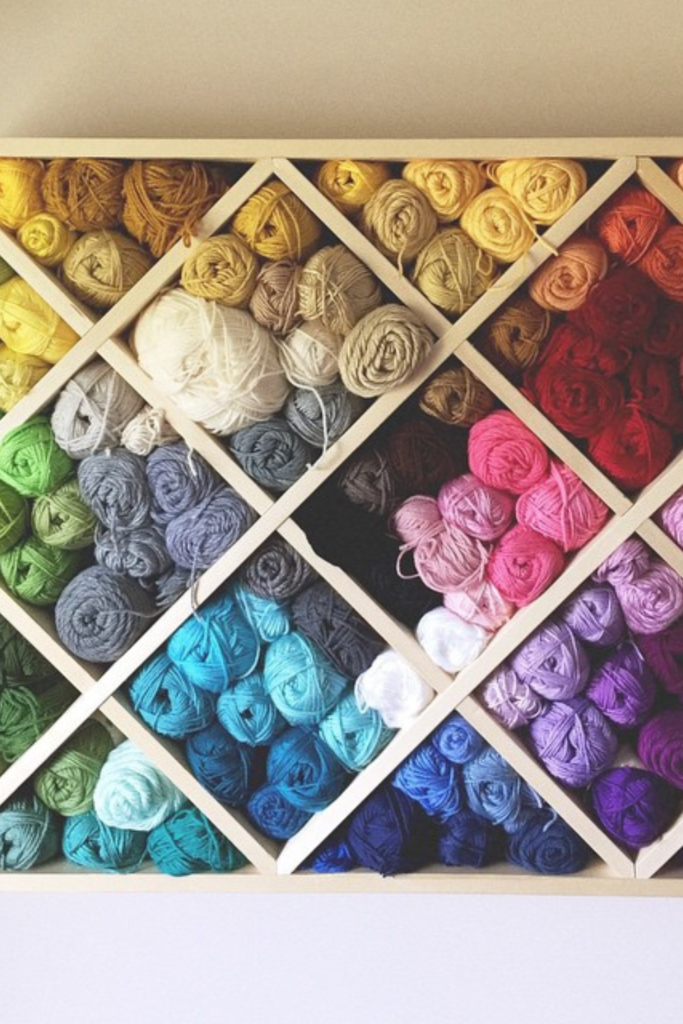
Shelves With Baskets
Visual order comes easier when loose yarn has boundaries. This setup works well in living rooms or shared spaces.
Open shelves hold full skeins, while baskets control scraps and small balls without wasting shelf depth.
Matching baskets sized to the shelf height. Soft ambient lighting keeps the setup clean-looking and easy to access.
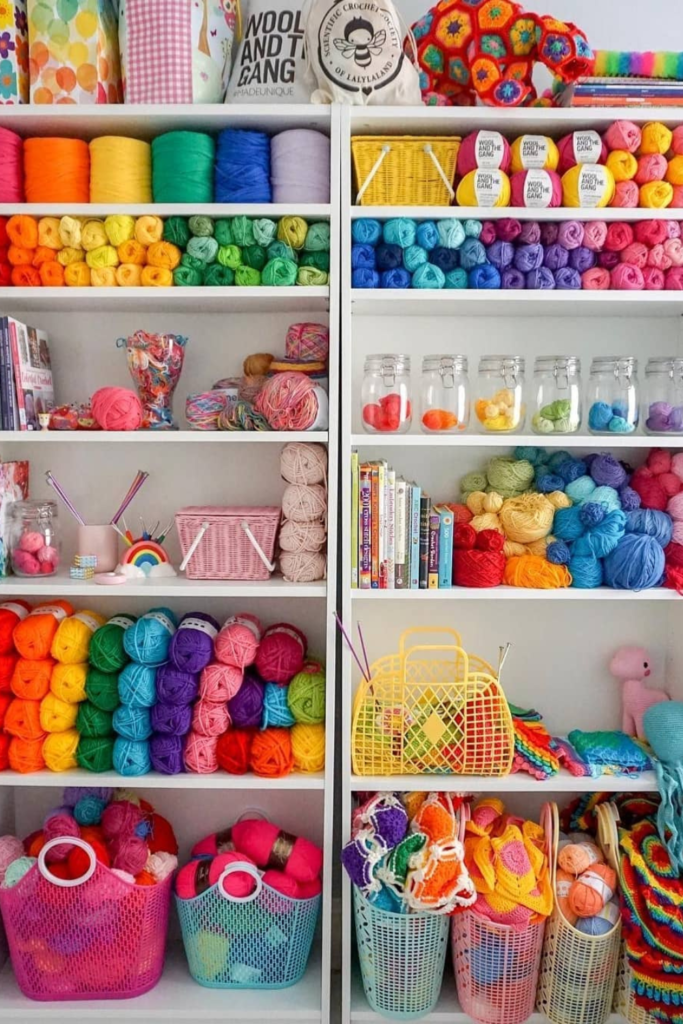
Stacked Crate Storage
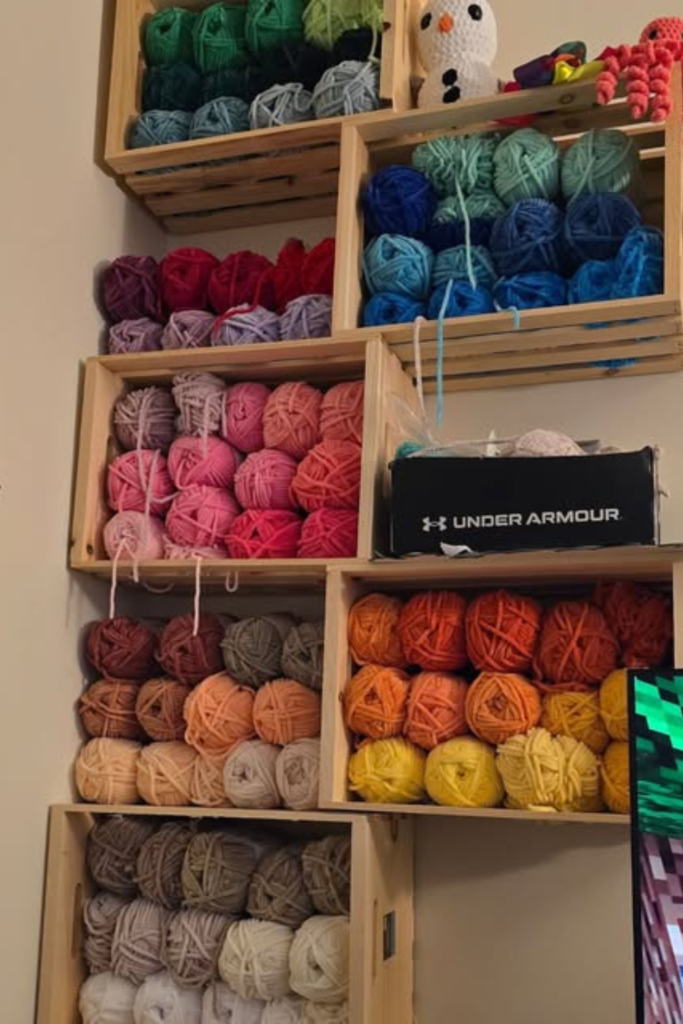
Narrow walls stop feeling useless once crates go vertical, works best in hallways, tight craft corners, or beside desks.
Each crate becomes its own category, keeping colors or yarn types separated. Stacking sturdy crates.
Securing them for safety. Natural daylight or a nearby floor lamp adds warmth and keeps the colors easy to read.
Open-Closed Storage
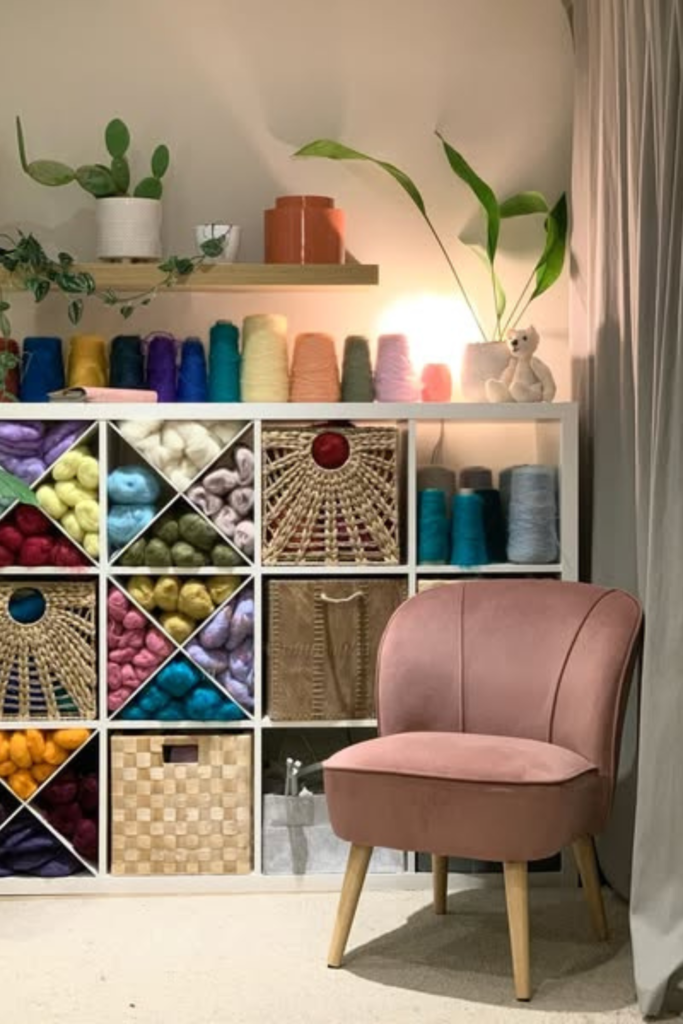
Balance makes storage feel intentional. Open sections keep active yarn visible, while closed baskets hide backups and tools, mixing cubes with drawers.
Soft overhead lighting keeps the area calm while still making frequently used yarn easy to spot, works well in multipurpose rooms.
Tall Yarn Cabinet
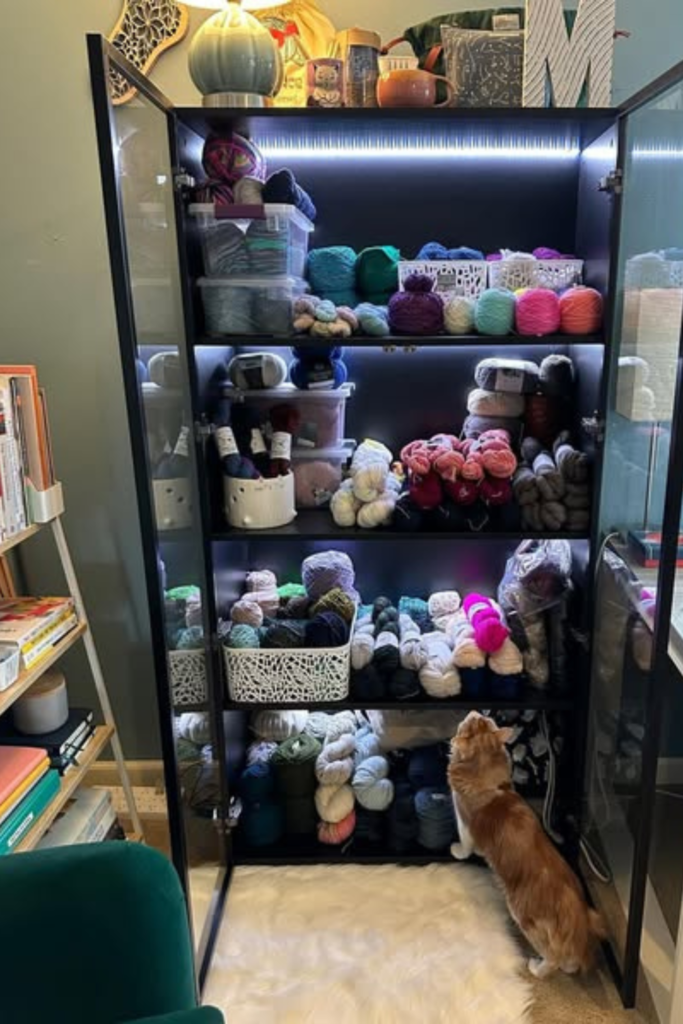
Protection matters when pets, dust, or sunlight become a problem. Tall cabinets work best in bedrooms.
Vertical shelving holds a large stash without taking up the whole room, adding baskets inside to stop shifting.
Soft interior lighting or nearby ambient light helps you see contents without opening everything or disrupting the space.
Grid Shelf System
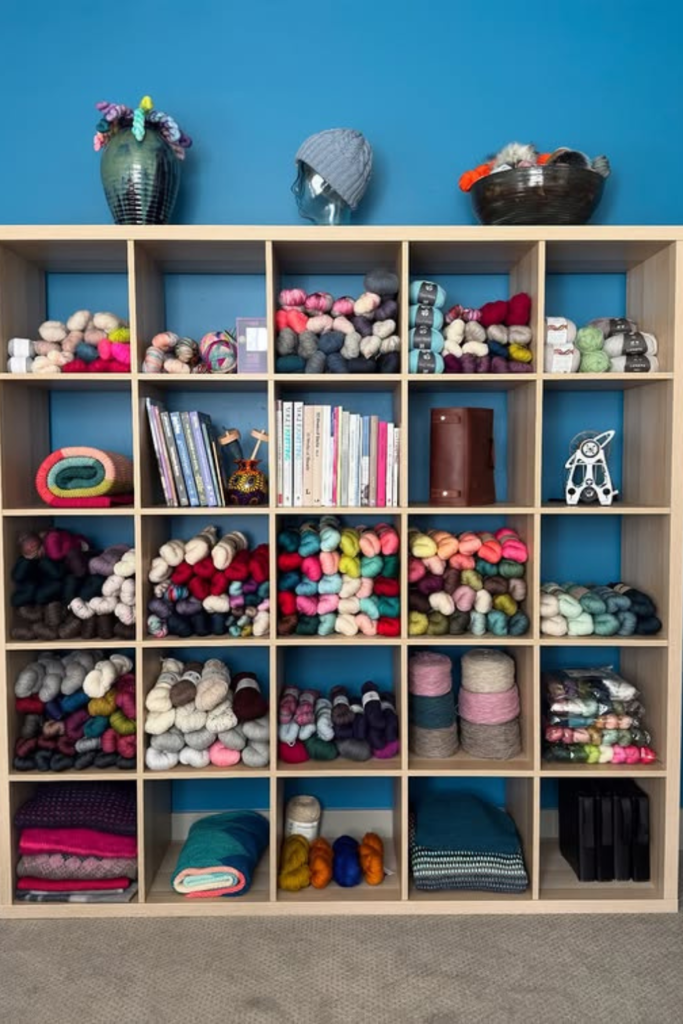
Structure provides control as yarn counts increase rapidly. Grid shelving works best in dedicated craft rooms.
Each square creates a clear category, preventing spillover and wasted space. Use cube-style grids and limit each section.
Even ceiling lighting keeps every compartment visible and stops darker colors from disappearing into shadows.
Hanging Yarn Holders
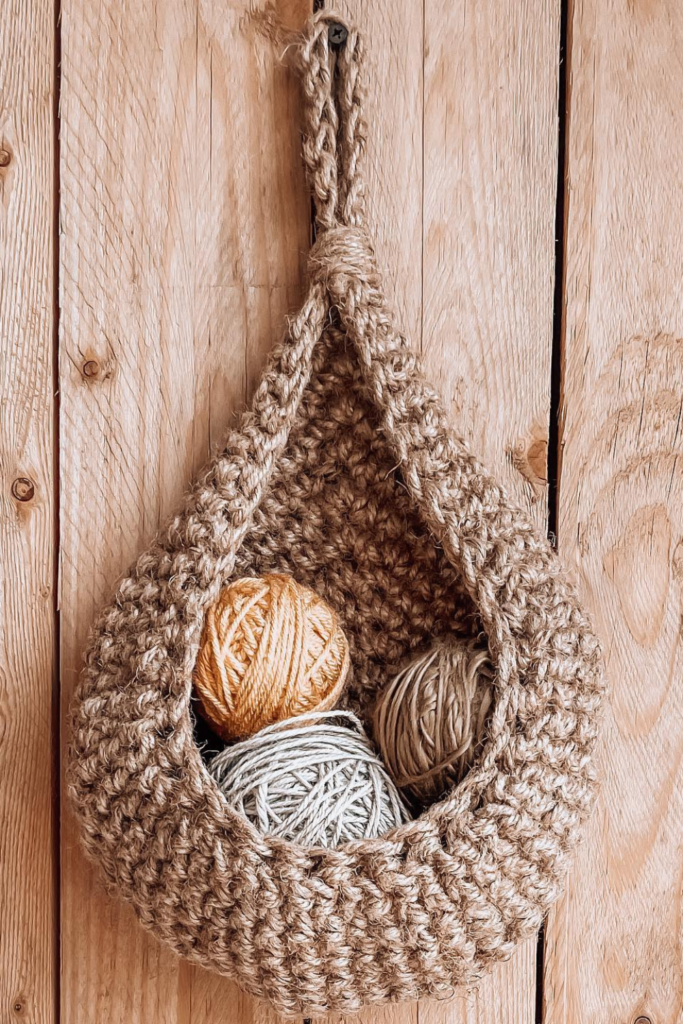
Unused wall space turns practical with hanging storage. Lightweight holders keep small balls and active projects off surfaces.
This idea works well near sofas, desks, or crafting chairs where yarn needs to stay close without taking floor space.
Use fabric or mesh hangers secured to hooks. Nearby task lighting keeps yarn visible and easy to grab during projects.
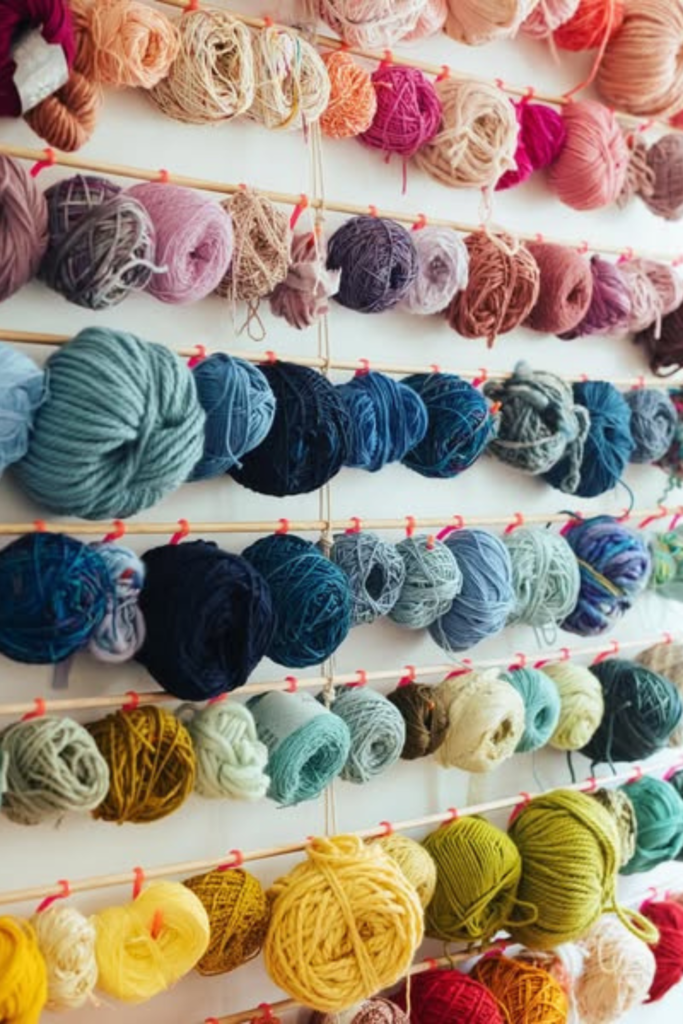
Yarn Rail Storage
Long, narrow walls become useful when yarn hangs rather than being stacked. Wound balls hang freely and stay visible.
Rail systems work best in hallways, behind doors, or above work tables. Use curtain rods or evenly spaced wall rails.
Overhead lighting or LED strips along the wall help highlight colors and make selection quick and frustration-free.
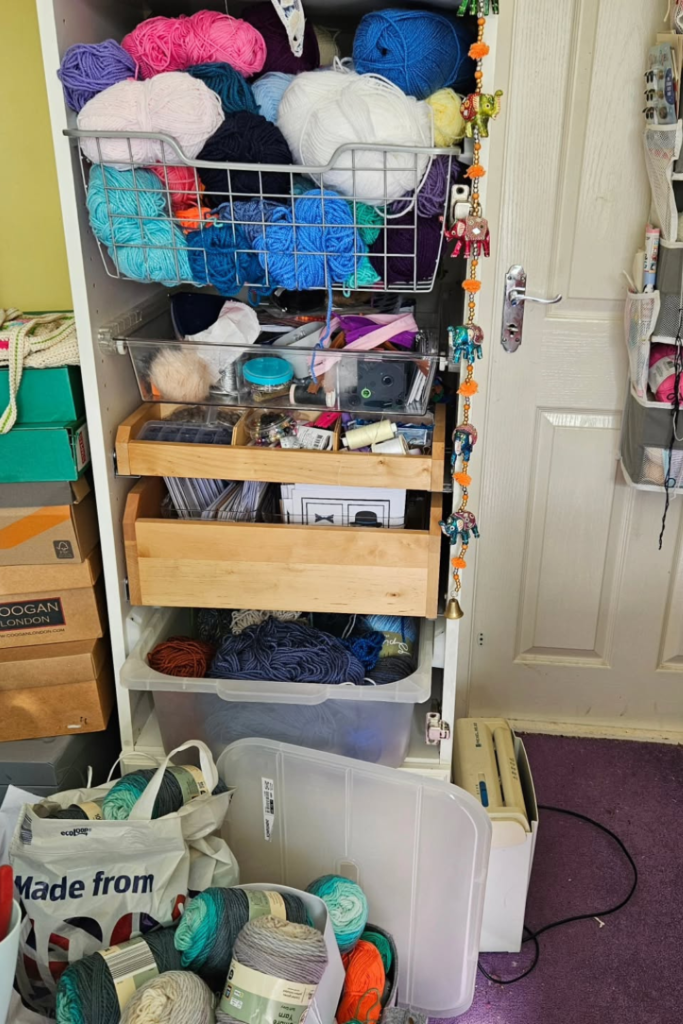
Hidden Closet Storage
Crowded rooms feel lighter once storage moves out of sight. Closets and doors work best in small apartments.
Hanging organizers handle small skeins, shelves inside store bulk yarn, recreate this with clear bins and simple labels.
Motion-sensor or overhead closet lighting helps you see everything without digging or rearranging stacks.
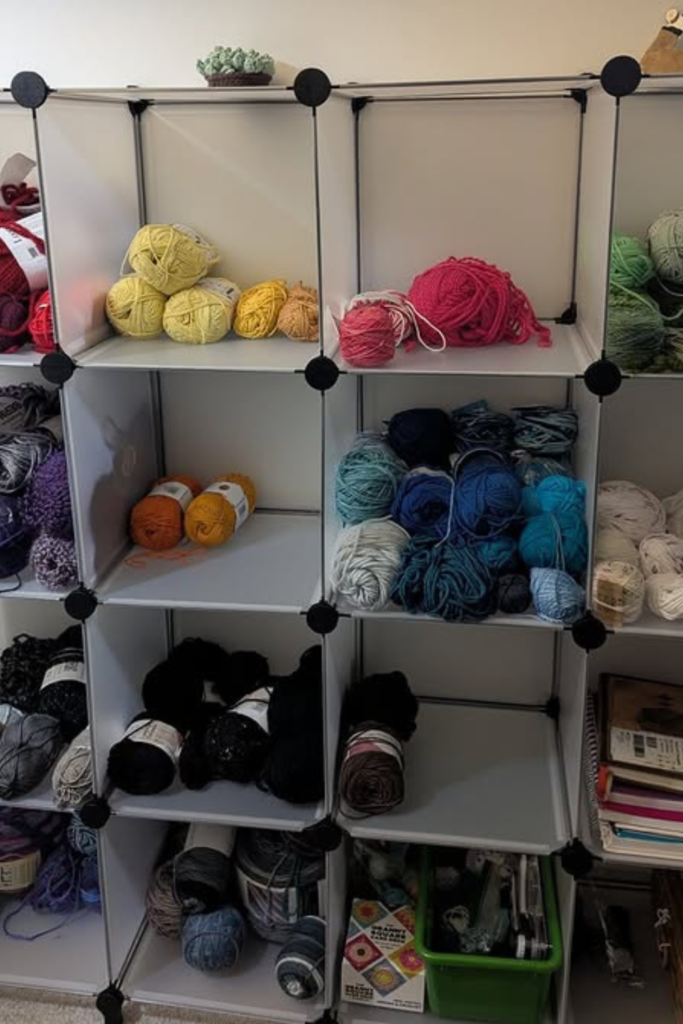
Lightweight Cube System
Flexibility matters when storage needs keep shifting. Each cube holds a single clear category, preventing yarn from blending.
Lightweight cubes work well in small rooms, rentals, or shared spaces where permanent furniture isn’t ideal.
Stacking cubes vertically and adjusting layouts as needed. Soft ambient or daylight nearby keeps the setup feeling open.
Deep Cube Shelves
Storage density improves when depth is used properly. Deep cubes work best in craft rooms or storage walls.
Rolled yarn fits tightly, allowing more skeins per section, evenly winding the yarn, limiting cube to one category.
Bright overhead or natural lighting keeps deeper spaces visible and prevents yarn from disappearing into shadows.
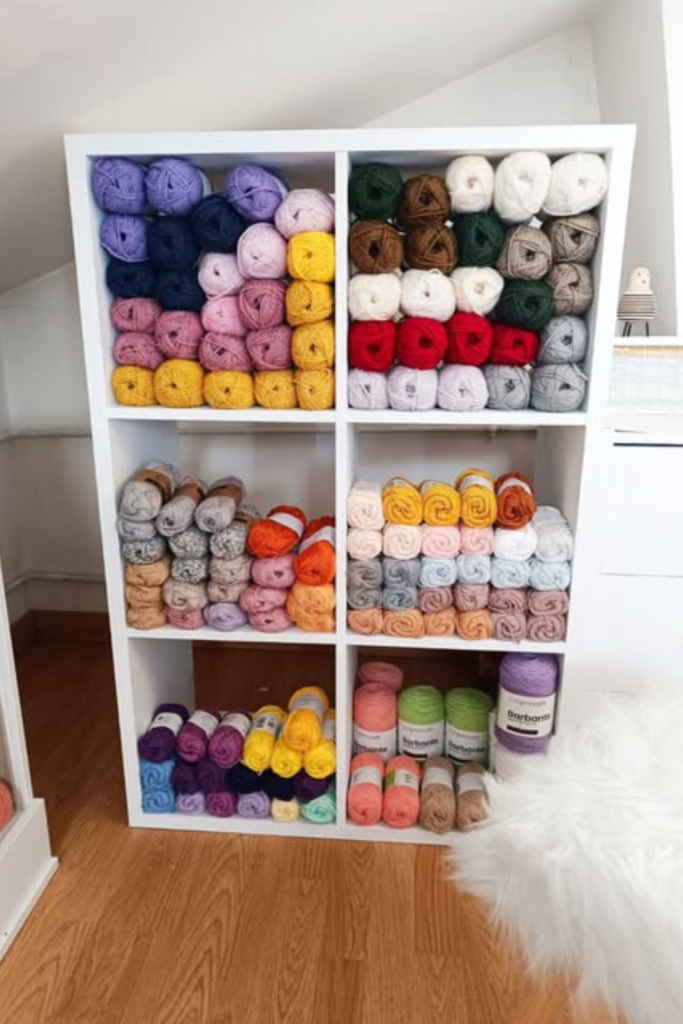
Corner Cube Storage
Corners stop going to waste once storage wraps around them. Cube shelves best in bedrooms or craft rooms.
Right-angle placement creates a single, compact yarn zone. Matching the cube units placed back-to-back.
Nearby floor lamps or ceiling lights help brighten the corner so colors stay visible and the space doesn’t feel closed in.
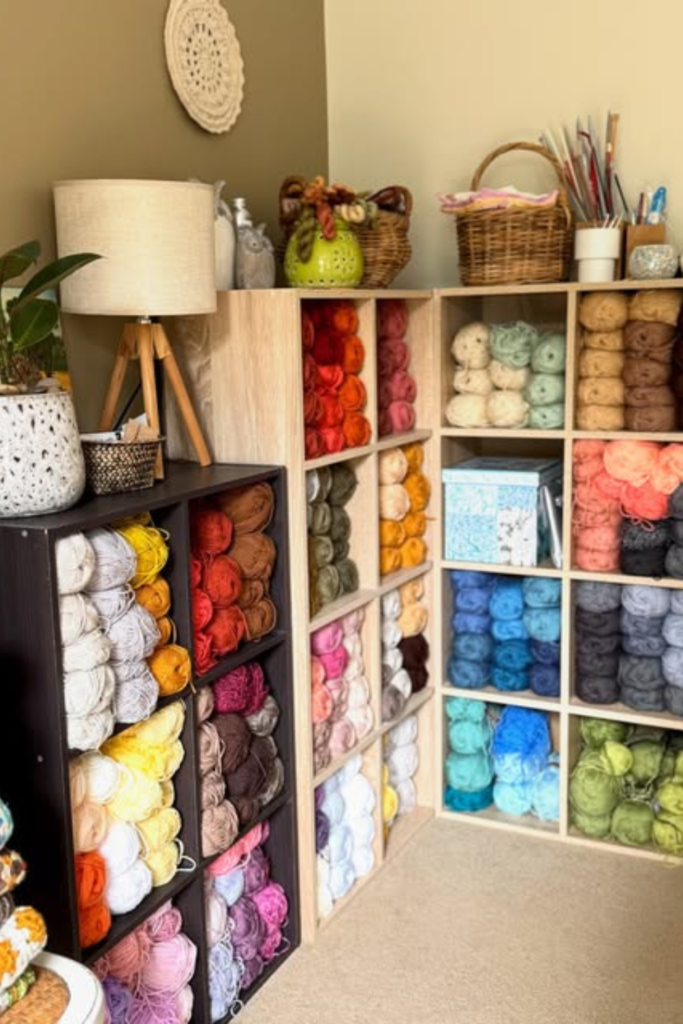
Tall Shelf Storage
Large stashes feel manageable once everything moves upward. Tall shelves work best along empty walls in craft rooms or spare bedrooms.
Vertical stacking keeps yarn contained in one footprint. Ceiling lighting or wall-mounted fixtures help keep upper shelves visible and usable.
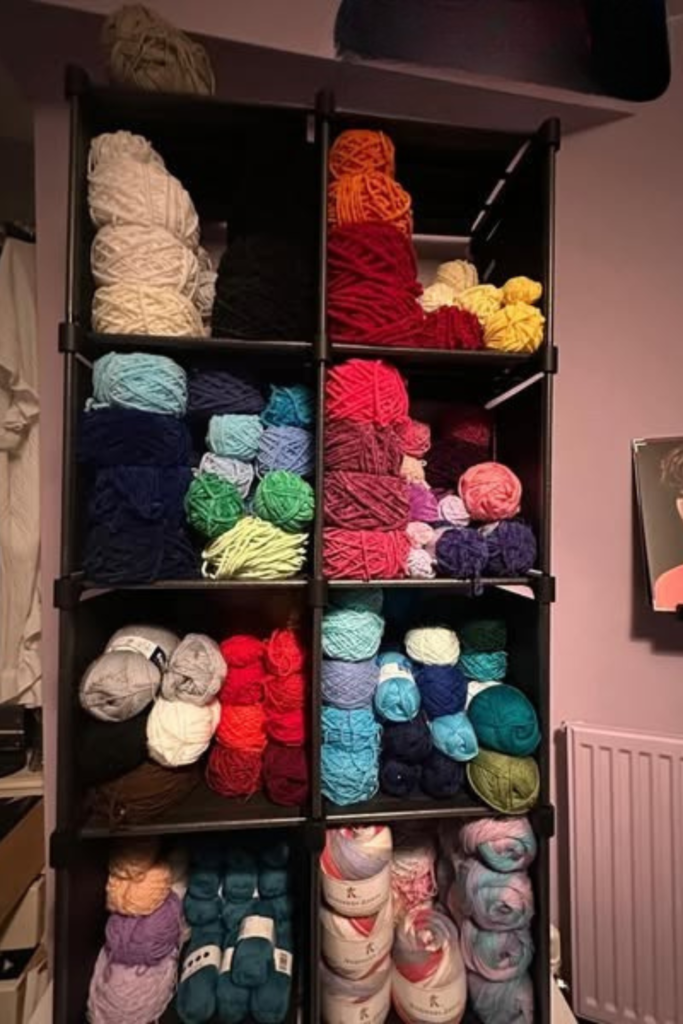
Workspace Yarn Storage
Productivity improves when yarn stays close to where work happens,works best in craft rooms or home offices.
Surrounding the workspace with shallow shelves or cubes keeps yarn accessible without eating desk space.
Recreate this by placing frequently used yarn at eye level. Task lighting or adjustable desk lamps help maintain visibility.
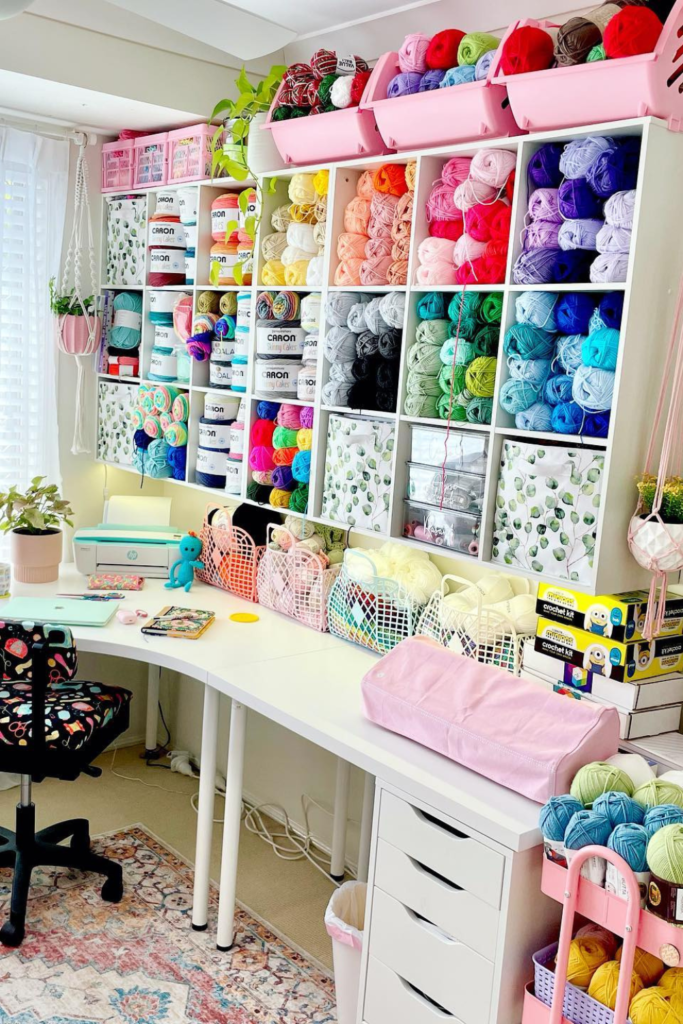
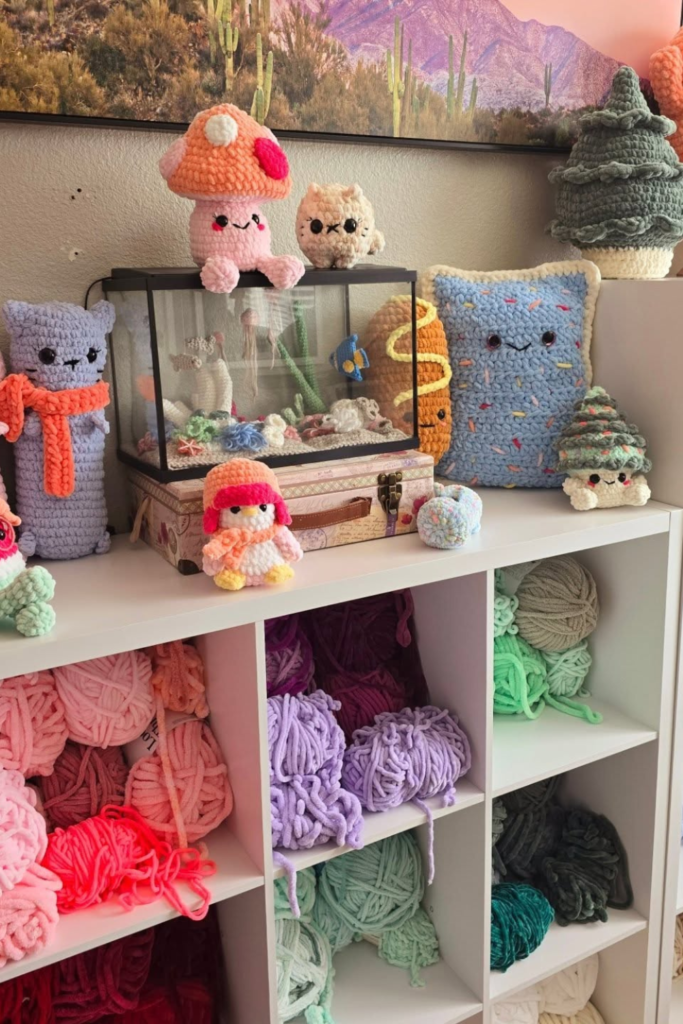
Display And Storage
Dual-purpose shelving keeps small spaces from feeling crowded. Cube units work well in living rooms or studios.
Finished pieces sit on upper cubes, yarn stays organized below, limiting display items, keeping most sections functional.
Soft accent lighting or a nearby lamp highlights finished work without overpowering the storage area.
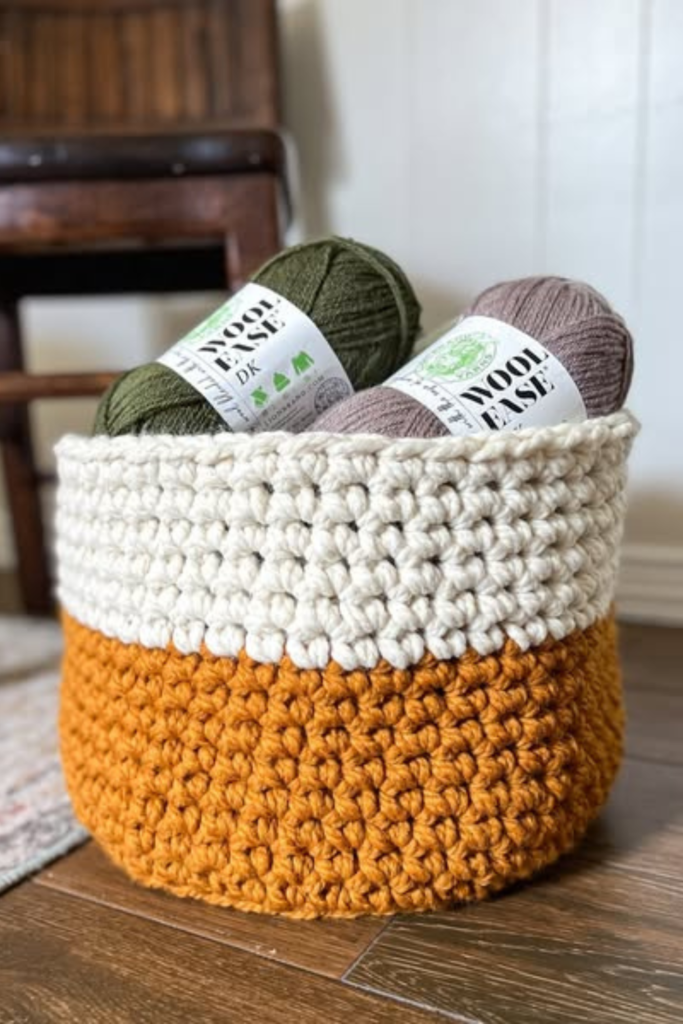
Project Yarn Baskets
Loose yarn spreads fast when projects stay active. One basket per project keeps yarn contained and prevents tangling.
Use shallow, lightweight baskets that are easy to move. Small baskets work best beside sofas, desks, or crafting chairs.
Nearby floor lamps or task lighting help keep stitches visible without pulling yarn back into the main storage too early.
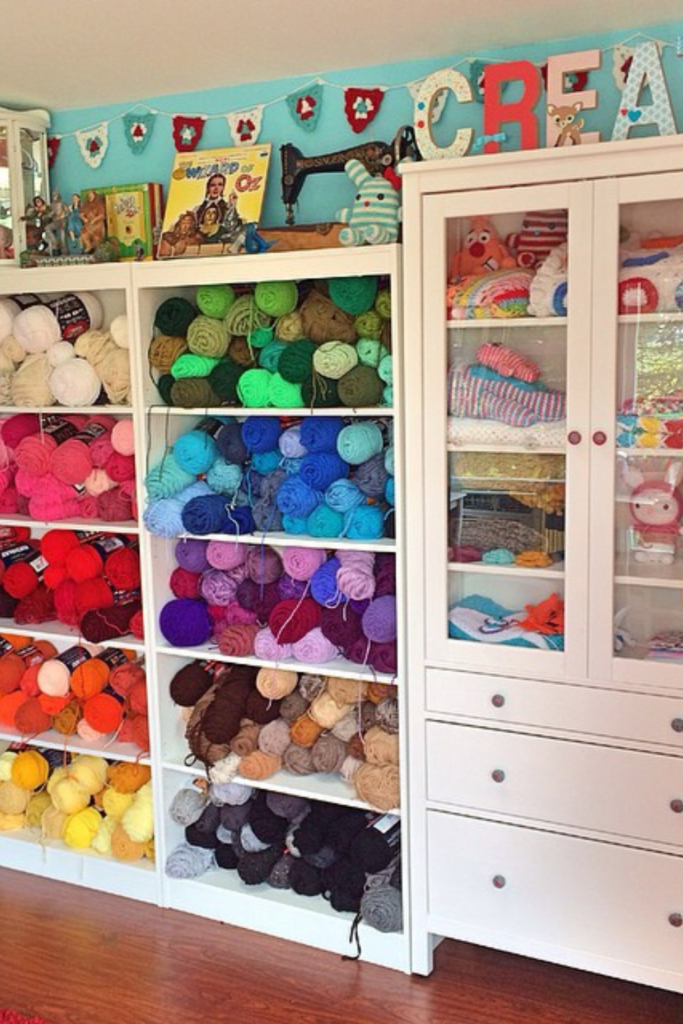
Mixed Storage Zones
Order feels easier when access and hiding stay balanced. Open shelves handle daily-use skeins, while cabinets hide backups.
Seasonal supplies, pairing one shelving unit with a tall cabinet nearby. Even ambient lighting keeps the area cohesive, works well.
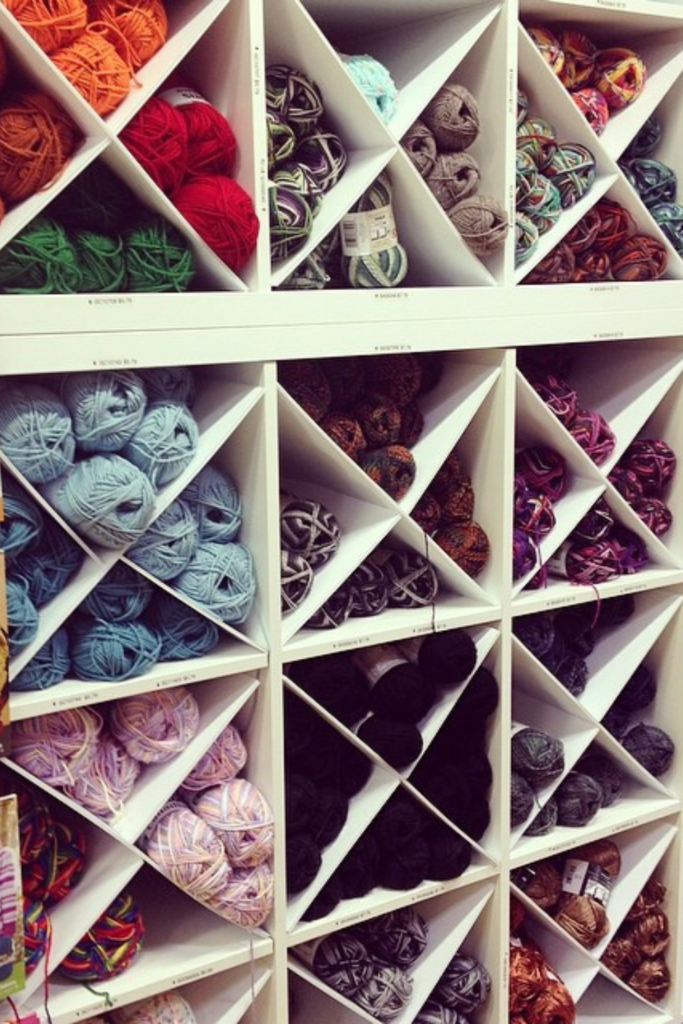
Angled Yarn Compartments
Visibility improves when yarn leans rather than stacks. Slanted sections support skeins and stop rolling.
Allowing tighter packing. Angled compartments work best on feature walls or shelving units meant to display color.
Directional lighting or LED strips enhance color separation and keep every skein easy to spot without reshuffling.
FAQs
How can you keep yarn storage from getting messy again?
Mess usually comes back when yarn doesn’t have clear limits. Assign each storage area a purpose, like active projects, backups, or specific yarn weights.
Stop filling spaces once they’re full. When a section reaches capacity, it’s a signal to use yarn before buying more. Simple boundaries make long-term storage easier to maintain.
Is it better to store yarn in bins or on shelves?
It depends on how often you use it. Shelves work best for yarn you reach for regularly because everything stays visible and easy to grab.
Bins are better for backup yarn, leftovers, or specialty fibers that don’t get used often. The most efficient setups usually mix both, using shelves for access and bins for control.
You may like to read!

Fasial is the founder of the Fizzy Flare. He has been a passionate blogger since 2021. He ran three different websites in the past few years. Now he is focusing on Fizzy Flare to build an audience and help them organize their life.